


fbpx

Behind the Bimah

Here\'s a variation on Wolpe\'s idea -- let your children stand in awe in front of the bimah, but then take them behind the bimah. Raise the curtain and demystify the sanctuary. By doing so you help them feel comfortable.
[additional-authors]
August 31, 2006

In “Teaching Your Children About God,” Rabbi David Wolpe suggests taking our children to a sanctuary when services are not being conducted to give them a sense of the
sacred.

I love this idea. I have been in my own sanctuary at odd hours, and even if I am there for “business reasons” — taking pictures for a new synagogue brochure, for example — I feel different in the sanctuary than I do in any other room.
Seeing the eternal light, knowing the Torah is sleeping inside the ark, gives me the feeling of being on holy ground.

But here’s a variation on Wolpe’s idea — let your children stand in awe in front of the bimah, but then take them behind the bimah. Raise the curtain and demystify the sanctuary. By doing so you help them feel comfortable.

Many of my adult friends still feel uncomfortable in synagogue. To them, it is a place where you have to go — where you have to sit still and say meaningless prayers in a difficult language, where you have to listen to lectures from a rabbi who you do not know personally and are, perhaps, a little intimidated by. No wonder they only attend services twice a year.

I was extremely fortunate as a child. My family “raised the curtain” for me. And they did so by doing two things.

The first is unique to my family — my uncle is Cantor Saul Hammerman, who is now cantor emeritus of Beth El in Baltimore. Before my parents affiliated with our Philadelphia synagogue, they would take us to Baltimore to be with our extended family for holidays. I remember sitting in Beth El, an imposing synagogue to anyone, but even more so to a little girl. I looked up at the enormous ark and wondered how anyone could ever reach the Torahs.

I listened to the brilliant Rabbi Jacob Agus, and wondered how old I would be when I would understand his sermons. And I listened to the chazzan — so imposing in his white robes and his big white hat with the pompom on top (oh, how my sister and I loved that hat). When he sang, his voice wafted over me — both beautiful and frightening in its power and passion.

But, then, during the Torah procession, something would happen. My sister and I would scramble to the end of the aisle to kiss the Torah, and as the procession passed the cantor would wink at us and flick his tallit so that the fringes brushed our cheeks. We would giggle, and the imposing chazzan would once again become our beloved Uncle Saul.

At other times, Uncle Saul took us to his office and even showed us where his robes hung and how he entered and exited the bimah. Those special visits made the synagogue seem less foreboding, but no less magical.

The second thing my parents did was be involved with our synagogue. Their involvement inspired my own. I remember being on the bimah with the choir, making macaroni in the kitchen between tutoring the younger students and waiting for my own evening classes to begin, and even raking leaves at my rabbi’s house during our Kadima “Rent-A-Rake” fundraiser. This involvement, this ownership, made synagogue a comfortable place.

And so, the very first thing I did when my husband and I joined our shul was to volunteer. I didn’t like the feeling of entering the synagogue and not knowing what it was like behind the bimah. By volunteering, I was able to feel at home. I did this for me and I did it for my children.

This is a gift every Jewish parent can give to her child. Not all families have an Uncle Saul, but everyone can volunteer. Synagogues desperately need lay leaders. It is so easy to get involved — just call and ask how you can help. And then? Well, you will have raised the curtain, you will learn that a synagogue is not run on some intimidating magic, but by people you know and care about. Synagogue will no longer be a frightening Oz, but rather a welcoming home.

Meredith Jacobs, author of the soon-to-be released “Modern Jewish Mom’s Guide to Shabbat” (HarperPerennial) is founder and editor of

Did you enjoy this article?
You'll love our roundtable.

Editor's Picks

Latest Articles

Antisemitism, Deicide, and Revolution

The United States Conference of Catholic Bishops did a remarkable thing: It issued a memorandum to all American Catholic bishops urging them to prepare their teachings carefully during this Easter period and ensure that they accurately present the Church’s positive teachings about Jews.
Chametz Is More than Crumbs in the Corners of our Homes

Chametz is also something that gathers in the corners of our being, the spiritual chametz that, like the physical particles we gather the night before Passover, can infect, wither, influence and sabotage us as we engage with others.
Alpine Flavors—a Crunchy Granola Recipe

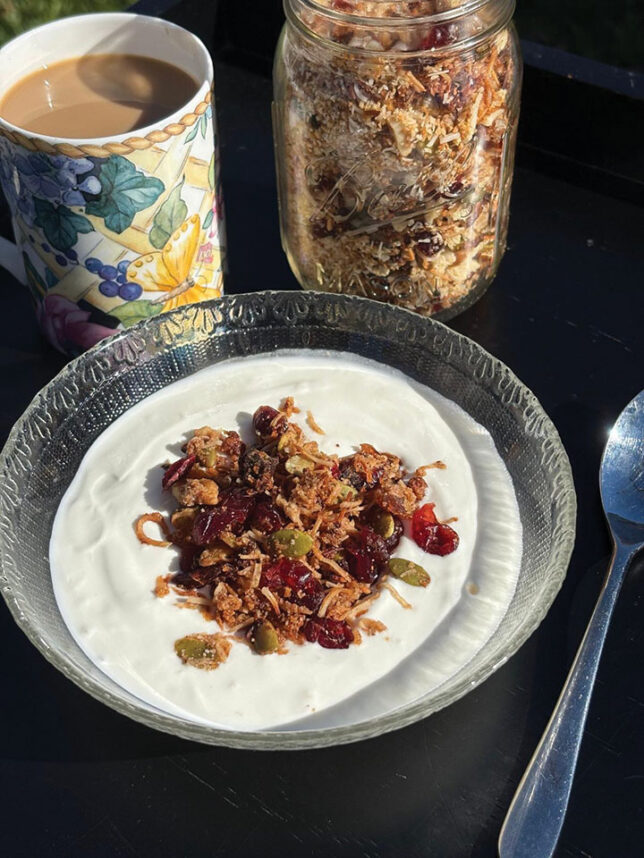
Every Passover, I prepare a truly delicious gluten-free granola. I use lots of nuts and seeds (pistachios, walnuts, almonds and pumpkin seeds) and dried fruits (apricots, dates and cranberries).
Pesach Reflections

How does the Exodus story, Judaism’s foundational narrative of freedom, speak to the present? We asked local leaders, including rabbis, educators and podcasters, to weigh in.

Rosner’s Domain | Be Skeptical of Skeptics, Too

Whoever risks a decisive or semi-decisive prediction of the campaign’s end (and there is a long list of such figures on the Israeli side as well as the American side) is not demonstrating wisdom but rather a lack of seriousness.
When We Can No Longer Agree on Who Is Pharaoh

The Seder asks us to remain present to the tension between competing fears and obligations. It does not require choosing one lesson over the other, but rather, it creates space for us to articulate our concerns and listen to the fears and hopes that shape others’ views.
Pesach at War. Leaving Fast, Leaving Slow.

Freedom, it would seem, is erratic; it happens in fits and starts, three steps forward and two steps back. Freedom is a leap into the unknown, driven by a dream. We will figure it out in time.
More news and opinions than at a Shabbat dinner, right in your inbox.