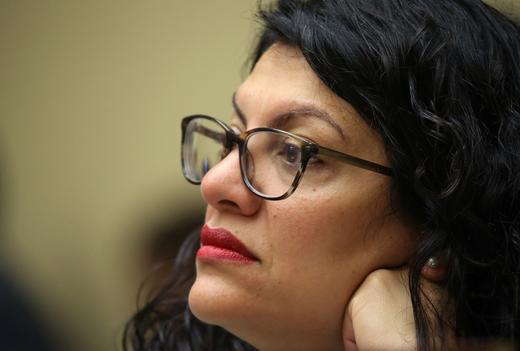
Rep. Rashida Tlaib (D-Mich.) cited American boycotts of Nazi Germany during World War II in a July 23 speech at the House of Representatives when she announced her opposition to the anti-boycott, divestment and sanctions (BDS) resolution.
Tlaib was speaking out against H.R. 246, the anti-BDS resolution that the House will be voting on later on July 23. Tlaib said that the boycotts are “rooted in the fabric of our country,” citing the 1773 Boston Tea Party and the civil rights boycotts during the 1950s and 60s.
“Some of this country’s most important advances in racial equality and equity and worker’s rights has been achieved through collective action protected by our Constitution,” Tlaib said. “Americans of conscience have a long and proud history of participating in boycotts specifically to advocate for human rights abroad. Americans boycotted Nazi Germany in response to dehumanization, imprisonment and genocide of Jewish people.”
Tlaib then called the anti-BDS resolution a threat to free speech.
“It sets a dangerous precedent because it attempts to delegitimize certain people’s political speech and to send a message that our government can and will take action against speech it doesn’t like,” Tlaib said.
Just Rashida Tlaib on the House floor likening the anti-Semitic BDS movement to boycotts against Nazi Germany and the Boston Tea Party, echoing Ilhan Omar last week. pic.twitter.com/KalfVqiNkh
— Nate Madden (@NateOnTheHill) July 23, 2019
Rep. Ilhan Omar (D-Minn.) introduced a resolution on July 16 that defended the right to boycott as the impetus for supporting BDS; that resolution made similar comparisons to the Boston Tea Party and boycotts of Nazi Germany.
Rep. Brad Schneider (D-Ill.), one of the co-sponsors of the anti-BDS resolution, told CNN’s Dana Bash that the BDS movement is anti-Semitic.
“It denies Israel’s connection to the land going back to 1948,” Schneider said.
He added that the BDS movement tries to foster a “hostile environment for supporters of Israel on college campuses to make it difficult for companies that are doing business with Israel around the world. That is by its very nature anti-Semitic.”
However, Schneider wouldn’t say that his pro-BDS colleagues like Tlaib are anti-Semitic.
“I believe they have [an] understanding of what they believe the movement does without understanding the impact of it,” Schneider said.
Democrat Representative says BDS is “bigoted” but can’t explain why Rep. Rashida Tlaib isn’t anti-Semitic for supporting it. pic.twitter.com/uyzBhPnUvR
— Steve Guest (@SteveGuest) July 23, 2019