fbpx

July 23, 2019

House Overwhelmingly Passes Anti-BDS Resolution

The House of Representatives overwhelmingly passed an anti-boycott, divestment and sanctions (BDS) resolution on July 23 by a vote of 398 in favor, 17 against and 5 abstentions.

The nonbinding resolution, H.R. 246, condemned the BDS movement for attempting to delegitimize Israel. The resolution had nearly 350 co-sponsors, including Reps. Lee Zeldin (R-N.Y.) and Brad Sherman (D-Calif.). Sixteen of the 17 representatives who voted no were Democrats; four out of the five who voted present also were Democrats. The only non-Democrat who voted present was Rep. Justin Amash (I-Mich.).

During the 40-minute floor debate on the resolution, House Foreign Affairs Committee Chairman Eliot Engel (D-N.Y.) said the BDS movement “promotes a one-sided view of the Israeli-Palestinian conflict that seeks to marginalize Israel, that would deny the Jewish people the right of national self-determination.” He added, “Participating in an international commercial effort that undermines Israel’s legitimacy and scuttles the chances of a two-state solution isn’t the same as an individual exercising First Amendment rights.”

After the vote, Rep. Alex Mooney (R-WV) tweeted, “Displays of anti-Semitism have become too frequent in the past few months, even from members of this House of Representatives—and it is time that we stand united in support of Israel.”

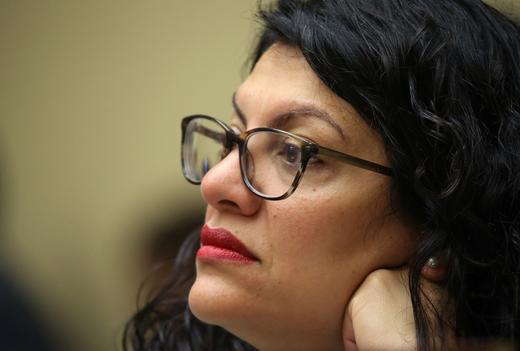
Earlier in the day, Rep. Rashida Tlaib (D-Mich.) criticized the resolution, saying, “It sets a dangerous precedent because it attempts to delegitimize certain people’s political speech and to send a message that our government can and will take action against speech it doesn’t like”

The Anti-Defamation League and AIPAC praised the passage of the resolution:

StandWithUs CEO and Co-Founder Roz Rothstein similarly said in a statement, “Congress continues to recognize that anti-Israel boycotts are a form of hate which will never lead to justice or peace between Israelis and Palestinians. Everyone who is committed to fighting discrimination and bigotry should follow their lead and oppose these campaigns wherever they occur.”

The House also passed a bill that provides security assistance to Israel as well as a bill that sanctions foreign governments that provide material support for Hamas and Islamic Jihad.

House Overwhelmingly Passes Anti-BDS Resolution Read More »
Five Jewish Things to Know About Boris Johnson

(JTA) — No matter their political affiliation, all sides can agree that Boris Johnson, who has secured his Conservative Party’s vote to become the United Kingdom’s next prime minister, is a colorful character.

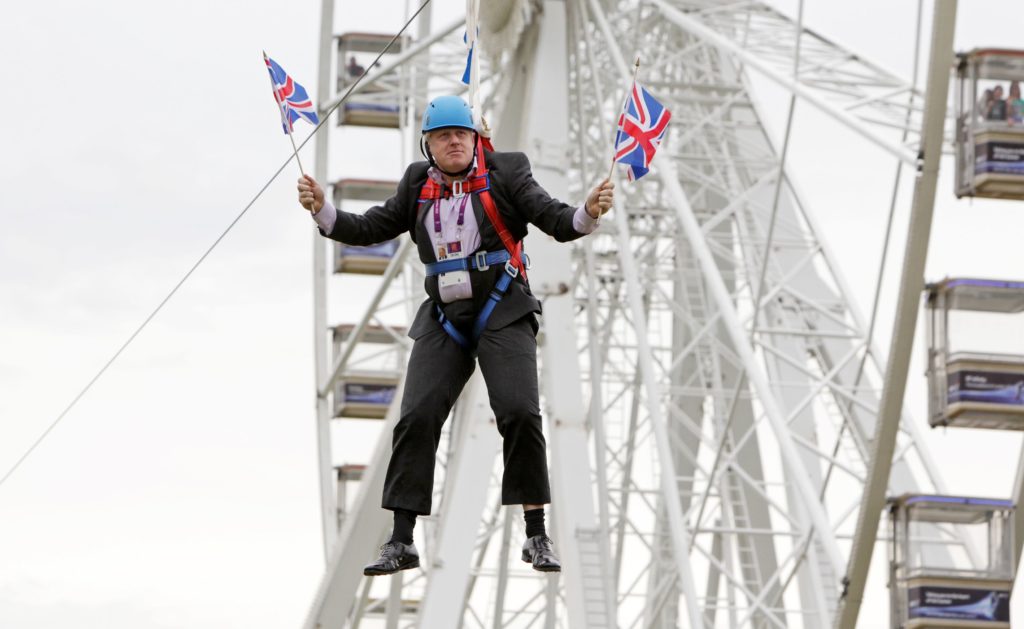
As the mayor of London, a position he held for eight years until 2016, Johnson was lampooned by the media for his buffoonery. In one incident, he was wearing a helmet and waving British flags when he got stuck on a zip line that was supposed to be his dramatic entrance into the Olympic Park that year.

Also in ’16, his first year as foreign minister, Johnson was ridiculed for texting on his cellphone throughout Prime Minister Theresa May’s speech at the U.N. General Assembly in New York.

Those are just a couple examples of the clumsy but chummy style that has allowed Johnson, a 55-year-old journalist turned politician, to rise through the U.K.’s political ranks while many of his rivals underestimate him.

He won London’s mayoral race twice, even as a Conservative running in a liberal stronghold. On Tuesday, Johnson clinched 66 percent of the vote in the party’s election to determine a successor to May, who failed to deliver Britain’s departure from the European Union. Since Conservatives won the last national balloting in 2017, they will stay in power and Johnson will become prime minister.

While the British political establishment “operated within the structures of 20th-century political discourse, Johnson worked on his material like a standup preparing for a Netflix special,” Matthew d’Ancona, a previous editor in chief of The Spectator, wrote Monday.
For British Jews, Johnson is a mixed bag because of his record on Israel, his own Jewish roots and his apparent disregard for how many Britons expect senior politicians to speak about religious minorities.

1. Brexit on one side, Labour on the other.
Unlike May, Johnson is a hardliner and longtime supporter of Brexit. In other words, he has committed himself to getting the United Kingdom out of the European Union no matter what, with or without a deal with EU officials (May had desperately tried to strike a deal).
This is risky because a no-deal Brexit would likely slow down the economy, which in turn could increase the chances that Labour Party leader Jeremy Corbyn is elected after Johnson. Many British Jews believe that this would pose an existential threat to their community because of the explosion of anti-Semitism in Labour since Corbyn became its leader in 2015.

2. Boris feels Jewish (sometimes).
Johnson’s maternal great-grandfather, Elias Avery Lowe, was a Moscow-born Jew born to a textile merchant. Johnson confirmed this in a 2007 interview for the Jewish Chronicle.
“I feel Jewish when I feel the Jewish people are threatened or under attack, that’s when it sort of comes out,” Johnson said. “When I suddenly get a whiff of anti-Semitism, it’s then that you feel angry and protective.”

3. Still, Jews had complaints when he was mayor …
Throughout his tenure as London mayor, Johnson consistently ignored pleas from Jewish groups to ban the infamous pro-Palestinian Al Quds Day marches through London — events that have featured calls to kill Jews along with other anti-Semitic language and imagery. It was only last year that London police said they would intervene at the event to stop Hezbollah flags from flying. The move came with Sadiq Khan, a Labour politician and practicing Muslim, as mayor.

In 2014, Johnson called Israel’s attack on Hamas in Gaza “disproportionate,” and “ugly and tragic,” adding that “it will not do Israel any good in the long run.” He apparently tried to balance those remarks in the run-up to elections in the Conservative Party, which has seen a surge in support by Jews who have left Labour over its anti-Semitism problem, by calling himself a “passionate Zionist” who “loves the great country” of Israel. British politicians rarely call themselves “Zionists,” partly because of the actions of Zionist militants against British targets in prestate Israel.

“It’s totally unacceptable that innocent Israeli civilians should face the threat of rocket fire and bombardment from Gaza,” he said in a July 10 interview with the Jewish News.

4. … and when he was foreign secretary.
Despite a slew of pro-Israel statements and actions, Johnson is widely seen as responsible for getting the United Kingdom to help draft a U.N. Security Council resolution against Israel’s settlement policy. British Jewish leaders called the British role in the process a “disgrace,” and other supporters of the Jewish state described it as a betrayal.
Johnson has also been a supporter of the nuclear deal reached by Iran, the U.K., the U.S. and other world powers (the United States has since withdrawn from the agreement).

Israel and its supporters are not big fans of the pact, which they say will allow the Islamic Republic to build a nuclear arsenal at close proximity to Israel.

However, Johnson was the U.K.’s first foreign secretary to pledge to vote against Item 7, a permanent U.N. Human Rights Council agenda item that singles out Israel for criticism, the pro-Israel group BICOM noted. He has criticized U.N. bias against Israel, calling it “disproportionate and damaging to the cause of peace.”

5. Call him the British Trump.
In the early days of Donald Trump’s presidency, Johnson spoke dismissively about the reality TV star turned politician, but the two have since built a positive relationship. On Tuesday, for example, Trump called Johnson a “good man” who is tough and smart.
Like Trump, Johnson has excited his right-wing base with derogatory statements about Muslims, which is making some British Jews uncomfortable.
Last year, Johnson wrote a Daily Telegraph op-ed that mocked veiled Muslim women, saying that it’s “absolutely ridiculous that people should choose to go around looking like letter boxes.”

The chairman of the Jewish Leadership Council, Jonathan Goldstein, wrote on Twitter in response.

“Boris Johnson’s comments totally disgraceful,” the tweet said. “Extraordinary to think he was Foreign secretary only a few weeks ago.”

Edie Friedman, chief executive of the Jewish Council for Racial Equality, condemned what she called Johnson’s “dog-whistle racism.”

On Tuesday, the organized Jewish community struck a more cordial tone, congratulating Johnson on the nomination and recalling its “long and positive relationship” with him “as both Mayor of London and Foreign Secretary.” The Board of Deputies of British Jews “look[s] forward to this continuing as he enters Downing Street,” said Marie van der Zyl, the board’s president.

The more left-leaning Liberal Judaism movement made a shorter statement on Twitter that reflected the discomfort of many of the group’s constituents with Johnson.
The group “looks forward to working with @BorisJohnson, the new Prime Minister, as we have with Prime Ministers over the last decade,” the movement tweeted.

Five Jewish Things to Know About Boris Johnson Read More »

Tlaib Announces Opposition to Anti-BDS Resolution, Citing American Boycotts of Nazi Germany

Rep. Rashida Tlaib (D-Mich.) cited American boycotts of Nazi Germany during World War II in a July 23 speech at the House of Representatives when she announced her opposition to the anti-boycott, divestment and sanctions (BDS) resolution.

Tlaib was speaking out against H.R. 246, the anti-BDS resolution that the House will be voting on later on July 23. Tlaib said that the boycotts are “rooted in the fabric of our country,” citing the 1773 Boston Tea Party and the civil rights boycotts during the 1950s and 60s.

“Some of this country’s most important advances in racial equality and equity and worker’s rights has been achieved through collective action protected by our Constitution,” Tlaib said. “Americans of conscience have a long and proud history of participating in boycotts specifically to advocate for human rights abroad. Americans boycotted Nazi Germany in response to dehumanization, imprisonment and genocide of Jewish people.”

Tlaib then called the anti-BDS resolution a threat to free speech.

“It sets a dangerous precedent because it attempts to delegitimize certain people’s political speech and to send a message that our government can and will take action against speech it doesn’t like,” Tlaib said.

Rep. Ilhan Omar (D-Minn.) introduced a resolution on July 16 that defended the right to boycott as the impetus for supporting BDS; that resolution made similar comparisons to the Boston Tea Party and boycotts of Nazi Germany. 

Rep. Brad Schneider (D-Ill.), one of the co-sponsors of the anti-BDS resolution, told CNN’s Dana Bash that the BDS movement is anti-Semitic.

“It denies Israel’s connection to the land going back to 1948,” Schneider said.

He added that the BDS movement tries to foster a “hostile environment for supporters of Israel on college campuses to make it difficult for companies that are doing business with Israel around the world. That is by its very nature anti-Semitic.”

However, Schneider wouldn’t say that his pro-BDS colleagues like Tlaib are anti-Semitic.

“I believe they have [an] understanding of what they believe the movement does without understanding the impact of it,” Schneider said.

Tlaib Announces Opposition to Anti-BDS Resolution, Citing American Boycotts of Nazi Germany Read More »

JWed Announces Contest to Celebrate 3,300 Married Couples

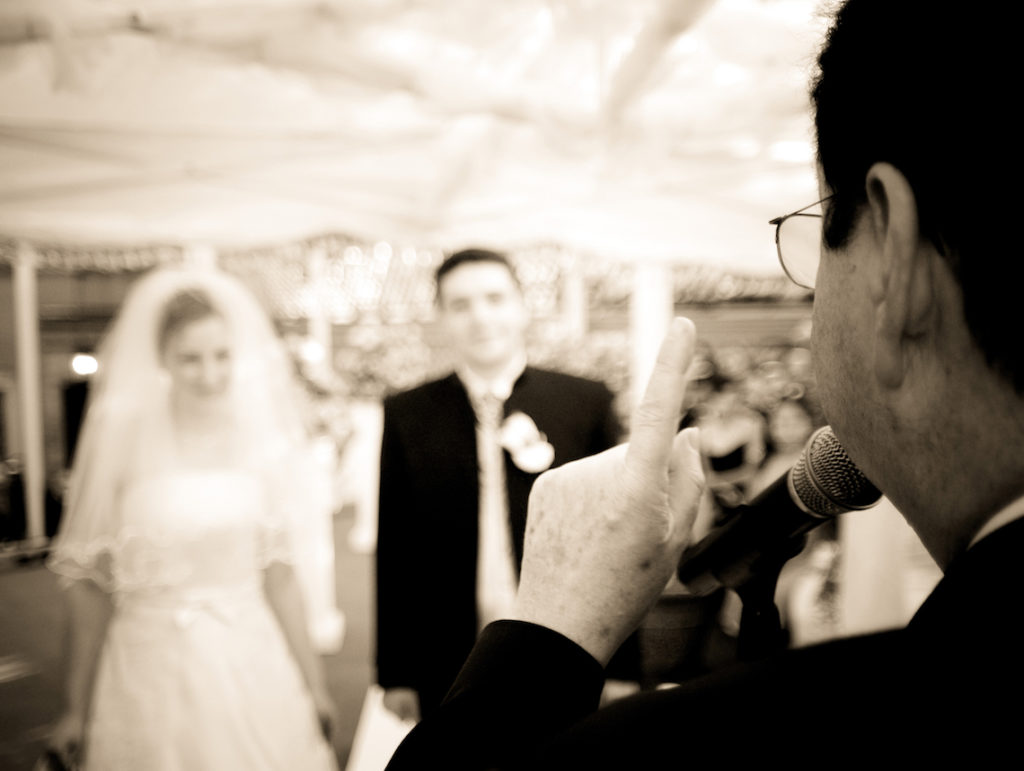
In celebration of Jewish dating site JWed’s 3,300th marriage, it is giving away two tickets to Israel to a couple who met through the website. Couples are encouraged to submit their stories and photos for a chance to win the contest. 
JWed allows Jewish singles to customize their profiles to find matches with similar core values and religious affiliation.
 
JWed staff will raffle the best stories for the two round-trip plane tickets to Israel of up to $2000 in value. 
 
“We are excited to bring the JWed family together to celebrate this milestone,” CEO Ben Rabizadeh told the Journal in a statement. “At a time of exciting growth for our company, we think it is appropriate to celebrate those who found their chosen one through our platform, which has been a pioneer in online dating for more than a decade.” 
JWed launched in 2001, originally named Frumster, an Orthodox dating website. JWed said it was later renamed in 2012 to reach the broader Jewish community.
A firewall screens every profile so users only see relevant suggestions. Through the website, users can directly contact other users of their choice. For more information on JWed or the contest, visit the website. 

JWed Announces Contest to Celebrate 3,300 Married Couples Read More »

Anti-Semitic Graffiti Found in Santa Monica

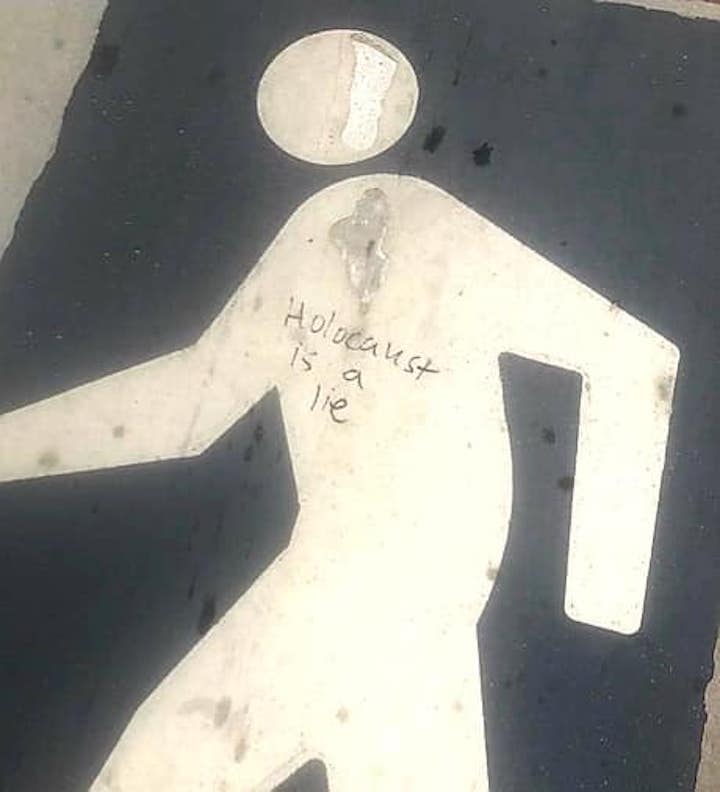
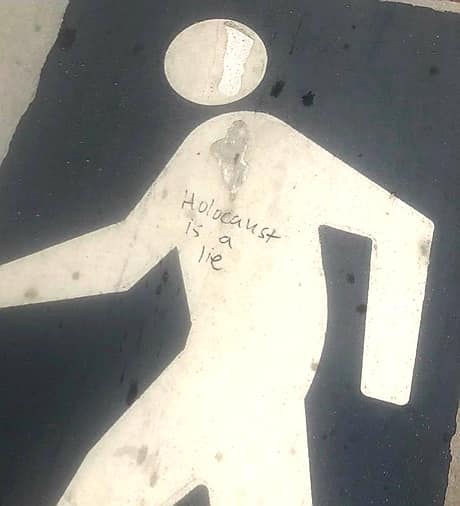
Anti-Semitic graffiti calling the Holocaust “a lie” and claiming that Jews have “been kicked out of 109 countries” was discovered on a pedestrian bridge in Santa Monica on July 20.

American Jewish Committee (AJC) Los Angeles Regional Office Assistant Director Siamak Kordestani told the Journal in a phone interview that an AJC member who didn’t wish to be identified discovered the graffiti and sent photos of it to the AJC.

The words, “Why have Jews been kicked out of 109 countries?” and “Nationalism or extinction” were discovered on the pedestrian bridge on the corner of Idaho Avenue and Pacific Coast Highway and the “Holocaust is a lie” was written on the bicycle path just north of the bridge.

“Both are Santa Monica public property,” Kordestani said.

Photo courtesy of American Jewish Committee Los Angeles.

AJC Los Angeles filed a police report with the Santa Monica Police Department on July 22 and notified the Santa Monica City Council. Santa Monica Mayor Pro Tempore Terry O’ Day told the Journal in an email that the city “acted swiftly to remove the graffiti and is attempting to determine if this is a pattern or a random act.”

California State Assemblyman Richard Bloom (D-Santa Monica) said in a July 20 Facebook comment, “Virulent hate speech is on the rise. We must call it out whenever and wherever we see it.”

Similar graffiti was also found along the pedestrian bridge on July 17. According to CBS Los Angeles, a swastika and the words “Holocaust is a lie” were scrawled along the bridge. The City of Santa Monica painted over epithet and police didn’t find any further vandalism nearby at the time.

Anti-Defamation League Los Angeles Regional Director Amanda Susskind told CBS Los Angeles on July 17 that such graffiti is “a function of events, like Charlottesville, that just unleashed a lot of people to come out from behind the shadows of the internet and out into [the] public. There’s less shame.”

Susskind told the Journal it wasn’t yet clear if the July 17 graffiti and the July 20 graffiti were related, but if they are, she said, “It is even more of a heightened issue for us.”

She added that the Santa Monica pedestrian bridge “is a high visibility spot, which compounds the insult and injury that you see in the messages.”

Kordestani said AJC Los Angeles is “very concerned” about the July 20 graffiti given that the Hebrew Discovery Center synagogue in Woodland Hills had white paint smeared on it on July 14 and that anti-Semitic graffiti was found on Mishkan Torah Valley Community Kollel in Tarzana on January 29.

“Seeing this in Santa Monica and a number of other incidents in L.A., the L.A. area, and Southern California in general – not to mention of course the [Chabad of] Poway shooting – we are very concerned about the uptick in anti-Semitic incidents not just globally but locally,” Kordestani said.

A California Department of Justice report released on July 2 found that there was a 21 percent increase in anti-Semitic hate crimes in California in 2018 compared with 2017.

Susskind told CBS Los Angeles that Holocaust education is necessary to counteract such anti-Semitic graffiti.

“There are still those of us alive — my grandmother survived Auschwitz, my father was rescued on the kindertransport to London — so we’re still around,” Susskind said. “We can still tell these stories in a personal way.”

Anti-Semitic Graffiti Found in Santa Monica Read More »

Americans Don’t Know Much About Judaism but Love the Jews, Survey Says

(JTA) — U.S. Jews know more about religion in general than their non-Jewish neighbors, a new survey shows.

Americans who are not Jewish, meanwhile, don’t know a lot about Judaism. But they like Jews more than any other religious group. And they think there are more Jews in the country than there actually are. The more non-Jews know about Jews, the more they like them.

The data comes out of a new survey on what Americans know about religion published Tuesday by the Pew Research Center. The survey asked a group of diverse Americans a set of 32 questions about religion, ranging from knowledge of the Bible and Christianity to knowledge of Judaism and other religions.

Ten of the questions related to Judaism in some way: four asked directly about Jewish history, practice and texts; five were about the Hebrew Bible; and one was about the size of America’s Jewish population.

The survey was conducted Feb. 4-19 and included a total of nearly 11,000 respondents. The margin of error for the whole group was 1.5 percent. The margin of error for the Jewish sample was 8.6 percent.

Here are three takeaways from the survey.

Americans don’t know a lot about Judaism. 

Out of four questions on Judaism, non-Jewish Americans got a dismal score: They averaged less than one out of four correct. Besides Jews themselves, atheists did the best on the Jewish questions, averaging 1.3 correct answers.

None of the questions on Judaism received a majority of correct answers:

  • 29 percent of respondents knew that the Jewish Sabbath (Shabbat) begins on Friday night.
  • 27 percent knew Kabbalah (Jewish mysticism) was associated with Judaism.
  • 24 percent knew that Rosh Hashanah is the Jewish New Year.
  • 13 percent knew Maimonides was a Jewish scholar.

Older Americans did better on all of these questions than the youth. Forty percent of those 65 and older, for example, knew that the Jewish Sabbath begins on Friday night, compared to 18 percent of respondents aged 18 to 29.

Jews did much better on these questions than non-Jews, averaging 3.1 correct out of four. Nearly 90 percent knew that Shabbat begins on Friday night, almost 80 percent knew Kabbalah is Jewish, 82 percent knew Rosh Hashanah is the Jewish New Year and 58 percent knew that Maimonides was Jewish.

Americans as a whole also didn’t know how many Jews live in the country. Fewer than one in five knew that Jews are less than 5 percent of Americans. A quarter thought Jews were more than 5 percent of Americans, and the rest of the respondents didn’t know.

But Jews know a lot about religion.

Jews didn’t only outscore their non-Jewish counterparts when it came to Jewish knowledge. They outscored everyone when it came to general religious knowledge, too.

Besides the questions on Jewish practice, history and text, seven questions were about Christianity, nine were about the Bible, including the New Testament, nine were about “world religions,” two were about atheism and agnosticism, and two were about religion in the United States.

Jews were the only religiously affiliated group to get a majority of the questions right. On average, Jews got 18.7 questions right out of 32, as opposed to a national average of 14.2. Atheists and agnostics also got a majority of questions right, but the closest religiously affiliated group was evangelical Christians, who got an average of 15.5 correct.

Jews scored highest, the survey said, “even after controlling for levels of education and other key demographic characteristics such as race, age and gender.”

Jews also scored high on world religions and on knowledge of atheism and agnosticism. Ninety percent, for example, knew that atheists don’t believe in God. More than 85 percent knew that Ramadan is an Islamic holy month and that Mecca is an Islamic holy city.

They were above average when it came to knowledge of the Bible (including the New Testament) and knowledge of Christianity. On the question of who saved the Jews from murder by appealing to the king (an occasion marked by the Jewish holiday of Purim), 66 percent of Jews correctly responded “Esther,” as opposed to 28 percent of Americans as a whole.

The more Americans know Jews, the more they like them.

As other surveys have shown, Americans tend to have warm feelings toward Jews. Asked to rate religious groups on a thermometer scale, from 1 to 100, Jews got an average rating of 63, the highest of any group. Forty-one percent rated Jews at 67 or higher, while 8 percent rated Jews 33 or lower.

Atheists and Muslims scored lowest, both with an average thermometer score of 49.

The more Americans knew about religion in general, and Judaism in particular, the more they liked Jews. Those who answered 25 or more questions correctly, for example, gave Jews an average rating of 70.

And those who know Jews personally also rated them higher. The respondents who know Jews gave Jews an average rating of 66, versus 56 from those who do not know any Jews.

Americans Don’t Know Much About Judaism but Love the Jews, Survey Says Read More »

My Adventures at Beaches Turks and Caicos continue

Beaches Turks PanoMore of my adventures at Beaches Turks and Caicos!
See PART ONE videos 1-4, PART TWO videos 5-8 
and below for videos 9 -12
click here for
 all my videos of my adventures at Beaches Resorts
Video: Sesame Street Show at Beaches Turks and Caicos

Watch your Sesame Street friends in a live show at Beaches Turks and Caicos.
Grover tries to get Cookie Monster to talk about something besides, “EAT COOKIES!”

Elmo learns that: “we don’t have to all do the same thing. Being different is a big part of being friends!”

Cooking at KImono's Beaches Turks and Caicos

Video: I love diving at Beaches Turks and Caicos!

Beaches Turks and Caicos diving April 30 2019
Can you understand me underwater?
I am saying: “We just saw three sharks! It is so awesome here. You should be diving at Turks and Caicos!”
I loved my stay at Beaches Turks and Caicos and did nine dives in four day!

On April 30, we did two dives in Grace Bay at Cathedral and Piranha Cove. We saw three sharks, barracuda, a giant crab and a giant lobster! I found nudibranchs and a couple of lion fish.

Dolphins on the way to North Point

Lancelot, Lyndon and Danny were our dive crew and as usual the dive team was fantastic! We found a nurse shark, more sharks in the distance and more barracuda. I just love diving with Beaches at Turks and Caicos!

Video: Beaches Turks and Caicos: Let’s talk about the BUTLERS!

My butlers, Jomo and Harrold, took great care of me!I had afternoon snacks, late night treats and many towel animal creations! They made my meal reservations and even walked me to the restaurants! It was lovely to be so well taken care of!When Harrold brought me a rose to dinner at Sky Restaurant, I felt like a Bachelorette on the TV show! Thank you Beaches Turks and Caicos for an amazing experience!

I loved my stay at Beaches Turks and Caicos
Video: Thank you Beaches Turks and Caicos! I loved the diving and my whole stay!

Are you ready to get Scuba Certified? Beaches and Sandals resorts are ready for you!

Want to know more about their program? I am going to meet you UNDERWATER!

You do not even need to bring your own gear!
See you at Beaches Turks and Caicos!

Beaches Turks and Caicos

Read my article in TODAY.com about the diving program at Beaches Resorts:
Growing Up Diving: A Childhood Passion Becomes A Career.”

Today.com Diving article Beaches Resorts

See PART ONE videos 1-4, PART TWO videos 5-8 
click here for
 all my videos of my adventures at Beaches Resorts


Advice-from-OCEAN


My Adventures at Beaches Turks and Caicos continue Read More »