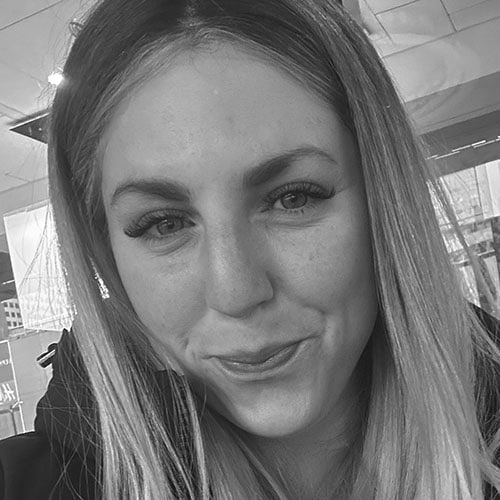
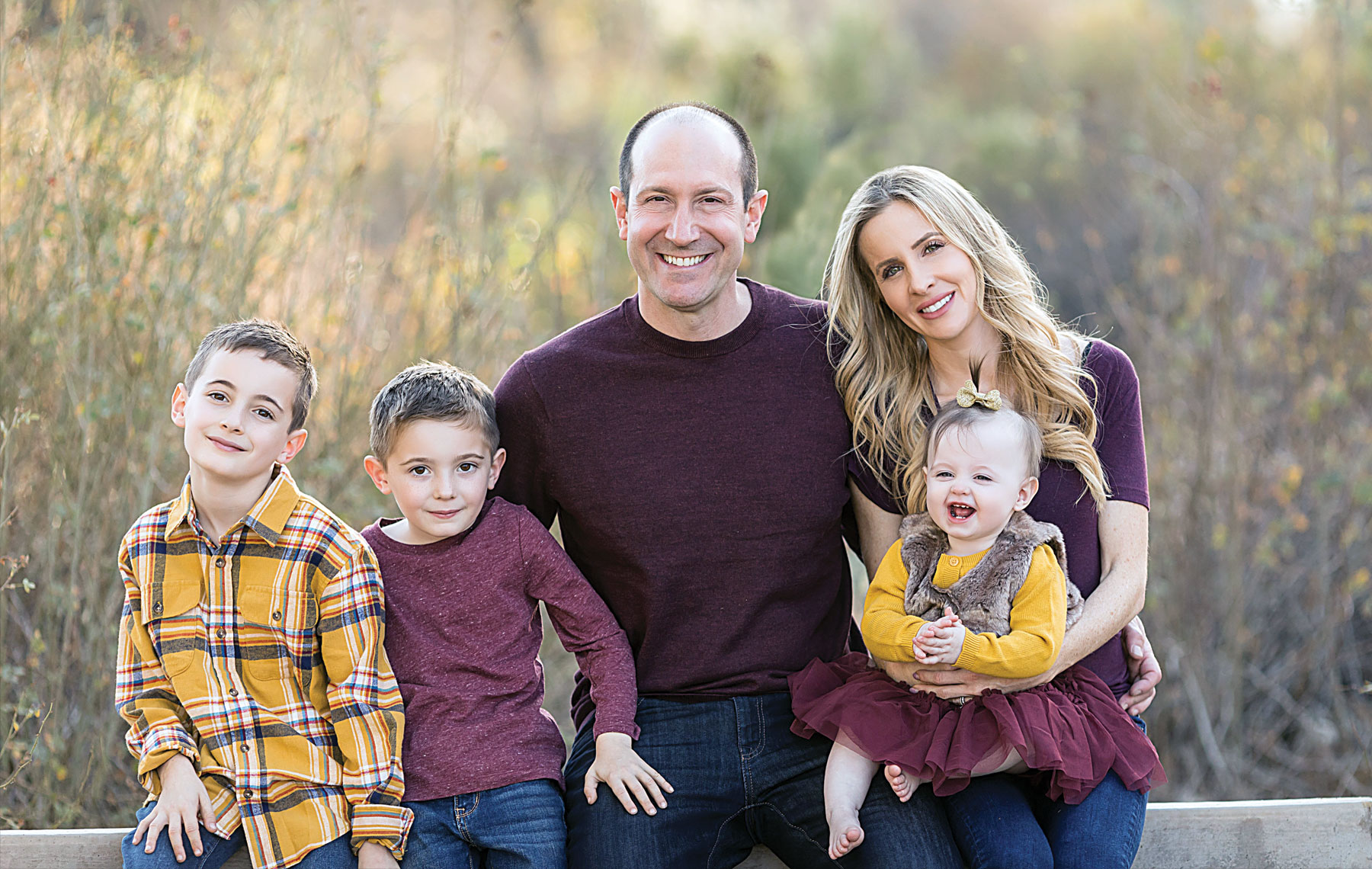
Encino resident Laura Osman was always curious about her ancestry. She knew that she was Jewish, but she wondered where her blond hair came from. So, she ordered a 23andMe test in early 2018. When it arrived, she spit into the tube, and checked the optional box to have genetic testing done, and put it in the mail.
Weeks later, Osman, 37, was checking her email, when a message from 23andMe popped up. It said she was 99.9 percent Ashkenazi Jewish, which didn’t come as a surprise. But as she scrolled down, she saw some startling additional news: “BRCA1 Positive. Consult With Doctor.”
Immediately, Osman made an appointment with her OB/GYN and got tested that afternoon. Seven days later, the doctor confirmed that she was, in fact, BRCA1 positive.
“It was just shocking, because the way I found out was by clicking on an email,” Osman said in a phone interview. “It caught me completely off guard. I’d considered myself low risk for breast cancer and hadn’t even thought about ovarian cancer.”
The mother of three small children, Osman had never had an ovarian cancer screening or even a mammogram. According to Penn Medicine’s Abramson Cancer Center, an individual can get tested for BRCA1 and BRCA2 mutations at 18, but there isn’t much that doctors can do even if someone tests positive. The cancer risks usually manifest when people are in their late 20s and early 30s.
According to the Abramson Cancer Center, if women test positive for BRCA1 or BRCA2 mutations at age 25, they can start doing breast exams, and having mammograms and breast MRIs. If Osman had discovered the genetic mutation at an earlier age, she might have been able to take the same steps.
Because this was no longer an option, Osman knew she had to make some serious decisions to ensure she was going to be healthy. After all, according to Cancer.gov, 72 percent of women who inherit a BRCA1 mutation will get breast cancer by the time they turn 80. Additionally, about 44 percent of women who have the BRCA1 mutation will get ovarian cancer by 80.
After discovering this information, Osman had a breast and ovarian cancer screening, which came back clear. Then, five weeks later, she underwent surgery to remove her fallopian tubes and one ovary. When she turns 40, she said she will need to remove the other ovary. She also had a double mastectomy this past July, as a final precaution.
“It was a difficult time, [going through the double mastectomy],” she said. “I tried not to feel sorry for myself because I was happy I didn’t have cancer. That was my immediate concern, because I hadn’t gotten early screenings but I was really scared and nervous to do the surgery.”
While preparing for her mastectomy, Osman discovered Sharsheret, a Jewish breast cancer organization that provides support to women and men. It offers one-on-one peer support and access to genetic counselors and mental health professionals for people dealing with breast cancer, BRCA1 and BRCA2 diagnoses.
Sharsheret introduced Osman to a woman who had undergone the same surgery. She gave Osman recovery tips, including what kind of pain to expect and what type of button-down shirt to wear after the procedure.
“The recovery from a mastectomy is complicated, because you can’t drive, and you don’t know how you’re going to feel,” Osman said. “I couldn’t do simple things like open my fridge for several weeks. You have to really plan ahead and know how the recovery is going to go. When you plan for it, it’s manageable.”
Today, Osman said she is feeling great, even though the first six weeks were difficult. She’s able to run again, which she loves, as well as lift her daughter. She is still involved with Sharsheret as a peer supporter to others. “When you do the surgery, it’s super important to connect with women who have gone through it,” she said. “They can talk you through it and tell you what emotions are tied to it.”
Osman also discovered that the BRCA1 mutation came through her father’s side. He had prostate cancer, but the mutation went undetected in him. “Jewish women need to take their own initiative with talking to their doctors about genetic counseling and getting tested,” she said.
“It was just a random check on that box that saved my life. It’s incredible.”
— Laura Osman
This is especially important in the Jewish community because, according to Sharsheret, 1 in 40 Ashkenazi Jewish men and women carry a BRCA gene mutation. That’s more than 10 times the rate of the general population. Also, Sephardic Jews may be genetically predisposed to hereditary ovarian and breast cancer.
If men and women throughout the United States are interested in genetic counseling, Sharsheret can set them up with a consultation, according to Jenna Fields, Sharsheret’s California regional director. “Generally speaking, the medical profession recommends pre-counseling for genetic testing,” she said.
Additionally, there are Jewish genetic testing organizations, such as JScreen and Dor Yeshorim, where people can get tested. Men and women may want to consider other resources that are available during October, which is National Breast Cancer Awareness Month, as well as year round. The National Breast Cancer Foundation, Inc. provides free diagnostic breast care services and mammograms to women in need, and Komen Affiliates offers breast health information throughout the country.
Looking forward, Osman said she will continue volunteering with Sharsheret and, when her daughter turns 20, she’s going to get her tested. “I’m really happy I went through the surgery, even though I was scared,” she said. “I feel great and I look great. It’s amazing finding the right team of surgeons that believed in me. It can be a really positive experience when done correctly with support.”
She continued, “I’m just so grateful that I caught it when I did, and it was out of luck really. It was just a random check on that box that saved my life. It’s incredible.”