Several groups and University of Michigan students are protesting the university’s decision to discipline Professor John Cheney-Lippold for refusing to write a letter of recommendation for a student to study abroad in Israel.
According to Middle East Eye, students marched and chanted pro-Palestinian slogans such as “no justice, no peace” and handed letters to University of Michigan President Mark Schlissel’s and Social Science Dean Elizabeth Cole’s offices decrying the university’s discipline of Cheney-Lippold. The students are threatening to host a sit-in at Schlissel’s floor if he doesn’t respond to their letter in three-to-five days.
Additionally, groups such as the American Association of University Professors (AAUP), Jewish Voice for Peace (JVP) and the Middle East Studies Association of North America (MESA) called the university’s actions against Cheney-Lippold a violation of academic freedom.
“We regard your decision to arbitrarily impose disciplinary sanctions on Professor Cheney-Lippold, without affording him any opportunity to explain or justify his action in a fair hearing process with faculty participation, as having violated those principles and that right, as well as your university’s ostensible commitment to faculty governance,” MESA President Judith Tucker told the university in a letter.
As the Journal has reported, Cheney-Lippold will not be eligible for a salary increase this year and will be unable to obtain sabbatical credits until 2020.
However, some pro-Israel groups, such as The Lawfare Project, have criticized the university for not going far enough in their handling of recent controversies.
The Lawfare Project noted in a recent memo to Schlissel that the university has yet to discipline teaching assistant Lucy Peterson, who also refused to write a letter of recommendation for a student to study abroad in Israel and wrote an op-ed defending her actions, and was dismissive of a slide in a required lecture that compared Israeli Prime Minister Benjamin Netanyahu to Adolf Hitler.
Additionally, the memo called on the university to investigate their academic personnel to ensure they aren’t engaging in academic boycotts against Israel and to adopt the International Holocaust Remembrance Alliance (IHRA) definition of anti-Semitism.
Irving Ginsberg, a Farmington Hills resident, said he felt the letter was an example of anti-Semitism on campus. He said he felt the University had failed to sufficiently punish Cheney-Lippold, and on-campus discrimination continued to occur because of the insufficient response.
“The administration and President Schlissel only acted (weakly) to Professor Lippold’s violation because of widespread national criticism, in contrast to the quick and decisive actions when other minority groups are so treated,” Ginsberg said. “With regard to Lippold’s behavior, only one regent called it what it was, ‘anti-Semitism’ … Not one other regent, nor President Schlissel, nor the administration did the same.”
Another speaker on the issue was West Bloomfield resident Ed Kohl, who said he disapproved of Cheney-Lippold’s actions, but was more appreciative of the stance taken by University President Mark Schlissel and the University. In his speech, he commended past efforts by the University to stamp out anti-Semitism, and said he knew the University would respond adequately on this occasion as well.
“Anti-Jewish bias has a long history in American universities,” Kohl said. “During that history, this University has been a beacon of enlightenment that has well-served Jews and the University itself … The latest outrage is supplied by recommendation-denying graduate instructor Lucy Peterson. Her job is not the pursuit of truth — she proclaims — but is what she called ‘social justice pedagogy.’ Social justice pedagogy is not education. It is blatant propaganda, ideology and indoctrination.”
Schlissel has stated that the university is opposed to all academic boycotts against Israel in an apology to Jewish students.
Sharon Naim sits behind her white lacquer desk embossed with crocodile skin in her office on Wilshire Boulevard in Beverly Hills. As she overlooks the Hollywood sign, she seems completely unbothered by the fact that her telephone won’t stop ringing, and neither will her Skype notifications. Today she’s reviewing one of many offers for a Merger & Acquisition of her company, which resides in a highly competitive field: online education. And in a few hours, she will be picking up her three young kids from school.
Naim does everything society tells women they cannot do. She is a mother, a wife, an attorney, and an entrepreneur—simultaneously. After graduating from UCLA’s School of Law, she founded the first online traffic school in California, and then went on to launch the first online driver education course for pre-licensed teens.
“My passion was education and business from the start,” she says. In fact, while she was in law school, she worked for TestMasters, one of the nation’s largest test preparation companies specializing in the LSAT, GMAT, GRE and SAT. Naim was integral in spearheading the expansion of the company, making its California-based classes available in all states, several countries and online. It was during her time at TestMasters that she founded her company. Today, CyberActive’s classes are offered in over 25 states.
“The CEO of TestMasters, Robin Singh believed in me,” Naim says. After collaborating on many projects together, Singh gave Naim a small room akin to a storage space with a desk, phone line and computer and let her use all of his office resources and employees to get her own company started. “His mentorship and support was invaluable, as a business partner, and my success is a reflection of his amazing spirit, generosity and support.”
When Naim first started working on her own venture, traffic school and driver education were not yet sanctioned online, so she worked directly with lawmakers and judges in over 20 states to make both traffic school driver education more accessible. Today, CyberActive offers courses online and via apps, directly to consumers and through contracts, it maintains with school districts, states, municipalities, counties, courts, and private business affiliates.
CyberActive stands out because they are constantly working to keep the courses interactive, adaptive, and in alignment with the preferences of individual users.
“When we started, our courses catered to Generation X by utilizing the latest in gamification techniques and leveraging live simulation scenarios in an adaptive learning environment,” Naim says. “Our interactive experiences had to be intuitive, engaging, and straightforward. Our customers demanded it.”
But their most recent initiative targets a different generation, and offers a series of interactive focus groups with Generation-Z audiences across the country. “We’re developing new online teaching approaches that utilize the language, expectations, and needs of the new digital generation,” she says. “This means creating mobile apps and tailoring our program for increasingly smaller devices and catering to those on-the-go.”
Naim’s success seems unprecedented. But of course, like any other person who has earned this level of success, she experienced challenges along the way.
“I wish someone had told me to bring in equity partners early to grow the company faster,” she says. “I was always so busy growing the company organically that many of the roles fell on me and a few of our top employees. In retrospect, I should have kept my focus on my expertise and passion: creating excellent courses and getting them approved rather than on areas such as handling human resources.”
Surrounding yourself with smart and talented people makes it easier to find and keep other smart and talented people, Naim says. “It’s quite challenging to build a smart team. To that end, I wish someone told me early on to structure my growing business around talented people I can depend upon, and not try to shoulder so much of the burden alone with a few top employees.”
She says this would have made growing the company a lot easier, but that in retrospect, it taught her many valuable lessons about business ownership. “I know how to wear every hat at my company,” Naim says.
Like other tech entrepreneurs, Naim is meticulous when it comes to hiring great employees and software developers as technology rapidly evolves. “Finding and keeping the best engineers is a challenge, as those types of employees are in high demand. The best people are incredibly hard to come by, and recognizing that talent is a frequent challenge for any business owner,” she says.
Another challenge she faces is making sure their company stays ahead of the curve. “Pioneering the concept of online traffic school and driver education industry means you have to solve every problem with careful analysis and attention to detail,” she says. “In fact, my company has solved such problems for states that chose my company exclusively to offer to their constituents traffic school”
“There was no model to compare my company against. We took the first steps in every new development and we had to think of everything such as how to stop people from advancing to quickly, deter cheating and ensuring they were reading the material.”
Today, 7 million customers later, CyberActive has one of the most comprehensive software platforms because they seamlessly utilize their platform to create other online certification courses.
Perhaps that’s why Naim’s company won government bids over other much larger and well-funded companies. “We win these bids because of the quality of our product and the competence of our executive team,” Naim says. “We were also chosen by independent school districts who offer our driver education courses to their students as part of their curriculum.”
Among several triumphs, CyberActive was chosen by the United States Army to provide online courses to their military personnel. They also work with the Educare Foundation to make education accessible to all students, and empower them to reach their highest potential.
The popularity of CyberActive’s course content is a direct result of a number of factors. The courses are engaging, the material is delivered in a fun way, and their interactive courses are adaptive to the learning capabilities and speed of each individual. “We know that the users of our product come from all walks of life, and we are responsive to the needs of our students.”
In fact, CyberActive gives free courses to students from underprivileged backgrounds that do not have equal access to education. Naim—who lost her mother to cancer—frequently donates to the UCLA cancer research fund, and, participates in local D.A.R.E. initiatives for teenagers.
David Lonner is a Hollywood mogul who is also an unwavering and outspoken supporter of Israel. A committed philanthropist, he’s a former and founding board member of the Phase One Cancer Foundation and a former board member of Pardes and the Entertainment Industry Foundation. Today he sits on the board of Yemin Orde Youth Village in Israel.
In Tinseltown, though, he’s best known as the founder of the Oasis Media Group, where he represents writers, directors and producers. He began his career at ICM, moving on to Creative Artists Agency, Endeavor and William Morris. He is responsible for discovering and nurturing the careers of many writers and directors, including J.J. Abrams, Alexander Payne, Brad Bird, Jon Turteltaub, and the late Audrey Wells, who died from cancer on Oct. 4, one day shy of the opening of her best-reviewed movie, “The Hate U Give.”
I spoke with Lonner about his love of Israel, his long-standing career in the entertainment industry, and the passing of Wells.
Howard Rosenman: I am so sorry about Audrey’s passing. What a great talent she was, and you single-handedly nurtured her extremely successful career from the beginning.
David Lonner: Audrey was a powerful force in my professional life. She hung on for way longer than any doctor predicted and she accomplished so much while she was struggling with her illness. “The Hate U Give” is a fitting epitaph as it speaks to everything she was about — [a] loving parent and powerful social action facilitator.
HR: You worked with all the major Hollywood agencies. Did that give you a competitive advantage when you started Oasis?
“Israel is a place that has always inspired me creatively, spiritually and professionally.
As I like to say when I’m there: ‘I’m going to the Fortress of Solitude for Jedi training.’ ”
DL: I was fortunate to have had the opportunity to work at William Morris, CAA, ICM, Endeavor. Since I was in the trenches with all of them, agents are my closest allies and contacts. I took pride as an agent who didn’t poach. I built my business from the ground up. The predatory nature of the agency business wore me down and I wanted to get back to what I love: artists and stories. Oasis is what I wanted to manifest — a place of peace and tranquility to do one’s best work.
HR: You have discovered and represented many of today’s iconic writers and directors. Can you share any of those stories?
DL: My goal, when I became an agent, was to discover my generation of great filmmakers. I scouted the student film schools, and read and watched everything I could get my hands on. Alexander Payne’s student film, “The Passion of Martin” made the hairs on the back of my neck stand up and caused me to lose sleep because of the excitement that I felt in discovering a new and fresh voice.
J.J. Abrams (Jeffrey in those days), was working as an intern for a television production company. A friend called me up and said that this intern had gotten a deal to write a script at Disney and that he needed an agent. I told him that he shouldn’t let anyone represent him until they understand his voice.
Jon Turteltaub had made a film called “Three Ninjas” that Disney picked up and there was an optimism and sweetness that was undeniable. Jon has this unique ability to make his characters funny and loveable — like him. I put him into the film “Cool Runnings” and he has been batting almost a thousand since.
HR: You are part of a handful of vocal vociferous Zionists in Hollywood. How did that happen?
DL: I grew up in a warm, Conservative Jewish home. My father escaped Germany at the age of 5 and my mother was born in Israel. I rebelled against my religious upbringing and was known in my family as the “Shabbos goy” because I would start driving on Shabbat and I couldn’t wait to taste a cheeseburger.
However, it was the semester that I spent at Tel Aviv University where I had an epiphany. The great professor Itamar Rabinovich was my teacher of the Arab-Israeli conflict and I reviewed my notes and textbook assignments like they were a Robert Ludlum or John le Carre novel. It dawned on me that I’d better do what I love or I’ll be a mediocre professional like I was a mediocre student. This is a long way of saying that Israel is a place that has always inspired me creatively, spiritually and professionally. As I like to say when I’m there: “I’m going to the Fortress of Solitude for Jedi training.”
HR: How do you advocate for Israel without offending the predominantly progressive activists in Hollywood?
DL: It’s the easiest thing for me to do because it comes from my heart. It is a part of me. I have genuine roots there and when I walk into Ben Gurion Airport after that 14-hour flight, I feel like a light socket that has been plugged into an energy source. I’m home.
As for the [Donald] Trump administration, we Israel-loving Jews should look at Trump not only as [he] relates to Israel but also as American citizens and how the administration views and treats the rest of the world. We are Jews who love Israel, and its existence is a priority, but we are also citizens of the world and tikkun olam is our central tenant.
HR: Why do you think Hollywood has an almost total disaffection about Israel, besides the loathing of the Benjamin Netanyahu government?
DL: In 2006, after Israel’s war with Hezbollah, I was very concerned about the ignorance and apathy the Hollywood community had in its understanding of Israel’s plight of being surrounded on all sides by people who want her destroyed. I made a decision to pay for tastemakers and influencers to come to Israel with me and see its magnificence in person. I was looking to build critical mass for Israel in Hollywood. After three of these trips, my competitors in the agency business who also loved Israel put together their own trips. For me, that was the point.
HR: Do you think there will ever be peace between the Israelis and the Palestinians?
DL: Two words: Faith and diplomacy. We need faith that it will happen and diplomacy to make it happen. With all its flaws and glory, Israel is my roots and inspiration. My father would tell stories of growing up Jewish in Germany and even in Queens, N.Y., of the racism and anti-Semitic behavior he had to face before Israel came into modern existence. I’ve probably been too dogmatic in preaching that to my children over the years but Israel’s survival is the most important thing to me, next to their health and well being.
Howard Rosenman has produced more than 43 movies, including “Call Me By Your Name.” He founded Project Angel Food.
2019 may be a few months away, but some of the major paint companies already have named their choices for next year’s signature color. Now, what exactly does it mean to be the “color of the year?” Color prognosticators analyze the mood of the country, along with interior design trends, to come up with a specific color that they think will encapsulate the upcoming year. It’s all very subjective. And obviously, it’s not a precise science when the resultant picks are so different.
Nevertheless, I eagerly await the paint companies’ announcements like royal watchers hunger for baby news. I’m always inspired by the choices, even if I don’t like the particular colors. I’m guess I’m just so happy to see a color — any color — besides Swiss Coffee.
The question always does come up about what home decorators should do, armed with this knowledge. The fact is you don’t have to do a thing. If you like the colors in your home, keep them. But if you’re looking for a change, let these colors be a starting point. At least until Pantone announces its color of the year in December — that’s the Oscars of color.
Sherwin-Williams – Cavern Clay Cavern Clay is a rich, warm hue that brings to mind the color of terra cotta pots. According to the company’s press release, it is “a nod to midcentury modern style, but with the soul of the American Southwest, which together create the desert modern aesthetic.” I’m not sure what that even means, but I do know that Cavern Clay is an earthy color that is cozy and welcoming. In fact, I’ve used colors similar to it in a number of interior design projects including a psychotherapist’s office and a master bedroom. “Cavern Clay is an easy way to bring the warmth of the outdoors in,” said Sue Wadden, director of color marketing, Sherwin-Williams. “Envision beaches, canyons and deserts, and sun-washed late summer afternoons — all of this embodied in one color. ” Yes, I can picture it.
Benjamin Moore – Metropolitan While Sherwin-Williams went with warmth, Benjamin Moore is cool as a cucumber this year with Metropolitan. The pale gray color may be on the icy side, but I do find it can be as comforting as a warm brown, but in a different way: It’s calming, and a quiet respite from all the turmoil going around outside your front door. As Ellen O’Neill, Benjamin Moore’s Director of Strategic Design Intelligence, wrote in the press release, “Comforting, composed and effortlessly sophisticated, Metropolitan exudes beauty and balance. It’s a color in the neutral spectrum that references a contemplative state of mind and design. Not arresting nor aggressive, this understated yet glamorous gray creates a soothing, impactful common ground.” Metropolitan also would be perfect for people who currently have white walls but won’t paint them because they are afraid of color. It’s subtle, yet still makes a statement.
Behr – Blueprint If Goldilocks had found Cavern Clay “too hot” and Metropolitan “too cold,” she might have found Blueprint “just right.” This deep, teal blue embodies warmth, but with a quiet sophistication. Behr’s press release describes it as “warmer than denim and softer than navy, “ adding that “this refined blue signifies authenticity, confidence and timelessness.” I find Blueprint to have a New England patrician quality about it, and the color is very much like one I used in a hallway I designed at the Beverly Hills Greystone Mansion a few years back.
Interestingly, if you look at all three of these colors next to one another — Cavern Clay, Metropolitan and Blueprint — they work remarkably well as a cohesive palette. The brown complements the blue, with the gray grounding them as a neutral. Together, then, they really could be the perfect “2019 Color of the Year.”
Jonathan Fong is the author of “Flowers That Wow” and “Parties That Wow,” and host of “Style With a Smile” on YouTube. You can see more of his do-it-yourself projects at jonathanfongstyle.com.
Priscilla Jean Berke died Oct. 3 at 84. Survived by sons David, Kenneth (Amy Kent), Jonathan (Elke); 6 grandchildren; sister Sharon (Joe) Fineman. Mount Sinai
Ruth Litt Berke died Oct. 7 at 88. Survived by sons David (Teresa) Litt, Jeff Litt, Robert Litt; 7 grandchildren; 2 great-grandchildren. Mount Sinai
Jack David Fox died Oct. 3 at 89. Survived by wife Carolyn; daughter Susan (Gene) Fox Turnbow; son John A. Fox. Mount Sinai
Ellis Gillman died Oct. 5 at 72. Survived by wife Janine Chevallard; brother Stuart. Mount Sinai
Jacqueline Goldberg died Oct. 3 at 95. Survived by daughter Deborah (Curtis); sons Richard, Jeffrey; 1 grandchild; brother Royal. Hillside
Albert Jared Gould died Oct. 2 at 39. Survived by daughters Willow, Arianna; mother Bonnie; father Steven; sister Alissa (Jason) Vos. Mount Sinai
Justin M. “Josh” Groshan died Sept. 30 at 83. Survived by wife Janet; son Andrew; stepdaughter Lyndie Benson; stepson Sky (Sonya Burrett) Benson. Mount Sinai
HenryKaperl died Oct. 9 at 82. Survived by wife Pearl; daughter Tracy (Steven); son Bradley; 3 grandchildren; sister Louise. Hillside
Hyman Kesden died Oct. 8 at 96. Survived by wife Mary; daughter Abby Joyce (Jim); son Bradley; 4 grandchildren; 2 great-grandchildren. Hillside
Arnold George Kopelson died Oct. 8 at 83. Survived by wife Anne; daughter Stephanie (Chris Jackson); sons Peter, Evan. Mount Sinai
Marvin Lang died Oct. 1 at 100. Survived by daughter Jackie; son Perry (Julie); 4 grandchildren; 5 great-grandchildren. Hillside
Lena Lee Levinson died Oct. 10 at 101. Survived by son Steven. Mount Sinai
Leslie R. Mackson died Oct. 12 at 71. Survived by husband Lawrence; daughters Dara, Tori (Andy) Cohen; 3 grandchildren. Mount Sinai
Herbert R. Mayer died Oct. 6 at 97. Survived by daughter Connie Kalter; 4 grandchildren. Mount Sinai
Joseph Ostrow died Oct. 7 at 92. Survived by wife Georgina; daughter Lynn Stuart; 3 grandchildren. Mount Sinai
Jerald A. Otchis died Oct. 9 at 79. Survived by wife Marsha; daughter Rochelle (Eric) Holden; son Brian (Nicole); 6 grandchildren; brother Wayne (Linda). Mount Sinai
Deborah Rappoport died Oct. 5 at 80. Survived by daughter Michele (Howard); sons Fred (Michelle), Albert; 6 grandchildren. Hillside
Theodore Rich died Sept. 30 at 88. Survived by son Steve (Cindy); 2 grandchildren. Hillside
George A. Roegler died Oct. 11 at 76. Survived by wife Patricia Bunin; daughters Amy (Octavio), Jessica (Paul) Ellwood; stepdaughter Sara Fletcher; 4 grandchildren. Mount Sinai
Esther Rosenfeld died Oct. 9 at 94. Survived by sons Mark (Cynthia), Robert (Beth); 3 grandchildren. Mount Sinai
Lucian Leo Seifert died Oct. 1 at 87. Survived by wife Susan; son Marc (Roanna) Mostman; 3 grandchildren. Mount Sinai
Arnold Sperling died Oct. 2 at 74. Survived by wife Lynn; sister-in-law Robyn. Hillside
Dina Stone died Oct. 3 at 88. Survived by daughter Helen (Harry) Moskowitz; 2 grandchildren. Mount Sinai
Darilyn Suber died Oct. 3 at 85. Survived by daughter Gail; sons Michael, David (Janet), Adam; 5 grandchildren. Hillside
Estelle Tenenbaum died Sept. 26 at 87. Survived by daughter Carolyn Katz; 2 grandchildren. Mount Sinai
William Turkel died Oct. 5 at 81. Survived by wife Sandra; sons Doug (Mark Gamez) Silverstone, Dan (Jesse) Silverstone, Jeff (Annette) Silverstone; 1 grandchild. Mount Sinai
Harriet Warnick died Oct. 1 at 73. Survived by husband Richard; daughters Karen (Derreck) Bernard, Cindy (Bruce) Albert; 5 grandchildren. Mount Sinai
Jerry Weisberg died Oct. 3 at 79. Survived by daughter Roz; brother Seymour (Tony). Mount Sinai
Shirley B. Wintrob died Oct. 1 at 88. Survived by sons Jay (Wendy), Richard; 2 grandchildren. Mount Sinai
Martin “Marty” Zabel died Sept. 10 at 87. Survived by wife Helen; daughter, Tammy Kottenbach; son Steven (Susan); 2 grandchildren; 2 great-grandchildren. Mount Sinai
While Dorothy in “The Wizard of Oz” may have said, “There’s no place like home,” the reality today is that our aging parents might not be able remain at home until the end of their lives.
Let’s face it: Losing control over one’s life is the last indignity, so we want to honor our parents’ wishes for as long as possible. That’s the ultimate goal but it isn’t always realistic.
John Shore wrote on the Huffington Post on Nov. 11, 2011, “One of the most emotionally complex and difficult things a person can experience is taking care of an elderly parent.”
The adult children of elderly parents face one of the most difficult tasks imaginable: how to deal with their parents’ needs as their health declines. The experience triggers tremendous guilt and grief within themselves and potential emotional strain on their own immediate family.
Throw in the dynamics among siblings, addressing financial issues and a parent who may not be willing to accept this decline and embrace the help that is necessary to remain in a safe place. I have seen competent adults who can run a business and manage a family reduced to tears facing the reality that either Mom or Dad cannot live on their own any longer.
This is the time when family teamwork becomes critical. With the advent of all things electronic, create a “group chat” to discuss next steps. Do not be surprised if disagreements among siblings occur on Mom or Dad’s health needs and financial status. If you can all make an effort to be on the same page, it will help make this transition much smoother. Ask the important questions.
Are Mom or Dad frequently falling in the home? Are they taking medications as prescribed? Is the television set their best friend? Are they isolating and showing a lack of interest in socializing? Do Mom or Dad live so far away that it becomes a struggle to visit or keep tabs on their care? It might be time to consider moving them closer to children, even if it means moving them across the country.
“Although there is always an adjustment period, it always amazes me how many of my clients wish they had made this decision earlier.”
For those who can afford it, a live-in caregiver has always been an option. However, the costs can be exorbitant, and it doesn’t necessarily address the isolation and loneliness factor. Many seniors don’t like having someone “hovering” over them all day long. And, a child now has to manage a home with caregivers, schedules, etc. This can easily turn into a full-time job.
As a result of the aging population living well into their 80s and 90s, the advent of the independent and assisted living world has found its niche. These beautiful communities are now a booming industry that defies the old-fashioned notion that Mom and Dad are being sent off to the “home.”
These communities all share one thing in common: an endless list of activities, outings, lectures, and the celebration of every holiday imaginable. The social interaction that occurs during meals in the dining room cannot be matched with eating alone in front of a television set. And, romance has even been known to bloom! Think “cruise ship on land.”
If a move is inevitable, it is always a good idea to seek the guidance of a trusted physician whose judgment is valued. To avoid searching the internet for the right community, it is recommended to utilize a senior living placement specialist, who will listen to the needs of the family as well as educate and guide all members through the entire process, taking into consideration their budget, the community atmosphere and the specific care needs of the client. They simplify the process with their knowledge of the industry and make recommendations that become a fit for the client.
A recent UC San Francisco study revealed that elderly participants who reported “feeling lonely” saw a 45 percent increase in their risk of death, and those seniors who described themselves as “isolated” had a 59 percent greater risk of mental and physical decline compared to their more social counterparts.
The ultimate move to independent or assisted living can be seen as a positive and fun experience. Before making a final decision, involve Mom or Dad in the tours, lunches and social activities. Although there is always an adjustment period, it always amazes me how many of my clients wish they had made this decision earlier.
We can all agree that we want the very best for our parents as they near the end of their lives. When some of these issues are identified, this can be an excellent opportunity to spend quality time with our parents in a relaxed and vibrant atmosphere. Videotape their stories. Bring the grandchildren to visit as often as possible. Knowing they are safe and cared for is the best gift we can give to our elderly parents. As long as family members are nearby and visit often, the new home can easily replace the notion that there is “no place like home.”
Sandra Heller, a senior living advocate and placement specialist, is the owner of Compassionate Senior Solutions in Los Angeles.
More than 30 student groups are boycotting New York University’s (NYU) study abroad program in Tel Aviv, stating that they don’t want to be “complicit in the state of Israel’s targeted discrimination against activists and Palestinian and Muslim students.”
The groups, which included Students for Justice in Palestine (SJP), Young Democratic Socialists of America and Jewish Voice for Peace, wrote in a letter published on Medium that it wasn’t right for Israel to blacklist 20 organizations that support the Boycott, Divestment and Sanctions (BDS) movement from entering the country.
“The University, as an adoptee of AAUP [American Association of University Professors] principles of academic freedom, has the duty to uphold these standards throughout the Global Network University (GNU) and be proactive in addressing any violations of these principles,” the student groups wrote. “NYU must upgrade its commitment to ensure equal access to GNU sites and to appeal decisions of entry within the Global Network. Until then, the members of our clubs will not study away and/or visit NYU Tel Aviv.”
The groups added that NYU’s student government passed a resolution during the spring that expressed “concern over the lack of global mobility” regarding Israel’s BDS blacklist; the groups were also concerned about the University of Michigan disciplining Professor John Cheney-Lippold over his refusal to write a letter of recommendation for a student to study abroad in Israel.
“This sets a dangerous precedent, in which departments have the ability to unjustly penalize faculty simply for their support of Palestinian human rights,” the groups wrote. “As a department, we stand within solidarity with Cheney-Lippold and any faculty and students that support the Israeli academic boycott for Palestinian human rights.”
However, NYU spokesman John Beckman told NYU Local that the university is unequivocally opposed to an academic boycott of Israel.
“While we disagree with Israel’s policy about BDS supporters for precisely the same reasons of academic freedom and scholarly mobility that cause us to oppose academic boycotts, it is worth noting that no NYU student has been prevented from going to Israel, and a case involving a student from a different school was reversed in court,” Beckman said in a statement.
Evan Bernstein, the Anti-Defamation League’s (ADL) director of the New York-New Jersey region, told the Journal in an email statement, “This action is another indication that university-endorsed study abroad in Israel is the newest tactic in the effort to delegitimize and demonize Israel. We should be encouraging all students to explore and investigate for themselves. This effort to shut down opportunities for New York University students to conduct academic exploration in Israel is counter to all that higher education stands for.”
Several of the same groups signing the aforementioned letter also expressed support for the BDS movement in April, calling for the university to divest from all companies that conduct business with Israel and to boycott all pro-Israel clubs on campus.
In April 2016, NYU President Andrew Hamilton stated that the university would not engage in any sort of boycott of Israel.
“A boycott of Israeli academics and institutions is contrary to our core principles of academic freedom, antithetical to the free exchange of ideas, and at odds with the University’s position on this matter, as well as the position of GSOC’s [Graduate Student Organizing Committee] parent union,” Hamilton said in a statement. “NYU will not be closing its academic program in Tel Aviv, and divestment from Israeli-related investments is not under consideration. And to be clear: whatever ‘pledges’ union members may or may not have taken does not free them from their responsibilities as employees of NYU, which rejects this boycott.”
Koleinu On Shabbat morning, Shomrei Torah Synagogue cantorial soloist Jackie Rafii leads the inaugural “Koleinu” (“Our Voices Together”) service. The interactive, musical and abbreviated service is being piloted at the Conservative congregation in West Hills. Congregants play an active role in shaping the service and enjoy challenging and deep discussion. The service includes a Torah reading. Open to all. 10:30 a.m.–noon. Free. Shomrei Torah Synagogue, 7353 Valley Circle Blvd., West Hills. (818) 854-7650.
“Life Lessons From The LGBTQ + Jewish Community” At a panel called “Life Lessons From the LGBTQ+ Jewish Community,” members of the LGBTQ Jewish community discuss how they navigate today’s difficult times, and how they maintain a balance between joy and fear, celebration and grieving. This event is made possible by a Community Engagement Grant from the Los Angeles County Department of Mental Health. 12:45–2:45 p.m. Free, but RSVP required. Temple Beth Am, 1039 S. La Cienega Blvd., Los Angeles. (323) 417-2627.
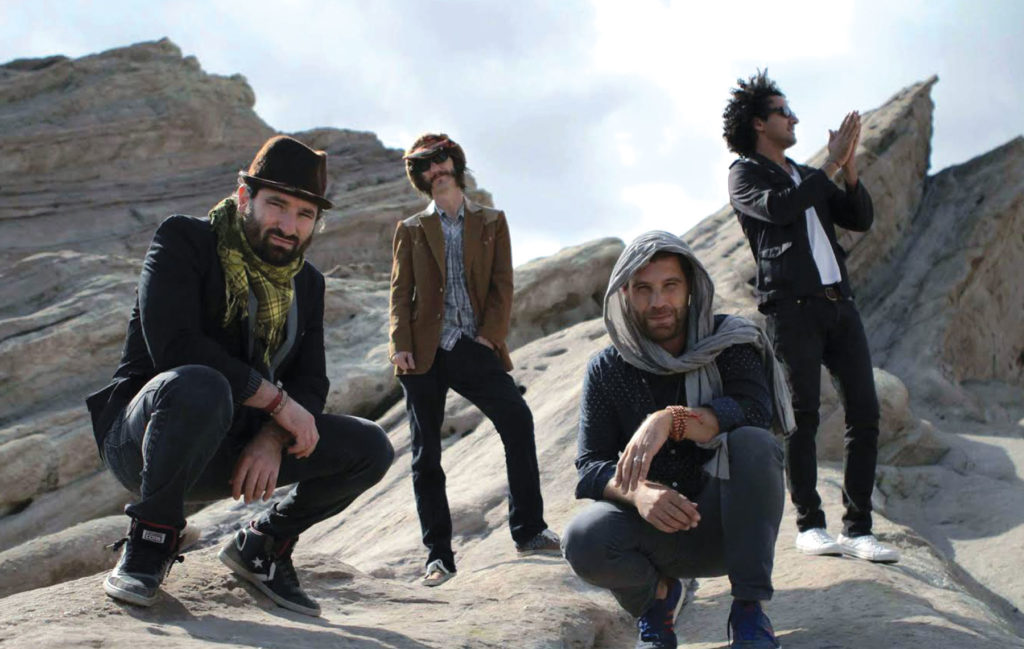
The Moshav Band
Unity Concert Snap your fingers and move your feet at the Jewish Unity Concert, which features the Moshav band performing music by the late Rabbi Shlomo Carlebach. Organized by the Happy Minyan, the Shabbat Project L.A. and Young Sephardic Community Center, the evening at Beth Jacob Congregation celebrates the legendary Carlebach, who blended his musical talent with rabbinical duties. Additional performers include the Los Angeles band 8th Day, Sam Glaser and the Harkham Hillel Hebrew Academy Choir. Jewish Journal Publisher and Editor-in-Chief David Suissa and TV writer and Happy Minyan leader David Sacks deliver remarks. 8–11 p.m. $10 children 2-11, $18 students 12–22, $35 general admission. Beth Jacob Congregation, 9030 W. Olympic Blvd., first-floor social hall, Beverly Hills.
Pre-Halloween Shebang The Living Room @ Pico Union Project presents a pre-Halloween event. Come for the fellowship, food, drink, Tarot card readings, music and Havdalah. Costumes encouraged. 7–10 p.m. $10. Pico Union Project, 1153 Valencia St., Los Angeles.
SUN OCT 28
Tour De Summer Camps Bicyclists 16 and over are invited to come to Simi Valley to ride for a good cause — supporting families who cannot afford to send their children to summer camp. The Tour de Summer Camps fundraiser at the Brandeis-Bardin Campus of American Jewish University, organized by the Jewish Federation of Greater Los Angeles, offers two ways to participate: Cycle for 18, 36, 62 or 100 miles along scenic pastoral routes, or cycle on the campus for one hour. Breakfast and lunch included. 7 a.m.–5 p.m. Registration fees: $55 for road cycling, $45 for cycling at camp. Participants must raise a minimum of $500; $250 for those younger than 30. Brandeis-Bardin Campus of American Jewish University, 1101 Peppertree Lane, Simi Valley. (323) 761-8013.
Gavin Newsom
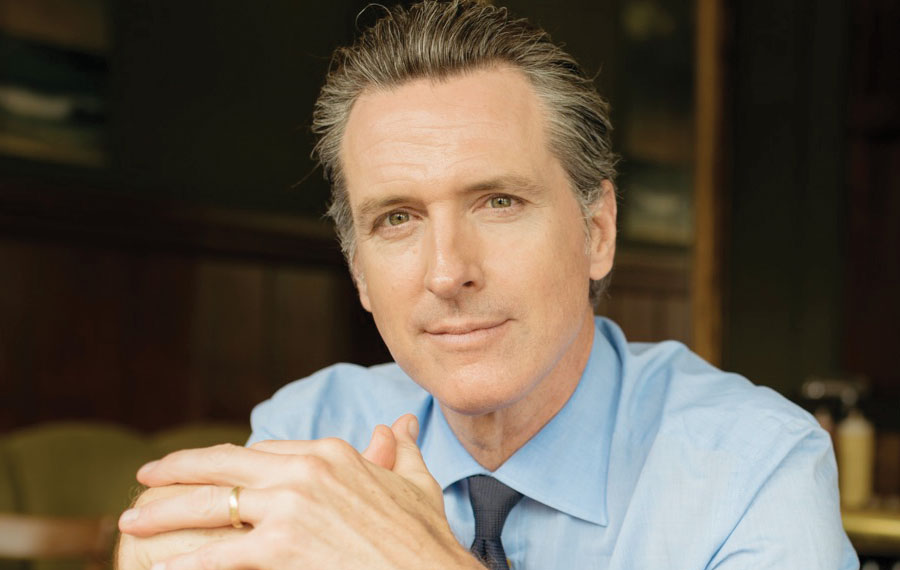
Gavin Newsom California Lieutenant Governor and Democratic gubernatorial candidate Gavin Newsom discusses Jewish communal issues at Valley Beth Shalom (VBS) with Rabbi Joel Simonds, founding executive director of the Jewish Center for Justice, and VBS Senior Rabbi Ed Feinstein. Newsom, who is running against Republican businessman John Cox in the Nov. 6 election, also is expected to talk about his agenda for Sacramento, if elected. The program, organized by the Jewish Center for Justice, includes a Q-and-A with the audience. 9 a.m. Free. Valley Beth Shalom, 15739 Ventura Blvd., Encino. (818) 788-6000.
Jewish Women’s Theatre Fall Party Celebrate the beginning of the Jewish Women’s Theatre’s 11th season with a sneak preview of its new show, “Jews in America,” at a private home and garden in Brentwood. 1:30 p.m. schmoozing and a dessert buffet, 2:30 p.m. showtime. General admission $40, VIP $75 (includes reserved seating). Address provided upon ticket purchase. No children younger than 14 will be admitted. If you are unable to purchase a ticket online, the event is sold out. Email tickets@jewishwomenstheatre.org to be placed on the waiting list. When purchasing multiple tickets, list the names of all attendees and their emails, if possible, in the “notes” section. (310) 315-1400.
“Giving Up Is Hard To Do” In her one-woman show, writer-performer Annie Abbott (“The X-Files,” “Californication”) plays a young woman determined to break into and survive in showbiz. The performance raises funds for the Hope Connection, a nonprofit offering bereavement support for those who have lost a spouse or a parent. Director Joel Zwick (“My Big Fat Greek Wedding”) participates in a post-show Q-and-A with Abbott. A wine and cheese reception opens the event. 2–5 p.m. $55. Valley Beth Shalom, 15739 Ventura Blvd., Encino. (818) 788-4673.
Gun Control Discussion Join Adam Winkler, a professor at UCLA’s School of Law, a specialist in American constitutional law and the author of “Gunfight: The Battle Over the Right to Bear Arms in America”; and Kelly Drane, the research manager at Giffords Law Center to Prevent Gun Violence, for “Gun Control in America: What Is the Reality? Legal, Public Health & Legislative Perspectives.” Moderated by Rabbi Emeritus Steven Carr Reuben. 4 p.m. Free, but RSVP suggested. Kehillat Israel, 16019 Sunset Blvd., Pacific Palisades. (310) 459-2328.
MON OCT 29
Theodore Bikel
Theodore Bikel Tribute Aimee Ginsburg-Bikel, widow of the late Theodore Bikel, discusses the iconic performer’s life as a man and an artist at a public event hosted by Cedars-Sinai Medical Center. In addition to Ginsburg-Bikel’s talk, the event features the screening of the 2014 documentary “In the Shoes of Sholom Aleichem,” which combines Bikel’s storytelling with an exploration of his life and work. (He died in the summer of 2015.) The film is to be followed by a Q-and-A with the audience and a reception with refreshments. 6 p.m. registration, 6:30 p.m. program, $10 general, $5 Cedars-Sinai medical staff, employees and volunteers. Cedars-Sinai Medical Center, Harvey Morse Auditorium, Plaza Level. RSVP to ellen.eichenberger@cshs.org.
Capitol Steps
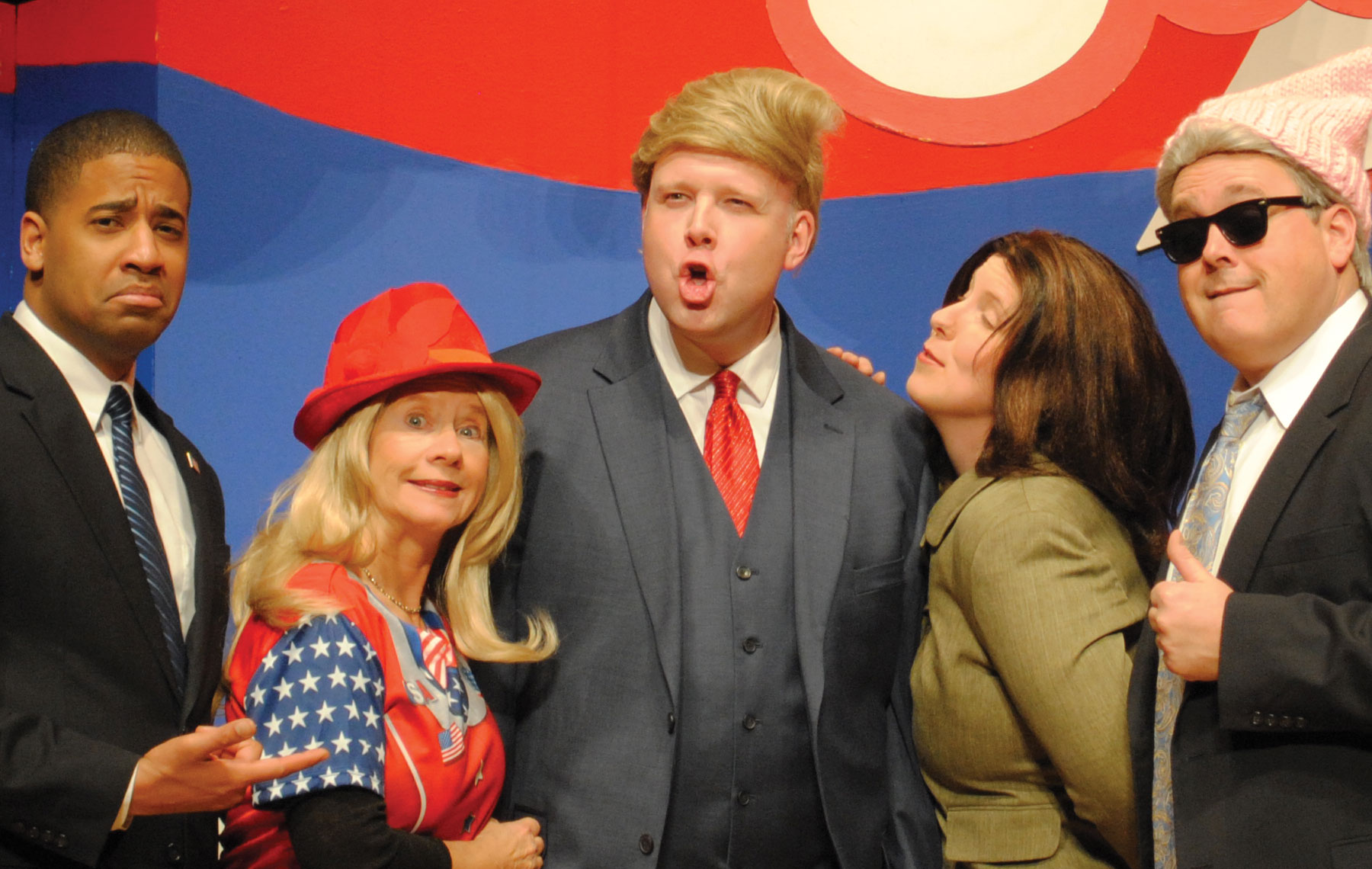
Capitol Steps Putting the “mock” in democracy, the acclaimed Capitol Steps political satire troupe comprised of former congressional staffers performs at American Jewish University. In the era of Trump and “fake news” and ahead of the midterms, there is no shortage of material. 4 p.m. matinee. From $25. American Jewish University Familian Campus, 15600 Mulholland Drive, Bel Air. (310) 440-1572.
“Under Swiss Protection” During the Holocaust, Swiss diplomat Carl Lutz and his team coordinated a massive rescue effort, issuing an estimated 50,000 lifesaving letters of protection and placing persecuted Jews in 76 safe houses. On this evening honoring Lutz, Agnes Hirschi and Charlotte Schallie, editors of “Under Swiss Protection: Jewish Eyewitness Accounts from Wartime Budapest,” discuss Lutz’s story of heroism. Book signing and reception follow. 7:30 p.m. Free. RSVP required. Museum of Tolerance, 9786 Pico Blvd. (310) 553-8403.
“Translation as a Bridge? Literary Encounters Between Israeli and American Jewish Cultures The Hebrew translation and reception of literary works by Jewish-American writers, and the English translation of works by Israeli authors constitute interesting junctures between the two major Jewish cultures of our time. Each culture was confronted in this way with an often competing concept of Jewish identity. This talk by Omri Asscher, postdoctoral fellow at the Y&S Nazarian Center for Israel Studies, will explore competing Jewish identities in Israel and the U.S. through the prism of literary translation. Co-sponsored by the UCLA Department of Comparative Literature, the UCLA Alan D. Leve Center for Jewish Studies and the Department of Near Eastern Languages and Cultures. 12:15-1:30 p.m. Free, but RSVP required at international.ucla.edu. UCLA Bunche Hall, Room 10383, 11282 Portola Plaza, Los Angeles. (310) 825-9646.
TUE OCT 30
Yossi Klein Halevi
Halevi On Kristallnacht Commemorating the 80th anniversary of Kristallnacht, author and commentator Yossi Klein Halevi revisits the horrors of the Night of Broken Glass in a lecture at Loyola Marymount University. Halevi (“Letters to My Palestinian Neighbor”) examines why nearly 100 Jews were killed beginning on the night of Nov.9, 1938, when on the pretext of avenging the fatal shooting of a German diplomat by a Jewish student in Paris two days before, coordinated mobs of Nazis roamed across Germany attacking synagogues and personal Jewish property. The shattering windows gave the pogroms their historic name. The program includes a candle-lighting and a kosher dessert. 7 p.m. Free. Seating limited. Roski Dining Hall, Loyola Marymount University, 1 LMU Drive, Westchester. (310) 338-2700.
THU NOV 1
Jerusalem Biennale Exhibition “Watershed Moments,” an exhibition of contemporary artwork from the 2017 Jerusalem Biennale, arrives for a 24-day show at Luz Art Space. The exhibition features artists Lili Almog, Yehudis Barmatz, Marcelle Tehila Bitton, Matan Ben Tolila, Rachel Koskas, Eliad Landau, Tamar Paley, Avner Sher and Arik Weiss. The Jerusalem Biennale provides a stage for professional artists whose contemporary work intersects with the Jewish world and refers to Jewish thought, spirit, tradition or experience. Through Nov. 25. 11 a.m.–6 p.m. Closed Mondays. Free. Luz Art Space, 8373 Melrose Ave. (323) 452-9118.
“Ethiopian-Israelis From Operation Moses to the Present” The Museum of the Jewish People at Beit Hatfutsot, the only institution that photographed the absorption of Ethiopian Jewry from 1984-1991, examined what happened to the community over the past 30 years. Its work inspired “Operation Moses: Thirty Years After,” a film screening at American Jewish University and telling the story of five individuals, their aspirations and achievements. Oshra Friedman, deputy director-general at the Authority for the Advancement of the Status of Women and the highest-ranking woman of Ethiopian descent in Israel’s government, appears in person. She shares insights into the prospects of the Ethiopian-Israeli community. 7:30 p.m. $10. American Jewish University Familian Campus, 15600 Mulholland Drive, Bel Air. (310) 440-1572.
More than 100 men and women have served on the Supreme Court, but only one can be fairly described as a rock star.
Ruth Bader Ginsburg’s ascent into popular culture was confirmed in 2015 with “Notorious RBG,” a playful book by Irin Carmon and Shana Knizhnik, and a 2018 documentary film titled “RBG.” Her face and figure are displayed on mugs and T-shirts, Halloween costumes and Christmas tree decorations, removable tattoos and children’s coloring books. We can even watch her workouts on YouTube, and when Stephen Colbert tried to replicate her demanding exercise regimen, he declared himself defeated by its rigor.
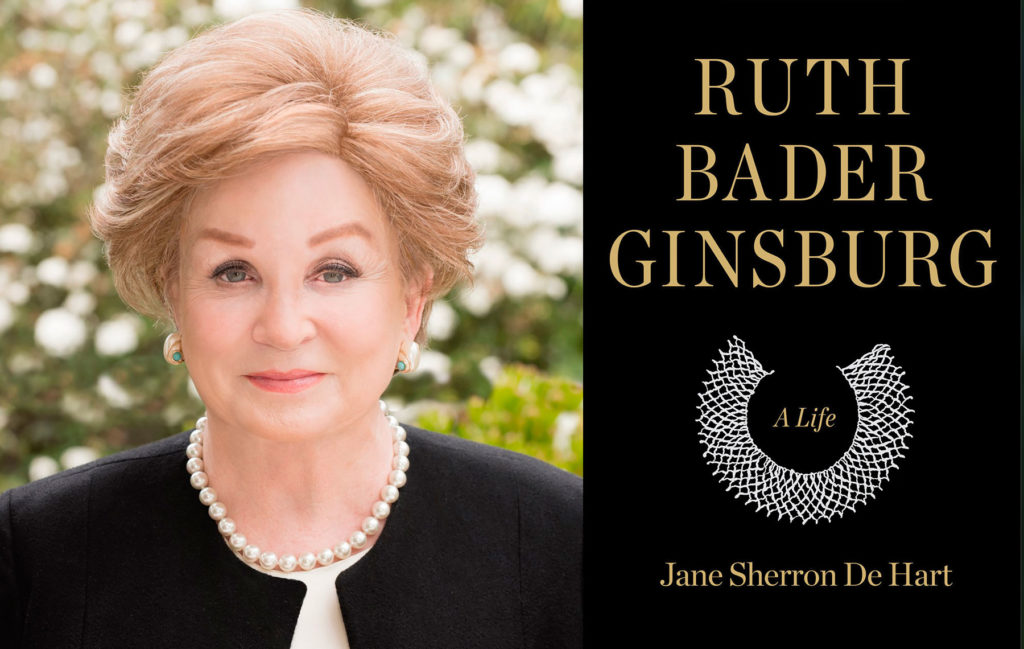
Now her life story is told in full by Jane Sherron De Hart, a scholar of American history and women’s studies whose academic appointments have included the University of North Carolina and UC Santa Barbara. De Hart has invested some 15 years in the research and writing of “Ruth Bader Ginsburg: A Life” (Knopf), including a series of annual interviews with Ginsburg, and she succeeds in showing us that the 107th person to be appointed to the Supreme Court is much more than a pop culture icon.
“… Ginsburg has made her mark not only on the jurisprudence of the United States but also on American society and popular culture more broadly,” De Hart writes, describing the remarkable breadth of her achievements in public life. “But the portion for which she is most remembered began with her efforts to make her chosen profession more welcoming to women at a time when it was overwhelmingly white and male.” And yet the values she embraces and the role she has played in putting them to practice are even more expansive. “Her pursuit of equality has been capacious, encompassing not only women but also men, African Americans, Hispanics, gays, immigrants, the poor, and the disabled.”
The life story begins in 1933, when Joan Ruth Bader was born at Beth Moses Hospital in Brooklyn to a mother and father who had each emigrated from Europe, her father (Nathan Bader) from the Ukraine and her mother (Celia Amster) from Poland, although Celia was “still in her mother’s womb” when the family arrived in the United States. Ginsburg’s upbringing was infused with Celia’s “boundless zeal and perfectionism” and her emphasis on “what it meant to be Jewish, American and female.” Thus, for example, Ginsburg’s childhood birthday parties were held each year at the Pride of Judea orphanage, where Ginsburg (known by the nickname “Kiki”) was taught that “even her own very modest economic advantages obliged her to share with those less privileged.”
All three of these themes, as De Hart shows in compelling detail, can be traced from her childhood reading to her jurisprudence on the Supreme Court. “Essential to her desire to make We, the People more united and our union more perfect is her Jewish background,” de Hart explains. “Tikkun Olam, the Hebrew injunction to ‘repair the world,’ had profound meaning for a thoughtful young Jewish girl who grew up during the Holocaust and World War II. So, too, did the phrase above the entry to the first chambers that she occupied as justice – Tzedek Tzedek tirdof(Justice, justice you shall pursue).”
“Essential to her desire to make We, the People more united and our union more perfect is her Jewish background.”
— Jane Sherron de Hart
De Hart makes the case that Ginsburg would deserve a place in history even if she had never been elevated to the Supreme Court. Starting as a Rutgers law professor and an attorney for the Women’s Rights Project of the ACLU, she served on the front lines of the struggle for gender equality under the law. “In retrospect, Ginsburg’s embrace of feminism seems to have been an easy fit for a woman who, in many respects, ‘walked the walk’ before the street was named,” De Hart quips. Thus did Ginsburg turn herself into “‘a tiger for the Cause’ — ‘a quiet tiger, a moderate, sensible tiger, but a fearsome tiger’ nonetheless.”
Then, too, we are shown the flesh-and-blood Ginsburg, as when her daughter, Jane, recalls her mother’s “tenacity on matters of posture, tidiness, or diet,” De Hart writes. “Recalling her mother’s eagle eye for candy wrappers in the waste basket, she added, ‘Her searches and seizures of my childhood debris showed that Fourth Amendment principles held no place of honor in our household order.’ ” On significant occasions, such as an oral argument before the Supreme Court, Ginsburg would wear an item of jewelry that had belonged to her beloved mother. Ginsburg’s son, James, wrote a poem on her 50th birthday that captures her work ethic: “On three hours’ sleep you’re not always fun/But that’s okay, says thy sweet loving son.”
Case by case, decision by decision, De Hart shows how Ginsburg’s courtroom advocacy eventually leveraged her into a fateful judicial appointment to the Court of Appeals by President Jimmy Carter in 1980. Thirteen years later, hailing her “achievements, decency, humanity and fairness,” President Bill Clinton elevated her to the high court. While she was “fated to serve as a member of the minority among ever further right-leaning colleagues,” as De Hart puts it, and now finds herself on the wrong side of a baked-in 5-4 majority on the Supreme Court, De Hart insists on taking the long view.
“[S]he is too familiar with history to assume that progress is linear,” De Hart concludes. “Like liberty, equality, she believes, is never really won, but has to be fought for by each generation.”
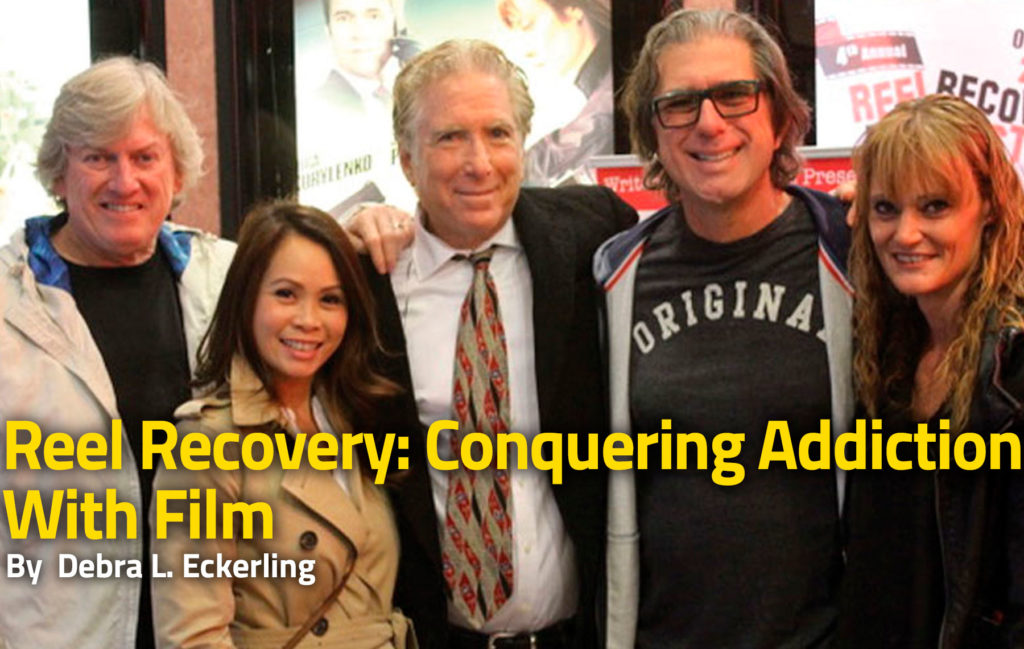
From the 2015 Reel Recovery Film Festival and Symposium in New York. Photo by Karl Abrams
The 10th annual Reel Recovery Film Festival & Symposium (RRFF), which runs through Oct. 30 in Los Angeles, describes itself as a “multi-day event celebration of film, the arts, writing and creativity [that] showcase filmmakers who make honest films about addiction, alcoholism and behavioral disorders.”
To date, the festival has screened more than 300 films in 12 cities (including Vancouver, Houston, Denver and London), and featured original movies from Iran, Ireland, the Netherlands, the United Kingdom, New Zealand, Canada and the United States.
However, ask Leonard Lee Buschel, executive director and co-founder of RRFF, to describe the event, and he uses one word: “bashert” (meant to be).
“If you’re a step ahead of a person and they trip, there’s something special about helping them to get up,” Buschel told the Journal via phone. “Part of the whole recovery world is being of service to others, and, if not showing them the way, at least showing them the way that you’ve been going.”
An addiction specialist and counselor who has been sober for 24 years, Buschel — who co-founded the festival with his longtime friend Robert Downey Sr. — also co-founded Writers In Treatment, which offers free referrals for individuals suffering from alcoholism or addiction, and which also presents the festival. He is also the editor and publisher of the weekly Addiction Recovery eBulletin and produces the annual Experience, Strength and Hope Awards in Los Angeles, honoring public figures in recovery who have written books about their careers and their former addiction.
“Somehow, I feel like I was born to do this work, after years of being into drugs and being into film at the same time,” Buschel said. “It merges all the things that I love, because film includes music, costuming, design — all the arts.”
In creating the festival, Buschel said, “There’s been a lot of great alcohol and drug movies that are no longer shown in the theaters and deserve to be. Why not watch something as grand as “Leaving Las Vegas” in the theater rather than on a television?”
He added that screening such films are great communal events for people in both the recovery world, including their families and friends, and for cinephiles who like to see great films.
“There is something [Jews] find very elevating and humbling at the same time, whether it’s a beautifully made tallis, or a perfectly poured glass of wine. Those are gorgeous little things, and art can be that way too.” — Leonard Lee Buschel
In its first year the festival only showed classics on 35mm film every Tuesday night over eight weeks. Among the movies screened that first year were, “The Lost Weekend,” “Days of Wine and Roses,” “Barfly” and “Less Than Zero.” Then and now, after every screening, there’s either a discussion, panel or conversation with the filmmakers or a clinician.
The response was so great that first year that Buschel and Downey Sr. decided to continue the festival and symposium. Once they put the word out, original film submissions started coming in from around the world.
“As long as you had a camera, a good idea, some friends, some ambition, you could make a film that we could project on a big screen,” Buschel said.
Ten years later, the festival now showcases around 60 classic and contemporary national and international films (shorts, documentaries and features), depicting addiction, alcoholism, mental health issues, treatment and recovery.
Buschel estimates that 20 to 25 percent of the films shown are by first-time filmmakers, adding that up to “40 percent of the filmmakers are clean and sober.”
In the festival’s first two years, the featured films focused on alcohol and addiction. “Mental illness, mental disorders sometimes overlap, so [now] we have a lot of great films with mental disorders,” Buschel added. RRFF now shows films about eating disorders, self-harm and process addictions — including sex, gambling and shopping addictions — as well as dual diagnoses: addictive behavior with mental illness.
Buschel said he wished every teacher, doctor and therapist would watch RRFF movies. “We don’t show films that preach, we show films that teach, but don’t minimize or exaggerate,” he said.
RRFF’s main criteria when it comes to choosing films is that “first and foremost they’re honest depictions of the ailments,” Buschel said. “They’re honest and entertaining and sometimes educational. In many cases it’s people overcoming serious addictions, so it has an inspirational aspect, as well.”
Buschel attributes his success as the festival’s curator to being Jewish.
“There is something [Jews] find very elevating and humbling at the same time,” he said, “whether it’s a beautifully made tallis, a perfectly poured glass of wine, a beautiful little square of fabric that you cover the matzo with at Passover. Those are gorgeous little things, and art can be that way, too.”
Buschel said he’s seen people begin a path to recovery after seeing some of the festival’s films. “I have seen the light bulb go off over people’s heads who have maybe been sober for a couple weeks and weren’t quite committed. They see some of our films, and I see them start to lean toward recovery.”
Indeed, he’s the first to admit that it’s film that helped him toward his own recovery 2 1/2 decades ago.
“Right now I call [film] my drug of choice,” he said. “I literally have to go see a film once a week or every other week, otherwise I start to get shpilkes. Twenty-four years ago, if I got shpilkes, I would smoke a joint and they’d go away. Now I have to go to a film just to get out of my own head.”
The Reel Recovery Film Festival & Symposium runs through Oct. 30 at Laemmle Royal Theatre, 11523 Santa Monica Blvd., Los Angeles. Visit reelrecoveryfilmfestival.org for the schedule.