When All Saints Church in Pasadena announced that it would host the Muslim Public Affairs Council’s (MPAC) 12th annual convention as part of its efforts toward “interfaith peacemaking,” the Episcopal church that was founded in 1883 became the target of hate mail and attacks.
In a post on its Web site, the Institute on Religion & Democracy, a nonprofit dedicated to advancing “Christian orthodoxy,” described the event as “Islamists … taking advantage of naïve Christians with a desire to show off their tolerance.”
In the days leading up to the Dec. 15 conference, MPAC leaders and their interfaith allies spoke out against what they saw as unfair attacks by those motivated by an unwarranted fear of Muslims. The Los Angeles Times, in an editorial that appeared on Dec. 13, defended MPAC, noting that the organization has “generally taken moderate stances on international issues and has regularly denounced major acts of terrorism around the globe.” It called All Saints’ decision to host MPAC’s gathering “something of a mitzvah.”
And yet, speaking to the crowd of about 400 Muslims and non-Muslims who gathered in All Saints’ main sanctuary for the day’s final panel, Dr. Maher Hathout, MPAC’s co-founder and senior adviser, urged members of his faith to look inward for the causes of Islamophobia.
“The other is afraid of us; part of this fear, probably, is our responsibility,” Hathout said, sitting on a panel of leaders from four different faiths.
“Generally speaking,” he continued, “the public is not jumping to be afraid of Muslims. But certain events happen and certain ‘lawyers’ of Islam, if you will, did not represent the case well. And so it is a shared responsibility.”
Some opponents of MPAC have argued that Hathout himself bears some of that responsibility, considering the statements he made in the late 1990s and early 2000s both defending Hezbollah as an organization “fighting to liberate their land” and sharply criticizing Israel.
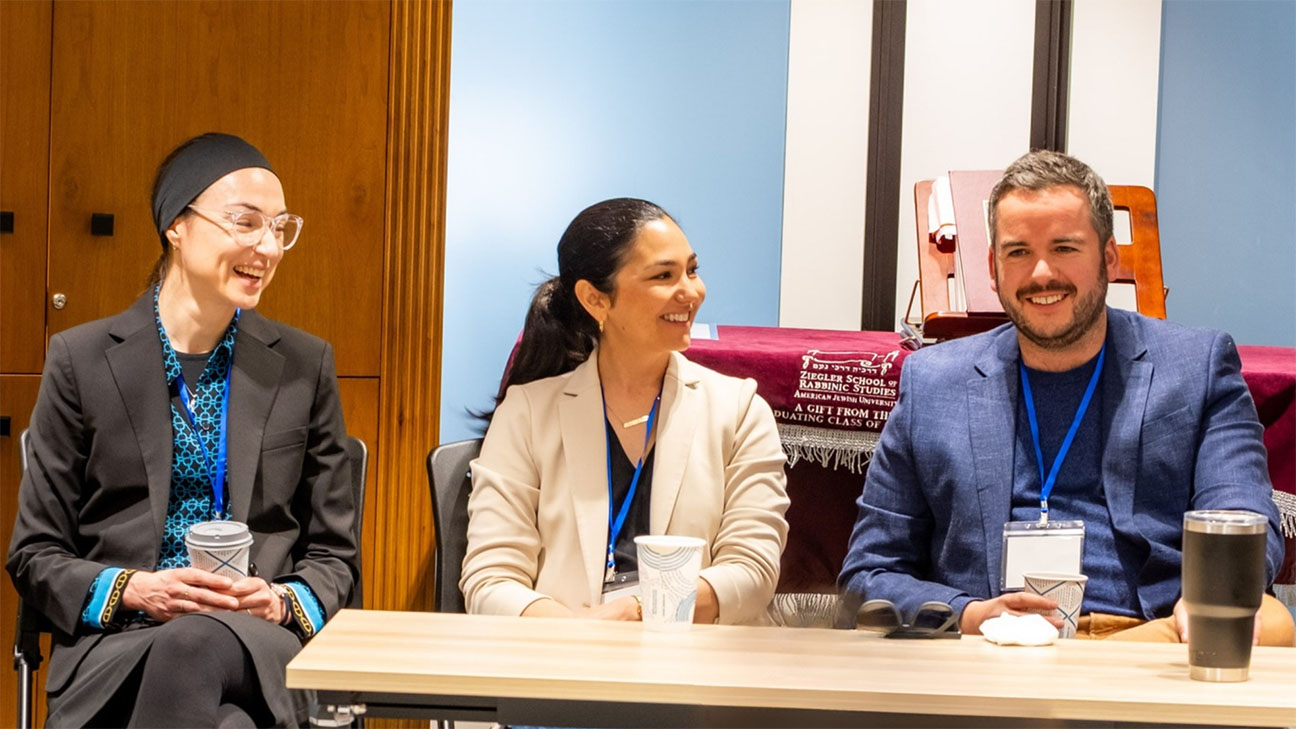
But aside from a handful of protesters who were at All Saints at the start of the day, such voices were not to be heard in Pasadena at the conference. The day’s final panel, titled “Faith, Authority & Freedom,” saw Hathout joined by All Saints’ rector, the Rev. Ed Bacon; Rabbi Sarah Bassin of the Muslim-Jewish partnering organization NewGround; and Niranjan Singh Khalsa of the Khalsa Care Foundation of the Sikh community.
Together they discussed a broad range of challenging topics: How far should freedom of speech extend? How should a religious minority deal with the presence of extremists within its own ranks? Should non-Muslims in America be concerned about the possibility of Sharia, or Islamic law, being incorporated or imposed on communities in the United States?
Katy Hall, a member of All Saints who attended the daylong conference, appreciated the chance to hear such questions addressed.
“I loved the fact that people are coming together in a very public way and giving a forum for all of us to be able to hear that conversation,” Hall said.