On Nov. 15, 2022, Donald Trump announced that he would be running for president for a third time.
Today, 721 days later, voters will finally choose between him and Kamala Harris. And it may be days longer before we know the winner.
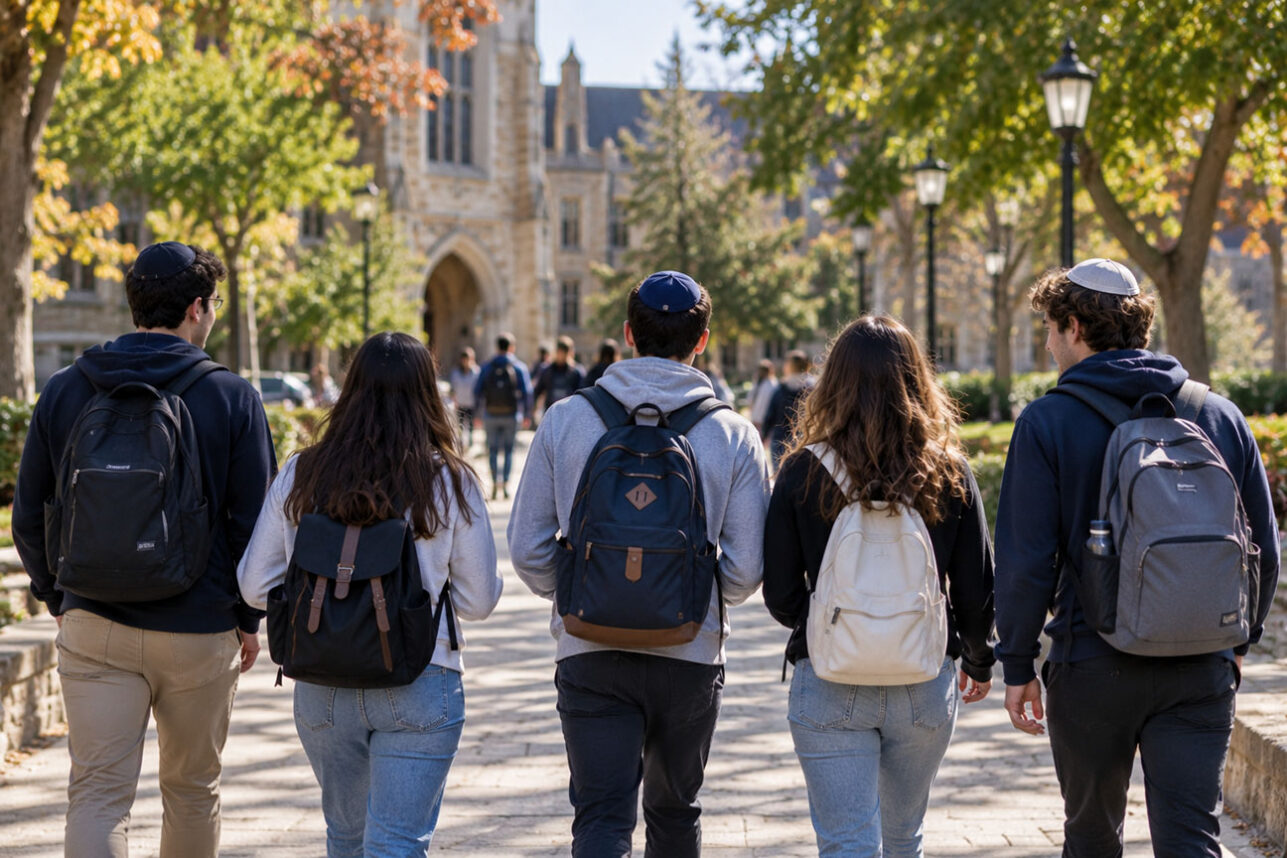
For Jews, it has been a long campaign season filled with never-ending debates over which president would be better (or, more often, worse) for American Jewry, Israel and those who wish them ill. Many Jews have watched and experienced the campaign through the lens of Hamas’ Oct. 7, 2023, attack on Israel, the wars that it launched and the surge in antisemitism that has followed.
As we head into Election Day and whatever comes next, here are four questions Jews are asking — including the one on everyone’s mind.
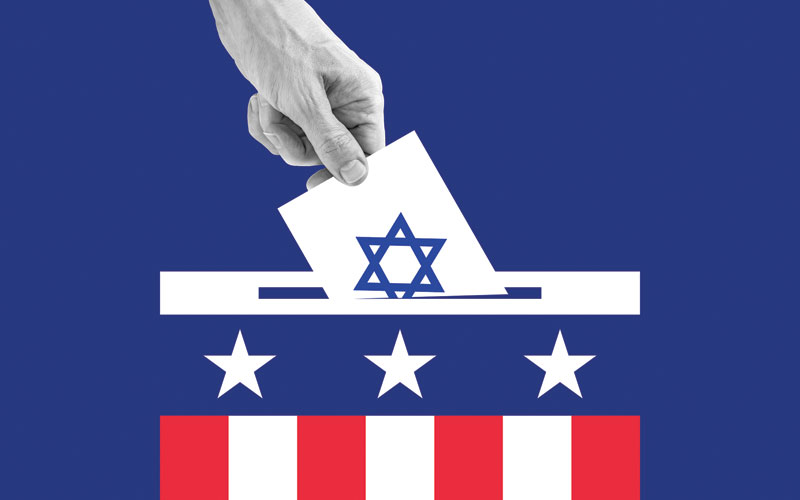
How will Jewish Americans vote, and how much will it matter?
This question gets asked every four years, and it’s getting harder to answer. This time, that might be especially true.
Before 2020, a consortium of leading publications joined in something called the National Election Pool, which conducted exit polls and posted its assessment of the Jewish vote. So, for example, it found in 2016 that Hillary Clinton won 71% of the Jewish vote to Trump’s 24% — roughly in line with the previous few decades of elections.
Last time around, the National Election Pool didn’t post Jewish results, citing inadequate data, and two partisan groups came to different conclusions: A poll commissioned by Republicans said the Jewish vote shifted Republican and a poll commissioned by Democrats said it shifted toward — wait for it — Democrats.
What does that mean for this year? With so many states up for grabs, and so much discourse this year about whether more Jews will choose Trump after the Oct. 7 attack, there are a lot of unknowns. If there isn’t one authoritative exit poll, expect competing takes.
The Jewish vote could have outsize impact, in particular, in some of the seven swing states. So if the hundreds of thousands of Jews in Pennsylvania, or the roughly 100,000 in Michigan, break unexpectedly one way or the other, it could make a difference. (And if Pennsylvania breaks for Trump, expect renewed criticism of Harris’ decision to pass over its Jewish governor, Josh Shapiro, for her vice presidential pick.)
There are some things we do know: Overall, most Jews will vote for the Democrat (in this case, Harris), as they have for generations. Most Orthodox voters will vote Republican, a more recent shift that has solidified during the Trump era. And some portion of Jewish voters will have voted with qualms they never felt before the Oct. 7 attack.
Will Jewish communities stay safe? Will America?
In October 2020, an FBI official advised Jewish leaders to prepare for “potential volatility, in regard to not only the election but I think just a lot of things that are going on in the country.”
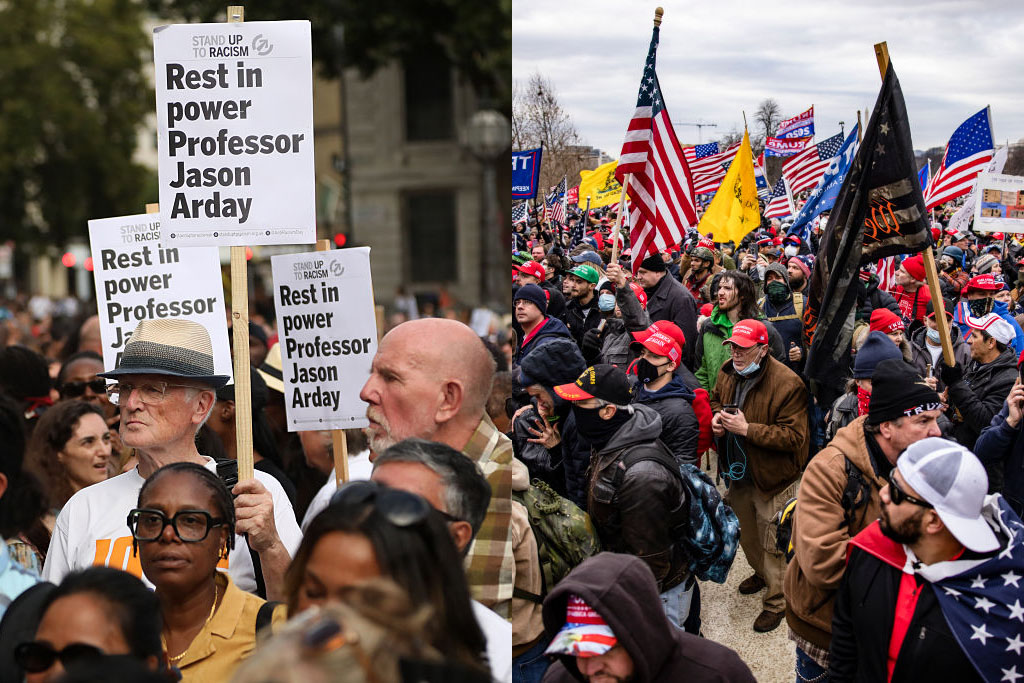
Volatility, as we know now, occurred. Trump and his supporters mounted a campaign to deny and reverse his defeat, culminating in the deadly Jan. 6 riot at the U.S. Capitol. While there weren’t prominent instances of violence against Jews as part of the riot, it featured antisemitic iconography and people who held antisemitic views. It also deepened ongoing anti-government activism on the far right that has manifested in recent antisemitic harassment of Jewish officials.
This year, security agencies are sending a similar message: Stay vigilant. They emphasize that there are no known threats at this time to Jews or Jewish institutions. But the rise in antisemitism, plus sharp national polarization and the possibility of uncertainty following Election Day, mean that the risk of violence in and around Jewish spaces is heightened.
Once again, Trump has not pledged to respect the result of the vote. He has also said that if he loses, it will be partly the fault of Jewish voters — a line that immediately worried Jewish leaders and extremism watchdogs who interpreted it as potentially inciting Trump’s volatile supporters.
Security officials note that after more than a year of protests over the Gaza war, the left is feeling emboldened, too, adding an element of uncertainty to the climate.
For security groups, all of this means monitoring polling sites, some of which are located at Jewish schools or communal buildings; sending guidance to Jewish institutions — one organization recommends a “robust preparedness posture”; and keeping an eye on threats emanating from social media.
How will Jewish candidates fare in downballot races?
Along with the presidency, some 470 seats are up for grabs in the House and Senate. Some of the most high-profile races include Jewish candidates, and still more may be decided by Jewish voters.
One of the most prominent races is for North Carolina’s governor, where the Jewish state attorney general, Democrat Josh Stein, is facing Lieutenant Gov. Mark Robinson, a Republican whose campaign has seen scandal after scandal over his past remarks, including calling himself a “Black NAZI.” Stein is heavily favored to win, even as the state is a battleground for president.
Jews are also running in a number of Senate elections — from shoo-ins like California Democratic Rep. Adam Schiff to competitive campaigns like Democratic Sen. Jacky Rosen’s in Nevada or Rep. Elissa Slotkin’s in Michigan. Those two races are among the handful that, together, will decide who controls the Senate.
Dozens of House races also involve Jewish candidates. And in some districts, the Jewish vote could be decisive.That’s particularly true in New York, where candidates in three closely fought districts with large Orthodox populations have made extensive efforts to secure the support of leading rabbis and their followers.
So, nu, who’s gonna win?
Nate Silver doesn’t know. Nate Cohn doesn’t know. And neither do we. (Allan Lichtman says he does.)
But no matter who wins, it will shape the Jewish story in the United States, Israel and beyond. In the days after the election is decided, the president-elect will appoint a cabinet and staff, almost certainly including a few Jewish names. Policies will be rolled out that dismay and delight different segments of American Jews. The scrutiny of words and gestures that attended the campaign is unlikely to let up. Divisions within our communities are unlikely to evaporate.
And while it’s not clear when this election will be called, or its results accepted, one timeline is nearly certain: Election Day 2028 is only 1,462 days away.