fbpx

November 5, 2024

How Sam Delug Transformed Notorious Menendez House into a Community Hub

Twenty-two years ago, when Sam Delug was thinking about purchasing a house on Elm Drive in Beverly Hills, he brought his three children there and asked what they thought: Should he buy it?

It was a beautiful mansion in the flats of Beverly Hills and the price was a steal — what wasn’t there to like? But given its reputation as the “Menendez House,” where the infamous murders of José and Mary Louise “Kitty” Menendez by their sons, Lyle and Erik Menendez, took place, he wanted to ensure his children were comfortable with it.

“My youngest was 19 at the time, so they were all adults, but I wanted them to have a room to stay in when they came occasionally,” Delug said. “My children told me, ‘Dad, it’s just another house.’”

The house, he said, was built in 1927, almost 100 years ago. “So, one day that something bad happened out of 100 years is not that important.” And so, Delug, an entrepreneur and attorney, purchased and remodeled the house, breathing new life into it. “I worked closely with my interior designer and approved each detail,” he said. 

Once the house was completed, he decided to open it for charity events. The three closest to his heart are AIPAC, StandWithUs and the Maccabiah, but he gladly opened his house to many other events from groups such as Israel Bonds and Beit Halochem.

“I started being active in the community 20 years ago, and for the past 15 years, I do four to five big events a year, so I probably hosted around 75 events at my home, including hosting a break the fast on Yom Kippur,” Delug said. “Every Jew who has nowhere to go can come to my home. This is my first mitzvah of the year.”

“I probably hosted around 75 events at my home, including hosting a break the fast on Yom Kippur … Every Jew who has nowhere to go can come to my home.” – Sam Delug

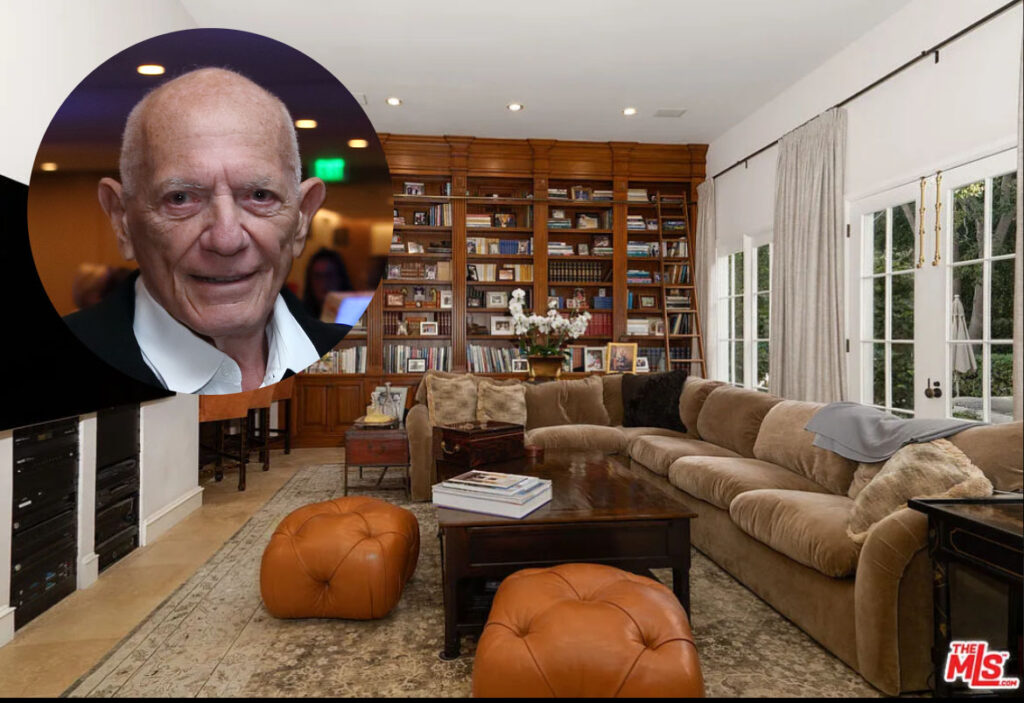
I’ve visited Delug’s house on many occasions. Yoseph Haddad, an Arab-Israeli advocating for Israel, gave a lecture there after Oct. 7, and Micha Kobi, former head of the investigative department of Shin Bet, spoke about his interrogation of Yahya Sinwar during the Hamas leader’s imprisonment in Israel. The last time I was there was in February of this year, when Delug hosted his final gathering there — a farewell party. He sold the house for $17 million to a Persian Jewish family.

Photo courtesy Cody Rappaport and Rodeo Realty

“I was sick and tired of people saying, ‘He lives in the Menendez house,’” Delug said. “Nobody could just say, ‘he lives in Los Angeles.’ Now, they can’t say it anymore,” he added, half-joking. At times, it was downright annoying. Delug recalled there were people who used to knock on the door and ask to come in and take a look, as though it was a museum. “I said, ‘If you don’t get off my property I’ll call the police, but it was only for the first two to three years, and then it stopped.’”

Then there were the Hollywood celebrity bus tours, which always passed by his house, letting thrill-seeking tourists snap photos. The curiosity of these onlookers always surprised him. For him, it was just a home, he said. He loved having his children and grandchildren over, making memories in the beautiful backyard by the pool and hosting Rosh Hashanah and Passover dinners.

Delug was born in Melbourne, Australia and moved with his family to Israel when he was 7 years old. The family stayed in Israel for three years before relocating to New York. “It was there that I lost my Australian accent,” he said. Later, he moved to L.A., where he established himself as an attorney and entrepreneur. For years, he is making it a point to visit Israel twice a year. 

“I’m 100% a Zionist,” he said. “I was in Israel on Oct. 7. I had arrived a few days prior, on Oct. 4, and was planning to leave on the 11th to meet my son in Italy, but I couldn’t leave because of the war.”

In May of this year, he returned to Israel as part of a StandWithUs support mission. “We organized a barbecue for the soldiers and brought musicians for a concert. They were so appreciative,” he said.

Photo courtesy Cody Rappaport and Rodeo Realty

The case of the Menendez brothers never interested him much, and he hasn’t watched “Monsters,” the Netflix series about the brothers. However, he does have an opinion on the talks about the resentencing of the brothers and their possible early release. “They are murderers,” he said. “Let’s say their dad did molest them; they were in their 20s at the time. Why didn’t they go to the police? Why didn’t they just leave? They had so many other options.”

After spending over two decades in the house on Elm Drive, Delug felt it was time to move to a new home. He said it was a little hard to let go of the old house where he had some great memories, but, he said, “I believe in making new ones.”

How Sam Delug Transformed Notorious Menendez House into a Community Hub Read More »
Rabbi Kornsgold Didn’t Want a Pulpit. She Took It.

“I never thought I would be in a pulpit,” Rabbi Gavriella Kornsgold said a year and a half after joining Sinai Temple, one of the community’s largest synagogues.  

Given her background — growing up in what she called “a house of learning” — her friends would have predicted she would land at the bimah. But not Rabbi Kornsgold. She didn’t think that was in the cards.

She didn’t even make up her mind about the rabbinate until she was 23 and in the midst of pursuing her master’s degree at the Jewish Theological Seminary. To that point, “I wasn’t quite sure. I thought maybe psychology, social work. I went into college open and undecided.”

While in rabbinical school, she felt she should “do an internship that was not what I ultimately wanted to do.” Which is exactly what the young woman (who grew up attending Temple Beth Am’s Library Minyan) did. She intended to spend a year in a pulpit to see what it was like “while thinking this is not what I want.” Having lived in New York for 10 years, Rabbi Kornsgold was comfortable enough in the city to apply to the Upper East Side’s Park Avenue Synagogue. “I knew it was good experience to see how diverse rabbis’ jobs are, how they get to be there for every step of the way in someone’s life, how rabbis get to be with every age and stage.”

Her first impression was that Park Avenue Synagogue is “huge.” That appealed to her, along with being part of a clergy team. “I had colleagues who were in solo pulpits. But at Park Avenue I saw the beauty of a team. I wanted to be in a place where I could be part of a team.” At the time, Jewish education appealed to her. “I was thinking I might be happy at a day school or a summer camp or a Hillel,” she said. On another hand, “I liked what the rabbis were doing more than the educators. It’s more fluid. You get to teach, to be with people in their life cycles.  You get to really be there in pastoral moments. You get to have the creative parts of being an educator.” Most other people knew she should be a rabbi before she did. What did they see in her? 

“I have a lot of rabbis in my family,” she said. “I grew up in a house where my dad is a rabbi, my zayde is a rabbi, and now my husband Noam and his dad. My father is Rabbi Gordon Bernat-Kunin at Milken. My zayde, Rabbi Haskel Bernat, has been, among other places, at Temple Israel of Hollywood.” She not only grew up in a Conservative home but also “in a house where learning was a part of our Shabbat dinner table. It was part of having students over all the time. It was part of having young people over to meet each other.”

“I have a lot of rabbis in my family. I grew up in a house where my dad is a rabbi, my zayde is a rabbi, and now my husband Noam and his dad.”

In New York, Rabbi Kornsgold studied at List College, which dates its history back 115 years to the revered educator Solomon Schechter. Next, she attended the Joint Program of Columbia University and the Jewish Theological Seminary. “That is where I met my husband,” she said, with a bright smile. “He knew he wanted to be a rabbi. I did not know yet. We met our first week at college at JTS. We were both in the Joint Program. We became friends early in our first year and started dating.” 

What attracted her? “The biggest thing,” she said, “was learning. Noam was someone very serious about learning. He took Judaism seriously in a way that extended to the way he is in the world. The whole goal of Judaism and the Jewish people is so that we can learn to be good human beings.”

Did her husband influence Gavriella’s decision to choose the rabbinate? “He is incredibly supportive,” she said, “and I think he definitely saw it before I did. While I was thinking about it, he already was in rabbinical school. So I was watching already – what does this program look like? What are opportunities one might follow. And it was appealing. He said ‘I think you are going to like this!’” They married right out of college in 2017, and today are the parents of a son, Shemayah, and a daughter, Nessyah.

So what brought her back to Los Angeles and Sinai Temple? “I was looking for jobs,” she said, “my husband and I together, because this is a joint process. We were looking to be near one set of our parents – mine are here, his are in New Jersey. We are both very close with our families. We were looking for jobs in those two places. We both have good relationships with each other’s families. We saw the value in that.”

She said her favorite part of being at Sinai Temple is “having a chance to influence people across the generations, and there is a lot of diversity here, Jews from all over the world.” Another bonus is that “even though Noam doesn’t work here, he is here a lot because this is our home.”

Rabbi Noam is the director of Continuing Education at the Rabbinical Assembly. He works remotely and is also is working on a Ph.D. from Yeshiva University. He finished the course work when they were in New York, which allowed the couple to be flexible about where they could move. “So all the pieces fit together,” Rabbi Gavriella concluded. “I am loving what I am doing, loving the place where I am. And I am soaking it up.”

Fast Takes with Rabbi Kornsgold

Jewish Journal: What is your favorite moment of the week?

Rabbi Kornsgold: It’s hard not to say Shabbat. I am here on Shabbat. So I don’t mean Shabbat in the traditional sense. But Shabbat is so countercultural there is something magical about it.

J.J.: What makes Shabbat perfect?

RK: Often it is mistranslated as a day of rest. What makes it perfect is ceasing from creation, of being okay with whatever is at the present.

J.J.  Favorite place you have traveled?

RK: The land of Israel. The streets of Baka, the streets of the German colony and all the streets of Jerusalem – because those feel like home. They are places I have lived.

Rabbi Kornsgold Didn’t Want a Pulpit. She Took It. Read More »

Did Israeli Women Just Help Restore Deterrence to the Middle East?

The last time that I, a Jewish female, flew over Iranian airspace, I was escaping the country as a young girl in the late 1980s. If you have watched the concluding airplane scene in the 2012 Oscar-winning film “Argo,” you can imagine that the atmosphere on that airplane I boarded was tense, especially for a Jewish family attempting to clandestinely leave the country.

Is it normal for Jewish females to fly over the Islamic Republic of Iran? As of two weeks ago, yes. 

But recently, several Jewish women flew over the country in a different capacity. They were four highly-trained Israeli combat navigators, and along with their male counterparts in the Israel Air Force (IAF), they targeted Iranian sites as part of “Operation Days of Repentance,” which also destroyed three Russian-made S-300 defense systems in Iran (Israel targeted the first S-300 back in April). It was a spectacular reminder that if you invest millions in buying defense systems from Russia, you better ensure that Israel can’t blow them up. 

The strikes also targeted Iranian missile production sites. Simply put, after the operation, one particular country in the Middle East is currently operating with its proverbial pants down. Or as Rich Goldberg, a senior advisor at the Foundation for the Defense of Democracies, observed on Dan Senor’s “Call Me Back” podcast last week, “With no air defense, Tehran — the regime — is naked. The Ayatollah has no clothes.”  

But that hasn’t stopped Iran from vowing to retaliate harshly against Israeli military targets, although not until after the results of this week’s presidential elections. The regime has said it would wait until after the elections to retaliate against Israel so as not to help Donald Trump win. That says a lot about Iran’s perception of the Democratic Party, but that’s a matter for another column. 

For their part, Iranian leaders now find themselves with their evil hands tied. They cannot admit that Israel destroyed so much of their defense systems without admitting their own vulnerability (hence, the nakedness), and that would be especially embarrassing in the eyes of their own population. But they also cannot make the case for striking back at Israel without admitting good reason, and that admission would have to include being honest about how much Israel has damaged their air defense systems. 

I asked an official source with the Israeli government to tell me more about “Operation Days of Repentance.” She confirmed that it was a “mission in which a great portion of the IAF was deployed in three waves to strike Iran.” I loved her response when I asked about IAF pilots flying over Iraq and Syria and striking targets there as well. “We don’t get into details about our flight path,” she said. 

The photos of those female Israeli navigators (their faces are blurred for their own safety) are incredibly powerful. Israel didn’t always allow female fighter pilots, especially due to fears of what they could endure at the hands of the enemy men who could shoot down their planes. 

But the symbolism of this recent operation is indescribable: Instead of forced hijabs like the kind I and millions of other females were forced to wear back in Iran, those Israeli women wore special jet fighters’ helmets. And instead of needing a husband’s permission to travel outside of the country (Iranian women also need their husbands’ permission to get a passport), those female Israeli navigators not only left their country in complete freedom, but in some of the most sophisticated stealth fighters in modern history. 

Isn’t that extraordinary?

The pilots who carried out the missions were highly-trained and tasked with vastly intricate responsibilities; with precision, they had to make split-second decisions, isolate targets to practically the nearest millimeter (only five Iranians were killed in the strikes, and they were all army or security guards), and control the aircraft they were utilizing flawlessly. I firmly believe that any Israeli woman who knows how to assess and operate an F-35 Lightning II “Adir” stealth fighter is more qualified to serve as president or prime minister of the country than almost anyone else. 

“There’s a sisterhood story in this war,” a female Israeli source who asked to remain anonymous told me. “When we think of these current wars, we think of IDF men entering Gaza. But this is also about women fighting for their country, and for their region. There’s a big women’s story here.” Tragically, that includes the fates of the five female IDF field observers, or “Tatzpaniot,” who were abducted from the Nahal Oz base near the Gaza border and are still being held captive in Gaza. Hamas killed 60 soldiers when it stormed the base on Oct. 7, including 15 unarmed female observers. They hid in their command center and were burned to death. 

The women who flew those stealth fighters in Iran two weeks ago not only helped restore deterrence in the Middle East, and they not only helped millions of Iranian women reach another step closer to freedom, equality and the pursuit of basic human rights. They also redeemed the memories of their sisters in uniform who perished on Oct. 7, and those who are still languishing as captives in Gaza. 

If Israel has repeatedly stated that it stands with the people of Iran, it is making good on its promise to also include the women of Iran. “As a father of daughters, we are telling the world that women need to fly high in attacking Iran and achieving their goals,” Israel Bachar, Consul General of Israel to the Pacific Southwest, told me. “Free the women of Iran. They can also fly high.” 

From one lone country in the Middle East, women are redeeming women. But that redemption comes with terrible heartbreak. Just ask the widows, mothers, daughters, grandmothers and other loved ones of soldiers who have fallen in battle this past year, or those whose hearts will never heal from the loss of a precious loved one on Oct. 7. 

Meanwhile, in Iran, all eyes are on the fate of a young woman at Tehran’s Islamic Azad University who, on Nov. 2, was being harassed by police for not wearing her hijab properly. Incredibly, she stripped down to her underwear in protest against the country’s strict modesty laws for women. She was arrested and dragged into a car by the dreaded security forces; they smashed the young woman’s head into a car or pillar and beat her, some students claimed. Now the regime is claiming she undressed in public because she suffers from a mental disorder.

In one country, the air force supplies women with top-of-the-line helmets to protect their heads; in another, misogynists with guns and clubs bash women’s heads in because they are not properly covered. (Remember the 2022 death of Mahsa Amini?)Which practice are university students in Europe and the West indirectly supporting when they violently protest against Israel?

In one country, the air force supplies women with top-of-the-line helmets to protect their heads; in another, misogynists with guns and clubs bash women’s heads in because they are not properly covered. (Remember the 2022 death of Mahsa Amini?) 

“In a remarkable demonstration of courage, Israel’s female IDF soldiers proved their capabilities on the battlefield while simultaneously showcasing the state of Israel’s respect and value for women who are entrusted to carry out critical military operations,” my colleague, Lisa Daftari, said. Daftari is a journalist and commentator on the Middle East, terrorism and foreign policy, specializing in Iran. She also hosts the podcast “The Foreign Desk.”

Daftari noted that the reality of women’s rights in Israel “stands in stark contrast to the Islamic Republic that shoots at, rapes, blinds and pours acid on the faces of its brave freedom-fighting women who, if given the opportunity, would stand shoulder to shoulder with their Israeli counterparts, fighting against the radical threats they both face.” And then she made a prediction that, I can only hope, will inspire a new type of protest in support of women on college campuses: “This will be the way forward for the future of the Middle East. Brave women will lead the way.”


Tabby Refael is an award-winning writer, speaker and weekly columnist for The Jewish Journal of Greater Los Angeles. Follow her on X and Instagram @TabbyRefael.

Did Israeli Women Just Help Restore Deterrence to the Middle East? Read More »

The Kids Are Alright; Grandparents Are Recovering

“I’m not going out there,” Jeff declared, settled in the club chair in our bedroom. Outside our door we heard a crash, followed by raucous laughter erupting from several grandsons busy playing football in the hallway. I hoped the crash didn’t involve the tall ceramic vase filled with dried flowers that I had forgotten to remove from the fireplace. Fortunately, I had whisked away the oversized glass candlesticks that are usually nestled next to the vase. With our grandchildren frequent visitors, all I seem to do is move these pretty décor items from living room to our bedroom and back again.  

Who could blame my husband for putting himself in “time out”? I’d been there, too.  Don’t get me wrong: We are hopelessly, deeply, and deliriously in love with our children’s children. Each is a fabulous gem, with a distinctive character and winsome charms. But after long visits, “delirious” becomes the operative word. This past Sukkot, blessed by a growing bounty of gems, we bought a larger sukkah to accommodate having three of our four kids and their families with us. Two of the families live out of state and stayed with us for one week or more, swelling our normal household census from two to 12: six adults and six kids ages eight and under (mostly way under). It was Pack ‘n Play and futon city, with the family folded into quarters tighter than on a submarine.  

I was armed with masses of squeezable applesauce packets and Teddy Bear graham crackers for the kids and Xanax for Jeff and me. Like on the reality show “Survivor,” only the strongest among the tribe would last to tell the story. 

Despite having planned for this visit for weeks, cooking and freezing soups, meats and desserts, very young children need to eat around the clock, so I rarely left the kitchen. When I did, I usually carried a broom in one hand and sported a thick red oven mitt on the other — American Gothic, Jewish Nana edition. It’s amazing how much food kids drop, spill, or in some cases, throw on the floor just for the thrill of it. When our local son and his family of seven joined us for a few of the holiday meals, we were 19 in all. The atmosphere felt “extremely loud and dangerously close,” borrowing the name of a famous book.  I don’t know how industrial-sized families do this all the time. 

It was all hands on deck, with frequent shouts of “No biting/hitting/grabbing/screaming/taking candy without permission!” Sometimes we had to reprimand the kids as well.

Despite all the work and occasionally shattered nerves, our gems delivered precious gifts. The youngest are the most demanding but also the most hilarious. One night, standing on the kitchen bench, our three-year-old granddaughter gave an impassioned speech declaring that when she’s a mommy, she won’t allow her “kinderlach” to go around coloring on themselves. She lectured as her own left leg was a tidal wave of orange, blue, green, and purple marker. Her hair was also shorter than it had been at lunch, due to an unauthorized haircut with a preschool scissors courtesy of her 4-year-old brother. The result? Uneven but trendy.

Despite all the work and occasionally shattered nerves, our gems delivered precious gifts. 

The little ones also practically leap into our arms, sidle over to sit on our laps, and reach up to take our hands on the way to shul. That makes up for a lot of spilled milk and cereal on the floor — even a tantrum or two. The older kids become essential helpers. Our eight-year-old grandson read with dramatic flair to five younger siblings and cousins on the couch. Our eldest granddaughters, 10 and 12, deftly mediate toddler arguments, organize games for the little ones, and supervise action on the trampoline. This is one way that having larger families nurtures a sense of responsibility and caring among children.  

When we were raising our four children we could never have imagined how this little tribe would grow. We’re incredibly proud of our kids doing the hard work every day of raising their own and building the Jewish future. 

We can’t wait to see our out-of-state kids and grandkids again, but I’m still in recovery mode here. Next time, maybe I’ll leave my vases on the fireplace and we’ll go to them.


Judy Gruen is the author of “Bylines and Blessings,” “The Skeptic and the Rabbi,” and several other books. She is also a book editor and writing coach. 

The Kids Are Alright; Grandparents Are Recovering Read More »

Kosher Comfort Food

Some weeks, you just need comfort food. This week is one of those.

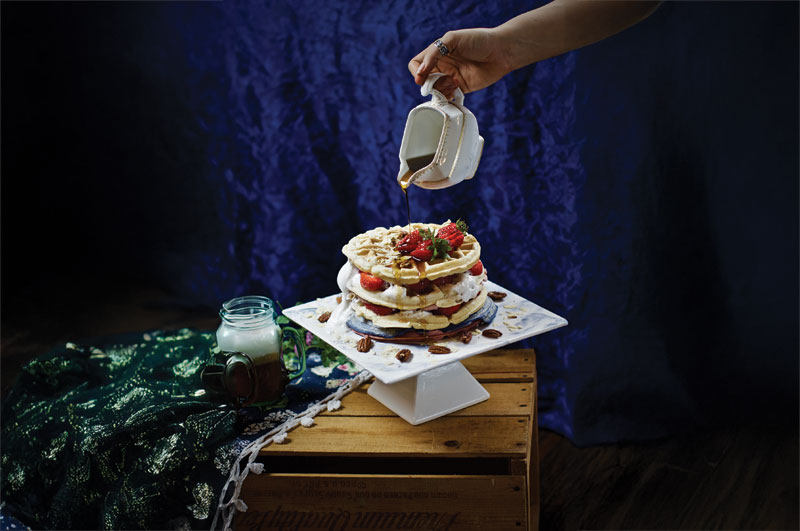
Chef Suzi Gerber, author of Plant-Based Gourmet: Vegan Cuisine for the Home Chef, believes that waffles are the ultimate comfort food. “I’m a big believer in the restorative power of what my mother calls ‘le petit déjeuner magnifique,’” Gerber told The Journal. In this household ritual she shakes off the stresses of the week with an indulgent brunch at home. 

Gerber said Belgian waffles pair with everything, from the American chicken and waffles to PB&J waffle sammies for the little ones and little ones at heart. Gerber’s gluten-free version ensures that everyone can enjoy them.

“Once you master the batter you can crank out a stack of waffles as a gorgeous centerpiece to kick start your weekend,” she said. “Before long you’ll probably feel that urge to waffle other things (best way to reheat latkes) and start letting your waffle comfort extend to holidays and special occasions.”

Belgian Waffles  

Makes 3 or 4 waffles, depending on the size of your waffle iron.

The best waffles have a nice golden-crisp exterior and a moist, fluffy inside, which is best achieved with a generous half cup of the batter poured evenly on a hot iron and left to stand for 30 to 45 seconds before closing.

2 1/4 cups gluten-free flour (conventional all-purpose flour may be substituted; reduce by 2 tablespoons)
1 Tbsp sugar
1 1/2 tsp baking powder
1/4 Tbsp salt
1 cup room temperature Oat Milk or Flax Milk
1 1/2 Tbsp melted vegan butter
1 tsp vanilla extract
1/2 tsp apple cider vinegar

Mix the flour, sugar, baking powder and salt in a bowl. In a separate bowl, combine the oat milk, vegan butter, vanilla and apple cider vinegar. Then slowly add the dry ingredients to the wet, whisking to combine.

Grease a waffle iron and preheat. Pour about 1/2 cup of the batter into the waffle iron and let it stand for 30 to 45 seconds, then close and cook approximately 3 to 5 minutes. Gently open to check, adding an additional 1 to 2 minutes if needed. Repeat with the remaining batter.

Tip: Add freeze-dried berries, whole or powdered, or even blue spirulina or pitaya powder to get colorful waffles with fruity flavors and even a bit of crunch. Alternating colors of waffles is fun, nutritious and festive.


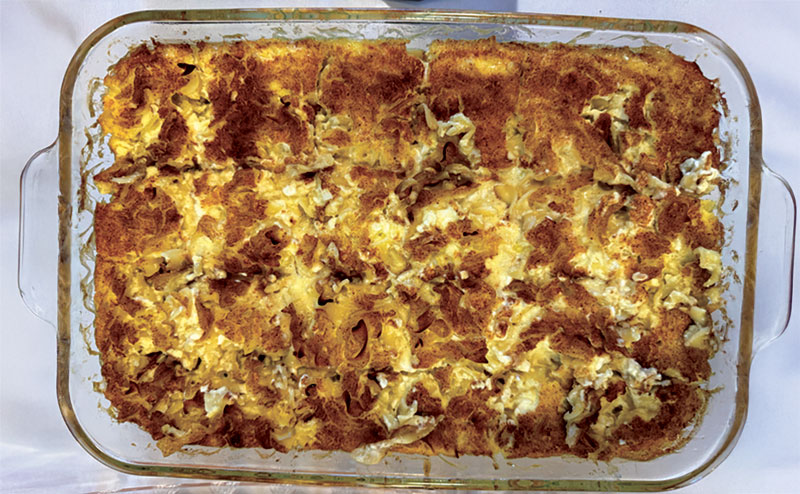
Nanny’s Noodle Kugel

When Amy Margulies’ family craves comfort food, they go straight for the noodle kugel. Her recipe is adapted from her brother-in-law’s Nanny Jeanne, which Margulies lightened up with lower-fat dairy products.

“The creamy texture created by the combination of the cheeses, noodles and sweetness of the dish, brings true comfort,” Margulies, RD, CDCES, LDN, NBC-HWC, and owner, The Rebellious RD, told The Journal. “It warms up the body and soul.” 

Nanny’s Noodle Kugel

1 pound wide noodles
1/2 cup sugar or an equivalent amount of sugar substitute
4 egg substitutes
2 cups nonfat sour cream
2 cups nonfat cottage cheese
1/2 tsp salt
1/4 tsp cinnamon

Preheat the oven to 350 °F. 

Cook the noodles according to package directions. Drain and set aside.

In a large mixing bowl, combine the sugar (or sugar substitute) through the salt together. Add the noodles to the bowl and mix to blend well. 

Spray a 9 x 12” casserole pan with nonstick cooking spray.

Pour the noodle mixture into the pan. Sprinkle with cinnamon. 

Bake for 50-60 minutes. Let stand for 5 minutes before slicing and serving. Slice into 12 pieces.


Potato Kugel Muffins

Shani Seidman’s go-to comfort-food recipe is also kugel, but the potato variety. Seidman is the Chief Marketing Officer for Kayco Kosher, whose brands include Gefen, Heaven & Earth and Manischewitz.

“Kugel muffins with crispy ‘bacon’ bits are my perfect mix of classic comfort and a little indulgence,” Seidman told the Journal. “They’re crispy on the outside, soft inside; plus, the beef bacon adds that extra savory crunch without compromising kosher standards.” 

Seidman said that beef bacon is the ideal swap for those who keep kosher.

“It’s flavorful, crunchy and gives each muffin that warm, satisfying touch we all crave from comfort food,” she said. “And with fluffy potatoes as the base, every bite feels like home.”

Potato Kugel Muffins with Crispy “Bacon” Bits 

Beef Bacon Bit Topping:
4 oz. Kosher beef bacon
1/4 cup brown sugar

Allow beef bacon to come to room temperature. Then place on a baking sheet, lined with parchment paper.

Cook on 350°F for about 15 to 20 minutes.

Once cooked, cool. Then cut into strips or little pieces using kitchen shears.

Muffins:
1 6oz. box of Manischewitz potato pancake mix
2 eggs
2 1/4 cups water

In a medium bowl, beat the two eggs until blended. Add the water and mix well.

Stir in the contents of the potato-pancake mix package. Allow the batter to thicken for about 4 minutes. Stir together.

Using a tablespoon, scoop out batter and place in a well-greased mini muffin tray.

Bake on 350°F for about 20 to 25 minutes, until the edges are slightly crispy.

Serve with spicy mayo and crispy beef bacon bits.

Kosher Comfort Food Read More »

Freshly Minted: A Fall Delicata Quinoa Salad

Last Shabbat, my son Sam, my daughter-in-law Estrella and my adorable baby granddaughter Raquel, slept over. Sam invited two high school friends, their sweet wives and sweet three-month-old babies to join us for a playdate.

When I offered drinks, Danny, who over the years had spent many Shabbats at our home, had a special request.

“Rachel, do you remember that amazing tea you used to make? That you served in those really cool, colored glasses?”

He was asking me to make Nana tea.

It made me so happy that this was one of his special childhood memories. And to know that the friendship will extend to the next generation, between his son Luis and my granddaughter Raquel.

Serving mint tea from an ornate silver pot into small decorative glasses is a treasured Moroccan tradition, a symbol of hospitality and friendship. It’s no coincidence that the garden path leading to my front door is lined with flowers and lots of bright green mint plants.

(The mint plant has ancient origins in the Mediterranean and was popularized by the Romans, who cultivated it throughout their Empire, bringing it as far away as Britain. Moroccan mint, called nana, has less menthol and a milder flavor than peppermint. Of course, mint grows like a weed, so many gardeners like to plant it in a container.)

As a young newlywed, I remember watching Bobby Flay on the Food Network. He was making a tabbouleh salad and he added fresh mint. That was the first time I had seen mint in a salad. Since then, I have discovered that adding herbs, such as mint, parsley and dill to lettuce and other greens is a simple, elegant way to create a unique, flavorful salad.

I began to add mint to my famous couscous salad — couscous tossed with tomatoes, cucumbers, peppers, onions, Kalamata olives, roasted pistachios and tons of herbs. About 10 years ago, the couscous was replaced with the more healthy quinoa to make an equally delicious salad.

—Rachel

Fall has definitely arrived. There’s a nip in the air, dried leaves rustle underfoot and the stores are filled with fabulous pumpkins and every color and variety of squash. Rachel and I have already started dreaming about the delicious Thanksgiving recipes we will cook for our family and friends.

Fall has definitely arrived. There’s a nip in the air, dried leaves rustle underfoot and the stores are filled with fabulous pumpkins and every color and variety of squash.

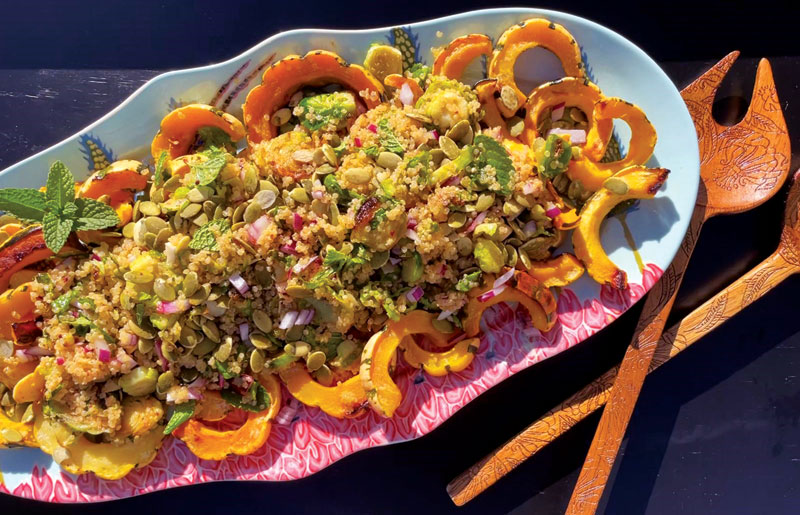
This delicata squash and quinoa salad is our way of embracing the season with a recipe that has all the fall feels. It’s our favorite kind of recipe — combining a nutritional powerhouse like quinoa with extra delicious, flavorful supporting players. Soft, golden brown roasted squash sweetened with a tiny bit of brown sugar. Crispy, buttery, caramelized Brussels sprouts. The cool sweetness of fresh mint. The subtle peppery spice of red onion. The savory crunch of roasted pumpkin seeds.

The true deliciousness of any salad is determined by the quality of the dressing and this sumac dressing recipe is a keeper. Of course, olive oil hardens in the refrigerator, so use avocado oil to make a big jar to use on any of your salads.

Like Rachel, I still love finding ways to use all the fresh mint from my garden in my recipes. Just make sure to soak your mint in cold water and drain well. Mint leaves are soft and easily bruised, so use a sharp knife to chop this herb.

Adding mint to this quinoa salad is a wonderful way to add a sweet, herby tone, a refreshing counterpoint to the delicata squash and the nutty quinoa.

—Sharon

Delicata Quinoa Salad Recipe

Dressing:
1/4 cup extra virgin oil
1/4 cup red wine vinegar
1 tsp Aleppo pepper
1 tsp sumac
1 tsp garlic powder
1 tsp salt 

Whisk together all the ingredients in a small jar and set aside.

Salad
1 cup quinoa
1/2 cup extra virgin olive oil, divided
1 lb delicata squash, washed and cut into thin strips
1 tsp brown sugar
1/2 lb shaved Brussels sprouts
1 small red onion, finely diced
1 cup fresh mint leaves, stems removed
1/2 cup salted and roasted pumpkin seeds, for garnish

Preheat oven to 400°F.

Cook quinoa according to package directions. Set aside.

Line a baking sheet with parchment paper and arrange the delicata squash in a single layer. Sprinkle with the brown sugar, then drizzle with 1/4 cup of olive oil. Bake for 15 to 20 minutes, until fork tender and the edges are golden brown. Line a small baking sheet with parchment paper. Arrange the Brussels sprouts in a thin layer, then drizzle with remaining oil.

Place cooked quinoa in a large bowl, then add the onion, Brussels sprouts and mint. Add the dressing and toss well.

Arrange the squash along the edges of a serving platter. 

Spoon the quinoa in the middle of the platter, then garnish with pumpkin seeds.

Notes:
Delicata can be substituted with sweet potato or any other squash variety.
Salad can be served warm or at room temperature.
Store leftovers in a tightly sealed container for 4-5 days.


Sharon Gomperts and Rachel Emquies Sheff have been friends since high school. The Sephardic Spice Girls project has grown from their collaboration on events for the Sephardic Educational Center in Jerusalem. Follow them
on Instagram @sephardicspicegirls and on Facebook at Sephardic Spice SEC Food. Website sephardicspicegirls.com/full-recipes.

Freshly Minted: A Fall Delicata Quinoa Salad Read More »

Ayelet Gundar-Goshen on ‘The Wolf Hunt,’ Writing and Oct. 7

Ayelet Gundar-Goshen is an Israeli psychologist and novelist, whose most recent work, “The Wolf Hunt” is about an Israeli family that relocates to Northern California and must reckon with the impact of a series of antisemitic and racial hate crimes. Published in August 2023, the book took on new meaning after Oct. 7, when its questions about who is a victim, who is a villain and what are the limits of self-defense resonated with Israel’s wartime realities.

Jewish Journal: Like the protagonist of your novel, you’re currently living away from your home in Israel to do a residency at Stanford University. The past year hasn’t been the easiest time to be Israeli or Jewish on an American college campus. How’s your experience been so far?

Ayelet Gundar-Goshen: The experience at Stanford has been very good. I have students that completely disagree with my political views but we share the same classroom and we exchange ideas and this is how it should be. I heard what happened when [students] locked themselves in the President’s office [last spring] and that there was a time when it didn’t feel so calm for some other faculty and students, but in person I haven’t had any troubles.

JJ: Your novel, “The Wolf Hunt” is about a mother “hunting” for the truth about her son in the aftermath of a hate crime and discovering that perhaps, she may not know her child as well as she thinks she does. Why did you want to explore the idea that a mother’s intuition may not be all it’s cracked up to be?

AG-G: The novel came from the moment I took my daughter for her first day of preschool and I realized that she felt very confident and I was the one worried. I was looking at the other kids as potential threats, scanning the classroom as if I was trying to identify the wolf out there: Which one of these sweet little girls or boys might do or say something that would harm my daughter? Then I realized the other parents were doing the same thing, but they’re actually looking at my daughter. You realize that all of us are afraid of the same thing, but none of us stops to consider the possibility that it could be my child that is the wolf. 

I came home and shared this disturbing thought with my partner. I asked him: If you had the choice of having [our daughter] be bullied or be the bully, what would you rather? And my partner said ‘Of course I prefer my child to be the bully rather than the victim.’ But for me, before Oct. 7, it wasn’t such a clear-cut answer. 

JJ: Does that mean you have a clear-cut answer now? 

AG-G: This question is far more prominent than it was before I wrote the novel. We’re all facing this question. I just hope [bully or victim] are not the only options we have to choose between.

JJ: For most of Jewish history there was deep anxiety around statelessness, not having a homeland. But in your book, Israel exists. And yet, when an Israeli family relocates to the U.S., the move creates anxiety around the ways living outside the land will change them. What is unique about the way Israeli Jews experience life in the Diaspora?  

AG-G: Growing up in Israel, my Jewish identity was not something to maintain. It was part of the culture, the language you’re soaked in. Here, you realize Yom Kippur doesn’t exist unless you insist it exists. But when you’re in Israel, the entire country stops on Yom Kippur. The same words which are used in the Bible and to pray, you’re using them when you go to the market. But when I’m teaching here at Stanford, I’m away from my language, away from my culture. There’s something about immigration that leaves you wondering … 

For so many years the ultimate Jewish dream was to get to the promised land and now that we have a promised land, the ultimate dream of many Israelis is to get to America and live the American dream. It causes a lot of guilt and shame. In previous generations, when somebody left Israel to go to America the word was “yerudim” — “downers.” It was viewed very negatively. Whereas aliyah means going up, something to be proud of. Now there’s been a huge shift. People relocating to America are considered the most successful, the unicorns. It’s history’s irony: We longed so much for the promised land and now that we finally have it, we switch the Jewish dream to the Israeli dream which is to live the American dream. Now many Israelis are choosing to go back and live in countries that Jews left [because of persecution] because they feel safer in those places than they do in Israel.

JJ: “The Wolf Hunt” raises questions about the assumptions we make around identities: Who is a victim? Who is a villain? Can a person be both at the same time? The book is ambiguous about any conclusions. What did you want to say about the messiness of ascribing labels to human beings or even groups of people?

AG-G: In the media today people are looking for very clear narratives of good guys and bad guys, but in real life it can be much more complicated. In the novel, the Israeli mom first learns that an African-American kid bullied her child and so she feels it’s antisemitic, that her child was bullied because of his Jewish identity and she feels like a victim. But at the same time, the child that bullied her child comes from a more deprived socioeconomic background. So it’s not very clear who is holding the power and who is powerless. I wanted to ask: Could it be that we are holding on to a certain identity – the identity of the good guy or the identity of the victim – because acknowledging the aggressiveness within our own group might be too challenging for us? 

It goes back to the disturbing experience I had as a mom, automatically assuming that my girl is the sweet little cub that needs protection. And then asking: Could it be that she’s the mean girl that people need protection from? Could it be a different story I’m unwilling to face? This is what I wanted the reader to go through on the domestic level, on the parental level but also on the political level.

JJ: Your work is often described as “psychological” which is hardly a surprise given that you are also a psychologist. How do your two identities – psychologist and writer – inform one another? 

AG-G: Both are driven from the motivation to ask questions. What makes us who we are? Yehuda Amichai has this beautiful line, “The clenched fist was once an open palm.”  And that’s the best textbook for literature and psychotherapy. I see a clenched fist and I ask, “What happened to the open palm? What made it turn into a fist? How do I reopen the palm?” 

JJ: During a lecture at the Nazarian Center for Israel Studies earlier this year, you mentioned that even though “The Wolf Hunt” came out before Oct. 7, it read very differently to you after Oct. 7. Why? 

AG-G: It took me a long time to reconnect with my own work because it was too raw. I worked as a trauma therapist with survivors of the Nova party. After that, everything else felt irrelevant. How can we discuss love, or family, or identity in the face of such horrors? It took me a while to realize that to insist on my right to read and enjoy a novel, to insist that we have a right to enjoy art, is to insist that we will not be defined by the sum of our traumas. This is what Hamas wanted, for us not to do anything but be soaked in trauma. This book deals a lot with Jewish identity and Israeli identity and my identity was shaken after Oct. 7. I was scared in a way that I never felt before, in a way I only knew from books. It raised these questions: Is the only way of making sure your child will never be a victim to transform yourself into the victimizer? Or is there an alternative? These became life or death existential questions.

”It took me a while to realize that to insist on my right to read and enjoy a novel, to insist that we have a right to enjoy art, is to insist that we will not be defined by the sum of our traumas. This is what Hamas wanted, for us not to do anything but be soaked in trauma.”

JJ: After some of the hostages were released last November, you gave an interview in which you warned “This is not a happy ending” – because the survivors were traumatized, and therefore the difficult healing work had yet to begin. Are happy endings only for literature? 

AG-G: I never trusted happy endings. Life doesn’t work that way. I love literature when it’s connected to life and not when it turns its back on life. It doesn’t mean that I think all endings are tragic; it’s about accepting the fact that it’s never whole; that there’s always going to be something broken there; and asking yourself: what do I do with the broken pieces? This is what I ask myself as an author and this is what I ask myself right now as an Israeli.

Ayelet Gundar-Goshen on ‘The Wolf Hunt,’ Writing and Oct. 7 Read More »

Tune Out the Noise

On a recent family vacation to Disneyland with my husband Daniel and two daughters, I realized I was the happiest I’d been in ages. 

Daniel and I spent all day going on kiddie rides with our girls and taking fun pictures, making memories that would last a lifetime. We swam in the hotel pool and watched our girls gleefully go on the water slides over and over again. We ate breakfast with all their favorite Disney characters; there’s nothing like seeing your child’s face light up when they realize Goofy is in the room. 

When I go on trips with my family, I disconnect from my regular life. I barely check the news or social media. I don’t really care what’s going on outside our tight little bubble. Life is simpler. 

In our busy everyday lives, Daniel and I work while our girls go to school, and weekends are often filled with errands and housework. Having this time away to truly connect meant everything to me. I relished the moments when we could cuddle our girls and eat meals together and read stories without feeling like we had to rush. We could just be. 

When I’m not spending time with my family, I sometimes forget what matters the most to me in life. I may obsess over how well one of my Instagram posts is performing or refresh my feed repeatedly to see what’s happening in the news. I get caught up in other people’s lives, and admittedly, I end up envying them or having FOMO, fear of missing out. I see beautiful clothing on Amazon that I just can’t afford, and I feel down about myself. 

But when I take a step back and tune out the noise, I’m able to say, “My life is actually pretty amazing. I’m grateful for what I have.”

When you think about the things that make you the happiest, they likely don’t include material objects or your social media feed. Like me, you probably have the best time with your loved ones. You might have a hobby that makes you feel calm and centered, like hiking up beautiful mountains or cooking delicious food. We trick ourselves into thinking we need much more than we do, but if we take a step back, we see it’s the simple things that we appreciate and love the most. 

Unfortunately, we live in an age where the noise is only getting louder and louder. We are increasingly relying on technology and have become absolutely obsessed with our devices. Many of us stay up late into the night looking at memes and watching videos, and then check our phones as soon as we wake up in the morning. We’re also binging on television and seeing tons of advertisements, looking at other people’s lives and wishing we had what they do. 

Here’s the truth, though: As much as human beings like to complicate things, at our core, we are simple creatures. We need food and shelter and love. We like to be among other people. We crave spirituality and a connection to God. Everything else is just extra.

As much as human beings like to complicate things, at our core, we are simple creatures. We need food and shelter and love. We like to be among other people. We crave spirituality and a connection to God. Everything else is just extra. 

In your own life, I challenge you to tune out the noise and figure out what matters to you the most. What makes you feel fulfilled?

On Shabbat, you can turn off your devices and talk with family and friends over a good meal instead. When you go away on vacation, you could leave your phone in your hotel room, or at least keep it far away so you can’t check it every few minutes. You can find a new hobby and really dedicate yourself to it, without having any distractions around. 

The world will always try to draw us back in. At times, it can cause us to forget who we really are and what we truly value. 

By pushing back and setting boundaries, we can effectively combat this. Tune out the noise, and I promise, you’ll be able to find yourself again.


Kylie Ora Lobell is an award-winning writer and Community Editor of the Jewish Journal. You can find Kylie on X @KylieOraLobell or Instagram @KylieOraWriter.

Tune Out the Noise Read More »

Israeli Film Festival Returns with Powerful Films and Honorees Ynon Kreiz and Shaike Levi

Meir Fenigstein is set to open the 36th Israeli Film Festival in Los Angeles, two and a half years after it last took place. Originally scheduled for November 2023, the festival was postponed twice due to the war. The past few years have been challenging for the festival; in 2020, it was held entirely online because of COVID-19, and in 2021, it was delayed until May 2022.

Now, as Fenigstein is getting ready to open the festival on Nov. 13, he promises the festival has one of its best lineups yet. “Since we didn’t have a festival last year, we have 10 films that were nominated for the Ophir Award [the Israeli equivalent of the Oscars],” he said.

“Since we didn’t have a festival last year, we have 10 films that were nominated for the Ophir Award [the Israeli equivalent of the Oscars],” he said. 

That selection includes Ayelet Menahemi’s “Seven Blessings,” winner of 10 Israeli Academy Ophir Awards 2023 including  Best Film, Best Director, Best Screenplay, Best Actress and Best Supporting Actress.It also includes Sophie Artu’s “Halisa,” Maya Kenig’s “The Milky Way,” Maya Dreifuss’ “Highway 65” and Adar Shafran’s “Running on Sand,” a four-time Ophir nominee.

Meir Fenigstein Photo by Michelle Mivzari

“Come Closer,”  this year’s official Israeli selection for the Best International Feature Oscar, an Israeli-Italian drama written and directed by Tom Nesher, will open the festival. The film’s story is rooted in Nesher’s personal experience of losing her brother Ari in a car accident in 2018, shortly after his 17th birthday. Nesher, the daughter of legendary director Avi Nesher, channels this family tragedy into a youth drama about Eden — a spirited young girl who loses her younger brother, Nati, in an accident. After his death, Eden discovers that her brother had a secret girlfriend named Maya. She embarks on an obsessive quest to learn more about Maya, and the relationship forged between the two girls becomes a way to fill the emptiness left in their lives.

“Come Closer” has already received acclaim, winning the top prize in the “Viewpoints” category at the Tribeca Film Festival in New York, which celebrates bold and unique voices in independent film. At the 2024 Jerusalem Film Festival, the film earned the Best Debut Film award, Best Actress for Lia Elalouf and a music award for Ginevra Nervi.

Organizing this year’s festival has been especially challenging. Fewer films were produced due to the war, and travel constraints added to the difficulty, with most airlines canceling flights to and from Israel, leaving only El Al operational — and fully booked. Fenigstein, who typically arrive in Los Angeles weeks before the festival, was only able to secure a flight the week before. He’s also faced obstacles arranging flights for the filmmakers he plans to bring to L.A. for post-screening Q&As.

Fortunately, El Al has joined as a sponsor this year, and they are not the only ones. It seems like there is nothing like the war in Israel to open up hearts and pockets. “I have 25 Jewish organizations sponsoring the festival,” Fenigstein said in a phone interview from his home in Tel Aviv, listing groups like Jewish National Fund-USA, the IAC (Israeli American Council), the Jaffa Institute, USC Dornsife and the Nazarian Center for Israeli Studies at UCLA.

This year, the festival will honor two individuals. The first is Ynon Kreiz, chairman and CEO of Mattel, who will receive the 2024 IFF Industry Leadership Award for his transformative leadership and the global success of “Barbie.” “Surprisingly enough, he was a volunteer at the festival in 1993,” Fenigstein recalled. “Back then, he was a UCLA student responsible for the volunteers who stuffed envelopes. Today, he’s Mattel’s chairman.”

Comedian and actor Shaike Levi, a member of Israel’s legendary comedy trio Hagashash Hahiver, will receive the 2024 IFF Lifetime Achievement Award during the festival’s closing night ceremony.

Next year, when the festival will celebrate its 37th anniversary, audiences might catch Fenigstein himself on the big screen. The former drummer for the Israeli pop group Kaveret and actor known for “The Band” and “Aunt Clara” unexpectedly returned to acting this year after a chance encounter at the Cannes Film Festival. “I met director Nadav Lapid there and he told me he was getting ready for a new film,” Fenigstein recalled. “I thought it was great — I liked the concept; it was something close to my heart. I didn’t expect what happened next.”

A week later, Lapid called him, offering him a role. And so, 40 years after his last appearance on screen, Fenigstein found himself once again in front of the camera. “I can’t divulge anything about the plot or the name of the film,” he said. “I can only say it was fun. And I had a great time.”


The Israeli Film Festival will take place between November 13-26 at the Laemmle Royal Theatre (West Los Angeles) and the Laemmle Town Center 5 (Encino). To purchase tickets for all screenings visit www.israelfilmfestival.com.

Israeli Film Festival Returns with Powerful Films and Honorees Ynon Kreiz and Shaike Levi Read More »

It Must Sound So Cool to Boycott Israeli Cultural Institutions

Jhumpa Lahiri’s debut story collection from 2000 earned her a Pulitzer Prize. I liked “Interpreter of Maladies” very much. It was a well-written, sensitive portrayal about Indian immigrants struggling to preserve their own culture and heritage while acclimating to a very different — and not always welcoming — American environment.

But now I’m done with Lahiri, because she clearly has her own malady of antisemitism, demonstrated by adding her famous name to an open letter calling for a boycott of “complicit” Israeli cultural institutions in the “genocide” in Gaza. 

More than 6,000 other writers have signed the letter, sponsored by the warm and fuzzy sounding Palestine Festival of Literature, or Palfest. Signers include winners of the Booker Prize, Nobel Prize, Pulitzer Prize, MacArthur Prize, and other accolades: Annie Ernaux, Viet Thanh Nguyen, Junot Díaz, Sally Rooney (who doesn’t allow her books to be translated into Hebrew), Jonathan Lethem, and Ben Lerner. Palfest proudly calls this letter “the largest cultural boycott against Israeli institutions in history.”

This is the latest salvo against Jewish writers and all things Israeli by the publishing and literary world. Tagging Jewish writers as “Zionist,” even when their work has nothing to do with Israel, has caused publishing contracts, speaking engagements and relationships with agents, other writers, and booksellers canceled.

Tagging Jewish writers as “Zionist,” even when their work has nothing to do with Israel, has caused publishing contracts, speaking engagements and relationships with agents, other writers, and booksellers canceled.

Even Bernard-Henri Lévy, the renowned French philosopher and author of nearly 50 books, has been censored. Writing in The Wall Street Journal on Oct. 27, Lévy explains that a book industry journal called Shelf Awareness accepted and then canceled an ad for his new book, “Israel Alone,” bought by Lévy’s publisher, Wicked Son. With 60,000 subscribers, losing the ad could significantly hurt book sales.   

Lévy shared the weak-kneed, overly fragile explanation for pulling the ad: Shelf Awareness’ publisher feared his partners would have “trouble they haven’t asked for and don’t wish to have.” And what if bookstore employees complained to management that they didn’t support the book? What if customers complained? The publisher wouldn’t risk the possibility that anyone might discover the existence of a book with “Israel” in the title.  

“At first I was stunned,” Lévy wrote in his essay. “I found it almost unbelievable that the name Israel can become unspeakable in a part of this great country, which since the Holocaust has been the second homeland for Jews. But here we are. It seems that no Jewish author, no one remotely connected to Judaism, is safe from this kind of exclusion.”

He called this episode a “pathetic act of censorship” that won’t harm him, and his rebuttal to the ad cancellation is to launch a speaking tour on college campuses. 

Lévy is far more concerned for younger authors, such as Elisa Albert, shoved off a panel at the New York State Writers Institute in Albany, N.Y., when two other panelists refused to share the stage with a “Zionist.” Or Joshua Leifer, not overtly pro-Israel but canceled anyway at powerHouse Books in Brooklyn, N.Y., “because he was slated to discuss his new book with a rabbi, Andy Bachman.”

The slamming of doors against Jewish writers, coupled with the zest with which thousands of writers and publishers signed the Palfest letter, is creating a backlash. The letter demands a boycott of all Israeli cultural institutions, including publishers, festivals, literary agencies, and publications said to be “complicit in violating Palestinian rights.” 

In an Oct. 31 essay titled “Stop the Boycott of Israeli Culture,” published in The New York Times, Jerusalem-based literary agents Deborah Harris and Jessica Kasmer-Jacobs note that these cancellation efforts may be hot but are not new. More than 10 years ago, they saw that books by their Israeli clients were being rejected at acquisitions meetings, with editors showing “open disdain for anything Israeli. The gates have been closing well before this latest war.”

Because bookstores around the world frequently offer prime real estate to “the Israel-Palestinian table,” where the preponderance of books exclusively present a pro-Palestinian and anti-Israel side, the myopia feeds on itself. “The few Israeli books that make it to these tables occupy only a paltry corner,” they observe. 

Calling the Palfest letter “a counterproductive and misguided rebuff by the very people who have been our comrades in the sacred mission of making books,” they argue, “It cannot be that the solution to the conflict is to read less, and not more. For authors who would in any other case denounce book bans and library purges, what do they hope to accomplish with this?

“You can lead a cultural boycott of Israeli literary institutions only if you believe that we don’t deserve to be there in the first place. And if that is your position, you are not looking to solve this conflict and alleviate suffering and death and herald an independent Palestine. You are advocating the expulsion of the other indigenous people of this place, the people about whom you apparently read very little.”

Adam Kirsch, editor of the Wall Street Journal’s Review section, also decried the Palfest letter, its outrageous claims and far-reaching demands. “Some of the world’s leading writers have decided that the best way to change Israelis’ minds is to refuse to talk to them,” he writes in an essay titled “A Writers’ Boycott of Israel Betrays the Values of Literature,” published Nov. 2.  “The boycotters have fallen victim to our era’s mania for ideological purity — the profoundly unliterary idea that disagreement is a reason to reject dialogue, rather than the best reason to begin it.”

A pro-Israel open letter by writers and others in the publishing industry now has more than 1,000 signatories and can be found here: https://www.creativecommunityforpeace.com/blog/2024/10/29/authors/


Judy Gruen is the author of “Bylines and Blessings,” “The Skeptic and the Rabbi,” and several other books. She is also a book editor and writing coach.  

It Must Sound So Cool to Boycott Israeli Cultural Institutions Read More »