(JTA) — Israel must grant citizenship to Jews who converted to Judaism in Israel under non-Orthodox auspices, its Supreme Court ruled Monday, possibly igniting another round in the long-running government battle over who the state should recognize as Jewish.
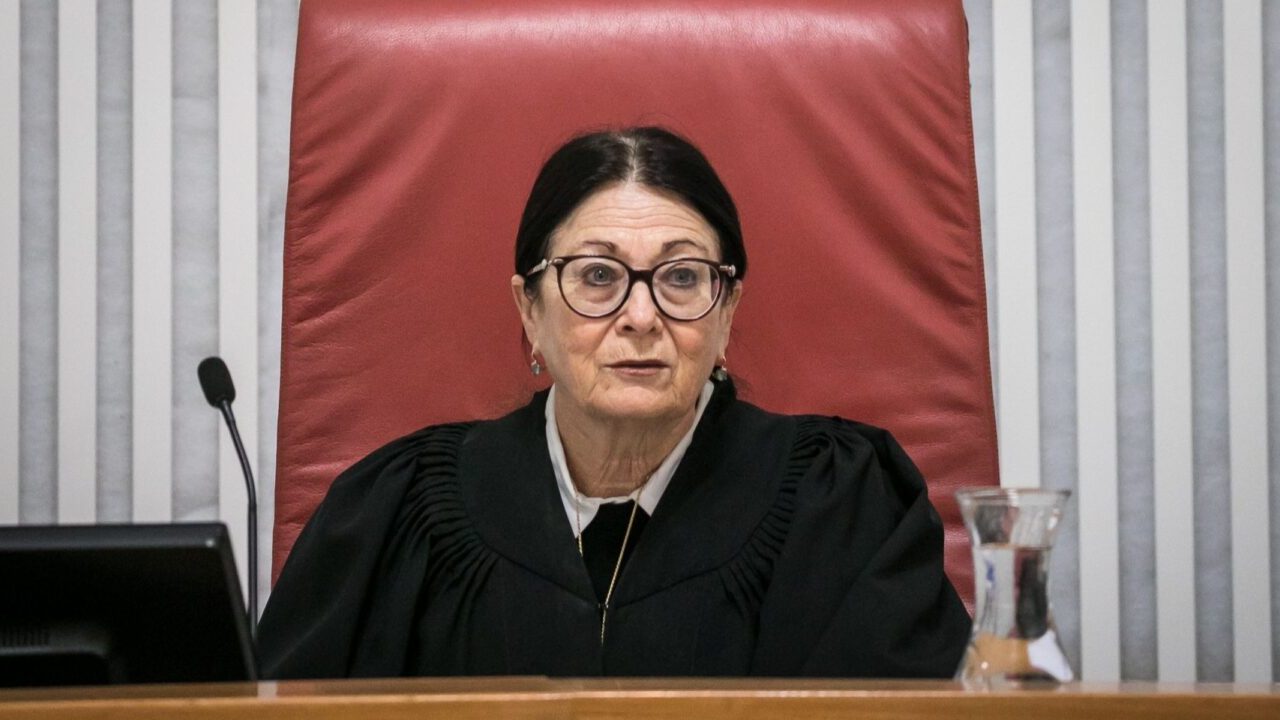
The decision, written by Chief Justice Esther Hayut, comes less than a month before national elections.
Israel’s Law of Return offers automatic citizenship to anyone with at least one Jewish grandparent. The state also generally recognizes those who converted to Judaism under Orthodox standards.
Past Supreme Court decisions have mandated that the state also recognize Jews who converted outside of Israel under non-Orthodox authority, provided they live in a recognized Jewish community. Non-Orthodox converts, such as Conservative or Reform Jews, however, still often face hurdles in obtaining Israeli citizenship and are sometimes denied.
Monday’s decision extends the right to citizenship to those who converted to Judaism under non-Orthodox auspices in Israel itself. The petition that spurred the court ruling was filed in 2005 but was postponed for more than a decade because the court wanted to give the government time to resolve the matter through legislation.
“The petitioners came to Israel and went through a conversion process in the framework of a recognized Jewish community and asked to join the Jewish nation,” Hayut wrote in her ruling, according to Haaretz.
Rabbi Gilad Kariv, a leading Reform rabbi in Israel and a Labor Party candidate for the Knesset, or parliament, called the ruling a “foundational decision of the High Court” in a Facebook post.
Aryeh Deri, the head of the Sephardi haredi Shas party, wrote on Facebook that the decision was “misguided, very troubling, and will cause arguing and a difficult rupture among the people.”
Successive government coalitions, based on their political leanings, have attempted to either liberalize or narrow Israel’s conversion standards. But such efforts at reform usually fall flat. Haredi Orthodox politicians object to laws that would broaden the range of recognized conversions, while attempts to make requirements stricter have provoked backlash from organizations representing American Jews, the vast majority of whom are not Orthodox. That has effectively meant that any change in conversion regulations comes from court decisions.
Once they become citizens of Israel, non-Orthodox converts still face restrictions.
Once they become citizens of Israel, non-Orthodox converts still face restrictions. Several issues of personal status in Israel, including marriage and divorce, are controlled by the country’s haredi Chief Rabbinate. Because the Chief Rabbinate does not recognize non-Orthodox converts as Jews, they have no way to marry legally in Israel.
Others who obtain Israeli citizenship under the Law of Return but are not considered Jewish by Orthodox standards — such as immigrants with only one Jewish grandparent — similarly cannot marry legally in Israel. Legislation to address that issue has been stymied as well by haredi opposition in parliament.
“Today Israel’s Supreme Court decided that Israel should be a national home for all types of Jews,” said Mickey Gitzin, the Israel director of the New Israel Fund and a longtime Israeli activist for religious freedom. “It is a day to celebrate, even as the road towards equality for all — especially those who are not Jewish — remains long.”