I remember, as a child, trying in vain to stay up to see the ball fall on New Year’s Eve. In later years, high school brought concerts that went past midnight and college introduced all-nighters of the studying and partying kind. In the midnight hour came inspiration and revelation and dreams of new worlds to conquer. Back then, sleep was not an issue.
Then sometime in my 20s, I suffered a bout of insomnia. For several weeks, I could not, did not, sleep. I can’t remember why, but the gnawing numbness of that sleep deprivation — too tired to think, too awake to sleep — did not go away. Before then, sleep didn’t matter; since then, I watch carefully over my sleep.
Turns out I was just a little ahead of the curve. As I passed into my 30s, it seemed everyone was concerned about sleep. In this age of 24/7, it was as if sleep had become a commodity, and there’d been a run on the product. When did sleep become “the new sex” — something everyone talks about, thinks about, but few ever have enough of?
As a married father with a mortgage and an aging prostate, there are still many nights when I wake and can’t seem to fall back asleep. But I no longer lie in bed, eyes wide open, anxious, mind going a million miles an hour — or worry about how little sleep I’m getting, or if I will fall back asleep. Yes, brothers and sisters, I am here to tell you that Herr Doktor Teicholz has a cure and he is going to share it with you.
My secret is simple: If I can’t sleep, I get out of bed. Most researchers agree: The bed is where you sleep, and if your eyes pop open — in the words of the Rolling Stones, “You gotta move” to another room or just another piece of furniture.
Experts also recommend that, like Lot, you avert your eyes — from finding out what time it is. My daughter wonders why we have so few clocks in the house; it’s because I keep them out of my nighttime sight line.
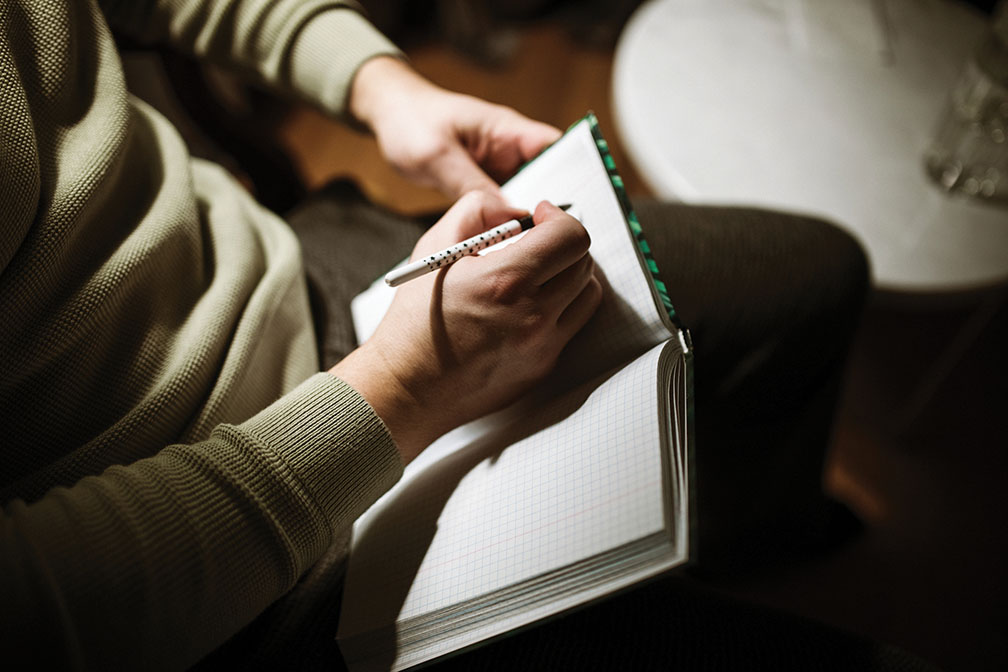
Here’s the important part: Once resettled, don’t turn on the TV, which seems to stimulate the brain, rather than quiet it. I recommend reading. But not just anything.
My criteria is something that will hold your attention, divert you from your problems, but that you can pick up and put down with impunity. Although I most often read fiction for pleasure, my middle-of-the night regimen calls for nonfiction. Reading your Visa bills is a bad idea. Reading history can be a good one.
Over the years, I’ve found several books for midnight ramblers that fit the prescription perfectly. I will always be indebted to “Son of the Morning Star,” Evan Connell’s masterfully written account of Gen. Custer and the battle of Little Bighorn for getting me through many a night, or early morning as the case may be. Connell is most known for his novels “Mr. Bridge” and “Mrs. Bridge,” perhaps the finest chronicle of the interior lives of a marriage in American Literature, but it his nonfiction work, “Son of the Morning Star,” that has magical properties.
It is a fascinating, extremely well-written account of something I would never have imagined would absorb me. Ten minutes of reading, and I was ready to go back to bed. Yet each time I picked up the book again, I did so with pleasure. In fact, I was sad when the book ended — and a little panicked: What would I read next?
For a while, I tried biographies. Teddy Roosevelt, Churchill, whatever was gathering dust on the living room coffee table. Didn’t work for me.
The problem with biographies is that the first half is all good news — there are hardships and travails, but they are inevitably overcome. It was the second half that I had a problem with — disappointment, decline, illness and death — such is the rub in life itself and being reminded of it at 4 a.m. is no plus.
By contrast, I’ve had great success with Joseph Telushkin’s “Jewish Literacy.” Close readers of this column will know that I often reference the work when I want to pass for Torah savvy or Tanakh fabulous.
Mostly, though, I dip into it at night. The book is more than 700 pages long and there are 348 entries, each a few pages long. At that time of night, my powers of retention vary, and so sometimes I read sections I don’t realize I’ve read before; sometimes I read them again because I don’t remember them; and sometimes I have great realizations reading them, which I often forget upon waking. But it never fails to capture my imagination and then lead me back to bed.
Most recently, I’ve started in on Edith Grossman’s new translation of Cervantes’ “Don Quixote.” The knight errant of Galicia quickly transports me away from 21st century concerns.
The book is surprisingly sly, deft and comic — a virtuoso 15th century metanovel. And the chapters are short — always a plus in matters of sleep hygiene.
I’m only 200 pages in and will report at some future date on the full Mancha, but for now, suffice to say, Grossman’s wonderful rendering makes returning to my dreams, possible.
We live in a culture (and a city) where people strive for self-improvement. They work out, they obsess about their appearance (and improve it beyond God’s gifts). They seek to look better and live longer.
At the same time, they neglect sleep, to which we devote one-third of our lives. That, I would argue is a mistake. Instead, they should do a little night reading to improve their lives.