
Elkin could be key for potential game-changing voting bloc
The steady exodus from Binyamin Netanyahu’s Likud party continued Wednesday evening, with one of his closest confidants, Minister of Higher and Secondary Education and Water Resources Ze’ev Elkin, offering a scathing rebuke of the Israeli prime minister and his conduct on primetime television before joining the new party of his nemesis, Gideon Sa’ar.
“You’ve destroyed the party, turned it into a personality cult, a byzantine court,” Elkin accused his former patron and friend. “We’re headed for a fourth election [in less than two years] because of your desire to influence the selection of the next attorney general and state attorney,” he added, hinting at attempts by Netanyahu to interfere with his ongoing corruption trial.
For over a decade, the former Likud lawmaker served as Netanyahu’s loyal ally and political adviser, often negotiating the party’s coalition agreements, putting together governments, and representing the prime ministers in various political settings.
Yet Elkin’s significance to the Likud was not limited to the behind the scenes wheeling and dealing.
Born in Soviet-era Ukraine and immigrating to Israel in 1990, Elkin represented in the party the vast former-USSR migrant community in Israel, serving as an expert on Israel’s Russian population during the party’s various campaigns and often accompanying Netanyahu on his meetings with President Vladimir Putin as a personal translator.
His defection to the New Hope party of Sa’ar, himself also a former prominent Likud member of Knesset who decided earlier this month to form his own platform and has since nabbed four more Likud lawmakers, leaves the party without one of its most effective Russian-vote magnets.
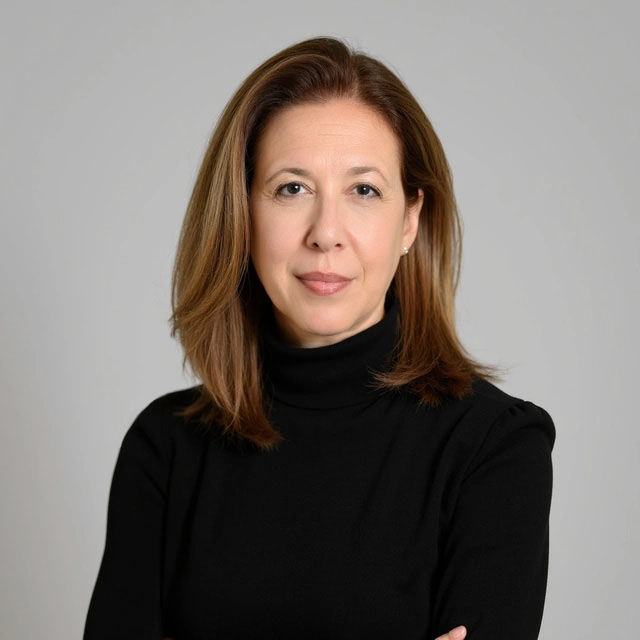
“Elkin enjoys significant popularity; he’s been voted one of the most well-liked lawmakers in the Likud among the ex-Soviet migrant community,” Ksenia Svetlova, a Moscow-born former MK from the Zionist Union party, told The Media Line.
“Some of these people may consider moving with him to the new party, but I have a hard time seeing masses of them leaving the Likud,” said Svetlova.
In the early 1970s, more than 160,000 Soviet Jews immigrated (made aliyah) to Israel. Throughout the 1990s, over a million more left the crumbling USSR and made their home in the Jewish state.
Over the years, the largely homogenous group voted for a string of parties claiming to represent the Russian vote. Today, their electoral power is estimated at 12 seats in parliament, or 10% of the Israeli legislature.
“I believe it’s growing as time goes on,” Alex Tenzer, a former director of the National Association of Immigrants from the Former USSR in Israel, told The Media Line.
“The children of the olim [immigrants], they’ve returned to the Russian bloc in the past few years,” he adds. “You have to understand what the issues are that matter to them, to truly realize their strength and size.”
The majority of voters of Russian background have recently camped in Avigdor Liberman’s Yisrael Beitenu party, made up mostly of Russian-born lawmakers and traditionally part of the right wing in parliament.
The party with the second-highest percentage of the olim votes has traditionally been the Likud, yet Tenzer says that identifying the entire demographic as exclusively right-wing would be a mistake.
“In the ’90s, they voted for [Labor Prime Minister Yitzhak] Rabin, and then Netanyahu, then [Labor Prime Minister Ehud] Barak,” he details.
“As of now, this electorate is divided between Yisrael Beitenu, Netanyahu, and the rest, who are unaffiliated and on the fence.”
During 2019’s three election campaigns, the battle for the Russian vote, waged principally by the two parties, escalated with each cycle. In the final round alone, the Likud spent close to 1.5 million shekels (around $470,000) on Russian-language campaign material, an unprecedented sum for the party.
Svetlova, who explains she did not see herself exclusively as a representative of the Russian community while in office and did not run on the “olim ticket,” says there is still something to be said for identifying as an ambassador of the community.
“I know where I come from, and it was important for me to advance the issues that weigh on people’s minds and that I was familiar with from up close: public housing, pensions, the separation of state and religion.”
Tens of thousands of the former Soviet Union immigrants living in Israel are considered non-Jewish by the state’s religious authorities, a designation that hinders their ability to wed, receive certain benefits and be buried in Jewish cemeteries.
As a whole, the Russian-born demographic is secular, and strongly opposes the closure of business and public transportation on Shabbat and the monopoly religious bodies hold over civic issues in Israel.
“Everyone has cheated them,” Tenzer accuses. “You name the politician, I’ll tell you how they’ve conned the Russian public. So naturally, they’re disappointed.”
As to the effect the latest political maneuvering will have on the March 23 election, it remains to be seen.
“Elkin doesn’t change much. He alone is not enough,” Tenzer says, while acknowledging that interest in Sa’ar’s new party among Israeli-Russian voters has spiked.
“He has great potential, but that can be momentary. He has to prove what his candidates have done for the community, while also coping with Liberman’s highly effective Russian-language propaganda, which will annihilate [Sa’ar].”
Added Svetlova: “I wouldn’t call it an earthquake.”