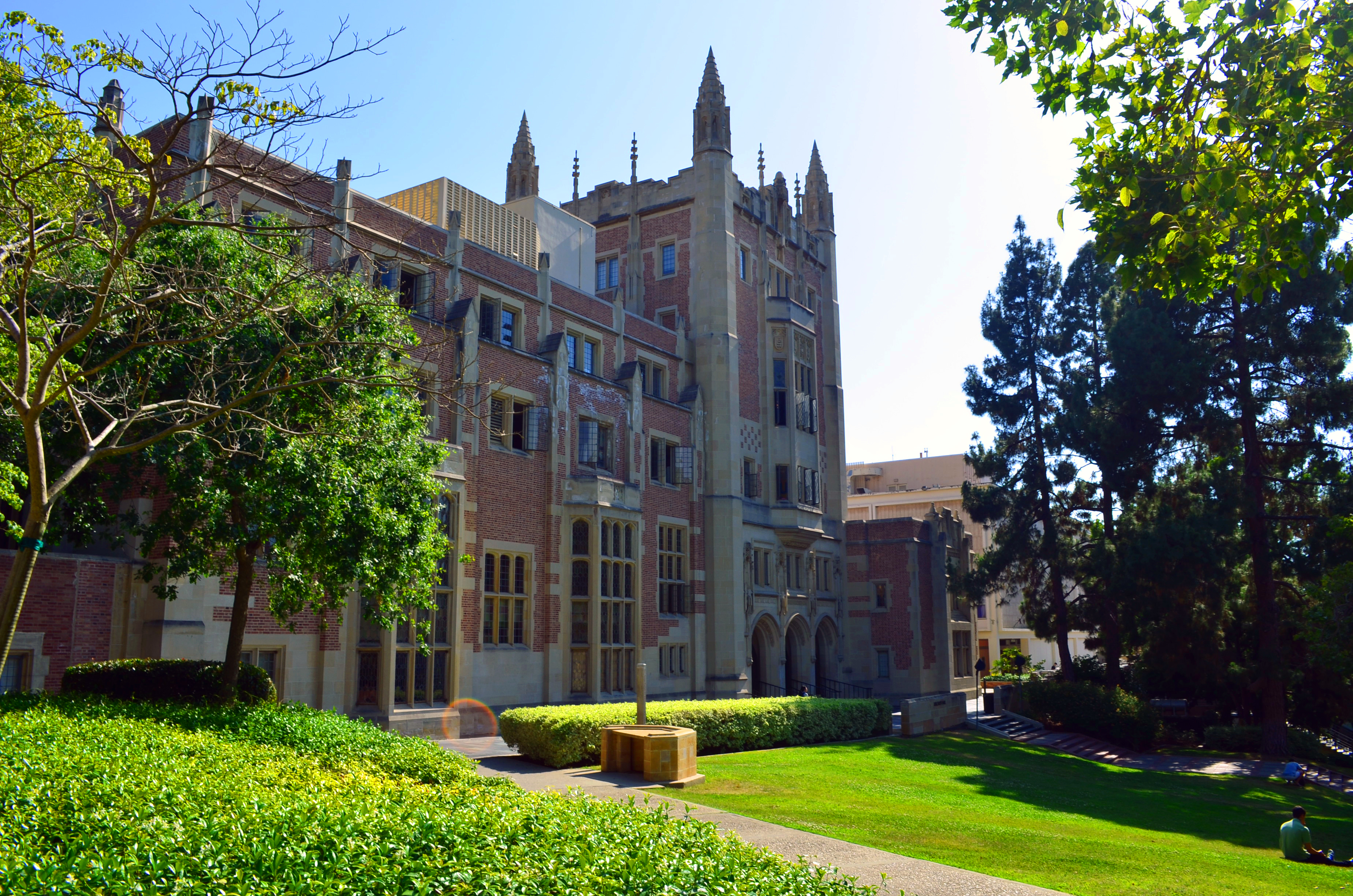
A rededication of a mezuzah was held at UCLA on Jan. 18 after a vandalism incident during which a mezuzah was removed from the door of the school’s Undergraduate Students Association Council president.
The president, Arielle Mokhtarzadeh, described in a Jan. 10 Facebook post how she returned from winter break to find that the mezuzah adorning her office in Kerckhoff Hall had been taken down. Mokhtarzadeh noted that it was “the second time in two years that Mezuzah has been stolen from doorpost the Office of the President.”
“The fact that you felt the need to vandalize my office under the cover of darkness shows that you and your actions do not represent this community, which has no tolerance for your intolerance,” Mokhtarzadeh wrote. “We know all too well that there are costs associated with championing certain identities in our current political climate. We cannot afford to let that reality become our reality, for the day students at UCLA begin to feel that there are costs associated with being themselves at this University is the day we, as a community, forfeit the right to call ourselves one in the first place.”
In response to the incident, a rededication of a new mezuzah was held in front of Mokhtarzadeh’s office. UCLA Chabad Rabbi Dovid Gurevich, who presided over the event, declared in a speech, “You can steal a mezuzah, but not God.
“You cannot steal the faith and resilience, especially of the Jewish people, who have been around long enough to overcome all kinds of adversity and challenge,” he said.
Gurevich also praised Mokhtarzadeh for “her amazing leadership.”
“She really exemplifies the best of the best, and her leadership is very inspiring to us,” Gurevich said.
Gurevich explained that there are two key parts to the mezuzah: It states in Hebrew that “God is our Lord, God is one” and that good, divine deeds are done “with all your heart, with all your soul and with all your mind.”
“Arielle’s leadership is with all her heart, with all her soul and with all her mind, and she really, really goes out of her way to be positive, to be proactive,” Gurevich said, “and that’s why it’s very important to make this positive stand here, so this thing should not happen again. It should only be positive happenings throughout UCLA, throughout campuses, not only for the Jewish students but for everyone. People should learn tolerance, people should learn to respect each other’s cultures and beliefs.”
According to the Daily Bruin, Mokhtarzadeh said she’s working to get security cameras installed on the third floor of Kerckhoff Hall to ensure that such incidents don’t happen again. Investigators have not named any suspects yet and the incident is being investigated as a possible hate crime.
Students Supporting Israel at UCLA (SSI), UCLA Hillel and Bruins for Israel will host an event to discuss anti-Semitism on campus.
“We plan to stand strong in the face of anti-Semitism, just as we have in the past,” SSI President Hirmand Sarafian told the Daily Bruin.
UCLA gained national attention when a provocative editorial cartoon featuring Israeli Prime Minister Benjamin Netanyahu was published in the Daily Bruin in 2017, and in 2015, when a member of the student council’s judicial board asked a Jewish nominee for student council if she would be “able to maintain an unbiased view” despite her faith.
As Mokhtarzadeh explained in her Facebook post, mezuzahs are important because they speak “to fundamental Jewish values like education and accountability for one’s actions.”
“Mezuzahs have marked the doorposts of Jewish homes for generations; demonstrating dedication to our Jewish traditions, exhibiting pride in our Jewish identities, and expressing defiance against those who pressured Jews to hide or cast away their identities,” Mokhtarzadeh wrote. “I grew up hearing stories about my grandparents’ childhoods in Iran where they were forced to put their Mezuzahs on the inside of their doorposts, rather of than the outside. What better way to honor the sacrifices and experiences of my grandparents and parents than to proudly express my Jewish identity in a way they never could. Imagine my utter disappointment to see that the reality they feared most had happened in our very own Kerckhoff Hall.”