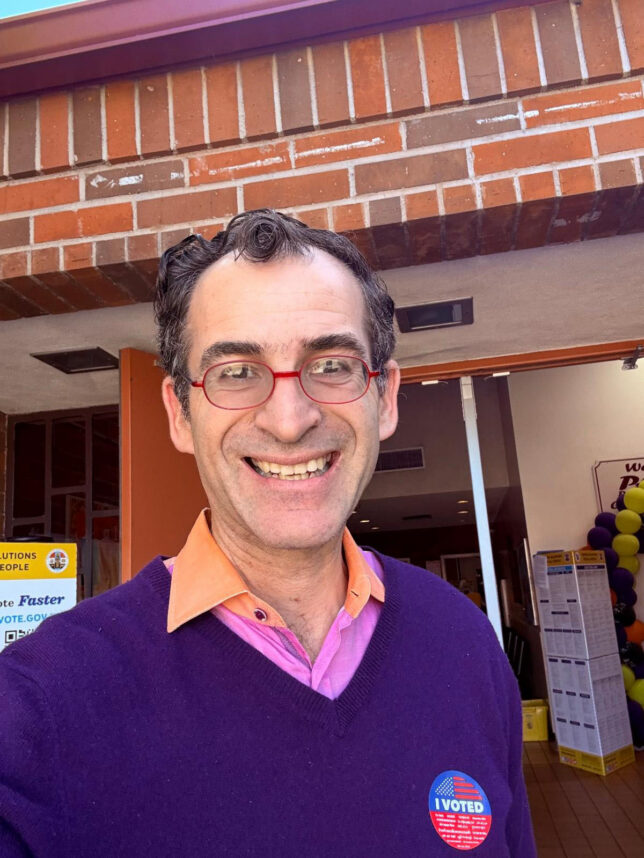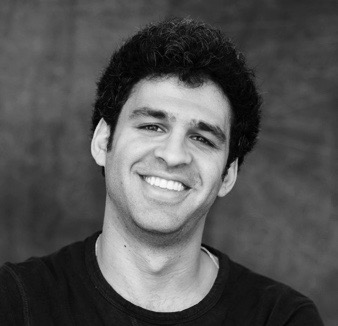
Activist Sam Yebri and USC lecturer Josh Lockman have read every page of the controversial Iran deal, but they’ve come to very different conclusions.
“Iran wants this deal. They need it. We can do better than this deal,” Yebri said, garnering applause during a community debate on Aug. 24 at Temple Emanuel of Beverly Hills.
“Getting a better deal at this point is illusory,” Lockman countered.
The two were matched up during an evening event titled “Should Congress Approve or Reject the Iran Nuclear Deal?” moderated by Temple Emanuel Associate Rabbi Sarah Bassin. Yebri is a local attorney and president of the Iranian-American organization 30 Years After, and Lockman is a USC Law School lecturer on international law and U.S. foreign policy.
The debate on the deal — which would lift sanctions against the country in exchange for Iran curbing its nuclear program for at least 10 years — attracted an attentive audience of more than 150 people of all ages.
Although the two speakers offered little in the way of fresh arguments about the agreement, they demonstrated intimate familiarity with the comprehensive deal’s fine print as they went back and forth about centrifuge reduction, “snap-back” sanctions and other talking points for more than an hour.
The event was one of numerous debates and speaking events about Iran that have taken place in Los Angeles ever since the United States, United Kingdom, France, Russia, China and Germany came to an agreement with Iran in July about its nuclear program. Although different speakers have represented the various points of view at each of these events, one thing the events have had in common is a captivated audience participating in the Q-and-A portions.
During this debate, audience members were asked to submit questions on notecards. One person asked about a possible alternative to this deal, given President Barack Obama and other supporters have maintained the only other option is war.
Yebri’s answer was declarative: “The fact that it’s either this deal or war is a false dichotomy.”
Bassin told audience members to hold their applause until the end, but that did not stop them from applauding Yebri’s criticism of the deal.
Bassin pushed for people in the crowd to contact their local representatives and let them know how they feel about the deal, whether they support it or are against it.
Lockman, in a later phone interview with the Journal, said he thought the debate over the Iran deal, if nothing else, underscored the variety of opinions local community members hold about issues pertaining to Israel and beyond.
“This issue exemplifies the American-Jewish community does not think monolithically, whether about U.S.-Israel relations or about the Middle East at large,” he said. “There is a lot of diversity and [a] spectrum of opinions on how the United States should lead and strengthen our alliance with Israel and protect Israel.”
Audience member Mati Cohen, who told the Journal he was against the deal, said that while he was pleased with the dialogue between the two speakers, he was hoping for more discussion about how Iran will likely use the funds that it will receive after sanctions are lifted.
“I wanted to see if they would address the main issues,” Cohen said, when asked why he attended the event.
The debate was organized by American Jewish Committee’s ACCESS Los Angeles and co-sponsored by Temple Emanuel of Beverly Hills, Temple Israel of Hollywood and 30 Years After.