Jewish Tax
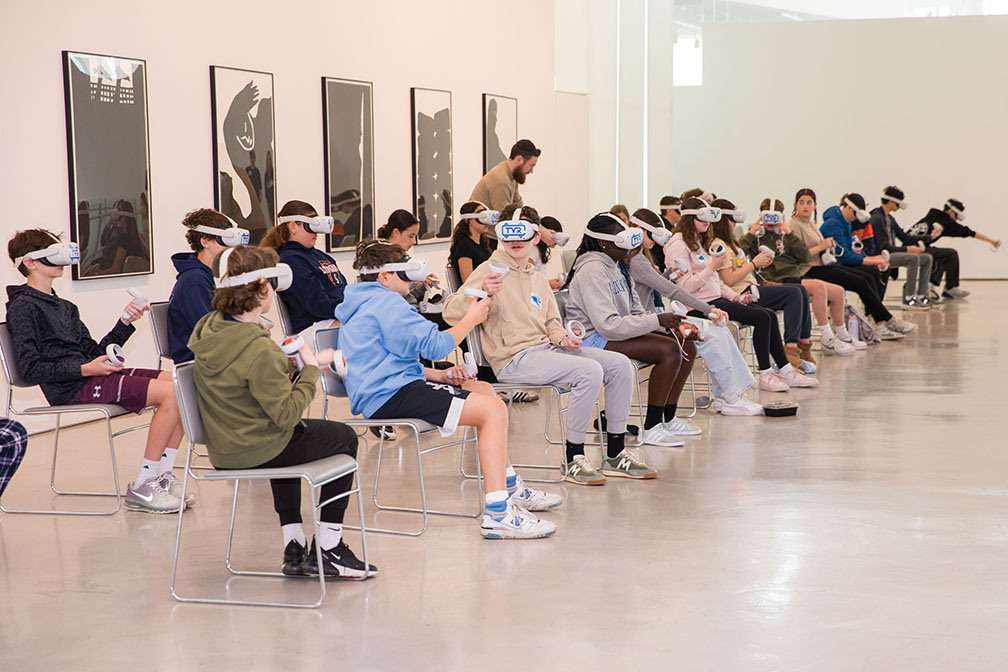
I noted a great disconnect between the editorial (“The Jewish Tax,” April 13) and the cover story on the Skirball Museum (“Skirball at Five,” April 13). The editorial correctly noted the high financial burden borne by Jewish families paying for day school and camps. The article urged creative steps to help ease this burden including “massively funded regional endowments.”
The $45 million Cotsen Auditorium is about to be supplemented by the $34 million Winnick Heritage Hall that will help “teach children about the immigrant experience.” Almost all of this no doubt has been funded by money from members of the Jewish community.
A $79 million endowment could generate close to $5 million annually in scholarships for Jewish camps and day schools without even touching the principal. The scholarships could be provided each year in perpetuity. Add to that the amount the Los Angeles-based Museum of Tolerance will be spending on a new campus in Israel, and you see the high cost of certain decisions.
In order to solve the important questions addressed in the editorial, the Jewish community needs to ask hard questions about how its priorities are reflected in its expenditures.
Lawrence Weinman, Los Angeles
Thanks to Rob Eshman for his valuable and insightful editorial. Every day — not just April 15 — parents and grandparents are confronted with the cost of “doing Jewish.” As a community, we have no idea of the number of families lost to our future because of financial costs.
The communal sophistication Eshman describes is an important template for discussion. As one with deep concerns and commitment to a Jewish future, I would like to join others to continue this discussion and, perhaps, work on solutions.
Esther Lerner Brenner
Strasser and Smith
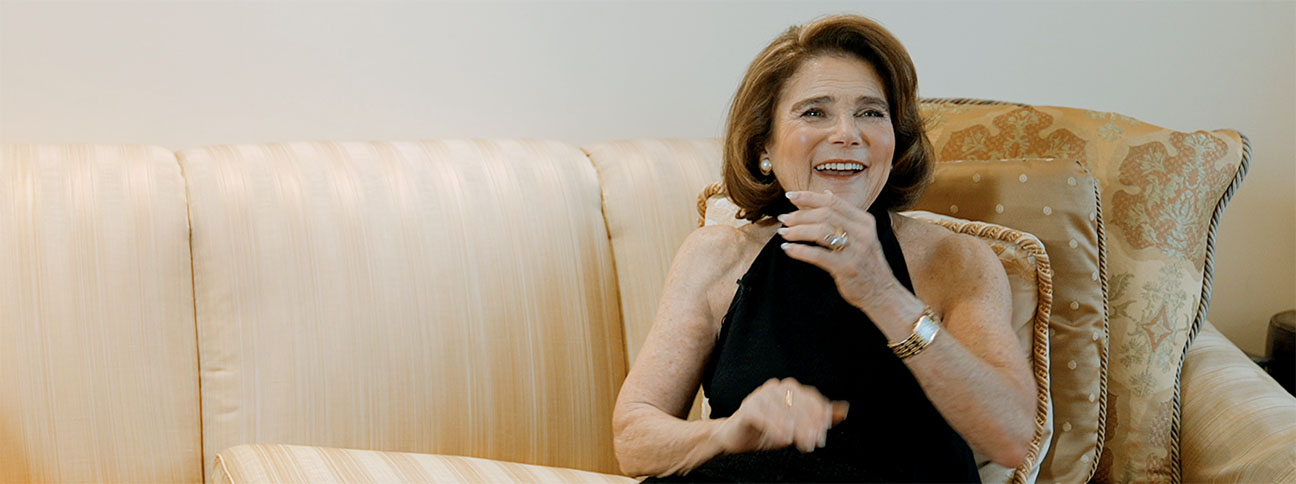
As one of your appreciative yet grammatically challenged readers, I would like to lend my support to Teresa Strasser for the refreshingly conversational, intimate tone of her writing (“Grammar Police,” April 13). I find her essays to be insightful, entertaining and particularly risk-taking in the way she exposes her personal life and vulnerabilities.
Those who incessantly criticize her can choose to not read her column and put their spare time and energy toward a worth cause, such as fighting hate crime. Better yet, with their fine grasp of the English language, tutoring school children or volunteering for a literacy program would be a productive alternative.
Carol Schneider, Los Angeles
Considering Los Angeles is teeming with brilliant talent in all of the arts, it’s frankly shocking that you can do no better than hiring the likes of Teresa Strasser and J.D. Smith. Neither imbue their writing with anything remotely spiritual, let alone Jewish.
Elements of Judaism, whether religious or spiritual, should be integral elements in a column by, for and about Jewish singles. Instead, Strasser uses the column as an outlet for her uninspired free-associative styled blatherings about secular insights that only she finds insightful. Smith uses the column as a stage for his archaic, passe, “self-hating Jew” stories about both his and his friends’ pathetic accounts of their situations with women.
Considering that Marlene Adler Marks writes about things worth reading, weaves Jewish threads into her column and always writes in an engaging style, I know that The Jewish Journal is capable of finding good writers.
Morley Beth Sobo, Los Angeles
Death Penalty
It is encouraging that with the understandable exception of Buford Furrow’s victims at the North Valley Jewish Community Center and the family of Joseph Ileto, the man Furrow killed, everyone in your story expressed satisfaction that justice had been served by sentencing Furrow to life in prison rather than the death penalty (“Furrow Sentenced,” March 30).
This is in keeping with Jewish tradition. Talmudic rabbinical interpretations for the last 1,800 years have essentially eliminated capital punishment by requiring two witnesses to testify not only that they personally witnessed the crime but that they warned the perpetrator beforehand that he would be executed, that he acknowledged the warning and proceeded in spite of it.
Consequently, the Central Conference of American Rabbis and the Union of American Hebrew Congregations of the Reform movement have since 1959 opposed the death penalty. Last June, the Union of Orthodox Jewish Congregations endorsed the national call for a moratorium on capital punishment initiated in 1997 by the American Bar Association.
As national standards of decency evolve in the direction of joining all other civilized countries that have abolished capital punishment, it is fitting and proper that the Jewish community acknowledges that it is wrong to kill to show that killing is wrong.
Stephen F. Rohde, Secretary Progressive Jewish Alliance