I want to talk about fear. After all, these are the Yomim Noraim, or “The Days of Awe.” Not the Days of Awww. Not like what you say when you see a puppy nuzzling a bunny. No. The ’80s ruined the word “awesome,” just like the 2010s are ruining the word “epic,” but we should never forget: The word for awe in Hebrew is the same as the word for fear.
These are the Days of Fear and Trembling. For our ancestors, God-fearing people, Yom Kippur was terrifying. The idea of God as King struck fear, because kings struck fear.
“Who shall live and who shall die” is frightening stuff. The rabbi used to be scary, pounding the pulpit with fire and brimstone. Today, if one thinks the rabbi is going too far, one just bangs out an email, cc’ing the temple president. (Fear is a rabbi checking her inbox after Yom Kippur.)
We teach our children to be afraid of fire, and crossing the road, and talking to strangers. Life is filled with fear. In nature, everything under the apex of the food chain is afraid.
“Do not fear” is repeated 39 times in the Torah. However, the Torah also says that one should fear. Deuteronomy 10:12 reads, “And now O Israel, what does the Lord your God demand of you? Only this: to fear the Lord your God.”
Proverbs 1:7 reads, “The beginning of wisdom is fear of God.”
Proverbs 19:23 reads, “One who fears
God earns life, this one shall abide in contentment.”
How can an emotion so debilitating also be redemptive?
In Genesis 15:1, God says, “Fear not, Abram, I am a shield to you.” But in Genesis 22:12, as Abraham is lifting the knife over Isaac, God says, “Now I know that you fear God, since you have not withheld your son.”
In other words: Don’t be afraid, but I’m very pleased that I terrify you. But also: Don’t be afraid of people who would hurt you, because you’re with Me. And remember, be respectful of Me. I’m your 380-pound Bengal tiger, and you’re my Siegfried and Roy.
Yea, though I walk through the valley of the shadow of death, I will fear no evil, for thou art with me. Thy rod and thy staff, they comfort me. Wait, what comforts me? Not thy blankie and thy cannabis. Thy rod and thy staff. I will fear no evil, why? Because You basically are carrying nunchucks, and that comforts me.
In Hebrew, there are are two words for fear. Pachad means fear as in “Eek, there’s a killer clown in a sewage drain!” Yirah is that fear associated with reverence and trembling. Yirah is a soulquake.
We have a lot of pachad but very little yirah.
Yirat Ha-Shamayim, fear of heaven, dislodges our lower fears, replacing them with wonder and also fear. Fear of divine retribution.
For the most part, we dismiss the idea of divine retribution; God is all love. Acceptance. Participation awards. But to reduce God to 1-800-THERAPY is to lose the whole point of God, even if you don’t believe in God.
The whole point is moral accountability.
Does the person contemplating an affair need to feel more of God’s love? Need more permission to “treat themselves”? That person probably has pachad, motivated by their own fear of aging, fear of death … but that person does not have Yirat Ha-Shamayim, fear of heaven, to protect them and their family.
And what of the tiki torch-toting protesters in Charlottesville, Va.? Do they fear anything? When they shouted “Jews will not replace us!” they gave us their answer. They are afraid of Jews replacing them. Afraid of their own inadequacies, embarrassed by their own ignorance, and so they target us.
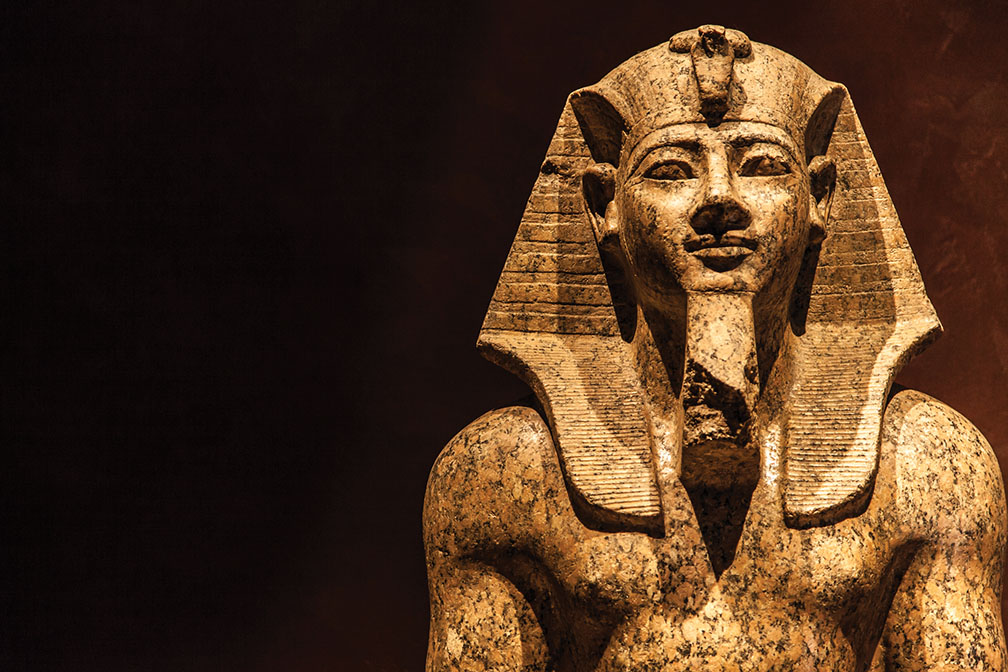
Rabbi Malka Drucker wrote, “Judaism had been a target of fear for 3,500 years, beginning with the Egyptian Pharaoh, who, fearing that the Israelites would rise up against him, turned them into slaves and killed their newborn sons.” What haters need is less pachad and a heck of a lot more Yirat Ha-Shamayim, fear of heaven.
We live in what’s sometimes called an “attention society,” in which attention is understood to be a limited resource, and what better way to grab it and hold it than through shock and fear. But most people are afraid of the wrong things. There’s homophobia, Islamophobia. People now are afraid of Skittles, for God’s sake.
Rabbi Chanina ben Dosa taught: “Whenever a person’s fear of sin comes before his wisdom, his wisdom will endure. But when a person’s wisdom comes before his fear of sin, his wisdom will not endure” (Pirkei Avot 3:11).
Our wisdom won’t endure until we learn to revere the great tapestry of which we are each a small but significant part. Our wisdom won’t endure unless we dislodge our lower fears and replace them with moral accountability. We will not endure unless we fear sin. Unless we fear heaven.
May we arrive at the next year with our hands clean, our conscience clean, our hearts pure.
Rabbi Zoe Klein Miles is senior rabbi at Temple Isaiah.