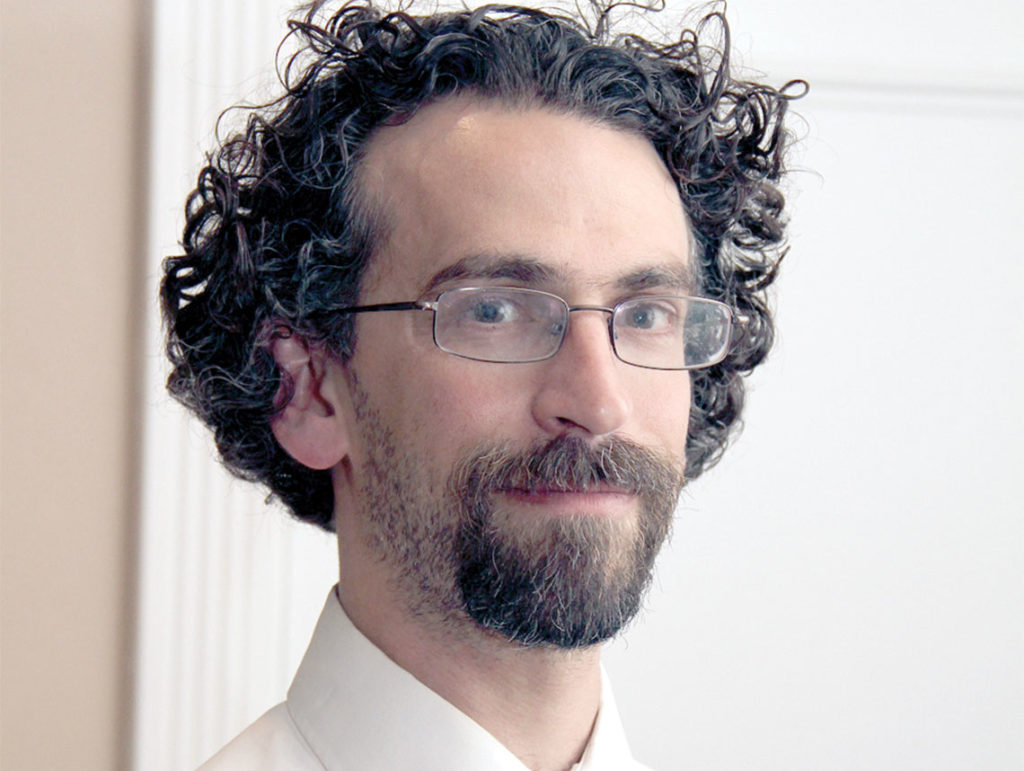
Marlene Adler Marks was one of them. She was managing editor when I started at the Journal. She wrote a weekly column called “A Woman’s Voice” in the days when there were few female columnists taking on subjects beyond family life. It was, alas, the days before the Internet too, so the column never got far beyond LA. That’s a shame, because Marlene was too good for analogue. She always wanted a bigger readership, and her writing—original, strong, unafraid—deserved it.
Her best column was her last. She was diagnosed with interstitial lung cancer at age 52. What a joke: she never smoked, not once. In all the times we ate lunch together, all I remember her eating was cut fruit. She was whippet-thin, a yoga fanatic long before there were $40 T-shirts saying, “Yoga Fanatic.” When we went to one of those fundraising banquets— which, by the way, I will not miss, not for one second—Marlene would drink a glass of red wine– and eat a fruit plate.
The column, published August 31, 2002, is entitled, “Oh So Sorry.” (The Journal posted it in 2014.) Today, just before I was about to Tweet the link to a friend, I re-read it. She wrote it during the period just before the High Holy Days, so on the eve of the eve of Yom Kippur, it feels more like liturgy. She wrote about why denying ourselves the pleasure of food can only lead to regret. The older I get, the more profound, sad and funny this column is. Here’s a taste:
Saturday is Selichot, the time when the whole Jewish world sings with Connie Francis, “I’m sorry,” and vows to do better next time. Many of us are focused on the wrongs we’ve done to others, or even to God.
This year, however, as I contemplate in yet a new way the impact of lung cancer, there’s no one to whom I owe apology more than myself.
Yes, many of my apologies go to me. I should have eaten more hot dogs, with mustard and sauerkraut. And even more hush puppies, which in Jewish delis are hot dogs wrapped in potato knish, served best (if not only) in New York.
I know what you’re thinking: you were only watching your health. But if you want a hot dog and never give yourself a hot dog, what are you accomplishing? Fear of food is, I think, a crime against the soul, the shutting down of the appetite by which we show our confidence in being alive.
How can our differences make us stronger? Hear what Reform Rabbi Joel Nickerson of Temple Isaiah, Orthodox Rabbi Jason Weiner of Cedars-Sinai Medical Center and the program’s moderator, Conservative Rabbi David Wolpe of Sinai Temple, have to say as they discuss how Jews can use the differences in their practices and beliefs to strengthen the American Jewish community. 6:30 p.m. Free. Sinai Temple, 10400 Wilshire Blvd., Los Angeles. (310) 481-3340. sinaitemple.org/events.
SINAI TEMPLE TEEN CENTER’S PARENT INFO NIGHT
The Sinai Temple Teen Center is a community of Jewish teenagers who get together for activities such as weekend retreats, leadership training days and religious experiences. Parents can learn what its multitude of events and programming has to offer Jewish teens. 7 p.m.Free. Sinai Temple, 10400 Wilshire Blvd., Los Angeles. (310) 474-1518. sinaitemple.org.
IAC REAL ESTATE NETWORK
Four real estate experts will discuss what the Los Angeles market will look like in 10 years at the Israeli American Council Real Estate Network event “Forward Snapshot of LA.” Panelists include Dan Rosenfeld, developer and president of Acanthus LLC; Rick Cole, Santa Monica city manger; Manjeet Ranu, senior executive officer of the Los Angeles County Metropolitan Transportation Authority; and moderator Gail Goldberg, executive director of the Urban Land Institute. The event also will include a special opening presentation by Joslyn Treece from the LA 2028 Olympic committee. The event includes food, networking and an open bar. 7 p.m.; 8 p.m. program. $50. IAC Shepher Community Center, 6530 Winnetka Ave., Woodland Hills. israeliamerican.org/laforward.
THURS. | OCT. 5
“ABOVE THE DROWNING SEA”
Longtime “Law & Order” showrunner and head writer René Balcer channels his talents toward a different kind of drama: “Above the Drowning Sea,” a feature-length documentary about the escape of European Jews to Shanghai as World War II loomed. Panel conversation follows screening. 6 p.m. Free. USC’s Wallis Annenberg Hall Auditorium, 3630 Watt Way, Los Angeles. abovethedrowningsea.com.
SASHA ABRAMSKY
Sasha Abramsky will discuss and sign “Jumping at Shadows: The Triumph of Fear and the End of the American Dream.” In his book, Abramsky digs into what he says is America’s most dangerous epidemic: irrational fear. He takes readers on a dramatic journey through a divided nation, delivering an eye-opening analysis of our misconceptions about risk and threats. Abramsky shows that how we calculate risk and deal with fear can teach us a great deal about ourselves and can expose our culture’s deeply rooted racism, classism and xenophobia. 7 p.m. Free. Book Soup, 8818 Sunset Blvd., West Hollywood. (310) 659-3110. booksoup.com.
On Saturday, when Jews around the world will fast and gather in synagogues to pray on Yom Kippur, some young Jews will be coming together in the U.S. capital at a more unconventional venue: a beer garden.
Aaron Potek, the 31-year-old rabbi for GatherDC, a nondenominational group that does outreach to young Jewish professionals, is hoping to reach young Jews who otherwise would not attend synagogue on the holiest day of the Jewish calendar.
“They are people who would not be going to a service otherwise,” said Potek, who was ordained by the liberal Orthodox Yeshivat Chovevei Torah in New York City. “Some will be fasting, some won’t be fasting. Some are coming from absolutely no [Jewish] background, some are coming from more of a background but have been alienated by more traditional approaches.”
The event is not a prayer service and thus will not feature many of the traditional Yom Kippur routines. Instead, from 11 a.m. to 1:15 p.m., an expected 120 participants will come to the Sauf Haus Bier Hall & Garden on Dupont Circle to hear lectures, study Jewish texts, meditate and participate in discussions. Leading the event alongside Potek is Sarah Hurwitz, who worked as a speechwriter for President Barack Obama and first lady Michelle Obama.
And though it takes place at a beer garden, the bar will be closed and no food or drinks will be served. Those who do bring food will be asked to eat it inconspicuously.
“I don’t care if you’re fasting or not, I still would like you to try to connect to the day of Yom Kippur,” Potek told JTA on Wednesday. “That’s not a statement about Jewish law, that’s not a statement about what the Torah says about fasting, that’s just living in the reality, and saying there are people who don’t fast and who don’t connect to fasting.”
Potek says he hopes to attend religious services on Saturday, but likely will end up praying on his own in between the beer garden event and preparing food for homeless people at another GatherDC event.
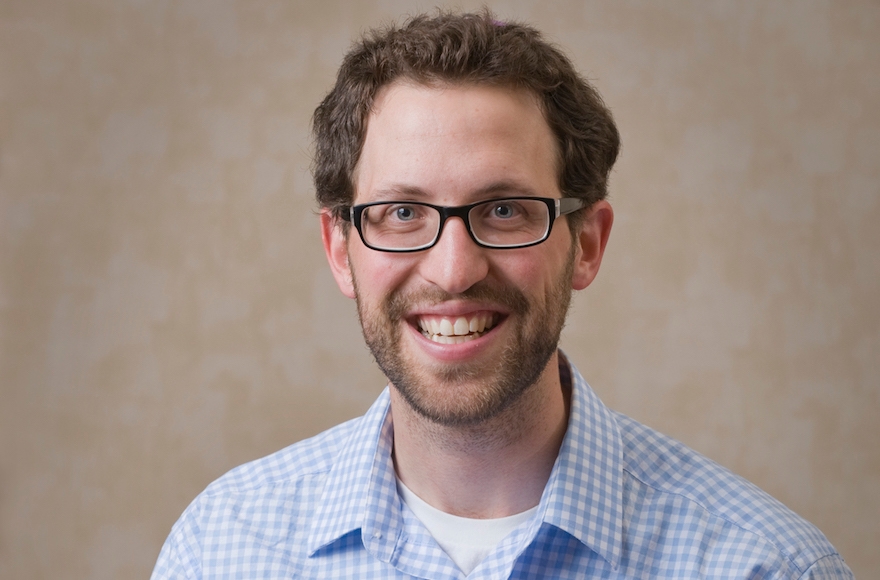
Rabbi Aaron Potek hopes to attract young Jews who otherwise would not be attending Yom Kippur programming at an event hosted at a beer garden. (Bruce Powell)
The setting led to some minor controversy.
“Having an event in a beer garden — the implication is that food and beverages will be served — on Yom Kippur is highly inappropriate and crosses the line of acceptability. To me, this is a mockery of our traditions,” Harris Cohen, the vice president of the D.C. Orthodox synagogue Ohev Sholom, told Religion News Service.
Cohen later reiterated his view, writing on Facebook that though he had been made aware that no food or drinks would be served, he still thought the choice of venue “highly inappropriate.”
Rabbi Ari Hart, who like Potek is a graduate of Yeshivat Chovevei Torah, initially criticized the event on Facebook, saying the beer garden venue “runs against both the spirit and the law of Yom Kippur.”
However, after being informed by JTA that there would be no food or drinks served at the gathering, he apologized for his initial criticism and gave Potek his blessing.
“It’s just a space,” Hart wrote in an updated status. “A controversial, unconventional space? Sure. Would I feel comfortable? Probably not. Does that matter? Definitely not. Would hundreds of Jews who would feel uncomfortable in my shul, or any shul, feel comfortable there? Definitely yes.”
Potek considered a few venues prior to settling on the beer garden. Price and capacity ended up being the determining factors, he said.
“We wanted it to not be in a synagogue. We wanted it to be in a popular, centrally located area, something that people associated with their regular life,” he said.
Despite the kerfuffle, Potek is looking forward to the event.
“I’m really excited,” he said. “It’s unfortunate that questions of denominational lines have distracted from what I’m ultimately trying to do, which is help people talk about the meaning of Yom Kippur and the meaning of their lives.”
The harvest festival of Sukkot is a great time to be home for the holidays.
The most obvious reason is that the main symbol of the festival is the sukkah, the decorated outdoor booth that provides families a wonderful opportunity to invite friends and neighbors to share a snack or come together for a meal.
In the spirit of the holiday, dishes should include seasonal fruits and vegetables, along with several kinds of grains, as a reminder of the fall harvest.
This year, our family and friends will enjoy interesting foods from a menu that is healthful and low in fat, and much of it can be prepared in advance.
Begin with a hearty Holiday Pumpkin Soup, which can double as a great addition to your Thanksgiving dinner. Garnish with a sprinkling of toasted pumpkin seeds that add a crunchy texture, and serve with grain-rich bread made from whole-wheat flour and cornmeal.
Another Sukkot culinary custom is to serve foods filled with rice or other grains. Kreplach, blintzes, cabbage, squash, and other vegetables are perfect examples. But, red bell peppers stuffed with rice and fruit, and baked until tender, are my favorite.
For dessert, lemon-flavored treats always are welcome and refreshing, since lemons are in the same citrus family as the etrog, or citron, one of the four species used ritually during Sukkot. (The other three species are the palm, willow and myrtle.) The lemon cake recipe below uses generous quantities of fresh lemon juice and grated rind for some extra zest.
HOLIDAY PUMPKIN SOUP
3 tablespoons unsalted butter or nondairy margarine
1 large onion, thinly sliced
1 clove garlic
1 tart apple, peeled and thinly sliced
4 cups pumpkin, peeled and thinly sliced
1 teaspoon fresh thyme
6 cups vegetable broth or pareve chicken broth
Salt and freshly ground black pepper, to taste
Parsley and toasted pumpkin seeds for garnish
In a heavy saucepan, heat butter; add onion and garlic and sauté until tender. Add apple and pumpkin, and sauté 2 to 3 minutes, until tender. Add thyme and 5 cups broth. Bring to boil or until soup thickens.
With a slotted spoon, transfer all of pumpkin mixture to a food processor and process slowly, adding remaining 1 cup of broth until pureed.
Return pureed mixture to saucepan. Bring to a boil, reduce heat and simmer 10 minutes or until soup thickens. Season to taste with salt and pepper. Ladle into heated soup bowls and sprinkle with parsley and toasted pumpkin seeds.
In the large bowl of a mixer, combine flour, salt, baking powder, 1 cup yellow cornmeal and sugar. Blend well. In a separate bowl, combine milk, oil and egg. Pour into flour mixture, beating until dry ingredients are moist.
Brush an 8-inch-square baking dish with oil and sprinkle with cornmeal. Pour in batter and sprinkle with sesame seeds.
Bake in preheated oven for 20 minutes, or until wood toothpick inserted in the center comes out clean. Cool on rack and cut into squares.
Makes about 16 squares.
RICE AND FRUIT STUFFED RED BELL PEPPERS
Quick Tomato Sauce (recipe follows)
8 large, sweet red bell peppers
1 1/2 cups uncooked, long-grain rice
2 tablespoons olive oil
1 onion, chopped
1/3 cup sliced dried prunes
1/3 cup sliced dried apricots
1/2 cup chopped parsley
1/4 teaspoon ground cinnamon
1/4 teaspoon turmeric
2 cups vegetable stock, chicken broth or water
Salt and freshly ground black pepper, to taste
3 tablespoons pine nuts
Preheat the oven to 350 F.
Prepare Quick Tomato Sauce; set aside.
Cut off stem ends of peppers (1/2 inch from top), and remove the seeds and inner white ribs. Blanch and invert to drain while preparing filling.
Rinse and soak rice in hot water, covered, for 30 minutes; then drain.
Heat oil in skillet and sauté onion until tender. Add prunes, apricots, parsley, cinnamon, turmeric, stock and drained rice. Season to taste with salt and pepper. Mix well. Bring to a boil, cover and simmer 5 minutes, stirring occasionally.
Stuff peppers with rice mixture and cover with stem ends of peppers. Cover and bake in preheated oven for 1 hour or until tender, basting occasionally.
Makes 8 servings.
QUICK TOMATO SAUCE
1 (15-ounce) can tomato sauce
1 cup water
1/3 cup lemon juice
1/3 cup brown sugar
1/2 cup golden raisins
Salt to taste
In a large pot, combine tomato sauce, water, lemon juice, brown sugar, raisins and salt to taste. Bring to boil, then reduce heat and simmer 10 minutes. Cover and set aside.
Makes about 3 cups.
Sukkot Lemon Cake
SUKKOT LEMON CAKE
6 eggs, separated
1 1/2 cups sugar
1 3/4 cups flour
1/4 teaspoon salt
1/2 cup lemon juice
2 tablespoons grated lemon zest
Powdered sugar for garnish
Preheat the oven to 350 F.
In the large bowl of an electric mixer, beat egg whites at medium speed until foamy. Gradually beat in 1/2 cup of the sugar, 2 tablespoons at a time, beating well after each addition.
In another bowl, beat egg yolks until very thick and lemon-colored. Gradually beat in remaining 1 cup of sugar until mixture is smooth. Combine flour and salt and blend into egg-yolks mixture, alternately with lemon juice. Fold in lemon zest. Using a wire whisk or a rubber spatula, fold yolk mixture gently into egg-white mixture.
Pour batter into ungreased 10-inch tube pan. Bake in preheated oven for 50 to 55 minutes, until cake springs back with finger. Invert on wire rack and cool completely. Just before serving, sprinkle with powdered sugar.
Makes 10 to 12 servings.
JUDY ZEIDLER is a food consultant, cooking teacher and author of 10 cookbooks, including “Italy Cooks” (Mostarda Press, 2011). Her website is judyzeidler.com.
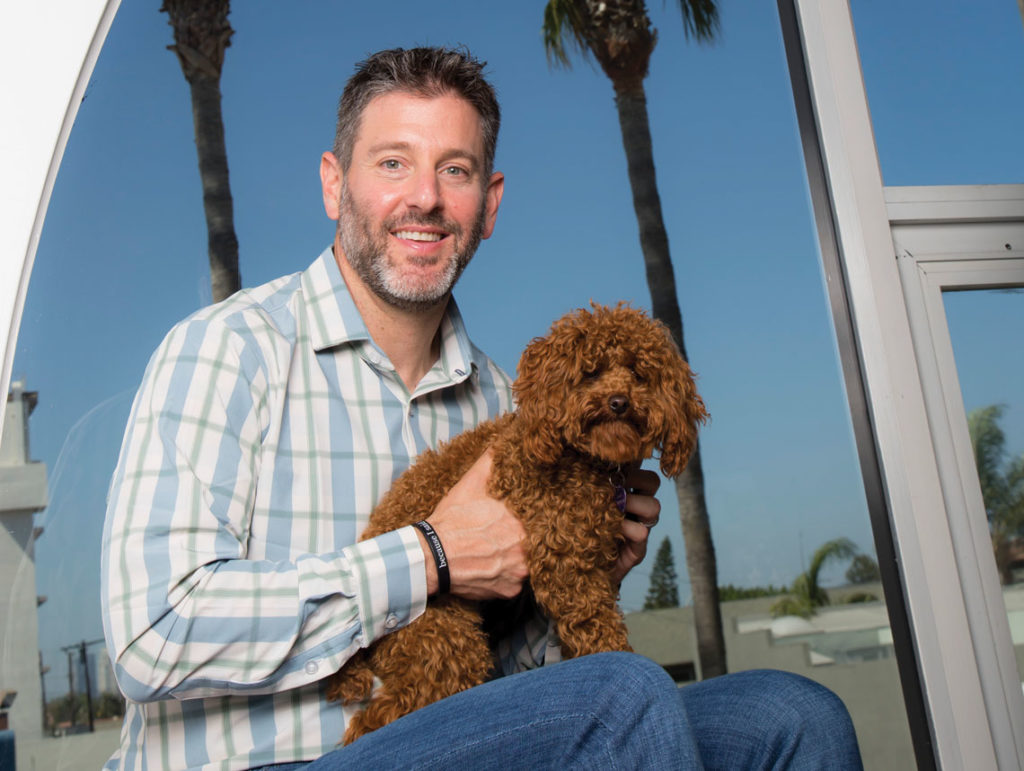
From 2004 to 2014, Greg Liberman helped Jewish couples come together as an executive and eventually the CEO of Spark Networks, parent company of the online Jewish dating service JDate. Since 2015, he’s carried on his work making shidduchs, albeit of a different sort:As the CEO of PuppySpot.com, he helps customers secure pups from responsible breeders.
“I’m a puppy matchmaker now,” Liberman said during an interview in his dog-friendly office in Culver City. “A lot of people tell me, ‘This is like JDate for puppies,’ which it really is.”
At the time that Liberman arrived at what would become PuppySpot, the company was called Purebred Breeders; he changed the name and soon revamped the business. Under his leadership, the company employed a 15-member breeder compliance team to ensure that only top breeders participated in the program, he said. Less than 10 percent of breeders who apply are accepted; they must be federally licensed or legally exempt, per the United States Department of Agriculture, and follow more than 40 pages of regulations outlined by PuppySpot. The business has a zero tolerance for puppy mills, Liberman said.
“Breeders have to have an exercise program, and we mandate a health and vaccination protocol they have to follow,” he said. “And they need to constantly send us updates.” PuppySpot employees make all travel arrangements for the dogs to safely arrive at their new homes.
The customers, meanwhile, undergo their own thorough vetting, filling out a detailed questionnaire about what they would like in a pet and what they have to offer. A dog that needs lots of exercise, for example, wouldn’t be matched to a person living in a small apartment. The dog must pass a thorough health check before being allowed to travel to its new home.
And customers are required to take their new puppy to the veterinarian within two days of arrival and to promptly send the doctor’s report back to PuppySpot in order to activate the company’s health guarantee. Should the dog develop genetic or hereditary problems within a year, the network will provide a replacement dog of equivalent value. If issues come up over a 10-year period, PuppySpot offers 50 percent off the purchase of a new dog from the company.
The network, which serves all 50 states, now has about 3,000 active breeders participating, with no first-time breeders allowed. Customers simply can go online, type in the name of a breed, and select from videos and photos of pooches that are available to be adopted immediately.
Randall Kaplan, an entrepreneur and venture capitalist who founded the Justice Ball benefiting Bet Tzedek Legal Services in the 1990s, purchased his miniature goldendoodle, Karma, from PuppySpot about eight months ago. The Brentwood family’s previous canine, a Bernese Mountain dog, had died; subsequently, Kaplan decided to adopt a goldendoodle because the dogs are hypoallergenic and because many of his friends had great experiences with the breed.
Kaplan emailed all 80 goldendoodle breeders he found online around the country, but discovered that many wanted deposits up front for puppies that might not be available for months. One breeder even raised the price of a prospective dog from $3,000 to $8,000 while Kaplan was on the waiting list.
When Kaplan finally tried PuppySpot, he found eight puppies ready to go home with him almost at once. The price was more than $3,000, but that was comparable to what he had found while dealing directly with breeders. Now, Karma is an important part of his family.
“The process couldn’t have gone any better,” he said.
Liberman, 45, developed his entrepreneurial skills early. At 15, he founded a profitable baseball card company and secured a business license. After attending Stanford and the University of Chicago Law School, he practiced law for a time before being lured back to a business career. He graduated from Harvard Business School’s Program for Management Development and worked in telecommunications and internet corporations before coming aboard at MatchNet, which ultimately transformed into Spark Networks.
The company ran a number of ethnically and racially specific dating services, but JDate was especially important to Liberman, who attends Wilshire Boulevard Temple.
“A lot of people tell me, ‘This is like JDate for puppies,’ which it really is.”
“It was exciting to work for a consumer brand that was making a huge impact on the Jewish community and that all my friends knew,” he said. “Some of my son’s and daughter’s best friends would not have existed without JDate.”
But by 2014, other entities took over the company, he said.“We didn’t see eye to eye and I left,” Liberman said.
He found familiar territory when he came aboard on what would become PuppySpot in early 2015. “It’s a profile-based matchmaking service where, instead of matching humans with each other, we’re matching humans with puppies,” he said.
“I had dogs all throughout my childhood, so I love dogs,” Liberman added.
Two Shih Tzus, three basset hounds and a Cavalier King Charles Spaniel were part of his family growing up. His now 10-year-old daughter picked out the Libermans’ current dog, a red miniature poodle named Lucy, from the PuppySpot website two years ago. Liberman often takes the 5-pound pooch with him to work.
PuppySpot now does eight figures in revenues, Liberman said, while declining to name specific numbers. Under his leadership, the company has expanded from a single location in Cooper City, Fla., to an additional two offices, in Culver City and Utah, and has grown from 148 to 201 employees.
But why not just adopt a lovable mutt from a shelter? Liberman responded that shelters are not for everyone. For example, an elderly customer had suffered a stroke and needed a healthy, trainable dog as her service animal. Health issues aren’t always apparent when one adopts a dog from a shelter, he added.
But Liberman acknowledges that rescue and shelter organizations can work for many individuals and families. “We’re not anti-shelter,” he said. “We’re pro-dog.”
As for PuppySpot, the company will continue its mission to place “healthy puppies in good homes,” Liberman said.
Like JDate, he added, it’s all about helping to create happy families.
Ask any fan of Billy Wilder to name their favorite of the master’s films, and almost inevitably the answer will be either “Some Like It Hot” or “The Apartment.” Marilyn versus Shirley. “Nobody’s perfect” versus “Shut up and deal.”
I was in the former camp until, while watching “The Apartment,” I had an epiphany.
To set the stage: In my former life as a motion picture literary agent, I represented writer-director Cameron Crowe beginning with the movie rights to his first book, “Fast Times at Ridgemont High,” and the screenplay he wrote based on it.
Crowe’s idol, role model and inspiration was Billy Wilder. His lodestar was 1960’s “The Apartment.” If Wilder, in a moment of creative indecision, asked himself, “What would Ernst Lubitsch do?” Crowe would ask himself, “What would Wilder do?”
Wilder won an Oscar for directing “The Apartment,” and shared the screenwriting Oscar with I.A.L. Diamond.
About 15 years ago, I arranged a screening of “The Apartment” in the Creative Artists Agency’s (CAA) theater with Crowe present for a Q-and-A after the film.
It was near the end of the movie when I had the epiphany: The story of “The Apartment” is the story of the Wandering Jew. Wilder, consciously or not, wasn’t just telling us the story of a hapless soul who found his courage. He was telling us the story of a Jew, destined to wander the world as an eternal outsider.
To summarize the intricate plot: In a large insurance firm, an anonymous, gray-suited worker, C.C. Baxter, played by Jack Lemmon, tries to curry favor with his bosses by lending them his Upper West Side apartment for their extramarital affairs. One manager in particular, Mr. Sheldrake (Fred MacMurray), uses Baxter’s apartment in exchange for a promise to promote him. Baxter is deeply saddened to learn that Sheldrake’s mistress is the woman he secretly longs for, Fran Kubelik (Shirley MacLaine), an elevator operator in the building. Baxter must decide between the woman he loves and the advancement of his career.
In addition to the three main characters, Baxter’s managers are named Kirkeby, Dobisch, Vanderhoff and Eichelberger. The residents we meet in his apartment building are Dr. Dreyfuss, Mrs. Dreyfuss, and Mrs. Lieberman. It’s the gentile authority figures versus the Austro-Hungarian Jews, with MacLaine’s Kubelik as the outsider to both groups.
When Dr. Dreyfuss offers life advice to Baxter, he says, “Be a mensch,” which the good doctor defines as “a human being.” Meanwhile, Mrs. Dreyfuss makes chicken soup for Baxter, and Mrs. Lieberman collects his rent.
Wilder was a Polish-born Jew whose family moved to Vienna. He left in 1934 for Paris, then Hollywood. In “The Apartment” he re-created a Little Vienna on the Hudson.
On the other side of the ledger, Kirkeby drives a VW Beetle, the only car we see in the film, and reports in disgust what he did with his mistress after Baxter reclaims the key to his apartment: “I wound up at the Guggenheim Museum.” The Jewish name fairly curdles in his mouth.
Baxter is torn between these two cultures: the amoral, manipulative larger society where material success beckons, and “home,” where what matters is ethical behavior and tradition (that chicken soup).
At the movie’s climax, he makes his choice, returning the key to the executive washroom to Sheldrake. The key represents all the privilege and sense of belonging that Baxter thought he wanted. It’s the defining moment for our hero. Undergoing his own epiphany, Baxter says to Sheldrake, “I’ve decided to become a mensch.”
With that declaration, Baxter’s life falls apart. He loses his job, the girl, his apartment, and takes a punch to the nose. As he packs up his minimal possessions, Dr. Dreyfuss asks him where he will go. He says, “I’ve got to get out of here.” Soon after, MacLaine’s character asks, “Where are you going?” Baxter replies, in effect, “Who knows. Another town, another job, I’m on my own.”
“I’m on my own.”
Sitting in the CAA screening room hearing those words, that’s when the lightbulb went off. Baxter is the Wandering Jew, the archetypal figure doomed to move from place to place, never quite fitting in, yet always somehow surviving.
Is C.C. Baxter, with the bland, gentile name, not the essence of the Wandering Jew? He will always adapt to adverse circumstances. He will always return to his essence. He will survive and teach those around him the same ageless lesson we come to at Yom Kippur: It takes courage to recognize one’s mistakes and make a better choice.
The day after the screening, I phoned Crowe to relate my interpretation, which seriously bemused him. I asked him if he would run it by Wilder the next time they spoke.
Two hours later, Crowe called me back. He had just spoken to Wilder. After Crowe laid out my theory, Wilder had only one response: He answered a question with a question.
Surprised by the insight, the great director said, “Who told you this?”
All these years later, I think that meant I was onto something.
Bob Bookman is a lifelong cinéaste and a charter member of the Billy Wilder Fan Club.
An Ohio coroner said that a post-mortem examination of Otto Warmbier, the Jewish-American college student who died after being imprisoned in North Korea, did not show any obvious signs of torture.
The Wednesday statement contradicted President Donald Trump and Warmbier’s parents, who claimed the 22-year-old was tortured by North Korea. Trump said Warmbier “was tortured beyond belief by North Korea.”
Dr. Lakshmi Kode Sammarco, the Hamilton County coroner, painted a different picture.
“I felt very comfortable that there wasn’t any evidence of trauma” to the teeth or jawbone, Sammarco said Wednesday, according to CNN. “We were surprised at [the parents’] statement.”
Warmbier’s father, Fred, said Tuesday that his son’s “bottom teeth look like they had taken a pair of pliers and rearranged them.”
The parents opposed doing an autopsy on their son, so the coroner’s report and Sammarco’s statement were based on an external examination.
North Korea’s Foreign Ministry, which has denied torturing Warmbier, shot back at Trump, calling the president an “old lunatic” in a Thursday statement, BBC reported.
Warmbier died in the United States in June, days after after being sent back here in a coma. In 2016, North Korea sentenced him to 15 years of hard labor for stealing a propaganda poster while on a student tour there. North Korea released Warmbier, saying his health had deteriorated after a bout of botulism. Warmbier’s doctors in the U.S. said he suffered extensive brain damage.
Prior to Warmbier’s death, JTA reported that he had been active in the Hillel at the University of Virginia. Following his death, it was revealed that his family hid their son’s Jewishness from the public as negotiations for his release took place.
A family spokesman, Mickey Bergman, told The Times of Israel that the family chose not to disclose Warmbier’s Jewish background as negotiations went forward so as not to embarrass North Korea, which had announced that Warmbier stole the poster on orders from the Friendship United Methodist Church in Wyoming, Ohio.
Am I the only person who sees Donald J. Trump as [Slim Pickens’ character] riding the bomb in “Doctor Strangelove”? Will he be riding the bomb into North Korea?
Judith Ornstein Kollman, Sherman Oaks
Content of Some Sermons Isn’t Surprising
The truism is that rabbis in branches of Judaism known for three-days-a-year followers would sermonize on leftist politics and remind their parishioners that liberalism and politically correct social constructs are (the only?) holy sacraments in their religion. Your story on mostly leftist clergy supports that thesis (“Some Holiday Sermons Become Words to Live By,” Sept. 21).
So why go to temple rather than to an ACLU policy conference?
S.Z. Newman, Los Angeles
The Brainwashing of a Hitler Youth
Your story about Ursula Martens sparked my interest (“A Soul-Crushing Debt,” Aug. 11). I read it with great understanding for a child, who had only the brainwashing of a sick society while growing up. She did not have the opportunity to question or learn that all humans are the same.
I am a child of a Holocaust survivor from Poland. As an adult, I have always been very interested in the feelings of German perpetrators of war crimes upon the Jewish people. Not much has been written by them about their hate, greed, jealousy or fear while executing their deeds.
I know and understand how these emotions block the feelings of people who are not taught to love or think independently. However, I still do not understand how most of the nation could be so apathetic in the early stages of brainwashing to not react en masse.
I am now very disturbed by what is happening in our great nation in respect to hate and hate crimes. Can it be that the discrepancy between the haves and have nots is getting more prevalent all over the world, as it was in Germany in 1934? At least in the United States we can still complain and get awareness, but once that is gone, history will repeat itself once more!
Thank you for a good story that expressed growth and learning.
Vicky Engel Hartman, Chatsworth
Hey, Rob, Please Take Marty With You
Goodbye and good riddance to Jewish Journal Editor-in-Chief and Publisher Rob Eshman. Sick of reading the leftist slant for a Jewish newspaper. Too much junk about President Donald Trump, while the economy has been excellent, thanks to him. Nothing good said about Trump’s excellent “Make America Great Again” policies that have already made us the best this country has ever been. By the way, Rob, when you leave the Journal, please take Marty Kaplan with you.
Robert Clark via email
Deep Meaning in This View of the Universe
I just read Marty Kaplan’s column (“Holy Hurricane,” Sept. 15).
The second-to-last paragraph contained this thought: “ … I don’t experience the universe as arbitrary and meaningless; I experience awe at the mystery of existence, and gratitude for its wonders.”
I found much meaning in Kaplan’s thought; the awesomeness of a precise universe that inspires thankful appreciation. There’s a scriptural rhythm to those words.
Kathy Amato via email
The Professor and the Roots of Shalhevet
In your ad “Jewish Contributions to Humanity #57” ad (Sept. 8), you featured professor Lawrence Kohlberg, which made me reminisce that if it weren’t for this giant in moral education, there would be no Shalhevet High School today.
After seeing the aftermath of the Holocaust, Kohlberg focused his life on developing a more moral and ethical human being, so that Nazi Germany would never happen again. While lecturing in Israel, he spent time on a kibbutz. There, he adopted methodology of how the kibbutz developed rules and its members abided by them.
Philosophers, psychologists and educators came from all over the world to seek his advice and discuss his theory. So did I. He became my mentor, adviser and friend and had a profound impact on my adult life. He inspired me to be a change agent in Jewish education and use his moral principles to start Shalhevet High School in 1992. For that, I will be forever grateful to his contribution to humanity.
Jerry Friedman, Founder, Shalhevet High School via email
The tank company had pulled back beyond Egyptian artillery range to refuel. Platoon commanders, determined-looking young men with stubbly, 2-week-old beards, gathered around a map of the Golan Heights that a visiting information officer had laid on the ground. They listened intently as he explained how the Syrians had been driven back after almost capturing the Heights, 300 miles to the northeast. It was the first clear indication the officers had of how the war was going on the northern front.
It was the waning days of the 1973 Yom Kippur War. The Golan front had stabilized and I had come down to Sinai as a Jerusalem Post reporter for a glimpse of the endgame beginning to play out on the Egyptian front.
The company commander said his unit had been in combat every day since the war started two weeks before on Yom Kippur afternoon. He was highly complimentary of the Egyptian infantry, which had wielded antitank weapons with devastating effect — “They fought like men” — but he said the Egyptian tank corps had not improved since the Six-Day War. His men were supposed to have been pulled back for a brief rest but they refused to be rotated off the line. “As long as they want to stay, we’ll let them,” he said.
An officer, hearing my American accent, summoned a tall lieutenant whose left arm was covered from wrist to elbow with a fresh bandage, incongruously white in contrast to the brown dust that covered tanks and uniforms. The military censor did not permit publication of family names of officers but the lieutenant could give his first name: Alan.
Alan hailed from Beverly Hills, of all places, and was the son of a doctor. On his own, he had immigrated to Israel four years before, straight out of high school at age 18, and settled in a kibbutz. He was serving as a forward artillery observer, which meant he was almost constantly exposed to enemy fire. In an article the next day, I mentioned my encounter with a soldier from Beverly Hills.
About 10 days later, I received a call from Alan’s kibbutz. The war had ended but he had not been heard from and the army could not account for his whereabouts. His sister, who was in the country, had seen my article and informed the kibbutz. Did I know what might have happened to Alan, the caller asked? I could only note that some of the tank officers in the unit to which he was attached were from Kibbutz Bait Hasheeta. Perhaps they knew something. Not long afterward, the kibbutznik called to inform me that Alan had been killed while crossing the Suez Canal in Israel’s final push. According to an obituary subsequently issued by the army, his halftrack had been hit and he had mounted another in order to wield its machine gun. But that vehicle was also hit and he was killed.
Years later, after publication of my book, “The Yom Kippur War,” I received a letter from a friend of Alan’s who informed me of his family name, Chersky. I wrote his parents to describe my brief wartime meeting with their son. The father, Dr. Joseph Chersky, who had participated in the Battle of the Bulge in Belgium as a U.S. Army private in World War II, wrote back that Alan, in moving to Israel, had been motivated by concern “about the preservation of the Jewish people.” I was able to tell him Alan’s final words to me as we shook hands in parting — just a few hours, apparently, before he was killed:
“I feel fulfilled.”
ABRAHAM RABINOVICH is a journalist born and raised in New York City, who lives in Jerusalem. He is the author of six books, including “The Yom Kippur War,” “The Boats of Cherbourg” and “Jerusalem on Earth.” A revised and updated edition of “The Yom Kippur War” was published this month by Schocken (New York).