Each night before retiring, the great Chasidic master Rabbi Nachman of Bratslav would make a list. At the end of a long day, he would write down all the wrongs he had committed — against other people, against God, against himself. Nachman would read the list over and over again, with increasing levels of agitation and remorse, until he welled up with sorrow.
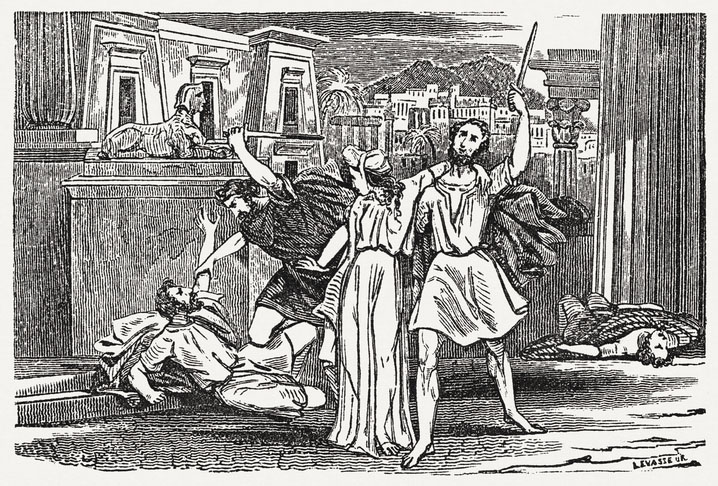
In this week’s Torah portion, the Israelites are encouraged — commanded really — to write something down. Upon crossing the Jordan River and entering the land of Israel, the people are to “set up great stones, and coat them with plaster. You shall write on them all the words of this Torah.” (Deuteronomy 27:2-3). The commandment seems clear enough: to convey a message in writing. Yet generations of debates have ensued over what words, exactly, were to be inscribed on those stones. Was it the entire text of the Torah — what we call the five books of Moses? Or, was it just a list of mitzvot (commandments), which encompass the legal aspects of the Bible? Or perhaps these stones simply reiterated the Ten Commandments, and that was the “Torah” spoken of in the verse. What was on these stones?
The answer to this question remains a mystery. We don’t know for certain what words were inscribed. But we know something was written. In the end, what is meaningful was not what they wrote, but that they wrote. Immediately upon arriving in the land — after 40 years of desert wandering — the Israelites took the time to record something. They created a monument with words — words perhaps recounting their history, their trials, their legal system, their beliefs, their collective wisdom.
For us, this is a season of building monuments with our words. Throughout this month of Elul that precedes Rosh Hashanah and Yom Kippur, our tradition invites us to think, in detail and with brutal honesty, about ourselves. We are encouraged to devote these days to a cheshbon ha’nefesh (inventory of the soul) in which we evaluate our behavior over the last year and humbly seek to make improvements.
During these days before the New Year, we — like the Israelites who were at a dramatic, transitional moment — also stand at the edge of a precipice. The work of looking deeply within can be terribly dangerous. The liturgy of the High Holidays suggests three possible ways to best approach the challenges of this season: through tefillah (prayer), tzedakah (righteous works) and teshuvah (repentance). In other words, the liturgy teaches us to do a cheshbon ha’nefesh by turning in three different directions: turning upward (to God, in prayer), outward (to others, in acts of righteousness), and inward (to ourselves, in contemplation and improvement).
Each of these turnings — containing the power to make radical change — is done with words. The Israelites at the Jordan River also understood this. As they literally walked out of their old existence and into a new one, they marked their transition with words. And God commanded that their enormous change be accompanied by words not just spoken, but written. Once the wisdom was inscribed, it somehow seemed that much more real.
When Rabbi Nachman of Bratslav sat considering his own behavior, he, too, opted to go even further than the spoken word. He, too wrote down the inventory of what he might alter in himself. Why? Why not just stop at speaking the words? It is said that after repeatedly reading the list, he felt such great sorrow that he started to weep. The teardrops would fall upon the written words, and actually blur them beyond distinction. By reading the words he had written, he moved himself to the depths of emotion that might affect real change in the days to come. Perhaps this is the truest meaning of the phrase of greeting we use on Rosh Hashanah: Shanah tovah tikatevu: May you be inscribed — and may you inscribe yourself — for a good and sweet new year.
This column originally appeared Sept. 15, 2000.
Rabbi Shawn Fields-Meyer is founder and facilitator of Ozreinu, a spiritual support group for parents of special-needs children. She can be reached by e-mail at ozreinu@yahoo.com.
Â
Â
Â
Â