Rabbi Dr. Reuven Hammer is a Conservative rabbi, scholar of Jewish liturgy, author and lecturer. Rabbi Hammer, who earned his ordination from the Jewish Theological Seminary, is a founder of the “Masorti” (Conservative) movement in Israel and a past president of the International Rabbinical Assembly. He served many years as head of the Masorti Beth Din in Israel. Rabbi Hammer is a prolific writer, and his articles appear often in the Israeli press and elsewhere. Two of his books, Sifre, A Taanaitic Commentary on Deuteronomy and Entering the High Holy Days, were awarded the National Jewish Book Council prize as the best book of scholarship for the year. Rabbi Hammer is the 2003 recipient of the Simon Greenberg Award for Lifetime Achievement in the Rabbinate by the Zeigler Rabbinical School of the University of Judaism.
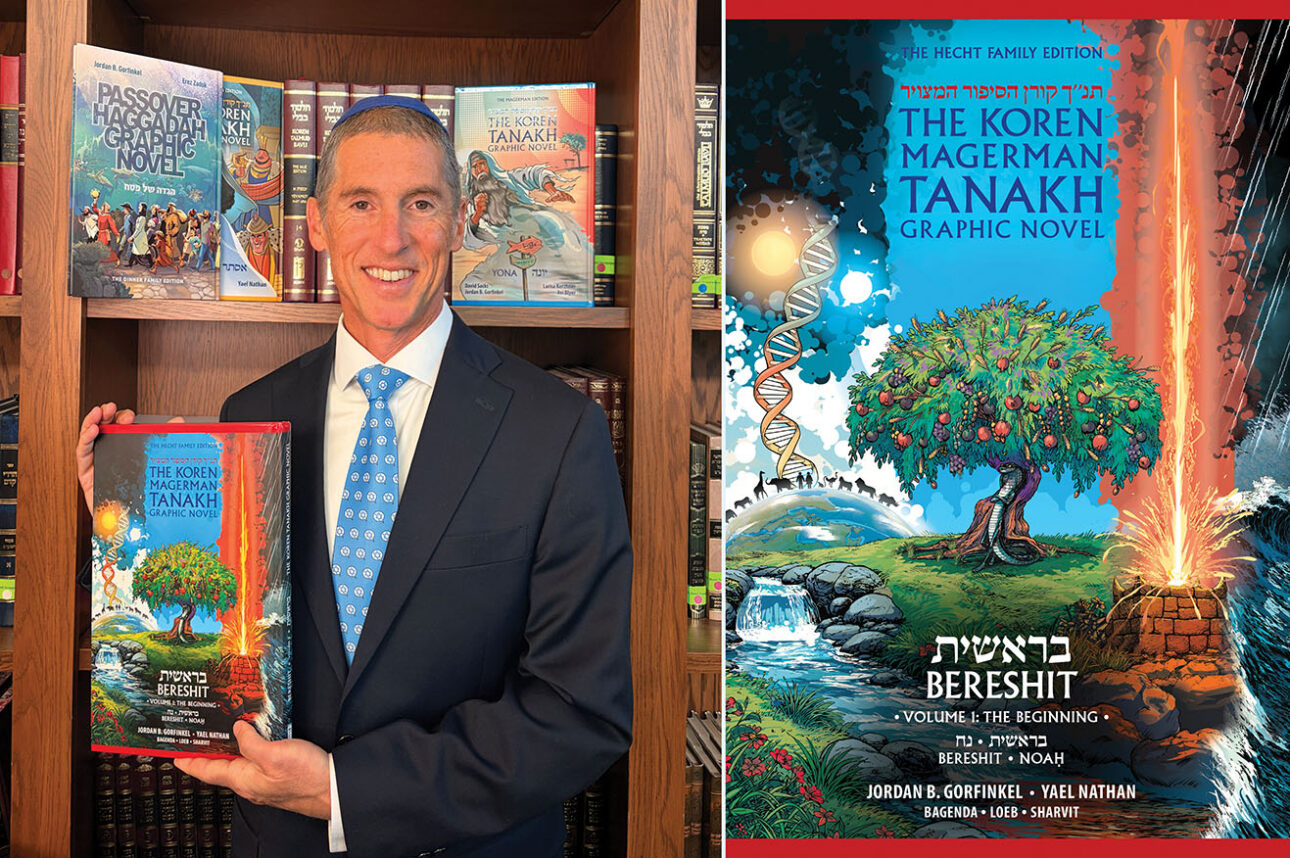
This exchange focuses on Rabbi Hamer's book Akiva: Life, Legend Legacy, an account of the life of the great Jewish sage Rabbi Akiva. Parts one and two can be found here and here.
***
Dear Rabbi Hammer,
In the first part of the exchange you expressed your deep admiration for the progressive, even modern, attitude and culturally momentous achievements of Rabbi Akiva. But you also mention his “concept of the Torah as a unique book, created by God even before the creation of the world, containing mystical meanings in every jot and tittle.” There are many passages in your book which also present a deep loyalty to the oral traditions, as he interprets them, as another absolutely integral part of Rabbi Akiva’s Judaism. Here is one of them:
Akiva felt it was his task to prove that all the Torah was one and that whatever was not written in the Torah was implicit in it. Thus anyone who claimed to accept the Torah and who did not acknowledge the divinity of the so-called oral traditions was rejecting the true teaching of God. This was also an important way for Akiva to differentiate Judaism from Christianity: he held that a religion that did not contain these oral traditions was not an authentic representative of the divine revelation.
Now, the majority of Jews in the world today, for better and for worse, do not follow the edicts of the oral tradition as eventually put forth in the Mishnah. They also do not share the type of mystical word-of God attitude to the Torah mentioned above.
My question: is Rabbi Akiva’s heritage accessible to Jews who do not share his theology and mysticism? Could one separate his ethics and concern for the individual from his metaphysical beliefs, or would that not be true to the type of Judaism he represents?
Yours,
Shmuel.
***
Dear Shmuel,
It is true that most Jews today do not share Akiva's concept of the origins of the Torah. For that matter, they do not share Ishmael's approach either. If we had to accept the traditional beliefs in the origins of the Torah in order to appreciate Jewish teachings based on the Torah we would have to reject our interest in anything that was written through the ages until modern times – from midrash to Rashi and Rambam. But we appreciate them for what they are and for the values and ideas contained therein.
Akiva's work regarding the Torah freed the Torah from narrowness of interpretation by permitting it to integrate and anchor later laws into it, thus broadening the concept of Torah. It also allowed new interpretations and changes in laws to come into being. What we learn from his methods is the importance of not letting Torah stagnate. Our methods and belief may be different but our aims are the same – flexibility, growth and change to meet the needs of the time. As for the oral tradition, most Jews do not adhere to either the written or the oral traditions – although I would venture to say that many Jews follow some of them. If you light Shabbat candles, you are following the oral tradition. If you light Hanukkah candles, celebrate Purim, have a seder, etc. etc. you are following oral tradition and written tradition. Therefore Rabbi Akiva's work is still influencing most Jews is some way.
One does not have to share completely Akiva's concepts in order to appreciate his work and his teachings. I do not believe in ghosts, witches of faeries but can still appreciate Shakespear's plays which depend on them. Certainly his ethical concerns, the way in which he determined the law so that Jews and non-Jews were equal, so that the poor were cared for remain valid, his love of all human beings, his devotion to the people Israel, his love of Torah are all still meaningful. The fact is that we would not have Judaism as we know it today without his work. Akiva is responsible for the second wave of Jewish tradition – the Mishnah and all that followed. He is truly the father of rabbinic Judaism and we are rabbinic Jews, viewing the Torah through the eyes of the rabbis. Otherwise we would be fundamentalists in the worst sense of the word. And if we have moved beyond some of his concepts, that happens all the time. We can learn from Maimonides without having to accept all his basic beliefs. In my view Judaism is always growing and evolving. We do not ignore or discard what went before. We appreciate it for what it was at its time and for the values it has bequeathed to us. Akiva was a lover or God, Torah, Israel and human beings. He was an ingenious innovator to make Jewish law relevant. That makes him important for us today.