Israeli President Shimon Peres has seen it all.
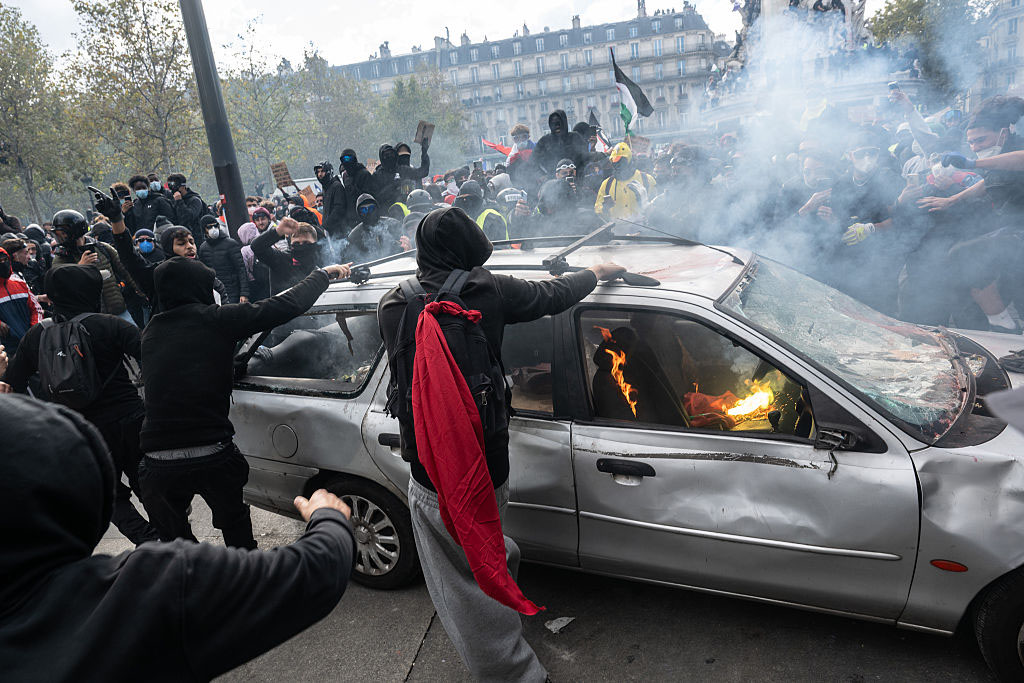
Almost any man would have been confused by the series of unbelievable mishaps that erupted out of nowhere during his visit in France, from anti-Israeli rallies and boycotts to a sabotage of his speech by right-wing Jews, to the collapse of an installation just inches over his head at the mid-March prestigious annual book fair where Israel was the star guest.
But not President Peres. He didn’t appear moved at all.
To the contrary. Like a quick tennis player, he anticipated the attacks and threw the ball back to his advantage, winning the PR match.
His message was clear: Sarkozy’s policy of close friendship with Israel is not a new or original trend after three decades of somewhat colder ties, but rather a return to the natural state of affairs between the two countries — albeit one that must be encouraged. Peres repeated over and over that after Israel’s War of Independence, when Israel was desperately looking for any kind of ally in order to defend itself and survive, France was the only country that agreed to sell warplanes and weapons to the Jewish state.
“I came to France at the time and discussed [this] with its great leaders. That was the France of the Resistance, the one we respect so much,” Peres said in his speeches. “I say we owe France our thanks. Thank you France!”
One of the striking things about Peres’ visit is the disconnect between him and the local Jewish community, which is often more allied with the Likud Party. The non-Jewish public appreciates him, yet most Jews don’t share that enthusiasm (though they pretend they do when speaking with non-Jews). By contrast, when Ariel Sharon visited France a couple of years ago he made whole audiences of traditional French Jewry cry and laugh to tears. The same people didn’t even bother to attend Peres’ address to the community.
One girl told me “I admire Sharon; I worship Rabin; I don’t care for Peres.”
Some right-wingers attended the ceremony only to interrupt Peres and call him “traitor” for a dozen minutes.
Peres was not moved.
“I’m used to your kind of people, those who try to turn any meeting into a political protest,” he said. “I’ll tell you one thing: Whatever you may attempt, we will not halt our efforts to encourage Mr. Sarkozy in his policy on the Middle East. He understands what the dangers are, and together we will fight terror and the Iranian threat and bring security to the whole region.”
“Being a Jew is not just having a Jewish mother. It’s raising one’s children to become Jews, and I mean with Jewish moral values. This means one does not want to rule [over] or control any other people.”
The protestors were ejected from the hall by security.
The next day, the Jewish community issued a press release saying, “All French Jews are united behind Shimon Peres.”
Something has definitely changed in France regarding Israel. Maybe it’s the Sarkozy effect. As both Ehud Olmert and Peres say, the French president is an extremely rare example of a political leader who maintains his enthusiasm toward Israel, even after his election.
A few years ago, France, at best, tolerated Israel; on some occasions Jacques Chirac said Sharon was not welcome in Paris. Obviously, things have since improved, but Sarkozy’s election pushed the friendship further, turning the relationship into genuine support.
And indeed, the French president kept his promise and honored Israel by inviting Peres as his first official guest on a state visit. He defended Israel’s right to defend itself and its right to live as any other state and be — for instance — the guest of honor at the Salon du Livres de Paris, the international book fair. He sent his son Jean, a newly elected local representative at 22, to Peres’ meeting with the Jewish community.
In embracing Israel, the French president has on several occasions been the victim of anti-Semitic jibes, and, indeed, the French book fair was boycotted by several Arab countries because an Israeli leader was a guest star. France could have tempered its support to the guest, but it didn’t. The boycott was seen as an outrage, and the Presidential Palace’s spokesperson repeated its position. The affair was of national importance. Through all that week, thousands of Israeli flags were seen floating across the French capital to honor Peres and Israel.
All the signs are there: France is changing. Or perhaps, as Peres puts it, things may be simply getting back to normal.
The 8th Israeli Film Festival of Paris is taking place this week (March 25 to April 1st). The event, launched eight years ago by Charles Zrihen, propelled precious collaborations between French producers and Israeli directors contributing greatly to the Israeli 7th art industry, said French producer Sophie Dulac. Israeli films were a joke here 10 years ago. Today, French intellectuals won’t miss them for anything.
The festival is organized by Charles Zrihen’s association ISRATIM (“>Paris-Chronicler is featured on JewishJournal.com.