Daniel Lewkowicz travels more than an hour each way from his home on a moshav to the Ohr Moshe School in Beit Shemesh, almost 20 miles west of Jerusalem, but he doesn’t mind the commute.
“This school is so good it’s worth the trip,” Lewkowicz, 16, said during a break from his studies at Ohr Moshe, a school for boys who, because of a wide range of learning disabilities such as dyslexia, Asperger’s syndrome and ADHD, haven’t succeeded in traditional schools. “Here, I get to learn one-on-one, the staff is well-equipped and it’s fun. I’ve made friends. It’s very easy to make friends in this school.”
The school, which began focusing on kids with learning disabilities five years ago, offers the kind of small classes (eight to 10 students) and individualized attention that most parents can only dream about. Its students come from new and veteran immigrant families from English-speaking countries, and instruction is in English and Hebrew.
The semiprivate school, which is certified and partially funded by the Ministry of Education, offers a full range of secular and religious subjects.
 Daniel Lewkowicz, 16, doesn’t mind the long commute to Ohr Moshe, because the school is “so good it’s worth it,” he said.
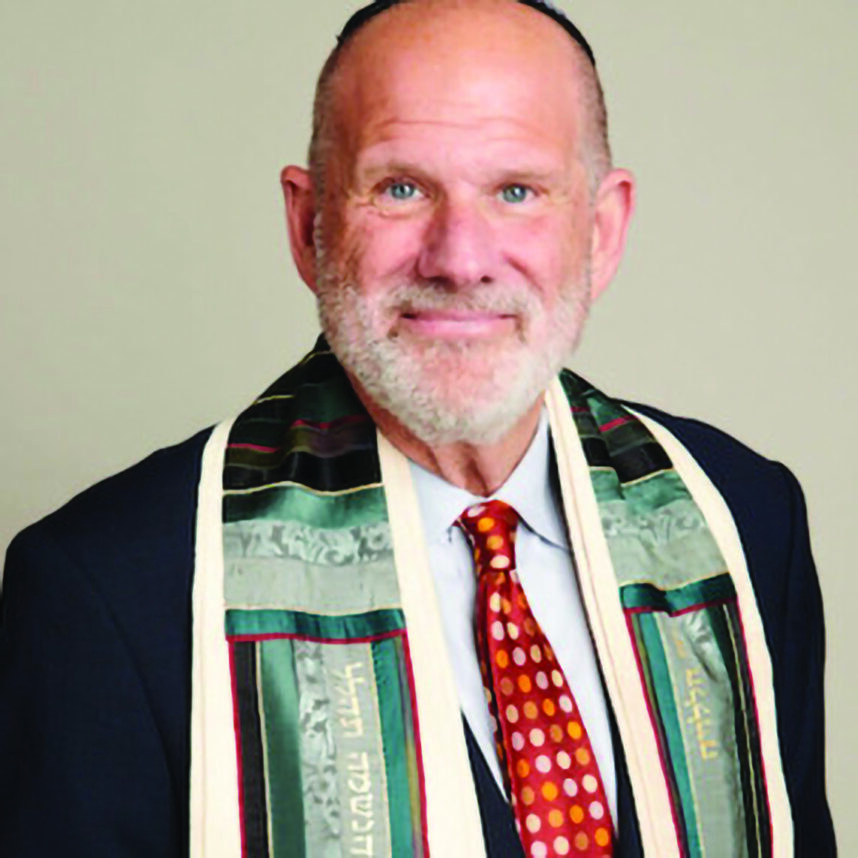
Rabbi Avi Lipman, Ohr Moshe’s principal, said his school provides a middle ground for seventh- to 12th-graders whose needs aren’t being met by either typical or special education frameworks. Israeli students with severe challenges have the benefit of specialized school programs with smaller classrooms, but those whose needs are relatively mild fall somewhere in between, he said.
Before enrolling in Ohr Moshe, many of the school’s students were in special education frameworks or would qualify for one. And because most high-functioning special education students receive only vocational training, few complete their bagrut, or full matriculation certificate, the principal said.
“I have no problem with vocational training as long as it’s a choice,” Lipman said. “All too often, there is no choice.”
Despite their learning disabilities, virtually all of the boys at Ohr Moshe study for and pass the matriculation exams necessary to attend a university thanks to smaller classes and intensive individualized attention, according to Lipman. Earning the matriculation certificate “keeps as many doors open as possible, both in terms of higher education and a career,” he said. “Nobody should be saying, ‘You have ADD, so you can only choose A and B.’ ”
Lipman’s passion to help his students reach their fullest potential is rooted in his experience as a child with special needs growing up in an American-Jewish school.
“I myself have dyslexia and ADHD, and in the middle of fourth grade, I was placed in a special education classroom. In the class were two severely autistic students, two students with Down syndrome” and others with significant developmental delays, he said. Although Lipman said he needed the kind of help not available in the school’s much larger mainstream classroom, the special education class was clearly not the place for him either.
“Our students are here not because they don’t need individualized assistance but because the kid next to them [in their special education class] may have had severe behavioral problems and was trying to set something on fire,” he said.
Rabbi Chanan Fruchter, the school’s rosh yeshiva (religious head of school) who was born in New York and made aliyah with his family when he was 9, believes a school like Ohr Moshe is especially important to immigrant teens whose less-than-perfect grasp of Hebrew only adds to their learning challenges in the Israeli school system.
“When a family makes aliyah and even one of its children isn’t fitting in, it throws the whole family into turmoil,” he said. “Some of our kids were born here, and others made aliyah relatively recently, but the ability to study in English or Hebrew is important to them.
“Some of our boys’ parents told us they made aliyah because they finally found the right place for their sons to study, something they said they didn’t always have back home,” Fruchter said, adding that North American-Jewish day schools and yeshivas are rarely equipped to provide classes for teens with mild-to-moderate learning challenges.
In addition to its small classes, Ohr Moshe offers each student an individualized program of study based on his individual strengths and weaknesses. Classes are built around ability, not age or grade. A younger boy who is advanced in math or English, for example, will be put in a class suitable to his ability, regardless of his age.
By studying at the right level, they succeed rather than feeling like failures, Lipman said.
The school also helps the students develop the social skills needed to form friendships and thrive on and off campus.
“In the past, many students felt like outsiders,” Lipman said. “They were excluded, and now they feel included.”
Such was the case for Dovid Singer, whose family made aliyah four years ago.
“It was my decision to come here. I suffered bad culture shock and felt rejected when we moved to [the settlement] Efrat and we couldn’t find anything English-speaking.”
Singer, nearly 15, said he felt welcome at Ohr Moshe the moment he walked in the door.
“I was immediately bombarded by students who wanted to show me around. What I love is that the school is big enough so you can be with the people you want to be with but it’s not too big. I’m a lot more open than I used to be and I don’t get angry as fast as I used to.”
Singer, who said he has “attention issues,” said his teachers give him room to explore. “It’s not stressful here. I really do try, and when I say I need help, I get it.”
Lewkowicz said he appreciates the individualized attention he receives.
“It’s hard for me to focus sometimes — I have ADHD — and the teachers go the extra mile to provide support. I like it here.”