fbpx

July 15, 2026

Unbreakable Bond: From Einstein’s $500 Bond to $57 Billion in Israel Bonds

On May 10, 1951, more than 20,000 people packed New York’s Madison Square Garden to hear Israel’s first Prime Minister, David Ben-Gurion, make an extraordinary appeal. The young State of Israel was less than three years old, struggling to absorb hundreds of thousands of immigrants while building its economy from the ground up. Ben-Gurion was not asking for charity; he was asking Jews around the world to invest in Israel’s future.

That evening marked the launch of Israel Bonds, a campaign that would become one of the most significant financial partnerships between Israel and the Jewish Diaspora. Among its earliest investors was one of the 20th century’s greatest thinkers: Albert Einstein, who just months after the Oct. 30, 1951 announcement, purchased a $500 Israel Bond from his home in Princeton, New Jersey. For Einstein, the bond represented more than a financial investment — it was an expression of faith in Israel’s ability to build a secure and prosperous future.

Seventy-five years later, Israel Bonds has raised $57 billion for the State of Israel.

Throughout Israel’s history, in moments of crisis and uncertainty, the Jewish Diaspora has stood alongside the country through Israel Bonds. During the Six-Day War in 1967, communities around the world purchased approximately $200 million in bonds. During the Yom Kippur War in 1973, that figure reached $500 million, and during the COVID-19 pandemic, investors purchased $1.8 billion in bonds as Israel faced unprecedented challenges.

The response following the Oct. 7, 2023 Hamas attack was even more dramatic. Within the first 30 days after the attack, more than $1 billion in Israel Bonds were sold, with total sales eventually surpassing $5.7 billion in the months that followed.

The surge was driven by a global campaign launched by Israel Bonds, under the leadership of President and CEO Dani Naveh, to provide Israel with financial backing during a time of unprecedented need. In a Zoom interview from his New York offices, Naveh reflected on the extraordinary response.

Dani Naveh

“We found ourselves in the most challenging times after Oct. 7,” Naveh said. “We started a special campaign for Israel, and in terms of what we achieved, it has been record-breaking. We have surpassed $8 billion in sales worldwide, and this year is going to be the fourth year in a row that we reach $2.5 billion annually — 2.5 times more than the average sales before Oct. 7.”

That surge also served as a powerful counter-message to the global BDS (Boycott, Divestment and Sanctions) movement, launched in 2005 with the goal of economically isolating Israel. While BDS advocates for divestment, Israel Bonds has seen growing institutional investment: more than 90 U.S. state and municipal pension funds and treasury funds have invested over $3 billion in Israel Bonds. In the aftermath of Oct. 7, Palm Beach County alone committed $700 million, underscoring the continued financial ties between American institutions and Israel.

“About half of the money we raise comes from local governments — from elected officials, treasurers and controllers who invest in Israel Bonds because they believe in the steady and strong returns for their funds, while at the same time wanting to express support for the U.S.-Israel relationship,” Naveh said. “Over the past two-and-a-half years, we have seen a strong BDS campaign targeting American officials, trying to pressure them not to invest in Israel Bonds. I’m proud to say that the vast majority have not caved in. They continue to stand on the right side of history. Some of them have even told me, ‘We’re going to double down on our investments.’”

The reach of Israel Bonds extends far beyond the traditional centers of Jewish life. While states with large Jewish populations, such as New York, New Jersey, Florida and California, have historically represented some of the largest sources of investment, participation has also come from local governments across the country – including Oklahoma, Illinois, Ohio and Texas. The broad geographic reach of these investments underscores that Israel Bonds is not limited to communities with large Jewish populations but has become part of a larger American institutional relationship with the Jewish state.

With offices and investors across Europe, Canada and Mexico, Naveh said many people internationally view Israel Bonds as a meaningful way to maintain a connection with Israel and participate in its future.

Beyond the surge in sales following Oct. 7, Israel Bonds is also seeing a growing number of new investors, including younger generations. Naveh said longtime investors continue to reinvest their bonds when they mature rather than withdrawing their funds, while families who have supported the organization for decades are passing the tradition to their children and grandchildren. Some younger investors first received Israel Bonds as bar or bat mitzvah gifts and are now continuing that connection as adults.

Naveh said one of the organization’s greatest strengths is that it allows people from all backgrounds to participate. While some institutional and individual investors purchase bonds worth millions of dollars, others begin with a much smaller commitment.

“Anyone can be part of this story,” Naveh said. “The minimum investment is $36, and many people buy bonds as gifts for a bar or bat mitzvah, a wedding, or simply as an investment for themselves.”

Reflecting on the organization’s journey since its founding, Naveh added that David Ben-Gurion could hardly have imagined the impact Israel Bonds would have over the past 75 years. “I think he would have been amazed.”

Unbreakable Bond: From Einstein’s $500 Bond to $57 Billion in Israel Bonds Read More »

Kitchri—Comfort and Culture in a Bowl

For as long as I can remember, kitchri has always featured on the summer menu in the kichens of my grandmother Nana Aziza and my mother Nana Sue.

A classic of the Iraqi Jewish kitchen, kitchri is both savory and aromatic. A one pot meal, it is a combination of nutty basmati rice melded with earthy red lentils and flavored with sautéed onions and tangy tomatoes. The irresistible topping of fried garlic and cumin adds a spicy, pungent warmth.

Kitchri is inspired by the Indian Kitchari, a more porridge-like dish of rice and mung beans and the name comes from the Sanskrit word khiccā. Ancient Ayurvedic texts praise this rice and pulse mix for “easy digestion and balancing properties.”

In the Royal Mughal era, this humble peasant meal became a court luxury. The 16th century vizier of the Emperor Akbar recorded seven variations of the dish.

In the 18th century, robust commercial trade and family ties expanded between Baghdad and the British-controlled Indian trade ports of Bombay (Mumbai) and Calcutta (Kolkata). Indian spices and recipes made their way into the Jewish Iraqi kitchen, including the famous amba (fenugreek pickled mangoes).

In Baghdad, local cooks substituted green and yellow mung beans with easily accessible red lentils and added their own unique twist of cumin, onions, and garlic. Kitchri evolved into a distinct Iraqi Jewish comfort food, frequently served as a traditional meatless meal on Thursday evenings.

For me, and probably every other Iraqi Jew, kitchri is the quintessential meal of the Nine Days. As lentils are a traditional Jewish symbol of mourning, most families eat kitchri during the week leading up to Tisha B’Av, the fast marking the destruction of the First and Second Temple.

While kitchri is a source of complete protein, it is traditionally served with a fried egg, sour leben or plain kefir and a fresh tomato-and-cucumber salad with freshly squeezed lemon and extra virgin olive oil.

—Sharon

My mother imprinted the lessons of Tisha B’Av in my mind. Not only was it the date of the destruction of the two Holy Temples, it was the date of the Expulsion from Spain. She impressed on me that we don’t eat meat and chicken, we don’t listen to music and we don’t swim. Before the fast, my mother always served a delicately seasoned brown lentil soup. It’s so good that I make it whenever I’m craving a hearty, nutritious soup. I love to cook with lentils because they are an excellent source of protein, vitamins and minerals, full of fiber and low in calories.

Last week, when Sharon and I got together to cook the kitchri for this week’s article, I was pleasantly surprised to see her pull cumin out of her spice cabinet. While cumin is a crucial spice in Moroccan cuisine, I know that Sharon isn’t a huge fan of it.

She laughed and told me that she makes an exception for kitchri. Good thing, because it’s the topping of caramelized onion, fried cumin and garlic that really adds so much to this kitchri recipe. It’s absolutely delicious!

—Rachel

KITCHRI

2 cups basmati rice, washed and drained

1 cup red lentils, washed and drained

1/4 cup extra virgin olive oil

1 large onion, finely diced

4 Roma tomatoes, diced

2 tsp cumin

2 tsp turmeric

2 tsp kosher salt

1 tsp fresh ground black pepper

4 Tbsp tomato paste

4 1/2 cups water

Topping

1/4 cup extra virgin olive oil, divided

1 onion, sliced into thin half moons

8 garlic cloves, cut into thin slivers

1 tsp cumin

In a large heavy pot, heat 1/4 cup oil over medium heat. Add onions and sauté for 5-7 minutes, until softened. Add tomatoes and sauté for 2-3 minutes. Add cumin, turmeric, salt and pepper and sauté for 2 minutes.

Pour in the rice and lentils and sauté for 2 to 3 minutes. Add the tomato paste and stir well to combine. Cover with water, stir well and bring to a boil.

When most of the water has evaporated, reduce heat to lowest setting and cover with a tight-fitting lid. Cook for 30 to 40 minutes.

In a frying pan, warm half the oil over, medium high heat. Add the onion, reduce heat and sauté until caramelized. Set aside.

Heat the remaining oil, add the garlic and sauté for 2 minutes, then add the cumin until garlic is golden brown.

Garnish the rice with the onion, garlic and cumin mixture.


Sharon Gomperts and Rachel Emquies Sheff have been friends since high school. The Sephardic Spice Girls project has grown from their collaboration on events for the Sephardic Educational Center in Jerusalem. Follow them on Instagram @sephardicspicegirls and on Facebook at Sephardic Spice SEC Food. Website sephardicspicegirls.com/full-recipes.

Kitchri—Comfort and Culture in a Bowl Read More »

Everyone Screams for Ice Cream in July: Culturally and Creamy Rich Recipes from Pati Jinich

July is National Ice Cream Month, and there’s no better way to beat the heat than with a frozen treat.

Jewish Mexican chef Pati Jinich brings her multicultural perspective to every recipe she creates, blending the traditions, ingredients and stories that have shaped her cooking. That approach shines through in her ice creams, where distinct, delicious flavors reflect her rich cultural influences.

“There are recipes that satisfy a craving, and then there are recipes that tell you something about who you are; burnt milk ice cream from Oaxaca does both for me,” Jinich, author of the upcoming “Foods of La Frontera,” told The Journal. “At first glance, it seems wonderfully simple, milk, sugar, time and patience, but as the milk slowly caramelizes and develops its deep amber color and rich, almost toasted flavor, it becomes something much greater than the sum of its ingredients.”

Jinich said that transformation reminds her of the way traditions evolve as they travel across generations and borders. “As someone who grew up in a Mexican Jewish family, I have always found comfort in discovering those unexpected moments where my two worlds meet,” she said.

When preparing this ice cream, the milk is taken to the edge of scorching, so the flavor is smoky, ashy, rustic and even a little bitter. “That bitterness is not a flaw; it is the whole point, because it makes the sweetness sing,” she said.

To Jinich, that contrast is profoundly Jewish.

“Ours is a tradition that never pretends the bitter away,” she said. “We set it on the table right beside the sweet, the maror next to the charoset, the apples dipped in honey after a year that may have been hard, and we taste both because both are true.”

This ice cream holds that same wisdom in a single spoonful.

“I serve it with galletas de animalitos, the animal crackers every Mexican kid grows up on, because a dessert this soulful deserves a little playfulness on the side,” she said.

Burnt Milk Ice Cream with Animal Crackers

Helado de Leche Quemada con Galletas de Animalitos

1 generous quart

1 1/2 cups milk

1/2 tsp vanilla extract

1 stick Ceylon cinnamon or canela

3/4 cup plus 2 Tbsp sugar

2 large eggs

1 1/2 cups heavy cream

Animal crackers (for garnish)

In a small saucepan set over medium heat, heat the milk, vanilla and cinnamon stick until a thin skin (called nata) forms on top and it barely begins to simmer, about 6 to 7 minutes. Don’t let it boil. Reduce to the lowest possible heat.

Meanwhile, in a medium saucepan, add 3/4 cups sugar and place over medium to medium-low heat. Let the sugar begin to dissolve, swirling around and moving the whole sauce pan occasionally, but not stirring, until the sugar melts into a caramel syrup, about 7 to 8 minutes.

Remove from heat.

Immediately, remove the cinnamon stick from the milk mixture, and pour it in a very thin stream into the hot caramel, whisking as fast as you can to incorporate it. The caramel will react very aggressively, but you need to continue pouring the milk at a steady slow pace and whisking fast with determination until it is all well combined. If for any reason, any caramel hardened on the bottom of the pan, place back over medium heat and whisk until diluted. Remove from the heat.

In another bowl, whisk the eggs until thick and foamy. Add the remaining 2 tablespoons of sugar and continue to mix. In a very thin stream, and very slowly, alternate incorporating the caramel milk and the heavy cream into the eggs, whisking continuously until it is all incorporated.

Pour the mixture into your ice cream maker and follow the manufacturer’s instructions (in my ice cream maker, it takes about 1 hour 15 minutes). Eat right away or freeze until ready to serve.

Serve with whole or crumbled animal crackers.


“My love for corn ice cream is rooted in childhood memories of visiting Chiandoni, a beloved ice cream shop in Mexico City, known for transforming simple, fresh ingredients into unforgettable flavors,” Jinich said. “For me, sweet summer corn isn’t just a vegetable; it’s a reminder of family, tradition and the joy of Mexican heladerías, where familiar ingredients become unexpected desserts.”

Jinich said the combination of fresh corn, milk, cream and sugar creates an ice cream that highlights the natural sweetness of peak-season corn, while celebrating its versatility beyond savory dishes.

“This recipe reflects my philosophy of cooking: honoring simple ingredients, preserving family traditions, and finding joy in sharing food with the people I love,” she said. “For my family, this dessert has become more than a seasonal treat; it’s a tradition.”

Outrageous but Necessary Corn and Cream Ice Cream

Helado de Elote

4 servings

Corn and Cream Ice Cream.
Courtesy of Pati Jinich

3 ears of shucked fresh corn

2 1/2 cups milk

1 1/2 cups heavy cream

3/4 cup granulated sugar

6 egg yolks

Pinch of salt

1/2 tsp vanilla

Remove the kernels of the corn by holding the ear with one hand straight up over a kitchen towel (this will help keep the kernels from going all over the place). Be sure to use a very sharp knife or serrated knife to cut them off. Place the kernels of corn in a saucepan with the milk, heavy cream, 1/2 cup sugar and place over medium heat, stirring until it comes to a boil. Turn off the heat and allow the ingredients to steep for one hour, covered.

Remove about one cup of corn from the pot. Set the corn aside. Puree the mixture in the pot with an immersion mixer or blender. Bring this to a simmer.

Meanwhile, whisk the yolks with the remaining 1/4 cup sugar. When the liquid comes to a boil whisk in about half of it to the yolks and stir rapidly so you don’t make scrambled eggs. Return to the pot and cook over low heat until the mixture covers the back of a spoon. Add the vanilla.

Return the reserved corn to the ice cream base and pour into a container. Let it cool and place a piece of plastic film directly on top and chill in the refrigerator. Freeze according to the manufacturers directions of your ice cream maker.

Everyone Screams for Ice Cream in July: Culturally and Creamy Rich Recipes from Pati Jinich Read More »

Great Grilled Grub for National Grilling Month

Grilling and summer go hand-in-hand. Outdoor cooking is a fabulous alternative to heating up the kitchen. Plus, some foods just taste better when cooked outside. Whether you’re planning a backyard barbecue, a casual weeknight dinner or a Shabbat meal on the patio, the possibilities are endless.

Try something new to celebrate National Grilling Month in July.

Felice Kaufman is a food blogger in Key Largo, Florida. Originally from New York, she moved to Florida in 2018. “As a kid, my dad used to take us to 18th Avenue in Brooklyn to see his ‘fish man,’ who kept a big tank of salmon,” Kaufman, CookingintheKeys.com, told The Journal. “He’d clobber the fish with a big wooden mallet; I was fascinated every time!”

While she does not have fresh salmon in Florida, fresh snapper is available everywhere. Red snapper is one of her favorites. “Red snapper is a meatier fish than other white fillets you’ll find at the market,” she said. “The fish has more body, which makes the meat more succulent than filet of sole, for example. … and when cooked correctly it melts in your mouth.”

Grilled Red Snapper Fillets with Lemon

By Felice Kaufman

1 ½ pounds red snapper fillets

2 Tbsp olive oil

1 ½ Tbsp Old Bay seasoning or blackened seasoning

½ tsp kosher salt

½ tsp black pepper

2 lemons, halved

Defrost the fish if frozen.

Preheat the grill to medium-high heat.

Pat the snapper dry with paper towels.

Brush both sides of the fish and the cut side of the lemons with olive oil. Season the fish lightly with salt and black pepper.

Sprinkle both sides of the fish with Old Bay seasoning or blackened seasoning.

Oil the grill grates well before adding the fish. Use long tongs and a folded paper towel dipped lightly in oil or brush the grates with oil.

Place the fish on the hot grill, skin-side down first if the skin is still on. Add the lemon halves cut side down.

Grill the fish for 3 to 4 minutes per side, depending on the thickness. The fish should release easily from the grates when it is ready to flip. If it sticks, give it another minute.

Grill the lemon halves until lightly charred.

The snapper is done when it flakes easily with a fork and reaches an internal temperature of 145°F.

Serve immediately with the grilled lemon.


“There is something about kebabs (or food on sticks, as my sons called them) that is appealing to both adults and children,” Faith Kramer, author of “52 Shabbats: Friday Night Dinners Inspired by a Global Jewish Kitchen,” told The Journal.

She’s created two versions for double the fun: Tofu miso and za’atar chicken. Her kebabs can be made outside on the grill or inside in a grill pan or an electric grill. If using bamboo skewers, soak for 30 minutes first.

“The miso marinade gives the tofu and vegetable kebabs a deeper, more savory flavor and provides a tasty vegan and parve option for a summer barbecue,” Kramer said.

Kramer also uses the marinade from the Middle Eastern inspired za’atar kebabs on grilled and baked chicken and fish, as well as with oven-roasted vegetables and whole roasted cauliflower.

“Leftovers can be refrigerated for a day or two and reheated on a greased baking sheet covered with foil in a 350°F oven until warmed through (about 10-15 minutes),” she said.

Tofu-Miso Kebabs

Serves 4

Tofu-Miso Kebabs.
Photo by Faith Kramer

Miso marinade (see below)

14 to 16 ounce package firm tofu

4 medium zucchini

2 medium onions

16 small cremini or button mushrooms, stems removed

Vegetable oil for grill

Make the miso marinade.

Stir together until smooth ½ cup white, blond or yellow miso paste, 2 teaspoons Asian sesame oil, ¼ cup unsweetened rice or cider vinegar, ¼ cup soy sauce, ¼ cup water, 2 tablespoons agave syrup and ½ teaspoon (or to taste) hot sauce. Can be made 1 day in advance and refrigerated. Bring to room temperature before using.

Have 8 long skewers ready.

Rinse and drain tofu. Place tofu in a kitchen towel between two plates. Place a heavy can on top for 20 minutes. Pat tofu dry. Cut into 16 equal pieces.

Cut zucchini into 16 slices, each a ½-inch wide. Cut onions into 16 half-inch chunks. (If chunks separate, reassemble when skewering.)

Pat tofu dry. Cut into 16 equal pieces.

Thread zucchini on skewer, followed by onion, tofu and mushroom. Do a second set of zucchini, onion, tofu and mushroom then repeat on remaining skewers. Brush kebabs on all sides with marinade. Let sit for 20 minutes or refrigerate up to one day (return to room temperature before grilling).

Oil grill. Heat to medium-high. Brush kebabs all over with marinade again. Grill until bottom of the tofu has char marks and is slightly brown. Repeat on all sides, brushing with marinade, until kebabs are grilled (about 10-15 minutes total).

Za’atar Kebabs with Vegetables

Adapted from “52 Shabbats: Friday Night Dinners Inspired by a Global Jewish Kitchen”

Serves 4

Za’atar Kebabs.
Photo by Clara Rice

Za’atar marinade (see below)

1 1/2 pounds boneless, skinless chicken (thighs or breasts)

4 medium zucchini, cut into 1-inch pieces

1 medium-large red onion, cut into 1-inch pieces

2 medium-large red bell peppers, seeded and cut into 1-inch pieces

Vegetable oil for the grill

3 Tbsp chopped fresh flat-leaf parsley or cilantro

4 lemon wedges

Make the za’atar marinade.

In a large bowl, mix 1 cup olive oil, ¼ cup lemon juice, 1/4 tsp. cayenne (or to taste), ¼ teaspoon black pepper, 1/4 teaspoon salt, 1 teaspoon ground za’atar, 1 tablespoon minced garlic and ½ cup finely chopped onion. Can be made 1 day in advance and refrigerated.

Cut the chicken into 1½-inch chunks.

Set aside ¼ cup of the marinade for basting and refrigerate until needed. Add the chicken to the remaining marinade and marinate in the refrigerator for 1 hour or up to 1 day, stirring occasionally. Add the zucchini, onion, and bell pepper chunks to the marinade about 10 minutes before you’re going to prepare the skewers and stir until evenly coated. Thread the chicken and vegetables onto 8 to 10 long skewers. Brush grill with vegetable oil and heat to medium-high heat.

Grill the skewers, adjusting the heat up or down as needed to avoid scorching or flare-ups. Turn them occasionally and baste with the reserved marinade. Cook the chicken until it’s firm to the touch, with clear juices, 10 to 15 minutes.

Let rest for 5 minutes. Serve on or off the skewers sprinkled with parsley and lemon wedges.

Great Grilled Grub for National Grilling Month Read More »

Table for Five: Devarim

One verse, five voices. Edited by Nina Litvak and Salvador Litvak, the Accidental Talmudist

“You shall not favor persons in judgment; rather you shall hear the small just as the great; you shall not fear any man, for the judgment is upon the Lord, and the case that is too difficult for you, bring to me, and I will hear it.”

– Deuteronomy 1:17


Nili Isenberg

Pressman Academy Judaic Studies Faculty

As we enter the book of Deuteronomy, Moses delivers his final words to the nation. He focuses his address on rebuke to inspire the people to move forward with a greater sense of responsibility. Using a familiar Hebrew word (“Eikha!”) Moses asks, “How could I bear alone the trouble of you, and the burden, and the bickering!” (Deuteronomy 1:12). He then recalls the creation of the Israelite justice system to resolve these issues.

The Midrash (Eikha Raba 1:1) points to a three-part connection between this week’s Torah portion, the Haftarah from Isaiah, and the book of Lamentations which is read on Tisha b’Av, coming up next week. In fact, this Torah and Haftarah portion are always read on the Shabbat preceding Tisha b’Av, the day commemorating the destruction of the Temple. The Haftarah condemns Jerusalem’s moral decay and corruption, using the Hebrew word, “Eikha!” – “How has she become like a prostitute!” (Isaiah 1:21). The book of Lamentations begins with the same word as well: “Eikha!” – “How lonely sits the city that was once full of people!” (Lamentations 1:1).

With his eyes turned toward a brighter future, Moses had commanded the people to build a just society, but his dream proved to be elusive. Still today, justice fails in so many ways. “Eikha!” – How can we make this broken world a better place? The Talmud (Shabbat 10a) reminds us, “Any judge who judges truthfully becomes a partner to the Holy One in the act of creation.”


Rabbi Tova Leibovic-Douglas

Founder of The Ritual House, @rabbi_tova

What does it mean to be a leader? To hold power? And how do we do so morally and ethically? Today, we grapple with this question in nearly every sphere. And yet, a text from thousands of years ago feels as relevant now as it was then. Moses instructs the new leaders and judges of Israel on how to lead, assuming that leaders will inevitably fall short. They may give preferential treatment to those who seem great, or act from fear, making decisions untethered from their values. This assumption feels poignant, as if speaking directly to our leaders today. Across every aisle, political, religious and corporate leaders are leading exactly as Moses warned against. For many, it feels like the only way to survive within systems that keep us from our moral vision and integrity. And although understandable, our Torah, and our greatest teacher, Moshe Rabbeinu, is shouting at us, lifting up this verse as we enter Shabbat Chazon, the Shabbat of Vision. The Baal Shem Tov taught that on this Shabbat, right before our day of greatest grief, Tisha b’Av, we glimpse the third Temple that will be built. Why? Because even in the greatest darkness, there is always light. Perhaps that light is exactly this: each of us stepping into our own leadership, holding our leaders accountable, with the determination and integrity our tradition demands. And when we do, I wonder if that is when we finally see the vision of a new world, one that was always possible.


Salvador Litvak

Filmmaker, Author, Accidental Talmudist

Who among us thinks, “I’m an unfair person?” And yet, what happens when a caller ID appears on our phones? If it’s someone important, we answer. But if it’s someone who can’t advance our career or improve our social standing, do we hit the voicemail button? Status has a way of bending our attention.

The Torah warns our judges against this very temptation, “You shall hear the small just as the great; you shall not fear any man, for the judgment belongs to God.” Rashi says that “the small just as the great” refers not to the people but to the case. A dispute over a single coin must get the same careful hearing as one involving a million. Once a judge begins a case, he must give it the same patience, seriousness and respect because the law is at stake.

Justice isn’t measured by dollars. It’s measured by integrity. Achieve that, and it naturally follows that all people will stand as equals before the judge. This lesson extends far beyond the courtroom. Every day we decide who deserves our attention. The quiet coworker. The lonely neighbor. The nudnick who keeps asking questions we’ve already answered. The guy whose name keeps slipping our mind. Every one of them was created in the image of God.

Moses adds, “Do not fear any man.” Easier said than done. Powerful people often intimidate us. But if the judgment belongs to God, we can lean into truth instead of approval, lovingkindness instead of flattery.


Judy Gruen

Author, “Bylines and Blessings”

We recently celebrated this nation’s 250th anniversary, an opportunity to reflect on the radical experiment in freedom that defined the new nation of America. Unless we have studied history, it’s hard to fathom just how revolutionary this bold experiment was. Consider the words in the Declaration of Independence that “all men are created equal, that they are endowed by their Creator with certain unalienable Rights, that among these are Life, Liberty, and the pursuit of Happiness.” Many of the Founding Fathers were well versed in the Hebrew Bible, and some of them studied Hebrew. Even those early American leaders and thinkers less inclined toward formal religious practice knew full well that the concept of individual rights of liberty and fairness under the law emanated from the Torah; in particular, verses such as these in Deuteronomy. The American Founders understood that a just society demanded the idea that individual rights are God-given – a concept still novel in the 18th century. If rights are God-given, they cannot be snatched away by any corrupt governing power or individual. Eventually, Enlightenment-age thinkers caught on.


Rabbi Amy Levin

Founder of Tzibur Strategies for Thriving Sacred Communities

We witness a definitive moment in the verse we are delving into today: This is not God addressing Moses alone, or God charging Moses with specific responsibilities. This is Moses creating a structure for the people of Israel to take collective responsibility for living the words they had uttered at Sinai: “We will do, we will obey.” [Exodus 24:7]. Aware of all his personal and public growth, and all the honor and responsibility that God has bestowed upon him, Moses is also aware that there is too much responsibility involved in leading a people, and too much complexity involved in that leadership for it all to fall on one person’s shoulders. The time has come to create a framework for judgment, for the people themselves to uphold the guardrails of values and behaviors they accepted standing together at Sinai.

The people who originally committed themselves must ultimately judge themselves. Moses reassures them … when it gets too complex, when it gets too fraught, I’ll be there to help you figure it out. What a superb teacher and coach! And when Moses and the people of Israel part (as they inevitably must) Moses will at least have the peace of mind of knowing that he has served as a role model and coached the leaders of the community with patience and the wisdom and humility that came from his own experience.

Table for Five: Devarim Read More »

Letter from Los Angeles

I was born one year after Hitler’s master race was pronounced dead. Still, antisemitism was alive and well in Los Angeles. In our tradition, a son is named after his paternal grandfather. I should have been named “Noach.” My mother named me “Noel.” I remember her gripping my shoulders and saying, “You have olive skin. If anyone calls you a Jew, you tell them, you’re Italian.” I was still called a “kike.”

1946: Los Angeles was an Anglo-sea with Negro, Mexican, Japanese, Chinese, Italian and Jewish islands in its stream. Was there equality? No, but the food, the music and the high-life were out of this world.

2026: Los Angeles is a Latino-sea. The islanders are Afro-American, Korean, Filipino, Persian, the LGBTQ+++ Pride juggernaut, and the ever-present homeless, a cash cow for the city’s coffers. White, married heterosexuals with a front lawn, a mortgage, two kids, a dog and two Teslas backed into their driveways were kept in a special purgatory of lax law enforcement, strident building and safety enforcement and higher taxes, utilities and fees to pay for ever-expanding restorative justice programs.

We lived on the Eastside in Boyle Heights. Originally inhabited by Mexicans dispossessed from El Pueblo, “The Heights” welcomed citizens of all races, religions, and creeds who lived, fleetingly, in harmony. We Jews maintained prosperous businesses on Brooklyn Avenue, where Canter’s Delicatessen, the Peter Luger of Los Angeles delicatessens, kept barrels of briny pickles on the sidewalk. They made my mouth water. The harmony was lost when two Mexican gangs, White Fence and Evergreen Street, battled for Boyle Heights with motorcycle chains and jagged beer bottles. The Jews left for the West Side. Brooklyn Avenue became Cesar Chavez Boulevard.

The gabardine scene of the Forties fox-trotted into the Fifties. My divorced mother was a dead ringer for Eva Gabor and a pariah in a time when miserable couples stayed together and fought like normal people. She was a cocktail waitress and a courtesan whose clients included car dealers, chippies looking for a thrill, dentists, ophthalmologists, high rollers, heavy drinkers and a sprinkling of mobsters with manicures and rolled collars. She may not have been a Harriet Nelson, but she came through for me.

I accompanied her on dates when she was unable to find a babysitter. We dined at Ciro’s and the Mocambo, nightclubs on the Sunset Strip where Dean Martin, Sammy Davis, Jr. and Ella Fitzgerald entertained Sidney Poitier, Marilyn Monroe and Humphrey Bogart. No “colored” were allowed. I became a nine-year-old lounge lizard and her personal bartender who knew how to mix a jazzy whiskey sour. I kept a secret, naïve hope that the john of the moment was a candidate for father. We went to Beatnik poetry readings in Venice and attended an Elvis Presley concert at the Pan Pacific Auditorium. Elegant “colored” ladies dressed in perky white maids’ uniforms, black aprons and red bow ties served customers in red leather booths at The Hamburger Hamlet. No one blinked an eye. The turbulence of race relations had not yet come to a boil. Life was our make-believe bowl of cherries, while most poor suckers were stuck with the pits.

Sixties Flower Power bloomed, then wilted. The Rolling Stones debuted on “The Ed Sullivan Show” in 1964, the year I barely graduated from high school. They played “Time Is on My Side.” I was off the hook.

I tried college and bilged out. I was just 17 with no money and no prospects. I enlisted in the United States Navy and reported for boot camp on my 18th birthday. I was separated from active duty after a 55,000-mile around-the-world cruise with complimentary river patrols in Viet Nam, gunfire support missions for the Marines, and chasing aircraft carriers at 35 knots to pick up pilots who missed postage-stamp-sized carrier decks in roiling seas. There were two Jews on our ship. While enjoying R&R in Da Nang Harbor, my peroxide blond surfer girlfriend sent a Dear John letter: “Noel, I’m going to Laguna to drop acid in the woods.”

Separated from active duty in 1968, I used the GI bill to pay $1,800 for tuition and classes at USC. But there was a rub. I was required to report for Navy Reserve meetings. That meant I had to keep a regulation (high and tight) haircut, and that meant the anti-war crowd treated me like a child killer while they used the liberty I’d fought for them to have, to protest. I was thrown into a hat with Charlie Manson.

My social life on campus was as robust as an astronaut stranded on Pluto. I was asked to rush a fraternity. After the saloons of Bangkok, I felt they were still in diapers. Students for a Democratic Society had commandeered useful idiotic students to join arms to protest the war and eradicate the Four Olds: Old Customs, Old Culture, Old Habits and Old Ideas. Chairman Mao was doing the same thing in Beijing.

I met a cute USC coed with a red bandana around her arm. I let my hair grow out and became a useful idiot, a Veteran Against the War, for about three weeks until I realized the peace movement was a Marxist sham. (“Don’t trust anyone over 30.” “You’re either oppressed or an oppressor.”) I did not want any part of their “peace” movement. I kept my hair long, but the girl stopped seeing me on political grounds. She ate with her mouth open, anyway.

The Sixties rocked. Led Zeppelin, Creedence Clearwater, The Doors, Jimi Hendrix, The Allman Brothers, Traffic and The Stones, were far out, man. Rock ‘n’ roll was pure testosterone. Boys were boys, girls were girls, no one wanted you to be proud of what they did in bed, and the birth rate was high enough to provide a future generation that somehow lost its way. All you can do is try.

Snowflakes fall silently to cover mountains, then melt away. I woke up the other day and thought, “I’m 79! How the hell did this happen to me?”

Los Angeles today is a different city. Deserted downtown skyscrapers, monuments to Babel, are covered in graffiti written in an alien tongue, “DEEK, JONZ, GROP.” Every other person looks unhinged, and everyone else is afraid to hurt somebody’s feelings. Gangbangers are freer. You can’t say “Mexican,” but you can say “Canadian.” Blacks, Latinos, and the Pride crowd enjoy special dispensation. If you’re a rabbi pushed into an alley by a maniac and strangled to within an inch of your life, your perp may be released with no money bail. Now, that is what some call social justice.

Democratic Socialists like mayoral candidate Nithya Raman treat the landed gentry with quiet disdain while championing renters and counting the homeless (many of them addicts and with mental health issues) as constituents. Progressive Jews blame Bibi Netanyahu (not Iran, Hamas, Hezbollah and the U.N.) for the rise in antisemitism. Civic incompetence resulted in Pacific Palisades, the beachside houses of South Malibu and sweet ol’ Alta Dena looking like little war zones. Too many people talk about leaving, and too many leave. Our leaders seem to make it easier and easier. Whether or not LA Jews ever had a golden age, this certainly ain’t it.

Me? I’m thinking of paying Ugarte for the letters of transit he’s stashed in Sam’s piano at Rick’s Café Americain in Casablanca.


Noel Anenberg is the author of “The Dog Boy,” about life in Boyle Heights after WWII.

Letter from Los Angeles Read More »

Dear England: Don’t Cry for Thee Argentina

When my team America is not playing in the World Cup, I like to cheer for Argentina (what can I say, I love Messi).

For some reason, though, as the game between England and Argentina unfolded today (with most of the eyeballs on Earth watching), I found myself slowly cheering for England.

Sports is a weird thing. When your team—or should I say, your country– is playing, you’re a fanatic. But if it’s other countries, you become more of a fan of the sport and revel in the drama.

This game was dripping with drama. England hasn’t won the World Cup since 1966, and here they were, a few minutes away from playing for the final on Sunday against Spain.

While England was suffering through its 60-year drought, Argentina has had a remarkable run, winning the Cup in 1978, 1986 and 2022.

So, when England took a 1-0 lead early in the second half, I felt a sense of cosmic justice. Sixty years is a long time. Argentina won it the last time. Maybe it was England’s turn.

Even though my love for Messi never dissipated, I quietly rooted for England.

When Argentina made a remarkable comeback with two goals to win it, I had mixed emotions—sad for England, but in awe at the extraordinary quality of the game.

It’s only when I drilled down at the statistics that I found some justice at the final score.

Unlike sports like basketball or baseball, soccer (or football, as they say around the world) is not known for statistics. You have shots on goal and you have goals. The rest is commentary.

It turns out there are some valuable stats in this sport as well, and in today’s epic game, Argentina had the clear advantage.

It had a 64% to 36% advantage in time of possession; a 1.59 to .53 advantage in “expected goals”; a 5 to 2 advantage in shots on goal; a 3 to 1 advantage in big chances created; a 52 to 50 advantage in duels won; and a significant 537 to 273 advantage in accurate passes.

Beyond the numbers, Argentina’s dominance, especially in the second half, passed the eye test, with a persistent, relentless attack in England territory. England defended valiantly, but it wasn’t enough.

Of course, playing valiantly and knowing the best team won are poor consolation for the millions of England fans now nursing their patriotic sorrow.

But I can only imagine how much greater their sorrow would have been had England dominated the game and still lost. And remember, on Saturday England will play France for third place. The British versus the French—need I say more?

And one more thing: Messi, who’s 39, is not likely to play in 2030.

None of this makes up for today’s loss. But add it all up and I would say England need not cry for thee Argentina.

Dear England: Don’t Cry for Thee Argentina Read More »

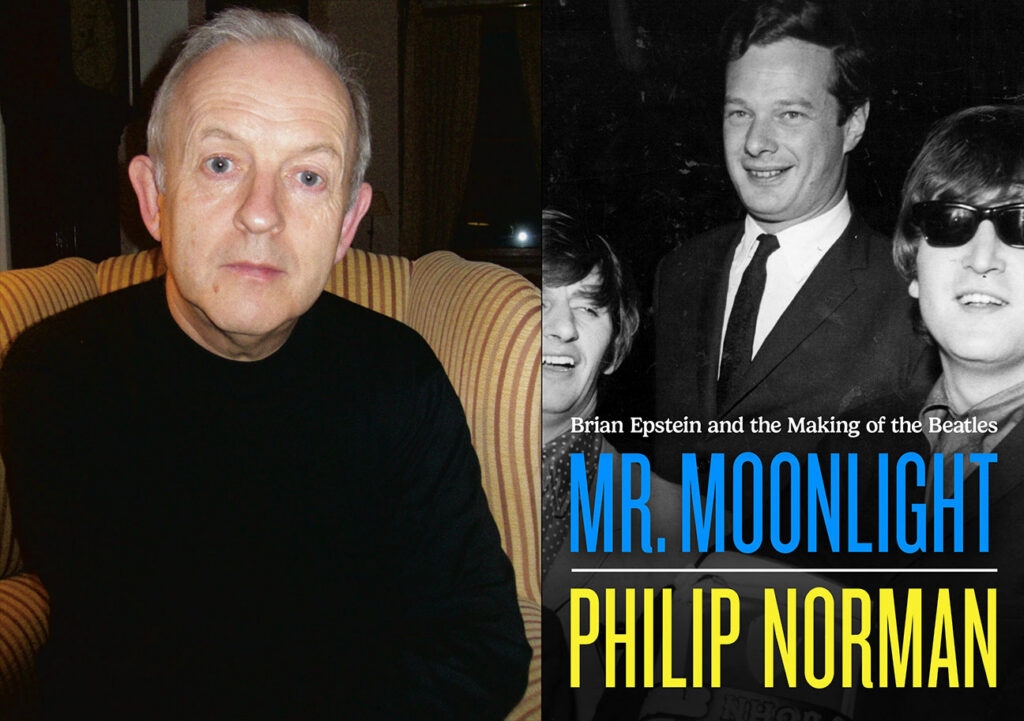
The Admirable Epstein: ‘Mr. Moonlight: Brian Epstein and the Making of the Beatles‘

When Philip Norman was working on “Shout!: The Beatles in Their Generation,” his landmark 1981 biography of the Beatles, writing about pop music was seen as a little disreputable. “I was told I was mad,” he said. “I didn’t like to mention the word ‘Beatles.’ I was embarrassed.” Today, it’s a much different landscape, and books about pop music are big business.

Books about the Beatles are still best sellers, even more than 50 years since the band broke up. There are scholarly, sober books such as Mark Lewisohn’s “All These Years,” whose first, nearly 800-page volume takes the story only up to 1962, the cleaned-up, bowdlerized history in Hunter Davies’ authorized 1968 “The Beatles” and sordid, sensationalist tripe like Albert Goldman’s “The Lives of John Lennon.” Wikipedia currently lists 43 books about the band, and that doesn’t include books by people who worked with the Beatles, such as “All You Need Is Ears,” by George Martin.

One figure that has been left behind is Brian Epstein, the Beatles’ gay, Jewish manager. With “Mr. Moonlight: Brian Epstein and the Making of the Beatles,” Norman aims to redress the omission. Even though he was responsible for much of the Beatles’ career from 1962 until his death at the age of 32 in 1967, there hasn’t been a substantial biography of Epstein since Ray Coleman’s 1989 book.

Norman sounds almost offended as he ticks off the ways Epstein has been overlooked due to his religion or sexuality. In making the Beatles superstars, he “changed Britain’s place in the world. Suddenly, everybody wanted British things because of the Beatles and their conquest of America in 1964. And for all of this, he got no recognition whatsoever. Not so much as a thank you from the British government.” From Norman’s perspective, Epstein’s life makes “a wonderfully inspiring and terribly sad story.”

What’s even more impressive, he said, is that Epstein “had to contend with antisemitism and homophobia, which never let up until his death” at 32. Much of it, Norman noted, was of the “subtle British style that could only be felt by the victim.” Norman is married to a Jewish woman, and said “that gave me more insight into antisemitism, which of course has come back in a sickening way.”

“Mr. Moonlight” also shows how deep Epstein’s Judaism went. His family, who owned both Epstein and Sons furnishing stores and NEMS (North Ends Music Store), were prominent members of Liverpool’s Jewish community. The Epsteins kept kosher at home and had Shabbat dinners Friday nights. Brian was sent to a Jewish boarding school and had a bar mitzvah. Even as an adult, Norman said, Epstein “took his Judaism very, very seriously.”

In 1960s Britain, homosexuality was a crime, punishable by up to life in prison; Epstein was blackmailed multiple times. He convinced himself the Beatles had no inkling of his sexuality, but Norman said that the secret in “Do You Want to Know a Secret,” was Epstein’s homosexuality.  Lennon was Epstein’s favorite, but could be cruelest in mocking Epstein. Joe Flannery, Epstein’s only stable homoerotic relationship, told Norman that Epstein would return from meetings with the Beatles in tears.

Norman’s admiration for Epstein is obvious both on the page and when speaking to him. His Epstein is a complex man: generous and honest in his business dealings, but prone to moments of violent rage; a man given to elegance who seeks out “rough trade” for sexual gratification; a man capable of deep emotions but unable to sustain a romantic relationship; and a success who was convinced he was a failure. He’s not afraid to explode the myths Epstein created, contradicting the often-told story that Epstein first heard about the Beatles when a customer at NEMS requested “that new single by the Beatles.”

Epstein was possibly the least likely person to succeed in the music business. An adult in a milieu that was proudly adolescent and a buttoned-up middle-class shopkeeper at a time when British pop music was decidedly working-class; the first time Epstein saw the Beatles at the Cavern, he cut an incongruous figure, wearing a suit, tie and hat and holding a briefcase.

The main points of the story are well-known to most Beatle fans; what “Mr. Moonlight” does is move your gaze a few feet to one side and change your focus. Epstein was devoted to the Beatles, whom he referred to as “the boys” even though he was only a few years older, and scrupulous in his business dealings with them. He never interfered with the Beatles’ music, or tried to shape their personalities; his influence is most deeply felt in their presentation. As a member of the Cavern crown told Norman, he “steamed cleaned them.” He took them out of their leather jackets and jeans and put them in suits and insisted the Beatles become professional, bow at the end of every song, and refrain from the earthier aspects of their humor. This, Norman said, “made it possible for middle-class teenagers and their parents and, eventually, their grandparents to like them.”

The book follows Brian on his fruitless trips to London to try and get the Beatles – he told anyone who would listen they were “going to be bigger than Elvis” – a record deal. The band’s demo was famously turned down by Decca Records exec Dick Rowe, who wrote that “guitar groups were on the way out.” EMI finally signed the band, and assigned them to George Martin’s small Parlophone label, which specialized in spoken word records. Martin, in turn, recommended that Epstein hire Jewish song-plugger Dick James to administer Lennon/McCartney’s publishing. These choices meant, Norman writes, that the Beatles’ career was in the hands of “three fundamentally honest men,” the odds of this being “billions-to-one” against. Epstein and the Beatles, he said, arrived at “the triumphantly right destination by a totally wrong route.”

As a music industry naif, Epstein made some terrible deals. The worst among them was the contract he signed with the company that licensed Beatles merchandise; they split the proceeds 90% to 10%, with Epstein and the Beatles getting the short end. When he met with United Artists (UA) to produce “A Hard Day’s Night,” the studio was willing to offer the Beatles 25% of the picture; when asked what he would consider a fair percentage, Epstein told them, “I couldn’t accept anything less than seven-and-a-half percent.”

Norman also clears up two persistent rumors: first whether Lennon and Epstein had sex during their Spanish getaway in 1964; they did. (His sources: Flannery and Yoko Ono, who told Norman that John admitted to having gay sex twice – “once to see what it was like, the second time to make sure he didn’t like it.”) The book also presents an alternate theory of Epstein’s death. He dismissed the idea that Epstein committed suicide, noting first that it was against Jewish law, and Epstein’s brother Clive told Norman that Brian “would never have done that to his mother.” The inquest (which Norman said was “a travesty”) ruled an “accidental death.”

In Norman’s telling, Epstein, realizing he made an awful deal with licensing Beatles merchandise, decided to ignore the contract and license merch himself. Retailers, unsure who had the official license, canceled all their orders, leading many smaller manufacturers to go bust. One of them died of a heart attack, and his son told people he was going to put a hit on Brian Epstein. Reggie Kray, one-half of the Kray twins, “the Al Capones of London,” told The Liverpool Echo that “it’s easy to make a death look like an overdose,” adding, that Epstein’s death “wasn’t us,” which Norman writes “insinuates that it had been someone – and he knew who.” And finally, the man who heard the threat told him about getting a phone call where someone told him, “You’re going to hear that Mr. Epstein had an accident.” After that, Brian was found dead.

Norman, who has written over a dozen books about music, sniffs at Sam Mendes making four Beatle biopics “on the basis of having studied them for one year.” Most people, he said, “think that music writing is easy.” Distinguished authors like Salman Rushdie, Martin Amis and “even Tom Stoppard” think music writing is “the soft option.” But it’s really hard, he said, to make a sentence like “the record went to #3 in the Hot 100” interesting.

Norman’s already started work on his next project. He won’t reveal the subject, but said it will be “Beatle related.”

The Admirable Epstein: ‘Mr. Moonlight: Brian Epstein and the Making of the Beatles‘ Read More »

Summer in Israel: Still Waiting for Tourists to Return

Summer in Israel used to be the peak tourist season: Ben Gurion Airport filled with passengers arriving from around the world, Tel Aviv’s restaurants buzzing with people speaking dozens of languages, beaches from the Galilee to Eilat packed with visitors soaking up the Mediterranean sun and Jerusalem’s Western Wall welcoming thousands of tourists every day.

Visiting Israel this summer revealed a very different reality. Restaurants, gift shops, hotels and car rental companies have all been hit hard by the ongoing war. The blow to the economy is evident almost everywhere you go.

It began almost three years ago with the Oct. 7, 2023 attacks and continued through the war with Iran. Israel has had little opportunity to recover. Tourists have understandably chosen to vacation elsewhere rather than risk disruptions from rocket sirens or sudden military escalations. Even after a ceasefire was announced, the uncertainty has continued to discourage many travelers from booking flights to Israel.

One company, however, appears to have prospered during much of the past two-and-a-half years: El Al. As one of the few airlines that continued flying to Israel – and the only carrier maintaining direct service to and from the United States for much of the war – the airline benefited from the lack of competition. Airfares soared, and many travelers, particularly Israelis who had little choice but to fly, ended up paying thousands of dollars for a ticket.

In February 2026, Israel’s Competition Authority announced its intention to fine El Al up to 121 million shekels (about $34 million) for allegedly charging excessive and unfair prices during the war. The Authority found that after most foreign airlines suspended flights to Israel, El Al became the country’s dominant carrier, effectively holding a monopoly on many routes, and raised ticket prices by an average of 16%, with some routes seeing increases of up to 31%. El Al denied the allegations, arguing that its wartime pricing was restrained and that higher fares largely reflected last-minute bookings and unprecedented demand.

Going to Israel this summer, I booked a flight with Austrian Airlines, which was later canceled, and I was transferred to El Al. Wanting to be comfortable during the long 12-hour flight, I paid extra for a preferred seat, only to discover that El Al’s “preferred” seat was equivalent to a regular seat on every other airline I had flown.

I had also ordered a vegetarian meal, which was nowhere to be found despite having confirmed it several times before the flight. The flight attendant apologized and brought me a small salad and a small bowl of fruit instead, both unpalatable.

The process of getting through customs at Ben Gurion Airport took only minutes. On the way to visit my family in Haifa, the taxi driver gave me my first glimpse into how much tourism had changed. He told me that before the war, 35 to 40% of his customers were tourists. Today, he said, his passengers are almost exclusively Israelis.

The impact of the decline in tourism was evident throughout my visit. Walking through Jerusalem’s Old City, one of the most beautiful and colorful markets in the world, I noticed something was missing: the crowds. The narrow stone alleys were still filled with vibrant displays of spices, jewelry, textiles and religious items, but the energy had changed. Shop owners stood outside their stores, calling out to passersby and trying to lure customers inside. Feeling bad for some of them, I purchased several souvenirs for friends and family back in the United States.


Shops in Jerusalem’s Old City awaiting customers
(Photo by Ayala Or-El)

While browsing in one shop, I spoke with an Arab store owner who sells kippahs, tablecloths and Judaica. He told me that business has been suffering for the past three years and that he is considering closing his store. “I’ve been here for 30 years, but it’s never been this hard,” he said.

I heard similar complaints in many of the places I visited – businesses that were once filled with international visitors now struggling to survive. Yet amid the decline in foreign tourism, I noticed an unexpected trend: Israelis who used to travel abroad often, have begun discovering their own country.

During my stay at the Dan Panorama Hotel in Tel Aviv, I found the hotel completely booked – all 478 rooms – for the weekend. According to the manager, nearly all of the guests were Israelis. The beaches were also filled with families, couples and friends enjoying the warm Mediterranean waters.

The return of domestic tourism reflects the Israeli spirit of trying to maintain a sense of normalcy despite the uncertainty. Israelis continue to travel within the country, dine out, spend time with family and friends and enjoy moments of everyday life. But domestic tourism alone cannot replace the millions of international visitors who once filled Israel’s hotels, restaurants, tour buses and markets. Businesses that depend on foreign tourists cannot survive on Israeli customers alone, especially after nearly three years of dramatically reduced tourism.

Beyond the economic impact, another sentiment has become increasingly difficult to ignore: exhaustion. After nearly three years of war, uncertainty and repeated disruptions to daily life, many Israelis describe feeling emotionally drained and unsure what the future holds.

While Israelis leaving the country are not a new phenomenon, the ongoing war, security concerns, and economic pressures have intensified the desire to leave. Some singles and young families have left the country to explore better opportunities abroad, looking for stability and a sense of predictability that has become harder to find at home.

Countries such as Portugal, Germany and the United States have become increasingly attractive destinations for Israelis seeking a new beginning. Some say their move is temporary, a way to find stability until the situation improves, while others acknowledge that they are making a permanent decision to build their future elsewhere.

The possibility of losing some of its younger generation is a concern Israel has faced before, but after Oct. 7 and the prolonged conflict that followed, the question many Israelis are asking is not only how to endure the current crisis – but what kind of future awaits them.

Israel has always been a country built on resilience, a place that has repeatedly rebuilt itself after wars and crises. But resilience requires more than endurance. It requires hope, stability and confidence that the future will be better than the present. For the tourism industry, for small businesses and for many Israelis wondering whether to stay or leave, rebuilding that confidence may be one of the country’s greatest challenges.

Summer in Israel: Still Waiting for Tourists to Return Read More »