Until this day, God did not give you a heart to know, eyes to see and ears to hear ~ Deuteronomy 29:3
Until this day
this day at the river
this day after forty years of days
after forty years with the same clothes
the clothes as fresh as day one
the same shoes as sturdy as they were
on the Egyptian shoe rack
I did not have the heart to know
to know where my heart belonged
to know to Whom it belonged
I did not have the eyes to see
to see where I was going
to see the short path across the river
I did not have the ears to hear
to hear the praise and the warning
to hear the sounds of miracles –
Until this day
this day at the river
my stomach sated for decades
my thirst not unquenched for decades
my enemies smoted –
Until this day
my heart and eyes and ears
functioning organs again –
I know what I have to do.
Rick Lupert, a poet, songleader and graphic designer, is the author of 29 books including “God Wrestler: A Poem for Every Torah Portion.” Visit him at www.JewishPoetry.net
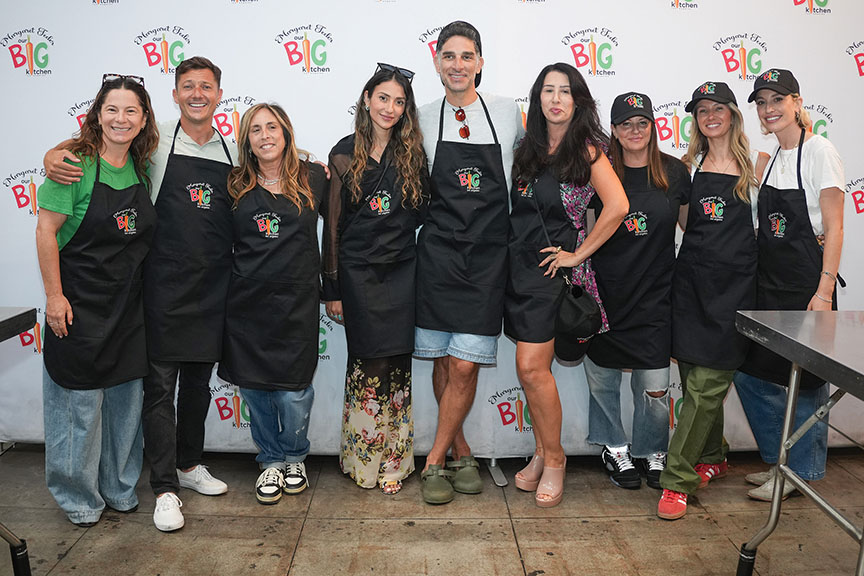
Celebrating its fifth anniversary, Our Big Kitchen Los Angeles (OBKLA) recently partnered with The A List, a top marketing firm, for a week of service dedicated to giving back. A List founder Ashlee Margolis, alongside UTA’s Jacob Fenton, Uzo Aduba, and Lisa Rinna, joined volunteers in preparing and distributing nourishing meals and baked goods for Angelenos in need.
The milestone week drew support from a wide circle of OBKLA friends and advocates, including Jason Segel, Dylan McDermott, Josh Peck, Gia Coppola, artist Honor Titus, Kevin Zegers, Chace Crawford, Holland Roden, Marla Sokoloff, Lewis Tan, Rachael Leigh Cook, Emmanuel Acho, rapper GaTa, Nolan Gerard Funk and others — underscoring the community’s commitment to OBKLA’s mission.
Based in Pico-Robertson, OBKLA unites volunteers to cook and package meals for those facing hardships. These meals are then provided to social service organizations for distribution.
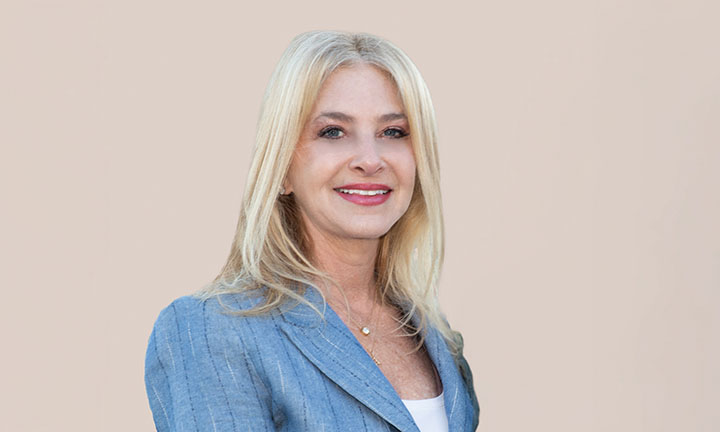
Michelle Conwisar, the recently elected national vice president at Hadassah. Courtesy of Hadassah, The Women’s Zionist Organization of America
Los Angeles-area resident Michelle Conwisar was recently elected to the national board of Hadassah, The Women’s Zionist Organization of America.
Conwisar, who was named national vice president, has been a Hadassah leader for more than three decades. She is vice chair of the forthcoming national capital campaign. A third-generation Hadassah leader, Conwisar herself helps engage younger women as a liaison for Evolve Hadassah: The Next Generation. She is married to Dr. Philip Conwisar, an orthopedic surgeon and Hadassah associate, with whom she is a member of the Founder and Keepers of the Gate donor societies. The couple has two daughters who are fourth-generation Hadassah life members.
Hadassah made its announcement about Conwisar joining its executive committee during its 2025 national conference, held in Miami in August.
The organization, which advances women’s health and supports a strong State of Israel, currently counts more than 300,000 members.
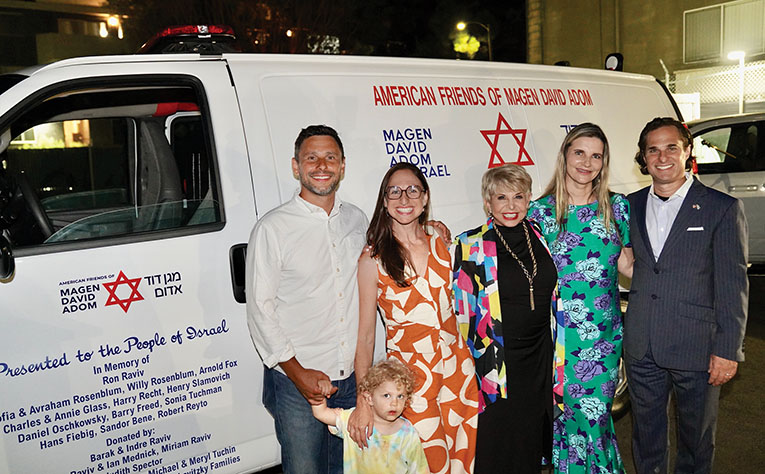
An ambulance dedication for Magen David Adom featured Los Angeles philanthropist Barak Raviv and his wife, Indre (far right), with their family and friends. Photo by Orly Halevy
An ambulance dedication for American Friends of Magen David Adom was held last month at Temple Beth Am. Husband and wife Barak and Indre Raviv sponsored the ambulance for Magen David Adom—Israel’s national emergency organization.
The ambulance was dedicated in memory of Ron Raviv, Barak’s late father.
MDA is Israel’s official representative to the International Red Cross. Although its role is mandated by the Israeli government, it’s not a government agency and thus relies on philanthropic support for its dispatch systems, training and equipment, including ambulances. MDA also operates a lifesaving blood center and milk bank.
The ambulance joins MDA’s fleet of 2,650 vehicles, including 1,200 life support ambulances — the self-described “workhorses of the MDA fleet.” The ambulances are built on a GM chassis and assembled in Elkhart, Indiana. According to the AFMDA website, more than 100 new life support ambulances are needed each year to support MDA’s critical work.
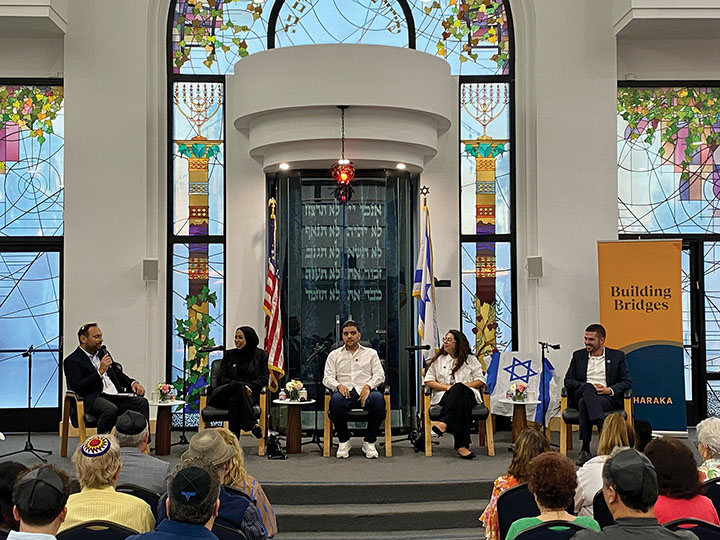
From left: VBS Senior Rabbi Nolan Lebovitz; Fatema Al Harbi (Bahrain); Youssef Elazhari (Morocco); Maryam Younnes (Lebanese-Christian speaker from Israel); and Noam Meirov, managing director at Sharaka. Courtesy of Valley Beth Shalom
On Sept. 5 at Valley Beth Shalom, the synagogue hosted Sharaka, an organization that builds people-to-people relationships between young people in the Abraham Accords countries.
There was a Muslim woman from Bahrain, a Muslim man from Morocco, a Lebanese Christian woman who now lives in Israel and an Israeli Jewish man. They offered an inspiring message about the next chapter of the Middle East and spoke about a hopeful future. Approximately 100 people attended the event, which included a Friday night dinner.
The event at VBS was part of Sharaka’s speaking tour in Southern California. The delegation of young Arab and Israeli leaders visited Los Angeles from Sept. 5-11 and San Diego from Sept. 12-15.
Six months after we reported on the break-in at Mark Pizza on 1708 S. Robertson Boulevard, it happened again. When owner Mark Douek arrived to open his pizzeria on Tuesday morning, he discovered that once more his shop had been broken into.
“They broke the window, stole around $200–$300, and left,” said Douek. “The insurance won’t cover the $2,000–$3,000 in damages because it’s lower than our deductible.”
Douek said he doesn’t believe it was the same criminals as last time. “This time they were Black,” he said, “but I’m not sure if they were also Black during the previous break-in.”
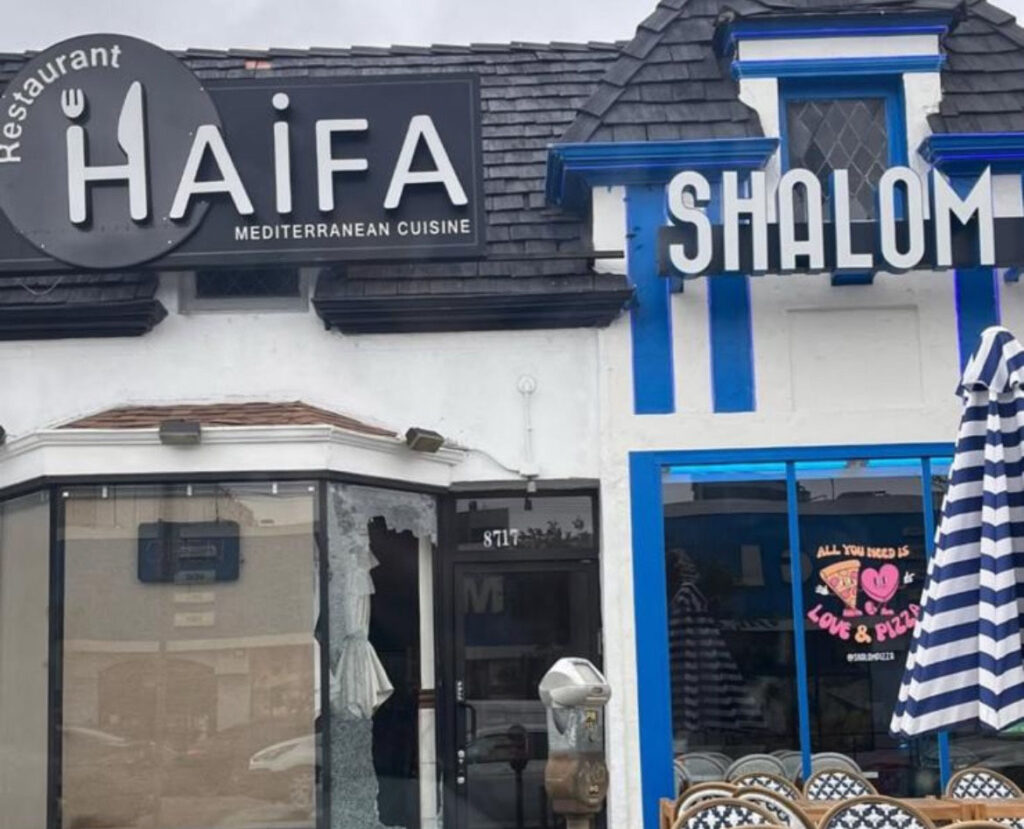
Not far from there, Haifa Restaurant on 8717 W Pico Blvd in Los Angeles, was also broken into that same night—by different suspects, according to surveillance cameras.
Restaurant manager Jouvani Mejia recalled this was the third time the eatery had been targeted within the past year. “They tried several times to force the front door, and when they couldn’t, one of them broke the side window and came in, followed by another guy. He had been here before—he knew exactly where he was going.”
The two men spent less than three minutes inside before fleeing. “The odd thing is, we had a couple of valuable items and they didn’t touch them,” said Mejia.
No other businesses in the area besides Mark Pizza were targeted, leading Mejia to suspect the thieves may have been focusing on Jewish-owned establishments.
When asked how he plans to protect his business from further burglaries, Douek said he intends to install more surveillance cameras, activate his alarm system, and check his mezuzah.
For the addicted, harm reduction
is preferable to prohibition.
Those who can’t resist seduction,
when guided towards inhibition
by harm reduction methods, may
retrain, restrain, themselves without
recourse to laws they can’t obey,
demoralized too much by doubt
caused by their inability
to conquer totally addiction.
A step with more humility
than laws and fear of legal friction
is harm-reduction, using measures
that will not stop, but can diminish,
pain caused by addictive pleasures.
Less than perfect is its finish,
coming with a shell-shocked shine
all addicts get once they rebuff
the pleasures for which they would pine
before they learned the word “Enough!”
In Mainz in Ashkenaz around the year 1000 CE Rabbenu Gershom decided to disparage bigamy in a takkanah, decree, in which he chose to forbid
multiplicity of marriages, perhaps inspired by the same verse that Jesus cited when forbidding marriage dissolution by divorce. In both decrees the superego supersedes the Freudian id, and both of them seem serendipitously adaptive
of the Deuteronomic law of the fair captive!
Note that the paradigm for harm-reduction as opposed to total prohibition is the Deuteronomic law of the fair captive (Deut. 21:10-14), concerning which Rashi cites the midrash implying that the Torah negotiates with the evil inclination.
Douglas Quenqua (“Graduating from Lip Smackers,” NYT Styles, 4/30/10) writes:
The choice between prohibition and harm-reduction has long divided parents on prickly issues: forbid alcohol or supervise the inevitable kegger? Preach abstinence or buy condoms?…..
A fascinating article on the Deuteronomic fair captive, “Jesus on Divorce: Another Moral Compromise,” thetorah.com, by Shaye Cohen and Zev Farber, caused me not only to recall this poem but to wonder whether Rabbenu Gershom’s decree against bigamy might have been inspired by the same verse in Genesis that inspired Jesus’ decree against divorce.
In the article Shaye Cohen and Zev Farber write:
The idea that a Torah law may not reflect the divine ideal but instead a human compromise has a close parallel in the gospels. The earliest version is the Gospel of Mark:
Mark 10:2 Some Pharisees came, and to test him (=Jesus) they asked, “Is it lawful for a man to divorce his wife?” 10:3 He answered them, “What did Moses command you?” 10:4 They said, “Moses allowed a man to write a certificate of dismissal and to divorce her.” 10:5 But Jesus said to them, “Because of your hardness of heart he wrote this commandment for you. 10:6 But from the beginning of creation, ‘God made them male and female.’ 10:7 ‘For this reason a man shall leave his father and mother and be joined to his wife, 10:8 and the two shall become one flesh.’ So they are no longer two, but one flesh. 10:9 Therefore what God has joined together, let no one separate.”[16] (NRSV)
In this story, retold in the Gospel of Matthew (19:3–8),[17] Jesus claims that the Torah’s law permitting divorce is actually immoral. The only reason the Torah included it is because it is the lesser of two evils. In other words, men would divorce their wives anyway, so the Torah designed a form of legislation to accommodate this, but really, it would be best if people never divorced. Later in the story, as well as in Matthew’s Sermon on the Mount, Jesus takes this a step further and says that remarriage after divorce is akin to adultery, claiming that the Torah’s concession is no longer valid, at least for those righteous enough to see the truth.
Jesus’s claim that in an ideal world, the Torah would not permit divorce is conceptually similar to the Talmud’s claim that the Torah permitted marrying the captive woman to limit or avoid wartime rape. What the Talmud calls “the evil inclination,” Jesus calls “hardness of heart” (based on Ezekiel 2:4 and 3:7), but the logic is the same: The Torah permits an action which it would have preferred to prohibit.
Gen. 2:24 states:
כד עַל-כֵּן, יַעֲזָב-אִישׁ, אֶת-אָבִיו, וְאֶת-אִמּוֹ; וְדָבַק בְּאִשְׁתּוֹ, וְהָיוּ לְבָשָׂר אֶחָד. 24 Therefore shall a man leave his father and his mother, and shall cleave unto his wife, and they shall be one flesh.
I wonder whether Jesus’ citation of this verse to justify his disapproval of divorce as a violation of the biblical command that marriage should transform two fleshes into a single flesh might have inspired Rabbenu Gershom to forbid bigamy. a situation in which three fleshes are joined, preventing the union of a marriage from becoming one single flesh.
If my suggestion is legitimate, it would explain why Rabbenu Gershom’s decree only applied to Ashkenazi Jews, who at the time he was alive, inhabited communities whose non-Jewish population followed rules of the New Testament. This also might explain why his decree was not enforced by Sephardim, who inhabited communities whose populations were mainly Muslims whose religious laws allow bigamy.
Gershon Hepner is a poet who has written over 25,000 poems on subjects ranging from music to literature, politics to Torah. He grew up in England and moved to Los Angeles in 1976. Using his varied interests and experiences, he has authored dozens of papers in medical and academic journals, and authored “Legal Friction: Law, Narrative, and Identity Politics in Biblical Israel.” He can be reached at gershonhepner@gmail.com.
Don’t be satisfied. My instruction might sound odd in comparison to Ben Zoma’s wisdom in Pirke Avot: “Ben Zoma said: Who is rich? The one who rejoices in his lot.” Doesn’t that mean be satisfied with what you have? Perhaps. But it doesn’t mean be satisfied with what you do.
Rabbi ibn Paquda teaches, “Negative pride is a condition that arises when a person is proud of his wisdom, or a righteous person is proud of his deeds, in a way that causes his accomplishments to be great in his eyes; to feel that he can make do with what he has already accomplished.” This means that when we let our credentials cloud our willingness to grow, we have lost our way. Our self-importance shadows the soulful, heartfelt introspection that is meant to be in constant motion.
Don’t be satisfied with your academic knowledge, your emotional connecting, your spiritual yearning, your relational bridging, your professional goals.
As long as we are reaching higher, we continue learning, loving, and living.
What a blessing in dissatisfaction.
Shabbat Shalom and Shana Tovah
Rabbi Nicole Guzik is senior rabbi at Sinai Temple. She can be reached at her Facebook page at Rabbi Nicole Guzik or on Instagram @rabbiguzik. For more writings, visit Rabbi Guzik’s blog section from Sinai Temple’s website.
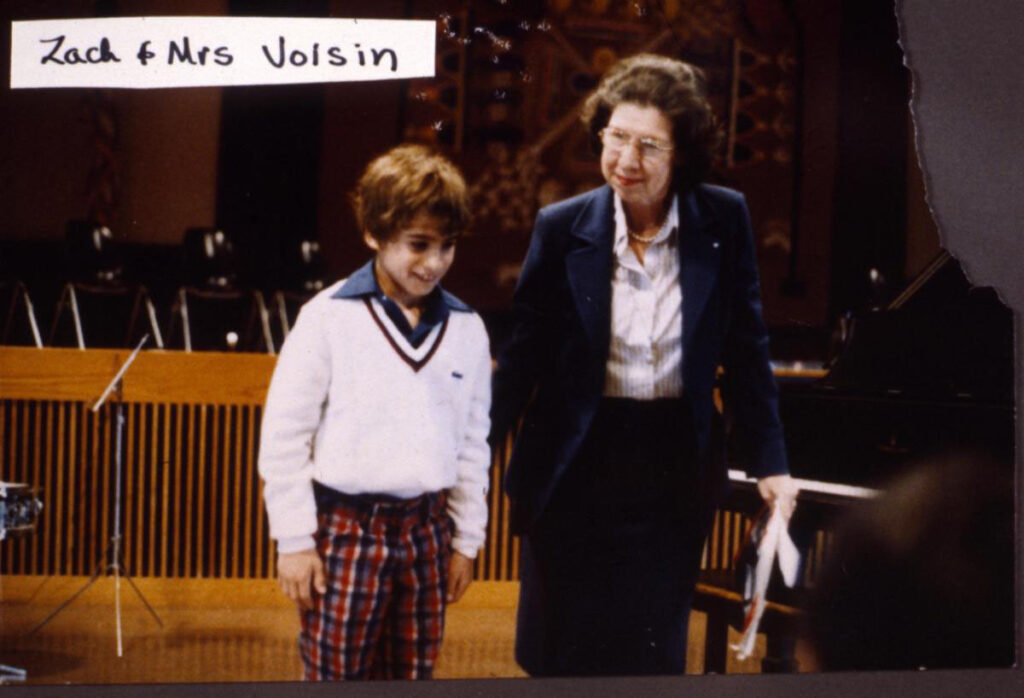
I had my first piano recital when I was in second grade. I can still picture it—the two songs I played, the little introduction I gave, even the necklace my teacher wore. That single recital, more than forty years ago, was more than a performance. It was a moment in time that shaped me, planting in me a lifelong love of music and a deep respect for those who teach it.
We all carry moments like this—experiences that leave their mark and never fade. Some are shared across the world. We remember where we were on September 11, 2001, or when the Space Shuttle Challenger exploded.
We remember the joy dancing at Israel’s Independence, hearing Martin Luther King Jr.’s dream, watching Neil Armstrong take his first step on the moon, or seeing the Berlin Wall fall.
And then there are the personal ones—the moments no one else may notice, but that change the course of our own lives.
What have been those moments for you? Which ones inspired you, or unsettled you, or shifted how you see the world?
And perhaps the most important question: how have those moments helped you bring your own light more fully into the world?
Marla and Libby are back with another episode of Schmuckboys. This week the duo start with their updates of the week. Libby shares about how her and Jack are celebrating one year of marriage. And the two talk about the exciting news of having a Schmuckboys billboard in Nashville. The two then welcome their guest, comedian Natan Badalov!
Things get off to a deep start, Natan sharing about a recent break up and how he’s grown from it and the importance of knowing what you’re looking for. The group talks about dating in NYC, and the trouble with comparing your relationship to others. They then chat a bit about the Bukharian Jewish communities and the cultural differences between different types of Jews.
Natan then talks about how he got into his comedy career and kept going even when it was difficult. He shares about being grateful for his family’s support. The group talks about the societal expectations for careers, especially with immigrant parents. They then chat about Natan’s upcoming comedy special which released on September 2nd! They continue on talking about Judaism and the pressure to marry Jewish, and the lack of representation of certain types of Jews in comedy.
The group then talks about combatting misinformation and antisemitism online and how to find the balance between voicing community support while still focusing on bringing comedy to the space.
They end with a quick game, and asking Natan what he thinks his definition of a Schmuckboy is.
You can find Natan on all social platforms @natanbadalov and his comedy special CONNECT THE DOTS is out now on YouTube!
Ever since the days of the Free Speech Movement at Berkeley in the 1960s, when college students protested the Vietnam War, fought for racial justice and camped out at the Woodstock Music Festival, the rebellious spirit on college campuses symbolized the essence of cool– the antidote to a stuffy and conservative older generation.
To a certain extent, that still holds true today. The liberal hippies from the 60s took over our major cultural pillars, and they likely still consider themselves part of the “cool club.”
Charlie Kirk, the conservative firebrand who was shockingly murdered on Wednesday while talking to college kids at Utah Valley University, wanted to change that. He took his old-school conservative message to college campuses and dared to make it cool.
“He seemed like a guy who would be popular on campus, who would be invited to the good parties, who would have friends outside of political activism, who wouldn’t just show up in a bow tie plotting how to take over the Young Republicans,” Ross Douthat writes in The New York Times. “The fact that he was himself a college dropout, leaving college early to found Turning Point USA, was almost the perfect touch: There is nothing more normally American than choosing a really good entrepreneurial opportunity over the full undergraduate four years.”
Kirk, at only 31, became so successful and influential within the conservative world he could have received a high-level position in the Trump administration. But he aimed higher.
“We want to transform the culture,” he said in an interview in February.
Transform from what to what?
“Conservatism on college campuses has traditionally mixed tweedy intellectualism, shock-value provocation and ruthless training for future G.O.P. operatives,” writes Douthat. “All of these forms… have tended to attract nerds and dorks and oddballs, campus outsiders, the inherently uncool.”
Kirk may have had conservative views, but he was far from uncool. As Douthat writes, he “built his career and reputation organizing a different kind of campus conservatism — fun-loving, masculine, rowdy, mainstream, even faintly cool.”
We rarely talk about the cool factor when discussing the politics of power. It feels nebulous. It’s hard to measure. It doesn’t fit the talking points of policies and ideologies.
Indeed, it transcends all of that.
Cool is that intangible trait we internalized during our most formative years in high school. I have distinct memories of the cool kids in my high school in Montreal. I remember their names. I remember their swagger. Some were athletes, some were musicians, some were rebels, and others were just cool-looking.
President Barack Obama was the essence of cool. He had the whole package—the look, the ideas, the delivery. He was against the Iraq War, he could speak to any audience, and he never lost his cool.
The Democratic party, almost by default, became the natural home of the cool people since those days in the 60s when the nation was listening to anthems like Crosby, Stills and Nash’s “Four Dead in Ohio,” about the police killing of college students at Kent State.
The Democratic hold on cool began to loosen with the arrival of the woke movement, which featured a growing intolerance for anything that might hurt people’s feelings, otherwise known as “microaggressions.” Although this was rooted in compassion and empathy, it undermined the cool factor. How cool can a fragile scold be?
Charlie Kirk saw an opening and barged right through.
He engaged with tens of thousands of college students in hundreds of campuses over more than a decade and stood tall with his coolness and his arguments. He wanted to make loving America cool again.
“He was a harbinger and then an embodiment of Trump-era populism,” Douthat writes, adding that he “became a spokesman for a youthful right that seemed both more rebellious and more relaxed (like a good college hangout) as progressivism became more institutionally dominant and uptight.”
The shift of cool away from Democrats was most evident in the 2024 elections, when the party of Hollywood and rebellious college students became the party of the elite and the uptight. If you want to win a national election today, you’re much better off with Joe Rogan than with George Clooney or the billionaire Oprah.
Why did Kirk become so threatening that someone felt compelled to assassinate him? I’m no psychologist, but it could well be that Kirk’s very coolness, his ability to express controversial views in disarming ways, was seen as the ultimate threat precisely because it helped him reach new people.
Of course, conservatives have a long way to go before they can hope to grab the cool mantle, especially with the loss of their campus hero. Maybe, in our fragmented and frenetic social media ecosystem, no party can grab it.
But Charlie Kirk, by being earnest rather than smug, polite rather than condescending, and cool in an old-school kind of way, has made the elusive cool label up for grabs, or at least broadened its definition.
In doing so, Kirk also managed to gain the respect of icons of the left like Cenk Uygur, who posted on X yesterday, “Charlie and I disagreed a lot about really important things. But somehow, we didn’t lose our humanity. We were still fellow Americans.”
Not losing our humanity may be the coolest thing I can think of.
What a singular tragedy, for us and for his family, that Kirk was stopped from continuing that mission.
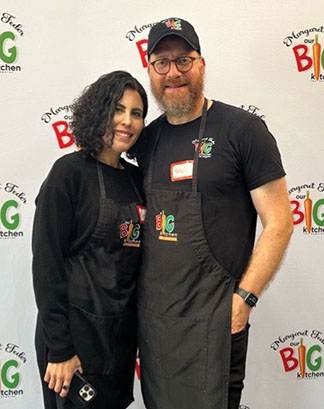
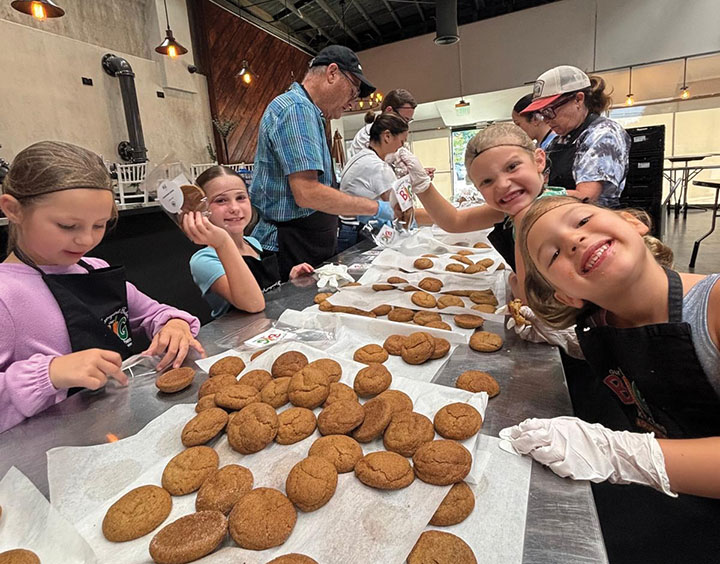
In August, Our Big Kitchen Los Angeles — aka The Margaret Feder OBKLA — celebrated its fifth anniversary of providing meals, love, unity and community.
The nonprofit welcomes volunteers in two-hour sessions to prepare fresh, kosher meals for those who are food insecure in Los Angeles. They are then distributed through a variety of partner organizations. In the last five years OBKLA prepared and distributed 357,433 meals and 587,665 baked goods; they hosted 54,587 volunteers, who did 105,989 hours of volunteering.
Chaya and Yossi Segelman
As we approach the High Holy Days, community — and community service — remain top of mind. “Volunteering during the month of Elul is a meaningful way to prepare for Rosh Hashanah and Yom Kippur, as it brings the themes of the season — introspection, growth and connection – into practical action,” executive director of OBKLA Yossi Segelman, who cofounded the organization with his wife, Chaya, told The Journal. “Elul is a time when we focus on teshuvah (return), seeking to deepen our relationship with G-d and with others.”
One of the best parts of these acts of kindness and service through OBKLA is the volunteers get as much joy from the experience as the ones who benefit from the meals. “Volunteering reflects a sincere desire to better ourselves and our world, and to enter the new year with compassion, humility and a renewed sense of purpose,” he said. “Through these actions, we help create an environment of care and responsibility, aligning our daily lives with the values we hope to carry into the year ahead.”
In the spirit of the High Holy Days, Segelman shared two of his go-to recipes for the fall: chicken skewers and snickerdoodles. These recipes represent a fusion of old and new, savory and sweet. “Cooking during this season is about blending tradition with personal meaning,” he said.
While the chicken is not a traditional Jewish dish, Segelman believes it represents fresh starts and bold flavor: just like a new year. “The vibrant green of the chimichurri symbolizes growth and renewal, echoing the themes of Rosh Hashanah,” he said. “Grilling and serving skewers also creates a sense of gathering and sharing, as food is passed around and enjoyed together; something I associate with holiday meals.”
On the other hand, snickerdoodles tie beautifully into the High Holy Day tradition of eating sweet foods to symbolize a sweet year ahead. “The warm cinnamon sugar reminds me of the comforting flavors of home and the hope that the coming year will be filled with sweetness and warmth,” he said. “Though not a traditional Rosh Hashanah dessert, they are a modern twist on the idea of sweetness, and baking them has become my own personal tradition.”
Learn more about volunteering at OBKLA.org.
Chicken Skewers with Chimichurri
6-8 Servings
2 lb chicken breast cutlets
2 cups yellow bell peppers
2 cups yellow onions
2 cups zucchini
3 yellow squash
Chimichurri (recipe below)
16 6-inch bamboo skewers
1. Preheat the oven to 450°F (on the convection setting if available).
2. Prepare the chimichurri (see Chimichurri Recipe below). Set aside.
3. Cut the chicken in half lengthwise, then into 1 1/2-inch square pieces.
4. Cut the bell peppers into 1 1/2-inch square pieces and slice the zucchini and squash into 1-inch wide half circles.
5. Trim the onion by cutting off the top and bottom, slicing in half top to bottom, then across the equator. Slice each quarter into 2 to 3 pieces, depending on the size.
6. To assemble skewers, follow this order: squash, chicken, pepper, chicken, onion, chicken, zucchini.
7. Brush each skewer generously with chimichurri.
8. Roast in the oven for 15 minutes, or until the chicken reaches an internal temperature of 160°F.
9. Optional: Any extra vegetables can be added to their own skewers or tossed and roasted separately as a side.
Chimichurri
10 – 16 Servings
4 Tbsp dried parsley
1 tsp kosher salt
4 Tbsp water
2/3 cups oil
1 oz fresh, peeled garlic (3-5 cloves)
2 Tbsp dried oregano powder
2 tsp dried thyme
2 tsp dried basil
2 Tbsp red pepper flakes
2 Tbsp lemon juice
1 tsp paprika powder
1/2 tsp ground black pepper
1. In a small saucepan, combine parsley, oregano, thyme, basil, chili flakes, salt, black pepper and water.
2. Bring to a gentle simmer and let cook for 5 minutes to rehydrate the herbs and bloom the spices.
3. Transfer the mixture to a tall-sided container. Add lemon juice, garlic and smoked paprika.
4. Using an immersion blender, blend until the garlic is finely chopped and well incorporated.
5. While blending, slowly drizzle in the oil until fully emulsified and smooth.
6. Taste and adjust seasoning, if needed.
Snickerdoodle Cookies
Makes 2 dozen+
10 oz margarine
1 cup white granulated sugar
1 cup brown sugar
2 eggs
5 tsp vanilla extract
1 tsp salt
1 tsp baking soda
2 tsp ground cinnamon
3 1/4 cups all-purpose flour
Plus:
1 cup white granulated sugar (for rolling)
1 1/2 Tbsp ground cinnamon (for rolling)
1. Melt the margarine in a large mixing bowl. Let it cool slightly so it doesn’t cook the eggs.
2. Add white and brown sugar to the melted margarine. Whisk or beat until smooth and creamy.
3. Add the egg, vanilla extract, salt and baking soda. Mix until fully incorporated.
4. Stir in flour and cinnamon until a soft dough forms. Do not overmix.
5. In a small bowl, mix together the reserved sugar and cinnamon. Set aside.
6. Scoop and roll dough into balls, then roll each ball in the cinnamon-sugar coating.
7. Chill the dough balls for 20–30 minutes for thicker cookies (optional but recommended).
8. Bake at 350°F (175°C) for 10–12 minutes or until edges are set and centers are soft.