fbpx

June 26, 2025

Foundation to Combat Antisemitism Names New President, JBBBSLA Raises $420K

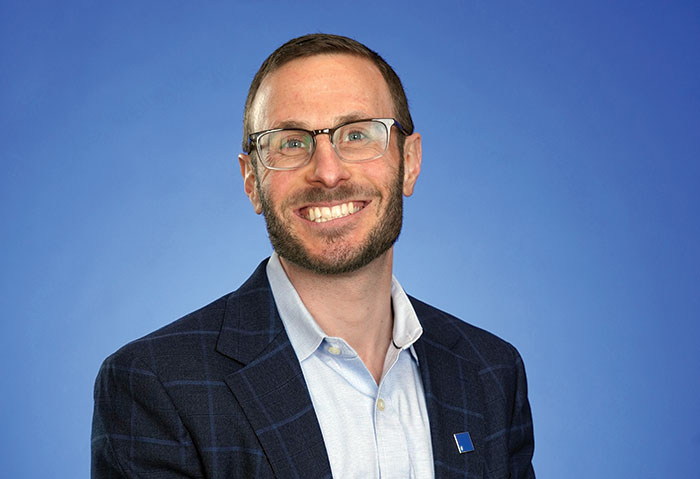
The Foundation to Combat Antisemitism (FCAS) has named Adam Katz as its new president. 

He joins the organization at a time when FCAS’ research indicates 45% of Americans are unaware of antisemitism, even as Jew-hatred continues to be on the rise.

“Unfortunately, Jewish hate has become normalized for us,” Katz said in a recent phone interview. “The goal is de-normalize Jewish hate and to get people, who today are bystanders, to become upstanders, so that when they see something hateful, they say something, they do something, so that that same thing doesn’t repeat itself.”
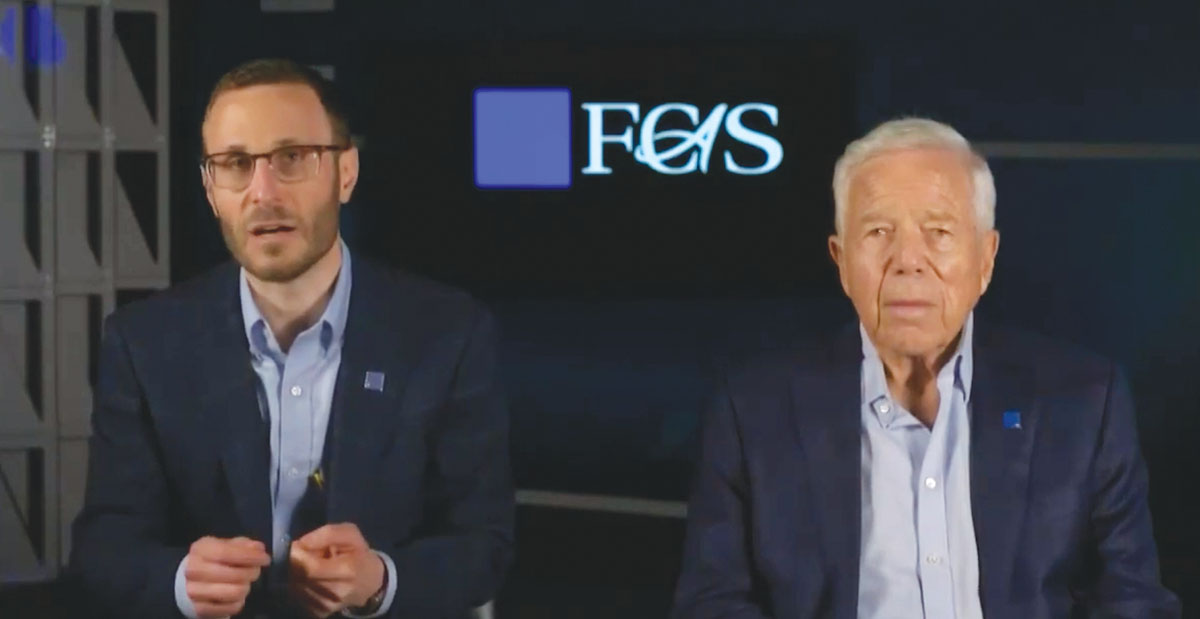
FCAS’ Adam Katz and Robert Kraft appear on CNN. Screenshot of CNN show

Katz, 39, previously served as global head of physical stores at Wayfair, leading the company’s expansion into brick-and-mortar retail. He earned an MBA from the Wharton School as well as a JD and BA from the University of Pennsylvania. He lives in Boston with his wife and two children. 

Under Katz’s leadership, FCAS, based in Massachusetts, will continue its flagship campaign, #StandUptoJewishHate, which promotes the use of the Blue Square emoji on social media as a symbol for combating antisemitism, the world’s oldest hatred. 

The symbol, according to FCAS, draws attention to the fact that Jewish people comprise a tiny percentage of the country’s population — just 2.4% — yet are victim to a disproportionate amount of religiously-motivated hate crimes.

“It’s something that is very accessible, and that’s one of the powerful components of it,” Katz said of the Blue Square symbol. “It’s been something that we’ve invested in for a few years now, and we continue to, because we believe it’s a powerful way for folks to show their support, show their allyship and say that hate is not acceptable.”

Other FCAS initiatives include “Unity Dinners,” an ongoing partnership with Hillel International and United Negro College Fund that brings together Jewish students from Predominately White Institutions and Black students from Historically Black Colleges and Universities (HBCUs) for on-campus social gatherings.

Since the conception of the “Unity Dinners” series, hundreds of students from different backgrounds and ethnicities have come together with the aim of rebuilding the historical bonds between Jewish and Black communities, according to the FCAS website. Black and Jewish students who participate in the series are subsequently encouraged to apply for $1,000 microgrants that empower them to host follow-up events.

“The idea is, how do we cultivate and scaffold a situation for students to get out of their social bubbles and interact?” Katz said.

In 2019, businessman and philanthropist Robert Kraft founded FCAS in response to rising antisemitism, with the specific goal of reaching Americans unfamiliar with the issue. In previous interviews, Kraft — who, as chairman and CEO of the Kraft Group, owns the New England Patriots, one of the NFL’s most valuable franchises —has cited the deadly Tree of Life synagogue shooting in 2018 and the antisemitic “Unite the Right” rally in Charlottesville, Virginia, in 2017, as reasons why he started the organization.

Kraft has said his vision for FCAS is that it functions more like a data-driven, private, for-profit business than as a nonprofit. FCAS, he has said, is an organization that closely measures the return on its investment. 

And Katz, with his more than 15 years of private sector experience, was the right person to implement that vision, Kraft said in a May 15 statement announcing Katz’s hiring.

“At a time when hate and intolerance are growing at an alarming rate, strong leadership is more important than ever,” Kraft said. “I am proud to announce the appointment of Adam Katz as the new president of the Foundation to Combat Antisemitism. Under his guidance, I am confident we will expand FCAS’ impact, deepen its reach and empower even more people to speak out, educate others and build bridges.”
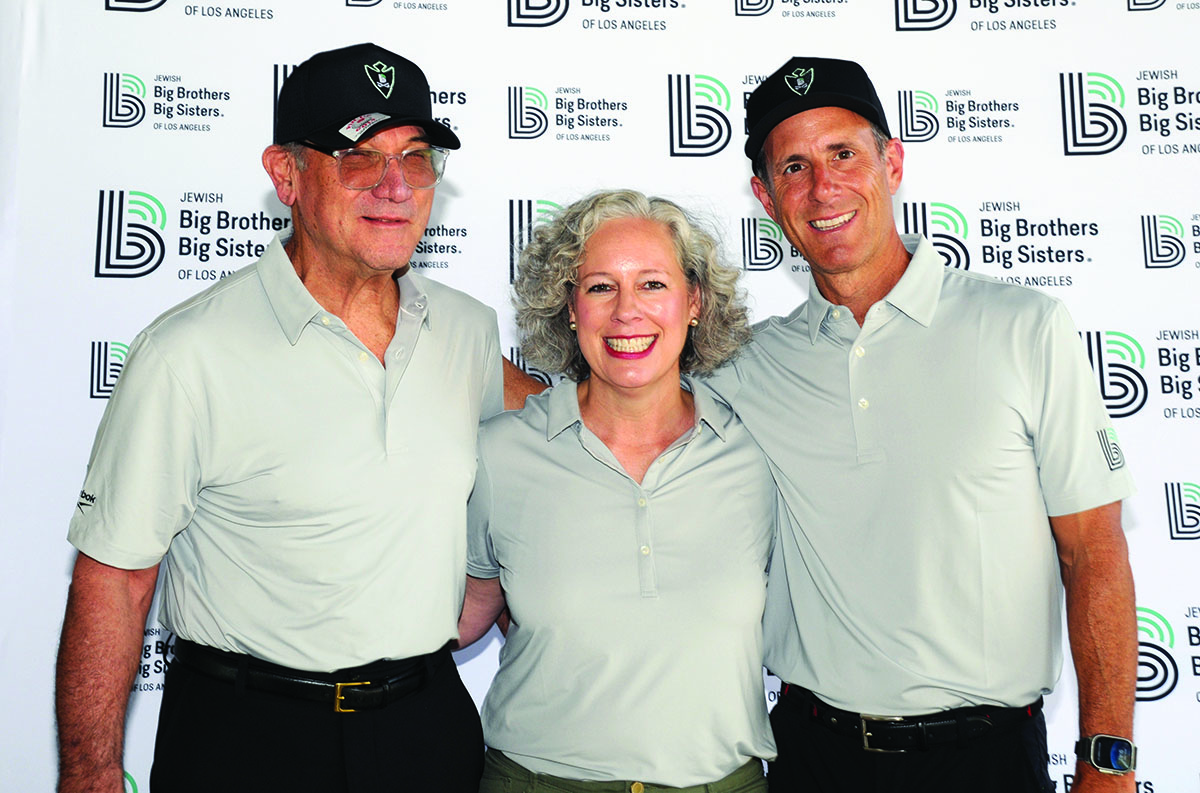

Golf Classic Co-Chair Steve Miller, JBBBSLA CEO Cari Uslan and Co-Chair Joey Behrstock.
Photo: Jewish Big Brothers Big Sisters of Los Angeles

On May 12, Jewish Big Brothers Big Sisters of Los Angeles (JBBBSLA) held its 33rd annual Camp Bob Waldorf Golf Classic at Valencia Country Club supporting its efforts to send youth across Los Angeles to overnight summer camp this summer. 

Thanks to the support of donors and sponsors, the Golf Classic raised over $420,000. JBBBSLA thanked the generous golfers, foundations, institutional sponsors, and in-kind donors who support Camp Bob Waldorf, including event co-chairs Joey Behrstock and Steve Miller; the Golf Committee; title sponsors Johnny Carson Foundation and Cogent Financial Resources; presenting sponsors Cara and Jimmy Heckenberg of Heckenberg Realty Group; and golf cart sponsors Angels 4 Austin and Men of Westwood.

“For more than 100 years, JBBBSLA has been a place where young people find hope, build confidence, and form community,” JBBBSLA CEO Cari Uslan said. “We match youth with mentors, offer life-changing summers at Camp Bob Waldorf, and help students access college. And none of that is possible without you. Together, we are shaping a brighter, stronger, and more hopeful future for the youth of Los Angeles.”

At the event’s closing awards dinner, more than 140 golfers heard from Uslan; Vice President of Camp and Retreat Operations Katie Toole; Co-Chairs Behrstock and Miller; and former camper and current Camp Counselor Kiley Haugen.

“My two years at camp were filled with so many adventures and new experiences. I got to ride horses, shoot bows and arrows, climb a high ropes course, and meet people from all around the world,” Haugen said. “I also got to find a sense of community. I am from a sole income household and was only able to afford camp because of our amazing financial aid assistance. For the first time, I was with kids who dealt with the same issues of money insecurity. Camp gave me a space to grow and learn with people like me.”

JBBBSLA has owned and operated Camp Bob Waldorf in Glendale for more than 80 years, offering multiple camp programs for youth from low-income families. All Camp Bob Waldorf campers receive financial aid, and no camper is turned away for inability to pay.

Foundation to Combat Antisemitism Names New President, JBBBSLA Raises $420K Read More »

Extra Tater Tots Because Torah – A poem for Parsha Korach

After you separate the choicest part from it, you will not be guilty of any sin on account of it. ~ Numbers 18:3

When it’s my turn to make dinner for my wife and son
(which, by the way, is on Wednesdays)

I often do it restaurant-style – meaning I bring out
the meal pre-portioned on their plates

and lay it in front of them so they feel
they are being taken care of.

Sometimes the plates don’t look equal –
not in terms of portion size, but

in the intended beauty of the arrangement
of the food. (Yes, I want them to be

visually delighted before their hand
even touches a fork.)

So I have to make choices about
who gets the best-looking plate.

Of course, that’s always my wife because
she deserves the best of the best.

She deserves food arranged by angels.
She deserves plates the culinary magazines

are knocking on the door to take pictures of.
(Not that I’m able to produce anything like that.)

My son (who is at camp so I won’t be
giving him a plate of food for the next two months)

used to always expect the broken piece
of whatever it was, but that made me feel guilty

so I started giving him the second-best
of the presentations because he deserves that

for his food humility alone. He doesn’t care
what it looks like. What it tastes like

is a whole other issue for him.
I give them both the choicest portions

(and often extra tater tots if they’re involved.)
I didn’t learn this from the Torah, but as with

all things involving wisdom and straying from sin,
I wasn’t surprised to find it in there.


Rick Lupert, a poet, songleader and graphic designer, is the author of 29 books including “God Wrestler: A Poem for Every Torah Portion.” Visit him at www.JewishPoetry.net

Extra Tater Tots Because Torah – A poem for Parsha Korach Read More »

BRAVE-ish at Brandeis University Alumni Books and Authors Spring Event 2025

Thank you Brandeis University Alumni in Los Angeles for including me in your Spring Author Event!

Under blue skies and with sweeping views of the harbor at Whiskey Red’s in Marina del Rey, the Brandeis Alumni Spring Author Luncheon offered a memorable afternoon of conversation, community, and compelling storytelling. This spring gathering featured three celebrated authors: Antoine Wilson, Laurie Stevens, and Lisa Niver, each of whom shared their unique journeys as writers and creators.
The program was introduced and moderated by Mitchell Schwartz, a Brandeis alumnus and longtime political strategist, who warmly welcomed guests and guided the audience through each author’s segment. Antoine Wilson, author of the bestselling novel Mouth to Mouth, spoke about the origin and evolution of his gripping literary thriller, which begins with a chance encounter in an airport lounge and unfolds into a suspenseful, philosophical exploration of truth, perception, and identity. Wilson, whose work has appeared in The Paris Review and Best American Short Stories, captivated the room with insights into his writing process and reflections on the novel’s unexpected success. Laurie Stevens, creator of the award-winning Gabriel McRay psychological suspense series, offered a behind-the-scenes look into her intricate character development and the psychological research that grounds her work. Her thrillers—set in and around Los Angeles—blend crime, trauma, and forensic science in a narrative style that keeps readers turning the pages. Stevens spoke about the real-life cases that have inspired her fiction and her commitment to portraying mental health issues with authenticity. Lisa Niver, an award-winning travel journalist and memoirist, shared stories from her book BRAVE-ish: One Breakup, Six Continents, and Feeling Fearless After Fifty. With humor and honesty, Niver recounted her transformative solo journeys around the world and the courage it took to start over after heartbreak. “I was born in Boston while my dad was in periodontal school at BU,” she said. “So being invited to speak at a Brandeis event in Los Angeles—where one of the board members is actually a patient of my dad and learned about my book through him—felt incredibly special. I was so grateful to be welcomed into this inspiring and thoughtful community.” VIDEO of Lisa’s talk:
After the talks, guests mingled and enjoyed the chance to meet the authors one-on-one during the book signing. “It was such a joy to meet everyone,” said Niver. “And a true honor to be invited.” With its beautiful waterfront setting, enthusiastic attendees, and thoughtful discussion, the event was a vibrant celebration of storytelling, connection, and the literary spirit of the Brandeis community.
April 24, 2025 11am -2pm Whiskey Reds, 13813 Fiji Way, Marina del Rey, CA 90292 with authors: Antoine Wilson, Laurie Stevens and Lisa Niver. Moderator: Mitchell Schwartz

BRAVE-ish at Brandeis University Alumni Books and Authors Spring Event 2025 Read More »

We Know Why Trump Dropped the Bomb, But Why Did He Drop The F-Bomb?

President Donald Trump became the first president to use the “f”-curse knowing he was on a mic, so how is it possible he could say Iran and Israel don’t know what the “f” they are doing? Iran’s regime knows what it is doing in this instance as it wanted to kill more Jews. Israel knows what it is doing. Trump was wrong to say what he said on the morning of June 24, but he had his reasons.

Isolationist fools like Tucker Carlson, Dave Smith and Candace Owens thought their criticism of Trump would stop him from dropping the bomb on Fordow. It didn’t, but it caused him to drop the F-bomb on Israel and Iran, in a brief press appearance in which he bizarrely said he was especially mad at Israel for dropping bombs.

Bashing Israel, in his mind, served three purposes. First, it clapped back at the isolationists who say he is doing Israel’s bidding. Even though it is false, Trump hates the idea that anyone is pulling his strings. Secondly, Trump was upset he got less credit than he deserved for the Abraham Accords and wants to normalize relations between Saudi Arabia and Israel. One of the goals of Hamas on Oct. 7 was to derail this train, and it was able to. Saudi Arabia’s leader Mohammed Bin Salman, has a population that is furious seeing images of Palestinians dying the Israeli-Gaza war. He can use this moment of Trump sticking it to Israel to sell the idea that Trump, while not a neutral broker, is not a slave to Israel. The third element is that Trump believed being harsh on his allies will scare his enemies, who will fear is unpredictable nature and thus put him in a position of more leverage in any negotiation.

That doesn’t mean this strategy will always work. Recall how Trump publicly lambasted Ukrainian President Volodymyr Zelensky, saying “You don’t have the cards.” Worse than that was his inexplicable lie that Ukraine started the war. It was embarrassing to watch. But the verbal flogging made no difference to Putin, who didn’t agree to any deal.

Note how Trump falsely claimed India and Pakistan have been fighting for 150 years and didn’t highlight a Pakistani terrorist group started the problem. Trump thought the appearance of being neutral was needed. To what extent Trump stopped Pakistan and India form embarking on a full-scale war, we don’t know, but even if Trump takes more credit than he deserves, it’s still a big win for him.

Trump did once say (though not in front of cameras) “F— Netanyahu” falsely believing the Israeli leader was too earlycongratulating President Biden on winning the 2020 election. Many Jews are wondering if Trump should get a pass due to his support of Israel and dropping the bomb on Iran. I would not frame it that way and instead, we should evaluate each item as it comes, rather than make bombastic statements or predictions.

When Trump didn’t visit Israel on his trip to the Middle East, many people were quick to say he sold out Israel and had no strategy. I said to wait and see and if he made a terrible deal with Iran, which allowed them to have its nuclear program, one could then say that. Now that it didn’t happen, the Jews who want to say Trump hates Jews have been left grasping at straws and his tirade gave them one thing to stir their drink.

I would not be surprised if Iran attempted to rebuild its ballistic missile program and its nuclear program. Should there be any agreement between Iran and America, it must include unfettered monitoring, it must thwart Iran from supporting terrorism and limit the ballistic missile capacity.

While no one should be blowing a gasket over Trump cursing, there is an understandable concern that Trump could force Netanyahu to make a deal that leaves Hamas in power, but we will see.

If Trump thinks calling Iranians great traders and giving them economic benefits will alleviate their threat, he is probably mistaken. If he thinks talk of building a Riviera in Gaza will alleviate the problem of Hamas, he is also probably mistaken. And Iran needs to tell the International Atomic Energy Agency the location of their more than 400 kilograms of enriched uranium.

But we need to give credit for Trump’s bold decisions that have helped Israel. Isreal restored its deterrence and Trump, who numerous times said Iran would not have a nuclear bomb, proved he was more than talk.

But we need to give credit for his bold decisions that have helped Israel. Isreal restored its deterrence and Trump, who numerous times said Iran would not have a nuclear bomb, proved he was more than talk. If given a choice, I’ll take an f-bomb from the only president who would say it, in exchange for dropping real bombs on Iranian nuclear sites by the only president who would do it.

We Know Why Trump Dropped the Bomb, But Why Did He Drop The F-Bomb? Read More »

A Bisl Torah — In Your Coming and Your Going

We had the opportunity to visit the Jewish area of Rome. An Italian Jew, Sarah was our tour guide for two synagogues: the Great Synagogue of Rome and a smaller synagogue sometimes used by the Italian Jewish community and sometimes used by the Libyan Jewish community. Often shared by both.

Sarah explained that because of various cultural influences, you can find touches of different Jewish traditions throughout the synagogues. One example was not finding a mezuzah on their synagogue. She shared Roman Jewish tradition is to stringently believe the synagogue is holy and gives enough protection, thus not needing a holy object to touch as one enters and leaves. She explained that even if the synagogue is used for other functions, the tradition is no mezuzah for Roman Jewish synagogues.

I still found myself wanting to touch a mezuzah as I left the synagogue, especially as she explained how antisemitism continues to plague Italy. The security was evident and cars cannot drive down the visibly Jewish area. While in Rome, we also heard our own congregants’ stories. Those in bomb shelters in Israel, seeking safety and contemplating how they will get home. Their journeys have been arduous and filled with courage. Jews also praying for Godly protection. Protection for their families and the entire Jewish people. And through each story told, our congregants have ended their messages with, Am Yisrael Chai.

Mezuzah or not, we are viscerally bound to each other. Our tour guide explained that her son’s bar mitzvah was mere days after October 7th. He trembled as he put on his tefillin, scared about what might happen next—perhaps, to him. But then Sarah explained, her son hasn’t stopped putting on tefillin since. Often our faith is driven by fear. But her story is a reminder, that we push past fear and instead, grasp tradition. We grasp life. We always have and we always will.

Just as we say when we touch the mezuzah and as we saw on the threshold of the Great Synagogue in Rome, “Blessed are you in your coming and blessed are you in your going.” Whether we are in Italy, Israel or Los Angeles, connected to each other, may we continue to experience blessings of peace wherever we go. Fear is not our primary drive. Rather, may we be blessed to grasp life, over and over again.

Shabbat shalom


Rabbi Nicole Guzik is senior rabbi at Sinai Temple. She can be reached at her Facebook page at Rabbi Nicole Guzik or on Instagram @rabbiguzik. For more writings, visit Rabbi Guzik’s blog section from Sinai Temple’s website.

A Bisl Torah — In Your Coming and Your Going Read More »

Condemnation Is the Cost of Jews’ Survival

Condemnation is the cost
of Jews’ survival, a low price
compared with one more holocaust
that anti-Zionists entice,
no more effective than recalling
defeat in Khaybar of the Jews,
a memory the appalling
Ayatollah Khameini renews,
reminding Shiites, after Israel
prevented nuclear doom, of Ali’s
defeat of Jews, a victory as stale
as Passover’s prohibited bialys.

On 6/17/15, in ‘The battle begins,” The Times of Israel reported:
Iranian Supreme Leader Ali Khamenei posts an apparent threat to Israel on social media, saying, “The battle begins.”….
“Ali returns to Khaybar,” the post says, according to a translation by the Iran International news outlet. The statement is a reference to the first imam of Shia Islam and his conquest of the Jewish town of Khaybar in the 7th century.
The post includes an image a man holding a sword entering a castle-like gate, with fiery streaks in the sky overhead……
The statement is Khamenei’s first public post since US President Donald Trump on social media demanded Iran’s unconditional surrender and said that the US was holding off on assassinating Khamenei “for now.”
The Battle of Khaybar was fought in the year 629 between Muhammad and his followers against the Jews living in the oasis of Khaybar, located 150 kilometers (93 mi) from Medina in the north-western part of the Arabian peninsula, in modern-day Saudi Arabia. According to Muslim sources, the Muslims attacked Jews who had barricaded themselves in a fort….The Jews of Khaybar finally surrendered and were allowed to live in the oasis on the condition that they would give one-half of their produce to the Muslims. Jews continued to live in the oasis for several more years until they were finally expelled by caliph Umar. The imposition of tribute upon the conquered Jews served as a precedent for provisions in the Islamic law requiring the exaction of tribute known asjizya from non-Muslims under Muslim rule, and confiscation of land belonging to non-Muslims into the collective property of the Muslim community. In return, non-Muslim citizens were permitted to practice their faith, to enjoy a measure of communal autonomy, to be entitled to Muslim state’s protection from outside aggression, and to be exempted from military service and the Zakat, which is obligatory upon Muslim citizens.


Gershon Hepner is a poet who has written over 25,000 poems on subjects ranging from music to literature, politics to Torah. He grew up in England and moved to Los Angeles in 1976. Using his varied interests and experiences, he has authored dozens of papers in medical and academic journals, and authored “Legal Friction: Law, Narrative, and Identity Politics in Biblical Israel.” He can be reached at gershonhepner@gmail.com.

Condemnation Is the Cost of Jews’ Survival Read More »

A Moment in Time: “Never Underestimate Your Purpose”

Dear all,

I was traveling through Boston Logan Airport this week when I saw a sign that was just begging for my interaction! I posed as the letter “T” as a passerby kindly took this photo.

For that brief moment in time, I felt like I was completing something incomplete, fulfilling something unfulfilled, giving purpose to something without purpose.

Yes, I felt this – and I realized…. Each of us has incredible potential and responsibility to step in to make the world more complete. Each time we plant a seed, each time we help a neighbor, each time we listen with intent, each time we act with integrity…. All this creates purpose. And regardless of how big or small our interaction is – we can and do make a difference!

Yes, Boston exists regardless of my whimsical pose! Nevertheless, we should never underestimate our role as a whole piece (or, better put – a holy peace) in this divine world!

With love and shalom,

Rabbi Zach Shapiro

A Moment in Time: “Never Underestimate Your Purpose” Read More »

A Battle for the Soul of the Middle East

Storytelling is the essence of who we are as people. It is the epitome of the human experience. Life is all about the stories we hear, those we believe, and those we tell ourselves about the world.

Now is the time to start telling the story of Israel’s war since October 7th and beyond. Over the past year and a half, I have spoken to many media outlets and U.S. audiences about the war in the Middle East: Hamas’s unprecedented massacre, and the ensuing IDF campaigns in Gaza, Lebanon, Syria, Yemen and Iran. As Israel is fighting on the ground on so many fronts, a grand battle is being waged for the very legitimacy of Israel’s war—on social media and in the press—meant to undermine Israel and prevent its victory. This war of words is not insignificant as it is the one that should allow Israel the time and conditions to achieve its goals, but are we telling the right story?

On Tuesday morning, June 24, President Trump’s announced ceasefire between Israel and Iran entered into force. It concluded 12 (plus) days of direct confrontation between the two nations, one whose current round started 627 days ago, when Iran’s proxy, Hamas, breached the border with Israel and committed unspeakable atrocities.

This unique moment in history, which ended with a strategic victory for the Jewish State of unimaginable proportions, demands that we pause and observe the true nature of the battle Israel is waging. Israel has launched this campaign against Iran to rid it of its nuclear capabilities, we heard, as well as its dangerous ballistic missile program. Many words have been commonplace in the course of this war—missiles, terror, nuclear, ballistic, enriched uranium, bunker-busters, etc.—all meant to “convince” and “explain” the situation on the ground.

However, we owe it to ourselves to step back from the details and observe the bigger picture of what transpires in the Middle East.

On Monday, June 23, Israel bombarded the notorious Evin Prison in northern Tehran, one of the main symbols of the Islamic Republic’s regime of oppression and torture against their own people. Young Iranians who dared to stand up for their basic human rights found themselves confined, humiliated, and tortured there, and hundreds of them never made it out alive. The mere name Evin still sends shivers down the spines of many—behind and beyond—the iron wall of the evil regime to the East.

This symbolic attack tells the real story unfolding before us.

For too long, the shadow of the Islamic Republic of Iran has stretched across the Middle East, a regime built on ideological expansionism, regional destabilization, and a chilling disregard for human rights. Through its intricate network of proxy forces—Hezbollah in Lebanon, Hamas in Gaza, Houthi rebels in Yemen, and various Shi’ite militias in Iraq and Syria—Tehran has exported its terror and oppression, undermining sovereignty, stifling the aspirations for freedom among countless people, immiserating humanity by the millions. The pursuit of a nuclear weapon by this regime represents not merely a regional threat but also a global existential danger capable of plunging the world into an even darker abyss.

In this crucible of conflict, Israel finds itself on the front lines, fighting a war of profound necessity and undeniable justice. Beyond the immediate imperative of self-defense, Israel’s struggle carries a more profound significance. In a region often defined by autocratic rule, religious extremism, and the suppression of individual liberties, Israel stands as a singular bastion of democracy and a beacon of freedom. As Israel takes on the forces of oppression, it is fighting for a future where human dignity, economic prosperity, and individual liberties can flourish.

As Israel takes on the forces of oppression, it is fighting for a future where human dignity, economic prosperity, and individual liberties can flourish.

The story we tell, ourselves and others, matters. How many times have we allowed our enemies to tell our story? Allowed them to define us? How many times have Hamas apologists hidden behind “the plight of children” and their “call for justice”? It is nothing new, though it is especially infuriating when these statements are made in support of the very organizations that inflict all that suffering on their own populations.

Now imagine the headlines you will never see on mainstream media, telling Israel’s current story like it is: “Israel, the great redeemer of the Middle East”:

  • Fighting to free Palestinians of Hamas’s indoctrination and cruel rule, giving them a chance to rehabilitate themselves and hope for a better future.
  • Freeing the Lebanese people from Hezbollah’s stranglehold, opening a window for actual Lebanese sovereignty, which has been missing for decades.
  • Toppling the Assad regime in Syria, which has massacred many in the service of the Iranian war machine and their aspirations of regional hegemony.
  • Fighting the Houthis in Yemen, where, after ten years of war, the country remains one of the world’s worst humanitarian crises, with almost 5 million people currently displaced and hundreds of thousands of dead and injured.
  • And now, fighting the evil empire in Tehran, attacking a regime that has not just been at war with the entire region and world but with its very own.

Ignoring emotional elements has proven detrimental to our ability to tell a compelling story. Only a combination of cerebral and emotional arguments and language, a mix of the heart and the mind, can capture this compelling story of Israel’s grand battle for humanity.

Only a combination of cerebral and emotional arguments and language, a mix of the heart and the mind, can capture this compelling story of Israel’s grand battle for humanity.

Now, how does the story end, you might ask? Israel cannot dictate regime changes, but through its just and righteous battle, it could provide an opportunity for the oppressed to rise and claim their freedom.

This is not merely a story of a geopolitical clash but rather of a great battle for the soul of the Middle East. Israel’s choices today in confronting the architects of regional instability define not just its own destiny but also the very possibility of a more just, free, and peaceful future for many peoples all across the Middle East.

May it be.


Shahar Azani is a passionate advocate for Israel and a frequent contributor to various media outlets focusing on Israel, Jewish issues and the Middle East. He is the CEO of the Book Family Foundation as well as Head of Corporate Social Responsibility at Jet Support Services, Inc. (JSSI). Azani was formerly Senior Vice President at JBS, former Executive Director for StandWithUs in New York and served at Israel’s Foreign Ministry for 16 years, focusing on international media and public diplomacy.

A Battle for the Soul of the Middle East Read More »

Print Issue: Changing History | June 27, 2025

CLICK HERE FOR FULLSCREEN VERSION

Print Issue: Changing History | June 27, 2025 Read More »

Sephardic Torah from the Holy Land | “Bayit Means House and Home”

These past few weeks have been a surreal experience.

Wednesday night, June 11, Peni and I boarded an El Al flight from Israel to Miami, followed by a flight to Panama. We travelled to celebrate the wedding of Isaac and Perla. I was at Isaac’s Brit Milah, I officiated his Bar Mitzvah, and he was a student on my Sephardic Educational Center Hamsa Israel experience in summer of 2017. Being under his huppah was extra special, as thirty years ago, I officiated his parent’s wedding. Perla is from Venezuela, so Panama was the “connecting canal” that brought the Los Angelenos and the Venezuelans together. Both the Shabbat and the wedding were beautiful celebrations deeply rooted in Sephardic traditions – prayers, tunes, customs and foods – and genuine love between a beautiful couple.

Our joy was blended with deep concern for what was happening in Israel. For many at the wedding – myself and Peni included – Israel is our actual home. We have kids serving in reserves and friends in bomb shelters. Being away from home is unsettling and nerve wrecking. Isaac and Perla asked me to add prayers under the huppah for Israel, for IDF soldiers, and for the hostages. This was a poignant moment in an otherwise celebratory atmosphere.

From Panama we flew to Boston to celebrate my father-in-law’s 90th birthday and my mother-in-law’s 88thbirthday. This past weekend, the children, grandchildren and great- grandchildren all gathered to celebrate. Like in Panama, this joyous family celebration was blended with deep worries in our hearts over the situation in Israel. Sunday’s celebration was in the aftermath of America’s heroic mission destroying Iran’s nuclear sites. Relieved, but still anxious.

Now Peni and I begin the challenging process of finding a flight back home. As many have remarked, Israelis are the only people in the world who – if abroad while their country is under attack – scramble to get back home in a hurry.

As Peni remarked, in Israel, even as missiles fly over us and sometimes land and do damage, we are free to be who we are: Jews. We are free to wear a kippah, speak Hebrew, attend synagogue or go to Israeli concerts – all without the fear of someone in the streets yelling “Free Palestine” (as someone did to us here in Boston this week).

Peni and I are feeling a blend of Judah Halevi’s poem “My Heart is in the East” and Dorothy’s “There’s No Place Like Home.” We yearn for our morning walk that starts with “Boker Tov,” pauses for a “Café Hafukh” and continues with “Shalom, Ma Nishma”? In Israel – our home – we feel “ba’bayit” – at home.

In Hebrew, “Bayit” means “house” and “home.” We miss both – our physical “house” (apartment) in Herzliya, and our Jewish “home” – Medinat Yisrael. Praying to get back home soon.

Shabbat Shalom


Rabbi Daniel Bouskila is the international director of the Sephardic Educational Center.

Sephardic Torah from the Holy Land | “Bayit Means House and Home” Read More »