fbpx

May 8, 2025

A Love Story Written with a Mop

Literary depictions of love and friendship usually omit the part about cleaning the floor. But one anecdote in the Talmud breaks the pattern:

There was once an incident involving a student of Rabbi Akiva’s who fell ill. The Sages did not visit him; but Rabbi Akiva did. Because Rabbi Akiva swept and sprinkled water and cleaned the room, the student recovered. The student said to Rabbi Akiva, ‘My teacher, you have brought me back to life! (Nedarim 40a)

Rabbi Akiva mopped his student’s room; and that made all of the difference.

When reading this passage, the question that leaps out is: Why didn’t the other rabbis visit? Didn’t they want to fulfill the commandment to “love your neighbor” as well?

The answer lies in a debate about what “love your neighbor as yourself” means. Does this commandment relate primarily to our feelings or our actions?

The Ramban interprets this commandment as regulating one’s emotions. One should not feel jealous of another’s achievements, even if they are greater than your own. You should feel joy in their continued success.

In this view, “love your neighbor” is an obligation of the heart. Judaism demands that even our emotions should follow divine directives; and according to the Ramban, the commandment to “love your neighbor as yourself” directs us to feel affection for everyone.

There is a second element to this view. The way you learn to feel love for others is by appreciating their importance. This idea is found in a debate Rabbi Akiva had with his student Ben Azzai. The Talmud Yerushalmi says:

‘And you shall love your neighbor as yourself.’ Rabbi Akiva says: This is a great principle in the Torah. Ben Azzai says: ‘This is the book of the generations of Adam. When God created humankind, it was made in the likeness of God’ (Genesis 5:1) — this is an even greater principle than that. (Nedarim 9:4)

Ben Azzai sees the commandment “love your neighbor” as spiritually incomplete. Its very language implies a pragmatic concern, of the need to enter into a social compact of mutual aid with your neighbors and others in your community. (For example, Bechor Shor and Rashbam infer from this verse that those who separate themselves from the community would be excluded, and others would not be required to love them.) Offering love to a neighbor who can reciprocate may be practical; but it seems far less spiritual than recognizing the inherent value of each human being.

To see the divine spark in others is an idea that can transform one’s heart and mind. You love what you appreciate; and who can fail to appreciate a beautiful human being created in the image of God?

Ben Azzai is the standard bearer of a view that sees the Torah as obligating true appreciation and affection for others.

The other view offers a far less lofty vision of what “love” means. Rabbi David Zvi Hoffmann writes:

This commandment refers to a love expressed through actions—that is, acts of kindness…. A person cannot love every human being, including one who is not pleasing to him. Yet, performing acts of kindness is an obligation and is possible toward every person…

In other words, you can’t expect people to love everyone; but you can ask them to act kindly to each other.

This is a practical, worldly view of “love your neighbor as yourself”; it’s not about love, it’s about kindness. When the Talmud looks at what this love means in practice, it mentions very prosaic concerns, such as offering a quick and painless execution to those on death row, and requiring a man to meet his future wife in person, to ensure that they will truly be attracted to each other and not divorce. The lesson is that you can practice kindness even in unpleasant situations when the muse falls silent, when the heart is too preoccupied to feel authentic love.

At first glance, this pragmatic approach seems less spiritual. But the importance of action is why Rabbi Akiva came to visit, and not the Rabbis. The other Rabbis had embraced the poetics of love, but lost sight of the practicalities. You might be a holy rabbi, and your heart may be filled with the warmest thoughts towards all of humanity; but if you fail to take action, then sick people like the one in this story will languish. In the real world, people need more than love; they need help.

Kindness becomes the foundation of the Jewish community. Maimonides explains that the commandment to “love your neighbor as yourself” requires everyone to visit the sick, to comfort mourners, to bury the dead, and marry off a bride and groom. This is Rabbi Akiva’s vision of “love your neighbor as yourself,” a command that is more about changing the world than changing your heart.

The true language of love is action.

David Wolpe wrote the following story about an act of kindness that transformed his father’s life. He wrote:

My father’s father died when my father was 11. His mother was a widow at 34, and he — an only child — bore much of his grief alone. In accordance with traditional practice, he began to walk very early to synagogue each morning to say prayers in his father’s memory for the next year.

At the end of his first week, he noticed that the ritual director of the synagogue, Mr. Einstein, walked past his home just as he left to walk to synagogue. Mr. Einstein, already advanced in years explained, “Your home is on the way to the synagogue. I thought it might be fun to have some company. That way, I don’t have to walk alone.”

For a year my father and Mr. Einstein walked through the New England seasons, the humidity of summer and the snow of winter. They talked about life and loss and, for a while, my father was not so alone.

After my parents married and my oldest brother was born, my father called Mr. Einstein, now well into his 90s and asked if he could meet his new wife and child. Mr. Einstein agreed, but said that in view of his age my father would have to come to him. My father writes:“The journey was long and complicated. His home, by car, was fully twenty minutes away. I drove in tears as I realized what he had done. He had walked for an hour to my home so that I would not have to be alone each morning. … By the simplest of gestures, the act of caring, he took a frightened child and he led him with confidence and with faith back into life.”

Mr. Einstein’s devotion to a young boy who needed him tells us more about love than endless volumes of poetry. When it comes to love, it is the actions that matter.

Because real love stories are often written with a mop.


Rabbi Chaim Steinmetz is the Senior Rabbi of Congregation Kehilath Jeshurun in New York.

A Love Story Written with a Mop Read More »

Actor Ido Samuel on Playing Hungry in Hollywood

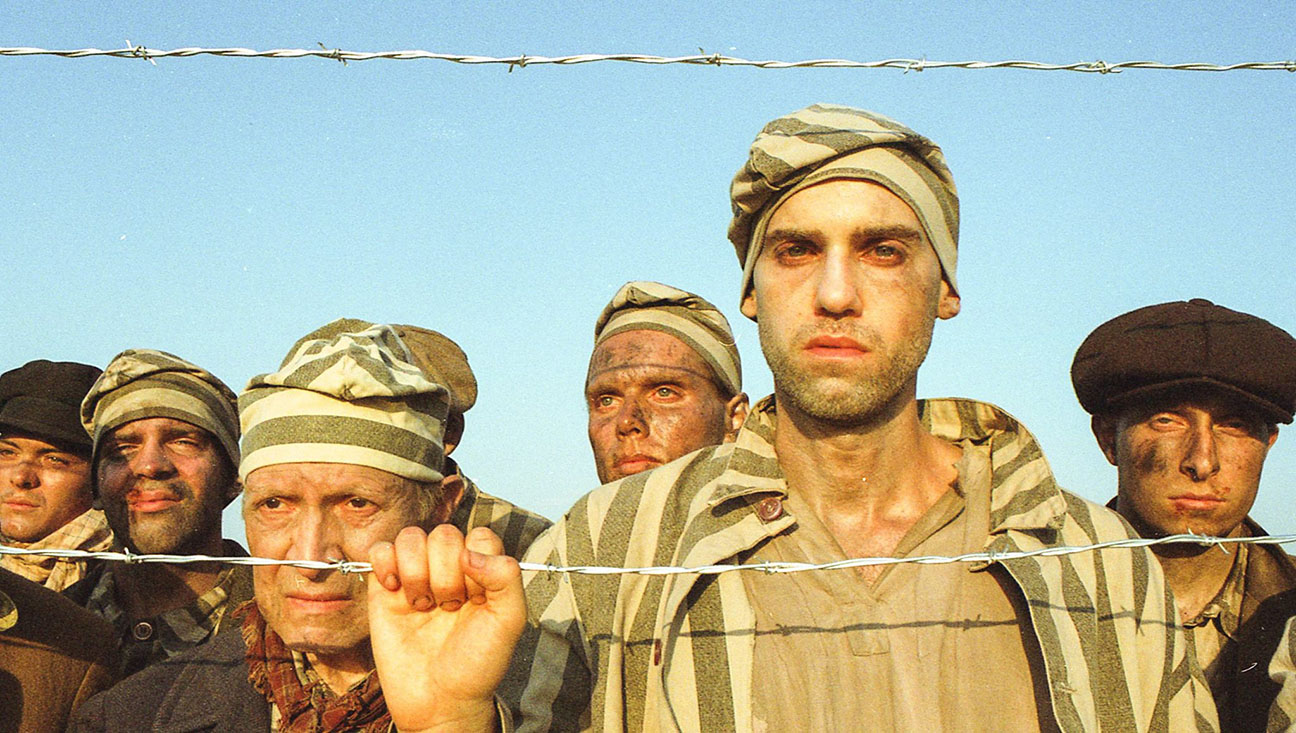
It was over 100 degrees in Fresno during the 2018 shoot for “Dirty Bomb,” a Holocaust film that takes place in the winter. Actor Ido Samuel, dressed as a prisoner at a concentration camp,  had been sustaining himself on just one small salad per day for a week. The short film followed Jewish prisoners forced to build Nazi V-2 rockets in the Mittelbau-Dora concentration camp. The production had no air conditioning, and not much of a budget. Samuel didn’t care. “The hunger helped me get immersed in the scenes,” Samuel told The Journal. To prepare for that role, he spent over three hours talking with a 96-year-old Mittelbau-Dora survivor. The man told him, “I didn’t have the luxury of thinking about my family or what I lost. All I could think about was my hunger. Survival was instinct.”

Those words stayed with Samuel. And not just for that film.

“Dirty Bomb” went on to win Best Short Film at the Madrid International Film Festival, and Samuel was nominated for Best Actor. He stands six-foot two with a muscular build. Off-screen, he is quick to share a friendly smile. But on screen, his eyes have an icy blue intensity reminiscent of those of actor Ralph Fiennes in “The English Patient” or Steve McQueen in “The Great Escape.”

Ido Samuel in “Dirty Bomb”

Samuel grew up in Herzliya, Israel where his mother was a hotel secretary and his father was an electrical technician. His twin sister Michal was just minutes older than him, but growing up was much more outgoing and confident compared to her shy brother. Every Saturday, their father took them to the movies. That’s where Samuel first saw the performances of actors that left him in awe. Two particular Tim Burton’s films that eventually became his acting compass were Jack Nicholson as the Joker in “Batman” and Johnny Depp as “Edward Scissorhands.”

“Great actors make you forget that you’re watching an actor,” Samuel said about Depp and Nicholson.

When he was eight, a magician pulled the still-shy Samuel on stage at a Hanukkah party at the hotel where his mother worked. He started talking with the magician, cracking jokes, making the room laugh. “For the first time, I didn’t feel shy,” Samuel said. “I felt at home.”

Still, acting wasn’t something he pursued. “We always grew up knowing we have to have a stable career, we have to study, I didn’t even dare think about acting,” he said. Samuel took a leap and enrolled in an acting conservatory in Tel Aviv in 2007. Over the next five years, he would have roles in over 100 student films. In 2012, he was cast in his first feature, “Fill the Void,” directed by Rama Burshtein. The film went on to win the Best Picture Ophir, Israel’s version of the Oscars. Life was getting exciting, but life back home in Herzliya was becoming more chaotic. His father’s health was declining from diabetes: first he lost a finger, then a foot— all while his eyesight gradually diminished. “It was so overwhelming to see my Dad like that, but I used acting as an outlet for those emotions,” Samuel said. “Every audition, I treated it as the last audition I’ll ever get.”

One of his first U.S. jobs was in a music video for the song “Bitter Pill” by Irish singer-songwriter Gavin James. One day before the final day of filming, Samuel got a call: his grandmother — a Holocaust survivor — had just died. She became a pediatrician late in life, and had encouraged him to follow his desire to be an actor when he started acting school. The music video was already heavy—Samuel and his co-star have a painful slow-motion breakup in the back of a 1967 Lincoln Continental. But as the camera rolled, Samuel’s tears were real. During our interview, as Samuel recited the song’s chorus he could barely complete the lyrics without getting quite choked up: “I’m sorry that I’m here so late/And please don’t turn my heart away.” He flew back to Israel the next day for the funeral.

He barely took time to grieve before returning to Los Angeles. The next three years would be his busiest with constant work in short and feature films, and even a guest spot on the Amazon Studios show “Transparent.” The year 2018 would challenge Samuel at home and on the screen. After immersing himself in his role in “Dirty Bomb” by eating just a small salad every day, Samuel’s father passed away the night after production wrapped. He’d go back to Israel for the funeral, but he didn’t stay long.

“I wanted to grieve, but I was also afraid that if I took a break, I’d miss calls for auditions and I couldn’t let that happen,” Samuel said. When the pandemic hit in 2020, there were no auditions to miss. He had a car and no scripts to read. So he took the break that he needed and drove to Yosemite National Park, then Redwood National Park, and on to the Petrified Forest in Arizona. At the Grand Canyon, went on the first hike he Googled — 21 miles down to the river and back. He didn’t realize that barely anyone does a round trip from the rim to the river in one day without camping. He did it. “I couldn’t walk for a week, but the struggle and the scenery was so healing and powerful.”

As production resumed in Los Angeles, his first acting gig was in an EDM music video, Illenium’s “Hearts on Fire.” He was cast in an action film. “Tehran,” and  appeared in an episode of the CBS series “FBI: International.” Then came his biggest role: as Isaac, a Jew who joins the Judenrat and is cast out by his own community, in “We Were the Lucky Ones,” Hulu’s adaptation of Georgia Hunter’s novel about a Polish Jewish family separated during the Holocaust. To access that kind of rupture, Samuel returned to music. He would get in character by listening to “For Myself,” a song by the Israeli band The Dollhouse (Beit Habubot).

He says the biggest price of success as a character actor in Hollywood remains being so far away from his mother, twin sister and two nephews in Israel. “I feel guilty being away from them for so long,” he said. “Without both my sister and my mom’s support, I wouldn’t last as an actor in Los Angeles.” His nephews are too young to watch his films and television shows. But they still get performances from their Uncle Ido. “I send them videos of myself doing funny scenes from films that they like,” Samuel said. “I’m doing ‘The Lion King,’ I’m lip-syncing to the songs, and they love that.”

It became apparent to Samuel just how far he has come when he received a WhatsApp text message from his eight-year-old nephew with a screenshot: “Ido, you’re on Google!” His nephew wrote. “It was exciting to get my first text from my nephew,” Samuel said. “But also — now all of the sudden my young nephew is using Google too?”

When he’s not on set, he can often be seen at Jewish community events around Los Angeles; people recognize him from film and television. He’s realizing his dream every day. The characters he often plays have stakes way too high to just relax. So he refuses to do so as well. “I treat every opportunity I ever have to be the best that I can,” Samuel said. “I’m competing with the best of the best in Hollywood. I can’t just relax.”

Ido Samuel stars in “Dirty Bomb,” now available to stream on ChaiFlicks. Follow him on Instagram at www.instagram.com/ido_samuel

Actor Ido Samuel on Playing Hungry in Hollywood Read More »

Complaint: NY Legal Assistant Group’s Union Discriminated Against Jewish Members

The Louis D. Brandeis Center for Human Rights Under Law filed complaints to the National Labor Relations Board (NLRB) and Equal Employment Opportunity Commission (EEOC) on May 7 alleging that the New York Legal Assistance Group’s (NYLAG) union, A Better NYLAG (ABN), discriminated against its Jewish members.

The ABN is a chapter of the Association of Legal Aid Attorneys, United Auto Workers Local 2325. The complaint states that the NYLAG President and CEO sent out an email shortly after the Oct. 7, 2023 “expressing sympathy and concern for Jewish employees” who were scared about the “Day of Rage” protests the next day. In response, the ABN sent out their own email decrying “the illegal Israeli occupation and war crimes against Palestinian[s],” accusing the New York Police Department of working with the Israel Defense Force and criticizing the NYLAG’s management.

The complaint accuses the ABN of creating a hostile work environment after its members, with encouragement from ABN leadership, put up posters stating “resisting colonialism is not terrorism” and “long live the resistance.” Other posters included “intifada now” and “abolish the settler state.” NYLAG management responded by barring all posters “regarding the Israel/Gaza conflict” from the organization’s offices. The ABN countered by filing an Unfair Labor Practice charge with the NLRB and held protests against the NYLAG’s policy inside and outside the office, one of which featured them donning keffiyehs and waving flags to express support for the Palestinians.

A Jewish ABN member wrote a letter to the union’s board alleging that one of their protests outside the office featured speakers promulgating antisemitic tropes like accusing the “Zionist cabal” of putting forth the rule. Another Jewish member responded to an online ABN survey claiming that they did not feel comfortable expressing their Zionist beliefs due to fear of retaliation over the posters’ messages. A third sent a letter to the NYLAG imploring them to enforce their poster policy.

“The ABN is choosing to support discrimination against Jewish NYLAG employees in the bargaining unit to whom it owes a duty of fair representation and who are enduring an antisemitic environment that NYLAG’s policy is attempting to remediate,” the complaint states. “The union cannot throw members of one protected identity under the bus in favor of supporting other members’ ‘right’ to discriminate or torment them.” It also notes that “there is no nexus between postings concerning the war in Israel and any term or condition of employment at NYLAG.”

“Jewish American union members, like all other working people, are entitled to union representation that supports them fairly and equally against toxic environments,” Kenneth Marcus, chairman of the Brandeis Center and former U.S. Assistant Secretary of Education for Civil Rights from 2018-20, said in a statement. “In this case, the union actually made things worse, actively attempting to block management efforts to address a workplace that had been made inhospitable for Jewish workers. This is exactly the opposite of what unions should be doing. We must hold labor unions accountable when they exacerbate antisemitic environments, just as we do with universities, public schools, and other institutions.”

“In this case, the union actually made things worse, actively attempting to block management efforts to address a workplace that had been made inhospitable for Jewish workers. This is exactly the opposite of what unions should be doing.” – Kenneth Marcus

The ABN did not immediately respond to The Journal’s request for comment.

Complaint: NY Legal Assistant Group’s Union Discriminated Against Jewish Members Read More »

Every – A poem for Parsha Acharei Mot-Kedoshim

Regarding a man who “lies with” a male as one would with a woman, both of them have committed an abomination. They must be put to death. ~ Leviticus 20:13

Love is love is love is love
is love is love is love

Every soul
Every set of lips
Every arm and leg
Every length of hair
Every color of skin
Every skirt or pants
Every visible knee
Every preference
Every politic
Every new and old
Every kindness
Every breath
Every poem
Every longing
Every warmth
Every shelter
Every first
Every last
Every border
Every blurred line
Every hand
Every whisper
Every bold statement
Every epitaph
Every garden
Every gate
Every you and you
Every one
Every one

Love is love is love is love
is love is love is love


Rick Lupert, a poet, songleader and graphic designer, is the author of 28 books including “God Wrestler: A Poem for Every Torah Portion.” Visit him at www.JewishPoetry.net

Every – A poem for Parsha Acharei Mot-Kedoshim Read More »

A Bisl Torah~ Fragile Time

Rabbi Simon Jacobson created a “Spiritual Guide to the Counting of the Omer.” He offers 49 steps “to personal refinement” as a means of readying ourselves for the receiving of Torah during Shavuot. Rabbi Jacobson writes, “Each day in time has a life of its own. A day is a unique energy flow waiting to be tapped and channeled into the fiber of man’s being.”

How true this is. In a rabbi’s office, one hears it all.  One day, a person receives an eviction notice. Another day, a congregant hears about an unexpected inheritance. One day, someone is diagnosed with an illness. Another day, a student gets into the college of their dreams. One day, a baby is born.  Another day, a loved one dies.  As the alarm clock blares, it is impossible to know what the day will bring and yet, we wake up and thank God for the opportunity to breathe in these precious, holy moments for we learn how fragile time can be.

Counting the omer is a spiritual exercise that reminds us to value those we love and cherish the time given by the Holy One. Take this exact moment to count your blessings. Don’t wait. And as you do, you will fashion a heart that is both ready to receive and ready to give.

Shabbat Shalom


Rabbi Nicole Guzik is senior rabbi at Sinai Temple. She can be reached at her Facebook page at Rabbi Nicole Guzik or on Instagram @rabbiguzik. For more writings, visit Rabbi Guzik’s blog section from Sinai Temple’s website.

A Bisl Torah~ Fragile Time Read More »

A Moment in Time: “Harnessing Joy”

Dear all,

Over the weekend, I set myself up in my home office to do some “very important things.”

No sooner did I begin responding to emails, Maya came in and sat herself on my lap.

“Maya, dear, I really need to get a few things done.”

“Daddy, but you’re home. I’m home. What do you really need to do?”

She had a point.

We spent that moment in time harnessing joy with one another.

Friends – joy is everywhere. We open our eyes, our hearts, and our souls. It may be a loved one. It may be rain falling. It may be the smell of a cookie. Even in times of darkness – opportunities for joy abound.

It’s up to us to be receptive. What joy is knocking on your door right now?

With love and shalom,

Rabbi Zach Shapiro

PS – My apologies about my delay in responding to those emails!

A Moment in Time: “Harnessing Joy” Read More »

Drink to Life, Not Saying Lachaim but Lechaim

Drink, my friend, and pour
for me so that my sorrow
may trouble me no more
tonight, although tomorrow
I am sure you’ll see
me die before your eyes,
unless with lute you flee
before my dry demise.

In Hebrew with me say
lechaim, one-word appreciation
for those who wish to stay
alive, an exclamation
that’s not lachaim, to lives,
but is lechaim, said by blessers
of drinks, loved less than wives
who’re husbanded by lessers,
their herbands, hisbands not
the word I use to sing
of the loved lass, the her I got,
love Lindered, with a ring.


The first verse of this poem is my very free translation of a poem by Moses Ibn Ezra, an Andalusian Jewish philosophic poet who was born in Granada about 1055 – 1060, and died after 1138:

Drink up, my friend, and pour for me, while I with joy
surrender to the alcoholic cup my pain,
Refraining from it plaintively, please plead, “Enjoy!
Play on your lute “l’chaim,”  life’s pain-free refrain.”

The second verse was inspired by “L’Chaim a Bad Grammatical Error?” mosaicmagazine.com. 11/21/22, in which Philologos  (Hillel Halkin) writes:

The definite article in Hebrew is ha-, so that if bayit, say, is “house,” ha-bayit is “the house.” Yet if I want to say “to the house,” I don’t say l’-ha-bayit. Rather, the l’ and the ha- combine to form the single syllable la-, so that “to the house” is la-bayit. This is something learned in the third week of “Beginning Hebrew.”

It’s only in the 23rd or 49th week, however, that one learns something else — namely, that in Hebrew, as opposed to English but as in French and many other languages, abstract nouns take a definite article. In English, for example, one says, “Life is wonderful,” but in French it’s “La vie est grande,” and in Hebrew, “ha-ḥayim nehedarim.” (Hayim nehedarim without the article would mean “a wonderful life.”) Therefore, if we wish to toast someone by saying “[Let’s drink] to life,” meaning, “Let’s drink to that wonderful thing called life,” we should say la’ chayim and not l’chayim.

Have we Jews, then, been saying l’ḥayim ungrammatically all along? I wouldn’t jump to such a hasty conclusion.

Let’s look briefly at l’ḥayim’s history. The earliest mention of it in Jewish sources in the context of drinking can be found in the 13th-century Italian rabbi Tsedakiah ben Avraham Anav’s guidebook to Jewish ritual, “Shibbolei ha-Leket.” There he writes: “And when drinking a glass of wine… it is customary to respond [to anyone reciting the blessing over it] l’ḥayim, that is, ‘May what you drink bring you life and not harm.’” In medieval times, in other words, when the practice first originated, l’chaim was said not by a toaster in our sense of the word, but rather by anyone hearing the borei p’ri ha-gafen, the “Blessed are You O God our Lord, King of the Universe, who creates the fruit of the vine.” This is a custom observed to this day by Sephardic and Middle Eastern Jews in Israel and elsewhere, who, during the Sabbath and holiday Kiddush, exclaim l’chaim after the Aramaic call to order savrei maranan, “Attention, my masters,” that precedes the actual blessing.

L’chaim, in other words, did not originally mean “[Let us drink] to life;” it meant, “[May you be consigned] to life,” the life in question being that of the blessing’s reciter, not life in general. In such a case, ḥayim does not take the definite article and l’chaim, not la’chayim, is correct.


Gershon Hepner is a poet who has written over 25,000 poems on subjects ranging from music to literature, politics to Torah. He grew up in England and moved to Los Angeles in 1976. Using his varied interests and experiences, he has authored dozens of papers in medical and academic journals, and authored “Legal Friction: Law, Narrative, and Identity Politics in Biblical Israel.” He can be reached at gershonhepner@gmail.com.

Drink to Life, Not Saying Lachaim but Lechaim Read More »

Print Issue: Is It Time to Rejuvenate Jewish Education? | May 9, 2025

CLICK HERE FOR FULLSCREEN VERSION

Print Issue: Is It Time to Rejuvenate Jewish Education? | May 9, 2025 Read More »

Rabbis of LA | Rabbi Jillian Cameron Makes Contrasts Work

Rabbi Jillian Cameron of Beth Chayim Chadashim firmly insists that she is an introvert. Since no one has heard of such a rabbi, she, at times of professional requirement, undergoes a personality reversal. “I figured out how to do it,” she said. “So I became an extroverted rabbi.” 

Rabbi Jillian was raised in Bergen County, N.J., in a loving interfaith family, although no faith would have been a more accurate description, she said. Both her raised-Jewish father and born-Catholic mother had left their roots behind. 

How does someone raised in such an environment grow up to be the senior rabbi of a significant synagogue? Beth Chayim Chadashim, in the heart of Pico-Robertson is the first shul founded, in 1972, by and for lesbian and gay Jews.

When she was seven years old, a public school classmate urged her to go along with her to Hebrew School. That changed Rabbi Jillian’s life. She doesn’t exactly recall that life-changing scene. Her parents told her what happened. This no-nonsense manner of telling monumental moments in her life is typical of Rabbi Jillian. The leader of the first shul founded by LGBTQ+ Jews matter-of-factly told The Journal that she realized she was gay around 24 or 25.

When she was seven years old, a public school classmate urged her to go along with her to Hebrew School. That changed Rabbi Jillian’s life. She doesn’t exactly recall that life-changing scene. Her parents told her what happened. 

How is it that non-religious parents not only send their older of two daughters to Hebrew School but, to seal the agreement, joined — and became active members of — a Reform synagogue?

Entering Hebrew School at seven was the life-changing moment that no one in the Cameron family could have predicted. At 15 or 16, after realizing she yearned for a career in the rabbinate, there were still significant hurdles to be met. 

In a family where the only other Jew was her father, Rabbi Jillian was confronted by challenges from other Jews who insisted she was not really Jewish since her mother never had converted.

“I was Reform all the way,” she said.

“After high school, a part of me knew that being a Jew of patrilineal descent would make my options of places to be different. That didn’t factor into my thinking in high school. Frankly, I didn’t think much about that. In my community, my family was welcomed, celebrated. I didn’t have a sense about how that would be seen by other people until I went to college and people started telling me I wasn’t really Jewish because my Mom wasn’t Jewish.” Rabbi Jillian chose Judaism as her life long before the barbs began. “It was a love affair from seven years old,” Rabbi Jillian says firmly. 

“I had community. I had values. I had people who were inspirational. I felt connected. From then on, Judaism has been the center of my life.”

Synagogue membership – and participation – “meant a lot” to Rabbi Jillian’s parents and her sister. “This was the first real community we had as a family.” Rabbi Jillian told The Journal that when she teaches Torah Study to the Beth Chayim Chadashim community, Richard Cameron, her father, is in her Zoom audience. “My parents, Richard and Cathy, who live in Northern California, always have been incredible supporters of my sister and me,” said the rabbi.

When she was 17 and told her parents she was planning a career in the rabbinate, “they probably weren’t so surprised because I was so involved in numerous areas. But I am not sure they ever imagined me being a rabbi.” Still, she said, “they not only allowed but encouraged me on my Jewish path.”

She was not sure she wanted to be a congregational rabbi. In the Boston area, “I worked in one of the centers of Reform Judaism to get a sense of what Jewish life was outside of one synagogue. Having done both – congregational and working with interfaith families — I loved being part of people’s lives,” said Rabbi Jillian. “Congregational life has a lot of ups and downs. It can be difficult.”

During the Journal interview, her dog Yasha happily bounced about her high-ceilinged office. “He is the cuter of the two of us,” she said.

As for BCC, “when this opportunity came along, it was exactly what I was looking for. I had lived in New York for 10 years. Thirty-eight years of Eastern winters was enough.” She was searching for a community “where I could be all the different parts of who we are.” After being interviewed by members of the BCC Search Committee, “I knew this was a place where I could plant roots and grow.” 

BCC appealed to her because of “the way people deal with the many pieces of who we are. To celebrate all of the diversity. It’s primarily an LGBT synagogue. But there is so much diversity within those letters. And we have an interfaith population. We have people who come regularly who aren’t Jewish and Jews of color … we are all a slew of different things.”

Rabbis of LA | Rabbi Jillian Cameron Makes Contrasts Work Read More »

Richard Walter’s ‘Deadpan’ Confronts Antisemitism with Humor and Heart

Fifty years ago, Richard Walter wrote a novel about a somewhat antisemitic West Virginia Buick dealer who wakes up one day to find himself transformed into the world’s most popular Jewish comedian, Richie Ritchie. It was a brilliantly humorous book, full of surprising twists — a real page-turner.

But Walter couldn’t find a publisher for it, so he let it go. Then one day, during the COVID pandemic, he received a phone call from someone who had read it. The caller asked, “Say, what happened to that book you wrote?”

“It occurred to me that if someone was thinking about it after so many years, decades after I had written it, I’d better take another look,” said Walter.

He pulled it out from where it had been stored all those years, reread it, and sat down to rewrite it.

Because the pandemic had just hit and most people were staying home, Walter had nothing better to do than pour his time and energy into writing. Still, after completing the revision and being satisfied with the result, he couldn’t find an agent to represent him.

Walter is no novice. He’s the author of six books, including “Essentials of Screenwriting: The Art, Craft and Business of Film and Television Writing” and “The Whole Picture.”

His third screenwriting book, published 15 years ago, was translated into Mandarin and continues to sell thousands of copies, providing him with royalties every month. A bestselling author in both fiction and nonfiction, Walter also led the screenwriting program at UCLA’s film school for four decades.

And yet, he still couldn’t get a book deal.

“I’ve had modest success as a writer. I’ve written scripts for major studios and television networks, lectured on screenwriting and storytelling and conducted master classes throughout North America and the world, but I couldn’t get a response from anyone. Some sent a polite turndown and rejection and the others didn’t respond at all.”

It soon became clear to him that, in today’s publishing climate, Jewish subject matter — no matter how satirical or comedic — makes people uncomfortable.

“There seems to be a plague of comfort. Everybody’s supposed to be comfortable,” he said. “I taught writing for over 40 years at UCLA, and I always believed good writing is supposed to make people uncomfortable. It should provoke them, upset them and make them think. Likewise with movies. The last thing you want to do is make people feel comfortable.”

“There seems to be a plague of comfort. Everybody’s supposed to be comfortable,” he said. “I taught writing for over 40 years at UCLA, and I always believed good writing is supposed to make people uncomfortable.“

Then he heard about Heresy Press and decided to give it a try. He sent them his novel, not expecting much. They contacted him two days later with an offer. That’s how, 50 years after he first started writing “Deadpan,” the book was finally published.

Walter grew up in New York in a family that had emigrated from Eastern Europe. Like many immigrants, he said, they wanted to assimilate and therefore abandoned any religious practice. Still, his neighborhood and the people he knew were all Jewish.

As such, his Jewish identity wasn’t particularly strong — except for the fact that he knew he was Jewish. The turning point, perhaps, came when he heard a Black student lecturing at Howard University to a group of Black students. Those were the years of the Black liberation movement and Martin Luther King. The student stood before them and said they should be proud of their Black heritage. “Repeat after me: My hair is curly, I am Black and I’m proud to be Black.”

“As I watched him,” Walter recalled, “I was thinking, ‘I’m a Jew. I don’t go to temple, I don’t keep all the traditions, I don’t keep kosher, but the way I use humor, the personality that I have, the style, is very much Jewish culturally. I realized at that moment that I don’t need to do all that paraphernalia to be Jewish — my identity is one.’”

Being surrounded by Jews and having them as part of the local background never made him think much about it. He was Jewish as much as he was a man and an American. The first time, however, he truly understood the concept of antisemitism was in 1973, after the Yom Kippur War.

“This led to the oil crisis in the U.S. because of the U.S. support of Israel. People lined up to get gasoline and there was an outpouring of antisemitism. I’d heard vaguely about antisemitism, but I’d never really encountered it. Then I started to notice it. People wrote on oil tanks and refineries, ‘Burn Jews, not Oil’ and ‘Dump Kissinger,’ because he was a Jew and the U.S. Secretary of State back then.”

Walter chose to set his book during that era of antisemitism, and he didn’t change the setting decades later when he sat down to rewrite it. He didn’t need to — history repeats itself and the story remains just as relevant today as it was back then.

“The idea came to me as I was thinking about Kafka’s story ‘Metamorphosis,’ of a man who is inexplicably transformed into an insect. I was thinking, what else can someone wake up as?” Walter said. “And then I thought, ‘Since so many comedians are Jews, why not make my book about a Jewish comedian? And why not let the person who is transformed into that comedian be somewhat of an antisemite?’” he said.

Even though his experience with publishing this book was not an easy one, Walter doesn’t regret his decision to make the story about a Jewish character and a subject that some publishers find “uncomfortable.”

 “Writing is not about strategizing, it’s about feeling and emotions,” he said. “I used to tell my students, ‘You don’t have to make people feel good, you just have to make them feel. You scare them half to death, you outrage them, you make them sad—as long as it’s passionate and evokes emotions, you’re fine.’”

Richard Walter’s ‘Deadpan’ Confronts Antisemitism with Humor and Heart Read More »