fbpx

May 8, 2025

‘My Mother the Architect’ Is a Cinematic Love Letter

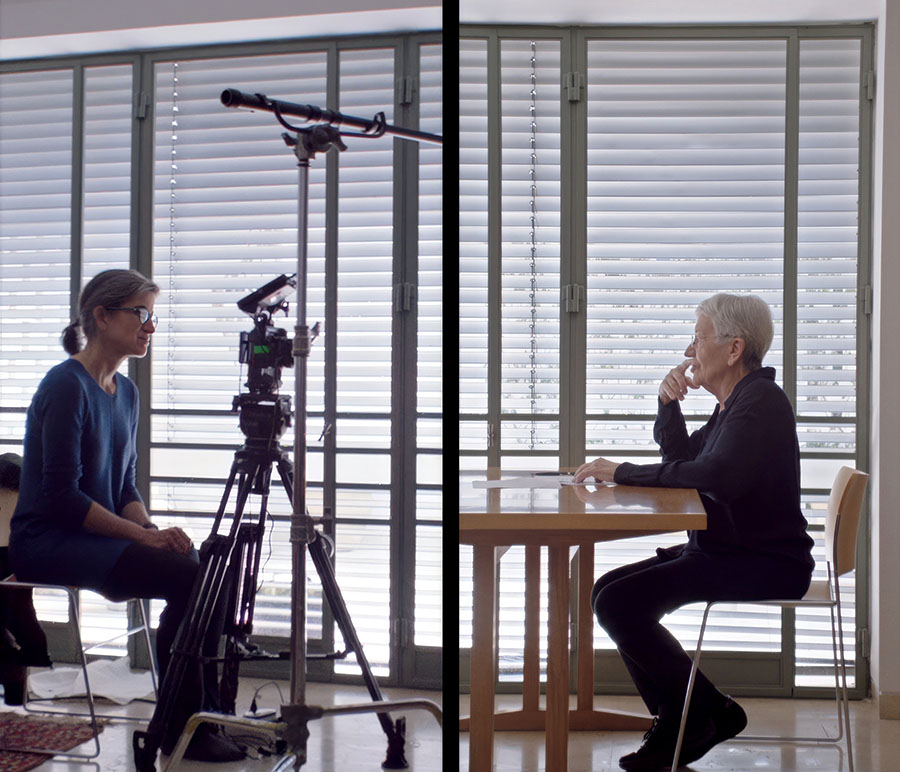
Four decades after her mother left the family in New York to pursue a career as an architect in Israel, Yael Melamede, 57, decided to make a documentary about her.

“Ada: My Mother the Architect” is not what you might expect from that premise. It’s a film filled with love, admiration and appreciation for a woman who designed some of Israel’s most significant civic monuments, including the Supreme Court in Jerusalem (with her brother Ram Karmi), Ben Gurion Airport, the Open University of Israel and many more.

One would think that Yael would be a little resentful while portraying her mother Ada Karmi-Melamede, but the film is nothing but a love letter to the woman she admires the most.

The film follows Ada Karmi-Melamede, one of the most accomplished female architects in the world, beginning with her childhood in Israel as the daughter of Dov Karmi, a renowned architect and recipient of the Israel Prize for Architecture in 1957.

After Yael’s parents moved to the U.S. for her father’s job, Ada began teaching architecture at Columbia University in New York City, where Yael was born. For the next 15 years, Ada juggled academia, large-scale public projects and motherhood.

While at Columbia’s Graduate School of Architecture, she worked on major urban initiatives, including a master plan for Con Edison, a study for mixed-use development along the proposed Second Avenue Subway and a 1978 housing competition on Roosevelt Island, all while raising three young children.

But in the early 1980s, after being denied tenure at Columbia, Ada made a bold decision: she left New York and her family for the opportunity of a lifetime to design Israel’s new Supreme Court building. While her career soared, the personal cost of being far from her family grew heavier.

Yael doesn’t clearly remember when her mother left for Israel. In a Zoom interview with The Journal, she guessed she might have been around 14 years old.

“She started going back to Israel more often,” Yael said. “Then she and my uncle were selected to compete in the contest to design the Supreme Court in Jerusalem. After she won, it became her work for six years, and by the time she finished, I was already in college.”

Getting her mother to participate in the documentary wasn’t easy. Ada was reluctant at first, and it’s clear while watching the film that she agreed mainly out of love for her daughter — and, of course, her enduring passion for architecture.

“I have so many clips of her saying, ‘This is a waste of your time and money.’ She was shut down. She didn’t want to do it,” said Yael. “She is very humble but I think that deep down she wanted there to be a record of some kind of what she had accomplished.”

Indeed, Ada becomes animated when discussing design, speaking in depth about buildings that are rooted in the ground and integrated into the landscape, versus modern glass structures that, in her view, lack heart, soul and character. “The role of architecture is to find connection between all the elements,” Ada says in one scene, seated behind her desk. “Because without common ground, we have no language.”

When it comes to more personal topics, however, she minces words. “Okay, Ima, shall we begin?” Yael asks at the start of the film. “What do you want to know?” Ada replies. 

“I want everyone to know that you love me.”

Ada laughs.

“A lot of people asked me how was it like to be left alone, but I had a lot of support,” said Yael. “I wasn’t alone. My father was around and my siblings were in the same country. While working on the film, I realized how alone she was. She was away from us. We at least had each other.”

Yael, who studied architecture before deciding to pursue a career in film, is an accomplished producer and director. In 2013, a short film she produced, “Inocente,” won the Oscar for Documentary Short Subject. Still, it was difficult for her to find a festival that would accept her documentary which was filmed mainly in Israel.

“We didn’t have an easy experience on the festival circuits,” she said. “It was a really hard time for the distribution of independent films, but especially for an Israeli film. Since Oct. 7, we haven’t been accepted into any festivals in Europe. However, there are wonderful architecture festivals that accepted the film and the response was great wherever we screened it.”

A few months ago, the film was finally picked up for commercial distribution — first at the Angelika Theater in New York and next at the Laemmle Theater in Los Angeles, where it will open on May 15. Screenings are also planned in San Francisco, Connecticut and Florida.

Ada is 89 years old but still works. She is clear-minded, active and still goes to her office in Tel Aviv.  In 2007 she was awarded the Israel Prize for architecture, just like her father and brother before her. She was the second woman awarded this prize.

Despite the fact that the two are living in separate continents for most of their lives, Yael said they are very close. “I think we have such an unusual relationship in terms of mutual respect. My editor said that at one time. I thought it was beautiful. I wanted to do this film for her and she wanted to do it for me.” 

Yael experienced a devastating tragedy near the end of filming; her only son, Niv, who had Type 1 diabetes, passed away at the age of 22. “He was an amazing young man and very close to my mom,” she said. “There’s a picture of them together at the end of the credits.”

After being accepted to his dream college in Chicago, Niv chose to take a gap year in Israel, where he developed a deep connection to the country and spoke fluent Hebrew.

His illness inspired Melamede to produce “Pay or Die,” a documentary about diabetes and the reliance on insulin. Though Niv rarely spoke about his condition, the project allowed Melamede to raise awareness in a way that respected his privacy. Tragically, Niv passed away a month and a half after the film premiered.

Yael directed and produced “Ada: My Mother the Architect,” but also takes part in it. She admitted she didn’t plan on it, but it happened naturally, which makes the film all that much more personal and beautiful. This is not only a film about Ada the architect and the buildings she designed in Israel; it’s also a film about a relationship between a mother and daughter.

After completing the film, Yael held a private screening for her mother. “I turned to her and asked: ‘So, what do you think? She looked at me with astonishment and said: ‘I can’t believe it’s not boring.’”

Director Yael Melamede will participate in a Q&A at the Monica Film Center following the 10:00 A.M. screening on Saturday, May 17.

‘My Mother the Architect’ Is a Cinematic Love Letter Read More »

Jack Kirby, King of Comic Books, Finally Gets His Moment in the Sun

There is a famous story about Jack Kirby going on “The Tonight Show Starring Johnny Carson.” When Johnny read his intro off a card that said, “My next guest is known as the ‘king of comics,’” Johnny went off script and started laughing, saying, “Who is this guy to call himself the king of comics? I know all the great comedians, and I’ve never heard of this guy.” Of course, he would soon find out that comics was referring to comic books, and that his guest had co-created “Captain America,” “The Fantastic Four,” “The Black Panther” and so many more modern superhero mythologies.

From way back then with Johnny Carson until today, it seems not much has changed… until now.  

Thanks to the Skirball Cultural Center, Kirby is finally getting the honor and respect he deserves with his own exhibit, “Jack Kirby: Heroes and Humanity.” 

Kirby, who was Jewish and from the Lower East Side, was born in 1917. He was a comic book illustrator who co-created “Captain America” with Joe Simon, a writer and editor. Captain America was a character who fought Nazis to save the United States. Kirby fought off the page when he was drafted during World War II.  It’s cool to think that a Jew is behind the most American character of all time. 

In the 1960s, while at Atlas Comics, which later became Marvel, Kirby co-created characters like Ant-Man, Iron Man, the Hulk, the Silver Surfer, the X-Men, the Avengers and Thor. 

“It was important to have this exhibition because Jack’s story is such a compelling Jewish American story,” said Michele Urton, Skirball’s exhibitions manager. “I hope that people will come away understanding that so much of the world that we live in today in popular culture was really impacted by this one person.”

The exhibition includes Kirby’s comic books as well as his personal items, like his uniform from World War II, rare collages, original pieces and character costumes from the movies. His family was involved in helping put it together.

Ben Saunders, one of the co-curators for the exhibit as well as a professor of English at the University of Oregon — where he founded the Comic Studies minor — said, “Jack Kirby emblematizes, almost literally, the power of the imagination. His fingerprints are all over my mind.”

“Jack Kirby emblematizes, almost literally, the power of the imagination. His fingerprints are all over my mind.”
– Ben Saunders

Saunders and his co-curator, Patrick A. Reid, had to go to private collectors to get the pieces. Though it wasn’t an easy ask, it was worth it. 

“Even as a huge Kirby fan, I hadn’t seen a lot of these things,” Saunders said. “It was part of the excitement for me to be able to do this.”

For Reid, it was special that the exhibit is being held at Skirball. 

“Jack lived and worked in Los Angeles for the second half of his career,” he said. “He and his family were integral to the community here. He helped inspire the fandom that founded San Diego Comic Con, and he was a foundational part of fandom on the West Coast. To be able to do that here, in a cultural institution, and celebrate Jack and his family is just a dream.” 

If you are a fan of comic books, or you simply want to learn about the man behind so many characters that shaped pop culture and our collective imagination, make sure you visit “Jack Kirby: Heroes and Humanity,” which is on display until March 1, 2026. 

“I hope that when people come, they walk away with a sense of joy,” said Urton. “Jack Kirby’s family has been incredibly excited to see him finally get an exhibition of this scale. It’s long overdue.”  

Jack Kirby, King of Comic Books, Finally Gets His Moment in the Sun Read More »

Yom HaShoah, Yom HaZikaron Ceremonies; Teens Do Community Service, Braid Talk

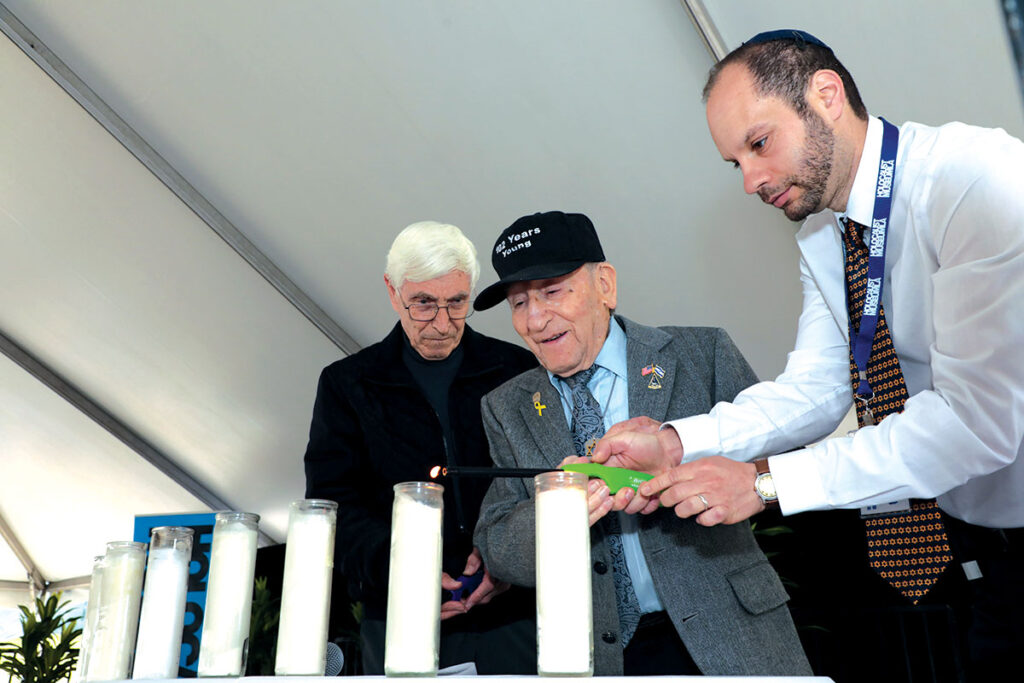
In honor of Yom HaShoah (Holocaust Remembrance Day), Holocaust Museum LA staged a stirring ceremony with survivors, city officials and religious leaders at Pan Pacific Park,on April 27. Open to the entire community, the program’s theme was “Beyond Liberation,” highlighting the 80 years that have passed since the end of Holocaust.

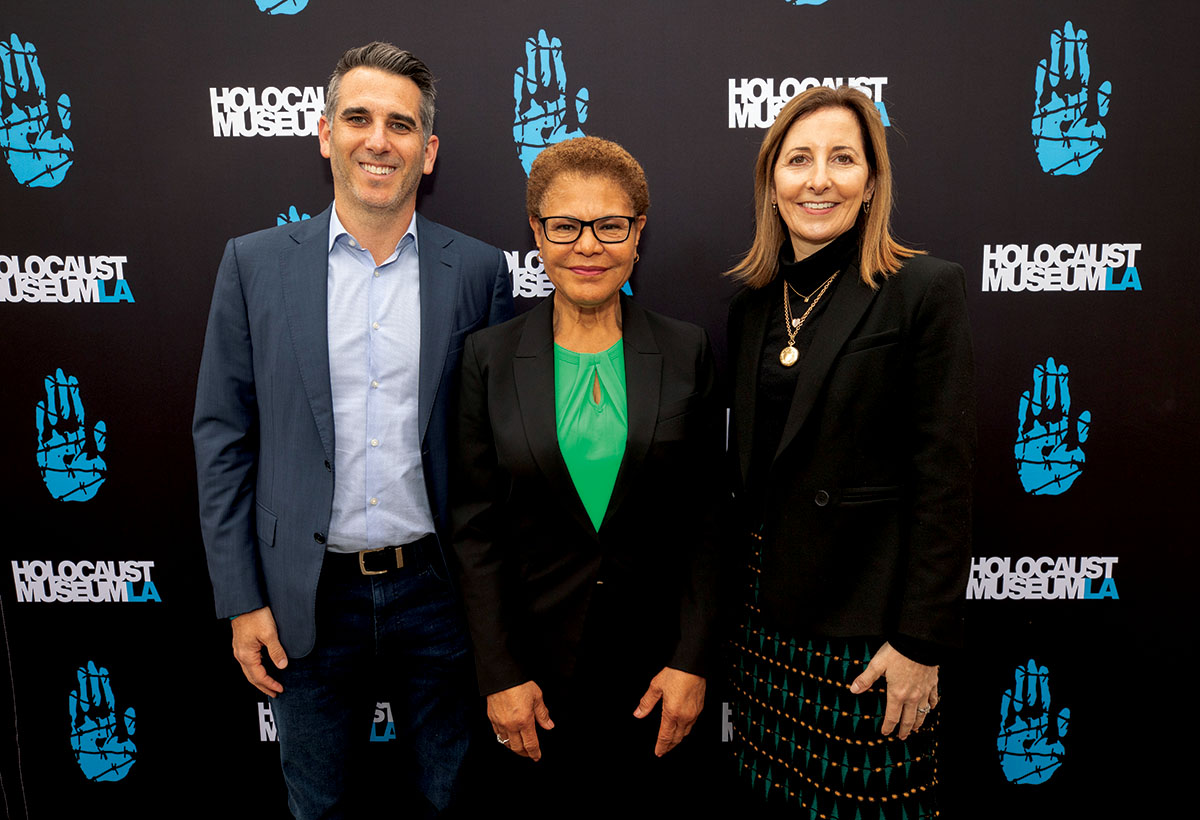
Holocaust Museum LA Board Chair Guy Lipa; L.A. Mayor Karen Bass; and Holocaust Museum CEO Beth Kean at Holocaust Museum LA’s Yom HaShoah Commemoration in Pan Pacific Park.
Photo by Al Seib, Holocaust Museum LA

Over the course of the day, survivor Erika Fabian, who spent much of her youth hiding from the Nazis, participated in a conversation; survivors took part in a candle-lighting ceremony; and Israeli American artist Tomer Peretz, along with survivor, artist and sculptor Gabriella Karin, debuted a new artistic canvas to commemorate the anniversary of the liberation. Meanwhile, survivor Henry Slucki led a musical rendition of “The Partisan Song.”

Holocaust Museum LA, which organized the program, is the first survivor-founded and oldest Holocaust museum in the United States.


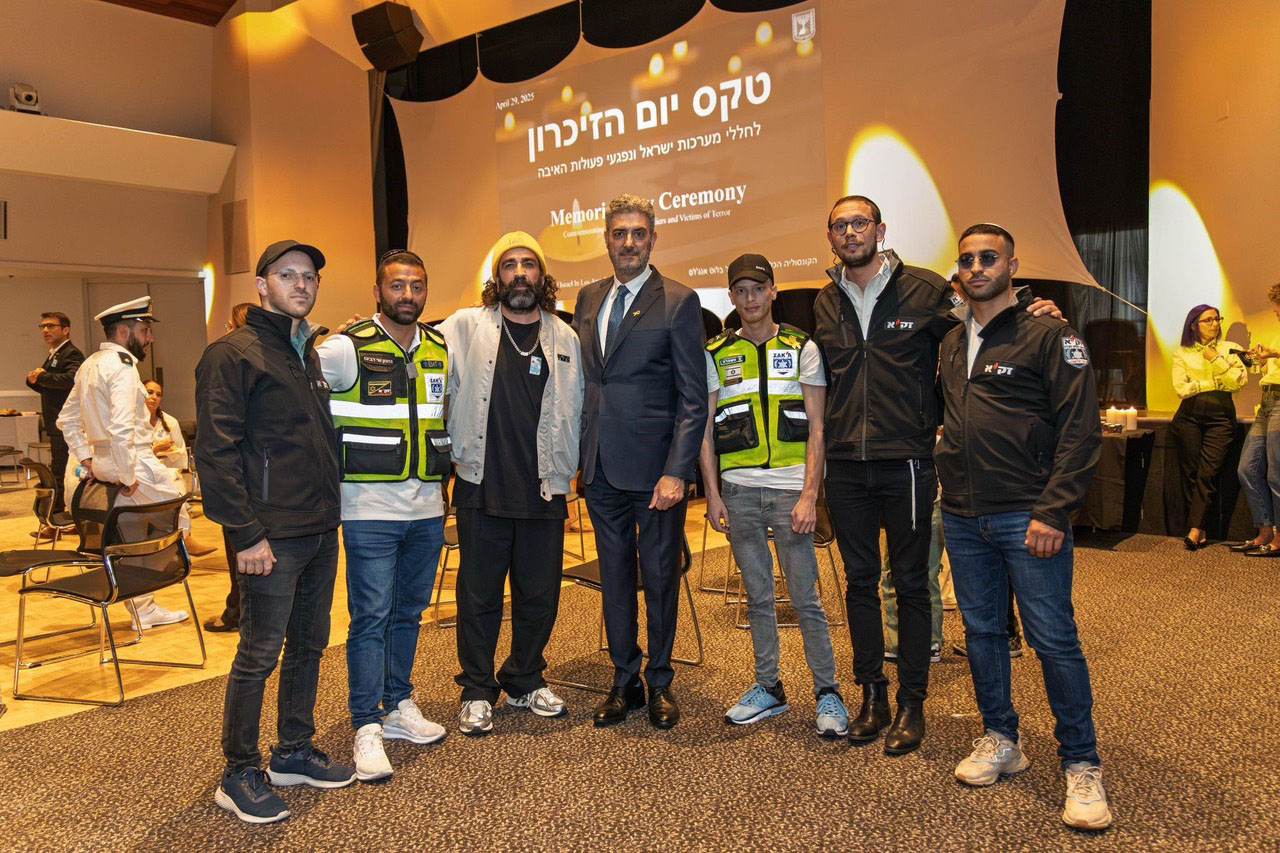
Consul General Israel Bachar (center) leads a Yom HaZikaron ceremony at Stephen Wise Temple.
Photo by Ben Frig

Marking Yom HaZikaron, several events were held across Los Angeles in commemoration of Israel’s fallen soldiers.

On April 29, the Consulate General of Israel in Los Angeles held a Yom HaZikaron ceremony at Stephen Wise Temple. Hundreds of people from the Israeli and Jewish communities, along with dignitaries, gathered to honor the 25,420 courageous men and women who have made the ultimate sacrifice in defense of the State of Israel since its founding.

There were 1,863 new families who joined the community of bereaved families this year. Among them are 848 IDF soldiers who have fallen since the beginning of Israel’s war with Gaza.

Consul General of Israel in Los Angeles Israel Bachar delivered remarks, underscoring the unwavering strength and resilience of the Israeli people in the face of hardship and loss. Meanwhile, Stephen Wise Temple Senior Rabbi Yoshi Zweiback offered spiritual guidance and prayers, highlighting the importance of unity and remembrance.

Danielle Sasi, daughter of Avi Sasi — an Israeli-American tragically killed during the Nova Music Festival attack — read a heartfelt letter in memory of her father. Her powerful tribute moved the audience to tears.

“We extend our heartfelt gratitude to the Israeli community in Los Angeles for standing with us tonight,” Bachar said. “Your unwavering support for Israel, particularly on this solemn day, reminds us of the strength and resilience that bind us together as one people.”

The ceremony concluded with the singing of “Hatikva,” Israel’s national anthem—a final tribute that encapsulated the collective spirit of remembrance and hope that continues to define the bond between Israel and its global supporters.

The event was one of several happening across the city. Also on April 29, the Los Angeles Jewish community gathered at the Saban Theater in a moving ceremony to honor Israel’s fallen soldiers and victims of terror. More than 50 organizations and schools co-organized the event, including FIDF, StandWithUs, IAC, Temple of the Arts and the Saban family.

“With our friends and neighbors in the Christian community, we stand against those who would protest for Hamas on campuses and in the streets, and we say in one voice, you will not prevail,” Temple of the Arts Rabbi David Baron said. “The Jewish people will overcome your hatred, and Jewish blood—as former Prime Minister Menachem Begin said—will not be spilled with impunity.”

Speakers included StandWithUs CEO Roz Rothstein; FIDF L.A. Chairman Ari Ryan; IAC CEO Elan Carr; Bishop Juan Carlos Mendez; and Anat Braslavski, aunt of Rom Braslavski — one of the hostages still being held by Hamas, recently confirmed alive through a newly released video.

“The Los Angeles Jewish community came together as one family to mourn and honor the memory of our fallen soldiers, victims of terrorism and the 59 hostages still in Hamas captivity,” Rothstein, who lit a candle, said. “May their memories inspire us to courageously confront and overcome the dangers of antisemitism, including anti-Zionism, and may their memories forever be a blessing.”

– By Ayala Or-El, Contributing Writer


IDF soldiers were joined on stage with Beverly Hills Mayor Sharona Nazarian and Head of School Eitan Sender at Harkham Hillel Hebrew Academy’s Yom Ha’atzmaut ceremony for students and their families on May 1.

Harkham Hillel Hebrew Academy recently transformed its Beverly Hills campus into a living reflection of the Jewish story. Students, faculty and guests honored Yom HaZikaron and celebrated Yom HaAtzmaut under this year’s powerful theme: “On a Path of Faith — Flying Forward.”

The two-day program began with a moving Yom HaZikaron ceremony, where students led reflective presentations and a “Living Wax Museum” of fallen heroes. The emotional crescendo carried into Yom HaAtzmaut, where the campus came alive with flags, music, and hundreds of students dressed in blue and white. A highlight of the morning included the entrance of IDF soldiers in a military jeep, greeted by the spirited beat of a student drumline and a flag-bearing procession led by 8th graders.

Beverly Hills Mayor Sharona Nazarian joined the celebration and addressed students with words of hope and pride. Harkham Hillel Head of School Eitan Sender, a former IDF officer, delivered a stirring message that echoed the words of freed hostage Agam Berger.

The day continued with a butterfly release, symbolizing resilience and renewal, followed by a school-wide dance party and song mashup, uniting the school in a moment of true simcha.


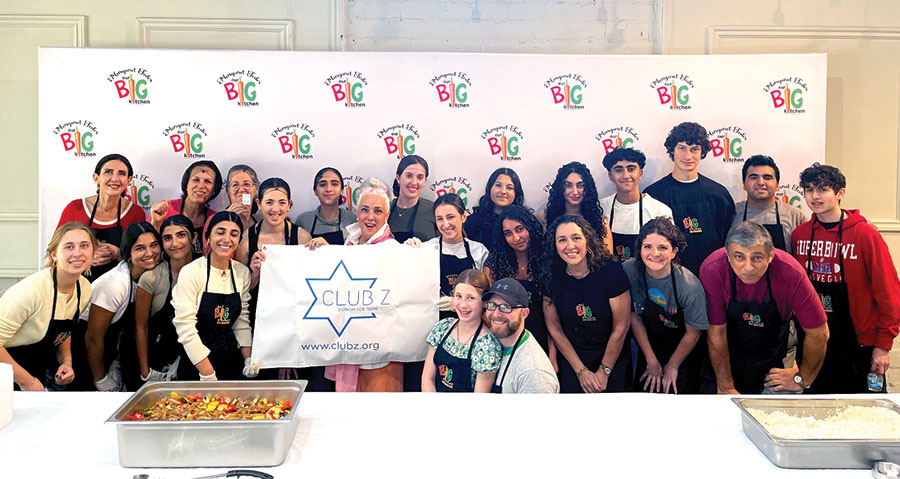
Club Z’s pro-Israel teens participate in a community service project at OBKLA. Courtesy of Repair the World

Powered by Repair the World, Club Z LA, a Zionist education group for teens, mobilized their community in service alongside One Big Kitchen Los Angeles over the National Days of Jewish Service, held throughout the month of April.

By packing meals to be distributed to the local community, participants took meaningful action and embodied Jewish values through service. Leah Shamouni, a participant, said the service work resonated with her commitment to tikkun olam.

“Serving my community is deeply important to me because I believe in the power of showing up for others, especially those who need it most,” she said. “Hosting our event at OBKLA [a community kitchen space in Pico-Robertson] was a meaningful way to support an organization that’s tackling food insecurity and helping those who are experiencing homelessness in Los Angeles. No one should have to wonder where their next meal is coming from, and by coming together to provide nourishment and care, we can restore dignity and hope to people who are too often overlooked. When we support each other, we create a stronger, more compassionate city.”


The panelists at the recent “Sundays with the Braid” discussion. Courtesy of Debra Eckerling

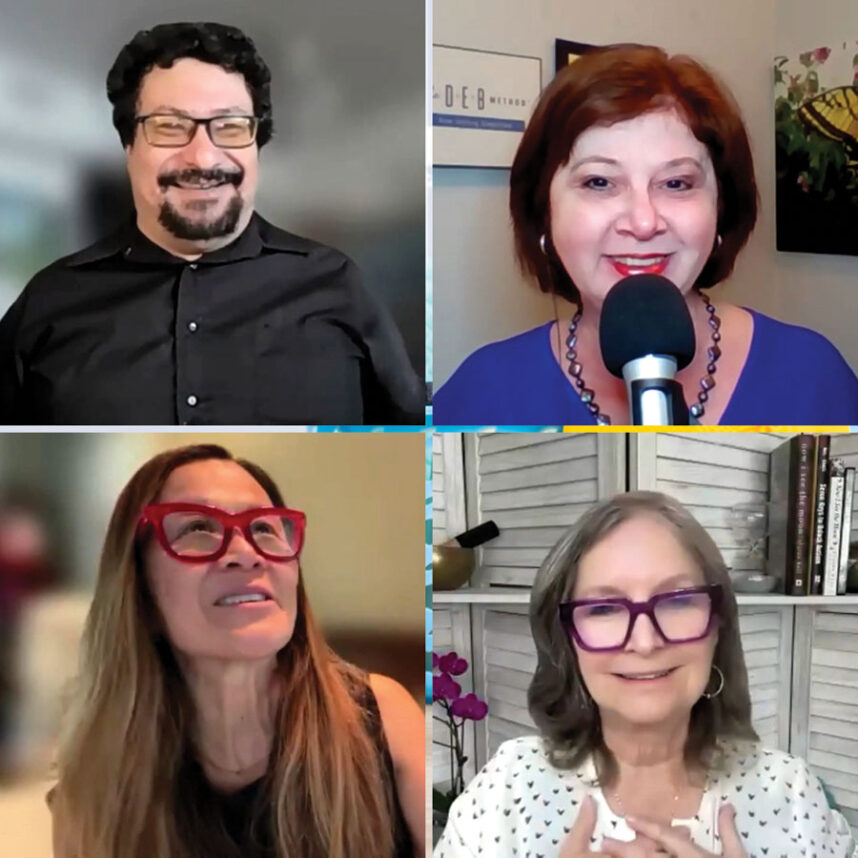
On April 27, Jewish Journal writer and podcaster Debra Eckerling appeared on the Braid’s virtual talk show, “Sundays with The Braid,” to discuss her new book, “52 Secrets for Goal-Setting and Goal-Getting.” Joining her were two of the 60 leaders and experts featured in the book, celebrity chef Katie Chin and autism activist Elaine Hall.

Braid Communications Manager David Chiu, serving as the event’s moderator, asked questions about the panelists’ personal practices to achieve their goals and the impact of family members on their lives. 

Chin spoke about the inspiring work ethic of her immigrant mother who went from a seamstress making 50 cents an hour to founder of a restaurant empire with over 50 locations. Hall spoke about how having a son on the autism spectrum inspired her to create The Miracle Project, an inclusive arts program for neurodivergent, disabled and nondisabled people. And Eckerling shared about the powerful impact of her own mother, whose wisdom and practical counsel guided Eckerling in writing this book as it had in so many other aspects of life. They also discussed the impact of Jewish values in each of their goal-oriented lives. 

Yom HaShoah, Yom HaZikaron Ceremonies; Teens Do Community Service, Braid Talk Read More »

From Exile to Encore: Daniel Lobell Returns to Spain for a Kosher Comedy Quest

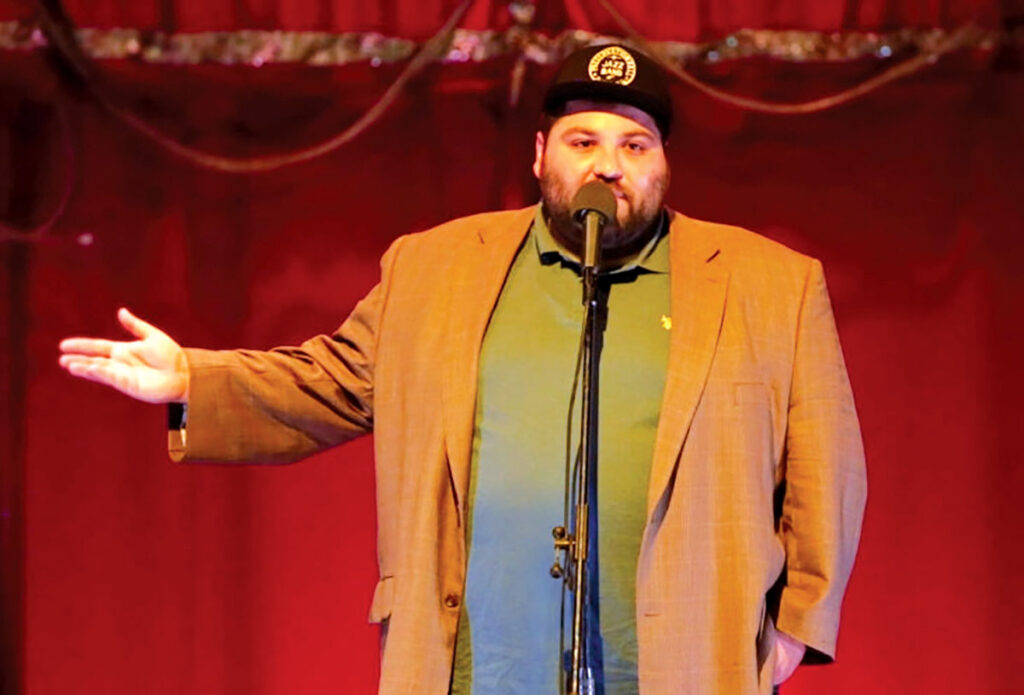
Five hundred years after his ancestors were expelled from Spain, comedian Daniel Lobell returned — this time with his new bride and a camera crew. It wasn’t your typical honeymoon, but it was certainly an entertaining and educational one, resulting in the documentary “Reconquistador,” produced by Stand Up! Records and available for streaming on Amazon. 

It’s true that Lobell’s ancestors were kicked out of Spain a long time ago, but the stand-up comedian doesn’t forget things like that so easily. He wanted to explore the city his family once called home and see what had changed over the past five centuries.

As it turned out, Jews are still something of a rare presence there and the few who live there — mainly the Chabad rabbi and his family — don’t take their security lightly.

“The rabbi heard that we were in town and were doing this film, so he invited us for Shabbat dinner at his house,” said Lobell. “We went there with four French tourists and another two guests. We walked from the synagogue to the rabbi’s house accompanied by two massive men with AK-47 guns. Everyone was looking at us, and I was thinking, ‘All we did was be Jewish.’ It showed me what it’s like to be a Jew in modern-day Europe.”

These armed security men were also present at the Chabad synagogue in Barcelona the Lobells visited, standing ready with their guns slung across their shoulders and a list of questions in hand.

“They grilled us to see if we are indeed Jewish before they allowed us in the shul,” said Lobell. “They asked us what is this week’s parsha and things like that. It was a very intense interview process.”

These entertaining scenes didn’t make it into the film, as Lobell is an observant Jew and won’t film on Saturdays. But there were plenty of funny encounters that did make the final cut.

In Girona’s Jewish museum, where Lobell was the only Jew present, a curious museum employee asked if he was someone famous.

Diplomatically, Lobell answered, “I think we’re all important people.” The employee wouldn’t let it go. 

“But are you?”

“Sure, yes,” he replied.

Perhaps confused by the cameras following Lobell, the employee continued probing about his celebrity status. 

“Who are you?”

Lobell, ever the stand-up comedian, replied: “You sound like my therapist.”

He had the idea to film a stand-up special that would include his visit to Barcelona — something of a history lesson about the time when King Ferdinand and Queen Isabella exiled the Jews. He pitched the concept to Stand Up! Records, an independent comedy record label based in Minneapolis that produced his albums, and they gave him the green light.
Shortly after getting married to Jewish Journal Community Editor Kylie Ora Lobell in 2015, the couple boarded a flight to Spain along with a camera crew. It didn’t take long for Lobell to realize how challenging it is to be an observant Jew in Spain. 

Most restaurants serve nonkosher food. He checked out local restaurants and found lots of pork dishes and seafood and the local favorite, jamón, a dry-cured ham. In his desperate quest for kosher food, he discovered that there was only one kosher restaurant in Madrid and one in Barcelona.

The film also features Lobell performing stand-up in Barcelona. The audience loves his material, roaring with laughter and appearing to understand all the anecdotes and jokes. There seemed to be no language barriers. Lobell later found out that a quarter of the crowd didn’t speak a word of English.

“The other three-quarters laughed enough to make up for it,” he said. “After the show, I asked them, through a translator, why they came if they didn’t understand English and they said, ‘We just thought it’d be interesting to see an American doing stand-up.’”

The show took place just one day after the deadly Paris attacks, when three suicide bombers struck outside a stadium during an international football match and other attackers targeted crowds at cafés and restaurants.

“Half of the people didn’t show up to my show because they were too afraid,” said Lobell. “After all, Spain is close to France. I wanted to mention that, but the label said it would make editing harder and it would time-stamp the show, so I didn’t.”

Despite everything, the show was a success and the entire experience so fascinating that Lobell is already thinking about a sequel — this time, perhaps in Israel.

“I’ve performed all over the world doing stand-up, and if we’re going back in time to explore our history, it makes sense to go back to Israel,” he said.

Since filming “Reconquistador,” a lot has changed in Lobell’s life. He welcomed three children into the world and continued performing all over the U.S. and the world, including Scotland, France and South Africa. He also has a podcast, “We Think It’s Funny,” with comedian Mark Schiff. 

That experience of walking through the streets of Barcelona made an impact on him. It was an experience he still reflects on. 

“I was walking in the streets of Barcelona thinking, at one point, it was my family who lived here,” he said. “There’s something profound in terms of how you feel as a Jew, walking around the place that decided it doesn’t want you. They want to get rid of you. It was a lot to take in, but I thought, hey, I’m back here and ready to conquer.” 

“I’m back here and ready to conquer.”

Part comedy special, part history lesson, “Reconquistador” offers an entertaining and deeply personal journey through the past, showing how humor can illuminate even the darkest corners of history. It’s a unique blend of laughs and learning —  proof that sometimes, the most meaningful stories come wrapped in punch lines.

Rent “Reconquistador” on Amazon

From Exile to Encore: Daniel Lobell Returns to Spain for a Kosher Comedy Quest Read More »

Classic Jewish Recipes and Memories for Mother’s Day from Grandma

Like the wonderful aroma of treasured family dishes, the memory that comes with it endures! What better time of year to honor treasured recipes from mom  — and grandma — than Mother’s Day!

Joan Jenkins said she has never met anyone more profoundly Jewish in heart and outlook and cooking than her grandma Ray. “My grandma made life more joyful with her meals and aromas and around the table conversations,” Jenkins told The Journal. “Her matzah balls floated in air; her kugels, omelets, baked apples, chopped liver, roast chicken, tzimmes and salads were all that type of deliciousness that only comes from that wonderful intersection of love and artistry.”

She added, “Most of all, I loved her cheese blintzes.”

Cheese Blintzes

3 eggs

1 cup sifted all-purpose flour

1/2 tsp salt

1 tsp lemon rind, grated

1 1/2 cup milk

3 Tbsp butter, melted

Optional: 2 Tbsp cognac

In a bowl, lightly mix the 3 eggs. Stir in flour, salt and lemon rind. Add in milk, butter and, if desired, cognac.

Grease a small skillet lightly. Heat over a medium flame.

Pour in just enough batter to cover the bottom of the pan. Fry until brown, flip and remove from the pan quickly. Pile one on top of another until all are done.

Filling:

1 pint cottage cheese

8 ounces sour cream

8 ounces ricotta or farmer’s cheese

2 eggs, beaten lightly

Sugar to taste

Mix all filling ingredients together. Put an overflowing tablespoon of filling in the center of each blintz. Fold over in all directions until the blintzes are rectangular.   

Melt butter in a skillet over medium flame. Sauté the blintzes until they are browned and a little crispy. Serve with sour cream and cherry preserves.


Award-winning chef, author and TV personality Pati Jinich (“Pati’s Mexican Table,” “La Frontera” and “Pati Jinich Explores Panamerica”) said that while her paternal grandmother, Bobe, cooked many wonderful things, nothing beat her Mexican-style gefilte fish

She used to make two kinds of gefilte fish every Friday: white (traditional) and red (a la Veracruzana). 

“The moment you sat down, she made you choose which [one you wanted],” Jinich told The Journal. “Invariably, after you choose, she’d ask, ‘You don’t like the way I make the other one?’”

“She’d barge in, make room on your plate and serve you the kind you hadn’t picked, right next to the one you had chosen,” Jinich continued. “She’d wait for you to taste it and tell her how good the one you hadn’t chosen was; then, she would eat right off your plate.”

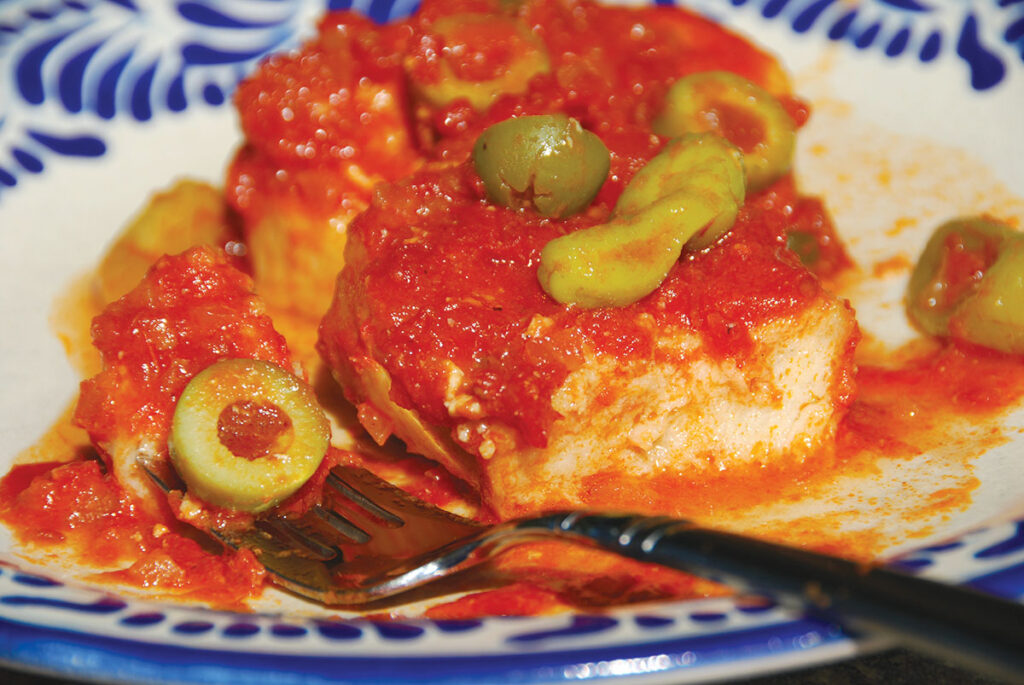
The fish mixture, JiInich explained, is the same for both versions. However, the white is refrigerated, covered with the fish stock, which turns gelatinous as it cools, and is served cold. The red is poached in a thick and spiced-up tomato sauce, enriched with capers, green olives and mild pickled peppers and served hot. 

“The Veracruzana sauce is traditionally served over large fish, and its flavors showcase the intermarriage of Spanish and Mexican ingredients that took place throughout the years of Spanish colonization,” she said. “It was through the port of Veracruz that most European immigrants came into Mexico, like my Bobe.”

While Jinich never had a chance to serve her red gefilte fish to her Bobe — she passed away a couple of months ago— she wishes she had. 

“She would have been so proud,” Jinich said. “My gefilte fish will always be for you, Bobe, and just so you know, I always make the red and the white.“

Mexican Style Gefilte Fish

Makes 20 patties 

Fish Patties:

1 lb red snapper fillets no skin or bones

1 lb flounder fillets no skin or bones

1/2 white onion quartered, about 1/2 pound

2 carrots peeled and roughly chopped, about 1/4 pound

3 eggs

1/2 cup matzah meal

2 tsp kosher or sea salt or to taste

1/2 tsp ground white pepper or to taste

Red Sauce:

3 Tbsp safflower or corn oil

1/2 cup white onion chopped

1 28-oz can crushed tomatoes

3 cups fish broth or water

2 Tbsp ketchup

1 tsp kosher or sea salt or to taste

1/4 tsp ground white pepper or to taste

1 cup manzanilla olives stuffed with pimientos

8 pepperoncini peppers in vinegar brine or more to taste, chiles güeros en escabeche

2 Tbsp capers

Fish patty mixture: Rinse the red snapper and flounder fillets under a thin stream of cool water. Slice into smaller pieces and place in the food processor. Pulse for 5-10 seconds until the fish is finely chopped but hasn’t turned into a paste. Turn fish mixture into a large mixing bowl. Then place the onion, carrots, eggs, matzo meal, salt and white pepper into the same bowl of the food processor. Process until smooth and turn into the fish mixture. Combine thoroughly.

Red sauce: Heat oil in a large cooking pot over medium-high heat. Add the chopped onion, and let it cook for 5-6 minutes, stirring, until soft and translucent. Pour the crushed tomatoes into the pot, stir, and let the mix season and thicken for about 6 minutes. Incorporate 3 cups water, 2 tablespoons ketchup, salt and white pepper. Give it a good stir and bring to a boil. Reduce the heat to low and bring sauce to a gentle simmer. Continue to simmer while you roll the gefilte fish patties.

Place a small bowl with lukewarm water to the side of the simmering tomato broth. Start making the patties. I like to make them about 3” long, 2” wide and 1” high, in oval shapes. Wet your hands as necessary, so the fish mixture will not stick to your hands. As you make them, gently slide each patty into the simmering broth. Make sure it is simmering and raise the heat to medium if necessary to keep a steady simmer.

Once you finish making the patties, cover the pot and bring the heat to low. Cook them covered for 25 minutes. Take off the lid, incorporate the manzanilla olives, pepperoncini peppers and capers. Give it a gentle stir and simmer uncovered for 20 more minutes, so the gefilte fish will be thoroughly cooked and the broth will have seasoned and thickened nicely.

Serve hot with slices of challah and pickles.

Classic Jewish Recipes and Memories for Mother’s Day from Grandma Read More »

Our Mothers, Ourselves: Quiche & Cake for Mother’s Day

Last year, I was blessed with the best present when our first grandchild, Raquel Luna, was born the day before Mother’s Day. Soon after her birth, my son Sam decided that Raquel would call me Maman.  

Growing up, my parents would speak to my brothers and me in French and Spanish. I would mostly answer in French or English. The word for mother in French is Maman and that is what my brothers and I called our mother. 

If you are a regular reader of our column, you know that over the past five years, we have shared many “Maman” recipes. It’s my way of keeping her memory alive. It’s my way of paying tribute to an amazing mother, who taught me to cook but most importantly taught me to be the best person I can be. 

When my son Sam and niece Anabella were little they also called her Maman. And it stuck. All her grandchildren called her Maman. 

My mother Rica was an exceptional grandmother. She loved to spoil her grandchildren. She would always cook their favorite foods. She would sneak cash into their pockets. She would act silly, sing songs and tell funny stories to make them laugh. And most of all, she looked forward to gathering them around her Shabbat table every Friday night. 

We all miss her terribly, but we were blessed to have enjoyed so many years of her love and care.

As you can imagine, I feel it is a huge responsibility to be called Maman. It has taken me this whole year to accept the honor. I pray that I will be able to fill Maman’s shoes.

A few years before my mother passed away, I bought her a sweatshirt with Maman embroidered on it as a Mother’s Day gift. 

This year, Raquel Luna’s birthday falls on Mother’s Day. I think I will proudly wear Maman’s sweatshirt and hold her close to my heart. 

I can’t wait to hear Raquel Luna call me Maman. 

Happy Mother’s Day!

—Rachel

One of my formative memories is of my mother reading the classic novel “Heidi” by Johanna Spyri to my brother Rafi and me. I was five years old and hearing my mother read inspired a lifelong love of books and reading (I belong to two book clubs).

When my maternal grandparents made aliyah from Baghdad to Israel, my grandfather Aba Naji was a headmaster of a school in Zichron Ya’akov. Naturally, my mother did her national service as a teacher and continued teaching after she married my father. 

When they moved to Australia, my mother pivoted to working in the fashion world, but she always retained a teacher’s passion for learning. She taught my brothers and me to love art and architecture, history and geography. 

My mother was blessed to have the respect, love and devotion of my father and they were true partners in everything. They taught me that any dream is possible. That with a little imagination and a lot of work and perspiration, you can build so much. I learned from them to take life in stride, to be grateful for the blessings and to fight the challenges with a strong attitude. 

My mother is an overachiever in the kitchen. An incredibly talented cook, she has mastered recipes from so many cuisines, including Iraqi/Babylonian, Mediterranean, Chinese, Thai and everything in between. She is adept at creating healthful recipes and capable of cooking ridiculously huge quantities of food. 

When I was a little girl, I remember her scolding my grandmother Nana Aziza for serving too many dishes on her Friday night table. Of course, I noted that when she entertained, she did the exact same thing. 

Every Shabbat, when I stand in my kitchen cooking a crazy amount of food, I remember that exchange between generations. I shrug my shoulders and continue cooking too much food. Poor Alan, he has to work his way through the leftovers!

The birth of my son Ariel made my mother a very young grandmother. Thankfully, Nana Sue continues to cook all her grandchildren’s favorite foods, especially the dishes that my grandmother used to cook. Kubbah sh’wandar (kubbah in a beet broth), kubbah bamia (kubbah in an okra stew) and a delicious fried kubbah b’ral (a bulgur shell stuffed with ground beef, onion, parsley and pine nuts). 

If you ever feel like sampling her food, head on over to Kahal Joseph Congregation (where my baby brother is the rabbi). Every Friday, my mother cooks a huge t’bit (overnight chicken and rice) and it is served on Shabbat day. —Sharon 

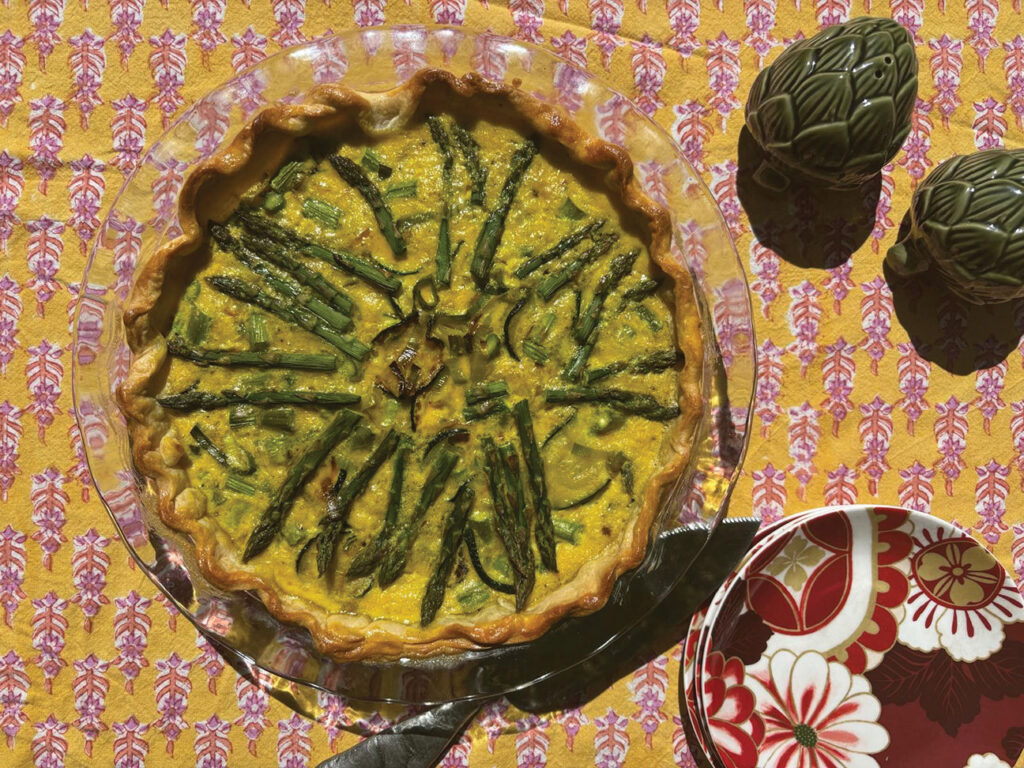
Spring is in the air and there is an abundance of seasonal new crops. A Mother’s Day brunch is the perfect occasion to showcase all the wonderful fresh new produce in the market. This quiche recipe is the perfect marriage of nutty asparagus, rich zucchini and the subtle oniony flavor of sautéed leek along with a creamy savory egg custard and a delightfully flaky puff pastry crust. 

Bright ruby red strawberries are plentiful right now! And this strawberry cake takes advantage of all that bursting delicious flavor. There are strawberries inside the cake, a pretty strawberry design on top and a sweet, tangy sauce to pour over. You’ll love the hint of lemon from the zest and the sour cream in the recipe keeps the crumb moist. Baking strawberries into a cake takes the flavor out of this world.

These recipes are simply perfect for a brunch or an afternoon tea!

—Rachel and Sharon 

Quiche Recipe

1 sheet frozen puff pastry, defrosted

2 tbsp Dijon mustard

6 tablespoons olive oil

2 leeks, pale green and white parts only, thinly sliced

2 medium zucchini, thinly sliced

1 lb asparagus, stems cut in 1 inch pieces, stalks left in 3 inch pieces, kept separate

6 large eggs

1/2 cup mayonnaise

2 tbsp turmeric

2 tbsp granulated garlic powder

1 teaspoon salt

1/2 teaspoon pepper

Preheat oven to 425°F.

Lay the puff pastry on a lightly floured work surface, then use a rolling pin to gently spread the pastry.

Cut into a circle and place in an ovenproof pie dish, then use a fork to prick the bottom and sides of the pastry. Spread the Dijon mustard on the bottom of the pie crust and set aside.

In a skillet, warm 2 tablespoons of olive oil over medium heat. Add the leeks and sauté, until soft and translucent. Remove from heat and set aside.

Warm another 2 tablespoon of olive oil, then add the zucchini and sauté for 2 to 3 minutes, until softened. Remove from heat and set aside.

Warm remaining olive oil, then add the stems of the asparagus and sauté for 2 to 3 minutes. Remove from heat and set aside.

In a large bowl, combine the eggs and mayonnaise. Add the turmeric, garlic powder, salt and pepper and mix well. Add the leeks, zucchini and asparagus stems. Stir gently to combine.

Pour the egg and vegetable mixture into the pie crust. Place the asparagus stalks in a decorative pattern.

Bake for 20 to 30 minutes until the puff pastry is a golden color and the center of the quiche is completely cooked.

Serve hot.

Strawberry Sour Cream Cake 

2 large eggs, room temperature

1 cup sugar

1 cup sour cream

1/2 cup light olive oil or avocado oil 

1 tsp vanilla extract

1 lemon, zested 

2 cups all-purpose flour 

2 tsp baking powder

1/4 tsp salt

1 lb strawberries, washed and hulled 

1 tsp powdered sugar for dusting, optional

Preheat oven to 375°F. Grease a 9″ springform pan and line the bottom with parchment paper. 

Prepare strawberries for the cake by dicing 8 oz of strawberries into slivers and slicing the second 8 oz into halves.
In a large mixing bowl, using an electric hand mixer (or stand mixer), beat together the eggs and sugar on high speed for 5 minutes, until mixture is creamy and a pale yellow.
Add sour cream, oil and vanilla, then beat on low speed until well combined.

In a small bowl, whisk together: the flour, baking powder and salt until well incorporated. With the mixer on med/low speed, add a third of the flour mixture to the batter, letting the flour incorporate. Continue with 2 more additions and mix until well combined. Do not over-mix.
Pour half of the batter into prepared pan. Top with the diced strawberries and pour remaining batter over the top. Cover the top of the cake with the halved strawberries (cut-side-down), pressing them slightly into the batter. 

Bake for 45-55 minutes or until a toothpick inserted into center comes out clean. 

Let cake rest in pan 15-20 min before removing the ring. 

Run a thin spatula around cake edges to loosen from pan and transfer to a cake platter. 

Strawberry Sauce

16 oz strawberries, washed and hulled 

1/4 cup granulated sugar, or to taste

In a blender or food processor, combine strawberries and sugar, then blend until pureed.

To serve—

Dust cake with powdered sugar. Drizzle individual slices generously with strawberry syrup and serve with fresh whipped cream.


Sharon Gomperts and Rachel Emquies Sheff have been friends since high school. The Sephardic Spice Girls project has grown from their collaboration on events for the Sephardic Educational Center in Jerusalem. Follow them
on Instagram @sephardicspicegirls and on Facebook at Sephardic Spice SEC Food. Website sephardicspicegirls.com/full-recipes.

Our Mothers, Ourselves: Quiche & Cake for Mother’s Day Read More »

Table for Five: Acharei Mot – Kedoshim

One verse, five voices. Edited by Nina Litvak and Salvador Litvak, the Accidental Talmudist

You shall not steal.
You shall not deny falsely.
You shall not lie,
one man to his fellow.

– Lev. 19:11


Rabbi Ari Averbach 

Host of the “Moral Courage” podcast 

The chapter begins with the command often translated: “You shall be holy, because I, the Lord your God, am holy.” It then follows with a list of laws, many of them a rephrasing of the Ten Commandments – — honoring parents, observing Shabbat, eschewing idols, and our selected verse’s exhortation of stealing. Our commentators of millennia past try to parse the different kinds of stealing, as the words are written in triplicate.

Maybe to understand the words, we have to retranslate the shortest word in the section, the Hebrew Ki. When I was a kid, I learned that this two-letter word means “because” (which it often does). Hence the common translation that we should be holy *because* God is holy. But what if we choose from another viable translation of that short word? Maybe it is conditional. *If* we are holy – if we treat one another with honesty and kindness, if we pay people living wages and pay them on-time, if we refuse to fall into the trap of dealing falsely with one another – *then* God will be holy. If we (Jews, God’s partners) can bring sanctity into this chaotic world through the 613 different ways illuminated in the holy Torah, then (and only then) will God become holy to us. 

Maybe the question is why we need this imperative in the first place. Are we prone to stealing? Of course we are. We need these reminders. God knows this. And God tells us. Because God wants us to be holy.


Kira Sirote 

Author of Haftorah Unrolled (Ra’anana, Israel) 

If you’re asked to think of a holy person, who do you think of? What are they like?

My husband climbed Mt. Kilimanjaro a couple of years ago. We have a picture of him wearing his tallis and tefillin, with the mountain’s summit in the background. His Tanzanian guides saw that and called him “the holy man.” We laugh about it when we look at the album, but the truth is, dedicating a part of your day, every day, to worshipping G-d — yes, that is holy.

But our G-d is not satisfied with us dedicating our time to Him in worship. He wants us to dedicate our sense of right and wrong to Him as well. If that holy person we imagined dressed a certain way, prayed a certain way, but used his neighbor’s lawn mower without permission? Not holy.

So, how holy is a Jew who is dedicated to G-d? So holy that the commandment “Do not steal” cannot possibly mean, “don’t take stuff that doesn’t belong to you.” No, says Rabbeinu Yonah in Shaarei Teshuva, that would be basic. Too basic for the Torah, for Parashat Kedoshim, for the holy Jewish People. It means: do not take something temporarily to teach your friend that he should take better care of his stuff!  Don’t borrow something without permission! Don’t take back something that belongs to you in a sneaky way as if you’re stealing it!

Kedoshim Tihyu – how holy? So holy that stealing itself is inconceivable. That’s how holy.


Rabbi Gershon Schusterman 

Author, “Why God Why?”

In Ethics of our Fathers (Avot 4:2), the Mishnah says: “A mitzvah leads to another mitzvah and a transgression leads to another transgression.” When a person does a mitzvah, he is proud of it and prompted to do more good deeds. When a person transgresses on the other hand, he might be pleased for the moment, but guilt and shame inevitably set in, as well as the fear that others will find out.

A prime example of the latter is the following sinful sequence: stealing, denying (passively), lying (actively) then ultimately (as described next in the Torah’s sequence (Lev.19:12)) swearing falsely in G-d’s name. While impulsively transgressing is human, a person with character and courage will rise to the occasion, bear the shame, admit the sin and make amends. Those with less integrity and character might obfuscate and deny and when confronted they might even lie brazenly. Ultimately, they might lie under oath in G-d’s name, thereby denying that G-d knows their heart and has witnessed the transgression, thus denying G-d Himself. 

This can be summed up succinctly by the First Rule of Holes: “If you find yourself in a hole, stop digging.” It’s better to step out of the hole while it is still shallow with only a little cleanup to do, lest you dig yourself in deeper to the point that the more you dig, the deeper the hole gets and you with it.


Rabbi Natan Halevy

www.KahalJoseph.org 

Lessons Behind “Do Not Steal”: In the Ten Commandments, “do not steal” refers specifically to kidnapping — the theft of a person. However, in our parsha, it addresses theft of money and property. Interestingly, the Torah sometimes uses the singular form and other times the plural when commanding against stealing. This variation highlights that the prohibition applies both to individuals and to the community. The community must enforce these laws and punish offenders, while individuals must resist wrongdoing, even when surrounded by a corrupt society.

Another reason for the plural form is that someone who witnesses theft and remains silent is considered complicit — a thief in their own right.

One might mistakenly believe that if someone steals from them, they are entitled to steal it back. However, Ben Bag- Bag teaches that this is forbidden. Instead, one should openly inform the thief they are reclaiming their property, even if this leads to confrontation, rather than resorting to secretive or retaliatory theft.

Hashem further commands: “I have instructed you to give to the poor out of respect for Me; how much more so must you not take from others what is not yours.” Similarly, the Torah warns against dishonesty. Do not make false promises, such as offering a favor in return for another’s help without intending to fulfill it. If your friend acts based on your word, you are obligated to honor your promise. Failing to do so is considered a lie. Likewise, never attempt to extract money from someone who owes you nothing.


Rabbi Chaim Tureff

Rav Beit Sefer, Pressman Academy and author of “Recovery in the Torah”

Even though it is the Omer and I’m refraining from music, the song by The Fixx “One Thing Leads To Another” keeps ringing in my head. As the song opens up, “The deception with tact, just what are you trying to say?” It’s the first thing that came to my mind as I read this parsha. I then went towards a more traditional route with the Torah dictum “Mitzvah Goreret Mitzvah, Averah Goreret Averah.” A positive commandment leads to a positive commandment and a negative commandment leads to a negative commandment. Many times, as we do something that we shouldn’t, it leads us to do something else that we shouldn’t, and it has a domino effect. We try to cover up our previous transgression with other transgressions and it becomes an endless pit. Like many addicts, when they use or do something they deem unacceptable, the only way they feel they can move forward is to do something worse because deep down in their heart they feel they’re not worthy. Rashi had this insight 1,000 years ago, “If you steal you will in the end come to deny it, then you will lie, and ultimately you will swear falsely.” However, the opposite is also true. When we do something positive, many times it leads to more positive encounters. As a popular saying in 12-step rooms notes, “Do the next right thing” which empowers us to take the next positive step and not get mired in the past.

Table for Five: Acharei Mot – Kedoshim Read More »

Why Pope Francis of Blessed Memory Was So Important to the Jews

I know that many of those writing about the late Pope Francis and the Jews have been dealing with his disappointing lack of support for Israel in the aftermath of October 7th. I believe that they have seriously misjudged the positive importance of his papacy.

Permit me to state my case briefly.

There are multiple forms of antisemitism and clearly one of the most important and most enduring has been religious antisemitism. We should recall antisemitism differs in its  source and in its goal, in its priority and in the stability of society.

Over the past sixty years Roman Catholicism has made a significant effort to address the theological sources of antisemitism within Catholicism. Quietly, yet clearly and directly, Pope Francis built on the legacy of his predecessors Saint John XXIII and Saint John Paul II to diminish, if not to end, the theological antisemitism of Roman Catholicism toward Judaism and toward Jews.

Recall:

Pope John XXIII, initiated Vatican II, which significantly reversed two millennia of Roman Catholic teaching on the Jews. Nostra Atatae reinterpreted Christian Scripture to broaden responsibility for the crucifixion. It changed Scriptural readings and modified the liturgy for Good Friday so that Jews are neither portrayed as Christ-killers, nor as accepting the responsibility for his death on themselves and their children. Nostra Atatae recognized the religious legitimacy of continuing Jewish life and thus reversed major anti-Judaic components of Christian teaching. After Nostra Atatae, the Church held the sins of all humanity responsible for the death of Jesus and the Jews were not portrayed as cursed by God for the murder of Jesus.” Perhaps, most importantly, it addressed Jews as Jews respectfully as the sons of Abraham, bearers of a covenantal tradition. He thus made peace with 1878 of Jewish history after the birth of Jesus, falling short of recognizing Israel and the implications of post 1948 Jewish life.

His successor once removed, Pope John Paul II did just that.

As Pope he recognized the State of Israel. He visited a synagogue for prayer –the first Bishop of Rome to visit a synagogue — and treated the Rabbi and the Congregation of Rome with every religious courtesy. Instead of dividing the world between Christians and Jews, he spoke of the commonality of the religious traditions, he spoke with reverence of the Torah. He spoke out against antisemitism again and again. He visited the sites of Jewish death and acknowledged on numerous occasions the centrality of the Shoah.

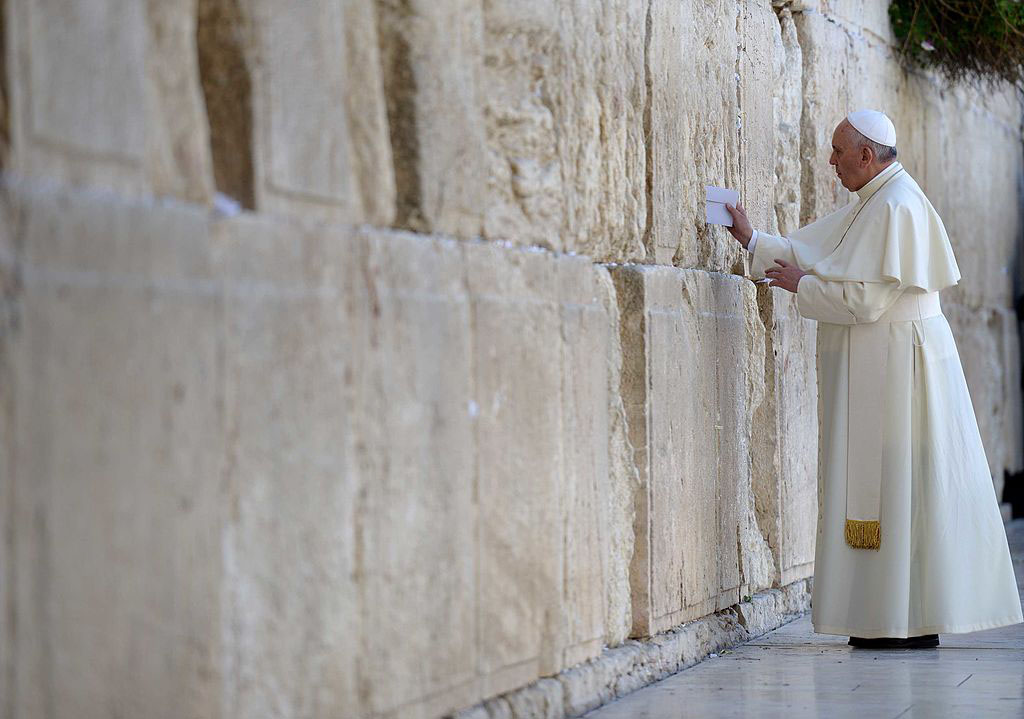
In March 2000, Pope John Paul II visited Israel. From the moment he arrived at Ben-Gurion Airport near Tel Aviv to the moment he departed, it was clear to Roman Catholics and Jews, and to the international media, that this was an extraordinary gesture of reconciliation in the shadow not only of two millennia of Christian antisemitism but in the massive shadow of the Holocaust. Even if Pope John Paul II did not say everything that could be said, his bowed head at Yad Vashem and his note of apology inserted into the Western Wall said more than could be said by words alone. In the Third Millennia, The Pontiff was determined that Roman Catholics act differently, behave differently and believe differently. An eyewitness to the Holocaust, he had come to make amends. He took all-important steps to make certain that the full authority of the papacy was brought to bear against antisemitism. His theology was quite simple: antisemitism is a sin against God. It is anti-Christian. These are welcome words to every Jew and one could sense their power by the manner in which the Israelis received Pope John Paul II. Even ultra-Orthodox Rabbis, opposed by conviction to anything ecumenical and raised on the stories transmitted through the generations of confrontations between Priests and Rabbis, were deeply impressed by the Papal visit to the offices of the Israel’s Chief Rabbis.

Still even he, did not end the Mission to the Jews.

Pope Francis did.

Thus, Pope Francis recognized the religious legitimacy of Jews remaining Jews and fulfilling their Covenant with God. Roman Catholic need not convert Jews, Jews do not require Baptism to be right with God and thus no effort should be made by the Church to covert them.

For centuries, there was a dark side to the Christian relationship with the Jews. Supercessionist traditions maintained that Christianity had come to take the place of Judaism, the New Testament to fulfill the Old. There was a theological difficulty for believing Christians to find a religious reason why Jews should continue to be Jews, except as a sign of obstinacy of a stiff-necked people.  St. Agustine viewed the Jews as a Witness People. Who better to accept Jesus as the Christ when he returns, then those who denied him in the first place, Augstine said.

And if there was no reason why Jews should continue to exist as Jews, there was even more motivation to convert them, and in difficult moments to sanction their elimination by expulsion or to turn aside during pogroms. In his discussions with the Vatican prior to Nostra Atatae, the late Abraham Joshua Heschel said: ” Speech has power and few men realize that words do not fade… What starts out as a sound, ends in a deed.”

Much of this tradition was ended  — at least in theory — for Roman Catholics by Vatican II, and with the changes in catechism, less of this tradition was transmitted in Post-Vatican II Roman Catholic schools, at least in the United States.

And now the last of the major steps were taken under the leadership and at the initiative of Pope Francis.

The result has been a substantial decrease in Roman Catholic antisemitism and a new era of ecumenical respect.

I think that this step, if not undone by future Pope and it will be exceedingly difficult to undue, is of historic experience and will be recalled long after the war in Gaza is but a distant memory. And anyone who does not recognize its historical significance does not quite understand the sources and manifestations of religious antisemitism.

So I mourn this Pope. I admired his modesty, humility, piety and pastoral sensitivity and respect his sense of justice and compassion. And as a religious Jew, I am grateful that he has come to recognize on behalf the Church he led, what I have always known, that Judaism is a legitimate and honored path to be faithful to God and humanity.


Michael Berenbaum is director of the Sigi Ziering Institute and a professor of Jewish Studies at American Jewish University.

Why Pope Francis of Blessed Memory Was So Important to the Jews Read More »