fbpx

February 27, 2025

In New ICC Poll, Americans Overwhelmingly Support Israel, Concerned About On-Campus Antisemitism

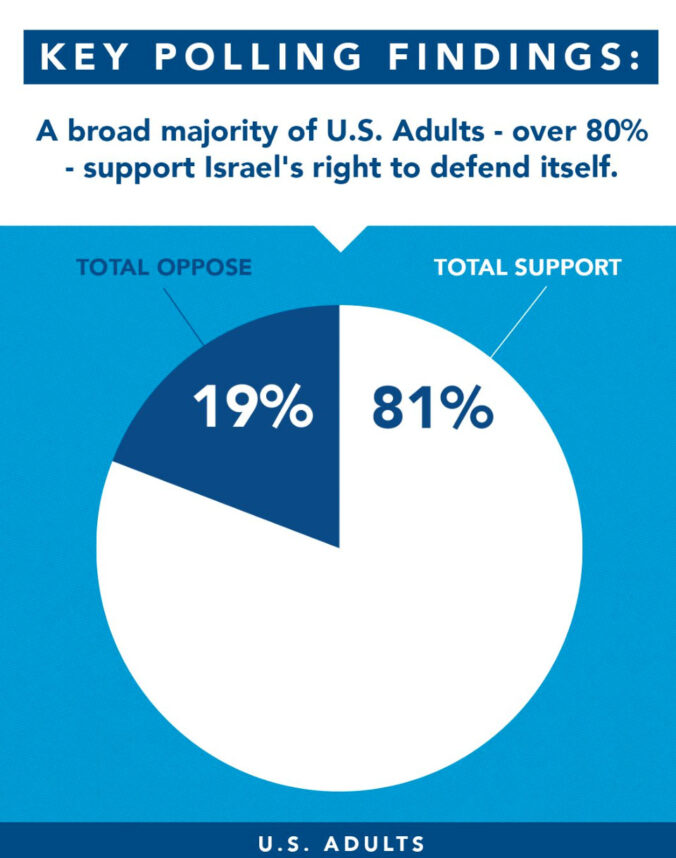
New research conducted by the Israel on Campus Coalition in partnership with Schoen Cooperman Research shows that among 1000 U.S. adults surveyed, 81% of them support Israel’s right to defend itself. Additionally, poll results showed that 82% believe a final ceasefire deal should require Hamas’ removal from power in Gaza.
The poll, which was conducted between February 14 and 18, also explored on-campus antisemitism. The ICC and Schoen surveyed 400 college students and 250 Jewish college students to assess perceptions of antisemitism and attitudes towards Israel and the Israel-Hamas conflict. It revealed that 75% of college students have experienced, witnessed or heard about antisemitic incidents on their campus, while 74% of Jewish college students believe antisemitism is a serious problem on their campus.

“These findings demonstrate unwavering public support for Israel and deep concern about the alarming rise of antisemitism, especially on college campuses,” the ICC’s CEO Jacob Baime said in a statement.

“These findings demonstrate unwavering public support for Israel and deep concern about the alarming rise of antisemitism.” Jacob Baime

Carly Cooperman, CEO of Schoen Cooperman Research, echoed a similar sentiment.

“The Israel-Hamas war is also a priority on college campuses, as virtually all college students surveyed say that this issue is important to them,” she said. “Though, there is widespread concern among college students generally—and particularly among Jewish college students—that the conflict has increased antisemitism on campus, and large majorities view this issue as a serious problem.”

According to the poll, 76% of general college students believe antisemitism is a serious problem on their campus, and the Israel-Hamas war ranks as the second most important issue for them (27%); only costs and inflation (43%) outrank them. Other top issues include healthcare (21%), immigration (19%) and affordable housing (19%). Over 90% of college students say that the Israel-Hamas War is an important issue to them, and nearly three-quarters view it as very important.

For Jewish college students, the Israel-Hamas war is the top issue, ranking at 40%, followed by violent crime and gun violence (28%), healthcare (27%) and costs and inflation (25%). Plus, 94% of Jewish college students say the Israel-Hamas War “is an important issue to them generally, including a 60% majority who consider very important,” according to the study.

Furthermore, 80% of Jewish college students have experienced (30%), seen (29%) or heard about (22%) an antisemitic incident taking place on campus.

Among Americans, following the Kanye West Superbowl ad and t-shirt controversy, four in five U.S. adults report that antisemitism is a serious problem in the United States today and 84% of U.S. adults believe It’s important for organizations and public figures to speak out and strongly denounce all forms of antisemitism, discrimination and violence against Jewish people.

The ICC, a pro-Israel organization that offers fellowships to students who are Israel advocates, frequently polls Americans, as well as Jews, to understand the current climate.

With these poll findings and the rise in antisemitism in America and on college campuses in particular, Baime said, “It’s clear that university leaders and policymakers must take action.”


In New ICC Poll, Americans Overwhelmingly Support Israel, Concerned About On-Campus Antisemitism Read More »

A Bisl Torah~The Strength of Their Names

These past weeks have brought intense and brutal heartache to the Jewish people. This week, Itzik Elgarat, Ohad Yahalomi, Shlomo Mantzur, and Tsahi Idan were returned from captivity in Gaza, having been murdered by Hamas.

And we experienced an unbearable, searing pain as we remain glued to our screens, watching the funerals of Oded Lifshitz, Shiri, Ariel, and Kfir Bibas. The Bibas family was buried together, a mother eternally embracing her babies.

Oded’s name means support or encouragement. His name is also a derivative of witnessing. Ariel means lion of God, Kfir is a lion cub, and Shiri means, my song. Remember, lions are a symbol of Judah—a symbol of the Jewish people.

We must hold their names and walk through this world with purpose, promising them that their lives continue beyond the grave.

My take on their names is a mission I will continue:

In the face of evil, we vow to support the song of lions. We won’t back down. We never will.

May their names always be a blessing. And may we never know this kind of heartache ever again.

Shabbat Shalom


Rabbi Nicole Guzik is senior rabbi at Sinai Temple. She can be reached at her Facebook page at Rabbi Nicole Guzik or on Instagram @rabbiguzik. For more writings, visit Rabbi Guzik’s blog section from Sinai Temple’s website.

A Bisl Torah~The Strength of Their Names Read More »

More Detailed Instructions – A poem for Parsha Terumah

And you shall make the courtyard of the Mishkan on the southern side [there shall be] hangings for the courtyard of twisted fine linen, one hundred cubits long on one side. ~ Exodus 27:9

The Ikea-like instructions to build the courtyard
of the Tabernacle have me glancing in my backyard
longing for direction.

We bring in contractors and talk about our dreams
and they respond with numbers that far exceed
our capacity to realize them.

I want their knowledge and skills so I know
how many holes to dig for posts. I want them
to spend hours telling me what a cubit is.

I’ll dig the holes. I’ve been longing to dig holes.
I just need to know how many. I’m not even sure
if I have a hundred cubits of space.

It’s not for anything so holy. Just a cemented pit
with water and a few seats. I’d like to sit in it
and contemplate my future while

jets of heated water make me aware
of their presence. It needs to be permanent.
I’m not planning on wandering around

the neighborhood for forty years until I
finally cross the Santa Clarita river
to my promised land on this mountain.

Sometimes, I see snow on a distant mountain.
In the other direction is Arizona where
so much of the copper comes from.

I’m good with a hammer. I know my way
around a shovel. I’m willing to set up snacks.
Please, God. Tell me what to do.


Rick Lupert, a poet, songleader and graphic designer, is the author of 28 books including “God Wrestler: A Poem for Every Torah Portion.” Visit him at www.JewishPoetry.net

More Detailed Instructions – A poem for Parsha Terumah Read More »

A Moment in Time: “It Takes Years to Make an Overnight Success”

Dear all,

Eli got a hole-in-one the other day! He was certainly proud of himself. Sure, there was some luck involved. But it also took patience, practice, and perseverance.

I was reminded of wisdom that a rabbi mentor once shared:

“It can take years to make an overnight success.” This can be true across so many of our goals. That lucky break, that winning formula …. They usually don’t happen right away – but after trial and error, honing our skills, and nurturing relationships.

And when we do achieve a milestone – we keep our vision forward, because there are always additional milestones in our life journey.

It took Eli well over par to reach the hole in the subsequent round. So while he reveled his success in that moment in time – he learned that life keeps moving.

(FYI – I have YET to achieve a hole-in-one in mini golf!)

WIth love and shalom,

Rabbi Zach Shapiro

A Moment in Time: “It Takes Years to Make an Overnight Success” Read More »

L.A. Federation Education Summit, SWU Holocaust Education Center, Mensch Awards Dinner

Jewish Federation Los Angeles brought together approximately 100 education leaders from public, charter and independent schools from across LA County, including superintendents, heads of schools, and academic department heads, for its 2nd Annual Education Leaders Summit, held Feb. 12. 

Participants engaged with expert speakers, attended enlightening breakout sessions, networked with colleagues, and received valuable tools and resources to help them build more inclusive school communities. During the summit, participants deepened their understanding of antisemitism — how it manifests, and how to recognize and respond to incidents in school environments. 

The summit also highlighted the importance of Jewish inclusion in DEI and Ethnic Studies, provided guidance on navigating complex global issues as school leaders, and more.  

Jewish Federation Los Angeles President and CEO Rabbi Noah Farkas opened the daylong learning with a session focused on Jewish Los Angeles and the current landscape. Other content providers included Project Shema, ConnectED, Jewtina y Co., Institute for Curriculum Services, JIMENA, USC Hillel, Anti-Defamation League-LA, and DEI experts from Oakwood school and Berkeley Hall.

In the wake of Oct. 7, as schools grapple with how to best support Jewish students and address topics related to the Israel-Hamas war with nuance and thoughtfulness, the Federation’s annual convening provides the space and opportunity for educational leaders to access the tools, content, and balanced resources they need to be most effective in their roles.


Israeli musician Nitzan Birnbaum and his mother, Bat Ella. Photo by Ayala Or-El

In honor of International Holocaust Remembrance Day, StandWithUs (SWU), in collaboration with the Israeli-American Council (IAC), held a commemorative evening at the Shepher Center in Woodland Hills. Nili Alon Amit, associate director of SWU’s Holocaust Education Center (HEC), invited Israeli musician Nitzan Birnbaum to perform alongside his mother, singer Bat Ella.

Birnbaum, a gifted musician, is the creator of The Saba Project, a deeply personal initiative that blends his original compositions with the recorded testimony of his grandfather, the late Holocaust survivor Professor Rabbi Ervin Birnbaum. The project resulted in two award-winning albums that combine testimony with music, earning widespread acclaim.

Birnbaum previously performed for StandWithUs’ HEC at the Wilshire Boulevard Temple during International Holocaust Remembrance Day in 2023. His work is now an integral part of HEC’s educational offerings and is frequently used in its programs.

The project’s second album, “The Resurrection,” further expands on his grandfather’s journey, focusing on his life after the Holocaust. At nearly 92, the elder Birnbaum recorded his story in the studio, accompanied by Nitzan’s music. Nitzan described the project as “a beacon of revival,” emphasizing how his grandfather was an ideal partner in this creative endeavor. Birnbaum was deeply involved in the musical life of his hometown, Netanya, and was no stranger to public storytelling. Bat Ella frequently performs for Jewish communities across Europe and the United States, using music as a means of preserving memory and strengthening cultural ties.

Founded in 2021, the HEC is headquartered in Los Angeles and brings interactive Holocaust education seminars, films, and curricula to schools and communities across North America through both in-person and virtual platforms. To date, HEC has reached 30,000 students with its engaging Holocaust education programs.

Throughout the event, several young participants took the stage, including members of the IAC program, Mishelanu, and the SWU Leventhal Fellowship program for high school students, as well as three children from Journey to Adulthood, a program designed for 12- to 13-year-olds in preparation for their bar and bat mitzvahs.

Joan Burns, a dedicated community volunteer who opened the event, spoke about “Zachor: The Generations After,” a new program for second- and third-generation Holocaust survivors. 

“It’s becoming increasingly difficult to find Holocaust survivors who can share their stories firsthand,” she said, “so it’s our responsibility to carry the torch and keep their memories alive.” 

– Ayala Or-El, Contributing Writer


Back row, from left: Temple of the Arts Rabbi David Baron and Mensch International Foundation Founder Steve Geiger are joined by (front row, from left) Leo David, Michael Wiener and David Wiener. Photo by Orly Halevy

The Mensch International Foundation held its annual awards ceremony on Feb. 21 at Temple of the Arts’ Saban Theatre in Beverly Hills.

During the event, which included a dinner, awards ceremony and an abridged Kabbalat Shabbat service, the leadership of the Mensch Foundation honored sculptor and Holocaust survivor Gabriella Karin; educator David Meyerhof; and Holocaust survivors David Wiener and Joseph Alexander with Mensch Awards.

Founded in 2002 by Steve Geiger, the Mensch Foundation seeks to develop an educational curriculum that will help eradicate stereotyping and antisemitic thinking. The awards recognize those who’ve dedicated their lives to embodying menschlichkei — devotion to bettering humanity.

The event on Friday evening was held in the rotunda of the Saban. Those in attendance included LAUSD Board President Scott Schmerelson; Temple of the Arts Rabbi David Baron; Cantor Nathan Lam, who was also celebrating his birthday; and philanthropists Barak Raviv and Daphna Ziman. Also in attendance was Leo David, who served in the IDF during Israel’s War of Independence and years ago established the Los Angeles chapter of the Friends of the Israel Defense Forces to support IDF soldiers — exactly the type of mensch that Geiger’s foundation has long recognized.

From left: Helen Alexander Flax, David Meyerhof, Steve Geiger, Todd Karin and Gabriella Karin. Photo by Orly Halevy

L.A. Federation Education Summit, SWU Holocaust Education Center, Mensch Awards Dinner Read More »

Rabbis of LA | Rabbi Kahn Sees the Personal Side of the Hamas-Israel War

Rabbi Yanky Kahn’s seven missions
to the victims of the war have had two aims: To demonstrate to Israelis that American Jews care about their fate, as shown by the practical gifts he brings every time, and to demonstrate to Southern California Jews how many Israelis have been suffering non-stop since Oct.7.

Rabbi Kahn, a leader at Chabad of the Valley in Tarzana, said the most striking aspect of his most recent mission was spending meaningful time with “displaced Israeli families who have been living in hotels since Oct. 7.”

Since the start of the war, reporting has centered on the plight of the Palestinians. “The families I met are staying at the Eden Hotel, near the Lebanon border,” Rabbi Kahn said. They spent a little money from the Israeli government. “I can tell they are very emotional, hurt, afraid.”

He made this trip accompanied by only by his wife, Rebbetzin Hindy Kahn. They spent most of their time near the Lebanon border. “In the morning, you see kids running to school. At night time you see seniors with their Filipino caretakers. You have a lot of women whose husbands are staying closer to their work – so the women are alone during the week. Husbands being away is very challenging for many families.”

Since fleeing their destroyed homes, have these Israelis adjusted to their new, temporary lives? “Many are very tense,” Kahn said. “They worry that when they go home appliances will be broken and they have to get help.” Before the war, repair responsibilities were taken for granted in many households. He noted many benefits from the government are online, but many seniors are not web savvy and don’t know how to access them. “People did not seem happy,” the rabbi said. “They were tired from months of war.” How does he, as an American, provide encouragement? “Listen to their stories,” the rabbi said. “Hear what they have to say. Give them some love. Just being there helps.”

The Kahns stayed in the hotel Kibbutz Levi, not far from the Lebanon border, where between 100 and 200 displaced families were housed. Rabbi Kahn paused while explaining how families, endlessly cooped up in a hotel, spend their evenings. What do the children do when they come home from school? Families told the Kahns the hotel tries to be creative, tries to make evening activities for them once or twice a week. “There’s a lot of running around the hotel,” he said. “They try to lead normal lives. Kids go to school in the mornings, and husbands and wives go to work. Families are trying to get back into a normal routine … as much as they can.” But “there’s not much for them to do, living in one room in a hotel. There’s not really a semblance of independence. They are not independent at all, just in limbo. Waiting for the government to tell them.” 

Not surprisingly, once-sturdy financial foundations are “shaky” for a lot of families. “Village after village is empty. Empty. Army bases now – a few people live there. All of these different places, cities, which are empty.”

How do you counsel people in the scariest moments of their lives? “You listen to their stories,” said. “Speaking to them. Spending time with them. We had dinner with them. We had dinner with an older lady. You speak to her. You smile to her. I don’t know how many people she has spoken to in the past year outside of those people who care for her. Such a difficult situation.”

The Kahns’ trip was impacted by the Palisades and Eaton fires. “We changed our schedule and came back early,” he said, to help people here with the fires. “A few people from our community lost their homes and Chabad of the Valley turned itself into a center with pillows, blankets, drinks for firefighters …  we got our Chabad Center organized to help our families.”

On a trip late last year, IDF soldiers asked Rabbi Kahn if, somehow, he could find enough donors to underwrite a food truck for the hungry army. He did, as Chabad donors raised the funds. The presentation of the truck was the focus of his most recent trip. “Thank God,” Kahn said, “the truck was a huge, huge success. The day we were there, we made 800 burgers. I never have had such a good burger in my life. Soldiers kept coming back. They ate double burgers, triple burgers.”

The truck visited army bases right on the border — nearly into Lebanon, — to bring them these hot burgers from the food truck. “I can’t begin to tell you the smiles, the joy from all of the soldiers since Oct. 7. The love we brought to them.”

The average soldier, he explained, could be 30, 40, 50 years old. Just this week, the first cousin of a good friend, father of eight or nine, was killed in Israel. “The soldiers are fighting, and the war still is going on – nearly 17 months after Oct. 7. Dragging on. To see the smiles for us coming there, giving them a burger and a drink …

“To give them the love was amazing, thanks to the donors who made this happen.” Rabbi Kahn is uncertain about how the food truck will continue.

It has become a custom each trip for Kahn to take a group of widows out to a meal. A majority are in their 20s. “So many are upset, lonely, lost. They’re trying to move on with their lives,” Kahn said.

Fast Takes with Rabbi Kahn

Jewish Journal: Your most enjoyable recent meal?

Rabbi Kahn: This past week, my sister-in-law from New York and my wife made French roast, rice and string beans. The best meal.

J.J.: What is your favorite time of year?

R.K.: Sukkot.

J.J.: What is your favorite childhood memory?

R.K.: So many. I was born in Italy and grew up in London. Skiing with my father in Switzerland.

Rabbis of LA | Rabbi Kahn Sees the Personal Side of the Hamas-Israel War Read More »

Six Million and One, Twelve Hundred and Two

I remember hearing it said once, perhaps by one of our Hebrew teachers – years before a documentary by that name was produced — that we should not say that six million Jews were murdered in the Shoah, but “six million and one.” Apparently because the human mind cannot absorb the number six million, but we can focus on one person.

I recalled that idea last week in Israel, when our hearts and the country came to a standstill with bated, mourning breath as we awaited the return of the little bodies of Kfir and Ariel Bibas, along with their mother, Shiri, and Oded Lifshitz, a grandfather who was also murdered in Gaza, at the age of 83, HY”D (a Hebrew acronym for “May their blood be avenged”). All of them were from Kibbutz Nir Oz. Lifshitz, a former journalist and one of the founders of the kibbutz, was known as a peace activist who would drive Gazan Arabs back and forth to Israeli hospitals for medical treatment. His widow, Yocheved, who had also been a hostage, said that he had cared about the Palestinians and “they betrayed him.”

Horrifyingly, there were whole families, and many more than two babies and children brutally murdered in the southern communities on Oct. 7, 2023. Most people don’t know their names, or if they read them at the time, have since forgotten. But everyone in Israel (and many throughout the world) know the names of the two little ginger-haired boys who were only four years old and nine months old when they were abducted. 

Scores of memes and pictures have been generated, based on the photos we do have of them, some with their abducted mother, some on their own – a chilling foreshadowing, as the little boys were first returned without her, one more cruel maneuver by Hamas; only a day and a half later was Shiri’s body sent back to Israel. 

We know that Ariel loved Batman, and a clip of him from the back, running up a pathway with the cape of his Batman costume flying in the wind, has gone viral.

Ariel and Kfir are what I would call the “two” of the “1200 and two” of Oct. 7. 

What’s more, those names are symbolic.

“Ariel” is one of the names of Jerusalem and the Holy Temple. Its source is in the book of Isaiah, 29:1. “Oh Ariel, Ariel, the city where David camped, add year to year, the festivals circling round again.” 

Ariel is also a town in the Shomron, founded in 1978, whose population grew enough so that in 1998 it was declared a city, and is now considered “the capital of Samaria.” It has a religiously and ethnically diverse population and boasts a hesder yeshiva (where students also do the army) and a university, including a medical school.

“Kfir” in Hebrew means “lion cub.” We find it in Isaiah 11:1. “Wolf will lie down beside lamb, the leopard will lie beside the young goat; calf, lion cub, fatter lamb together – a little child will tend them.” 

“Kfir” is also the name of a large Infantry Brigade in the IDF, that according to the IDF website “is on the front lines of the war against Palestinian terrorism.” Many soldiers from the Kfir Brigade died in this current war.

The name of their lion-hearted mother, “Shiri,” means “my song.”

After Oct. 7, all of Israel united in horror, in mourning, and then in determination to vanquish the enemy and to return our hostages. “Yachad nenatzeach” – “Together we will be victorious” – was the phrase seen everywhere – on bridges, by roadsides, on posters.

Kfir, Yarden, Shri and Ariel Bibas Courtesy of The Hostages and Missing Families Forum

As the months, then a year and more, went by, some cracks appeared once again in the unity, as there were still hostages in Gaza, some of whom had been murdered. 

But on the 22nd day of Shvat, Feb. 20, all of Israel united again in tears, waiting in cold and rainy weather by the roadside in the rain, holding flags, or glued to our televisions and internet channels, to see the winding convoy of vehicles transporting the coffins of Oded Lifshitz, Shiri Bibas (we thought then) and little Ariel and Kfir to the Abu Kabir Forensic Institute in Tel Aviv for the final identification. People cried and military people saluted as the convoy passed. 

It was the ultimate display of “chesed shel emet” – kindness with no hope of repayment, that expression we use when accompanying someone’s coffin, as he will never know, or be able to return the kindness.

Our national heart shattered, once again, for the 1200 and two of Oct. 7. And for more than 800 soldiers who fell in battle since then, and for all the hostages murdered in the Hamas tunnels. Because we cannot comprehend high numbers. It is too daunting for our minds and souls.

But we can wrap our hearts around two little redheaded boys. Boys whose names signify the holiness of Jerusalem and the courage of a lion cub. 

Six million and one.

Twelve hundred and two.

May their deaths, and all the deaths in Am Yisrael, be avenged, and may we know no more sorrow.

The translations of lines from Isaiah are by Prof. Shawn Zelig Aster and come from the new Magerman Edition of the Koren Tanakh. 


Toby Klein Greenwald is an award-winning journalist and theater director and editor-in-chief of WholeFamily.com. She and her husband, a liberator of Jerusalem in 1967, live in Efrat and their children live throughout the land of Israel and all have served in the IDF or National Service. 

Six Million and One, Twelve Hundred and Two Read More »

‘Fighter in the Woods’: A Book for Young Readers about the Holocaust

Parents often ask what they can give their middle school children to read about the Holocaust. They want to their children to be informed and inspired but not frightened, not horrified, by an event that in essence is both frightening and horrifying. No one wants to have their children waking up in the middle of the night by nightmares.

Scholastic Publishers has now produced a series of books written by Joshua M. Greene telling the story of young girls and women who went through the Holocaust. Each is inspiring in its own right; the series itself is worthy of attention.

Greene has chosen his subjects carefully. One book in the series, which he co-wrote with the survivor, tells the story of Renee Hartman, the only hearing member of her family, who ended up going through concentration camps with her deaf sisters, responsible not only for her own survival but her sisters’ as well, doubly endangered as a Jew and as hearing-impaired. Recently, Marlee Matlin announced that she will be making a film of this moving work.

Greene retold the story of Vladka Meed, the nom de guerre of a young Jewish woman, Feigele Peltel, who lived on both sides of the Warsaw Ghetto wall as an arms merchant purchasing vitally important arms for the ghetto fighters. She was stuck on the Aryan side of the wall as the fighters she had armed fought unto their last breath. She lived to tell the story, but something deep within her remained with them.

Another book, the story of Rena Finder, also co-written with the survivor, tells the story of Rena’s survival on Schindler’s List. Even though its intended readers presumably have not yet seen the classic film released some 31 years ago, either because they are too young or because even a canonical film is ancient history after three decades, the evocation of Schindler’s List means that the reader expects to grapple with the Krakow Ghetto, the Plaszow Concentration Camp and the Jewish workers who staffed Schindler’s factory. The cultural influence of the film is so great that the factory has become an indispensable stop on a visit to Krakow for all visitors, Jews and non-Jew alike. Greene and Finder make this story accessible, meaningful, powerful and inspiring for middle school readers who can identify with Rena.

His latest book tells the story of Celia Cimmer (Kassow) and her family from their prewar life to ghetto and then her escape. A gentile teenage boy snuck into the ghetto with the goal of rescuing her and bringing her to his family farm to live. Teenage readers might wonder: Is this mere gallantry and decency or did he have a boyhood crush on a pretty young girl – or both. Greene leaves the issue dangling. And yet bringing a Jewish girl home to his Polish Christian family was extremely risky, as Poles could be killed for hiding Jews. The reward for turning a Jew in to the Gestapo was so great that friends might turn against friends. Despite all the boy’s good intentions, as the occupying forces kept coming to the farm Celia was forced to live in a hole dug under the barn.  She lived in darkness. Her companions were rats. Her situation became even more dangerous when her younger sister Slava escaped the ghetto’s liquidation, implored by her dying mother to join her sister in hiding. Two now lived in the hole, coming up for air only in darkness. The forest became their only option – they were most fortunate that the ghetto was located near a forest, as urban ghetto inhabitants had no such escape route. First Celia’s sister came to the woods where she joined her brothers, who were apparently so good a fighting team that they could protect a preteen sister and soon Celia joined her. Celia became a daring resistance fighter, of necessity learning to pull her weight in order to survive. 

Greene tells a complex story without being complex. Terms are introduced. Historical events are explained. He presumes that the story is of such import that the reader will welcome the historical background allowing them to understand more. His prose is sparse, avoiding the dramatic and the cliché but allowing the drama of the situation to engage the reader.

He relies on Celia’s testimony given more than four decades ago to the Fortunoff Archives at Yale University just as the now “ancient” VHS technology became available. And he was aided by Celia’s son, the brilliant historian of the Warsaw Ghetto Samuel Kassow.

Greene’s scholastic series is a wonderful way to engage young readers. One welcomes what we have and the greatest compliment that one can give to a writer of books for young readers: “More” — please!


Michael Berenbaum is director of the Sigi Ziering Institute and a professor of Jewish Studies at American Jewish University.

‘Fighter in the Woods’: A Book for Young Readers about the Holocaust Read More »

Noa Kirel Thrills Young Audience in Charity Concert for LA Fire Victims

Noa Kirel, one of Israel’s biggest pop stars, performed at The Vermont in Hollywood on Feb. 16 as part of a fundraiser for victims of the Los Angeles wildfires.

Kirel, 23, from Ra’anana, Israel, opened with “Deja Vu.” Her 13-song setlist featured hit singles “Tikitas,” “Drum,” “Million Dollar,” “Provocativit,” “Tralala,” “Pantera (Panther),” and “Pouch.”

Two days before the show, she released her latest single, “Like What U See.” Singer-dancer-influencer Montana Tucker joined Kirel for the song, wearing a giant Magen David necklace while dancing and revving up the crowd.

Kirel closed the night with her 2023 Eurovision hit “Unicorn,” wrapping herself in the Israeli flag during the performance.

“That meant a lot, especially now,” said Ariel Nosrati, a fan of Kirel’s music for nearly a decade. “It’s powerful to see an artist not shy away from who they are and what they represent. This was one of the best concerts I’ve been to. She didn’t say much between songs. She was very efficient, which I respect. Some artists talk a lot to fill space, but she didn’t need to. She let the performance speak for itself.”

Los Angeles-based Israeli DJ Aviel Altit entertained the audience before Kirel, at one point spinning records while holding his toddler daughter — mirrored by the dads throughout the night. 

The crowd was a mix of families, young fans, and longtime supporters. Many parents brought their children, with dads lifting daughters onto their shoulders. A group of mothers and daughters even chartered a bus from San Diego to attend. With Presidents Day the next morning, the late Sunday night concert didn’t seem to be a concern for anyone. Post-show, fans gathered in the venue’s foyer to enjoy Cottura Catering’s Greek pizza toast and cold scoops from Tarzana-based Anita La Mamma del Gelato.

The show was announced only two weeks ago, but the crowd brought the energy of a packed house ready for a dance party. Dance instructor Zohar Dagan, who was among the attendees, was especially impressed by Kirel’s team.

“[The dancers] were spectacular,” Dagan told The Journal. “They did a really great job putting their full energy into the dance. It’s not easy to perform in a small space like that with so many dancers. Usually, when you see a pop performance with a big group of dancers, they have the luxury of a massive stage. Here, they had to stay incredibly in sync while still looking expressive and free. They totally didn’t [look confined]. They might as well have been on a giant stage.”

Dagan also noted Kirel’s ability to bring emotional depth to her performance. “I was surprised at her expressions. She had such beautiful expressions, and they were so connected to the lyrics and the music. You know how there are different emotions and different feelings? She exudes that feeling. She connected it to the song.”

The show was the debut event for Cactus Concerts, a new series aimed at introducing international artists to Los Angeles audiences. For many at Kirel’s show, it was the first fundraiser they had attended for fire victims.

“It was great to be with the Jewish community and celebrate because that always lifts our spirits,” said Cameron Banafsheha, who attended with her mother. This was their first Kirel concert. “The energy in the room was amazing, and you could tell how much people needed a night like this.” Deb Banafsheha, a Los Angeles-based photographer, captured the spectacle amid a sea of smartphones recording video of the performance.

Lizzie Adar, who attended with her young daughter, said her favorite song of the night was “Pantera (Panther),” while her daughter’s favorite was “Unicorn.”

“It’s just a really nice gathering for the community to get together, to feel like we’re supporting Israeli artists,” Adar told The Journal.

The event came five weeks after the Los Angeles fires. During one of the few moments Kirel spoke between songs, she told the crowd that she was so honored that during these tough times in Los Angeles, fans “still came out to sing and dance.”

The event came five weeks after the Los Angeles fires. During one of the few moments Kirel spoke between songs, she told the crowd that she was so honored that during these tough times in Los Angeles, fans “still came out to sing and dance.”

Kirel’s prominence continues to grow following her third-place finish at Eurovision two years ago. She was slated to become the second-ever Israeli to headline Madison Square Garden in New York in June 2024. That show has yet to be rescheduled, but Kirel did perform at Rock in Rio in Brazil in September and with Matisyahu at Yallapalooza in Philadelphia in November 2024. 

Eden Golan received both praise and threats representing Israel at the 2024 Eurovision for her song “Hurricane.” Golan ultimately placed fifth at Eurovision, only seven months removed from the Oct. 7 terror attacks. This year, Israel will be represented at Eurovision by Yuval Raphael, with the semifinal taking place on March 9 and the final on May 17 in Basel, Switzerland.

As Kirel’s fandom continues to expand beyond Israel, fans who attended the Hollywood show may look back on the night as a special moment as her rise continues.

“I don’t expect to see Noa in such a small venue next time she plays in Los Angeles,” an audience member said.

Noa Kirel Thrills Young Audience in Charity Concert for LA Fire Victims Read More »

Controversial Israel Critic Discusses New Book about Gaza in Beverly Hills

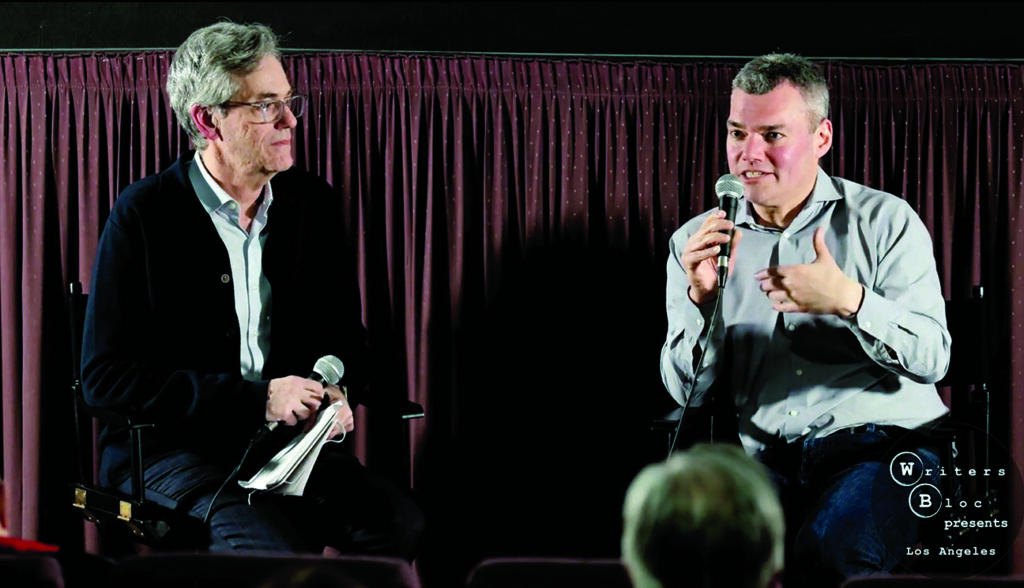
Peter Beinart, a prolific Jewish critic of Israel, appeared in Beverly Hills to promote his recently released book, “Being Jewish After the Destruction of Gaza: A Reckoning.” He participated in a discussion about his book, which was published in January, with UCLA Jewish history professor David Myers.

Before a sold-out crowd at the Lumiere Music Hall on Feb. 19, Beinart spoke about Israel being an “ethno-nationalism project” and outlined his hope to one day see a single state between the Jordan River and the Mediterranean Sea, where everyone residing there — Jews, Arabs, Christians, whomever — enjoyed “legal equality.”

Beinart is a professor of journalism and political science at City University of New York. He’s also editor-at-large at Jewish Currents, a progressive Jewish quarterly magazine. 

Since emerging on the Jewish intellectual scene in 2010 with the publication of his essay, “The Failure of the American Jewish Establishment,” followed by his 2012 book, “The Crisis of Zionism,” Beinart has said his frustration has been less about Israel — though it’s fair to say he’s not a fan of the country under its current leadership — than it has been with the organized American Jewish community’s response to Israel’s actions.

In his recent conversation with Myers, Beinart hammered home that point. In the aftermath of Oct. 7, Beinart said, Israel has become the dominant feature of Jewish life, to the detriment of other aspects of Judaism. He offered up an example of a rabbi, on Shabbat, asking his congregants to switch on their electronic devices to donate funds to support Israel.

This illustrated everything that’s currently dumbfounding about the American Jewish establishment, he said.

As for what’s been happening on college campuses, Beinart, in an incredulous tone, pointed out that campus Hillels don’t take strong positions on issues such as keeping Shabbat or keeping kosher but are unequivocal in their support for Israel. 

The website of Hillel International, which describes itself as “the world’s largest and most inclusive Jewish campus organization,” says, “Israel is at the heart of Hillel’s work.”

In discussion about anti-Israel activities on college campuses, such as “Israeli Apartheid Week,” Beinart said Jewish students would feel less threatened by anti-Israel activism on their campuses if they had a more well-rounded education about the issue in high school. This could include exposing Jewish high school students to Palestinian authors, Beinart said.

In Beinart’s eyes, there is an absence of mainstream pro-Palestinian voices and therefore an opportunity for those who are willing to be vocally pro-Palestinian, particularly in the Democratic party. It’s a lane that isn’t being occupied.

While he declined to explicitly say whether Israel’s actions in Gaza amounted to a genocide, he’s been listening to experts, including scholar Omer Bartov, on the subject. A professor of Holocaust and genocide studies at Brown University, Bartov has called Israel’s war in Gaza a “total moral, ethical failure.”

Beinart condemned Hamas’ actions on Oct. 7, but he asked, rhetorically, ‘how well has non-violent Palestinian resistance worked?’ 

As the American Jewish community has become increasingly concerned with all things Israel in the aftermath of the Oct. 7 attack,, Beinart has found himself turning to the ritualistic and cerebral aspects of the religion that have nothing to do with Israel. 

Currently, he’s doing Daf Yomi, a daily regimen of learning one page of Talmud each day over the course of seven-and-a-half years.

While most of the conversation focused on Beinart’s views, Myers also revealed his perspective. The UCLA professor, in the aftermath of the war in Gaza, said he no longer identifies as Zionist. He also doesn’t identify as “anti-Zionist” but called himself a “non-Zionist.” He offered this remark while discussing his participation in a recent conference at Brown University — “Non-Zionist Jewish Traditions” — that explored a “rainbow of non-Zionist Jewish traditions.” 

A Q&A segment followed the discussion. 

Organized by Writers Bloc Presents, a Los Angeles-based literary events organization, the event had originally been scheduled to take place at Skirball Cultural Center but was relocated to the Lumiere in Beverly Hills, according to Beinart. 

Positing on his X account days before the gathering, Beinart said the Skirball “cancelled” his talk, though The Journal was not immediately able to verify that claim. 

Andrea Grossman, founder of Writers Bloc, delivered introductions at the start of the evening. Showing how heated the topic of Israel has become, Grossman said any disruptors would be immediately tossed out and could even face criminal charges from the Beverly Hills Police Department.

Such warnings, however, appeared to be unnecessary. 

Instead, over the course of the 90-minute discussion between Beinart and Myers, audience members, including those munching on popcorn, proceeded to nod along as Beinart appeared to validate their complicated feelings about Israel.

Controversial Israel Critic Discusses New Book about Gaza in Beverly Hills Read More »