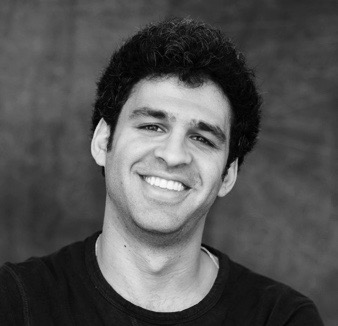
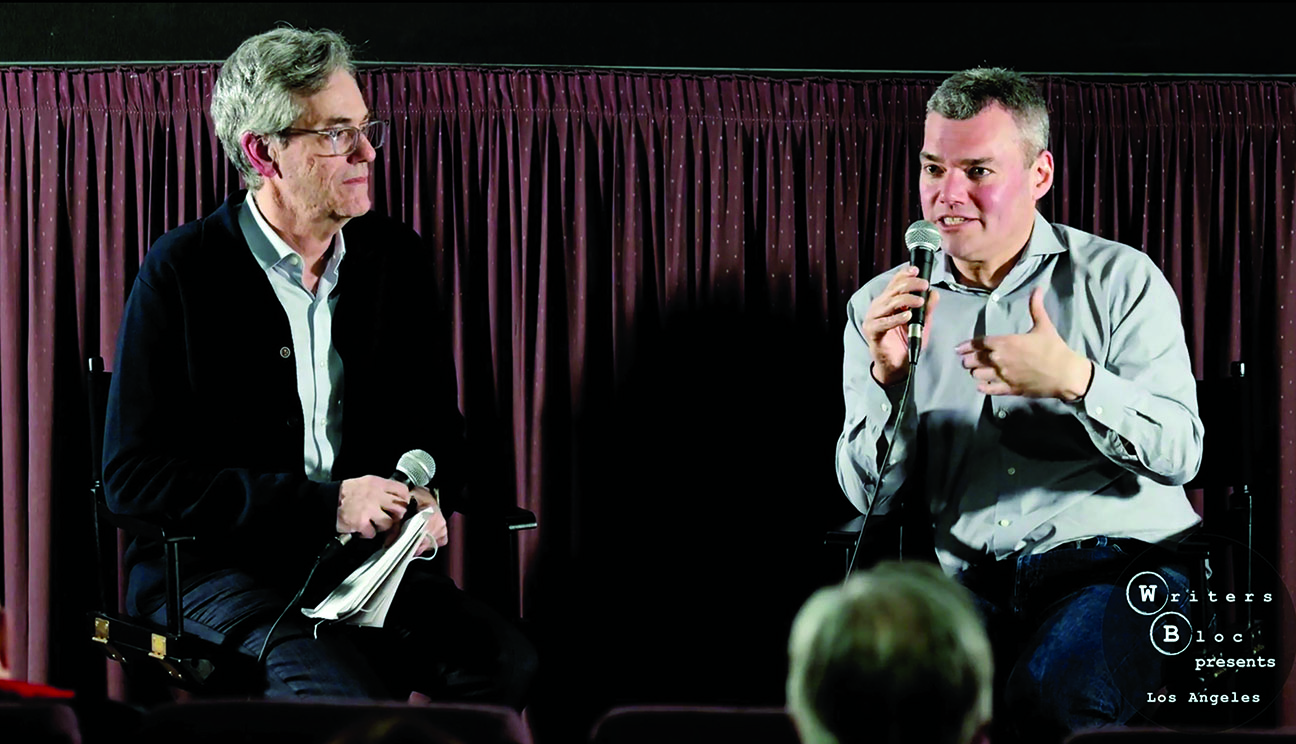
Peter Beinart, a prolific Jewish critic of Israel, appeared in Beverly Hills to promote his recently released book, “Being Jewish After the Destruction of Gaza: A Reckoning.” He participated in a discussion about his book, which was published in January, with UCLA Jewish history professor David Myers.
Before a sold-out crowd at the Lumiere Music Hall on Feb. 19, Beinart spoke about Israel being an “ethno-nationalism project” and outlined his hope to one day see a single state between the Jordan River and the Mediterranean Sea, where everyone residing there — Jews, Arabs, Christians, whomever — enjoyed “legal equality.”
Beinart is a professor of journalism and political science at City University of New York. He’s also editor-at-large at Jewish Currents, a progressive Jewish quarterly magazine.
Since emerging on the Jewish intellectual scene in 2010 with the publication of his essay, “The Failure of the American Jewish Establishment,” followed by his 2012 book, “The Crisis of Zionism,” Beinart has said his frustration has been less about Israel — though it’s fair to say he’s not a fan of the country under its current leadership — than it has been with the organized American Jewish community’s response to Israel’s actions.
In his recent conversation with Myers, Beinart hammered home that point. In the aftermath of Oct. 7, Beinart said, Israel has become the dominant feature of Jewish life, to the detriment of other aspects of Judaism. He offered up an example of a rabbi, on Shabbat, asking his congregants to switch on their electronic devices to donate funds to support Israel.
This illustrated everything that’s currently dumbfounding about the American Jewish establishment, he said.
As for what’s been happening on college campuses, Beinart, in an incredulous tone, pointed out that campus Hillels don’t take strong positions on issues such as keeping Shabbat or keeping kosher but are unequivocal in their support for Israel.
The website of Hillel International, which describes itself as “the world’s largest and most inclusive Jewish campus organization,” says, “Israel is at the heart of Hillel’s work.”
In discussion about anti-Israel activities on college campuses, such as “Israeli Apartheid Week,” Beinart said Jewish students would feel less threatened by anti-Israel activism on their campuses if they had a more well-rounded education about the issue in high school. This could include exposing Jewish high school students to Palestinian authors, Beinart said.
In Beinart’s eyes, there is an absence of mainstream pro-Palestinian voices and therefore an opportunity for those who are willing to be vocally pro-Palestinian, particularly in the Democratic party. It’s a lane that isn’t being occupied.
While he declined to explicitly say whether Israel’s actions in Gaza amounted to a genocide, he’s been listening to experts, including scholar Omer Bartov, on the subject. A professor of Holocaust and genocide studies at Brown University, Bartov has called Israel’s war in Gaza a “total moral, ethical failure.”
Beinart condemned Hamas’ actions on Oct. 7, but he asked, rhetorically, ‘how well has non-violent Palestinian resistance worked?’
As the American Jewish community has become increasingly concerned with all things Israel in the aftermath of the Oct. 7 attack,, Beinart has found himself turning to the ritualistic and cerebral aspects of the religion that have nothing to do with Israel.
Currently, he’s doing Daf Yomi, a daily regimen of learning one page of Talmud each day over the course of seven-and-a-half years.
While most of the conversation focused on Beinart’s views, Myers also revealed his perspective. The UCLA professor, in the aftermath of the war in Gaza, said he no longer identifies as Zionist. He also doesn’t identify as “anti-Zionist” but called himself a “non-Zionist.” He offered this remark while discussing his participation in a recent conference at Brown University — “Non-Zionist Jewish Traditions” — that explored a “rainbow of non-Zionist Jewish traditions.”
A Q&A segment followed the discussion.
Organized by Writers Bloc Presents, a Los Angeles-based literary events organization, the event had originally been scheduled to take place at Skirball Cultural Center but was relocated to the Lumiere in Beverly Hills, according to Beinart.
Positing on his X account days before the gathering, Beinart said the Skirball “cancelled” his talk, though The Journal was not immediately able to verify that claim.
Andrea Grossman, founder of Writers Bloc, delivered introductions at the start of the evening. Showing how heated the topic of Israel has become, Grossman said any disruptors would be immediately tossed out and could even face criminal charges from the Beverly Hills Police Department.
Such warnings, however, appeared to be unnecessary.
Instead, over the course of the 90-minute discussion between Beinart and Myers, audience members, including those munching on popcorn, proceeded to nod along as Beinart appeared to validate their complicated feelings about Israel.