
fbpx

February 27, 2025

JBI Library: Expanding Access to Jewish Life for Individuals with Visual and Print Disabilities

JBI, which was founded in 1931 as the Jewish Braille Institute, announced its new name — JBI Library — on Feb. 3. 

The new brand-name identity reflects its expanded programs and mission to connect individuals with who are blind, have low vision or visual or print disabilities to Jewish life. Like modern libraries, it will continue to provide free books and customized materials in braille, large print and audio formats while also deepening and expanding its services, programs, events and technology. 

As part of its new initiatives, JBI Library will lead a virtual convening online webinar, “On Making Jewish Life Accessible,” on Feb. 27. In partnership with organizations at the intersection of Jewish culture and disability — including Matan, the Jewish Deaf Resource Center and JDIN — the event will bring together experts to explore ways to make Jewish life more inclusive for individuals with disabilities.

“We are really excited to become JBI Library because it encapsulates our mission much better,” said Livia Thompson, JBI Library’s executive director. “We want to be the heart of the community for anyone who is blind or has vision impairment — to provide not just materials, but also programs and a sense of connection.”

With the appointment of Head Librarian Jill Rothstein — formerly Chief Librarian of New York Public Library’s Braille and Talking Book Library — JBI Library is expanding its offerings and reevaluating its materials, ensuring that large print, braille and audio resources are continuously improved to meet the needs of its patrons.  

“Jill brings years of experience and she is helping us develop and refine all of our materials,” Thompson said.

The organization is also launching new initiatives, including a memoir-writing series designed to give individuals a platform to share their stories. “Not everyone wants to write a memoir, but for those who do, we want to provide the tools to help them tell their stories,” said Thompson. “We’ll then share these memoirs with the rest of the community so we can all learn from each other.”

 JBI Library is bringing together 100 individuals to collaborate on concrete ways to enhance Jewish life. By working together, the participating organizations aim to achieve more collectively than they could individually.

The Library is also expanding its Passover programming, offering a Judaism 101 Passover course both virtually and in person. The virtual session will be led by Rabbi Gabrielle Cohn, a JBI board member and patron. 

“Passover is a learning opportunity and we provide Haggadot in multiple formats, including English, Russian and other languages in large print,” said Thompson. “We also have PJ Library versions in braille.”

Orders must be placed by March 28 to ensure timely delivery before Passover on April 12. 

Another recent highlight was the Tu B’Shevat learning series, designed to help individuals feel more comfortable engaging with Jewish practice while fostering a sense of community. “For those who feel isolated, our programs create a space for connection and exploration,” Thompson said.

“For those who feel isolated, our programs create a space for connection and exploration.” – Livia Thompson

Since expanding its programming just over a year ago, JBI Library has seen a surge in participation. “The good news is that we’ve received overwhelmingly positive feedback,” Thompson said. “Patrons tell us that our programs feel personal, engaging and easy to access. They appreciate being able to learn without feeling overwhelmed.”

JBI patron reading from the bimah

One particularly successful initiative has been JBI Library’s Jewish poetry series, where poets read their own work. On March 19, at 4:30 p.m. (via Zoom), JBI will host the third part of the poetry series on personal and collective resilience in Jewish poetry. Poets Rachel Hadas and Matthew Lippman will read from their work. 

“We had hundreds of people participate in previous sessions and hearing the poets read their own work added special value for them,” said Thompson. 

Additionally, JBI Library also hosts Russian-language book groups, creating opportunities for Russian-speaking community members to connect. “We’re planning even more programs tailored to their needs,” Thompson said.

Recognizing that many older patrons do not read braille, JBI Library has significantly increased its large-print offerings. “We provide books in all formats because we know that accessibility isn’t one-size-fits-all,” Thompson said. “Even though only a smaller percentage of our patrons use braille, we are committed to ensuring they have access to materials they wouldn’t otherwise have.”

JBI Library also relies on volunteers to help record audiobooks, assist with outreach and engage with patrons. “People can help remotely or in person, especially in the New York City area,” said Thompson.

With its new identity as JBI Library, the organization is reaffirming its role as a vital resource for individuals with visual or print disabilities, ensuring that Jewish learning, culture and community remain accessible to all.

JBI Library: Expanding Access to Jewish Life for Individuals with Visual and Print Disabilities Read More »

Print Issue: Books During War | Feb 28, 2025

CLICK HERE FOR FULLSCREEN VERSION

Print Issue: Books During War | Feb 28, 2025 Read More »

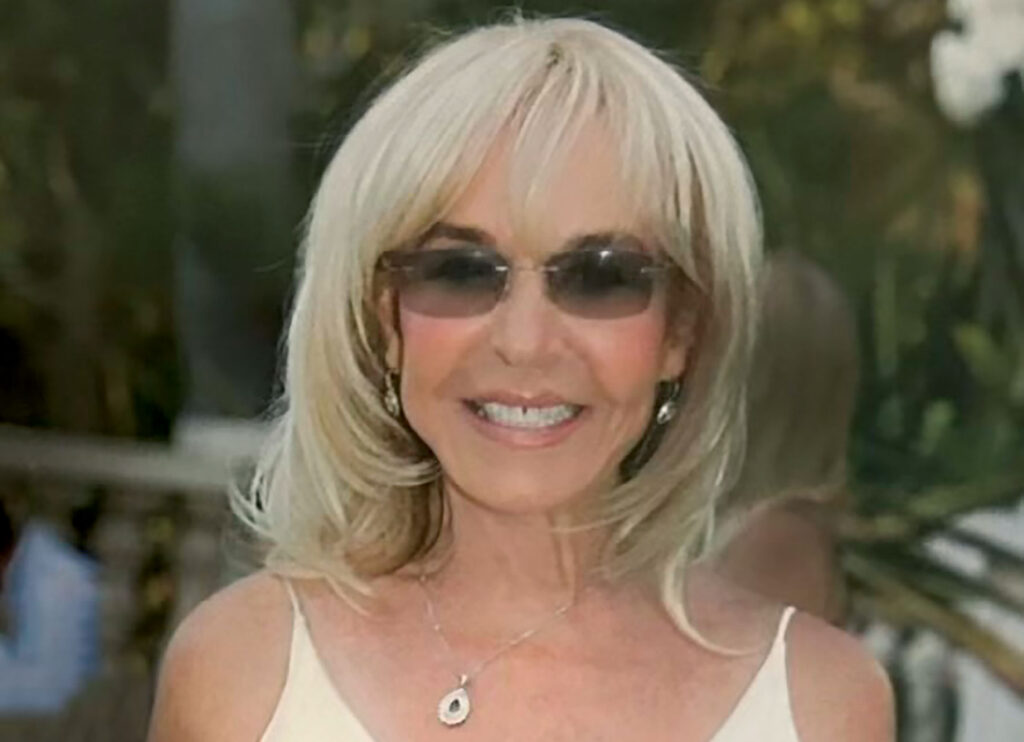
Miri Nash, Dedicated Community Fundraiser, 79

Miri Nash, beloved mother and grandmother, passed away on February 16, her 79th birthday, in Palm Desert, California. After an active life, she suffered a short illness and spent her last days with her family.

Miri was born in Poland to Marian Mundt and Donna Mundt, her father a dentist and her mother a Certified Public Accountant. Her father had escaped the Holocaust by fighting in the Russian army; her mother survived the Warsaw Ghetto and was hidden by righteous gentiles. Her parents took the unusual step of moving back to Poland at the end of the war to find relatives who had survived. The family subsequently emigrated, first to Israel, then to Chicago, where Miri attended high school and college. In Chicago, Miri met her first husband, Yehuda Nacson, with whom she moved to Montreal and started a family with three children. After a decade of enduring Montreal winters, they escaped to Los Angeles and California became Miri’s home.

In Los Angeles, Miri began a career in public relations that would sustain her through her working days. Her most fulfilling role was supporting the cause of Friends of the Israel Defense Forces, a nonprofit group dedicated to the well-being of the men and women serving in the IDF. She did this first through the firm she founded with her second husband, Richard Mahan, and then as the executive director for the Western Region of FIDF. Through her passion and personality, her division set records in fundraising and hosted galas that raised hundreds of millions of dollars for FIDF and other Jewish charities. She was honored for her work by having the IDF Legacy Center in Israel named after her and was described in the press as a “powerhouse of Jewish philanthropy.”  Upon retiring from FIDF, she moved to Palm Desert.

Beyond her working hours, Miri was a devoted friend and mother, and an even more devoted grandmother. With her daughters, she was a constant source of love and support. The only bond stronger than with her daughters was with her grandchildren, all of whom she adored and adored her back. 

Miri is survived by her three daughters, Ronit, Elanit, and Sigi, as well as four grandchildren, Eden, Zach, Ozzie, and Ivor. The funeral service will be private.

Miri Nash, Dedicated Community Fundraiser, 79 Read More »

MAZON Addresses Food Security Needs of Trans Youth

On Feb. 20, MAZON: A JewishResponse to Hunger, announced they were adding transgender (trans) youth to its advocacy priority populations. 

As the national and political climate grows increasingly difficult, MAZON is addressing concerns that trans youth are struggling to meet basic needs, including access to food.

“We began exploring this as a possible priority for our work some time ago, but there’s no denying that recent events, including the rhetoric during the 2024 election campaign, provided a greater sense of urgency for us in elevating trans youth as one of our priority populations moving forward,” Abby J. Leibman, president and CEO of MAZON, told The Journal. 

In a release, MAZON stated that the number of young people who identify as trans has nearly doubled in recent years, according to the Williams Institute at UCLA School of Law.Ages 13 to 17 comprise about 18% of the trans-identified population today. This number was previously 10%. Of the 1.6 million people ages 13 and older in the U.S. who identify as trans, 300,000 are youth ages 13 to 17. 

MAZON also cited The Trevor Project, which reported that 30% of LGBTQ+ youth experienced food insecurity in the past month, with disproportionately higher rates among trans, nonbinary and youth of color. 

“As a leader in the national anti-hunger community, we must step up to highlight this population and the acute sensitivities and barriers that they may face in seeking assistance from charitable organizations,” Leibman said. “Many of the organizations who advocate for trans youth do not focus on food insecurity, but we know this population faces unique barriers to assistance and that traditional ‘one-size-fits-all’ approaches are often ineffective.

“On top of it all, President Trump and his cronies are spewing hateful rhetoric and enacting new harmful policies with each passing day,” she said. “We will not stand by and watch, we will not be silent; we are fighting back with every ounce of strength we have.”

In voting to immediately make trans youth a priority population, MAZON’s board of directors acknowledged the clear and immediate need. MAZON’s staff will assess short- and long-term tactics to safeguard access food assistance for trans youth and, working alongside existing and new partners, will develop strong and meaningful responses and resources. This includes but is not limited to program development, policy advocacy, coalition outreach and legal action.

“Moving forward, we will be in a place of marshaling our resources and using them as effectively as we can,” Leibman said. “We understand that there are things that we can do right away and there are things that we will want to work on with partners and others already doing important work in the field.”

She added, “We will be doing our part to elevate this issue and make sure it is being discussed and recognized not only in the civil rights and social justice space, but also in the anti-hunger space.”

“When we make the decision to add a new priority area, we do so with our full heart and soul,” Carolyn Schwarz Tisdale, MAZON’s board chair, said in the release. “Our organizational ethos is to step in where we see a growing need, which in this case is a dire one without much recourse or support.

“When we make the decision to add a new priority area, we do so with our full heart and soul.” – Carolyn Schwarz Tisdale

“Furthermore, our history is one of real impact and success, built upon strong relationships with key partners and long-term dedication to the cause,” Tisdale continued. “We are not committing to support trans youth for days, weeks, or months — we are committing to them until our support is no longer needed.”

Inspired by Jewish values and ideals, MAZON: A Jewish Response to Hunger is a national advocacy organization working to end hunger among people of all faiths and backgrounds in the United States and Israel. Others in the priority population category, who need resources and more food advocacy, include military families, veterans, single mothers, college students, Native Americans and the people of Puerto Rico.

For more information, visit mazon.org

MAZON Addresses Food Security Needs of Trans Youth Read More »
