fbpx

January 16, 2025

The Heaven-Granted Home

Shiphrah and Puah, two midwives in Egypt, were commanded by the tyrant Pharoah to kill all male Israelite babies. As Exodus’ first chapter describes, however, the women sensed that above the monarch reigned a higher power. They feared God. So, “they did not do as the king of Egypt had told them; they let the boys live.” The women, in lieu of listening, offered an excuse to Pharaoh. They claimed that by the time they arrived to deliver the children (where they would have secretly killed them during the process of delivery), the boys had already been born.

This act of defiance has echoed throughout the generations. In demonstrating, as Rabbi Jonathan Sacks put it, “the moral limits of power,” the precedent these two women set was, he notes, “later taken up by the American writer Thoreau in his classic essay Civil Disobedience (1849) that in turn inspired Gandhi and Martin Luther King Jr” in their own fights for against oppression.

Often missed in the deserving praise of Shiphrah and Puah, however, is the passing mention of what happens next. In response to their actions, Exodus 1:21 states “and it was because the women feared God, he made them houses.” 

What kind of houses? Who made them? Were they literal or metaphorical? A punishment or a reward? Well, all that’s been debated for centuries.

Rashi, citing the Talmud, believed Shiphrah and Puah to be Moses’ mother and sister, Yocheved and Miriam. Thus, the houses granted to them by God were Aaron and Moses possessing the priesthood and political leadership. Even kings, the ancient rabbis suggested, emerged from their descendants, in the merit of the midwives’ actions. 

Abraham Ibn Ezra sensed a double divinely granted recompense. The midwives had originally been barren but after saving so many children merited those of their own. Additionally, Ibn Ezra added the possibility that the “houses” were literal safehouses, where God hid the midwives from a vengeful Pharaoh. Bekhor Shor suggested a more overt celebration of their deeds – with God granting them “wealth, and honor, and being fruitful and multiplying.”

The Rashbam, in a tragic suggestion, thought that it was in fact Pharaoh not God who made the houses, and instead of a reward, the midwives were punished with being put under house arrest. The 14th century Rabbi Bahya ben Asher similarly suggested – noting that “them” in “he made for them” is in the male conjugation and not the female and so might not refer to the midwives – that the houses were guard-houses for local Egyptians to spy on their Israelite neighbors and attempt to take away their children. 

Don Isaac Abravanel, the 15th century Spanish sage, countered by positing that the recipient of the houses were the Israelites themselves (thus the male conjugation) whose literal houses were full of children as a result of the midwives’ courage and kindness. The 19th century Italian scholar Shadal composed a moving proposition in the name of his father. He wrote that “the Israelites wished to reward the midwives, and since they were trained in the use of mortar and bricks [during their slave labor], they built them houses” to repay the kindness of sparing their kids.

Modern literary scholars have noted that similar language pops up in the book of Samuel in the context of God’s commitment to David that he will have a monarchical dynasty. The midwives, in other words, were gifted a family celebrated for generations. 

The contemporary Bible professor Victor P. Hamilton explained that in Egyptian, the kingly title “Pharaoh” itself means “Great House.” So God offered a fitting reward for those who had faith in Him. “Those who pull the wool over the eyes of King Great House,” Hamilton writes,  “end up with their own houses.”

Not coincidentally, the next biblical story, the birth of Moses, begins by describing how “and a man from the House of Levi took as a wife the daughter of a Levite.” As a result of the midwives’ actions, and whether they were punished or rewarded, the Torah is indicating that they enabled the Jewish people’s liberator Moses, to be born in a Jewish home. And it would be he who would ultimately free his people from the house of bondage in Egypt.


Rabbi Dr. Stuart Halpern is Senior Adviser to the Provost of Yeshiva University and Deputy Director of Y.U.’s Straus Center for Torah and Western Thought. His books include “The Promise of Liberty: A Passover Haggada,” which examines the Exodus story’s impact on the United States, “Esther in America,” “Gleanings: Reflections on Ruth” and “Proclaim Liberty Throughout the Land: The Hebrew Bible in the United States.”

The Heaven-Granted Home Read More »
Remembering a “Daughter of Africa”

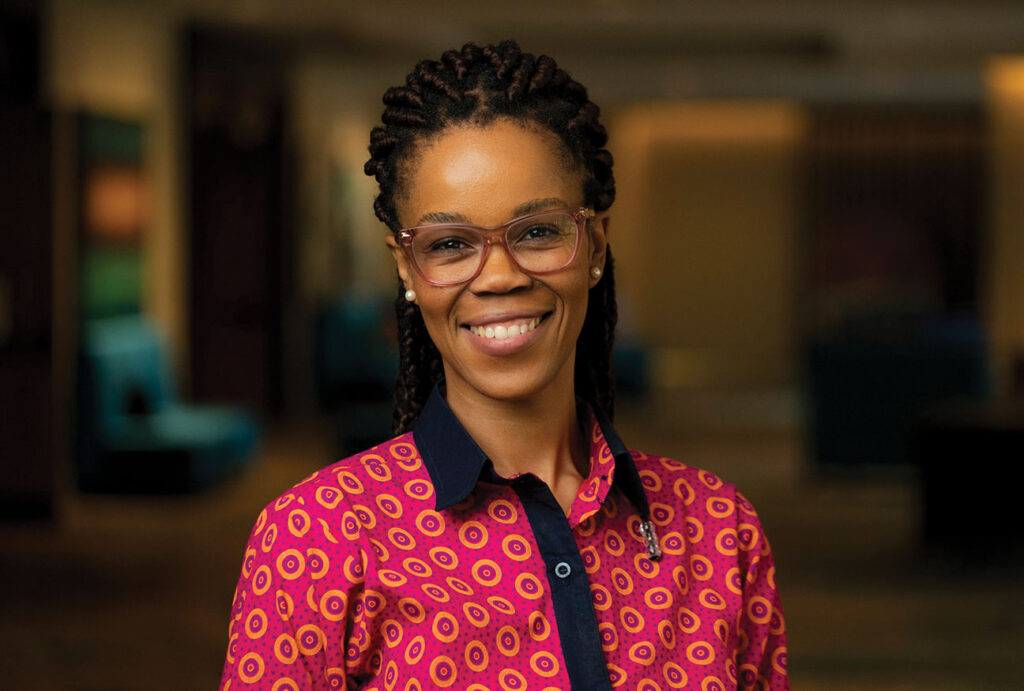
“She was the definition of sunshine,” Miri Kornfeld told me about Olga Meshoe Washington, an extraordinary, young Christian Zionist and friend of Israel and the Jewish people, whose passing last week devastated friends and loved ones worldwide. Kornfeld, who serves as Colorado Director for the nonprofit StandWithUs, was among many who are still in shock over the sudden loss of one of their true friends and one of greatest allies of our time.

Meshoe Washington was headed home from a visit with family in South Africa when she fell ill during a layover in New Jersey. She was rushed to the ICU, where doctors attempted to treat her for complications from lupus, a life-threatening autoimmune disease, in addition to pneumonia and other respiratory issues. The wife and mother of two young boys, ages four and six, passed away on Jan 6.

Alongside her loving husband, Joshua Washington, her father, Reverend Dr. Kenneth Meshoe, her late mother, Lydia (who passed away in 2023), her mother-in-law, Valerie Washington, and her father-in-law, Pastor Dumisani Washington, founder and CEO of the Institute for Black Solidarity with Israel (IBSI), Meshoe Washington never hesitated to defend the Jewish people and the Jewish state. In a recent Israel-Africa newsletter, her father-in-law wrote that Meshoe Washington often described herself as a “Daughter of Africa,” adding that “Olga was also African royalty, literally a princess of the Tswana tribe.”

I did not know Olga, but as I read various tributes to her on social media, I felt compelled to learn more about her and to share words of love and remembrance about this remarkable woman with our readers. I asked several pro-Israel leaders who worked with Olga to share some words of heartfelt tribute to Meshoe Washington.

“A Soul Sister”

“Everyone needs a soul sister. I am blessed to have had Olga Meshoe Washington as one of mine. I met her with her dear parents Reverend Kenneth and the late Lydia Meshoe at a United Israel Appeal dinner in Johannesburg. Attracted to her energy, I introduced myself and we became friends, an Australian Iraqi Jewish mother immigrant of four boys figuring out her belonging, and a high-powered lawyer, Zionist, and social rights activist nursing her hurt heart. 

We were the same age, we both dreamed of writing books, of changing the world. We both handed our lives and wounds to God. We blessed each other’s lives over cappuccinos. When I moved to Israel, I became Olga’s home in Jerusalem during her visits. We grew together. I grew into my writing and voice, she grew into finding Joshua, moving to America, and becoming a wife and mother of two beautiful boys, Ezra and Judah. 

We shared our wisdom. She strengthened me as a woman with a voice, and I strengthened hers as a mother and immigrant. We strengthened each other’s faith. I don’t know what to do without my soul sister to message and check in with. 

But I know she is still here; it is God’s will and her heart beats in her beautiful boys. Olga is only lost if we stop spreading her deep voice of truth, female wisdom and faith. God was her powerful driving force, and she expected that to be the driving force of God’s people too. Keep her light alive. Live like she lived with deep joy, faith, introspection and majesty.”

-Sarah Sassoon

Iraqi Jewish author, poet and educator

“Iron, Draped in Elegance”

“When Olga entered the room, there was a sense of a royal presence. Her dignity, her beauty, her brilliance, her grace, and her ability to choose words to go from her heart directly into another’s heart were just a few of her outstanding attributes. In a world that has become increasingly divisive, she devoted her life to uniting Israel and Africa and Jews and Christians because she loved Africa and Israel and found her strong faith dependent upon Christianity’s Jewish roots. She was the recipient of many well-deserved honors, including the Jerusalem Medal for her incredible work for Israel and the Jewish people. 

We and the entire Jewish community have suffered an indescribable loss. She and her family stood side by side with us when we felt abandoned by other less stalwart friends. She could not be intimidated from speaking out loudly and clearly about her conviction that Israel is the eternal homeland of the Jewish people and that the Christian mandate is to stand with Israel. She courageously linked her heritage and destiny to ours and in that became a cherished member of our family. Olga was iron, draped in elegance. 

Our hearts go out to her two sons, four and six, her adoring husband Joshua, her father Reverend Kenneth Meshoe, her father-in-law Pastor Dumisani Washington and her mother-in-law Valerie Washington.”

-Peggy Shapiro

Director of Policy and Outreach, StandWithUs

An Invaluable Teacher

“Olga and I worked together as advocates for Israel and teaching teens to be proud and know the story of Israel. From Olga, I have learned invaluable life lessons. Some of which are to speak but only when you have something of value to say, walk into the room with confidence even if you don’t feel it, and know that each one of us has a purpose in life. You have value even when others do not see it.”

-Dr. Naya Lekht

Educator and Research Fellow on contemporary antisemitism, The Institute for the Study of Global Antisemitism and Policy (ISGAP)

Extraordinary Dignity

“I met Olga about a decade ago, while she and Joshua were still dating. Her extraordinary dignity and grace were immediately apparent. When I started White Rose Magazine, we talked about how to use the magazine to help women remove themselves from the Instaporn cages they’ve been put in. But I knew that the best way to do that was through Olga herself: she epitomized the feminist notion that strength, elegance, and femininity are not mutually exclusive. I asked her to write the Foreword for my book The Elegant Soul, and I was planning on writing a cover story about her for Vogue. Perhaps I still will.”

-Karen Lehrman Bloch

Editor-in-Chief, White Rose Magazine

“I was utterly shocked and pained recently to hear of the sudden passing of Olga Meshoe- Washington. I knew her and was aware of her extensive Israel advocacy work at IBSI (Institute for Black Solidarity with Israel) over the years through my friendship with her husband, Joshua, and father-in-law Pastor Dumisani Washington. The pro-Israel community and the Jewish people worldwide have indeed lost a true friend and perhaps one of the most effective non-Jewish voices reaching millions of young people who were combating the lie that Israel was an ‘apartheid’ state. 

Olga, who was born in South Africa and had family who experienced the horrors of apartheid there firsthand, had the courage and special speaking ability to publicly push back against the apartheid slander made against Israel. As a proud Christian Zionist, she never stopped her advocacy for Israel in the African American community and in South Africa, two areas where the haters of Israel have had the most impact on increasing Jew hatred and Israel hatred.

Many times, in recent years, I utilized Olga’s impactful PragerU video about how Israel was in no way similar to South Africa during apartheid when pushing back against Iranian non-Jews that I came across who made the false apartheid accusations against Israel. Her video and her clear explanations always effectively shut down these Iranian haters of Jews and Israel. 

Nowadays the Jewish people do not have many very vocal, courageous and genuine gentile friends in this world who have stood with us in our darkest hours of persecution and fought back against the hate we have encountered. Olga Meshoe Washington was one of those special Christian friends the Jewish people had in this world who never once hesitated to raise her voice and fight shoulder to shoulder with us against Jew hatred everywhere. My prayers are with her family during this painful time and may her life’s work on behalf of Zion continue to inspire other Christians to also stand with Israel.” 

– Karmel Melamed

Iranian American Jewish journalist and attorney based in Los Angeles

On X, Meshoe Washington’s husband, Joshua, wrote that she “always talked about the day when she would finally hear the applause of Heaven for the life she lived. That day is today.”

To help the Washington family during this devastating time, please visit gofund.me/acd34c94


Tabby Refael is an award-winning writer, speaker and weekly columnist for The Jewish Journal of Greater Los Angeles. Follow her on X and Instagram @TabbyRefael

Remembering a “Daughter of Africa” Read More »

Palisades Residents on Surviving a Nightmare

Pacific Palisades resembled the set of an apocalyptic film, with charred houses, raging fires, and billowing smoke. Residents of the once-picturesque neighborhood described driving through a surreal landscape that felt more like a war movie, with themselves cast as the unwilling protagonists.

“We were fleeing for our lives,” said David Levine, a Pacific Palisades resident of over 20 years. “The smoke was so thick it was hard to see the road. We barely made it out. Our entire life was left behind. We managed to grab some clothes, my laptop, and a few other items. It wasn’t until we were driving away that we realized how much we had forgotten to take — but by then, it was too late. Our house is gone.”

Levine, a retiree, drove with his wife to Santa Barbara to stay with friends. “I’m grateful that we made it out of there. It was the scariest day of our lives, but it’s going to take a long time for us to recover from this loss.”

Dorit Rotenberg, 66, has lived in Pacific Palisades for over 20 years. On Tuesday morning, she evacuated her home with her husband, their black Labrador and cat.

“We weren’t prepared to leave on such short notice,” she said. “I packed a few clothes, few pair of shoes and important documents, and we left. Some of our neighbors refused to evacuate, hoping to protect their homes. They only left when firefighters forced them to, and later told us our house had burned down.”

Now staying with friends in Thousand Oaks, Rotenberg is grappling with the loss.

“It’s hard to process that we no longer have a home,” she said. “At our age, starting over is difficult. We’ve left behind an entire lifetime in that house.”

Rabbi Zushe Cunin, leader of the Chabad in Pacific Palisades, described the devastating impact on his congregation. The storage structure was burned along with 16 menorahs and vehicles used to transport children and elderly to and from their homes.

“Many members of our synagogue lost their homes in the fires,” he said. “Throughout the night and into Tuesday, I tried reaching out to the 250 members of our community, but I couldn’t get through to many of them.”

The rabbi added that some members initially refused to evacuate, desperate to protect their homes from the advancing flames. He was able to ask firefighters to rescue a 90-year-old couple who stayed behind in one of the buildings. Another elderly man who was the only one to remain in his building was also rescued by firefighters.

On Tuesday morning, the director of the Jewish Early Childhood Center of Chabad had her teachers call parents to pick up the 100-plus children. The parents rushed back, and the teachers carefully crossed the street across PCH to reunite them with their parents.

Over 5,000 Chabad rabbis and rabbis from synagogues all over L.A., had called offering help. Chabad of Bel Air had offered shelter to anyone affected by the fires. Six families spent Tuesday and Wednesday nights there; others just came over to take a shower and charge their phones before arranging for a place to stay.

Liat Stenberg moved to Los Angeles with her family seven years ago and had been renting a home in Pacific Palisades. “We had just returned from a vacation with my parents, who were visiting from Israel,” Stenberg said. “Our suitcases were still packed — mostly with swimsuits and beachwear.”

When the evacuation order came, Stenberg left with her parents, her son — a lone soldier visiting from Israel — and her 11-year-old daughter.

“I took a few photo albums and our computers before leaving,” she said. “My husband and older daughter were still in Miami, where she’s training for the Olympics in windsurfing.”

By the time they fled, the fire had already reached their backyard.

“Our neighborhood in Marquez was the first to burn,” Stenberg said. “I don’t know anyone whose house survived. The entire area was engulfed in flames.”

Noa Goldberg, a resident of Highland Village in Pacific Palisades, evacuated her townhome at 3 p.m., when the flames were getting very close. “I tried to leave earlier, but the roads were gridlocked,” Goldberg said. “Traffic wasn’t moving, and I was panicking. My husband was out of town, so I was alone with my 12-year-old. I waited for the firefighters to clear a path before I could leave.”

The scene as she drove out was harrowing.

“Houses were burning on all sides,” she said. “My favorite restaurants, the grocery store, CVS, the supermarket — everything was gone. The destruction was total. It felt like I was driving through hell.”

Dina, who chose not to provide her full name, lost her home in Malibu. This was the couple’s second home; they live in a penthouse in Los Angeles and spend weekends and holidays in Malibu. A few years ago, they had completely remodeled the house. “It’s total devastation. We lost everything we had there,” she said. “When we saw the news about the fires, we drove there, but we had to take different routes because the firefighters had blocked the roads. By the time we finally made it, the house was gone. Completely.”

Dina, a mother of four grown children, shared that the house contained valuable artwork and countless memorabilia collected over the years. “We stayed there just last weekend. Friends came over, and it was so peaceful and fun. We have so many memories there. I’m heartbroken.”

Palisades Residents on Surviving a Nightmare Read More »

Campus Watch January 16, 2025

Columbia Prof Retires After Investigation Says She Discriminated Against Israelis

Columbia University Law Professor Katherine Franke is retiring after an investigation concluded that she discriminated against Israelis.

The Times of Israel (TOI) reported on Jan. 10 that Franke was investigated after she said on Democracy Now! last year that “So many of those Israeli students, who then come to the Columbia campus, are coming right out of their military service. They’ve been known to harass Palestinian and other students on our campus.” She also claimed in the interview that three Israeli exchange students who had just completed military service had sprayed “pro-Palestinian students with this skunk waters,” when in actuality the spray was a “fart spray” gag, per TOI. A third-party law firm that conducted the investigation determined that Franke’s comments on Democracy Now! violated university policy prohibiting discrimination; additionally, the law firm concluded that Franke violated university policy regarding retaliation after she gave the name of a professor who filed a complaint against her to a journalist and targeting those who filed the complaint on social media.

When TOI reached out to Franke for comment, she sent them a statement that read in part: “The University has allowed its own disciplinary process to be weaponized against members of our community, including myself. I have been targeted for my support of pro-Palestinian protesters. I have come to the view that the Columbia University administration has created such a toxic and hostile environment for legitimate debate around the war in Israel and Palestine that I can no longer teach or conduct research.”

National SJP Call for “Land Back,” “Eradication of U.S. Imperialism” As Solution to LA Fires

National Students for Justice in Palestine (NSJP) posted a Jan. 11 thread to X contending that the solutions to the ongoing fires in Los Angeles were “land back,” “reparations” and “death to imperialism.”

The anti-Israel organization argued that the fires were “manufactured” as a result of “corporate greed,” “climate colonialism” and “prohibition of Indigenous land stewardship practices by the settler colonial government.” “We recognize the necessity that Indigenous land stewardship poses to the survival of our ecologies, and we underscore the comparisons that can be drawn between the settler ecologies that have ravaged native lands in both Turtle Island and Palestine,” NSJP wrote in the thread. “As settler colonial regimes continue their resource extraction through imperialistic campaigns across the globe, climate collapse draws near. The only solution is land back and the complete eradication of US imperialism, and in turn, the militarism that has perpetuated this ongoing climate catastrophe. We stand with those affected not only in LA but globally, where the devastation of imperialism reaches its peak.”

Kathryn Paisner, founder and principal of the KP2 LLC firm that provides research, organic chemistry and patent search services, posted to X: “Are they high? Wildfires burned many more acres in the pre-colonial era than they do today.”

Poll: Majority of Yale Students Believe Israel’s War in Gaza is “Genocidal”

A survey released by the Buckley Institute on Jan. 5 found 55% students at Yale University believe that Israel’s ongoing war in the Gaza Strip is “morally wrong and genocidal.”

According to the Washington Free Beacon, the students that believe that acknowledged that the Oct. 7, 2023 massacre by Hamas was also wrong; 34% believe that Israel’s war is justified as self-defense while 8% believe that Hamas was simply engaging in resistance on Oct. 7. Additionally, the survey––which was conducted during the fall––found that a plurality of students were opposed to divestment (36%); among those that favored divestment, 31% supported divesting from Israel, while 27% supported divesting from Russia, 20% supported divesting from Iran, and 12% supported divesting from China.

Canadian University No Longer Employs Prof Convicted of Terrorism

Carleton University, which is located in Ottawa, Canada, announced that it is no longer employing Hassan Diab, who was convicted of bombing a Paris synagogue in 1980.

The university said in a Jan. 9 statement to the National Post: “Hassan Diab is a former part-time contract instructor who taught a course at the university last fall. He is not in the employment of Carleton. Please note that, other than current employment status, the university does not disclose personal employment information due to privacy considerations.” Diab had taught a course on social justice at the university during the fall.

As previously reported in Campus Watch, the 1980 terror attack in which Diab, a Lebanese-Canadian academic, was convicted of resulted in four dead and dozens injured; a French court had sentenced him to life in prison. According to the National Post, friends of Diab’s have alleged that he was a member of the Popular Front for the Liberation of Palestine terror group. Diab has denied involvement in the bombing. B’nai Brith Canada lauded the university in a post on X “for taking the necessary steps to rectify this grave misstep” and called for Diab to be extradited to France.

Campus Watch January 16, 2025 Read More »

A Lemony Chicken Soup to Soothe the Soul

This week has been filled with so many emotions — fear and sadness, anxiety and angst. As so many Angelenos have said, I could never have imagined so much devastation. Family and friends have lost their homes, and there is nothing I can say to comfort them. 

On Thursday afternoon, after seeing all the wreckage from the terrible fires, I wanted to take action and do something for my city, like feed the firemen. But my body was wracked with chills, so I headed to bed. Sick with flu, I watched the coverage of the fire and listened to the many accounts of loss. Each morning, I awoke to more bad news and concerned WhatsApp messages from my Israeli cousins and their children. “Do not worry,” I replied to each of them. “We are safe, thank G-d!” I did not say how heartbroken we all are.

In the summer of 1983, I was returning to Los Angeles from a trip to Paris to visit my cousins. As the plane was descending over the city, I looked out of my window and I saw the vast network of freeways with the flow of teeny cars. Just as I spotted the iconic big brown Randy’s Donuts sign, the captain turned on Randy Newman’s summer hit song “I love L.A.”! 

I was so happy to come home to the sunshine. I loved L.A. Later, that song became the anthem of the ‘84 Olympics. Now, you can hear it all over social media — it has become the anthem for these past few days. 

I saw a meme that actually brought tears to my eyes: “I’ve never felt so close to my city. I’ve never loved LA as much as I have this week.”

Whether you are fighting one of the winter flus going around like me, or heartsick like everyone I know, there is nothing more comforting than chicken soup.

This Friday night, I was in the mood for something a little different than my usual chicken soup. At first, I thought about the chicken soup with rice and veggies that my mom would sometimes make. But in my online search for recipes, I kept seeing a Greek soup called “avgolemono,” a lemony chicken soup. 

When I first married Neil, I found it so odd that he loved adding a generous squeeze of fresh lemon to his chicken soup. After a while of watching him, I decided to give it a try. I was pleasantly surprised by the burst of fresh citrus flavor and I have been a big fan ever since. 

My husband’s maternal grandmother emigrated to America from the Greek island of Rhodes over a century ago. She brought all her Sephardic and Greek culinary traditions with her, so it makes sense that Neil relished the flavor of lemon in chicken soup. 

The first step in avgolemono is to simmer a whole chicken with aromatics to make the broth. For a special Sephardic touch, I improvised by adding saffron, which really added a warm earthy flavor and a golden tinge. The cooked chicken is removed from the pot, deboned and shredded, then added back into the soup just before serving. 

The final step in making the avgolemono is to beat fresh eggs with lots of lemon juice. When the mixture is a pale yellow and thrillingly frothy, you fold it into the soup, transforming the broth into a velvety, creamy delight. 

There’s an old Ladino saying — “Los huesos vinieron a su lugar, which translates to “my bones fell back into place.” That’s how this soup made me feel. 

My version of avgolemono is a truly delicious soup that combines my mother’s chicken and rice recipe with the Greek touch of fresh creamy citrus flavor. So delicious and hearty! 

We sure hope you try this recipe, and we pray for the speedy recovery of our beloved city. 

—Rachel

Rachel’s Avgolemono

2-3 pound whole chicken, washed and patted dry

12 cups filtered water

1 large yellow onion, finely chopped

3 celery stalks with leaves, finely chopped

10 saffron threads 

1 cup white rice, rinsed and drained

2 large tomatoes, seeded and chopped 

2 Tbsp chicken consommé powder

3 large eggs, room temperature

1/2 cup fresh lemon juice 

1/2 cup chopped Italian parsley 

Extra virgin olive oil 

Flaky salt 

Place chicken and water in a large pot. Cook over high heat and bring to a boil. Add the onion, celery and saffron. Reduce heat, cover and simmer for 1 hour. Stir occasionally and skim off any fat that comes to the surface. 

Remove the chicken from the pot and carefully pull the flesh from the carcass. Remove skin, shred the chicken and set aside.

Pour the soup through a strainer. Return the broth to the pot and bring to a boil. Add the rice, chopped tomatoes and consommé powder and simmer over medium heat for 15 minutes until the rice has cooked. 

Cover pot and reduce heat to low.

Using a stand mixer or a whisk, gently beat the eggs and lemon juice until thick and frothy. 

Gradually whisk in a half cup of chicken stock to the egg mixture, making sure not to scramble the eggs.

Pour the egg and soup mixture into the pot and stir gently until well combined. Add the chicken back to the pot and season with salt and pepper, then add the fresh parsley.

Serve soup with a generous drizzle of good olive oil and flaky salt.


Sharon Gomperts and Rachel Emquies Sheff have been friends since high school. The Sephardic Spice Girls project has grown from their collaboration on events for the Sephardic Educational Center in Jerusalem. Follow them
on Instagram @sephardicspicegirls and on Facebook at Sephardic Spice SEC Food. Website sephardicspicegirls.com/full-recipes.

A Lemony Chicken Soup to Soothe the Soul Read More »

Family Finds a Menorah in the Ashes of their Burned Home

Joshua Kotler, 39, was sitting down to dinner with his wife, Emily, and their two daughters on January 7, when the fire started down the street. The couple had purchased their house in Altadena two years ago after moving to Los Angeles from New York. Kotler works as an occupational therapist and is an assistant professor at USC. 

“We live up the mountain west of the fires. At that point, the wind started blowing east, but we still evacuated just to be safe,” he said in a phone interview with the Journal. “We moved to my sister-in-law’s house, about 20 minutes away.”

A few hours later, at around 11:30 p.m., Kotler decided to drive back to Altadena to assess the situation. When he got to the house, the fire hadn’t reached it yet, so he sprayed the roof and the area around the house with water, hoping for the best.

“I left when I saw the fire getting closer. I wished I had taken something out of the house, but it was too late—I felt it was unsafe.”

The next day, around noon, Kotler received a video from a neighbor who had filmed the burned-down street.

“When it panned down to our house and showed it was burned down, Emily and I just burst out in tears and cried. We spent the rest of the day mourning the house.”

On Thursday, January 9, the couple left their daughters, Liberty, 4, and Eve, 2, with family and drove back to Altadena. When they arrived, police had closed their street, so they parked on the side of the road and climbed up the mountain.

When they reached their house, they saw that nothing was left—just rubble and ashes.

“Before we left, I asked a firefighter who was standing there if it was safe to look through the rubble, and she said yes, she had some time and would help. I thought maybe something my kids made at school had survived. We started looking, and after ten seconds, the firefighter tapped me on the shoulder and said: ‘Happy Chanukah.’”

Kotler couldn’t believe it. He started crying and thanking God. “My wife ran over and videotaped me crying and screaming. I’ve been talking to my family—we were looking for some reasoning for it. This is the most horrific thing that has happened to us, and I honestly don’t think I would be as strong right now if I didn’t find it. It has given me so much strength, courage, hope and faith. It feels like a miracle. It feels like my grandparents are with me. It was the most powerful moment.”

Kotler received the menorah from his grandmother, Leah Kotler, a Holocaust survivor from Belarus.

“It made me feel how important it is to connect with tradition and my Judaism,” he said.

Family Finds a Menorah in the Ashes of their Burned Home Read More »

Table for Five: Shemot

One verse, five voices. Edited by Nina Litvak and Salvador Litvak, the Accidental Talmudist

The Egyptians ruthlessly imposed upon the Israelites
the various labors that they made them perform. Ruthlessly they made life bitter for them with harsh labor at mortar
and bricks and with all sorts of tasks in the field.

-Ex. 1:13-14


Morah Yehudis Fishman

Community educator

The Midrash tells us: “at first, with mortar and bricks, then, all the work in the field, and finally all their labor.” The Lubavitcher Rebbe explains that a person builds his house, or city, stone by stone to achieve a specific outcome. In a general way, a Jew is meant to use his abilities and resources to build a sacred dwelling through fulfilling commandments and good deeds. In contrast the goal from an Egyptian perspective was to coerce the Jews to use these means which should have been dedicated to holy causes to create structures for ungodliness. Therefore slavery co-opted energy meant to engage the soul and elevate the world, instead using it to create ways to disconnect the world from G-d with structures that further mask the divine presence. However, G-d prefers “happy endings.” The extreme bitterness actually accelerated the timeframe for the Israelites to reach a state of awareness where they could distinguish between denial of G-d and a yearning to follow a divine path, both literally and spiritually. For this reason on Pesach we eat maror, bitter herbs, after the matzah. Only after we have tasted the bread of freedom, can we understand the nature of slavery. So too in our current and final exile, the challenges are part of the process that will lead to the ultimate redemption. Hence the verse, “It is a time of trouble for Jacob, and FROM IT, we will be saved.”


Rabbi Scott N. Bolton 

Congregation Or Zarua, New York, NY

It was not just Pharoah who imposed back-breaking labor on the Israelites. Egyptians were guilty. From a political history standpoint, they are a stand-in for political entities that treat Israel harshly. Both the political class and everyday citizens were implicated. The end of Genesis stated a hope that Jews would be able to live peacefully in Diaspora communities. The beginning of Exodus teaches that even when we are granted legal rights to live among nations of the world, the Jewish soul knows that we must keep a vigilant watch. And throughout history that has been the case. Granted charters, Jews were expelled from lands and kingdoms time and again. There was a Holocaust; imposing back-breaking, free labor was central to Nazi evil. Even as the comity of nations recognized the Jewish State entire nations try to embitter our lives. Hearing our Torah’s tale inspires us to rise and defend ourselves. History teaches us to be resilient. Today, Jews labor and build community in the Diaspora and in the Holy Land as our ancestors did in the time of Nehemiah. We assemble with Jerusalem Stone bricks and lift our weapons of defense — military and legal. As it is written: “Those who built on the wall, and those who carried the burdens, loaded themselves in such a way that with one of his hands each labored in his work, and with the other hand he held a weapon.” (Nehemiah 4:11) We do not wallow in victimhood; we will not be embittered – Am Yisrael Chai.


Rabbi Johnny Solomon 

#theVirtualRabbi at WebYeshiva.org (https://webyeshiva.org/about-virtual-rabbi)

This verse, which describes the ruthless Egyptian taskmasters who made the lives of our ancestors miserable, does not only speak of our past. Yes, the ancient Egyptians are no longer. And yes, the Israelites eventually escaped from Egypt. But despite the Egyptian enslavement occurring over 3,500 years ago, the Jewish people has continued to suffer ruthless enemies, and as of right now, Hamas terrorists continue to hold our Jewish sisters and brothers as hostages in their terror tunnels of Gaza. It is significant that we speak of the Egyptians “ruthlessly” enslaving the Israelites. As Rabbi Sacks once explained with reference to the Book of Ruth: “One Hebrew word epitomizes the book: Chesed, usually translated as ‘loving kindness.’ It is what links the book’s main characters. In fact, it added a word to the English language. In Middle English, ‘ruth’ meant kindness. Today only its negation remains: The word “ruthless.”’ Ruthless is the inverse of Ruth. It is the inverse of kindness. And from the time of the Egyptian enslavement until now, the Jewish nation have repeatedly experienced not just bitterness but also ruthlessness. Yet despite everything we continue to choose the way of Ruth, as Viktor Frankl wrote: “We who lived in concentration camps can remember the men who walked through the huts comforting others, giving away their last piece of bread … [ultimately], everything can be taken from a man but one thing, the last of the human freedoms: to choose one’s attitude in any given set of circumstances.”


Judy Gruen

Author, Bylines and Blessings. 

It is heartrending to reread of our brutal treatment in Egypt. True, God had intended for us to endure difficult trials meant to toughen us for the road ahead, but the Egyptians went way beyond what was necessary. They gloried in their cruelty and therefore deserved their eventual downfall. These passages reveal a transition from our status in Egypt as “aliens” subjugated to harsh labor into something much worse: Degraded slaves forced into backbreaking, mind-numbing work. What prompted this change? In the sentence that precedes these lines, we learn that the Egyptians originally afflicted us because they feared we would overpower them. Their plan to suppress us backfired. The harsher their treatment of us, the faster and more incredibly our population grew. The Egyptians became “disgusted because of the Children of Israel,” and their fear turned to hatred. Previously, Jews were at least building storehouses, something with a purpose. Now, the harshness and bitterness of our labor stemmed not only from impossible production requirements, but because the slavedrivers assigned “various labors” and “all sorts of tasks in the field.” Meaning, much of the work had no purpose at all, a degrading and enervating experience. And yet, nothing our enemies did broke us as a people. We suffered immensely and for hundreds of years. But God was with us and helped us endure and eventually triumph over our enemies. What was true in ancient Egypt remains true today. Our enemies collapse and we thrive. Am Yisrael Chai.


David Porush

Ph.D. in literature – student, teacher, writer

Almost every verse in the Torah reveals hidden poetry and allusions. The whole text is so coherent, so holistic, it’s almost impossible to imagine the five Books were written by different authors or committees over centuries. Rather each verse suggests the infinite artistry of a single supreme Poet with an omniscient view intertwining every word, every letter. Much of this gets lost in translation. Take our verse for instance. In Hebrew, the same word – b’porech – “in ruthlessness” – ends both verses, a perfect rhyme emphasizing the Egyptians’ cruelty. Midrash says this word implies their psychological torture of Hebrews: Egyptian taskmasters inverted men’s and women’s work and interrupted one difficult task to start another: Make mortar, make bricks, till the field. Modern psyops knows that randomizing prisoners’ punishments amplifies torture. Our two verses also repeat the same root “oved” (labor) five times in 20 words. Oved is the root of slave. Finally, the English does not translate the first word properly. V’yimororu really means “they embittered them.” Midrash tells us this is the bitterness reflected on the seder plate alongside the mortar also mentioned here. In short, the two Hebrew verses encapsulate a microcosm of the entire Pesach saga. Bitterness sets the tone. Labor is ineluctable, malevolent. Each echo of “oved” recapitulates the Egyptians’ ruthlessness as they methodically subjugate the Hebrews, body and soul, by degrees. On Pesach we’re commanded to feel as if we personally were enslaved. Reading these two verses alone do it. This level of complex artistry is unmatched by any human author I know.

Table for Five: Shemot Read More »

Santa Ana

A blue day, the sky is clear, beach littered
with shattered palm fronds, otherwise it’s
empty, emptier even than on Christmas
or Thanksgiving Day

In the curb, more wind-tossed carcasses
pile up, the loss unmeasured
inconceivable, now that the sun is back—
three days that feel like years

In the haze beyond the pier, the route
to freedom—barred. Where young women
rode on horseback to the grocery-store
waves lick up a smoldering shore
chimneys are survivors, tombstones—

Behind the ridge, visible only on the map
hissing devils creep through canyons, deep
beneath brush and chaparral, uncontained
ecstatic in the breeze

When the sun sets the hills blaze up
now you can see it, from the freeway
from the bedroom window
north, east, west
a grapefruit glow throughout the night
a ring of godless pillars, hypnotizing

The bird shrieks, alarmed
palm trees bow
Santa Ana has come to town


Julia Knobloch is a rising fifth-year rabbinical student at HUC-JIR Los Angeles. She also serves as poetry editor for Ben Yehuda Press.

Santa Ana Read More »

Things We Lost: Stories of Resilience Amid Devastation

It took Jimmy Shomof three years to build his stunning home on Linda Terrace in Pacific Palisades. It took the fire just minutes to destroy it. The house, which was in escrow for $11 million, spanned 8,000 square feet and sat on an 11,579-square-foot lot. It featured seven bedrooms, nine bathrooms, a theater, a gorgeous backyard with a pool, and a breathtaking view of the Pacific Ocean.

Shomof had meticulously considered every detail during construction, striving for perfection — and he achieved it. The home was beautifully staged and quickly attracted a buyer who fell in love with it. But the purchase was never completed and no one had the chance to enjoy living in it.

One of his neighbors informed him that his house had burned down. The entire neighborhood looked like a war zone, with nothing left but rubble.

“It’s tough, but I think about what others are going through,” said the developer. “There are people who spent 20 or 30 years paying off their homes, only to lose everything in minutes. I know people who truly lost everything in this fire.”

A few weeks earlier, Shomof had received emails warning about high winds expected on Tuesday, Jan. 7. Many other residents received similar notices or texts from Edison and the Department of Water and Power (DWP). The messages urged customers to prepare for possible power outages due to the conditions.

“They told us to prepare, but the city was the one that wasn’t ready,” Shomof said. “They knew about the high winds and the risks but did nothing. If they had been properly prepared, all of this could have been avoided.”

Like many other homeowners in the Pacific Palisades area, Shomof was unable to secure adequate insurance for his property. Many insurance companies refused to cover homes in high-risk areas or those valued in the millions of dollars. Others have simply exited California altogether, seeking less risky markets in other states. Left with few options, Shomof had to settle for coverage under the California FAIR Plan.

The plan provides up to $3 million in coverage — far from sufficient for properties in upscale neighborhoods, where values often far exceed the plan’s limit.

Even if Shomof decides to rebuild, he knows exactly what the process entails. He’s been through it before. In 2018, the Woolsey Fire devastated the region, burning 96,949 acres, destroying 1,643 structures and reducing his neighbors’ home to ash. Shomof stepped in to help them rebuild, but the journey was grueling. It took two and a half years just to secure the necessary permits, as the city placed obstacle after obstacle in his way, dragging the process out unnecessarily.

“And that was better than what many others are going through,” Shomof said. “Some people are still waiting, six years later for those permits and sleep in their motorhomes.”

Like Shomof, Dotan Shoham also received an email warning him of the strong winds, a week before the fires. “They informed me that they are expecting strong winds and to expect they are going to shut off power,” said Shoham. “Everyone knew that it wasn’t raining, everything is dry and these are ideal conditions for a fire to erupt.”

The owner of the clothing company “Galactic Federation of Light” was at his business in Downtown L.A. when the fire started making its’ way from Pacific Palisades to his house in Malibu on Pacific Coast Highway. His girlfriend was able to leave the house with their daughter. “It took me a few hours to get there because all the roads were closed. I got there by evening and saw fire on the mountain and many firemen and rescue teams. Honestly I didn’t believe they will let the fire pass the mountain and get to the houses. Now we know they didn’t have the means to stop it, they didn’t have water.”

Shoham believes that negligence is not the only reason behind the third most destructive fire in California’s history.

“Suddenly, insurance companies are canceling policies and those who still insure don’t give enough coverage. While the water hydrants were empty, California spent millions on butterfly research and millions more on smelt fish. You can’t help but wonder — this isn’t a coincidence. There’s a deliberate hand at work here.”

Ayelet Kleinerman, a 32-year-old student, was in New York for a wedding when she received devastating news: Her father’s cousin’s house had burned down. Kleinerman had been living with them since moving to Los Angeles from Israel for her studies. Along with the house, her camper van — which she used for camping trips — was also destroyed. She also lost all her important documents, including her work permit, visa, passport and more. Kleinerman was left with only the suitcase she had packed for her trip. 

“My cousins lived in Pacific Palisades for 30 years. They’re retirees in their 80s and lost everything,” she said. “They weren’t home when it happened, so they couldn’t save anything.”

“Luckily for them, their insurance wasn’t canceled like so many others in the neighborhood,” Kleinerman said. “Their daughter came down from Oregon to help and soon they’ll need to find a place to rent. As for me, I’ve moved in with another cousin.”

Kleinerman recently completed her computer science degree at Pomona College and is now searching for a job, preferably as a product manager. “It’s a Catch-22,” she said. “I can’t stay here without working, but I can’t take just any job. I need a position in computer science. On top of that, I’m trying to replace all my documents, which isn’t easy.”

Her friends at college, where she was known for her activism against antisemitism and for inspiring Jewish pride, stepped in to help. They started a GoFundMe campaign, raising $27,774 so far.

 “I’ve been blessed by people who opened their hearts and pockets to help me. I’m full of love and gratitude,” Kleinerman said. “Some people tell me, ‘Come on, it’s fun — go shopping!’ But shopping under these circumstances isn’t fun. Plus, it’s tough to get around without a car.”

Many homeowners who lost their homes in the fires have voiced frustration and disappointment over the city’s inability to protect them. At least one homeowner, television personality Spencer Pratt, said he plans to sue the State of California. In an interview with blogger Perez Hilton, he recounted how he tried calling 911 when he saw his house catching fire, begging them to send a fire truck, but was told the fire department didn’t ”have the assets” to respond.

Pratt and his wife, singer Heidi Montag, lost their $3 million home in the fire.

When we asked Shomof if he was planning to sue the state as well, he said, “I feel that in the next few months, more information will come out. We’ll learn why the city wasn’t prepared and if it’s revealed that there was negligence, those responsible for it need to be held accountable and I’ll push for that.”

Things We Lost: Stories of Resilience Amid Devastation Read More »

Hostages: Is There Too High a Price?

In the end, a deal will likely be placed on the table — maybe, by the time you read this, it has already happened. The government will accept it; in truth, it won’t have much of a choice. A hostage deal is crafted behind closed doors, with powerful players involved. If there’s a deal, it will be one that both the outgoing and incoming U.S. presidents desire. It will be a deal that key mediators want. By the time it comes to a cabinet vote, the ministers will be no more than spectators. Their influence lies in setting the political red lines during negotiations. Once the prime minister makes his decision, their power ends.

What are these red lines? The monthly survey by JPPI, released earlier this week, reveals some of them. It sheds light on what the public is willing to accept — and what it isn’t. And to begin understanding the Israeli psyche concerning a deal we must start with the not-so-obvious: There is no longer such thing as a “deal at all cost.” No significant group in Israel supports such an idea. Thus, the notion of a deal that allows Hamas to remain in power is overwhelmingly rejected by Israeli Jews — only 17% are willing to accept it. 

Another thorny issue: the idea of releasing only some of the hostages in a partial deal. Most Israelis reject such terms. And here lies a potential clash between what Israelis want and what their government is prepared — or able — to deliver. Reports suggest that any deal currently on the table is likely to be partial, at least initially. This means that celebrations will be muted; hostages will still remain in Gaza, their heartbreaking stories haunting us. Hamas will continue to exploit them, reminding us of its presence and stirring debates: Who is to blame for the continued captivity of the remaining hostages? Were they left behind only because of Hamas’ impossible demands or also because of our government’s refusal to meet reasonable terms that might have secured their release?

At least we know what the public thinks about these reasonable terms. As we’ve seen, if faced with the agonizing choice between returning all hostages as the cost of legitimizing Hamas’ rule or insisting on Hamas’ removal as the price of leaving hostages behind, the majority seems inclined toward the latter. This sentiment isn’t new; a similar finding emerged in a survey nearly a year ago, sparking a certain unease of people who believe that such questions shouldn’t even be asked. 

But can we not ask it? Can we avoid confronting what Israeli society is, and isn’t, willing to do for its hostages?

The answer to this question reflects a complex reality. It reflects a meaningful change. Israelis are willing to go far for the hostages – but not as far as they once were. A decade ago, Israel paid dearly for a single hostage. Today, the willingness to pay is notably diminished. The horrific events of Oct. 7, the sheer number of hostages, and the unimaginable cruelty they face have hardened Israeli hearts. Paradoxically, and tragically, the enormity of the calamity has made Israelis less willing to pay the price they once deemed acceptable.

Still, Israelis remain willing to pay significant price to secure the hostages’ release. They are ready to free hundreds of terrorists, even those with blood on their hands – though not everyone agrees for this. Among Likud Party supporters, about half oppose such a move. Among Religious Zionist Party supporters, the majority – 55% – oppose a release of many imprisoned terrorists. When segmented by religiosity, religious Israelis are more likely to oppose such exchanges. Yet, when looking at the broader Jewish population, and even more so at the Arab population, the majority holds: Israel is prepared to release prisoners, including those guilty of grave crimes, to bring the hostages home.

The most contentious issue is the withdrawal of IDF forces from the Gaza Strip. Such a decision, should it become part of a deal, will largely define the government’s ability to defend it politically. Jewish Israelis are nearly evenly split on this question. However, supporters of the governing coalition overwhelmingly oppose a full withdrawal of IDF forces. 

Another potential price is a declaration of the war’s end. Will Israelis accept that? The answer is complicated. When asked if they would agree to “ending the war,” 54% of Jewish respondents said yes, while 38% said no. But when presented with the idea that agreements with Hamas are temporary — allowing for the resumption of hostilities later — 55% agreed. That’s almost the same share of the public. In other words, acceptance of the idea of ending the war may not be a genuine view, but rather a belief that the ceasefire is merely provisional.

A shift in public sentiment reveals a changed Israel. Some will say the nation has hardened, revealing a crueler side. Others will argue the country has sobered, and was forced to become tougher. Either way, this is Israel’s new psyche. The war changed our society, and even our ethos, in many ways.

Something I wrote in Hebrew

Minister of Justice Yariv Levin and Minister of Foreign Affairs Gideon Sa’ar are promoting a new plan for change in the composition of the Judicial Selection Committee. In their version, this is a “compromise” plan. Here’s what I wrote when it was released:

What was proposed has two components that are not necessarily compatible. The first is the desire for compromise — a sentiment that leads Israelis like journalist Akiva Novick to write, “I supported the compromise even before I knew what the compromise was.” This desire is understandable and shared by many Israelis who are tired of unnecessary quarrels … alongside this positive sentiment lies the second component that cannot be ignored: The details of the compromise. While the desire for compromise is broad and abstract, the details of the compromise are specific and concrete. One can want compromise without wanting this compromise. Conversely, one can support this compromise without being in favor of compromise as a general principle.

A week’s numbers

Numbers from the JPPI monthly survey in Israel.

A reader’s response

Illya M. asks: Shmuel, is your book on U.S. Jews available in English? My answer: No, and the truth is that it is already somewhat outdated. But since you asked about books… my newer book “The Jews: 7 Frequently Asked Questions” will soon be published in English. So, get ready. 


Shmuel Rosner is senior political editor. For more analysis of Israeli and international politics, visit Rosner’s Domain at jewishjournal.com/rosnersdomain.

Hostages: Is There Too High a Price? Read More »