Traditional mains and side dishes, from brisket to tzimmes, may fill your holiday table. However, apples and honey are the true stars of the meal.
Traditional mains and side dishes, from brisket to tzimmes, may fill your holiday table. However, apples and honey are the true stars of the meal.
“This Apple Olive Oil Cake is a great way to conclude a meal, new year or not,” chef and spice master Lior Lev Sercarz, owner of global spice brand La Boîte, told The Journal. “Depending on the season or occasion, this dessert can take on different varieties.”
For instance, swap out our Reims blend for your favorite pumpkin spice, and use fruits like pears and figs in place of apples.
Lior Lev Sercarz’s Apple Olive Oil Cake
Serves 8
Ingredients: 2 extra large eggs
¾ cup light brown sugar
½ cup pomegranate juice
½ cup olive oil
¾ cup silan
Juice of 1 orange + zest
2 cups all purpose flour
¾ tsp baking powder
½ tsp baking soda
1 tsp salt
1 Tbsp Reims blend
For the apples: ½ cup sugar + ¼ cup water
½ tsp Reims blend
2 Fuji apples
Also: 9”x 2” round cake pan
9” circle of parchment
Nonstick cooking spray
For the apples:
Prepare the cake pan by spraying with nonstick spray. Then place the circle of parchment in the bottom of the pan and spray again.
Peel the apples and cut them into 8 equal wedges each. Laying each wedge on its side, trim the seeds out with a straight cut to make a flat edge.
Toss the apples in Reims and arrange them evenly in the bottom of the pan, all facing the same way, with 2 apples in the center. There may be an extra apple wedge. The wedges should be about ¼” in from touching the cake pan and not touching each other.
In a small heavy bottom pan, cook the sugar and ¼ cup water until it reaches an amber caramel.
Remove from heat and pour evenly directly into the prepared cake pan with apples.
For the cake:
Cream the eggs and sugar together in a large bowl or in a stand mixer with a paddle attachment. Beat for 3-4 minutes or until noticeably lighter in color and texture.
Mix all dry ingredients together in a bowl and preheat the oven to 350°F.
Add the pomegranate juice, olive oil, silan, orange juice and zest to the eggs and sugar and stir well to combine.
Gently incorporate the dry ingredients, mixing until it just comes together, a few lumps are ok.
Pour the batter over the apples and caramel and bake for 30-45 minutes or until a toothpick comes out clean.
Remove to a rack to cool until the cake pan has cooled down enough to handle.
Unmolding the cake:
Lay a 10” flat plate or cake platter centered on top of the cake.
Holding the cake pan and plate securely, flip the cake and plate over and set the cake down.
Remove the cake pan to unmold the upside-down cake and carefully peel back the parchment paper, peeling horizontally, to reveal the shiny apples and delicious spiced cake.
Note: The cake will be easier to unmold while still a little warm – before the caramel completely cools and sets back in the pan. If the cake feels too set in the pan, prepare a baking dish with ½” of boiling hot water to dip the bottom of the pan for a minute or two to soften the cake again and continue unmolding.
Pam Stein’s honey apple cheesecake is the decadent dessert you never knew you needed to cap off your High Holy Day dinner or any special meal.
Not only is her cheesecake delicious and easy to make, it’s gluten-free!
“Sweet honey, juicy apples, creamy cheesecake and crunchy pecans come together for the perfect combination of flavors and textures,” Pam Stein, founder of In Pam’s Kitchen, told the Journal. “One scrumptious bite and you’ll have a sweet new year.”
Pam Stein’s Cheesecake
Pam Stein’s Honey Apple Cheesecake
Makes about 20 cookies
For the crust: 5 cups Honey Nut Chex cereal
6 tablespoons unsalted butter, melted
1 large peeled apple, thinly sliced – I used Gala apples
For the filling: 24 oz. cream cheese, softened
1/2 cup light brown sugar, packed
1/4 cup raw honey
2 large eggs
1 tsp vanilla extract
3 Tbsp cornstarch
For the topping: 1 1/2 cups peeled apples, chopped – I used Gala apples
1 Tbsp fresh lemon juice
2 Tbsp brown sugar, packed
1/4 tsp ground cinnamon 1/4 tsp ground nutmeg
2/3 cup chopped pecans
1/2 cup caramel sauce
Preheat the oven to 350°F.
In a food processor or blender, add the cereal and process into crumbs (heaping 1-3/4 cups crumbs).
In a medium bowl stir together the crumbs and melted butter until blended. Press crumb mixture onto the bottom and 1-1/2 inches up sides of a lightly greased 9-inch springform pan. Place the pan on a baking sheet.
Bake for 10-12 minutes or until lightly browned. Remove from the oven and let cool.
When the crust is cooled, lay the thinly sliced apples on top of the crust.
In the bowl of a stand mixer fitted with the paddle attachment or in a large bowl with an electric mixer, beat cream cheese until smooth. Beat in brown sugar and honey. Add eggs, vanilla and cornstarch; beat on low speed until just combined. Pour filling over apples and crust.
In a small bowl toss the chopped apples with lemon juice, brown sugar, cinnamon, nutmeg and pecans. Spoon on top of the filling. Place springform pan on baking sheet.
Bake for 70-75 minutes, until the center is almost set. It is done when the edges are set but the middle still slightly jiggles.
Remove from the oven, and gently run a knife around the outer edge of the cheesecake to loosen from the sides of the pan. Do not remove the sides of the pan. Cool for 1 hour at room temperature.
Cover and place in the refrigerator to chill for 6-8 hours.
Remove sides of springform pan. Before serving, drizzle cake with 1/2 cup warmed caramel sauce. Cover leftovers and store in the refrigerator.
About 15 years ago, I was on a visit to Israel and staying at my aunt Daisy’s home in Ramat Gan. On motzai Shabbat (Saturday night), there was a gentle knock at the door. I went to open the door with Shevy, my 18-month-old daughter, in my arms. I greeted my father’s youngest brother Aryeh with a big smile. He wordlessly reached out to take Shevy and she gladly went into his arms.
Shevy sat contented on my uncle Aryeh’s lap for three hours, while he fed her fruit and cookies. My cousins and I told stories and we laughed a lot. We cracked sunflower seeds, drank hot cardamom tea and m’ei soda (seltzer) and indulged in my Aunt Daisy’s delicious baba tamar (date cookies). It was the perfect way to spend a Saturday night.
As he was leaving, my uncle handed Shevy back to me and said “You have no idea how happy you made me tonight!”
Those were the last words we ever spoke, because he passed away a little over a year later.
This past weekend was the bar mitzvah celebration of my nephew, Eitan Lavi. My brother Danny and his beautiful wife Lemor named their second son in honor of our uncle Aryeh. “Aryeh” means lion, “Eitan” means strong and “lavi” means baby lion. My kind, quiet, gentle and intelligent nephew Eitan Lavi reminds me so much of my beloved uncle.
There is no Jewish celebration without food and this bar mitzvah was no different. There were trays of Bibi’s muffins, Starbuck’s coffee and juice for the Thursday morning prayers. There was a catered Shabbat lunch after a flawless Torah reading at Chabad of Sola. And for the Sunday night party, my incredibly talented cousin Daniella Wolf (@eventsbyella2) worked her magic. She served up yummy pulled beef sandwiches and fries, a Mexican station with handcrafted tacos, and an Israeli style shawarma and falafel bar!
But Friday night was a family affair. Of course, I offered to cook some of the meal, which gave me the opportunity to test Rosh Hashanah recipes for you, dear reader. Along with our family favorite shepherd’s pie, I served brisket, barbecued chicken, roasted sweet potatoes and delicata squash, sautéed white and baby bella mushrooms and a fabulous broccolini dish.
The homemade desserts included a rich chocolate torte and a huge pavlova topped with parve whipped cream, cut strawberries, blueberries, blackberries, raspberries and a generous amount of passionfruit.
In his bar mitzvah speech, Eitan thanked me for all the meals I’ve cooked and for all the meals I will cook and for showing him what it means to be a family. What more can I ask for?
—Sharon
Our sincerest wishes for a sweet, happy, healthy, and most peaceful New Year! May your cooking adventures be ever delicious and delightful and may
you be surrounded by the warmth of friends and family. L’Shana Tova U’Metuka! Rachel and Sharon
This caramelized date brisket is our favorite type of recipe—easy to make, but sophisticated in presentation and mouthwatering to eat. In this recipe, the brown sugar works as a natural tenderizer, blending with the dates, cinnamon and paprika for a wonderful smoky, caramelized flavor, contrasting with the tangy notes of the canned tomatoes and citrusy sumac.
Caramelized Date Brisket
Marinade 1/4 cup brown sugar
2 tsp kosher salt
1 tsp ground black pepper
2 tsp granulated garlic powder
2 tsp paprika
1 tsp sumac
1 tsp cinnamon
1/3 cup extra virgin olive oil
1 cup water
Mix the sugar, salt, pepper, garlic powder, paprika, sumac, cinnamon and olive oil into a paste. Add water and stir until the paste has a uniform consistency. Set aside.
1 3-4lb beef brisket or chuck roast, washed and patted dry
1 14 oz can of whole tomatoes
1 large red onion, peeled and cut into wedges
6 large medjool dates, quartered
Preheat oven to 350°F.
Place brisket in an oven proof dish. Layer onion around the brisket. Cut the canned tomatoes in half and place around the brisket, then pour the remaining tomato sauce over the brisket. Layer dates on top.
Spoon the marinade over the beef and cover tightly.
Bake in the oven for one hour, reduce heat to 300°F and bake for three hours more.
Remove from oven and allow to cool. Slice and cover with juices. Reheat for at least 30 to 45 minutes before serving.
—Sharon
Bamia and Arroz con Garbanzos Photo by Sephardic Spice Girls
Many years ago, Sharon and I posted a bamia (okra) stew on our Sephardic Spice SEC Food Facebook page. Rene, the Egyptian-born mother of our friend Molly, was not happy. She responded in the comments in all caps. “YOUR BAMIA IS TOO BIG!! COME TO MY HOUSE AND I’LL SHOW YOU HOW IT’S MEANT TO BE COOKED!”
The Moroccan kitchen doesn’t include okra, which I find strange because it is so popular throughout the Middle East and the Mediterranean. I was introduced to okra by my Rhodesli husband, who absolutely adores it. When he was a little boy, his mother and grandmother would actually serve him bamia sandwiches.
Okra has the power to connect people. My husband is an immigration attorney so whenever he has a Muslim or Christian client from the Middle East, talking about bamia is a sure icebreaker. Right away. “How do you make it?” “For sure, it has to be small, not large.” At which point, one of them will stick out their index finger and show the correct measurement. Everyone has an opinion on the correct size!
Once Neil and I were driving in a taxi in Istanbul. Neil was describing to the driver all the foods of Turkish origin that we cook. When he mentioned bamia, well, that was all he had to say. The driver lit up and we became the best of friends.
I have to admit that when I first tried it, I didn’t love it because it was slimy. Okra is one of those foods that you either love or absolutely detest. (It helps to be introduced to it in childhood.) For many years, I would cook it but not really eat it, just tasting it to make sure the sauce was lemony enough. Then, a few years ago, at the LA Persian kosher markets, I discovered frozen baby okra. It’s soft and tender and delicate in flavor and I became a fan of this healthy vegetable.
—Rachel
Bamia Okra with roasted tomatoes
Okra season in Southern California comes from midsummer until October. (Luckily, frozen baby okra is available all year long.) The key to success is selecting smaller size okras that have less moisture content and fewer seeds.
1 pound fresh okra or 1 bag frozen baby okra, defrosted
2 14oz cans cherry tomatoes
2 garlic cloves, finely chopped
1 Tbsp olive oil
1 tsp oregano
1/2 tsp salt
Juice and zest of 1 lemon
Garnish— a drizzle of olive oil
Preheat oven to 350°F.
In a medium bowl, combine tomatoes, garlic, oregano and salt.
Place in an ovenproof dish and bake for 45 minutes.
Remove from the oven and add the okra, then cover with foil.
Bake for 30 minutes, then remove foil and bake for 10 more minutes.
Remove from oven and taste for seasoning and add salt, if needed.
Finish with lemon juice, lemon zest and a drizzle of olive oil.
Rice is a staple in the Sephardic kitchen and you will always find it on my menu. The favored Sephardic rice is a Spanish-style recipe of a white rice cooked with fresh tomatoes or tomato sauce.
My mother always prepared a paella-style tomato rice with added vegetables or a saffron yellow rice. My mother used jasmine rice, which has a wonderful comforting flavor that I still love. But Neil will only eat Mahatma brand rice. When I married Neil, I learned to make his mother’s Rhodesli red rice. It was not a complicated recipe—a plain long grain white rice simmered with a tomato sauce. But I worked hard to perfect it. The rice had to be uno por uno, one by one. Meaning each grain of rice is perfectly cooked and not sticky.
My mother-in-law would jazz up her basic tomato rice for special occasions and holidays by adding garbanzo beans. It’s actually a really nice and unexpected addition that makes the dish a little more interesting. It’s also a great source of protein, a plus for any vegetarians or vegans at your table.
Arroz con garbanzos Rice with chickpeas
2 cups long grain rice
1/4 cup avocado or olive oil
1 14oz can tomato sauce
1 1/2 cups water
2 tsp salt 1 14 oz can garbanzo beans, drained and rinsed
In a medium bowl, soak the rice in cold water for 15 minutes. Then rinse the rice until the water runs clear.
Simmer the oil and tomato sauce in a large pot. Add water, salt and rice, stirring well. Bring to a boil, then add the garbanzo beans and stir with a fork.
Reduce heat to a simmer and when the water has evaporated, cover the with a tightly fitted lid. Cook for another 15 to 20 minutes, stirring occasionally.
When rice is cooked, turn off the flame. Place a paper towel on top of the pot and cover with the lid, to keep the rice moist.
On a recent trip to Manhattan, we scored a hard-to-get reservation at Malka, kosher restaurant on the upper west side, owned by the famed Israeli chef Eyal Shani. Among the delectable dishes we ate was his incredible broccolini on a bed of horseradish aioli. This is my interpretation of the recipe and I promise it’s a real winner!
—Sharon
Broccolini with Horseradish Aïoli
1/3 cup mayonnaise
1 Tbsp white horseradish 1 Tbsp white wine vinegar
2 Tbsp olive oil 2 Tbsp water
1- 1/2lbs broccolini, washed and cut into thin stalks
1/2 tsp kosher salt
In a small bowl, combine mayonnaise, horseradish and vinegar. Set aside.
In a large skillet, warm olive oil and water over medium heat.
Add the broccolini and simmer for 3-5 minutes, until broccolini is bright green and fork tender.
Just before serving, spread aioli on a serving dish and place warm broccolini on top.
Sharon Gomperts and Rachel Emquies Sheff have been friends since high school. The Sephardic Spice Girls project has grown from their collaboration on events for the Sephardic Educational Center in Jerusalem. Follow them on Instagram @sephardicspicegirls and on Facebook at Sephardic Spice SEC Food. Website sephardicspicegirls.com/full-recipes.
One verse, five voices. Edited by Nina Litvak and Salvador Litvak, the Accidental Talmudist
So early next morning, Abraham saddled his donkey and took with him two of his servants and his son Isaac. He split the wood for the burnt offering, and he set out for the place of which God had told him.
– Gen. 22:3
Rabbi Scott N. Bolton Congregation Or Zarua, New York, NY
Were tears in his eyes? Was Isaac in the foreground of the scene or the background? Who was splitting the wood? The Torah tells with words and describes scenes that stir our souls. We paint pictures in the mind; generally that’s what Jews did throughout history. But the mosaic maker at the Dura Europos synagogue (Syria, 3rd Century) depicted Avraham with his back towards us, knife in hand on the panel above the Torah niche. Avraham, look at us! Could he not face us? Was this the first moral critique of our forefather (long before Kierkegaard!)? Or, was the artist begging him to turn aside and look – before God or the angel called out? The ram is there in the thicket (in the foreground, big as life!) And to our surprise Sarah is depicted as sitting in her tent. Did she know? How would she react when she heard what happened? Think of the mother the tiles propound. At Kibbutz Beit Alpha the earliest visual image we have of the Akeidah in Israel was uncovered in 1929. This time Avraham is facing us. The sadness on his face is in contrast to the shock on Isaac’s. The ram is near a tree to the left. Maybe Avraham is scanning for a substitution and that’s why he’s looking away from his son and the fire burning on the altar? The ram’s horn is kafuf (bent) symbolizing the humility we must have when we read and visualize this terrifying tale of spiritual grandeur. As we sound the shofar this year may we imagine ourselves tasked with being Jewish legacy-makers like Avraham even if the challenges from God seem too hard to bear.
Rabbi Shmuel Reichman Judaic Studies, Shalhevet High School
The birth of a new year is a time of reflection and resolution; a time when inspiration fills the air. We dream about what this upcoming year holds in store: We all have ideas, ambitions, and aspirations that we yearn to actualize, and the new year gives us “permission” to revisit these goals and breathe new life into them. For a brief moment, everything is crystal clear; we see our purpose and path with vivid clarity.
However, there is an underlying frustration that accompanies this time period as well. If we reflect honestly, we often realize that our new year’s resolutions are quite similar to those of last year, and the year before, and the year before … because we have brief moments of inspiration, but they soon fade into oblivion, only to be resuscitated for a few more days the next year in the hopes that somehow this year might be different. However, there is a way to actually make this year different: By understanding the deeper essence of t’shuvah.
Genuine t’shuvah is not just about self-transformation; it’s about self-expression, returning to our true and higher self. This is the meaning behind Avraham’s entire spiritual journey: he was willing to journey into the unknown – because when one is devoted to Hashem and the truth, they are willing to go on the journey, no matter where it might take them. And, when we look back, we see how Hashem’s path took us right back home, to our true and higher self.
Miriam Mill-Kreisman President, The Tzaddik Foundation
Years ago, I vacationed in Dahab, nestled in the Sinai desert. My guesthouse hosts were a warm mix of Muslims from Sudan, Egypt, and Nigeria. I was new to Torah observance and my tznius dress earned their admiration. One day, I emerged from my tent to find one of my hosts in a white robe, a sheep bleating nearby.
“What’s happening?” I asked. “We’re celebrating the holiday of when our father, Avraham, went to sacrifice his son, Yishmael,” he replied.
I countered, “You mean Yitzchak.” “No, Yishmael!” “Yitzchak!”
The back-and-forth continued until I pulled out my Chumash. “This book, our Torah, has been unchanged for over 3,300 years. If even one letter can’t be repaired, we bury it.” I turned to the section about the Akeida, where Avraham is commanded to sacrifice his son, Yitzchak. I showed it to one of the hosts, who was studying law in Egypt. His eyes widened in disbelief as he read the passage in English. The realization dawned on them: The Quran’s version of the story does not name the son but they were taught it was Yishmael. They were visibly moved, their respect for my faith deepening. I didn’t tell them that one of those servants Avraham brought was indeed Yishmael because it might sound condescending, especially since Hashem previously told Avraham that Yishmael would be father to a great nation. That moment made me believe that sharing the truth of Torah could bridge divides and dispel ignorance, reinforcing the foundations of our world.
Rabbi Abraham Lieberman Judaic Studies, Shalhevet High School
The narrative of the Akeida (Binding of Yitzchak) is read on the second day of Rosh Hashanah. Our prayers on Rosh Hashanah are replete with references to this seminal event, and even the most important and significant Mitzvah of the day, the Blowing of The Shofar, using a ram’s horn, are reminders of the Akeida. But how does this event begin? Our verse starts that process. Hashem had just commanded Avraham to carry out a task which is cruel, unjust, and goes against all laws of morality, in fact, an act that defies all logic, even contradictory to Hashem’s own commandment of “Thou shall not kill.” (Jewish philosophers and commentators deal with those serious questions) Yet our verse describes Avraham as jumping out of bed early in the morning and moving quickly and quite resolutely, to perform this deed. Reading the verse reveals at least six different acts in succession, to quickly be on the way to perform this deed. Yet one wonders. Avraham has servants, why is he by himself, saddling the donkey, why is he undertaking the arduous task of chopping wood for the Altar? On Rosh Hashanah as we each pray and declare the Kingship of Hashem, as the world stands in judgement before Him, we are alone. Yes, we are part of a family, community, nation, yet the individual stands out. Avraham teaches us that in the most difficult moments, each one of us has the potential and the power to move forward.
“He set out for the place which God has told him.” Though the language isn’t exact, this line feels reminiscent of the beginning of Avraham’s story, Lech Lecha, “Go for yourself to a land that I will show you.” Could it be that even though Avraham arrived in Eretz Yisrael, he never arrived at his true destination until this story? Was Akeidas Yitzchak his true mission?
We all have our goals and issues we are working on. Though we may have made tremendous progress, sooner or later we find ourselves falling into familiar traps of issues we thought we’d overcome long ago. We thought we had arrived, only to realize we have so much farther to go. In fact, Reb Leible Eiger said that the commandment of Lech Lecha is on every Jew until the Moshiach comes.
Avraham had Yitzchak and thought raising him to carry on his legacy was his mission. But this story comes along to test Avraham to make sure his priorities are in order. Was the mission following Hashem, or raising a family? What are your priorities? Are you following them? Or are you getting sidetracked? Rosh Hashanah is the essential time to reassess where we are on that path and where we need to course correct.
The question of what it means to be Jewish is not a new one, and there is certainly no shortage of texts devoted to answering this question. But in the aftermath of Oct. 7 this question takes on new urgency. Now, when we ask what it means to be Jewish today, we do not mean in this century or in this decade; we mean today — what does it mean to be Jewish today, in a moment where antisemitism is more pronounced than most people have experienced in their lifetimes, in a time when Jews in both Israel and the diaspora often disagree vehemently, and in which evil is regularly called good?
In his new book “For Such a Time as This: On Being Jewish Today,” Rabbi Elliot Cosgrove of New York’s Park Avenue Synagogue provides an answer to this question as we approach the one-year mark since the brutal attacks on Israel by Hamas. Published on Sept. 24, the book also appears just one week before Rosh Hashanah. Given that the holiday is not just a time of joy and celebration but also one of introspection and reflecting on the past year as we move into the Days of Awe, the timing is prescient. The irony is that Cosgrove’s book contains more questions than it does answers, but it is this very tension, this pushing and pulling, that makes the response so powerful. And because it is an answer to a question that can never be fully resolved, it becomes more meaningful to us in a time when concrete answers feel disingenuous.
Trauma and Being Jewish
The book begins in trauma, a trauma that is still an open wound, a fresh wound. We are not yet on the other side of it. We have not yet worked through it because we are still inside of it. It has not yet begun to heal. Decades of post-Holocaust trauma studies and philosophical inquiries into the nature of suffering have taught us that to be within a period of collective trauma is to be within a blind spot, to be unable to understand clearly what has happened or what it means for us because we do not have access to the vantage point that would allow it. We do not yet know the full story. This is the difficulty of responding to the question of what it means to be Jewish today. We do not yet have the luxury of looking back on the events of Oct. 7 — and the ensuing war and attacks on the north by Hezbollah, the endless waiting for news of the hostages, the crushing avalanche of blatantly anti-Jewish racism across the world — and knowing how it will end. We are forced, instead, even if it feels like we are grasping aimlessly in the dark, to find stories of heroism and anecdotes of overcoming as we try to cultivate resilience. It feels like an impossible task, and yet we cannot not aspire to it.
Elliot Cosgrove
For Cosgrove, the prime example of this is the biblical figure of Esther, who is credited with saving the Jewish people from death and destruction at the hands of the evil Haman. Esther’s heroism empowers us. But as Cosgrove points out, it’s not just about her choices but also her decision to be an agent, her willingness to play a part in the future of the Jewish people. Perhaps this is the crux of the book’s reflections: To be Jewish, today, means to be willing to take an active role in the future of the Jewish people. In Judaism, we are not usually so concerned with intent or willingness. It’s what you do that matters. The nature of intent is more the territory of Christianity, after all. But in this case, both a willingness and an intent must precede the action, because without it, first of all the action may not come to fruition. And second, being willing to step away from the sidelines and become an active agent has a transformative power. It is in this space that we begin to find what it means to be Jewish today.
To be Jewish, today, means to be willing to take an active role in the future of the Jewish people. In Judaism, we are not usually so concerned with intent or willingness. It’s what you do that matters.
As the story goes, when Mordecai discovers that Haman has released an edict calling for the annihilation of Jews, he is beside himself. He dons sackcloth and wails loudly and bitterly throughout the town. When Esther questions why he is engaging in this behavior, he tells her all he knows and says that she must go before the king to plead with him for her people. But to approach the king in his inner court without being summoned can mean death unless the king grants mercy. Esther knows that this law applies even to her, the wife of the king, and she says as much to Mordecai, who replies:
“Do not imagine that you, of all Jews, will escape with your life by being in the king’s palace. On the contrary, if you keep silent in this moment, relief and deliverance will come to the Jews from another quarter, while you and your father’s house will perish. And who knows, perhaps you have attained to royal position for such a time as this” (Esther 4:13-14).
It’s a curious suggestion in a tradition that, at least since the end of World War II, has mostly resisted the notion that everything happens for a reason. If everything happens for a reason, or if God has a divine plan for everything that transpires, both good and bad, then suffering can be justified or seen as having some kind of usefulness. We know, of course, that there is no such thing as the useful suffering of others. All suffering is “useless,” said Levinas, “for nothing.” This doesn’t mean that we aren’t free to find meaning in our own suffering, but only that it is indecent to find it in the suffering of others. Both Primo Levi and the philosopher Emmanuel Levinas insisted that theodicy — the idea that there is a grand divine purpose for everything — was transgressive, and that if nothing else the events during the Holocaust proved that this is so. And yet here is Mordecai, proclaiming the possibility that Esther has been placed in her position as a queen “for such a time as this.”
But the question is what we make of this suggestion. Is Mordecai suggesting that Esther has been placed in this position for a divine purpose, or is it something else? Given that God is not mentioned explicitly in the Book of Esther, it’s possible to surmise that this isn’t so simple as Esther being placed in this role for a divine purpose. If “relief and deliverance will come to the Jews from another quarter” should Esther fail to act, then perhaps it is not necessarily her actions that will be the catalyst for redemption here; rather, it is simply her willingness to be an agent of change. For Cosgrove this point is of paramount importance.
Esther’s heroism is empowering for all of us. “Her leadership moments, and all the ‘Esther moments’ since, can be measured by the degree to which we cease to be bystanders and take action.” But first we must be willing.
In every era of Jewish persecution, Jewish responses have varied. Cosgrove outlines two primary responses in his fourth chapter: empathy and vigilance. We all experience suffering at some point. No human can escape it. “A terrible hurt has been inflicted on our people,” he says, “how shall we respond?” But we’re not the first Jewish generation to ask that question. The Passover story is confirmation of this. Every year during Pesach most Jews sit down for a seder, a dinner that includes the telling of the story of the Israelites’ journey from Egyptian bondage under Pharoah to freedom. The Passover Haggadah “relays a national saga of trauma.” In other words, we have been here before. For Cosgrove, Passover is “less a story about liberation” than it is a story about how we Jews need to be on guard for the Pharoah who will rise up in every generation and the oppression of Jews that will inevitably follow. The lesson is that we must be vigilant.
The lesson is that we must be vigilant.
But at Passover, this vigilance spills over into the desire for vengeance when we welcome in the prophet Elijah and recite the passage in which we ask God to pour out his “divine wrath upon the nations … and destroy them.” This moment speaks to the “spiteful aspect of the Jewish response to vulnerability.” Historically, we have always been forced to choose between empathy and vigilance — two threads that explain “both our origins and our present day” — and, as is the case with the Passover Haggadah, the Book of Esther’s ending is all about vigilance. We remember our victimhood, while also remaining hypervigilant, and these two aspects are “codified” not just into our yearly calendar but also into “the soul of the Jewish people.”
The mass immigration of Jews to America at the turn of the 20th century provided us with an opportunity to respond with empathy. When we arrived in America, “Jews operationalized empathy by establishing social services and self-help agencies aimed at supporting at-risk Jewish populations or advocating for Jewish interests.” The founding of organizations such as the Hebrew Immigrant Aid Society in 1881, the American Jewish Committee in 1906, and the Joint Distribution Committee in 1914 among others “reflected the first organizational steps toward an impressive scaffolding of support by which American Jewry could lend aid to Jewish interests worldwide.” As Jews assimilated into mainstream American culture, their services “expanded to include a much broader humanity.” Jews were, for the first time in a long time, in the position to “put their words into action by way of tikkun olam, ‘mending the world.’” Organizationally, American Jewry “pivoted from particularism to universalism,” ultimately becoming advocates of some of the most progressive causes in American history.
Years later in 1948, when the State of Israel was established, “millennia of exiled victimhood” seemed to come to an end. Still “the remembrance of that trauma and vulnerability persists.” The number of battles and conflicts that Israel has experienced in the brief period since its founding demonstrates the “tensions in its national psyche” that “reflect competing responses to the trauma of war.” Cosgrove references the 1973 Yom Kippur War, when 2,656 soldiers were killed, more than 12,000 wounded and hundreds captured and tortured. “Israel would never be the same: The shockwaves of the war reverberated through the country into the years to come.”
For decades scholars have pointed out the way in which collective and inherited trauma is a crucial component of American Jewish identity. But as “is the case with diaspora Jewry, the tensions within Israel are also situated on questions of the response to trauma.” Questions about issues such as settlements and judicial reform are also about “deeper questions in Israel’s substratum of how Israelis respond to the pain of the wars it has fought, and continues to fight.” An important question, however, persists: “Shall the hand it reaches out be open and extended or closed into a fist?” And will American Jews “define themselves with an inclusive and universal empathy or guard against another spasm of antisemitic hatred dating back to Pharoah?”
Vigilance or empathy: We are forever caught between the two responses.
The answer to the question of what it means to be Jewish today is bound up in other questions that continue to be complicated but are nonetheless worth asking. “Are Jews guided by a universalizing empathy or a hardened vigilance? Are we powerless or powerful, outsiders or insiders, vulnerable or strong?” These questions have been posed for a long time. “They are part of the backstory of the Jewish experience, both diaspora and Israeli.” They are also critical to understanding the diversity of responses “in Israel, the diaspora, and around the world to the traumas of Oct. 7.”
Israel and American Jews
Israel is a bit of a paradox. On one hand, “the whole point of Israel was to be a Jewish state. On the other hand, it has sought to enter the community of nations as a liberal democracy.” The tension between these two imperatives cannot be understated. Israel must be a land that gathers Jewish exiles to it, and that provides a safe harbor for any Jew seeking it; but, as claimed in its Declaration of Independence, it also aspires to ensure “complete equality of social and political rights to all its inhabitants irrespective of religion, race, or sex.” Since its inception, there has been a “push and a pull in Israel between its two founding impulses.” Cosgrove rightfully points out that given Israel’s lack of any equivalent to the American principle of separation of church and state, things have gotten murky. As the ultra-Orthodox community has grown larger and larger, so has its influence.
It’s no wonder that some American Jews have begun to feel alienated from the State of Israel, and that many Jews of the next generation have a waning attachment to it.
For Cosgrove, the cracks in his “competing visions of Israel’s future broke open” when he was living in Israel in 1995, the year Prime Minister Yitzhak Rabin was assassinated. He recounts his shock upon learning that it was a Jew who killed the prime minister. “I can see that Rabin’s death was not the only one that occurred that day. The vision of Israel that he represented also died.” Following the assassination, Israeli politics took a decidedly rightwing turn — “the growth of Israel’s ultra-Orthodox community, the expansion of the settlements in the West Bank, and the rise of religious extremism all reflect a hardening of Israel’s body politic.” Add to this two intifadas, multiple rocket attacks, relentless bombings and the rise in Palestinian extremism and it is clear to see that “Israel’s peace camp has more or less crumbled.”
Meanwhile, the Jews of America continued to assimilate and leave their old accents, neighborhoods and traditions behind, “embracing a secular and pluralistic vision of America.” There is a marked distinction between American and Israeli brands of Judaism: Israel’s “stated goal is to be a Jewish state,” but in America no religion can “have the upper hand”; there is separation between church and state. And this is the soil from which all the different forms of American Judaism were born.
Still far more pronounced was Jewish Americans’ move away from religion altogether. Rather than synagogues, Jews built organizations, institutions and advocacy groups. Holocaust remembrance became a “communal priority.” The “rhythms of the American Jew may not be religious ones, but they reflect a secular religion adapted to American shores.” Yet more than anything, it was engagement with Israel that became the “religion” of American Jews. American Jews felt stronger and safer and more determined with the existence of Israel. Engagement with Israel became the “religion of American Jews,” and at times, “it became an orthodoxy.”
Engagement with Israel became the “religion of American Jews,” and at times, “it became an orthodoxy.”
For American Jews, “uninspired by the prayerbook, unfamiliar with the Talmud,” it became easier to write a check to support Israel than to keep children home on Shabbat or insist on the laws of kashrut. Rather than arguments about Torah or levels of observance, now dividing lines were drawn between commitments to and support for Israel.
As we see, there is a profound difference between the “religion” of American Jewry and the “reality of Israel,” and the Palestinian-Israel conflict is the most contentious point here. Many American Jews see their “most prized liberal value in peril” with the continued occupation of the West Bank, and it doesn’t matter how or why those territories were acquired, or the extent to which safety concerns are part of it. They only care that the territories continue to be occupied, and this is, to them, a threat to Israel’s “commitment to democracy.” Liberal and progressive values have become the religion of many American Jews, and its tenets are codified so deeply that to push back against them is tantamount to heresy.
American Jews become more estranged from Israel, a country that defines itself by “physical borders and a national identity,” whereas American Jewry is “defined by religious borders” and ideological boundaries. An example Cosgrove notes is the simple fact that Israeli kids graduate from high school and go to the military, while American kids graduate and attend one of the many liberal colleges or universities that often assist in chipping away at any remaining loyalty to Israel. While Israel’s border incursions “come from Lebanon and Gaza,” in America ours come “from intermarriage.”
There has never been more of a disconnect between Israeli and American Jews. But “strengthening the bonds” between us “is one of the paramount issues facing Judaism today.” We must find “common ground and points of dialogue.” Cosgrove is optimistic. Such a future is not out of our reach. Rather than being “clumsy dance partners” stepping on each other’s toes, we must, in the words of the poet Rainer Maria Rilke, “find a language that permits us to remain distinct yet produces a unified sound.”
Genesis and Exodus Jews
It would be impossible to delineate what it means to be Jewish today without addressing the rampant antisemitism that has quickly come to define our time. “History never repeats itself,” said Voltaire. “Man always does.” It’s no wonder that vigilance is our default mode in the wake of trauma. This insight is threaded through our DNA, imprinted on our collective memory. Cosgrove imagines Jew-hatred as a spectrum or sliding scale — “from the most vulgar to the most genteel.” At one end, the lowest end, we find “acts of hate-filled violence,” and at the other we find “modest and sometimes barely perceptible sleight-of-hand exclusion … cloaked in pseudo-scholarship.”
We are not unused to contending with “lower” antisemitism, “violence against Jews because they are Jews.” The 2018 murder of Jews at the Pittsburgh Tree of Life synagogue, the hateful “antisemitic screeds in the dark and not-so-dark corners of the web,” the violent assaults and chants such as in Charlottesville: “Jews will not replace us.” Cosgrove reminds us that this kind of antisemitism comes from both the right and the left, from white nationalists and Islamic fundamentalism. And while some deploy the most complex mental gymnastics in order to justify the attacks of Oct. 7, we know that these too were violent attacks on Jews because they were Jewish, notwithstanding those of many other ethnicities and nationalities who were also attacked.
But it’s the “higher” antisemitism that has ”stung the most and shaken American Judaism to its core.” It is also the most widespread and often the “most difficult to discern.” It’s no secret that the critique of Zionism is often a more politically correct expression of Jew-hatred, though it’s not always easy to detect. “The left wing’s critique of Zionism as a colonial project born of sin ignores the thousands of years of Jewish claim to the land, the present-day case for a Jewish nation-state, and cycle after cycle of Arab rejectionism of any Jewish presence in the Middle East.” In fact, the word “Zionist” is “a convenient and fungible term used by antisemites to mask Jew hatred.”
But it’s the “higher” antisemitism that has ”stung the most and shaken American Judaism to its core.”
While less physically violent, this form of antisemitism is “more nefarious” as we realize that “in the eyes of many, Jewish lives are worth less than other lives.” Over the past year, violence has erupted on college campuses, Jewish students have been attacked and blocked from classes, pro-Hamas students have protested the presence of Hillel, and the list goes on. We have watched “hatred, in all its manifestations, emerge with ferocity, diversity, and ubiquity.”
Despite this darkness, we are experiencing a “tribal awakening.” Most of us know Jews who used to fly under the radar, who considered themselves secular, more American than Jewish, but are now suddenly more committed to engaging in acts of ritual that affirm their Jewishness. Jews who rarely set foot in synagogue are now donning tefillin. We’ve been awakened.
Despite this darkness, we are experiencing a “tribal awakening.”
“In a world that struggles to name evil for what it is, we are thirsting for a moral axis to the universe, where wrong can be named as such.” This is very much what it means to be Jewish today.
To understand this tribal moment more fully, Cosgrove calls on what Rabbi Donniel Hartman calls “Genesis Jews” and “Exodus Jews.” The Book of Exodus immediately follows Genesis, but the two texts could not be more different. In Genesis we find the story of origins and of matriarchs and patriarchs. The narratives are epic: We cross the Red Sea and stand at Mt. Sinai. Identities are passed down through families and inherited. But in Exodus, it isn’t enough to be Jewish because your father Abraham was. In Exodus, we become Jews through doing — “by assent or consent.”
Cosgrove identifies the “positive pull” of being Jewish in Genesis versus the “negative push” from those around them (the Egyptians, for example) that brings them together in Exodus. Although he sees a more nuanced overlap between the pushing and pulling of the two books, he makes a crucial point: In America, we became Genesis Jews, but now we are Exodus Jews. Perhaps nowhere is this more crystallized than in the example of American Jews fighting for progressive causes. Many embraced “the cause of Black lives in the wake of George Floyd’s murder in 2020, and of Asian lives in the wake of the mass shootings of 2021.” But when it came time for our progressive allies to stand with us on Oct. 7, to “name the crimes of violence perpetrated against Jews,” including “barbaric sexual violence,” they were silent. We felt, instead, the Exodus phenomenon, the negative push that distinguished us from all of our progressive allies: our Jewishness.
A new Pharoah has once again risen. “We are without question in an Exodus moment. We must find our front lines, the places where we, as individuals and as a community, can make a difference and fight the fight of our people.” We have to do this. But we must “never forget that we are also a people of Genesis, that this thing we are fighting for, Jews and Judaism, is a joy, a privilege, and a blessing to us and all people.” How do we do this? We defend Israel, we light Shabbat candles, we go to Jewish organization meetings on how to talk to our children, we take our kids to synagogues, we get involved in the often painful battles in higher education. We remind ourselves of “who we are.”
We are a people of both Genesis and Exodus, and as such we must “stand up and stand tall in defense of our people and never lose sight of the joy and the privilege that comes with being a Jew today.” There’s no binary here. We are a people who understands how to do both, how to be both. “Our Jewishness comes from both the push and the pull.” We need both. “The two together must inform who we are and what we will be in such a time as this.”
We Are Our Brother’s and Sister’s Keeper
The biblical story of Cain rising up and killing his brother Abel “serves as a scriptural backdrop for contending with the pernicious moral equivalencies that emerged in the wake of the attacks of Oct. 7.” A crucial part of the text is what remains untold. We do not know the reason they argued. But the “fragmented nature of the text is altogether intentional; the ellipses within is its very point. There is nothing that could’ve happened, nothing that could’ve been said, to justify Cain’s murder of his brother.” And in “leaving the dialogue unstated, the bible provides moral clarity.”
As a rabbinical leader, Cosgrove knew that after Oct.7 he must help to provide moral clarity. Contrary to what anti-Israel voices will shout from the rooftop, there is no context that justifies what happened on Oct. 7. “There is right and there is wrong, and no context or circumstance can justify Cain’s murderous deeds.”
“In the face of abnormal evil,” writes Michael Wyschogrod, “abnormal responses are necessary.” There is a point at which military action is not only justified but also necessary. But, says Cosgrove, we also have a responsibility to ask about the lives of Palestinians. “We are our brother’s and sister’s keeper … It is the backbone to who we are.” We take care of our Jewish brothers and sisters, but that does not mean we cannot extend that concern to innocents impacted by Israel’s military response. While the perpetrators of violence against our people must be brought to justice, “Israel must never fall prey to the perils of unchecked vengeance.”
As we navigate these dark and unpredictable waters, Cosgrove reminds us that the greatest risk is the enemy within, “the danger of infighting among our people.” It “brings about a self-inflicted trauma and the most horrific outcome our rabbis could imagine — the end of a sovereign Jewish state” It’s important to “disagree without allowing those disagreements to be the undoing of our people.” “We need to step forward together,” he says, because “we have hearts of many rooms.”
As we navigate these dark and unpredictable waters, Cosgrove reminds us that the greatest risk is the enemy within.
The Book of Esther is the book “by which to understand our moment.” It carries “extraordinary significance for Jewish identity.” The question is whether we are willing to be agents for the future of the Jewish people. “We will learn to rise up from sorrow. To hurt is human, to begin again is divine.”
Monica Osborne is a former professor of literature, critical theory, and Jewish studies. She is Editor at Large at The Jewish Journal and is author of “The Midrashic Impulse.” X @DrMonicaOsborne
During the month of Elul, Jews begin the process of atoning for our sins by reflecting on our misdeeds and asking for forgiveness. It’s a meaningful tradition. So meaningful I think we should share it with others who also need it. Like, for example, universities.
I’m not suggesting that universities need to repent more than others. I’m just saying that universities are supposed to set an example of ethical conduct — of noble aspirations — so why not start with an ancient tradition that will at least make administration executives begin to, well, think again?
I’m also not putting all universities in the same camp. Some need repentance more than others. With that caveat, here are 10 suggestions for where many universities could begin their spiritual journey of repentance:
Please forgive us for the sin of choosing professors based on their political ideology, not merit.
Please forgive us for the sin of allowing professors to hide 3,800 years of Jewish history from their students, and then indoctrinate them with illogical, ahistorical lies that promote violence.
Please forgive us for the sin of allowing syllabuses full of books that are brimming with politicized fallacies and historical distortions.
Please forgive us for the sin of allowing the toxic ideology of “critical theory” to destroy the main function of a university: critical thinking and the search for truth.
Please forgive us for the sin of promoting the resegregation of race; the privileging of one religion over all others; and the bigotry of low expectations for all students.
Please forgive us for the sin of allowing virulent antisemitic groups like Students for Justice in Palestine to dictate policy.
Please forgive us for the sin of allowing viciously antisemitic speakers to lecture about Israel, promoting violence with their malicious lies.
Please forgive us for the sin of canceling speakers who don’t adhere to our prevailing political ideology.
Please forgive us for the sin of allowing keffiyeh-garbed rioters — both students and professors — to fly terrorist flags; burn American and Israeli flags; block Jewish students from entering buildings; assault, harass, and spit on Jewish students; and normalize hatred and violence against Jews, both in the classroom and out.
Sure, it’s a lot of work. But this is what actual spiritual growth looks like. Don’t you want your university’s soul to be fully cleansed of ethical transgressions?
Sure, it’s a lot of work. But this is what actual spiritual growth looks like. Don’t you want your university’s soul to be fully cleansed of ethical transgressions?
Imagine the privilege you will feel of rebuilding your university based upon the original precepts of academic freedom and civil discourse, the unhindered pursuit of knowledge — through truth, reason, history, and ethics.
Perhaps most of all, imagine what all of this will do for the future of not just our children and this country, but of humanity. To borrow the words of one of our greatest thinkers, Albert Einstein (who you now call an “oppressor” or “settler-colonist”): “Learn from yesterday, live for today, hope for tomorrow. The important thing is not to stop questioning.”
Or perhaps more apropos: “Whoever is careless with the truth in small matters cannot be trusted with important matters.”
T’shuvah, the concept of repentance and new beginnings, really means “return.” When we repent for our sins, we return to the state of mind and moral behavior God requires of us — and loves us enough to know that we can muster. The only chance our university system has for redemption is a full return to the ethical principles that make education possible, and that includes, above all, an honest search for truth.
Karen Lehrman Bloch is editor in chief of White Rose Magazine.
These are uncertain times, and we are gathering for this year’s Leadership Dialogue at a pivotal moment. The events of October 7 last year have left a profound scar on the people of Israel and the broader Jewish community. So many innocent lives were lost and, almost a year on, families still suffer the enduring pain of having loved ones taken hostage. What should be a clear moment for global unity and condemnation of terrorism has instead seen a disturbing shift in focus. Rather than concentrating on dismantling Hamas — an organization whose ideology is rooted in hate and violence — the international community is increasingly putting pressure on Israel, its democratic government, and its right to self-defense.
The deeper question is what undercurrent must exist within Western society that blinds so many to the recognition of evil, allowing them to draw moral equivalence between a nation fighting to eradicate those who perpetrated the worst carnage since the Second World War and the terrorists who purposefully targeted civilians in the most vicious and barbaric way? How has such a distortion of morality taken root, and what does it reveal about an antisemitic undercurrent that has remained undetected for so long, only surfacing in this moment?
In Western societies, we have seen an alarming rise of leftist movements that paradoxically affiliate themselves with Islamist fascism while claiming to fight for justice and equality. These are the same groups that purport to champion the rights of women, the LGBTQ+ community, and human freedom, yet align themselves with ideologies that would destroy these very values. The feminist movements, for instance, stand in solidarity with Islamist groups that impose subjugation on Muslim women, claiming it is their “freedom of choice.” Similarly, LGBTQ+ activists — whose existence would be annihilated in Hamas-controlled societies — are demonstrating in favor of Hamas on the streets of cities such as Paris, London, Sydney and New York.
The profound irony is inescapable: The very people who would be among the first to suffer under Islamist extremism are the ones supporting it with the greatest fervor. This is not just hypocrisy; it is a tragic miscalculation of the true nature of the forces they are endorsing. How have we reached this point where moral clarity has been so distorted that movements founded on progressive ideals now actively support fascism disguised as religious or cultural resistance?
The profound irony is inescapable: The very people who would be among the first to suffer under Islamist extremism are the ones supporting it with the greatest fervor.
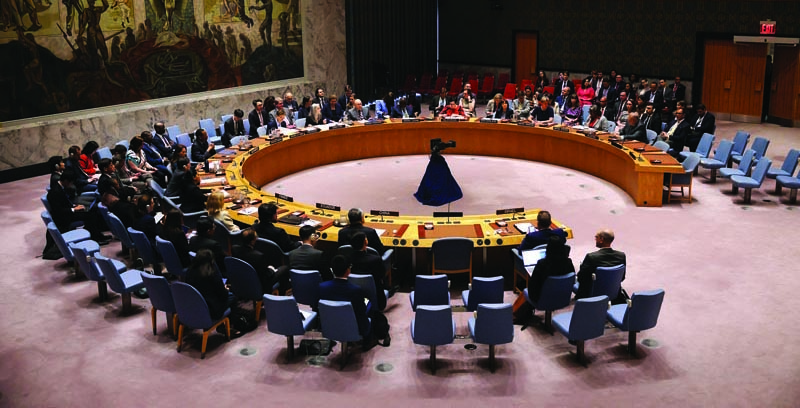
At the same time, we must look at the role of the United Nations in this moral deformity. Successive U.N. resolutions, driven by political bias, have unrelentingly chipped away at Israel’s legitimacy. These resolutions often ignore the root cause of the conflict — Islamist extremism — while disproportionately focusing on Israel’s defensive measures. The most recent resolution, passed just days ago, underscores the absurdity of this dynamic. It is a stark reminder that many countries are aligning themselves with forces that threaten not only Israel’s existence but their own national integrity.
The world today faces the scourge of Islamism — an ideology that is not merely a religious or cultural movement but a violent, expansionist doctrine that thrives on intolerance. Yet, instead of standing shoulder to shoulder with Israel in the fight against this dangerous ideology, a disturbing number of Western nations and leftist movements are turning their backs. They fail to realize that the same venomous forces targeting Israel today will inevitably target them tomorrow.
Israel has long been the frontline in the battle against extremist ideologies. Since its establishment in 1948, it has faced relentless threats to its existence. Each war, each attack, and each terror incident is a reminder of the precariousness of peace in the Middle East. And yet, Israel has always emerged stronger, driven by its commitment to democratic values, human rights, and the rule of law. In obvious contrast, groups such as Hamas represent the antithesis of these ideals, using terror as a tool to subjugate and destroy.
It is crucial to highlight the irony in the U.N.’s treatment of Israel. The General Assembly has become a forum where nations with abysmal human rights records—many ruled by autocratic or theocratic regimes—are emboldened to condemn Israel. This is a country that, despite facing persistent existential threats, has maintained a functioning democracy, provided equal rights to its Arab citizens, and strived for peace. The bias inherent in the U.N.’s actions undermines not only Israel but also the international order that it was created to uphold.
One of the most glaring examples of this absurdity is the pattern of resolutions that ignore the root cause of the conflict — Islamist extremism — while disproportionately focusing on Israel’s defensive measures. These resolutions embolden groups such as Hamas by providing them with a veneer of legitimacy under the guise of resistance. It is the height of hypocrisy to accuse Israel of overreach when it is defending itself against a group whose declared aim is to destroy it.
The countries that vote in favor of such resolutions must confront a fundamental truth: What path are they choosing for the future? Are they willing to support the forces of intolerance and hatred simply to appease a vocal minority, or will they stand up for the principles of freedom and democracy, as embodied by Israel? By siding with resolutions that undermine Israel’s right to defend itself, these nations are inadvertently legitimizing the very ideologies that threaten their own existence.
Albert Dadon is an Australian businessman, philanthropist and musician.
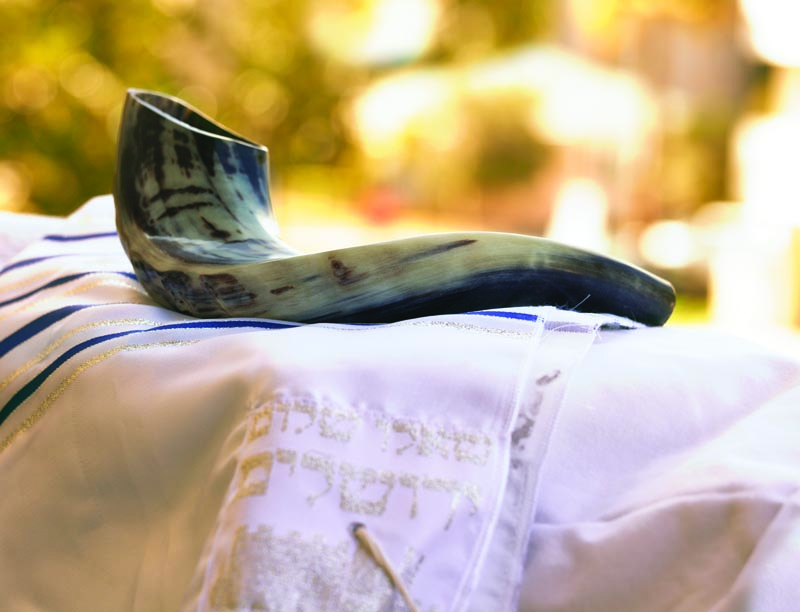
The shofar, the most significant symbol and vehicle for the Holy Days, represents a multiplicity of interpretations and depth of meaning in our tradition. The shape, the sound, the source, and rootedness in our history and formation bespeaks of its power and presence from the moment the month of Elul begins until the end of Yom Kippur when it becomes the capstone of each person’s emotional journey of celebration, remembrance, and depth of sorrow.
The word “shofar” in Hebrew is not only this curved ram’s horn, specifically required because of its key connection to many traditional events and teachings. The Hebrew letters also mean to shine bright into the dawn and qualities of acceptance, pleasantness, and beauty. In fact, one of the midwives who is seen as a courageous woman who helps to save Israelite babies, and the future of Judaism, is named Shifrah: beautiful woman.
When we see, hold, and blow the shofar we acknowledge the light and the beauty that it represents for the future. With other vowels it means to improve one’s actions, shapiru, the most essential quality of its purpose, like a spiritual alarm clock, to awaken us, to move us, to inspire us to review the year that has passed with its mixture of moments, the highs and the lows, focusing on those that need attention and improvement.
When we see, hold, and blow the shofar we acknowledge the light and the beauty that it represents for the future.
Our first and most powerful experience of the shofar was at Sinai and with each blow we are transported back to the powerful moment of G-d’s presence, when the revelation was surrounded by thunder, lightning, fire, and smoke and the very loud blast of the shofar, which increased in intensity, to the point it drove the people away in fear for their lives rejecting G-d to boot. When we hear the Shofar, year after year, it is also a redemption to come back, embrace the Holy One, and even bind ourselves to G-d, as Isaac did, allowing himself to be bound on the altar as a korban, an offering of his life. This too we remember, as the shofar is a symbol of the ram in the thicket which G-d sends to replace Isaac.
The curved, raw bony material, much like our own fingernails, is taken from a male sheep, a ram, that can only be used if it dies a natural death. We don’t kill the animal for our own use but repurpose part of its unique feature to lift it up and through its vibrational sound reclaim for many an opportunity to be transformed. The potent sounds are heard as cries, wails, and the deep, deep torment for so many Jews throughout our painful history, particularly this year of those slaughtered, raped, and abandoned. How can we not hear the blowing of this horn and the words T’ikiah, Sh’varim, Truah, which represent the loud blast, the breaking and the shattering of our hearts, and a reminder of our ancestral mothers like Sara and Hannah who wailed to G-d because of their deep maternal love and loss? How can we, personally, not be moved to our own pain and sorrow, the regret and omissions, and not crave this sonic mikvah to wash away all the obstacles and resistance so we can move forward, dispel the remorse, and find the grace we all desire?
Yet, we also know the shofar represents another side, the light, the goodness, and the possibility that deep awareness and willingness to change bring. The sages teach that blowing shofar heralded the coming of the King, our supreme ruler, as Psalm 150 says, “Halilu Hu B’teika Shofar,” “Praise Him with the blast of the Shofar.”We blow the shofar to announce the new moon, the new month, when we once again start over, especially when we celebrate such an auspicious time as Rosh Hashanah, the time of change, the greatest gift our tradition offers, ‘it is never too late to begin again.’ The shofar is sounded as a means to confuse Satan, the inquisitor, and to remind G-d we are human, bring forth your Rachamim, your compassion and set aside your judgement as we stand stripped of all excuses for our poor behavior. We blow the shofar to announce the Yovel, the 50th year when all slaves are set free and land is returned to its rightful owner and the coming of the Messiah, the hope for days of peace and tranquility.
We also know from the Book of Joshua that “the priests blew the shofar for seven days which inspired the people to call out loudly from their own voices and the walls of Jericho came tumbling down.”
The mitzvah is to hear the shofar, to let it suffuse our innards, move us to bend ourselves toward good, to “T’shuvah, T’fillah, and Tzedakah,” “Repentance, Prayer, and Deeds of Kindness,” to returning back to our better selves, engage in spiritual work that brings us closer to the transcendent Holy One and the imminent Shechinah, while also giving to those in need in whatever way we can.
Just as the walls came down in Jericho, may our own inner walls crumble so we can find the hope and the beauty shofar represents and inspire others towards love and peace in this coming year.
Just as the walls came down in Jericho, may our own inner walls crumble so we can find the hope and the beauty shofar represents and inspire others towards love and peace in this coming year.
Eva Robbins is a rabbi, cantor, artist and the author of “Spiritual Surgery: A Journey of Healing Mind, Body and Spirit.”
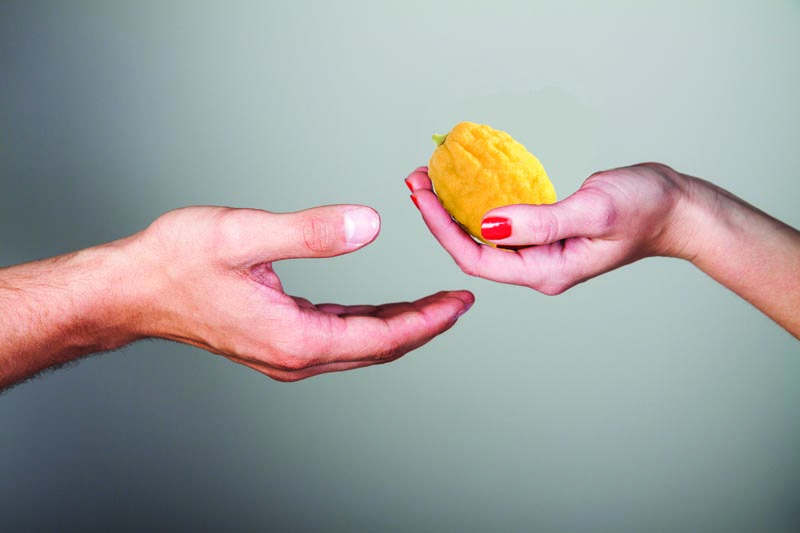
While as your local Jewish preschooler can sing to you, on Rosh Hashanah we dip the apple in the honey, and on Sukkot we take the etrog and lulav and shake it in synagogue, an oft-overlooked tradition offers a rather surprising New Year’s custom.
But first, best to begin at the Beginning.
Whatever Adam and Eve ate from the forbidden tree, it was certainly neither a Fuji nor Granny Smith.
As Azzan Yadin-Israel notes in his “Temptation Transformed,” the Bible never uses the Hebrew word “tapuach” when recounting the fateful bite. It simply states that the “fruit” of the tree was eaten. So what fruit was it?
Yadin-Israel dismisses the commonly-cited explanation that Latin “malum,” which means “evil” but can also mean “apple,” is the origin of the now-universal attribution. After all, as he documents, amidst the “immense wealth” of Latin writing by Christians on this foundational biblical episode, the writers used words like fructus (“fruit”), cibus (“food”), or pomum (“tree fruit”), not “malum” in their translations.
Some commentators posited the First Couple ate a fig. After all, as the ancient sage Rabbi Yossi noted in the midrashic collection Genesis Rabbah 15:7, as Adam and Eve stood enlightened to the realization they were naked following their violation of God’s command not to partake, they clothed themselves in fig leaves. Perhaps, in a case of measure-for measure, suggests Rabbi Yossi, no tree would clothe them other than the one from which they had sinned, lest the tree itself be deemed guilty by association.
Others preferred the pomegranate, which appears in numerous medieval depictions of the pivotal scene.
To Rabbi Meir, also cited in Genesis Rabbah, the food at fault must have been wheat. After all, he notes, citing an adage of his age, “when a person lacks knowledge people say, ‘That man has never eaten bread of wheat.’”
To this Rabbi Judah the son of Rabbi Ilai responded, “Nonsense. It was obviously a grape!” After all, as the book of Deuteronomy notes, clusters are oft-associated with sin — “their grapes are grapes of poison, their clusters are bitter” (Deuteronomy 32:32). Noah’s drunkenness after the flood, a few chapters following Adam and Eve’s error, attests to grapes’ affiliation with personal downfall.
But to Rabbi Abba, it must have been the etrog.Rabbi Chaim Palagi, in his book “Ruach Chayim,” elaborates: “Since on Rosh Hashana the first man was created and he sinned with the Tree of Knowledge and there is an opinion that it was an etrog, therefore, to repair this sin, we eat it [on Rosh Hashanah] with a blessing.” He then continues: “Alternatively, it is as our Sages taught (Leviticus Rabbah 30:12), there are four types of Jews, and the etrog represents those who have both taste and smell, the Jews who have Torah and mitzvot, and consequently, we eat it so that we will be worthy of being like an etrog, filled with Torah and good deeds.”
Alas for two other rabbis in the midrash, Rabbi Azariah and Rabbi Judah, the investigation was fruitless. “Heaven forfend [that we should conjecture what the tree was]! The Holy One, Blessed be He, did not and will not reveal to man what the tree was.”
What popularized the apple explanation, concludes Yadin-Israel, was actually Old French. The word for fruit, “pom,” can also mean apple. “By the early 12th century, he writes, pom, ‘apple,’ was so firmly established, that French-speaking readers of Latin projected it into Latin pomum,” which had simply connoted orchard fruit. Once the new Latin meaning spread through Church texts and art, it became the dominant reading in England, Germany and throughout the Christian empire. Thus the popular presumption that’s what the mysterious fruit had always been.
This, Yadin-Israel notes, was an ironic twist, as the apple in Christianity had usually had a positive association with Jesus. Long-standing Christian interpretations of the verse in Song of Songs 8:5’s reference to “under the tapuach [apple] tree” were read allegorically as “under the tree of the Cross,” since the “glorious apple” was understood to be Jesus.
Whether we’re biting into a ripe fig, baking bread, picking at some grapes, or slicing up a McIntosh to put in our kid’s lunchbox, it can’t hurt to take the opportunity to commit to doing good deeds, making up for that ancient couple back in the Garden.
While it seems mankind will never know what fruit caused the first couple’s expulsion from Eden, perhaps it was the etrog after all. Or maybe it wasn’t. Regardless, whether we’re biting into a ripe fig, baking bread, picking at some grapes, or slicing up a McIntosh to put in our kid’s lunchbox, it can’t hurt to take the opportunity to commit to doing good deeds, making up for that ancient couple back in the Garden.
Rabbi Dr. Stuart Halpern is Senior Adviser to the Provost of Yeshiva University and Deputy Director of Y.U.’s Straus Center for Torah and Western Thought. His books include “The Promise of Liberty: A Passover Haggada,” which examines the Exodus story’s impact on the United States, “Esther in America,” “Gleanings: Reflections on Ruth” and “Proclaim Liberty Throughout the Land: The Hebrew Bible in the United States.”
Faculty and students tirelessly demonizing Israel. Massive protests in the streets of Tel Aviv and Jerusalem. A dramatic rise in global antisemitism.
No, those aren’t current headlines – they are from before the Simchat Torah massacre and the hell that has ensued over the past 12 months.
Wait, weren’t those the good old days, which shockingly ended when our lives were shattered on Oct. 7?Given how bad things are today, it is easy to forget the uproar regarding “judicial reform,” or the insidious impact that the Boycott, Divestment and Sanctions (BDS) movement has had on our nation’s campuses for decades.I remember, instead, the beauty of last year’s High Holy Day celebrations, and the excitement around the Abraham Accords.I long for that optimistic time, regardless of how I actually felt back then.
Selective memory is an essential coping mechanism. There is an extensive scientific literature showing how people block out some upsetting memories, shielding themselves from emotional pain. Many psychologists consider it to be the mind’s way of safeguarding its health.
How many of us recall childhood joys, glossing over how we truly felt at the time? I have lots of fond recollections of junior high school, for example, taking interesting new classes and making new friends. Yet, I know that I regularly begged my mom to let me stay home, pretending that I was sick. I suppose that I have largely blocked out how humiliating it was to search the cafeteria for a place to sit, among other indignities. And I think often of spending summers at a Jewish camp in the Poconos (the same one, incidentally, that Doug Emhoff attended a decade or so later). Sleeping under the stars, barbequing in front of a massive fire, swimming across the lake, playing sports around the clock. What a time! Until my sister (who was at the neighboring girls’ camp) reminds me of how miserable I was – begging my parents to take me home during their annual visitors’ day pilgrimage.
Memory plays tricks on us all.Even on Moses.
Deuteronomy recounts many of the events from the preceding four books of the Torah. But the text doesn’t always get it right. The recitation of the Ten Commandments, for example, differs from the version presented in Exodus. And as for Moses, when he recalls the tale of how he sent out scouts to explore the promised land, he praises the Israelite people for coming up with the idea: “Then all of you came to me and said, ‘Let us send emissaries ahead to reconnoiter the land’ …” (Deuteronomy 1:22). Very gracious of him to give credit, even though that wasn’t the original story. According to Numbers 13:1, “G-d spoke to Moses, saying ‘Send emissaries to scout the land of Canaan’ …” I will leave it to the rabbinical authorities to sort this one out, but it might simply be the case that Moses, at the ripe old age of 120, didn’t recollect exactly what had transpired.
So, as improbable as it seems, perhaps a year from now we will focus on what is positive about today. We may remember the pride that Jews worldwide felt in celebrating their faith in the face of seemingly insurmountable obstacles, or how some of our non-Jewish friends supported us when we needed it most. And we may consider with lasting gratitude that some politicians were vocal in condemning anti-Jewish hatred.
Like Moses, we might not recall things perfectly, but that’s OK.One of my favorite songs, “I Remember it Well,” from Lerner and Loewe’s musical, “Gigi,” makes that point beautifully. An elderly couple recounts how they met. Him: “That carriage ride.” Her: “You walked me home.” Him: “You lost a glove.” Her:“I lost a comb.” The song goes on and on, making it clear that the specific ”memories” are pretty much irrelevant. What matters is that it worked out in the end.
When we reflect back on our memories of today, may we be eager to remember the good. And may we make new memories, especially ones that allow us to rejoice in the collective strength and resiliency of the Jewish people.
When we reflect back on our memories of today, may we be eager to remember the good. And even more importantly, may we make new memories, especially ones that allow us to rejoice in the collective strength and resiliency of the Jewish people and of our ancient homeland.
Morton Schapiro is the former president of Williams College and Northwestern University.His most recent book (with Gary Saul Morson) is “Minds Wide Shut:How the New Fundamentalisms Divide Us.”
My wife Nancy and I recently spent Shabbos in Calabasas at the home of our friends, Rachelle and Mark. We drove the 26 miles, which in Los Angeles could take three days, but we were lucky that God parted the 405 North for us.
We arrived around 6 p.m. on Friday, and even though we were invited to stay over Saturday night, we declined because my son and his family were headed to Florida that night. Besides the free babysitting, we are the family airport Uber drivers.
Our 27 hours in Calabasas with Rachelle and Mark was a perfect Shabbat and mini-vacation, a chance to lower the flame on our hectic everyday lives. We ate, davened, learned Torah, ate, had great conversations, played Rummikub, napped, and ate again. Rachelle is a wonderful cook; we are excellent eaters and took full advantage.
On Friday night before Shabbos started, Rachelle drove her husband, Mark, and me to shul about a mile away. After shul, Mark asked me if I wanted to walk the long way or the short way back to his house. I said, “Long.” Once you move into your 70s, people ask you if you can still walk.
We’ve all heard the stories about people who dropped dead exercising. People never seem to drop dead while roasting marshmallows to make s’mores. For years, I’ve been asked, “Would you rather I drop you in front of the restaurant?” Even at supermarkets, when checking out, they ask me if I need help to my car. I must look worse than I think. To Mark’s credit, he only asked twice over Shabbat, not 52 times like others.
Nancy and I exercise, but we are nowhere in the league of these two. The ladies went for a walk on Saturday; later, Mark and I did, too. Once again, he asked me if I wanted to take the big hills or an easier route. “Big,” I said. And let me tell you, those babies were tough. We passed a mountain goat lying on his side, clutching his chest.
During our climb, Mark and I chatted about our grandkids, how we wanted to hang out and play with them, and that grandparenting should not be a spectator sport.
I already have a few friends who need help walking. Some are unlucky, and others won’t listen. The statistics show that exercise helps in more ways than you could imagine.
After Shabbos, Nancy told me she got a text from our daughter-in-law Anna that they had to go to Atlanta instead of their Florida vacation. Anna’s 96-year-old grandfather Poppy, a wonderful man, died. It seems he woke up in the morning, told his caretaker that he was going to die, and then sat in his chair and died.
For the last 10 or so years, Poppy would wake up between 1 a.m. and 2 a.m. and work out for an hour and a half to two hours before returning to bed. Then a friend would pick him up at 5 a.m., and he would go to the gym and exercise for another hour or two. His go-to exercise was a combo of running, biking and weights for curling. Then he walked across the street to meet his friends for coffee.
Did it improve his later years? Probably.
How many people were encouraged by the late Richard Simmons or Jack LaLanne? The answer is millions. When I see someone doing what I think might be helpful, I ask them what they do and how they do it. I ask, ask, ask. As my internist, Dr. Mark Hyman, says, “There is nothing wrong with more information.”
When I see someone doing what I think might be helpful, I ask them what they do and how they do it. I ask, ask, ask. As my internist, Dr. Mark Hyman, says, “There is nothing wrong with more information.”
I have battled high blood pressure and high cholesterol, ate poorly, and drank and smoked for decades. To live a rich life, I need to remain active and teachable. Then I need to act upon what I learned. I have too much to live for, and with any luck, I won’t have to trade it for that chair anytime soon. After a beautiful Havdalah, we said our goodbyes to Rachelle and Mark, put on our Uber hats and drove the kids to the airport. Thank you, God, for Shabbos.
Mark Schiff is a comedian, actor and writer, and hosts, along with Danny Lobell, the “We Think It’s Funny” podcast. His new book is “Why Not? Lessons on Comedy, Courage and Chutzpah.”

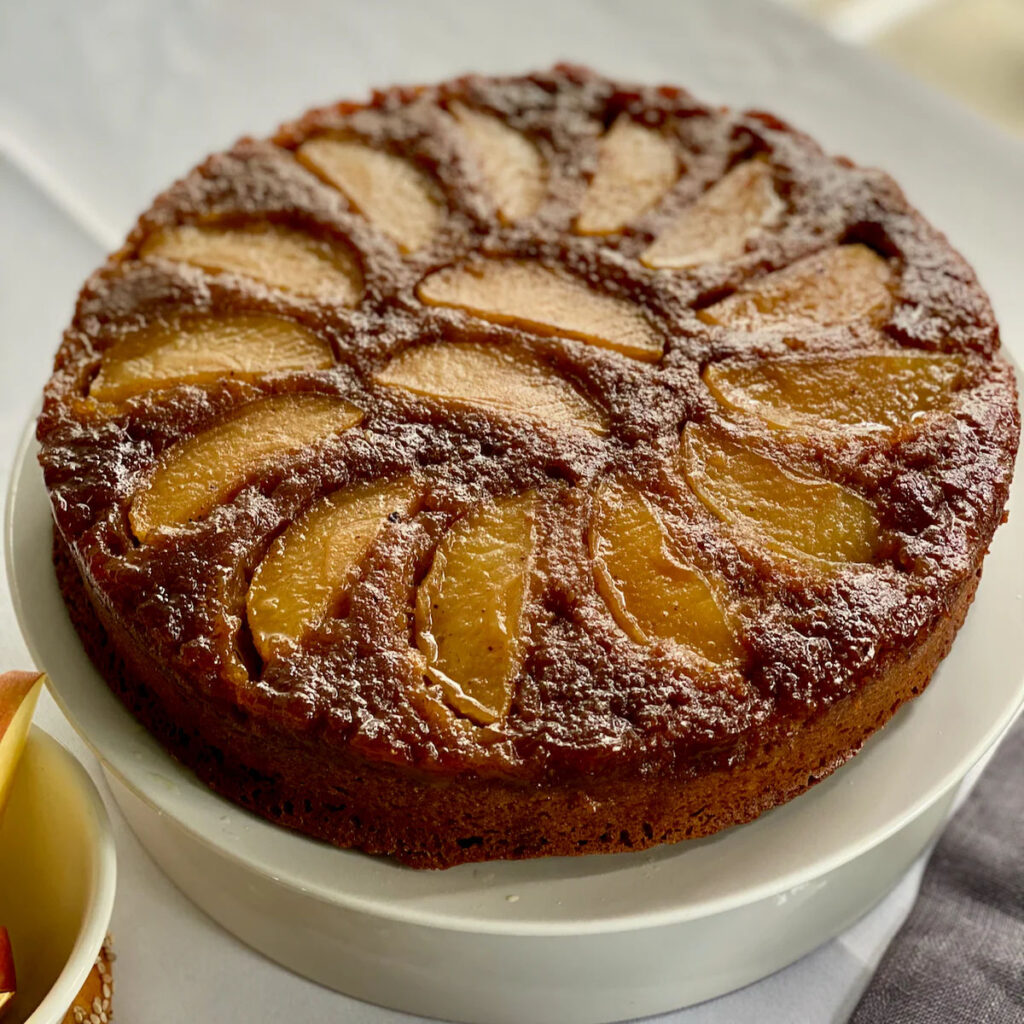

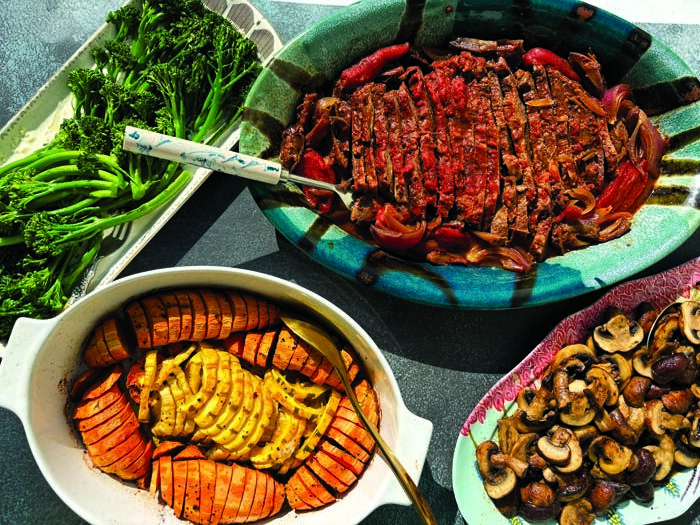
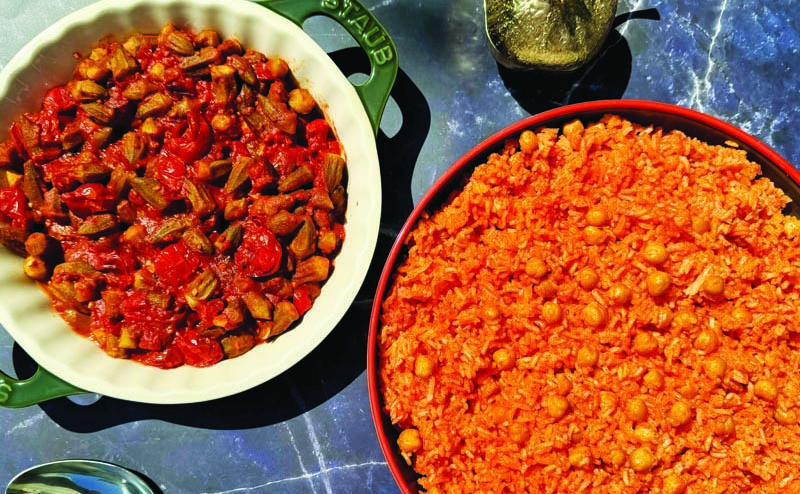
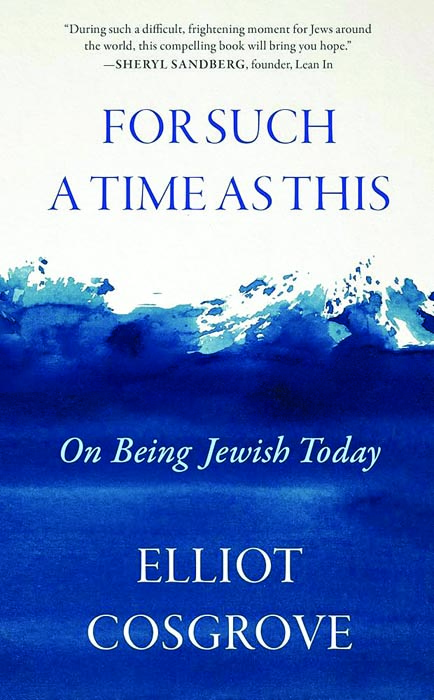 In his new book “For Such a Time as This: On Being Jewish Today,” Rabbi Elliot Cosgrove of New York’s Park Avenue Synagogue provides an answer to this question as we approach the one-year mark since the brutal attacks on Israel by Hamas. Published on Sept. 24, the book also appears just one week before Rosh Hashanah. Given that the holiday is not just a time of joy and celebration but also one of introspection and reflecting on the past year as we move into the Days of Awe, the timing is prescient. The irony is that Cosgrove’s book contains more questions than it does answers, but it is this very tension, this pushing and pulling, that makes the response so powerful. And because it is an answer to a question that can never be fully resolved, it becomes more meaningful to us in a time when concrete answers feel disingenuous.