Are we to eat the etrog a couple of weeks early?
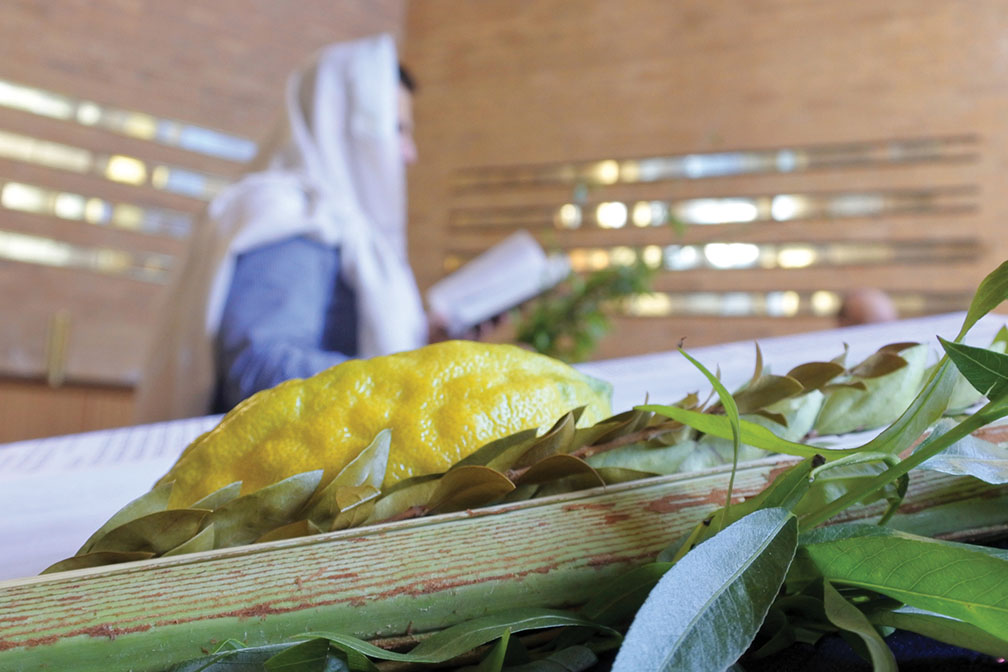
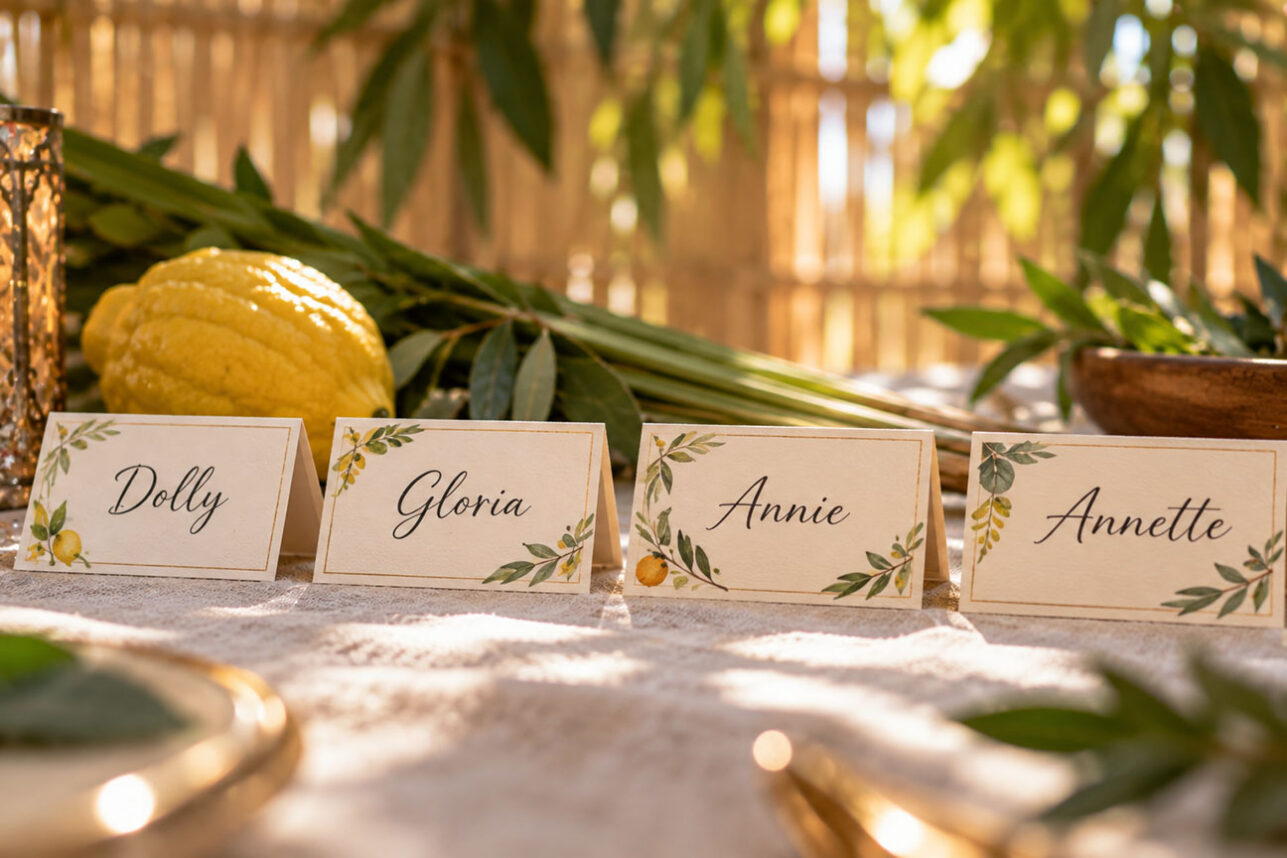
While as your local Jewish preschooler can sing to you, on Rosh Hashanah we dip the apple in the honey, and on Sukkot we take the etrog and lulav and shake it in synagogue, an oft-overlooked tradition offers a rather surprising New Year’s custom.
But first, best to begin at the Beginning.
Whatever Adam and Eve ate from the forbidden tree, it was certainly neither a Fuji nor Granny Smith.
As Azzan Yadin-Israel notes in his “Temptation Transformed,” the Bible never uses the Hebrew word “tapuach” when recounting the fateful bite. It simply states that the “fruit” of the tree was eaten. So what fruit was it?
Yadin-Israel dismisses the commonly-cited explanation that Latin “malum,” which means “evil” but can also mean “apple,” is the origin of the now-universal attribution. After all, as he documents, amidst the “immense wealth” of Latin writing by Christians on this foundational biblical episode, the writers used words like fructus (“fruit”), cibus (“food”), or pomum (“tree fruit”), not “malum” in their translations.
Some commentators posited the First Couple ate a fig. After all, as the ancient sage Rabbi Yossi noted in the midrashic collection Genesis Rabbah 15:7, as Adam and Eve stood enlightened to the realization they were naked following their violation of God’s command not to partake, they clothed themselves in fig leaves. Perhaps, in a case of measure-for measure, suggests Rabbi Yossi, no tree would clothe them other than the one from which they had sinned, lest the tree itself be deemed guilty by association.
Others preferred the pomegranate, which appears in numerous medieval depictions of the pivotal scene.
To Rabbi Meir, also cited in Genesis Rabbah, the food at fault must have been wheat. After all, he notes, citing an adage of his age, “when a person lacks knowledge people say, ‘That man has never eaten bread of wheat.’”
To this Rabbi Judah the son of Rabbi Ilai responded, “Nonsense. It was obviously a grape!” After all, as the book of Deuteronomy notes, clusters are oft-associated with sin — “their grapes are grapes of poison, their clusters are bitter” (Deuteronomy 32:32). Noah’s drunkenness after the flood, a few chapters following Adam and Eve’s error, attests to grapes’ affiliation with personal downfall.
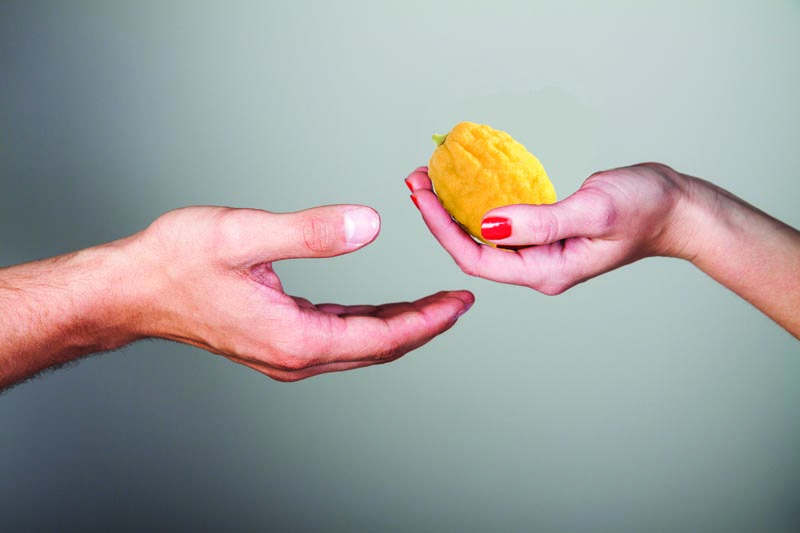
But to Rabbi Abba, it must have been the etrog. Rabbi Chaim Palagi, in his book “Ruach Chayim,” elaborates: “Since on Rosh Hashana the first man was created and he sinned with the Tree of Knowledge and there is an opinion that it was an etrog, therefore, to repair this sin, we eat it [on Rosh Hashanah] with a blessing.” He then continues: “Alternatively, it is as our Sages taught (Leviticus Rabbah 30:12), there are four types of Jews, and the etrog represents those who have both taste and smell, the Jews who have Torah and mitzvot, and consequently, we eat it so that we will be worthy of being like an etrog, filled with Torah and good deeds.”
Alas for two other rabbis in the midrash, Rabbi Azariah and Rabbi Judah, the investigation was fruitless. “Heaven forfend [that we should conjecture what the tree was]! The Holy One, Blessed be He, did not and will not reveal to man what the tree was.”
What popularized the apple explanation, concludes Yadin-Israel, was actually Old French. The word for fruit, “pom,” can also mean apple. “By the early 12th century, he writes, pom, ‘apple,’ was so firmly established, that French-speaking readers of Latin projected it into Latin pomum,” which had simply connoted orchard fruit. Once the new Latin meaning spread through Church texts and art, it became the dominant reading in England, Germany and throughout the Christian empire. Thus the popular presumption that’s what the mysterious fruit had always been.
This, Yadin-Israel notes, was an ironic twist, as the apple in Christianity had usually had a positive association with Jesus. Long-standing Christian interpretations of the verse in Song of Songs 8:5’s reference to “under the tapuach [apple] tree” were read allegorically as “under the tree of the Cross,” since the “glorious apple” was understood to be Jesus.
Whether we’re biting into a ripe fig, baking bread, picking at some grapes, or slicing up a McIntosh to put in our kid’s lunchbox, it can’t hurt to take the opportunity to commit to doing good deeds, making up for that ancient couple back in the Garden.
While it seems mankind will never know what fruit caused the first couple’s expulsion from Eden, perhaps it was the etrog after all. Or maybe it wasn’t. Regardless, whether we’re biting into a ripe fig, baking bread, picking at some grapes, or slicing up a McIntosh to put in our kid’s lunchbox, it can’t hurt to take the opportunity to commit to doing good deeds, making up for that ancient couple back in the Garden.
Rabbi Dr. Stuart Halpern is Senior Adviser to the Provost of Yeshiva University and Deputy Director of Y.U.’s Straus Center for Torah and Western Thought. His books include “The Promise of Liberty: A Passover Haggada,” which examines the Exodus story’s impact on the United States, “Esther in America,” “Gleanings: Reflections on Ruth” and “Proclaim Liberty Throughout the Land: The Hebrew Bible in the United States.”