fbpx

September 26, 2024

Sephardic Torah from the Holy Land | Elul, Sephardic-Mizrahi Style

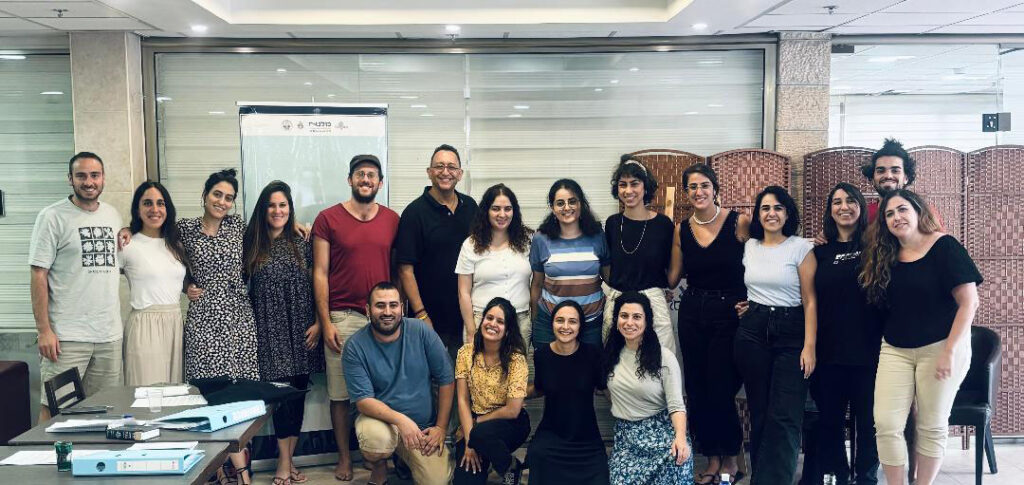
It’s no secret to my family and friends that I have a deep passion for teaching, that I especially love teaching young students, and that my number one go-to topic is the wisdom and brilliance of great Sephardic rabbis. How cool that last week in Tiberias, in the shadow of rockets and a brewing war up north, all three of these passions magically came together for me, with a cohort of brilliant students in the Elul Min Ha’Mizrah program.

The brainchild of Sephardic-Mizrahi intellectuals and activists in Israel, Elul Min Hamizrah (Elul from the East) is a unique program that places the literature, halakha, philosophy, liturgy, poetry, art and music of Sephardic-Mizrahi Judaism at the center of the experience, for a select cross section of young Israeli men and women from all backgrounds and walks of life. Through these intellectual and artistic mediums – taught by master teachers and scholars – the students explore identity, diversity, current-day social and political issues, and the meaning of Sephardic-Mizrahi traditions and philosophy in the modern world.

Different than programs who might “include one Sephardic session” as a token gesture, at Elul Min Hamizrah, Sephardic-Mizrahi Judaism is the heart, mind and soul of the program.

There are two versions of Elul Min Hamizrah – a one-month program down south in Yeruham, and a ten-day version up north in Tiberias. I was privileged to teach both, and I loved both! The students were super cool, diverse, brilliant, spiritual, educated and smart. They were curious, open-minded, and eager to explore their Sephardic-Mizrahi roots in ways they had never done before. For most, this was the first time their Sephardic-Mizrahi heritage took center stage as a voice for social change in Israel.

I taught some of my favorite texts – Rabbis Uziel, Nissim, Messas, Ovadia Yosef – on women’s issues, halakha and the modern world, teshuva and humanism, and halakhic views on the hostage crisis. Together we studied, debated, shared stories, laughed, cried and ended our sessions with big hugs of friendship.

I loved both groups, but developed a special bond with the one in Tiberias. I taught them on Thursday, and they asked if I can come again. Flattered and thrilled, I couldn’t say no to that – so after a wonderful Shabbat with Ilan in his new home on Kibbutz Degania – I went back on Sunday for one more round with this beautiful group. I look forward to meeting with them again and again throughout the year.

I feel confident that these passionate young minds will take the Sephardic-Mizrahi wisdom of Elul Min Hamizrah and spread it beyond Elul – for all of Israeli society’s benefit.

Israel’s future has never looked so bright, and it’s certainly never had such a cool Sephardic-Mizrahi vibe.

Tizku L’Shanim Rabot and Shana Tova


Rabbi Daniel Bouskila is the international director of the Sephardic Educational Center.

Sephardic Torah from the Holy Land | Elul, Sephardic-Mizrahi Style Read More »

A Multisensory Hebrew and Persian Concert at Skirball Gives Its Listeners Wings

Danielle Dardashti has finally forgiven Los Angeles. Specifically, she has forgiven the Iranian American Jewish community in Los Angeles for what she experienced as a disheartening lack of embrace toward her father’s much-anticipated return to Persian music over 43 years ago, when Dardashti was only 10 years old.

His 1981 album, along with a concert for Iranians in L.A., should have been a runaway hit; her father, Farid Dardashti, was a beloved teen pop singer in Iran before leaving the country to study in the United States in the mid-1960s. His father (Danielle’s grandfather), Younes Dardashti, was a legendary singer in 1960s/1970s pre-revolutionary Iran who even performed for Shah Mohammad Pahlavi. The Dardashti name was and remains nearly mythical among many Iranians, especially Jews. 

To understand Danielle’s heartbreak over those dashed high hopes and the incredible modern story of the Dardashti family, one must first listen to the exceptional six-part, audio-documentary podcast, “The Nightingale of Iran,” presented by the Jewish Telegraphic Agency (JTA) and distributed by PRX. The podcast is the brainchild of Danielle, an author and Emmy award-winning documentarian, and her sister, Galeet, a musician, composer and anthropologist. 

Both Galeet and Danielle took to the stage at the Skirball Cultural Center on Sept. 17 during a lively program in which they discussed “The Nightingale of Iran,” and Galeet and her band performed songs from her latest album, “Monajat,” which strikingly blends Galeet’s voice with that of her late grandfather. Younes Dardashti was affectionately known as the “nightingale” of Iran for his ability to sing the unmetered vocals of traditional Persian Āvāz music in a way that still enthralls listeners.

In full disclosure, I moderated a brief Q&A with Danielle and Galeet following the discussion of the podcast and the concert, which offered attendees a multi-sensory experience, thanks to Galeet’s powerful voice, the talent of the musicians in her band, and the art of Dmitry Kemell, who created beautiful visuals that were simultaneously presented with the electrifying music. 

The concept for “Monajat,” Galeet’s first Persian album, is itself unprecedented: Several years ago, Galeet found a cassette tape featuring her late grandfather, whose work was presumed lost or destroyed after the 1979 revolution. One unearthed recording featured her grandfather’s emotional recitation of the “Selichot” prayers during a Jewish fundraising event in Tehran in the early 1970s. The recording ends with Younes singing a poem called “Monajat,” most likely written by him in the style of the ancient Sufi poet, Rumi. 

Galeet intertwined her voice with his, added everything from Persian tombak (a goblet-shaped, handheld drum) to a multi-stringed santur, a violin and a modern drum set, all played immaculately by her band, and “Monajat,” which means “an intimate conversation with the Divine” in Persian, was born. The album is a touching dialogue across time between a granddaughter and her late grandfather (the two never sang together while Younes was alive; he passed away in 1993).

Los Angeles was the first stop of the sisters’ tour, which also included Baltimore, Washington, D.C., Philadelphia and New York. “It felt full-circle,” Danielle told me about the Skirball event. 

Julie Gumpert, senior program associate at Skirball, was inspired to invite Danielle and Galeet to the iconic cultural center when she attended an event with the sisters at IKAR last spring, and was introduced to the podcast. “As soon as I learned that they would be touring with the album, ‘Monajat,’ I was thrilled by the prospect of bringing them to the Skirball,” Gumpert said, adding that both the album and the podcast embody one of Skirball’s core institutional values: honoring memory. 

Indeed, I was deeply moved to hear the haunting voice of Younes Dardashti — an orphan who grew up in Tehran’s Jewish ghetto at the beginning of the last century — at the Skirball Cultural Center, and to witness an audience that was divided equally between Iranian and Ashkenazi Jews. Events such as this must not be taken for granted; instead, they must be recognized for enabling space for critical Sephardic and Mizrahi stories, culture and history to take their rightful place in the tapestry of Los Angeles Jewish programs. For this, I applaud Gumpert and the Skirball.

Events such as this must not be taken for granted; instead, they must be recognized for enabling space for critical Sephardic and Mizrahi stories, culture and history to take their rightful place in the tapestry of Los Angeles Jewish programs.

Though Danielle and Galeet are based on the East Coast, they briefly lived in Los Angeles with Farid and their mother, Sheila, who is Ashkenazi, before the family relocated to New York. But Galeet, Danielle and their younger sister, Michelle, grew up with very little connection to their Iranian identity. When I observed during our Q&A that their family name nearly conjures a sense of musical royalty and that his granddaughters, by extension, are a critical link in a chain of connection with Iran for most Iranian Jews, Danielle responded, “That’s very ironic because we didn’t see ourselves that way at all.”

Neither Danielle nor Galeet fully fits either mold of Ashkenazi or Persian identities, resulting in an outsider-insider phenomenon that can never be escaped as long as an entire community connects with them as heirs to precious memories — memories from a land that was hijacked by extremists 45 years ago.

As a child growing up in the U.S., Galeet was not able to speak with her grandfather in a shared language. Before the revolution, Younes was the voice of Iran, but exiled from his former home after he and his wife made aliyah to Israel, it was difficult for him to even converse casually in Hebrew.  “After the revolution, our grandfather was erased from history,” Danielle said in a sober tone. 

During the Skirball program, the sisters noted that in the past five centuries, Jews have especially maintained traditional Persian musical traditions, and were relegated to the position of the “motreb,” or singer/entertainer for Muslim audiences. That historical fact is at the heart of “The Nightingale of Iran” podcast, which fuses storytelling and history in such a compelling manner that it rose to number one in Jewish podcasts, as well as to the top of Apple charts. To date, “The Nightingale of Iran” has been downloaded 175,000 times in 160 countries.

For Danielle, discovering a family secret while creating the podcast finally connected her with her Iranian roots. That unearthed secret was also the missing puzzle piece in her decades-long search for understanding and healing over the rejection of her father’s music among Iranian Jewry in L.A. in the early 1980s. 

I have attended Jewish-related programs for many years in this city, but I have never witnessed anything as unique as the informal discussion between Galeet and Danielle that concluded the evening at the Skirball. When it was time to engage in audience Q&A, over half of the attendees who raised their hands offered personal memories about the Dardashti family, to the delight of the sisters. 

“My mother was first cousins with your grandfather!” cried one woman. “I was at your bat mitzvah, Galeet! I am also a Dardashti!” said another. A man described how Younes sang at a family function many decades ago. “What did he sing?!” asked a stunned Galeet. One woman raised her hand and described having attended the “selichot” prayers that Younes led in Iran 50 years ago, the same prayers that Galeet used in “Monajat.” Galeet and Danielle were elated to hear personal stories about their grandfather and their parents. 

And that’s when it struck me: Before my eyes, I was witnessing how a community was filling in the gaps for one family whose music and history is, for them, one of the last remaining connections to a country that has now become unrecognizable.

“Our L.A. concert was like a homecoming,” said Galeet. “That’s the heart of the Iranian Jewish expat community.” Regarding the unusually personal Q&A, she added, “It was like, ‘Danielle and Galeet: This Is Your Life.’” Galeet easily noted the significance of the event for her older sister, half-joking when she told me, “Danielle was redeemed.”

After the Skirball concert, the sisters sold “quite a few” of their father’s 1981 Persian music album on vinyl, the same records they discovered in their parents’ basement 30 years after Farid had recorded the album. Those records, with a vintage photo of their father, Farid, on the cover, were sold side-by-side with “Monajat.”

To listen to “The Nightingale of Iran,” visit nightingaleofiran.com. To download the “Monajat” album, visit galeetdardashti.com/monajat.

A Multisensory Hebrew and Persian Concert at Skirball Gives Its Listeners Wings Read More »

Rabbis of L.A. | Rabbi Moshe Pinto to Make His Mark at The Mark

On a recent Shabbat, Rabbi Moshe Pinto, the ambitious and visionary young Moroccan, told his multi-cultural congregation: “Hashem wanted this purchase because it was out of our capabilities. We have been looking for a place where we can set our roots. Hashem really gave us the best possible outcome.” Speaking from the pulpit at Beit El, the elegant shul founded by his father 40 years ago, Rabbi Pinto revealed that the shul had acquired The Mark, one of the larger structures in Pico-Robertson.

Speaking from the pulpit at Beit El, the elegant shul founded by his father 40 years ago, Rabbi Pinto revealed that the shul had acquired The Mark, one of the larger structures in Pico-Robertson. 

The single-story building had most recently been operated by Pat’s Restaurant. It is Rabbi Pinto’s intention to multiply the square footage — from the present 18,500 to 80,000 — within a decade. Could be sooner, the rabbi said, “but we want to underpromise and overdeliver.” While he envisions a traffic-heavy five-story structure, the future is now. He plans to introduce Pinto House activities there “soon.”

Current plans call for a school, with a restaurant on the top floor. The rabbi envisions a Torah center, an event hall and, uniquely, a Sephardic-Ashkenazic synagogue.

Rabbi Pinto also has a sharing plan for the wider community. “We want a place where Jewish events – gatherings, dinners, classes, lectures – could be held within our own organization,” he said. “We also want to make it a hub for other communities to join – because at the end of the day, if I am doing the kiruv (outreach), or another rabbi is, we are both successful.”

He has been clear that Beit El (House of God) itself is not going anywhere. As the rabbi has reminded the 300 Jews who regularly fill the shul at the intersection of Pico and Bedford on Shabbat mornings: “We are not a Sephardic, Ashkenazi or Iraqi temple. In the House of God, there are no distinctions, rich poor, frum, not religious.”

Rabbi Pinto notes that the city where he grew up presents powerful temptations for those seeking to stay on a moral path. In Los Angeles, he sees “so much evil that naturally pulls you” toward the world’s material aspects. “Baruch Hashem, we have a lot of good synagogues, good rabbis and organizations,” he said. “But they tend to be in competition with one another. Competition is good, but the real competition is not the other rabbis. A lot of rabbis have this false narrative that we need to compete with one another. Not true. Our competition is the city itself.”

“Baruch Hashem, we have a lot of good synagogues, good rabbis and organizations. But they tend to be in competition with one another. Competition is good, but the real competition is not the other rabbis. Our competition is the city itself.”

Rabbi Pinto’s lifetime goal is “bringing deep wisdom from across all Torah teaching – from the Gemara to the Five Books, to Kabbalah and the most mystical of teachings. If we are able to bring all of this together, making it accessible and giving answers to the questions young people have, we will change the world.”

An important distinction about The Mark property is that it is intended be a communal-event kind of place where, the rabbi said, the young will want to come for learning as well as recreation. “I believe in creating a space where anyone can ask a question, show any interest in wanting to get close to their creator,” he said. “That is what people need.”

In the rabbi’s opinion, having the chutzpah to ask a question is the greatest knowledge. “If you can encourage the people to be curious,” he said “an answer only is as good as the question.  You can have all the knowledge in the world, but if there is no question, it is worth nothing.”

Rabbi Pinto repeatedly underlined that while he envisions The Mark property hosting a variety of events, he intends to share space. “I want to make it a hub for other communities to join,” he said.

While Los Angeles is his home, the rabbi has other bases. His frequent-flyer record is enviable. “We actually have a facility in Montreal as well, a Kollel,” he said. “I travel all of the time. Once a month I go to Montreal. I have 11 learners for a full-fledged Kollel and learning center in Montreal. I go to New York very often. I go to Miami very often. I hope to get to many more cities, many more places.”

A philosophical optimist, he said that Angelenos “live in an incredible community. We need to see it for what it could be, not for the challenges and flaws that it is.”

Noted for his distinctly soft, gentle voice, Rabbi Pinto reached into history to illustrate his point: One person can look at an empty field and say it is empty. Another can look at the same scene and see the potential without limit.

His point: “We live in a city where it is empty. So much work to be done. So much spirituality there to be made. If you are trying to attract people and looking at it like a restaurant where you make good food and people will come, that is not what a synagogue is.”

The rabbi dreams large. “The fact we are able to bring people to synagogue in this city already is a miracle,” he believes. “That is why I am sure there is a lot of work to be done here.” Let there be no doubt about the precise Judaism that Rabbi Pinto teaches: His goal is to bring the depth of Kabbalistic concepts and teachings along with a curtain of the mystical. He estimates his community is 30-to-40% Moroccan, followed by Tunisian, French and Persian.

How did Rabbi Pinto find them? “They found me,” he said. “We are solid here. My board is Ashkenazi, Persian, Israeli, Moroccans. We try to carry the name at the forefront, the House of Hashem. At the core of everything, my No. 1 goal is representing our ancestors properly, keeping their merit and their legacy alive.”

Fast Takes with Rabbi Pinto

Jewish Journal: What is your favorite meal for Shabbat?

Rabbi Pinto: Every Shabbat meal.

J.J.: How has the rise in antisemitism affected your community?

R.P.: We had an incident here. One of our members walked out and was shot and wounded. We all took to heart what is happening around the world. Antisemitism should bring us closer to each other and to Hashem, and more Jewish than before.

J.J.: What is your No. 1 unfulfilled goal?

R.P.: Bringing unity among rabbis and organizations. It’s a shame they don’t work enough together.

Rabbis of L.A. | Rabbi Moshe Pinto to Make His Mark at The Mark Read More »

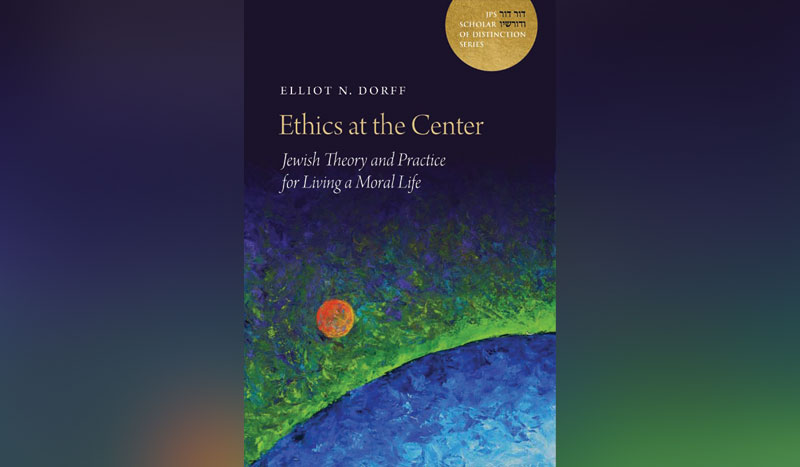
Questions About Morality: A Review of ‘Ethics at the Cen­ter: Jew­ish The­o­ry and Prac­tice for Liv­ing a Moral Life’

Rifling through dusty boxes in my father’s attic, I stumbled upon an old notebook dated to when I was 15 years old. 

On the first page, I had written: “Questions About Morality.”

I turned the page. “I always thought morals were simple,” I wrote, “but then I heard the story of Terri Schiavo.” 

The Terri Schiavo case, many readers will recall, centered on the removal of life support from a woman in a persistent vegetative state, sparking intense media coverage and national debate over the ethics of end-of-life decisions. I don’t remember it making such an impression on me, but here it was, page after page of reflection on the case. 

In addition to Terri Schiavo, fifteen-year-old me wrote about abortion, about eating meat, and about whether fish feel boredom in aquariums. I struggled through these issues on the page but didn’t come to any firm conclusions, adding that “only idiots and geniuses make up their minds about anything.” 

Reading this journal, I felt a sting of embarrassment at my own earnestness. I also marveled at the timing of this discovery, as I was, at that very moment, working on a review of “Ethics at the Center: Jewish Theory and Practice for Living a Moral Life” by the esteemed Conservative rabbi, Elliot N. Dorff (JPS, 2024). 

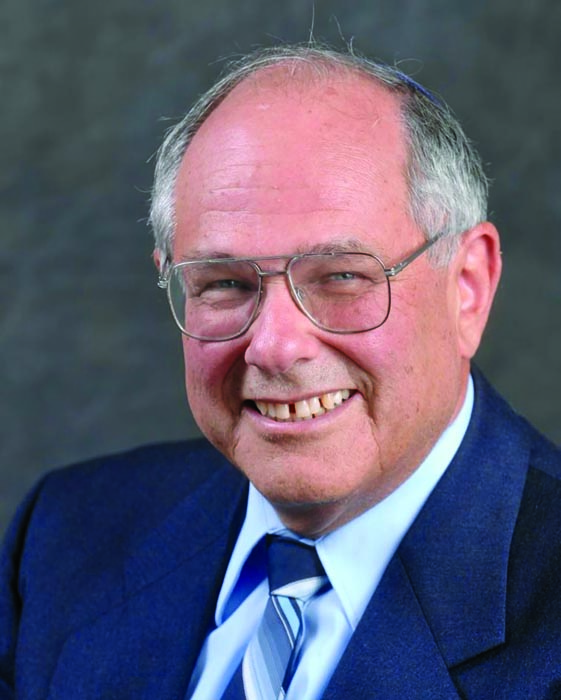
Elliot Dorff

Like my old journal, Rabbi Dorff’s book is more about the questions than the answers. The range of issues is broad — a reflection of Rabbi Dorff’s long career at the vanguard of the Conservative Movement’s most significant decisions, such as allowing gays and lesbians be ordained as rabbis and the prohibition on euthanasia for terminal patients (which Rabbi Dorff now rules is permissible in certain extreme cases). 

Other topics are less controversial. When someone asks you for a reference, how honest should you be? Is gossip ever acceptable? Though these issues may not be fodder for the culture wars, Rabbi Dorff gives them the same amount of attention.

More enlightening than Rabbi Dorff’s conclusions are the paths he takes to arrive at them. The work of the Conservative posek (legal scholar) involves far more than poring over tomes of Jewish law. It also involves reading the work of non-Jewish ethical philosophers, staying up-to-date on medical and scientific research, and hearing directly from those who will be impacted by the Conservative Movement’s position.

More enlightening than Rabbi Dorff’s conclusions are the paths he takes to arrive at them. The work of the Conservative posek (legal scholar) involves far more than poring over tomes of Jewish law.

Interestingly, the book opens not with ethics but with theology. Rabbi Dorff asks what it means to believe in God, and what God has to do with moral norms. In this, I was reminded of the ethical center of the Torah — the Ten Commandments — which similarly begins not with law, but with theology. “I, the LORD am your God who brought you out of the land of Egypt, the house of bondage: You shall have no other gods besides Me” (Exodus 20:2-3). 

And so Rabbi Dorff is not only putting ethics at the center of Judaism, but also God, making the case that ethics and God cannot be separated, at least not for Jews, for whom “human worth,” he writes, “derives not from having inherent rights, as in American ideology, but from being created in God’s image.” 

I came away from this book awed by those who dedicate themselves to finding answers for ethical questions and thankful that I am not one of them. The issue of euthanasia alone has countless considerations and counter-considerations. For instance, people can be pressured into opting for euthanasia because of financial concerns, depression, and the fear of being a burden on others. 

At the same time, we must consider the autonomy of patients themselves, many of whom want to choose the time and manner of their death when faced with debilitating and worsening disease. 

Describing his theory of Jewish law, Rabbi Dorff writes the following: “Unlike those who advocate legal positivism, in which the only way a law may change is to find a legal source from the past that can be interpreted or applied in a new way, my organic view of the law would allow change prompted by the entire Jewish context in which Jewish law operates, including Jewish moral values and theology and the economic, social, and political factors affecting the lives of Jews who are supposed to live by the law.” 

One consequence of this “organic view” is that Rabbi Dorff can never say — as some Orthodox rabbis do — that his “hands are tied” by the halacha. Nor can he say, as many Reform rabbis do, that every issue must be decided according to the conscience of each individual Jewish person. 

Rabbi Dorff writes, “individual Jews are not vested with the right to make decisions as to what they should believe and practice. This is a communal, and ultimately divine, matter.” 

And so, between the reflexive “no” of Orthodoxy and the reflexive “whatever you think is best” of Reform, the Conservative Movement dares to think it out. 

Rabbi Dorff’s new book shows us how, and thus serves not only as a retrospective on a fascinating career and portrait of a great mind, but also as a guidebook for anyone trying to discern the path of God and good in a world where, as my old journal makes clear, nothing is simple.


Matthew Schultz is a Jewish Journal columnist and rabbinical student at Hebrew College. He is the author of the essay collection “What Came Before” (Tupelo, 2020) and lives in Boston and Jerusalem. 

Questions About Morality: A Review of ‘Ethics at the Cen­ter: Jew­ish The­o­ry and Prac­tice for Liv­ing a Moral Life’ Read More »

Rescuing Israeli Teenagers from Hamas Terrorists

Liat Moshe of Valley Village, a mother of four, described her rescue response to the events of Oct. 7 with a striking calm.

The native of Otef Aza (Gaza Envelope), one of the main targets of the Hamas massacre was spurred by her mother’s reaction to the attack — “It’s crazy what is going on here” — and her niece’s plea for relief for her fellow teenagers.

Moshe arranged for her parents to be brought here from their kibbutz. Her niece was next. She reported that when intended attack victims were transferred to a safer kibbutz, their nightmarish issues continued. “Maybe I can come to you?”

A moment later, with hesitation, her niece made a bolder suggestion. “Maybe my friend can come?” Then “Uh, maybe another friend can come? Moshe’s niece told her that the teenagers were walking around like zombies because they could not sleep. “Every knock they hear, they are afraid Hamas is going to come inside,” the girl pleaded.

All of the kibbutzim and all of the moshavs were affected, she said. “Hamas, they would go inside and kill people. They make horrible, horrible. They rape and they do horrible stuff. No wonder these kids couldn’t sleep.”

Moshe’s niece continued pleading. “Can I bring another two?” “Okay.” “Another two?” “Okay.’” 

What began as temporary solution has spread into late summer with no end in sight. 

“But you know what?” Moshe said. “After the first day, the young people came to me and said … ‘This is the first time (since Oct. 7) that I have been able to sleep in the night without worrying.’”

“This made me happy, and so I said ‘Okay.‘” Moshe was crying. “I do this as a mitzvah,” she said. “I make them happy.” Moshe has taken them for treatments to psychiatrists and other therapists in search for long-term relief.

Two Rescuers Meet

Last March, Moshe met Etty Benhamou, a fellow Israeli and committed activist. Benhamou’s cousin Nuritz and her son Ilan are from the Gaza Envelope. She told Moshe that Ilan saved a 13-year-old boy whose entire family had been murdered by Hamas. The boy wanted revenge. He seized a gun to try and kill Hamas terrorists. 

“Of course,” Benhamou said, “with a gun you can’t win. He was murdered.”

Moshe and Benhamou repeatedly stressed that scores of other people — some with deep financial means, and all committed to aiding fellow Jews — are involved in this operation. The two women and their circle of activists have treated the  Oct. 7 survivors to extended holidays.

The group that arrived on July 24 was hosted at a huge Shabbat dinner, toured the Queen Mary, and visited Universal Studios. They were treated to the glamour of Las Vegas and the natural beauty of the Sequoia Forest.  

“The joy that overcame these children at each stop,” Benhamou said, “was overwhelming. I have no way to describe how much so many people have given of themselves to treat these teenagers.”

Everybody wants to come in and help, Benhamou said. “I believe it is where we are. We are united. I have gone to a number of Jewish organizations because we are supposed to be one people. We must help each other. If we don’t, who will help us? We have to show the world we are together.”

“We are united. I have gone to a number of Jewish organizations because we are supposed to be one people. We must help each other. If we don’t, who will help us? We have to show the world we are together.” ­­–Etty Benhamou

Rescuers Explain Motives

Unlike Moshe, Benhamou is from a small town in northern Israel. “Regardless of where we are from,” she said, “with our lives, we all suffer. It doesn’t matter where you come from. We are Jewish Israelis. If you are far or close, we all really feel the same.”

With pride, she said that the latest trip “will be their most memorable experience before they are entering the army. “They are 17, 18 years old. We have to give them the best of everything, welcome them. That is why we are doing this. They have been so traumatized. I do everything from the bottom of my heart because, you know, I am not about politics or anything like that.”

Moshe told The Journal, “everybody is sleeping at my house.” Moshe said that the first group of eight teenagers slept in her home for 2½ months. “Then,” she said, “I brought a second group – 20 people. “That was for 2½ weeks. Then they came back and said they wanted to bring another group. Everybody, you know, wants to come.”

Before the most recent group came, she was contacted by leaders of the kibbutz and the moshav. “We heard about your program,” they messaged. “Can we bring another eight?”

Before the most recent group came, she was contacted by leaders of the kibbutz and the moshav. “We heard about your program,” they messaged. “Can we bring another eight?”

Maybe at the end of the month, she told them. That was too late. “These teenagers need to go to the army, and we would like to do this for them first. So now,” Moshe said, “I have 18 kids.” And more will be arriving after the current group leaves. 

“Thank God I have a good husband (Cantor Nathan Moshe) who lets me do everything. Without his support as a father to these children and his financial assistance, none of this would have been possible.”

Since meeting Benhamou in the early spring, Moshe said she’s done an amazing job spreading the word about this program.” 

“My focus,” she said, “is to give them a little bit of relief, of healing, before they go into the army.

“The best part is that, God willing, this story is going to continue.”

Rescuing Israeli Teenagers from Hamas Terrorists Read More »

Blinded on Pico: Journalist Cam Higby on the Chaos and Bear Spray He Encountered Outside Adas Torah

Journalist Cam Higby was standing outside of Adas Torah synagogue in Pico-Robertson, filming the chaotic scene unraveling outside the synagogue on June 23. As pro-Palestine activists descended upon the Jewish neighborhood to protest an Israeli real estate event, shouting matches ensued and fights broke out. Higby, who isn’t Jewish, was in the middle of it all. 

Suddenly, he couldn’t see. His eyes stung profusely. The world went dark. He had been assaulted with bear spray, rendering him temporarily blind. “It was the most terrifying moment in my life,” the 24-year-old said. “Somebody came up to me to help.” 

It turned out to be Rabbi Arye Sufrin, head of school at YULA. 

“Rabbi Sufrin put water on my face and said, ‘I’ll take you to the hospital,’” Higby said. “I said, ‘Don’t put me in a car. I’ll freak out.’ I didn’t really know if this person was a rabbi. He could have been lying. I couldn’t see. I could have gotten my vision back and seen that this person is wearing a keffiyeh.”

Instead of taking the traumatized journalist to the hospital, Sufrin got a paramedic to assist him. 

“This woman told me, ‘Let’s take your camera off. Let me see you. Let’s calm you down,’” Higby said. “I said, ‘Here’s my camera. Please don’t steal it because I just got it.’ She’s like, ‘I’m not going to steal your camera. I won’t hurt you. I’m a Jew.’ I was still skeptical, but it was so interesting how she said, ‘I won’t hurt you. I’m a Jew.’ These people didn’t know who I was. For all they knew, I could have been an Antifa journalist.”

An hour and a half after the bear spray attack, Higby, who works for Today is America and previously hosted “The Wrap Up” at PragerU, could mostly see again. However, one of his friends, David, got hit with the spray as well and needed help.

“David fell down and was in agonizing pain,” he said. “The police told me I had to move him. I said, ‘He has a larger build than me, can I just put water in his face?’ They said no. I had to muster up my strength and move him. I carried him to Pizza Station, and they provided water to us.”

Leading up to the Pico protests, the previous months had also been scary for Higby, who was going to the anti-Israel university encampments at UC Berkeley, UC Irvine and UCLA to record what was happening. At UC Berkeley, a man pulled a gun on a member of Higby’s crew, and then followed Higby and his crew off campus. He was assaulted multiple times at UCLA, where he was once covered with burning hot spaghetti sauce.

Leading up to the Pico protests, the previous months had also been scary for Higby, who was going to the anti-Israel university encampments at UC Berkeley, UC Irvine and UCLA to record what was happening. 

“When I was in Pico, I recognized a lot of people from UCLA,” he said. “Many of them had hurt me in the past.”

One common theme, aside from the assaults from the pro-Palestine protestors, was that a Jew would be there to help Higby. After he’d spend all day at the UCLA encampments, an Iranian Jewish woman named Malka would look after him.

“I’d get the crap beaten out of me, and she’d be at UCLA to clean me up and wipe the blood off me,” he said. “She fed me. She’d say, ‘If you need someone to go in with you, let me know.’”

Higby recently moved to Seattle because his girlfriend got a job opportunity there; what he misses about L.A. are his Jewish friends, like Malka. 

“I’ve never encountered a group of people that is more loyal and willing to help or defend somebody who is not in their tribe,” he said. “If I was going out in L.A., I knew people in the Jewish community would have my back.”

Higby has a large social media presence – with over 41,000 followers on X – and uses his platform to show he is an ally to the Jewish community and Israel. “What should Israel do to Hezbollah next …” he recently tweeted. Another post reads, “Trust me bro, Israel is no apartheid state.”

During his five years as a professional journalist, Higby has carved out his niche recording protests of all kinds, from a large Roe v. Wade protest to one at the Glendale Unified School District office, where parents were clashing over LGBTQ+ education. 

“I feel strongly about a lot of the issues I talk about and document,” Higby said. “What I noticed about the UCLA encampments was that nobody else was out there doing the hard work. ABC7 was there, but they weren’t getting into what I felt was important: showing the violence, the supplies, which they clearly didn’t fund themselves, and the refusal to allow Jewish students onto campus unless they supported the pro-Palestine cause.” 

Higby would ask questions about who was funding the food and water stacked to the ceiling, along with other supplies like deodorant and women’s sanitary products. 

“There must have been $20,000 worth of stuff that materialized in a couple of days,” he said. “I asked Students for Justice in Palestine who was paying for it, and they attacked me.”

For the past three years, Higby has been making videos about Israel. He posted about it in 2021 and said no one cared; he’d get 1,000 views and 100 likes on his videos about the country. 

“I had posted a video about the origins of the word ‘Palestine’ on TikTok in September of 2023 and it got no engagement and fell flat,” he said. “I posted the same exact video on Oct. 7, and it went viral. It’s sad, but no one seemed to care about Israel before Oct. 7.”

In a time when misinformation is proliferating and people don’t know who to trust when it comes to the news, Higby recommends looking at stories from a variety of sources. 

“Watch people who are on the ground reporting in an independent way and don’t belong to big networks,” he said. “When I want to find out the truth, I check FOX and CNN and The Hill and NPR. I don’t just look at one of them.”

Even from Seattle, Higby is going to keep reporting on antisemitism, the Jewish community and Israel – and hopes to visit the Jewish state soon.

“I had no pigs in the race when it came to Israel,” he said. “I’m a white, agnostic American. I’m not Christian or Jewish. I’m just a white guy. I saw there were a lot of people on the left and right who don’t like Israel, and I thought, ‘What’s going on here?’ It seems to be the most history-rich place on planet Earth. I started researching and drew my own conclusions. And now, I want to go there.”

Blinded on Pico: Journalist Cam Higby on the Chaos and Bear Spray He Encountered Outside Adas Torah Read More »

Los Angeles Jewish Symphony Concert, OC Federation Hire, AFHU Bel Air Affaire

Los Angeles Jewish Symphony (LAJS), in collaboration with the Israeli American Council (IAC), convened the community concert “Tapestry of Jewish Music.” The Aug. 11 event — held at the IAC’s venue in Woodland Hills, the IAC Shepher Community Center — explored the rich diversity of Jewish music with special focus on inspiring melodies from Israel, and featured arrangements by Lahav Shani, music director of the Israel Philharmonic Orchestra, as well as L.A.-based Grammy-winning and Israeli-born composer Sharon Farber.

The concert concluded with audience members joining the LAJS Chamber Players in an emotional performance of “Hatikvah.” One attendee commented that the evening provided “… an easeful space to connect with community post-trauma in a way that, for me, had a measure of healing through music and community.”


Jewish National Fund-USA honors the Beverly Hills Fire and Police Departments at a 9/11 ceremony on Sept. 11. Courtesy of JNF-USA

In recognition of the 23rd anniversary of 9/11, Jewish National Fund-USA (JNF-USA) collaborated with schools and community partners in Los Angeles — including Sinai Temple Religious School and Brawerman Elementary School of Wilshire Boulevard Temple — to host a series of 9/11 ceremonies.

The events honored local first responders and security officers who bravely serve our community; educated congregants and students about the terrorist attacks that forever changed our nation; and reaffirmed the shared values between Israel and the United States as beacons of freedom and democracy.


Jodie Snyder
Courtesy of Jewish Federation of Orange County

Jewish Federation of Orange County (JFed OC) has announced the appointment of Jodie Snyder as its new senior director of philanthropy.

“I’m deeply committed to JFed OC’s mission,” Snyder said in a statement. “Now marks a pivotal time for us as a Jewish community, and it’s a privilege to join the esteemed staff and lay leadership as we work to ensure Jewish life flourishes here and around the world.”

 “Jodie Snyder’s proven dedication to community partnership aligns seamlessly with our mission,” JFed OC CEO and President Erik Ludwig said. “We are proud to welcome her to the team and expand our philanthropic reach to deliver more programs that enrich and sustain Jewish life in our community.”


Drs. Eric and Melina Esrailian (left). The evening’s surprise entertainment was singer and actress Katharine McPhee (center), wife of producer/composer David Foster (second to right). On right is AFHU Western Region Vice Chair Patricia Glaser. Photo by Robert Lurie Photography ­Brian Fishbach contributed to this report.

The 15th Annual Bel Air Affaire — held on Sept. 14 at the Papillon Estate in Beverly Hills by the American Friends of the Hebrew University (AFHU) — raised more than $2.5 million for scholarships benefiting Hebrew University students affected by the Oct. 7 Hamas attacks. 

Drs. Eric and Melina Esrailian were presented with the Humanitarian Torch of Learning Award in recognition of their philanthropic efforts, including their support for the university’s Armenian Studies program.

“We are grateful to all of you supporting the Hebrew University of Jerusalem and for dedicating a portion of tonight’s proceeds for the Armenian Studies Program,” Dr. Eric Esrailian said in his speech. “While we celebrate education, life, and the future tonight, we do so with the trauma of the October 7th attacks in our minds and hearts.” He also expressed hope for the preservation of the Armenian Quarter in Jerusalem — one of the most important sites in all of Christianity. The population of the Armenian Quarter, he said, is shrinking.

Guests were treated to surprise musical performances by Katharine McPhee and her husband, 16-time Grammy Award-winning composer David Foster, along with video tributes from Cher, Barbra Streisand, and Jeffrey Katzenberg.

Los Angeles Jewish Symphony Concert, OC Federation Hire, AFHU Bel Air Affaire Read More »

AJU Launches Programs to Combat Rising Antisemitism on College Campuses

As colleges resume this Fall, the safety of Jewish students is at the forefront of the conversation. Since Oct 7, antisemitic incidents on campuses have spiked by 700%, and a recent study found that 55% of those surveyed were or knew someone who was physically threatened because they are Jewish. 

American Jewish University (AJU) recently launched two programs to address this rising threat. AJU’s Jewish Learning Experience (JLE) – a national program that enables high school students to enroll in college-level courses on Jewish history, culture, and faith – has expanded to deepen young people’s understanding of Judaism and Israel.

“We are thrilled to have the opportunity to give students a meaningful and educational learning opportunity that takes place in a supportive and low-pressure environment,” said Carrie Vogel, director of undergraduate initiatives at AJU. “By engaging in our tradition’s favorite custom – wrestling with and exploring Jewish texts – we also boost the connection that each student feels with both their own Judaism and the broader Jewish community.”  

From Congregation Beth Israel San Diego to Temple Sinai Oakland to Congregation Shaarie Torah in Portland, Oregon, AJU partners with congregations across the country to offer the JLE and deliver engaging programs for high school students. 

“The Jewish Learning Experience has given me the opportunity to deepen my knowledge of my faith and culture like never before,” shared a JLE student. “The innovative approach to learning has made Jewish studies relevant to my life.”

The program was created for high school students, but parents are grateful for their teens’ ability to further connect with their heritage: “In my teenage son’s words, ‘It’s so special to have a place for the Jewish teens to be together. It’s a beautiful community.’ That would really be enough for me,” shared the parent of a JLE student. “And yet I also love that he is really engaging and grappling with the history, culture, religious traditions of Judaism. What he learns in this class is becoming part of him and he will carry forward with him.”

While the JLE intends to prepare individuals with the knowledge to navigate campus life with confidence, AJU also launched a research project to explore alternate avenues for combatting antisemitism – on and off campus. The recently completed Study of Allyship to Combat Antisemitism focuses on building alliances with other communities to mitigate antisemitism.

While the JLE intends to prepare individuals with the knowledge to navigate campus life with confidence, AJU also launched a research project to explore alternate avenues for combatting antisemitism – on and off campus. 

The project convened nine scholars to study Asian-American, Christian, Indigenous, Jewish immigrant, Latino, LGBTQ+, and Muslim communities and their relations with Jews. The authors met on Zoom and for an in-person meeting in Los Angeles in November 2023, and their papers were completed between March and June 2024.

Funded by The Schechter/Levine Program in Public Ethics and the Sid B. Levine Service Learning Program and led by AJU President Dr. Jeffery Herbst, the research emphasizes the importance of collaborating with a range of demographic groups to research strategies for coalition-building and fostering relationships among such groups. 

“The events of Oct. 7 have highlighted the urgency of building effective alliances against all forms of bigotry,” AJU President Herbst said. “The Allyship Project is crucial for building the partnerships we need to confront antisemitism and bigotry in today’s world. By fostering these alliances, we empower our community to not only resist antisemitism but to lead in the creation of a more inclusive and united society.”

The Study of Allyship to Combat Antisemitism concluded that successful coalitions require a deep understanding of potential allies’ unique perspectives. The research findings emphasized the need for reciprocal support and tailored strategies that consider each community’s specific social and political context – essential for building strong, long-lasting alliances against antisemitism.

However, scholars found frequent instances of contrasting perspectives within community groups. While studying the LGBTQ+ community, scholar Corinne Blackmer, for example, found that some radical LGBTQ+ intellectuals push for the exclusion of pro-Israel groups from LGBTQ+ activism. Many other members still support Israel and Jewish causes. These conflicting views hinder the Jewish community’s ability to build partnerships with certain factions of these groups. Despite these complexities, exploring collaboration where shared values exist remains crucial.

Regarding Muslim-Jewish coalition building, co-authors Sabeeha Rehman and Walter Ruby noted, “Islah and Tikkun Olam, analogous Arabic and Hebrew terms, have come to connote social action and the pursuit of social justice.” Although the two groups don’t see eye-to-eye on many issues, they share important theological moral principles – the sacredness of life, community, charity, and social action – a strong foundation for allyship. Focusing on these shared values, rather than the differences, is key to fostering long-lasting collaboration and mutual support.   

“In light of the increase in antisemitism especially since Oct. 7, AJU believes that we must critically examine our efforts to fight Jew hatred,” Dr. Herbst said. “We are committed to undertaking new educational and research efforts to promote the safety of the Jewish community.”

In addition to these new programs, AJU regularly hosts virtual conversations and educational courses on its Open Learning platform, that explore antisemitism through engaging and informative discussions. AJU Open Learning invites faculty and special guests to discuss key issues impacting the Jewish community. Some such events include a conversation with Jonathan Greenblatt, the CEO of the Anti-Defamation League; a discussion on how the Brandeis Center is using law to fight antisemitism with its Founder and Chairman, Kenneth Marcus; a three-part series on understanding genocide with distinguished scholar in Holocaust and Genocide Studies, Michael Berenbaum, and a candid dialogue about antisemitism on campus with three college students.

AJU Launches Programs to Combat Rising Antisemitism on College Campuses Read More »

CAIR, Which Blamed Israel for Being Attacked on Oct. 7, Calls for Lipstadt to Be Fired for Beeper ‘Joke’

The Council on American-Islamic Relations, which blamed the Jewish state for being attacked on Oct. 7 and which the White House removed from its national strategy on Jew-hatred, called on Sunday for the Biden administration to fire Deborah Lipstadt as U.S. special envoy to monitor and combat antisemitism.

Lipstadt, a Holocaust historian, was asked at the Israeli-American Council (IAC) annual summit in Washington, D.C., to respond to global perceptions that Israel is weak after Hamas carried out its terrorist attacks in southern Israel on Oct. 7.

“Do you want a beeper?” Lipstadt asked, drawing applause from the audience. (Footage of the exchange, and critical response to it, has drawn hundreds of thousands of views on social media.)

CAIR stated that the U.S. envoy celebrated “Israel’s recent state terrorism in Lebanon that left a number of civilians, including children, dead or injured.”

“Special envoy Lipstadt’s callous remarks are not only disgusting but also dangerous. At a time when our nation’s government claims it is working to de-escalate tensions between Israel and Lebanon, her flippant celebration of state-sponsored terrorism undermines diplomatic efforts to prevent a broader war in the region,” stated Robert McCaw, CAIR’s government affairs director

“Joking about the loss of innocent lives, especially children, is a disgrace and should have no place in U.S. foreign-policy discussions,” he added. “It sends a message to the world that the U.S. government condones or even celebrates the slaughter of Arab and Muslim civilians. This is not just immoral; it’s irresponsible.”

CAIR drew extensive criticism for its call to fire Lipstadt.

“How about they fire whoever consulted CAIR to develop a White House antisemitism strategy,” wrote Richard Goldberg, a senior adviser at the Foundation for Defense of Democracies. “Have we ever learned who did that?”

Eli Lake, a Free Press columnist and Commentary contributing editor, called CAIR’s statement “the pro-Jihad tone police.”

“The beeper mission was probably the most elaborate and successful military operation in history, using old communication equipment to target members of a designated terrorist organization,” wrote Joel Petlin, superintendent of the Kiryas Joel School District. “But haters of Israel … don’t want Israel to defend itself against terrorists.”

“This might be the funniest Ambassador Lipstadt ever said,” added Rabbi Shlomo Litvin, who co-runs the Chabad of the Bluegrass and the Chabad Jewish Student Center at the University of Kentucky.

The IAC conference was the first one under the leadership of Elan Carr, who said to the Journal that one of his key goals is “to foster a spirit of unity and bipartisanship.”

The IAC conference was the first one under the leadership of Elan Carr, who said to the Journal that one of his key goals is “to foster a spirit of unity and bipartisanship.”

CAIR, Which Blamed Israel for Being Attacked on Oct. 7, Calls for Lipstadt to Be Fired for Beeper ‘Joke’ Read More »

Campus Watch September 26, 2024

Baruch College Allegedly Attempted to Bar Rosh Hashanah Event Due to Security Concerns

Baruch College, part of the City University of New York (CUNY), allegedly attempted to block a campus event celebrating Rosh Hashanah due to security concerns.

Baruch College Hillel Director Ilya Brayman, who is also an English professor at the college, told The New York Post that they “were told by the administration that the campus can’t guarantee the safety of Jewish students because of other agitators who want to hurt, intimidate or harass them” and that the college only reversed course when Rep. Ritchie Torres (D-N.Y.) lambasted the decision. The college is denying that they attempted to block the event, telling the Post: “Baruch College did not request that students or faculty cancel Rosh Hashanah celebrations and any reports suggesting otherwise are entirely false. A Rosh Hashanah Festival will continue as planned on the nearby public plaza on Sept. 26. Baruch College does not tolerate antisemitism or any act of hate and is dedicated to providing a learning environment that is safe and fosters respect and inclusion for every member of the community.” 

Interim Columbia President Apologizes Over Police Arresting Anti-Israel Encampment Protesters

Interim Columbia University President Katrina Armstrong issued an apology over the university sending in police to arrest more than 200 anti-Israel protesters involved in the April encampment.

Speaking to The Columbia Daily Spectator, Armstrong said: “I know that this is tricky for me to say, but I do understand that I sit in this job, right. And so if you could just let everybody know who was hurt by that, that I’m just incredibly sorry.  I know it wasn’t me, but I’m really sorry … I saw it, and I’m really sorry.”

Columbia Professor Shai Davidai posted on X that he was “deeply disappointed” with Armstrong’s remarks. “Did she apologize to the Jewish and Israeli students who were terrorized for months on campus? No. She apologized to the students who *broke the rules and faced consequences*,” he wrote. “At least now, when reporters ask me where the new president stands on the issue, I have something to point them to.”

Wesleyan University Rejects Anti-Israel Divestment Proposal

Wesleyan University’s board of trustees voted against a proposal on Sept. 21 to divest the university from companies that conduct business with Israel.

The Middletown Press reported that the vote occurred after university leaders vowed to bring the Wesleyan Student Assembly’s Committee for Investor Responsibility proposal up for consideration following anti-Israel protests during the spring. “Supporters of the divestment proposal claim $20 million of Wesleyan’s $1.5 billion endowment is tied up in various companies connected to the Israeli military,” reported The Middletown Press. “They said the vast majority of students back the divestment plan.” Around 10 students held a sit-in inside a campus building the day before the vote in support of the proposal; about half of them were arrested after university officals gave them warnings to leave.

University spokesperson Ziba Kashef told The Middletown Press that the trustees staunchly supported the university’s investment committee’s unanimous decision against divestment, but did not disclose what the vote count was amongst the trustees. 

Texas Tech Library Staffer Suspended Over Antisemitic Social Media Posts

The Texas Tech University Health Sciences Center (TTUHSC) suspended a library unit manager on Aug. 30 over his antisemitic posts on X.

The university announced in a statement that the posts by the employee, Rudy Meixell, are “hateful, antisemitic, and unacceptable.” “We take the First Amendment’s application to public universities seriously; however, we are also committed to providing a safe learning and working environment that is free from harassment, including antisemitic harassment, and will not tolerate behavior that crosses the line into harassment and interferes with or limits the ability of an individual to participate in the educational activities of TTUHSC,” the statement read. Meixell has been suspended “with pay pending an investigation.”

According to Campus Reform, Meixell’s social media posts included posting to X that “it would be nice to have one major party in this country that doesn’t worship the ground Jews walk on” and “Hezbollah just launched multiple strikes. Zionism, the real barbarism, will be defeated.”

Anti-Israel Protesters Take Down American Flag, Spray-Paint Buildings at UNC

Various protesters spray-painted messages like “Free Gaza” and “Israel is a terror state” during an anti-Israel protest at the University of North Carolina (UNC) on Sept. 19; the protesters also briefly took down an American flag hanging outside of the campus’s Naval Armory. 

The Daily Tar Heel reported that the flag was taken down at around 1:48 pm EST by the protesters and was put back at around 2:24 pm EST. At least 200 students and university staff participated in the protest, according to the Tar Heel.

“Free expression and peaceful protest are, of course, in line with Carolina’s best traditions,” Chancellor Lee Roberts said in a statement. “We cannot tolerate, however, vandalism of public property or disruption of classes. We’ll pursue every avenue possible to hold people accountable.”

Campus Watch September 26, 2024 Read More »