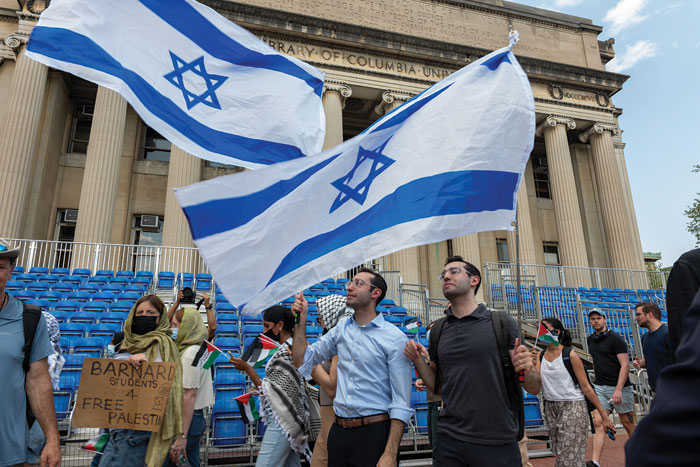
You don’t need my weekly email to remind you how awful things have been in our schools. Not only are students in colleges and universities facing anti-Jewish thuggery, but the younger kids in many high schools and elementary schools are feeling less safe because of a vacuum of responsible leadership.
Here’s the bottom line: Those in charge of our places of learning need to go back to school to better understand the A-B-C’s of being an educational leader:
A. Creating a safe environment for ALL students.
B. Encouraging students to critically think while also mentoring them to ethically act.
C. Reminding students that we live in a country that, though flawed at times, has been a cradle of good values that did not historically exist elsewhere in the world.
D. Putting a stop to hateful speech and actions. Immediately.
E. Listening to voices of concerned constituents.
F. Using your position with wisdom, not for popularity.
G. Teaching history in full context rather than a narrow vacuum.
H. Building bridges rather than barricades.
Educators, this is your moment in time to go back to the basics.
Students and parents, we need to demand this of our leaders. As our Jewish sages teach, “The true guardians of a community are the teachers” (Talmud Yerushalmi Hagigah 1:7)”
I have no reason to write about American students who raise Hezbollah flags in their pathetic attempt to be woke, or whatever. They are America’s problem. Or about American students dressed as if for a gay pride parade, in support of a movement that would throw them off rooftops had they danced in such a manner in Gaza. Such silliness can be rarely cured by words of reason. And I am not quite motivated to mock university administrations whose response to anti-Jewish protest is weak and confused. My mockery will have zero impact on their behavior.
As an Israeli I look at American universities with a mix of puzzlement, amusement and sadness. And I look at them to figure out what this all means for me – and my fellow Israelis and Jews. Of course, Israelis and Jews can try to moderate the impact of the protest movement and to assemble coalitions against hateful acts and language, and they can use their resources to resist the perpetrators of violent demonstrations. But ultimately – and this is as bad as it sounds – Israel and the Jews aren’t always powerful enough to divert a tide of hate away from them. I am not inclined, as some commentators did, to compare what happens in American universities to 1934 Germany. Not all things in life are either OK or Nazi. There are shades of grey in between. And yet, anti-Jewish forces were able, time and again, to prove their agility and durability. They might have their moment now.
So Jews must fight against the hate movement, and also must be prepared for a future in which American universities become less hospitable than before. They must think about alternative methods for dealing with a new reality that doesn’t bend itself to their needs or wishes. And they must do it in three ways:
By readying themselves to identify their more dangerous enemies. By sticking together and bracing themselves for a fight without fear.
By making themselves better, more essential, irreplaceable.
Identifying enemies is going to be difficult for many Jewish Americans who have strong liberal tendencies. Their growing inability to be both outwardly Zionist and outwardly progressive is understandably heartbreaking. For some of them, it is an identity crisis.
Identifying enemies is going to be difficult for many Jewish Americans who have strong liberal tendencies. Their growing inability to be both outwardly Zionist and outwardly progressive is understandably heartbreaking. For some of them, it is an identity crisis. For a while, they dealt with it by comforting themselves that the “right” is still more of an enemy than the “left” – as if having enemies on both sides of the political spectrum is some kind of consolation.
It is not. Moreover, it is not relevant, because most of their social and professional circles are impacted by what happens on the left much more than by what happens on the right. If they are shunned by a bigot in Oklahoma, they would rarely notice it. If they are shunned by a Hezbollah-flag waver at Columbia University, they would.
So for now, the more dangerous enemies are those who make it harder for Jews to live peacefully where they live, and work peacefully where they work, and hang out peacefully where they tend to hang out. And no parallel hateful trend in other places could somehow make this fact more tolerable.
Hence, they need to come together, and defend themselves without being apologetic about their need to do it, and without relying on obviously reluctant authorities to do it. Jewish students can also form groups, project power, intimidate their haters. They did it in the past, they can do it again. Dealing with bullies is not easy, but there is one language they understand. A language that many Jews in America might need to relearn (Israelis, for good and bad, are well practiced in this language of bullyism).
The third “must” is important and difficult to achieve. If American universities become less hospitable, what could be the remedy? One option is to still attend them, and deal with the hostility by lowering one’s profile, or by fighting back as a group. Another option is to attend those universities that make sure to have safe environments for Jewish students and faculty. Those universities ought to be identified and encouraged, and benefit intellectually and materially for making the right choice. If Jews can contribute to making these institutions greater than the institutions that became inhospitable – that would be a proper reward for our friends. Another option is to strengthen Jewish institutions of study, in the U.S. and in Israel. Some Israeli officials have already hinted at such an option as their choice, but this depends, among other things, on Israel going back to its senses and being a place in which excellence in science and pursuit of intellectual achievement is encouraged and respected.
Is there a bottom line? I think there is. In Israel and the U.S. Jews are facing a crisis, and a crisis is an opportunity for improvement and for growth. Let us not miss it.
Something I wrote in Hebrew
Identifying enemies is going to be difficult for many Jewish Americans who have strong liberal tendencies. Their growing inability to be both outwardly Zionist and outwardly progressive is understandably heartbreaking. For some of them, it is an identity crisis.
A week’s numbers Pesach is over, but this question is always relevant, and the response of Arab Israelis is troubling. Only one in ten acknowledges that a Jewish temple ever existed in Jerusalem (from JPPI’s survey of Israeli Arabs).
A reader’s response:
Moshe Krause asks: “Are you going to write about the scandalous behavior of American universities’ administrations?” My response: I think I just did.
Shmuel Rosner is senior political editor. For more analysis of Israeli and international politics, visit Rosner’s Domain at jewishjournal.com/rosnersdomain.
On April 14, the Los Angeles Jewish Symphony (LAJS) performed before a full house at Wilshire Boulevard Temple’s Resnick Family Campus, formally known as University Synagogue, as part of the symphony’s 30th anniversary celebration.
(From left) WBT Senior Cantor Lisa Peicott and young artist Eden Kontesz. Photo by Sheldon Botler Photography
Featuring LAJS Founding Concertmaster Mark Kashper, Cantor Lisa Peicott, Cantor Ilan Davidson and young artist Eden Kontesz, the milestone concert returned LAJS to the site of their 1994 debut concert. Among other pieces, Kontesz sang “Light a Candle,” and Davidson wowed the sold-out crowd with Stephen Sondheim’s beloved Broadway tune “Being Alive.”
The repertoire, drawn from throughout the LAJS’s 30-year history, exemplified the breadth and importance of the LAJS’s mission, with works by such composers as Leonard Bernstein, Shony Alex Braun, Sharon Farber, Kurt Weill and others.
Of the event, John Lavitt of the Hollywood Times wrote, “Dr. [Noreen] Green led her talented orchestra in a series of pieces that reflected the group’s history and mission…the diverse offerings highlighted the value of the LAJS as a part of the Los Angeles cultural landscape.”
Food influencers turn out to Pico-Robertson based Our Big Kitchen Los Angeles to create gourmet meals for those in need. In L.A. County, an estimated one-million households are considered food insecure, according to a 2023 study by the USC Dornsife Center for Economic and Social Research. Courtesy of OBKLA
On March 20, Our Big Kitchen Los Angeles (OBKLA) held a special event for food influencers who were invited by legendary food host and recipe developer Dini Klein of Prep + Rally to come together and use their skills to create beautiful gourmet meals for those in need.
Under instruction from OBKLA Chef Joseph Johnson, attendees learned the art of making homemade gnocchi from scratch, infused with lemons from @wonderfulseedlesslemons, whilst enjoying artisanal cocktails by @thenaturalmixologist and a gorgeous graze table from @thegrazela.
“This event truly showcased the versatility of the OBKLA space for infusing every celebration, such as a birthday, bar or bat Mitzvah, a date night or singles event with a dose of chesed, kindness and feeding people in need,” OBKLA Executive Director Yossi Segelman said.
Based in a 4,600 square-foot space in Pico-Robertson, OBKLA is a community-run, non-denominational kitchen that prepares meals for distribution to those in need throughout Los Angeles.
From left: “Black Power, Jewish Politics” author Marc Dollinger and Jews of Color Initiative CEO Ilana Kaufman at the Skirball Cultural Center. Courtesy of Jews of Color Initiative
More than 100 attendees turned out to “Black Power, Jewish Politics.”
The April 17 event at the Skirball Cultural Center featured author Marc Dollinger (“Black Power, Jewish Politics: Reinventing the Alliance in the 1960s”) in conversation with Jews of Color Initiative CEO Ilana Kaufman.
The book release and communal dialogue program was brought to life as part of a unique partnership between Jews of Color Initiative (JoCI) and Skirball Cultural Center.
“It was a healing evening to see academic and intellectual inquiry, a process of refinement that helps us reflect and rectify our past, and I was grateful to hear many others felt the same,” said Grace Osborne, the Los Angeles program coordinator at JoCI.
Supported by Jewish Community Foundation of Los Angeles, JoCI aims to advance racial equity in this country’s Jewish community by ensuring Jewish institutions “reflect the multiracial reality of the Jewish people,” according to the organization’s website.
A seder with children and families from Valley Beth Shalom’s Early Childhood Center was held April 16, a few days before the start of the Passover holiday. Courtesy of Valley Beth Shalom
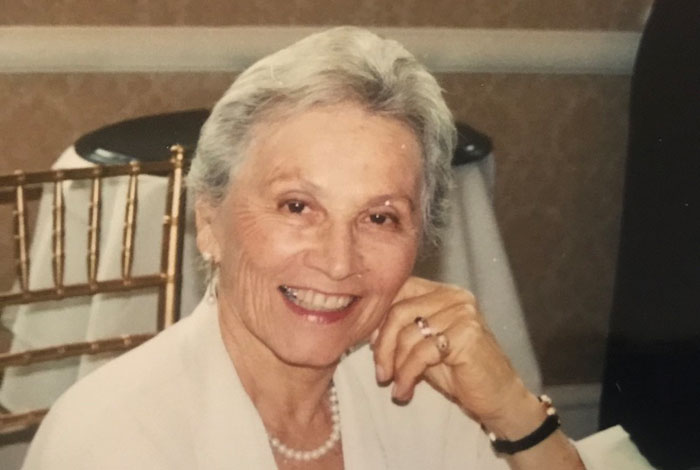
“Quo Vadis?” As I entered my cousin Erika Jacoby’s home, she looked me in the eye and asked me the question: Quo Vadis? Where are we going? Erika is a 95-year-old Holocaust survivor, psychotherapist, and widow of Dr Emil Jacoby, the former head of the Los Angeles Bureau of Jewish Education. She remembers pogroms. She remembers Auschwitz. Now she remembers Oct. 7 – and wonders where it will all end.
Over a snack of fruit and hamantashen, Erika shared her thoughts about the future of the Jewish people. Here are some excerpts from our conversation.
When asked what she meant by “Where are we going?” she replied, “That’s the big question. it is probably the eternal problem of the Jews.” She asserts that even though one person’s role is small, they must live up to their heritage. “As it says in Pirkei Avot, Rabbi Tarfon used to say, ‘You are not required to complete the task, but you are not exempt from undertaking it.’“
In previous conversations, Erika and I have discussed the many people who find the news so depressing that they do not look at it. She scoffed, “It is the only solution for blind people. When I was young in Hungary, we had no free press. We did not know what Hitler was; we were like blind people, and look what happened. I think we cannot afford to be blind.“ Now, Erika watches the news every night because she feels responsible for knowing what is happening. She emphasizes, “We are living through a historic time that will be written about for years to come, and we have a responsibility to bear witness to it. You need to think because this is not just what happens next week. This is defining our future, and we have to think about how our grandchildren will grow up with hatred. And we need to learn how not to hate.” When I protested that we don’t hate our enemies, but they hate us,she said, ”I know, but that’s not an excuse for me to hate.”
Despite her experience of Auschwitz, Erika remains committed to the ideal of peace. She adds urgently, “I need to tell you, and whoever wants to hear it, that this is not the way to go. I know you say, look what they are doing. And I’m scared. I’m scared of weapons. I don’t want to die. But what do I do to prevent that? So that’s the question, “Where are we going?” I don’t think you and I will answer those questions sitting here having lunch. But we asked. That in itself is doing something right. We are not just going ahead with blind eyes.” Even in the face of violence perpetrated by our enemies, she insists that the path to true justice lies not in retaliation but in reconciliation.
The belief that Judaism is a religion of peace is central to Erika’s worldview. She invoked the teachings of the Torah, which implore us to cherish and seek peace. She expresses dissatisfaction with Israel’s current government, saying, “I love Israel, but I feel that somehow the Israeli government lives within a dream world that whatever they do is okay because they have suffered. It’s not okay. Living with violence is not okay.”
When I protested that the only language Hamas understands is the language of violence, she retorted, “That’s the question. Just because he is bad, do I also have to be bad? If he is trying to kill me, I have to defend myself. We have an army that has protected us. They had to do what they did after October 7, but it is not defensible in theory to underwrite violence. I do not have the answer, but we need to think about it. Right now, we only know to fight.”
Although she understands the need to defend ourselves, Erika is stalwart in her view that the only real path forward is through peace. “We need to learn to raise our children with thoughts of peace,” she said. When I said that our enemies love death and we love life, she replied that the key is education. “The time is short, and the work is too much, but we cannot go to sleep because it might be too late. “
When asked about what a person can do to prevent the flow of violence, Erika, drawing on her decades of experience as a psychotherapist, noted that hatred is one of the easiest emotions to acquire. However, she added, “People don’t think about the meaning and consequence of hatred. Our religion always teaches peace — why do we not listen to ourselves?”
Erika does not claim to have an answer to the paradox of needing to defend our land and living in peace. She urges us, however, to continue asking the questions.
Erika does not claim to have an answer to the paradox of needing to defend our land and living in peace. She urges us, however, to continue asking the questions. She insisted “All I can say is that the most acceptable behavior is to search because if we don’t, that means we have given up to violence. I don’t want to accept that, so I do whatever I can to remember that words can kill and try to lower the temperature, not add fuel to the fire.”
In conclusion, Erika reflected, “In a way, it’s not fair to ask me what I think because I have already experienced the worst. So what do you think I feel? Am I scared? Do I hate them? No, because my parents taught me not to hate. Because my religion taught me how not to hate. And if I don’t follow that, then I don’t deserve to live.”
Perhaps, then, this is Erika’s answer to the question, “Quo vadis?” We are going toward peace, even if it might be a long way coming.
Elizabeth Danziger is the author of four books, including “Get to the Point,” 2nd edition, which was originally published by Random House. She lives in Venice, California.
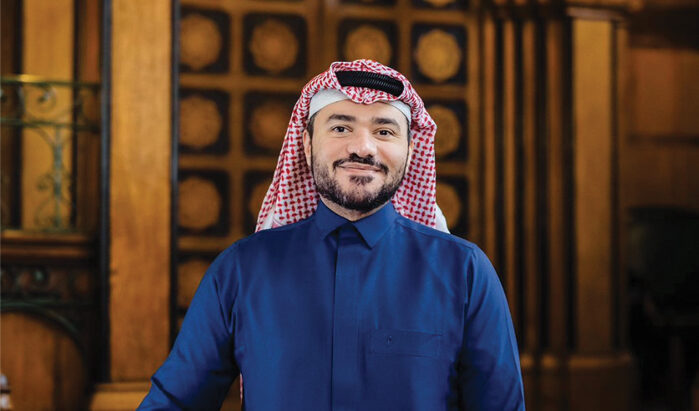
Loay Alshareef grew up a religious Muslim in Saudi Arabia, where he learned that Jews came from pigs and apes, they lived on stolen land in Israel and “The Protocols of the Elders of Zion” was true.
And then, when he was in his 20s, he went to Paris to study French. When he walked into his hosts’ home, he saw a Star of David –and he was horrified. He called up his mother and his school, who urged him to “take his time” and stay. He ended up living in that home for almost a year, where he did Shabbat dinner with his host family and realized his views on Jews were wrong.
Now Alshareef is an outspoken peace activist who welcomes Israelis to the UAE and recently completed a tour of college campuses in the U.S., where he spoke to students about bringing peace to the Middle East.
“I want the American audience on campuses to listen to the critical voices from the regions, from the UAE, Saudi Arabia and the Gulf.”
“I want the American audience on campuses to listen to the critical voices from the regions, from the UAE, Saudi Arabia and the Gulf,” he said. “We believe in peace in the Middle East. “We believe in a reconciliation of the children of Abraham. This is a message not being heard a lot on campuses. I’m doing my part to give people hope.”
Alshareef has a large social media following and has used it to highlight his trips to campuses. He visited USC, speaking to students and posing in pictures with them and Dov Wagner, the Chabad Rabbi. Next to the photos, posted on Instagram, he wrote, “Evil ideologies, like those promoted by the Muslim Brotherhood, seek to keep Muslims and Jews in eternal enmity. We are spreading hope on campuses because we are native Arabs who can effectively debunk this misinformation.”
The pro-peace influencer also met with Tessa Veksler, president of Associated Students at the University of California, Santa Barbara, an Israel on Campus Coalition fellow and a prominent pro-Israel voice on campus. “Peace activists are growing in number, and Loay is an incredible representation of being the unique voice among many standing up for the right thing,” Veksler wrote on Instagram. “As a Muslim and Jewish duo, we are a shining example of coalition-building.”
While touring the campuses, Alshareef met students who he said were “disconnected from what’s really happening.” For instance, at a school in Rhode Island, “people were chanting chants without any idea of what they meant. Did they read the Hamas charter? They have the wrong idea about these people, who they think are freedom fighters. They don’t know Hamas’ ideology.”
What Alshareef believes will change people’s minds – even those who are radicalized – is education. When he visited the Intrepid Museum in New York during his U.S. trip, he read about the Japanese kamikaze pilots during World War II and how they were also radicalized. But with education, they altered their way of thinking.
“It starts with education, whether we like it or not,” he said. “I use social media along with other Arab peace activists to change the narrative on Israel and show great examples of reconciliation between Arabs and Israelis. We are not doing this to serve any political agenda. We are doing this for our children and grandchildren.”
After all, Alshareef can personally attest to the power of education. When he met his Jewish host family and learned about the Torah and other Jewish texts – instead of reading the antisemitic “Protocols of the Elders of Zion” and consuming hateful media – he changed his entire stance.
“I’ve seen the darkness, and I can help overcome it,” he said. “No one will give you the solution for how to change people’s minds and hearts like someone who has been in the darkness, overcame it and went to the light.” Though Alshareef acknowledged he is not in the majority of voices, there are a growing number of pro-peace activists. “People are slowly but surely changing,” he said.
Most of his social media content is in English with Arabic subtitles so that he can reach his Arab audience as well. “It tells them, ‘I haven’t forgotten about you,’” he said. “In my subtitles, I use the right words that touch their hearts because I have been in their shoes. I’ve been there and I know how they think.”
So, where does the Middle East go from here?
Alshareef believes that the Israelis and Saudis will come to an agreement after the war ends and there are some concessions and deals made. “I believe that Saudi Arabia views Israel as part of the region, and peace will take place,” he said. “It’s very close, and of course, peace will benefit everyone.”
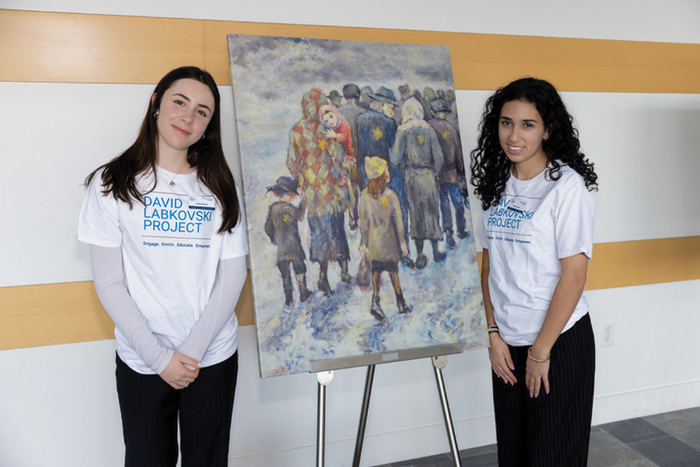
In 2016 Leora Raikin embarked on a poignant journey introducing her late great-uncle’s artwork to the world. The first selection of David Labkovski’s paintings was displayed at a school in Canoga Park. Raikin presented the haunting images of children and adults during the Holocaust. Labkovski, a Holocaust survivor, channeled his experiences into over 400 paintings, each a testament to the horrors he witnessed.
The revelation that none of the eighth-grade students had heard of the Holocaust struck Raikin profoundly. “To the school’s credit, they changed this around,” she said. “When we informed community leaders about this reality on the ground, they couldn’t believe what’s been going on.”
Labkovski was born in 1906 in Vilna (current-day Vilnius, Lithuania). Once the war broke out, he was sent to prison in a Siberian gulag, and after the war he returned to Vilna, where he lived for 14 years. After many petitions, he and his wife Rivka were given permission to go and live in Israel. He spent the first year in Ramat Gan and then moved to the art colony in Tzfat.
Leora Raiking, Founder and Executive Director of DLP Photographer: Luis Luque Photography
“We were his only surviving family on his wife’s side,” Raikin said. “They never had any children, and they were more like my grandparents than an aunt and uncle. We spent a lot of time with them growing up. They would come and stay with us in South Africa for weeks, and when we went to Israel, we would stay with them.”
The educational initiative, known as The David Labkovski Project (DLP), offers a unique approach to combating antisemitism and educating about the Holocaust. It integrates history and art, empowering students with the skills to educate their peers and community. Through the artist’s paintings and sketches, viewers not only learn about the Holocaust but also lessons of life, survival, tolerance, acceptance and the importance of bearing witness to history.
The program is available on Sundays throughout the year, providing students with a comprehensive educational experience at no cost. The curriculum is rigorous, requiring a seven-hour commitment, during which students undergo training to become docents. These docents play a crucial role during exhibitions, fostering connections with students from various schools. Half the students participating in this program are not Jewish.
“We actively engage with educators, from teachers to principals and superintendents of both public and private institutions, including Christian, charter and other schools,” Raikin said.
The project delves into the origins and repercussions of antisemitism, dividing Labkovski’s experiences into four distinct phases: pre-war Vilnius, his internment in Siberia, his poignant visual narratives of the Holocaust’s devastation in Vilna and his post-war rejuvenation in Israel.
The exhibit in La Jolla has 40 paintings and there are 20-50 real size lithographs in schools. The response to the program has been overwhelmingly positive; few have declined the offer to bring the exhibit to their schools.
“Our student jobs and training program in particular has garnered significant interest,” Raikin said. “Graduates of our program become ambassadors for the David Labkovski Project, often taking the initiative to reach out to school administrators to arrange visits. This grassroots approach has proven highly effective in expanding the reach of our program onto school campuses.”
Viewers of Labkovski’s art notice that he often used the brightest colors for the children he painted, representing the generation that would be robbed of their innocence and potential.
Viewers of Labkovski’s art notice that he often used the brightest colors for the children he painted, representing the generation that would be robbed of their innocence and potential. The clarity of colors in their clothing and facial expressions contrasts sharply with the dark reality they faced. He also employed a technique of almost disproportionate anatomy, particularly noticeable in the hands of those depicted in his Holocaust paintings. Their hands serve as a last resort — to hide, to cuddle, to embrace — a desperate attempt at protection.
In every stroke, every hue, Labkovski weaves a narrative with layers of meaning. His paintings are like stories waiting to be deciphered, with clues and information embedded in each brushstroke. From the play of light to the angle chosen, he meticulously crafts every detail. His background in anatomy, acquired at the Academy of Leningrad, allowed him to convey emotion with precision, particularly evident in the eyes and shoulders of the people he painted, revealing the internal turmoil of his subjects.
Raikin emphasized the dedication of today’s students, who, despite their busy schedules, willingly participate in the student docent and training program. She recounted a conversation with one student docent from Tijuana, who crosses the border every Sunday morning at 5 a.m. to attend school in San Diego. When she asked her why she devotes her Sundays to this program, her passionate response moved Raikin.
“She said, ‘This is so important to me,’ and you could just see it in her face. The passion that these students bring to educating their community and to educating people about the Holocaust, about antisemitism through this art, is incredibly hopeful.”
Raikin said that her great uncle would have been deeply moved and proud had he seen the project. She recalled that when he had his first exhibit in 1959, people didn’t want to see images of the Holocaust. “His art was critically acclaimed, but emotionally people did not want to see or talk about the Holocaust, it was too raw,” she said. “My uncle and aunt felt so devastated and betrayed by people’s reaction.So, for him to have students, generations after he died, not only look at his art but educate people through his art, this would have been beyond a dream come true.”
Passover is a meaningful time, filled with a wide variety of special traditions and foods. The return of the chametz also gives people a reason to celebrate.
Samantha Ferraro, founder of The Little Ferraro Kitchen and author of the “The Weeknight Mediterranean Cookbook,” misses pasta the most during Passover.
“My cherry tomato pasta combines comfort and simplicity,” Ferraro told the Journal.“Plus, tomatoes are my favorite fruit.”
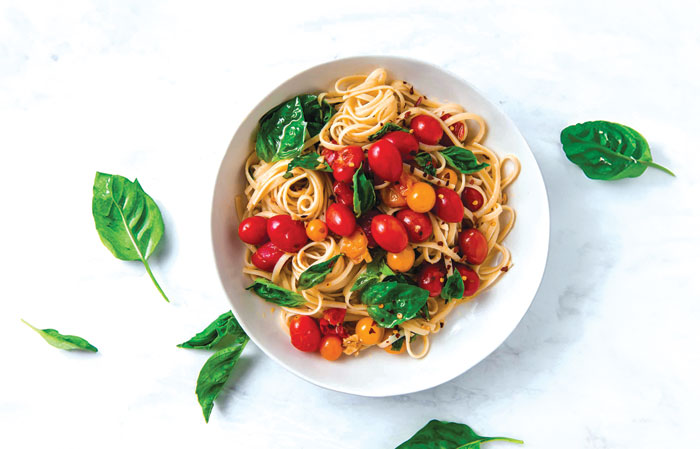
Cherry Tomato Pasta with Garlic and Lots of Basil
Yield 6-8 serving
1 pound linguini
Kosher salt
¼ cup olive oil, plus more for garnish
3-4 garlic cloves, minced
2 pints cherry tomatoes, any variety
¼ cup grated parmesan cheese, plus more for garnish
1 cup fresh basil leaves, roughly torn
Flaky sea salt for garnish
Red pepper flakes, optional, for heat
Begin by boiling a pot of water for the pasta and season liberally with kosher salt. Cook linguini according to directions, until al dente, about 8-9 minutes.
Meanwhile, heat a large skillet over medium-high heat and drizzle with olive oil. Add garlic and sauté for 30 seconds until just softened but color has not changed.
Add cherry tomatoes and cook until tomatoes begin to burst. Use a wooden spoon to gently press on the tomatoes as they soften to help them burst. Season with salt and cook for about 10 minutes or until tomatoes have started to release their juices.
Once pasta is done, drain pasta, reserving 1/2 cup pasta water. Add cooked pasta directly to tomatoes and toss to combine and stir in parmesan cheese. If the sauce is too dry, add a bit of pasta water and another good drizzle of olive oil.
Roughly tear up some of the basil and add to pasta, tossing everything together.
Plate pasta with cherry tomatoes and top with fresh basil, red pepper flakes, drizzle of olive oil, sea salt and parmesan cheese.
Notes:
To help cherry tomatoes cook a bit quicker, place a lid over the skillet, which will also help retain any juices/liquid.
If you don’t have cherry tomatoes, larger tomatoes will work well, just chop them into ½ inch cubes.
If the sauce is too dry, add some of the reserved starchy pasta water and stir to combine
Photo: unsplash Natalia Rüdisüli
To me, it’s not Sunday morning if I don’t have my bagels and lox, and similarly, it’s not Shabbat without a slice of fresh challah,” June Hersh, author of “Food, Hope and Resilience: Authentic Recipes and Remarkable Stories from Holocaust Survivors,” among others, told the Journal. “I miss both during Passover, but for tradition’s sake, I’ll go with challah being the most noticeably absent from my weekly routine.”
While Hersh said she doesn’t always bake a homemade challah, when she does, she uses Nadzia Bergson’s recipe from the aforementioned book.
“Nadzia’s story, her survival from Auschwitz and her beautiful bashert are inspiring,” Hersh said. “Her challah is inspiring, as well, and the tactile sensation of preparing challah is completely satisfying.”
Nadzia Bergson’s Challah
Yield: 1 large loaf
Start to Finish: Under 4 hours
1½ tsp active dry yeast
1¼ cups warm water (yeast thermometer should read between 105 and 115 degrees)
½ cup sugar
2 tablespoons vegetable oil
1 egg
4 cups bread flour
1 tsp salt
Egg wash glaze:
1 egg plus 1 Tbsp water, beaten
In the bowl of a standing mixer, combine the yeast, water and sugar and allow the yeast to bubble, about 10 minutes. Add the oil and egg; beat on low speed with the flat paddle until combined. Slowly begin adding the flour and salt and mix until all 4 cups have been incorporated. Turn the mixer to medium and mix for several minutes. Replace the beater with the dough hook and knead for 10 minutes longer, adding more flour if needed to create a smooth, firm, elastic, non-sticky dough.
Turn the dough out onto a lightly floured surface and knead for a minute or two so you can judge if the dough is right. Pour a drop of oil into a bowl and then place the dough in the bowl, rolling it around so all sides are covered with oil; this will help prevent a crust from forming while the dough rises. Cover the bowl with plastic wrap and then drape with a towel. Let it rise in a warm place for at least 1 hour or until it has doubled in size. If baking the dough at a later time, you can refrigerate the dough overnight and proceed to the next step.
Turn the dough out onto a lightly floured surface and punch down several times, so that all the air is released from the dough. Return the dough to the greased bowl and cover in the same manner as before. Let the dough rise for an additional hour
Lightly flour a work surface and turn the dough out. Punch down the dough and separate into three equal parts. Roll the dough sections in your hands to form three ropes, each about 12″ long. Squeeze out the air as you roll and gently pull on the ends, so the strand is thicker in the middle and narrower at the ends.
Place the three ropes on a lightly greased baking sheet. Pinch the ends together at one end and begin braiding the bread just like you would a ponytail, by moving the far-right piece over the middle piece, taking the far-left piece and bringing it over the middle piece. When done braiding, pinch the remaining ends together and then tuck them underneath to create a neat finish. Cover with plastic wrap and a towel and let the dough rise one more time, about 30 minutes. Preheat the oven to 350°F.
Prepare the egg wash, and using a pastry brush, coat the challah. Bake for 40 minutes or until the top is nicely golden brown. When you tap the bread, you should hear a hollow sound. Let the bread cool completely before slicing.
Note: 1 cup of raisins can be mixed in for a sweet holiday version, and poppy or sesame seeds can be sprinkled on top right before baking.
Doug Weinstein is executive chef for the Santa Barbara Jewish Federation. “I love dipping my mandelbrot into my coffee, while I watch the sun rise over the Santa Barbara coast,” Weinstein told the Journal.
Heat oven to 350°F. Line a large baking sheet with parchment paper.
In a large bowl, combine flour, baking powder and salt, and set aside. In another large bowl or a stand mixer, fitted with the whisk attachment, beat the eggs until well blended. Increase the speed to high and beat in the sugar 2 tablespoons at a time until mixture is thick and foamy, about 4 to 5 minutes.
Add oil and extract(s) to the eggs and beat briefly to blend. Replace whisk with the paddle attachment and, on lowest speed, beat in flour mixture and almonds just until mixture holds together. It will be soft, but shouldn’t be too sticky. If necessary, add a few more tablespoons of flour.
Divide dough in half. Dampen hands lightly and form each half into a 3-inch-by-12-inch log on the prepared baking sheet, spacing 4 inches apart. Bake for about 45 minutes or until golden brown and firm to the touch. Remove from the oven and let it cool for at least 10 minutes.
Carefully place logs on a cutting board and cut diagonally with a serrated knife into 1/2 to 3/4-inch slices.
Place pieces cut side down on ungreased baking sheets. Bake for 5 minutes. Turn pieces over and bake 5 minutes longer or until completely dry. Cool completely on wire racks.
Store in an airtight container for up to 3 months or freeze.
Friday night dinner is the quintessential Jewish experience. The ultimate reward for a long week of work and school. It’s the showcase for Jewish food, be it matzah ball soup or Yemenite soup, gefilte fish or Moroccan fish.
For me, Friday night dinner is when I try to delight my family and friends with the most delicious foods I can prepare — tender short ribs, juicy chicken, crispy potatoes and the creamiest, softest, sweetest sweet potatoes. There will be slow-simmered Iraqi-style stews and perfectly steamed basmati rice, lots of salads, one special dessert and fresh fruit.
We often start our Friday night meal with fluffy challah topped with freshly chopped garlic and extra virgin olive oil. Honestly, it’s so good that I often think that it could suffice for the whole meal.
When I inform guests that garlic is antiviral, antibacterial and anti-fungal, my husband likes to add, “and antisocial!”
When I inform guests that garlic is antiviral, antibacterial and anti-fungal, my husband likes to add, “and antisocial!”
As much as I love garlic raw, sometimes I change it by roasting the garlic in an olive oil confit, rendering the garlic all soft and buttery.
Confit, which derives from the French verb confire (to preserve), is a cooking method that originated in the Gascon region in the south of France. Duck and geese were slowly cooked over low heat in their own fat, then stored in clay pots that were sealed with another layer of fat to be consumed in the winter.
Of course, our modernday confit is meant to be devoured immediately. Our recipes for tomato and garlic confit and vegetable confit are truly easy and very impressive. The vegetable confit takes wonderful root vegetables and infuses them with the subtle sweetness of the aromatics — a dozen cloves of garlic, red onion and bay leaf. The fennel, turnip, and orange and purple heirloom carrots caramelize in the oven, intensifying all the delicious flavors.
Just fine for eating with challah.
—Sharon
Unlike Sharon’s family, we are not big fans of raw garlic. But a few years ago, I started noticing recipes for garlic confit and we’ve been hooked ever since. Roasted garlic with herbs, salt and olive oil is amazing, but adding cherry or grape tomatoes takes it to a new level. The contrast of the soft, sweet garlic and fresh juicy brightness of the tomatoes is a culinary delight. I also like to change it up by adding a few sprigs of thyme or fresh oregano.
A mezze of fresh dips on the table has become a very popular, modern way to entertain. For Sephardic Jews, salatim are an imperative. We’ve had them on our table all our life—hummus, tahini, matbucha, salad cuite, grilled peppers, pickles and eggplant. But when I present my guests with poached garlic and tomatoes, it’s a pleasant surprise.
This is unlikely, but if you have any leftovers, there are many options for repurposing.
The garlic cloves are perfect for smearing on anything—especially toast (garlic bread, duh). Mix them into hummus or to top your other dips. Add them to a pan of fried eggs and braised spinach for a healthy breakfast.
Blend the roasted vegetables into soups or add them to any pasta dish. Add them to the pan when cooking meat, fish, or vegetables and toss them with roasted potatoes.
This Friday night, Sharon and I hope you will serve a lovely garlic and vegetable confit and enjoy it with a fresh crusty challah surrounded by the faces you love the most.
A truly precious reward.
—Rachel
Cherry Tomato Confit
10–12 cloves of garlic, peeled
½ tsp salt
¼ tsp pepper
1–1 ½ cups olive oil (tomatoes should be covered at least half way)
1 handful of fresh herbs, like basil, oregano, thyme or dill
Preheat the oven to 425°F.
Place the tomatoes, garlic, salt, pepper and olive oil to a small ovenproof baking dish.
Gently stir until the tomatoes and garlic are evenly coated.
Sprinkle the fresh herbs on top.
Cover the dish with foil, then place on a sheet tray to catch oil splatter.
Roast in the oven until tomatoes burst a little, about 20 minutes.
Remove foil and cook for 10 more minutes.
Vegetable Confit
1 large fennel, cut into wedges
2 medium turnips, lightly peeled, chopped into wedges
2 medium heirloom carrots, cut into 1/2″ thick pieces
1 large red onion, cut into wedges
12 garlic cloves, peeled
4 bay leaf
2 tsp kosher salt
1/2 tsp pepper
1 1/2 cups extra virgin olive oil
2 sprigs rosemary, for garnish
Preheat oven to 400°F.
In a medium ovenproof dish, arrange the fennel, turnip, carrots, onion and garlic, then tuck the bay leaf in between the vegetables.
Sprinkle the salt and pepper over the vegetables, then cover with the olive oil.
Roast in the oven for 1 hour.
Garnish with rosemary before serving.
Sharon Gomperts and Rachel Emquies Sheff have been friends since high school. The Sephardic Spice Girls project has grown from their collaboration on events for the Sephardic Educational Center in Jerusalem. Follow them on Instagram @sephardicspicegirls and on Facebook at Sephardic Spice SEC Food. Website sephardicspicegirls.com/full-recipes.
One verse, five voices. Edited by Nina Litvak and Salvador Litvak, the Accidental Talmudist
For on this day He shall effect atonement for you to cleanse you. Before the Lord, you shall be cleansed from all your sins. It is a Sabbath of rest for you, and you shall afflict yourselves. It is an eternal statute.
– Lev. 16:30-31
Chana Rachel Schusterman Chasidic Educator / Dating Counselor
Yom Kippur is the holiest day of the year, when we return to G-d from whatever has kept us distant. Our desire is to be forgiven, to reconnect, and become one with G-d.
“For on this day He shall effect atonement for you to cleanse you.” The word “he” is understood by some as referring to the High Priest, whose temple service was intended to create the interconnection between G-d and the Jew. Others say that “He” refers to G-d Who forgives and reopens the intimate union that the High Priest is working to attain. On this day, “He” reveals the essential core relationship.
Even though we don’t have the Holy Temple today, the Jew performs the Yom Kippur service in the Temple of the Heart. We fast, as we review and evaluate our behavior, aiming to return to the Eternal. On this day G-d bestows purity on the person and forgives.
How does this work? On Yom Kippur in the Holy Temple, when the Kohen Gadol sanctifies himself, likewise, on the inner level, we all go into the Holy of Holies. The person moves closer to G-d through the service of the day. Then he atones and becomes elevated. The Talmud also says that “the essence of the day itself atones.” G-d’s own desire to unite with His people interacts with the Jew’s desire for connection. Through this unification, the Jew receives illumination from above. It is “He” Who atones for you on this day bringing true atonement.
I would have thought the opposite: Because we afflict ourselves on Yom Kippur, God forgives us. Yom Kippur is an exchange.
But that’s not how the verse is written. “You shall be cleansed from all your sins,” the text says. Then: “you shall afflict yourselves.” Because God cleanses, the words seem to say, we self-afflict. There’s a lot to be said about that self-affliction, but I want to put it aside for now. I want to focus instead on the fact that we react.
On Yom Kippur, God gives you this incredible gift. What will you do next?
That is the question of the day.
Benjamin Elterman Screenwriter, Essayist, Speechwriter at Mitzvahspeeches.com
How is it that Hashem “effects atonement” to “cleanse you”? The Hebrew words kapara and tahor aren’t easy to translate into English. Kapara is usually translated as atonement, but what does that mean? Google’s definition is a “reparation for a wrong.” When you have been hurt or offended by someone, they can ask forgiveness, but if the offense is damaging enough (such as in the case of a betrayal) the nature of the relationship changes. Even when there is forgiveness, the relationship is not what it used to be. But kaparah means the relationship goes back to the way it was before the offense. That is the gift of Yom Kippur.
What is tahor? Other translations use the word “purify” opposed to “cleanse.” Though these are more familiar, tahor really means “normal” or “free of foreign elements.” So purity in a Jewish sense is really about returning to your natural essence.
So my question is, shouldn’t you first “purify” yourself before your relationship with Hashem goes back to normal? Shouldn’t the verse say, “He will cleanse you to effect an atonement?” The answer is no. We don’t need to be perfected in order to return to our relationship with Hashem. He’s not looking for us to be perfect, He’s looking to rekindle the relationship. The magic is that by us returning to that relationship, the effect is that it will purify us. When we desire to have that relationship with Hashem, everything falls into place.
Salvador Litvak Founder of AccidentalTalmudist.org, Director of the upcoming film, “Guns & Moses”
Shabbat Shabbaton is usually translated as a Sabbath of “rest,” “complete rest” or “solemn rest,” but the English falls short in all three attempts.
Ibn Ezra comments, “Some say that Shabbat Shabbaton means rest for the soul and rest for the body. Others say that Shabbat Shabbaton means a rest above which there is no other rest. Both words are nouns … They have one meaning. This interpretation is not farfetched.”
The repeated words teach something that is Shabbatik and beyond Shabbatik. Particularly after the repetition of the root THR in the previous verse — more accurately “purify” than “cleanse” — we understand why Yom Kippur opens with introspection, affliction and atonement, and culminates in celebration. It’s not because we break the fast with bagels and lox. The joy begins much earlier if we do Yom Kippur right.
The Sifra states that “He will grant atonement” refers to God, meaning that in our time, when we have no Holy Temple or High Priest to atone for us, God steps into the breach personally. So long as we do the work of atonement, God Godself purifies us. We might have thought that affliction, fasting and atonement are incompatible with the joy we experience on Shabbat. Now we see that Yom Kippur actually elevates our Shabbat joy to a whole other level, Shabbat Shabbaton!
The key is to grasp that Yom Kippur is a gift of the most personal kind, individually designed and delivered to you by our Creator who loves you.
Kira Sirote Author of “Haftorah Unrolled,” Ra’anana, Israel
“On this day, you will receive atonement, you will be cleansed.” The “you” in this verse is plural, not singular. The acts of the Kohen Gadol to ensure this atonement, effect it for the Jewish People as a whole. Even if we ourselves as individuals fail to change our behavior and fail to improve, as long as we are part of the Jewish People, we get to start over and try again.
R’ Soloveitchik points out that Knesset Israel, the Jewish People, is in fact its own independent halachic entity. The scapegoat sent on Yom Kippur belongs to that entity and atones for the individual members of that entity as long as they are “inseparably linked to it by an unseverable bond.” R’ Soloveitchik goes to great lengths to explain that bond and how it works (“On Repentance,” “The Individual and the Community”).
Since this past Tishrei, we no longer need those explanations. We have been shown what it means, viscerally. Jews all over the world talk about how their hearts are aching for their fellow Jews – in captivity, on the battlefield, on campus, in the streets of cities we thought were safe. We cannot sleep, we cannot celebrate, we cannot wish or hope or pray, without an awareness of the pain of Knesset Israel.
And we also see those for whom that bond is being shattered.
Next Tishrei, we will stand before G-d again, as Knesset Israel, different than we were last year.
Last week, the campus intifada went into high gear in New York City. The enraged student rioters, all clad in oppression chic, spread from Columbia to New York University, The New School, City College of New York, and then stormed into The Fashion Institute of Technology for the photo-op of the century.
According to multiple interviews, many of the “disrupters” have no idea why they are spouting hateful slogans, throwing glass bottles at the NYPD, or sleeping in tents. Like the Nazi youth of 90 years ago, they are just following orders.
Of the 3,500 who attended this year’s festival in southern Israel, 370 ended up mutilated, raped, shot, and/or burnt alive; 44 were kidnapped. If the disrupters actually were the “resistance” they claim to be, this is what they would be protesting.
Meanwhile, an installation called “06:29AM: The Moment Music Stood Still,” about the Nova Music Festival massacre, opened on Wall Street. Of the 3,500 who attended this year’s festival in southern Israel, 370 ended up mutilated, raped, shot, and/or burnt alive; 44 were kidnapped. If the disrupters actually were the “resistance” they claim to be, this is what they would be protesting: The deadly spread of Islamic jihad through Iranian proxies. If they really wanted to fight injustice, they would also be protesting the ongoing honor killings, persecution of gays and enslavement of Africans.
Instead, they — and their “professors” — are disrupting Western institutions to enable the spread of jihad’s barbaric inhumanity. It’s the endgame of the Marxist-Islamist oppressor/oppressed ideology that has infiltrated nearly every class. With this in mind, and a deep sadness in my heart, I entered the exhibition.
I walked into the massive installation prepared to look, to feel, to absorb, to cry. But nothing can fully prepare you for the level of evil Hamas is capable of.
Like many, I have tried to shield myself from the worst photos and even some of the worst stories from Oct. 7. But that’s not bearing witness. So I walked into the massive installation prepared to look, to feel, to absorb, to cry. But nothing can fully prepare you for the level of evil Hamas is capable of. An evil the Ivy League is now celebrating.
From light to darkness
Some tragedies are so acute in their instantaneous transition from light to darkness, from good to evil, that the word “biblical” comes to mind. The Oct. 7 pogrom fits that definition. “This wasn’t a terror attack. This was something much bigger—it’s biblical,” said Ofir Amir, the 41-year-old Nova co-founder who still walks with a cane after being shot in the legs on Oct. 7. “We’re fighting for our survival every day.”
The opening documentary is called “We Are Nova.” Thousands of music and arts fans had gathered on Oct. 6 for a celebration of “friends, love and infinite freedom” near Kibbutz Re’im. The next morning the festival goers, aged 20 to 40, can be seen joyfully dancing to trance music, a genre of electronic music, with a quiet spirituality reminiscent of ‘60s bohemians.
And then, at 6:29 a.m., the film shows a couple of Nova employees telling the DJ something. “The music stopped. The rockets started. We started running for our lives,” survivor Tomer Meir, 21, said.
“Thousands of radiant souls came together for a celebration of unconditional love and the spreading of light,” Reut Feingold, the narrator, who is also the creator and director of the 06:29 exhibit, said in the documentary. “In one moment, the festive atmosphere was shattered. The Angel of Death swooped down, firing a barrage of hateful missiles that cut through the joy like an icy winter wind. The air, thick with laughter and friendship, becomes a terrifying scene of inconceivable horror. Innocence and love, which had soared so high, crash into the ground in an avalanche of shattered dreams. The festival, which had been a symbol of joy and unity, became a chilling spectacle of terror, instantly sealing its dark place in history.”
The film ends, and we begin to experience a small fraction of what the 3,500 experienced that day. A nightmare that went from love, peace, joy, and spirituality to barbaric evil in one second. A nightmare now being celebrated on U.S. campuses.
The haunting remains
We begin to walk through the remains salvaged from the festival grounds — torn, charred tents, skeletons of scorched cars, bullet-riddled bathroom stalls and personal belongings. The tents are particularly haunting given that prefabricated versions have now shown up on dozens of campuses to proclaim that “justice” requires not just the death of all Jews, but of Western civilization.
We walk through the darkened remnants of the campsites, while videos taken on the morning of Oct. 7 — graphic raw footage from both festival-goers and Hamas terrorists — are played on multiple screens. The effect is loud, tense, chaotic, alarming. Producers of the exhibition recommend that children under 16 not attend the exhibit, and yet Israeli kids have to grow up with this.
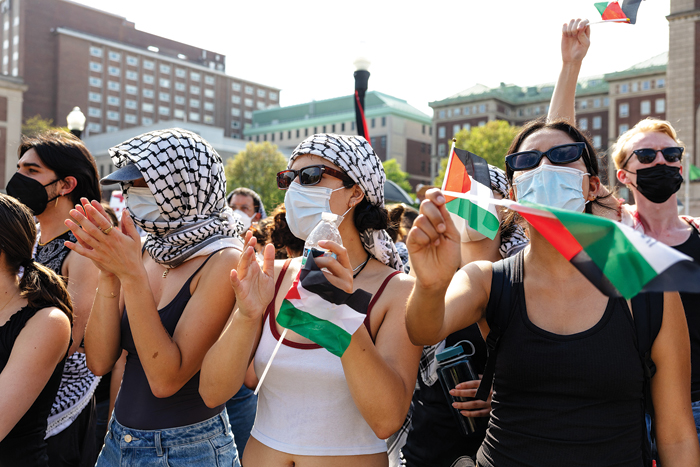
Pro-Palestinian demonstrators at Columbia University on April 29, 2024. (Photo by Michael M. Santiago/Getty Images)
How would students at Columbia or NYU react, I wondered, if seeing the exhibition was part of a social studies class? That’s never going to happen today, of course, but it would have before Marxist-Islamist ideology permeated academia.
Everything in the exhibit was brought in directly from the Nova site, including the dirt on the ground, lawn chairs, blankets, burned cars, and the DJ equipment and stage. The exhibit, which opened in Tel Aviv for 10 weeks in December, was created by Israeli designers and cultural producers, many of whom were producers with the Nova Festival itself.
Like the Tel Aviv version, the exhibit recreates the visuals and sounds of the Nova massacre. But the New York version is in some ways “more intense,” Yael Finkelstein, a volunteer who collected items from the Nova site and helped set up both exhibits, said.
“In Israel, we did this very fast after the seventh of October, so we don’t want to cause pain to people,” Omri Sassi, one of the exhibit’s producers, who was also a DJ at the festival and founder of the Nova community, said. But in New York, he said, “We needed to show people from out of the country what happened.”
“On that day, random decisions meant the difference between life and death,” reads a sign.
Both the tables of shoes and kippot are hard to look at. The former is of course eerily reminiscent of the Holocaust, while the latter almost becomes a symbol of centuries of persecution.
A massive “Lost & Found” section fills a corner of the 50,000 square-foot space. Clothing, kippot, backpacks, flasks, prayer books, hats, shoes and watches that were left behind are set up on tables. Both the tables of shoes and kippot are hard to look at. The former is of course eerily reminiscent of the Holocaust, while the latter almost becomes a symbol of centuries of persecution. One small room memorializes each of the murdered with their photos and names. More than one family lost two children.
The festival was one of the first targets of Hamas’ attack. Whether Hamas had advance knowledge of the festival is still a question. One attendee stated that after cutting the electricity, a group of approximately 50 terrorists arrived in vans and sprayed gunfire in all directions. Some of the terrorists infiltrated the festival via motorized paragliders. As the young attendees fled in panic, jeeps filled with terrorists began firing at the escaping cars and blockaded the roads. The open terrain left few places to hide.
Photo by Abbie Sophia
Redefined evil
In one section of the installation, volunteers from Zaka, the first responder search and rescue service in Israel, describe the horror and mutilation they saw when they arrived at the Nova site on Oct. 7 and in the weeks after. A bag full of heads; mutilated and cut off genitals; a badly burned body bound by cable ties.
“In some cases, they set them on fire and burned them in such a way that when we examined them, we suddenly realized what had appeared to us as one person was actually three,” one rescue volunteer recalled in one of the exhibition’s many videos.
“The sights I saw there will be engraved in my mind till the end of time. It’s not every day that you see young people tied to trees. Naked girls with their legs spreadeagled,” said Rami Davidian, a civilian who led a rescue effort that saved hundreds of festival goers. One woman was found with nails hammered into her thighs and groin.
During the same week, the documentary “Screams Before Silence,” by Sheryl Sandberg, former COO of Meta, was released. Through interviews with released hostages, first responders, medical and forensic experts, and Oct. 7 survivors, Sandberg surveys the “systemic sexual violence” against Israeli women of all ages. The film is excruciating to watch. Sandberg makes sure every horrific detail — from the sexual torture, mutilation, and “branding” to the incessant gang rapes — is clear. “Your body is open to all of them,” said one young Israeli.
The incontestable fact that Hamas used barbaric sexual violence as a tool of war — weaponizing Israeli women — has been disputed by leftists on campus, online, and in Hollywood. Each one now needs to publicly apologize for their cult-like ignorance.
But it is essential to watch the entire film. The incontestable fact that Hamas used barbaric sexual violence as a tool of war — weaponizing Israeli women — has been disputed by leftists on campus, online, and in Hollywood, most appallingly by Susan Sarandon. Each one now needs to publicly apologize for their cult-like ignorance. Or they will continue to be seen as part of the problem.
The fact that both Islamists and leftists here thought that they could get away with lying about the sexual violence when Hamas proudly filmed all of their “conquests” and posted the footage on a Telegram channel shows the depth of the anti-truth world we now live in. The fact that a group of Associated Press photographers won an award for the photo of Shani Louk, the 22-year-old German-Israeli paraded in a Hamas pickup truck clad only in blood-soaked underwear, shows how morally bankrupt our culture has become.
Healing, resilience, strength
Each room of the installation gets brighter as we walk through, ending in a warm, light-filled “healing space” with couches and rocks to memorialize. “The journey to heal yourself is a journey, for sure. Part of the community of Nova is that we heal each other together — healing is to help take care of others,” Meir said. “For me Nova is hope, helping each other, always smiling, and taking care of each other. I wish to spread that hope all my life.”
I walked out into the spring sunshine with both a deeper sadness and a keener understanding of what Jews worldwide now face. But unlike our ancestors, we have federal and state laws to protect us; the only thing missing is the bravery of nearly half the country.
“We will dance again,” the final wall of the exhibition promises. Yes, we will. But it’s not going to be an easy ride, given that much of the Democratic Party is now jihad-adjacent, just as they were slavery-adjacent before the Civil War.
None of us thought that it would get this bad this quickly, but that’s how biblical stories go. The Marxist-Islamic deterioration of our universities — where truth, reason, and history no longer exist — began decades ago; the fall into anarchy at Columbia took only a few hours.
And now we can thank George Soros for the subsequent explosion of intifada riots across the country. Students for Justice in Palestine, Within Our Lifetime, and Jewish Voice for Peace are funded by a network of leftist non-profits, all funded by Soros’ Open Society Foundation. At many colleges, the protests are being led by paid radicals who are “fellows” of a Soros-funded group called the US Campaign for Palestinian Rights. They are trained to “rise up, to revolution.”
Here in NYC, there are also The Peoples Park radicals, who posted “The Do-It-Yourself Occupation Guide” on its Instagram account. “We are sharing educational-only materials on tactical skills like holding down occupations *inside* of university buildings.” The hashtag #Escalate4Gaza accompanied the post. The 32-page booklet details tips for breaking into abandoned and commercial buildings; diagrams and step-by-step guides for barricading doors; and advice for how to maintain control of an occupied space.
“Use a crowbar to open a window,” the guide suggests. Because that’s what peaceful protestors seeking justice do, right? “We look ahead to when we enter the buildings, take over the streets, and occupy the city,” the text reads.Sure, there’s nothing specific about planting bombs, wearing suicide vests, and burning students alive. But all of that is no doubt in volume two.
In November, Within Our Lifetime, a New York City-based “pro-Palestinian” and anti-Zionist activist organization, shared a map of “enemy” — predominantly Jewish — buildings. “Each of the locations on this map reflects the location of an office of an enemy of both the Palestinian people and colonized people all over the world. Today and beyond, these locations will be sites for popular mobilization in defense of our people.”
When these jihadists in training began screaming “Globalize the Intifada” in Times Square on Oct. 8, before Israel even began to respond, few thought they actually meant it. Except those of us who either lived through an intifada in Israel or 9/11 here. If there’s one thing we’ve learned about terrorist groups like ISIS or Hamas, they mean what they say. Hyperbole isn’t their thing.
Photo by Abbie Sophia
Is this city — this country — at all prepared for the escalation? Given the tepid response thus far, it doesn’t seem likely. So yes, we have laws in place to protect Jews — but right now we’re being led by an administration that is truly incapable of understanding and responding to this stage, let alone the inevitable next stages.
And that is why the horrors in both the exhibition and the film need to embolden us for the road ahead. This biblical story will also end with the resilience of our people — hopefully more than a little wiser about the cowardice that allowed it to happen. But precisely our passion for the sanctity of life—precisely what distinguishes us from our enemies—now needs to be turned into a type of strength and bravery that we never thought we’d need. The barbarism of our enemies has again created Maccabees, this time in the Diaspora.
“Be strong and of good courage,” G-d told Joshua as he headed into the land of Israel. Now it’s our turn to lead.
Karen Lehrman Bloch is editor in chief of White Rose Magazine.