In my junior year at UC Berkeley, I brought an Egyptian
co-resident from International House named Khalid to Purim services.
This was my gesture toward international understanding and
cultural appreciation between Muslim and Jew. What a disaster!
As my co-religionists carryied on every time they heard the
name of the dreaded Haman, Khalid leafed through the Shabbat prayerbook.
When he got to the “Mi Kamocha” blessing and the celebration
of Egyptian soldiers drowning at the bottom of the sea, he turned pale. He
turned to me and said, “After all the progress made at Camp David, how can you
still have such anti-Egyptian propaganda in your prayerbooks?”
I explained to him that the prayerbook, compiled 1,200 years
ago, was referring to ancient Egyptians during the time of Pharaoh and that
Jews are very grateful to modern Egyptians for the Camp David peace accord. For
Jews, after all, the third blessing of the “Shema” is about God’s redemption
from slavery, not ancient Egyptian cruelty.
I had never looked at the “Mi Kamocha” the way Khalid did,
and I am not sure if I completely put his mind at ease. After viewing “The
Passion of the Christ,” which felt like a white-knuckle roller-coaster ride, I
wonder if my reaction to the film mirrored Khalid’s reaction to the “Mi Kamocha.”
I wonder if our Christian neighbors are playing my role in the Khalid story:
“Those were ancient Jews, we have nothing against modern Jews.”
What Christians really think of us takes on greater
importance as we enter what they call “Holy Week”: the period that spans Palm
Sunday, Good Friday and Easter. During this time, Christians focus on Jesus’
triumphant entrance into Jerusalem, the Last Supper (the seder), the betrayal,
Jesus’ suffering, crucifixion and resurrection.
Christians are supposed to go through their own spiritual
transformation as they ponder the last days of Jesus’ life, meditate on his
ultimate sacrifice for humanity’s sins and the hopeful message of his
resurrection. The more Christians can actually experience these events, the
more spiritually meaningful is the message.
The story of Jesus’ last hours has been used by some
European Christian leaders to murder Jews, most notably by Adolf Hitler. Yet
for the modern Christian who is mostly ignorant of the relationship between the
Passion story and wholesale pogroms against Jews, the story of Jesus’ suffering
is profoundly spiritual and moving.
During the same time period as Holy Week, Jews prepare for
the equally spiritually transformative holiday of Pesach. I wonder if there are
spiritual lessons Jews can take from their Christian neighbors. For many Jews
Pesach is a perfunctory, meaningless, highly abridged reading of the haggadah,
followed by a huge meal with traditional unleavened culinary favorites of the
season. Of course the primary mitzvah of the experience is for us to see
ourselves as if we had been personally freed from slavery.
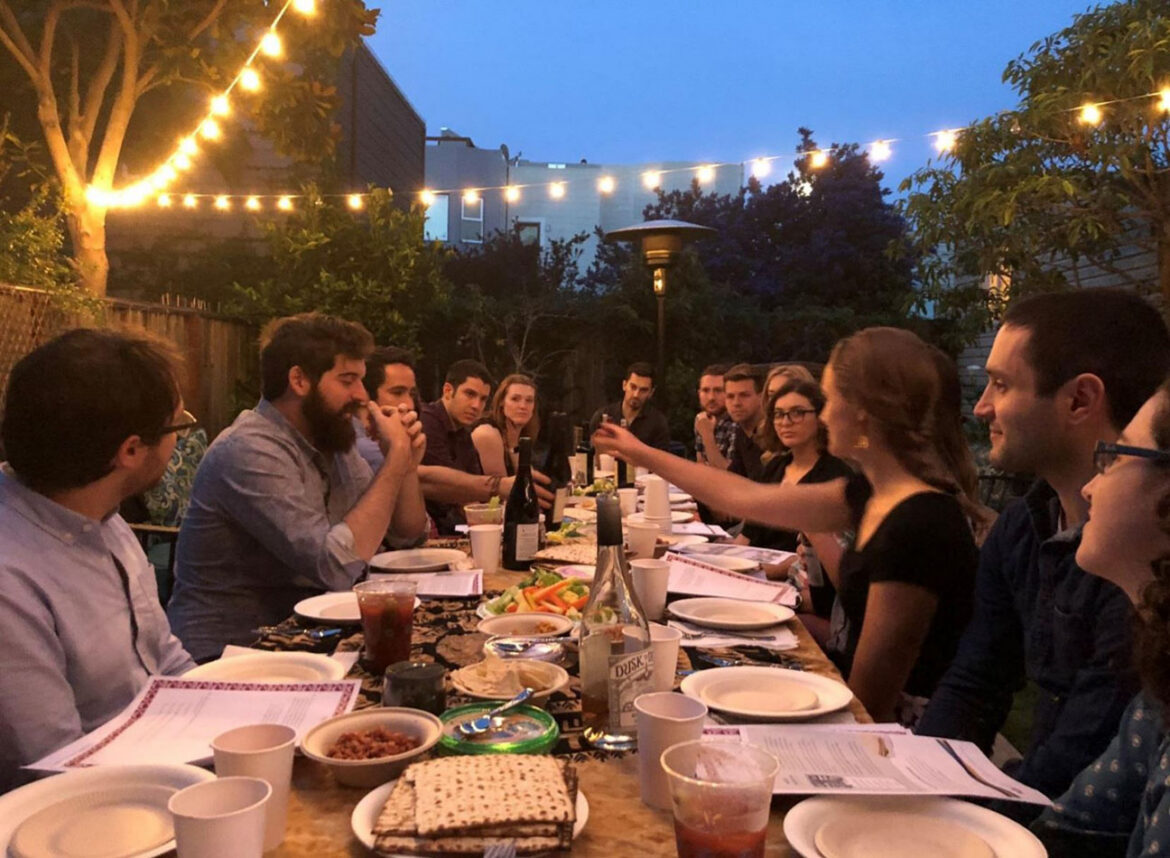
The matzah, maror, charoset and shank bone are all supposed
to transport us back to our past, to a time of peril and Divine redemption. But
I do not think any of us, even the most devout who read the entire haggadah in
Hebrew/Aramaic, really experience the “passion” that the holiday demands. We
try to make the seder cute. We try to be innovative so the kids will stay
interested. But we never really get to the sense of life and death, of the real
dread of Egyptian slavery and the miraculous Divine redemption, which all the
foods and text try to recapture for us.
What we really need to do is get Mel Gibson to make a new
movie, “The Passion of the Pesach.” Our parents had Cecil B. DeMille’s “The Ten
Commandments” and DreamWorks brought our children “The Prince of Egypt.” But
neither film is the real passion that Gibson understands in the Christian
story.
It is hard for Jews to relate to the Jesus Passion story and
what it means for Christians. In part, Jews are used to relating to stories in
the collective, while the Jesus story happens to an individual, with
ramifications for all humanity. Jews are born with a visceral rejection of Divinely
sanctioned human sacrifice because of the binding of Isaac story told every
Rosh Hashanah. God tells Abraham not to harm the boy. Instead, a ram replaces
Isaac, and the shofar (the ram’s horn) becomes an enduring symbol of the New
Year. We are taught that God sanctioned animal sacrifices to atone for human
sin, and after the Temple was destroyed, tefillah (prayer), teshuvah
(repentance) and tzedakah (bringing justice through giving of time and money)
were the three ways to achieve Divine salvation.
Yet, for all our fear of an anti-Semitic backlash from Mel
Gibson’s “The Passion of the Christ,” there is a wake-up call for us to
rediscover the passion of our own Passover story. As we once again face the
challenge of making our seders and Passover experiences meaningful, we would
achieve much to make “passion” the leitmotif and goal of this holy season of
transformation from slavery to freedom.
Chag Sameach. Â
Michael Beals is rabbi of B’nai Tikvah Congregation in Westchester.