When I think back to my bat mitzvah 30-plus years ago, here’s what I remember most: following the photographer’s prompts as I posed against the tree in the synagogue courtyard, standing nervously on the bimah chanting my Torah portion, and giving a speech in which I excoriated President Nixon. I don’t recall how I tied that in with the parsha, but I relished having the congregation laugh at my political barbs. I loved dancing with my friends and hoped that the boy I had secretly admired for months would finally realize what a prize I was and begin to like me in return.
My bat mitzvah was exciting and fun. It even gave me a vague notion of the meaning of Jewish adulthood. My grandfather, who trained me for my bat mitzvah, claimed that back in the 1940s he pioneered bat mitzvahs (at least here in Los Angeles) when he trained my aunt for this rite of passage. My grandfather came to the United States from Europe with visions of a more modern religious life. He was proud to have blazed the trail for bat mitzvahs in the Conservative movement.
So what would he think of his great-granddaughter pushing the clock back and having a bat mitzvah, shared mostly with girlfriends, sans Torah reading? Well, styles in fashion and religion come and go, and over time my husband and I became more committed to a Torah-observant lifestyle.
Just as the peasant look that I wore in the ’70s has returned, so has the Orthodoxy that that my grandfather left behind in Bialystock.
I’m the first to admit that I once would have scoffed at the idea that any daughter of mine (I had been a dues-paying member of NOW, after all) would not read from the Torah at her bat mitzvah. It was too regressive to deserve comment. It took several years until I was willing to entertain the Torah’s views about spirituality. It rankled to learn that some of the ideas were totally, unrepentantly politically incorrect, including notions about men’s and women’s differing roles in public ritual life. But the insights they revealed about human psychology rang true.
It’s very clear to most people unburdened with a master’s in sociology that men and women need different types of nurturing for emotional, spiritual and intellectual health. Yet many academics still kick and scream when you state the obvious (just ask former Harvard President Larry Summers). Men’s obligations to attend minyan, lead services and read from the Torah are all part of this care-and-feeding program for men.
Psychologically, it’s brilliant: men, who tend to lack meaningful male bonding, can get regular doses at their neighborhood minyan every day. Women will bond with other women, minyan or no minyan. Just watch us.
That’s why I didn’t lose sleep that my daughter’s bat mitzvah would be a less public affair than her brothers’ bar mitzvahs. Girls are considered to become bat mitzvah at 12, again revealing the Torah’s insight that girls are usually a year ahead of boys in terms of maturity at that age.
Like her brothers, Yael was excited and a little awed at the prospect of becoming responsible for her own actions, for mitzvahs as well as misdeeds, responsible to fast, to pray, to continue to grow spiritually and to contribute her special talents and energy to the community.
We also wanted her bat mitzvah to be more than just an expensive birthday party. Of course we had great food, music, dancing and an art project that the girls made and donated to Chai Lifeline for their Purim baskets. But Yael also prepared by studying a text for several months with a teacher (in her case, me). Together we chose to study the Eishet Chayil, a portion of Proverbs that is traditionally sung in honor of the Jewish woman at the Shabbat table each Friday night.
We plumbed the text and its elucidation, written by a phenomenal rebbetzin in Jerusalem. It was the first time that I had gone beyond a superficial reading of the Eishet Chayil, despite having sung it hundreds of times. Together, Yael and I tried to understand the deeper insights these proverbs reveal about life, about the spiritual potential of the Jewish woman, and about faith. Many of the concepts were beyond the grasp of even the most mature 12-year-old. Still, we soldiered on, and by the end we each shared a sense of accomplishment.
On her big day, Yael spoke with maturity and depth about the concepts of oz and hadar, strength and splendor, for which the Jewish woman is praised in Eishet Chayil. She explained that this is the kind of strength that springs from faith in God and from the courage of one’s convictions.
Listening to her speak with confidence and poise, I was willing to bet that her great-grandfather would have been beaming with pride. True, she may not have stepped up to the bimah with a tallit draped over her shoulder the way her mother had, but she was clearly and purposefully stepping up to Jewish adulthood with joy, pride and faith. And ultimately, that’s what any bat or bar mitzvah should really be about, isn’t it?
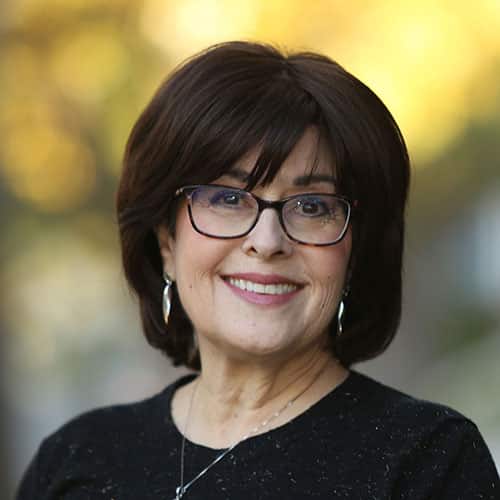
Judy Gruen writes the popular “Off My Noodle” column @ judygruen.com. Her next book, “The Women’s Daily Irony Supplement,” will be published in May.