
I didn’t grow up with tzimmes, so the idea of stewed, mushy vegetables with dried fruit has never much appealed to me. I say “idea” because I am pretty sure I have never actually tasted tzimmes. The dish always seemed too sweet to be appealing, even if sweet foods are traditionally enjoyed for the New Year.
But recently, while thinking of new ways to reinvent a few classic Rosh Hashanah dishes, I began thinking about tzimmes. And perhaps with a couple of very liberal (and namely savory) changes, who’s to say it couldn’t become something newer, grander and much more enticing for a palate like mine?
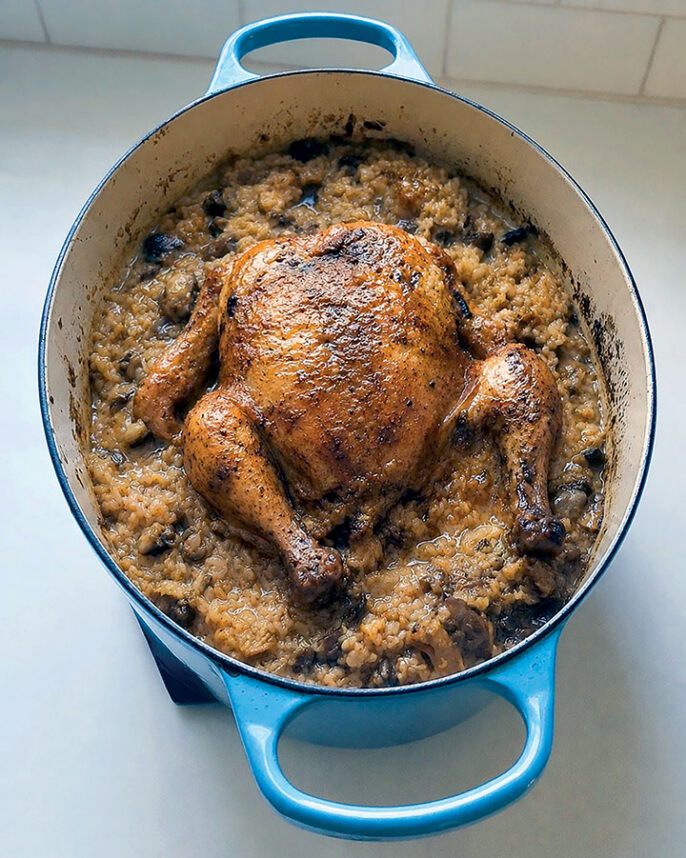
My experimentation has produced a colorful, show-stopping and nontraditional chicken dish.
Wonderfully savory chicken now complements the sweet tzimmes of yore, which I have updated by swapping fresh, juicy plums and apricots for their dry, pruney counterparts, adding sweetly swirled candy cane beets (you can also use red or golden beets); switching out regular carrots for vivid, tricolored ones; and tossing in a handful of golden raisins to be plumped up with aromatic pan juices. Alongside the requisite onion, aromatic rosemary and heady cloves of garlic, the striking fruit-and-vegetable mixture roasts in a cinnamon, ras el hanout (a Moroccan spice blend) and spiked date honey sauce.
Once the fruits and vegetables have softened a bit, they are topped by the chicken and doused in a saffron-infused white wine mixture, which saturates the entire dish as its components roast together in happy, fragrant harmony.
Now we have a delicious dish with tender fruits and vegetables, bronzed chicken and a saffron-and-white-wine-
Ingredients:
For the fruits and vegetables:
2 bunches small colored candy cane beets, tops removed, scrubbed and sliced
1 bunch colorful young carrots, scrubbed and thicker ones sliced in half
4 apricots, halved, some quartered
4 big purple plums, halved and some sliced
1/2 cup golden raisins
10 cloves garlic, peeled
1 large onion, peeled and sliced into thick rings
3 sprigs fresh rosemary
chopped parsley, for serving

For the chicken, sauce and saffron white wine marinade:
4 chicken bottoms, cleaned
2 teaspoons fine sea salt
2 sprigs fresh rosemary
1/4 teaspoon saffron threads
1/4 cup water
3/4 cups good white wine
3 tablespoons date honey (silan)
1/4 cup olive oil
1/4 teaspoon freshly ground black pepper
3 cardamom pods, lightly crushed
1 teaspoon ground cinnamon
1/2 teaspoon ground cumin
2 pinches cayenne pepper
1/4 teaspoon ras el hanout
Directions:
1. Preheat the oven to 425 F. Rub the chicken bottoms with the sea salt and the 2 sprigs of fresh rosemary.
2. Toast the saffron threads in a small pan over low-medium heat for about 3-5 minutes until they are slightly toasty and fragrant. Remove the pan from the heat, add the 1/4 cup of water and let it sit and turn yellow as the saffron infuses its flavor into the water.
3. Combine the cooled saffron water, of which you should have 1/4 cup, with the white wine. Mix and set aside until needed.
4. Make the marinade: Whisk the date honey, oil, black pepper, cinnamon, cumin, cayenne and ras el hanout in a large bowl.
5. Add the chicken pieces, carrots, onion, cardamom pods, garlic, apricots, plums, carrots, beets, golden raisins and rosemary to the large bowl and toss to combine.
6. Remove the chicken and set aside in a clean, baking paper-lined pan until needed. Spread the fruits and vegetables on a baking paper-lined rimmed baking sheet.
7. Pour half of the saffron/white wine mixture on the chicken and half on the vegetables. Cover the vegetables tightly with foil. Roast 15 minutes, then remove from oven. Remove and discard the cardamom.
8. Remove foil, lower the heat to 400 F. and top the vegetables with the chicken and the rest of the saffron/white wine mix.
9. Continue to roast until the beets and carrots are tender, the chicken is golden brown and the whole mixture smells divine, around 40 minutes to 1 hour. (If the fruits and vegetables get too dark, you can remove the sheet tray from the oven, place the chicken in another pan and return that pan to the oven until the chicken is nice and golden, leaving out the vegetables.)
10. When the chicken and vegetables are done, transfer chicken mixture to serving platter. Pour pan juices over. Top with shredded parsley before serving.
Chaya Rappoport is the blogger, baker and picture taker behind retrolillies.wordpress.com. Currently a pastry sous chef at a Brooklyn bakery, she’s been blogging since 2012 and her work has been featured on The Feed Feed, Delish.com, Food and Wine and Conde Nast Traveler.
The Nosher food blog offers a dazzling array of new and classic Jewish recipes and food news, from Europe to Yemen, from challah to shakshuka and beyond. Check it out at www.TheNosher.com.