Ignorance is not bliss — it’s death. That’s the truth underlying the fear of communal disintegration expressed in buzz words like “Jewish continuity” and the “crisis of Jewish identity.”
The crisis is real.
Statistical abstractions about assimilation and Jewish illiteracy veil the simpler reality that large sectors of the Jewish population now lead lives essentially empty of Jewish content — even in Israel. In many families, parents know almost nothing about Jewish culture, history, religion or ways of thinking and behaving. They have nothing substantive to pass on to their children.
One vital remedy for disintegration that works is an educational approach called Jewish Family Education.
Pioneered in large part by Dr. Ron Wolfson and his colleagues in Los Angeles at the University of Judaism’s Whizin Institute for Jewish Family Life (as well as in Jewish educational circles in Detroit, New York, Boston, and San Francisco), Jewish Family Education (JFE) is currently being adapted for use all over the Jewish world, including Israel, Russia, and Europe. In an ironic inversion of the ancient adage that Torah will come forth from Zion, JFE is even being exported from America to help grow Jewish life in Israel.
What is Jewish Family Education?
It is an educational approach that aims to change the behavior and culture of whole families, not just of individual students, JFE targets the family’s distance from Jewish life. As a pedagogical method, it is “ecological,” assuming that identity formation is an interactive, intergenerational process involving parents, children, siblings and community.
The key insight of Jewish Family Education is that in order to affect the individual child, we need to impact that ecology.
This approach is both intuitive and obvious. After all, Jewish parents have traditionally been the primary educators of their children.
Unfortunately, in the last two centuries, and especially in the last two or three generations, under the pressures of modern life families gradually gave to schools the primary role as purveyors of values and knowledge. Jewish parents lost the ability to transmit Jewish knowledge, skills and values. Now we see the consequence, as the vigor of Jewish family life, and therefore of Jewish community, have become imperiled.
What has Jewish Family Education accomplished that bucks this trend? A few representative programs and practitioners will suggest its potential:
\n
• In Detroit, Harlene Appelman, one of JFE’s initiators and a faculty member at the Whizin Institute in Los Angeles, mounts well-attended family Havdalah ceremonies “under the stars,” family zoo trips to coincide with the annual synagogue reading of the Noah story, and a host of synagogue-based or communitywide Shabbatons and family learning programs under an umbrella called the “Jewish Experience for Families.”
\n
• In New York, Jo Kay, director of the Hebrew Union College-Jewish Institute of Religion’s School of Education there and for many years on the faculty of the Whizin Center, reports that her synagogue-based Parent and Child Education (PACE) program, one of the first JFE curricula, by facilitating joint-study programs for families and larger groups, commonly generated self-sustaining chavurot even after the formal programming was finished.
\n
• In Boston, Federation President Barry Schrage declared some years ago the goal of placing a Jewish family educator in every synagogue. Hebrew College rose to the challenge by creating courses to train this new breed of educators. (Vickie Kelman of the San Francisco Bureau of Jewish Education soon followed suit with an innovative three-year fellowship to prepare Jewish family educators for her community.)
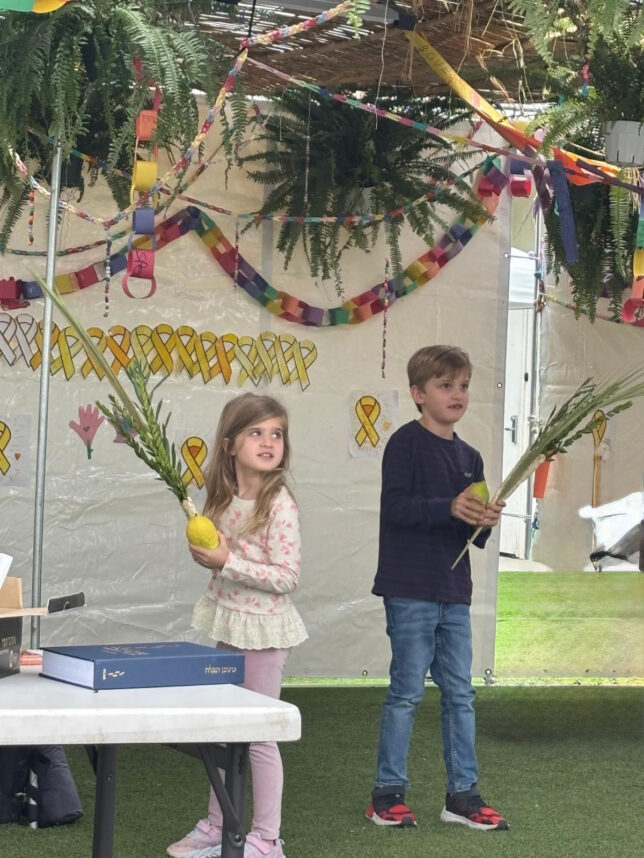
The possible configurations for family-education programming are clearly limitless. One common essence, however, is that such programs establish a way of giving busy modern families “protected time” together to consider and talk over Jewish ideas and their own Jewish experiences.
Also, JFE is a method for teaching Judaism, not an ideology of Judaism. By empowering the family, however, it does further the agenda of pluralism and denominational tolerance. Its aim, whether it is used in Orthodox, liberal or secular contexts, is to validate people’s own approaches, to build on what they know already and, especially, to use the stories, customs and knowledge that exist within families to awaken members to the pleasures of being Jews together.
It is important to remember that our current Jewish “identity crisis” is far from new. It is the overriding trauma framing the entire “modern period” of Jewish life, roughly from the French Revolution until now. Before the “emancipation” that allowed Jews to become citizens of their countries of residence, Jewish life may have been physically more difficult, but Jewish identity was easier — a fact of life, something one inherited rather than something that had to be figured out.
Reform, Conservative, Orthodox and Zionist interpretations of Jewish religion, culture and history have all succeeded in providing alternative “identities” for Jews in the modern world. But today, when the very assumptions of modern life — the validity of scientific knowledge and moral discourse, the nature of national borders, the role of gender in society and the organization of family life — are in question, these Jewish ideologies are in crisis. The result is that all over the world concerned Jews of all ideological stripes, including those who claim to profess no particular approach to Judaism whatsoever, are looking for new stories to tell their children about what it means to be Jewish.
JFE emerged over the past two decades to address this “identity crisis” by helping families of all varieties — traditional, blended, single parent, gay and lesbian — to rediscover Judaism together through intergenerational study and experience.
A few weeks ago we witnessed what many participants called a historic event in the field — an International Conference on Jewish Family Education in Israel that brought together some 130 educators and academics from eight countries. The two-day conference was sponsored by the University of Haifa’s Center for Jewish Education and the Jerusalem-based Frankel Center for Jewish Family Education.
The conference was keynoted by Rabbi Ed Feinstein of Valley Beth Shalom in Encino and was supported by The Jewish Federation of Greater Los Angeles, the Combined Jewish Philanthropies of Greater Boston and Israel’s Ministry of Education. In addition to furthering the field of Jewish Family Education as a target of academic study, it helped to promote the field more fully in Israel, where political and social realities, including the huge Russian immigration of recent decades and the polarization of the Jewish population into “Orthodox” and “secular,” have created ignorance of Judaism and even hostility to it in many circles.
JFE is not a panacea — in truth, there is no cure-all. But family education is a self-generating “social movement” that offers a tool for those who want to establish or intensify their Jewish identification. It has the potential to jump-start creative responses to Judaism and to ally Zionism and liberal Judaism in building truly robust Jewish identities. It offers parents an opportunity to reclaim their roles as Jewish teachers of their children. Most importantly, it once again makes the Jewish home, as A.J. Heschel put it, a place where Judaism is at home.