

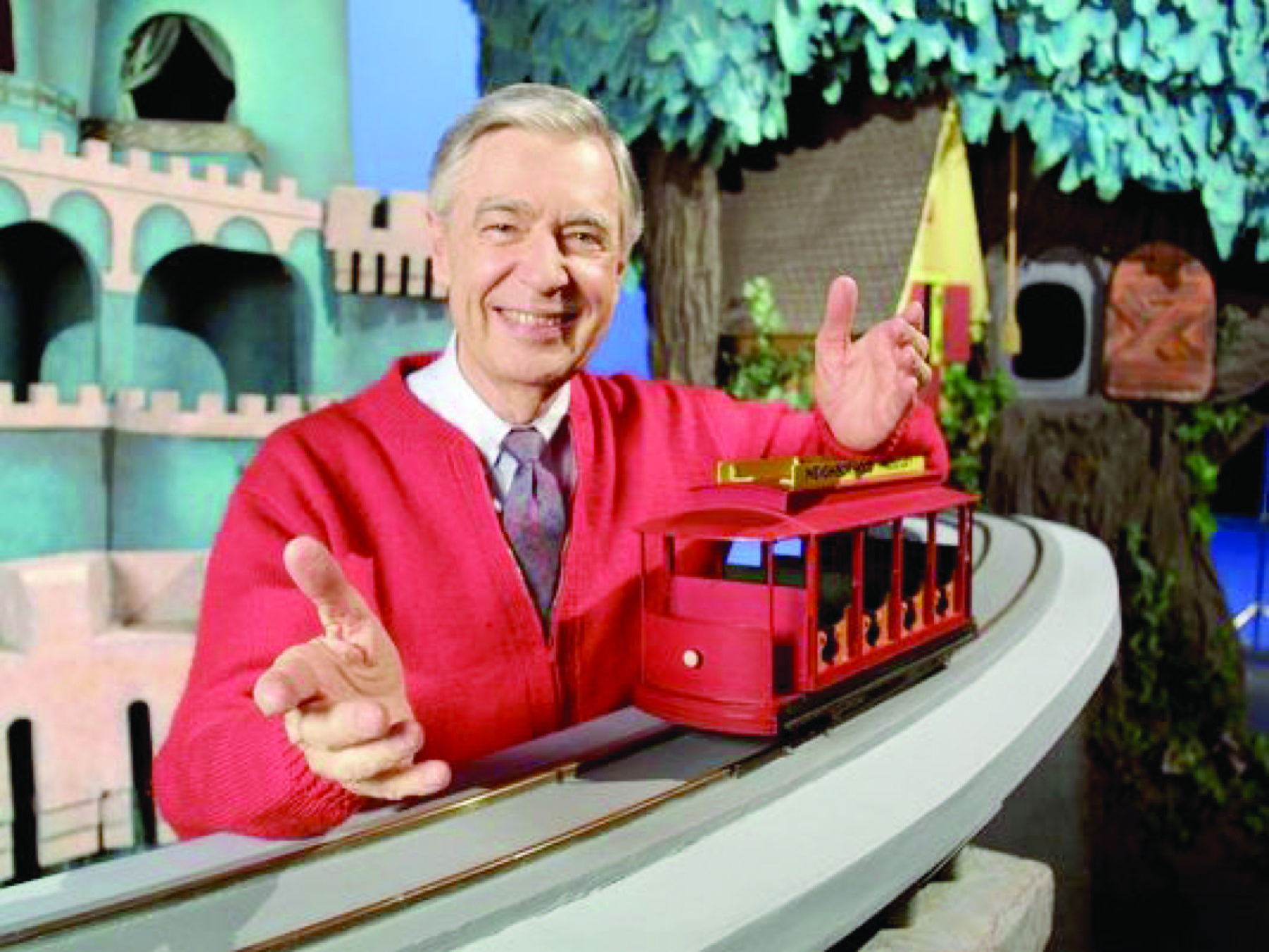
“Won’t You Be My Neighbor?” the documentary about Fred Rogers, host of the long-running children’s TV show “Mister Rogers’ Neighborhood,” could not be more timely.
I grew up watching “Mister Rogers’ Neighborhood,” and as I watched this film about Rogers’ life and values, it became clear to me that he is exactly the kind of person we need to heal today’s broken world.
There are many lessons and teachings to learn from Rogers, but two overarching ideas drive them all. One comes from his motivation and the other from his core belief.
Rogers, an ordained Presbyterian minister, practiced and preached true tikkun olam. A year after the 9/11 attacks, he recorded a short message for parents of young children, reminding them that we are called upon “to be tikkun olam” — fixers of the world.
Tikkun olam guided everything Rogers did in his professional life. He was trying to heal the world.
“I went into television because I hated it so,” Rogers explains in a clip shown in the documentary. “I thought there was some way of using this fabulous instrument to be of nurture to those who would watch and listen.”
Rogers said he thought a show like “Mister Rogers’ Neighborhood” was needed because most of the children’s programming in the late 1960s — when the show first aired on PBS — was full of slapstick and violence. It was all “pies in the face” and adults making fools of themselves. To Rogers, such programs were a degradation of people’s humanity. He disagreed with adults who thought that children would be entertained only by silliness and klutziness. He took children seriously. “Anyone making children’s programming should respect children the way I do,” he said.
That is why he always made a point of telling children that they were special and loved. That is why he talked about feelings and how to talk about feelings. That is why he tackled important issues like war, race, death, divorce, fear and friends. He treated children like real people. He listened without judgment. He talked but did not patronize. He loved unconditionally. He put his heart and soul into his work because he wanted to heal the world.
Good Judaism takes children seriously, too. Meaningful Judaism does not “dumb down” our traditions and rituals. There is a trend of infantilizing Judaism for preschoolers and then never allowing that Judaism to mature. This hurts us twice. It hurts the children because their Judaism becomes child’s play instead of something thoughtful and worthy of seriousness. It hurts Jewish adults because the only Judaism left for them is the infantile version that they find meaningless.
Serious programming for children does not need to be boring, sad and dusty. “Mister Rogers’ Neighborhood” was none of those things. Serious Judaism does not need to be boring, sad and dusty, either.
I watched “Won’t You Be My Neighbor?” and my mind processed these ideas while I was sitting on a cushioned seat in the comfort of an air-conditioned multiplex theater. In that moment, I could not help but think of the brokenness of our world, where children are being separated from their parents on our border and being housed in converted Walmarts — with no cushioned seats and no air conditioning.
It occurred to me that this policy does not take children seriously. It does not value children the way Rogers valued children. It sees children as pawns, as trade bait, as collateral in a political and sociological power play. It does not tell children that they are loved and that they are special just the way they are right now. It tells me that the timing of this documentary is perfect because we need more reminders of the values Rogers taught us.
According to Rogers, “Those who make you feel less than who you are is the worst evil.” That should be our guiding light.
Our Judaism should be aspirational and invite children to feel loved and respected for who they are. It should not be watered down beyond recognition. Our politics should be aspirational, too. We should treat all children and adults in a way that makes them feel loved and respected for who they are — not degraded and manipulated for political points.
Perhaps a better approach to our immigration conundrum would be to echo Mister Rogers and softly sing: “Won’t you be my neighbor?”
Eli Fink is a rabbi, writer and managing supervisor at the Jewish Journal.

































