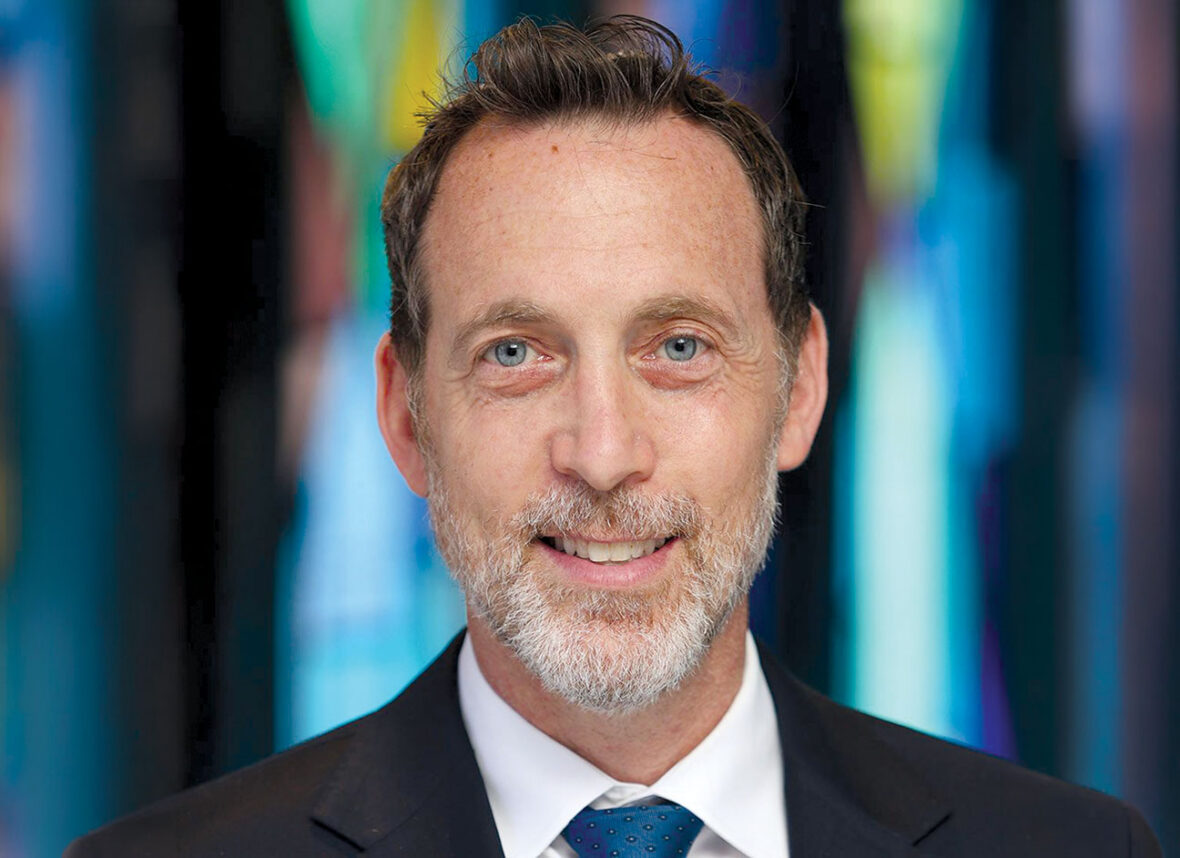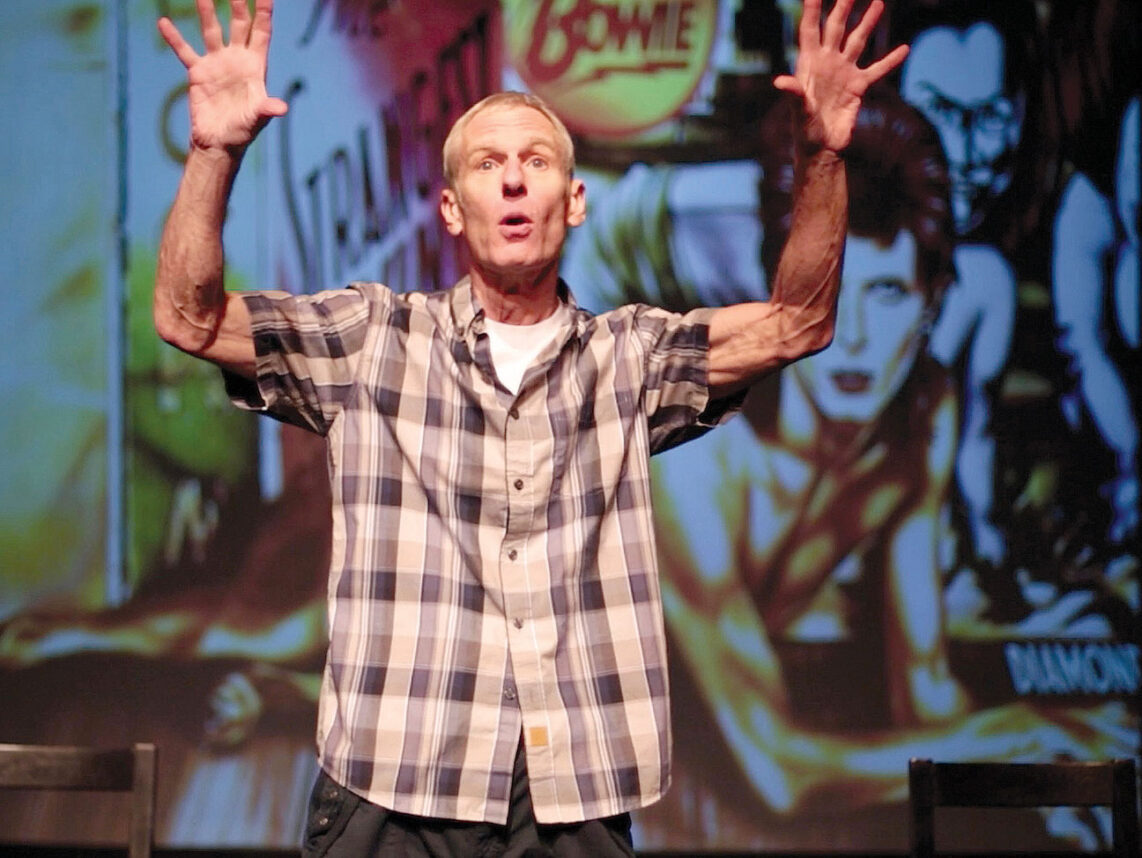

Actor, Broadway singer and cantorial soloist Rena Strober reconnected to her Jewish roots in a very unusual way: while hiding under a table at an Italian restaurant in Spanish Harlem during a Mob hit and finding herself reciting the Shema. This intense moment is the turning point in “Spaghetti & Matzo Balls,” a short musical film written and performed by Strober, premiering October 2 in a virtual screening sponsored by the Union for Reform Judaism (URJ) in honor of the High Holy Days.
Based on Strober’s one-woman show of the same name, “Spaghetti & Meatballs” opens with liturgical music, followed by the sound of gunshot and Strober breathlessly reciting the Shema in the dark. Then it cuts to her onstage today, in a ravishing red evening gown, singing a humorous song in Yiddish. Throughout the 28-minute film, Strober belts out songs in Yiddish, English and Italian, tells jokes, talks about her early childhood kosher home, her bat mitzvah theme, and her growing distance from Judaism in high school. By college, she was agnostic. “What’s my religion? I’m a theater major. I pray to Steven Sondheim,” she says in the film.
After college, she moves first to LA and then to New York City, where she goes to Rao’s, a hole-in-the-wall known for stimulating conversation and obsession-inducing red sauce. At Rao’s, she sings along to Barbara Streisand on the jukebox and finds herself welcomed to the exclusive table of regular patron Sonny Grosso, a former NYPD detective and a film and TV producer. Grosso’s rotation of dining companions includes not just Strober but also former New York State Supreme Court Justice Edwin Torres (author of Carlito’s Way), Regis Philbin, Emeril Lagasse and Bill Clinton — as well as guests with names like “Johnny Roast Beef” and “Vinnie the Nose.”
After leaving New York to perform with the touring production of “Les Misérables,” Strober returns to the city, rents an apartment, and goes to Rao’s every Monday night where the assembled diners at Grosso’s table once again, “treat me like a star.”
She’s starry-eyed, entranced with the drama and exclusivity, the Italian-ness, the feeling of being an insider in a culture that feels both exotic and familiar—food-focused, raucous, music-obsessed. That’s a very different feeling from, say, Tuesday morning, when she returns to her “day job” of going on auditions and fielding rejections. “To be a star on Monday night, I’m willing to accept all of the Italian lifestyle. Like maybe cheese does belong on chicken,” she says in the film.
But then, on a very crowded Monday night in late December, 2003, she’s singing “Don’t Rain on My Parade” when a young Mafia “made man” at the bar disses her performance. An older mobster shushes him. The altercation quickly devolves into graphic name-calling. The older Mafioso shoots the heckler and kills him, right there in the restaurant, an action he took to “save face,” as he later said from prison.
Strober, hearing the shots, ducks under a table and finds herself saying the Shema. It’s a tear-jerking moment in the film, touching on a deep-seated connection to Judaism she didn’t realize she had. As she asks in the film, “What did my soul know that I didn’t?”
Speaking from her home in Atwater Village last week, Strober said this question not only propelled the film but also comes up in so many people’s lives. “Why do we go back to our Jewish faith?”
After the shooting, Strober’s photo is on the cover of magazines and newspapers. Talk show hosts joke about the incident in their opening monologues. The New York Post sums up the incident in its famously callous, hyped-up style: “Diva diss sparked geezer’s gunfire.”
Suddenly, everyone is talking about her, but not in the way she wants them to be. She returns to her parents’ home near the Catskills and tries to piece together what happened. Later, rejoining the “Les Mis” tour, she starts going to local synagogues on Saturday mornings and eating matzo ball soup at stranger’s home throughout the South.
Running from, then returning to, Judaism is a story we’ve heard before, but Strober’s very specific, idiosyncratic route — through “Les Mis” and the Mafia, is totally new, refreshing and uplifting. It’s a personal tale full of music and a super entertaining window into a moment in time and a legendary locale in New York City.
The play became a movie in part due to URJ. “I was doing other events for them, and I knew they wanted to explore other ways of connecting to Reform synagogues,” Strober said. “I pitched the idea of turning my show into a short film. They loved the idea and decided to do it in preparation for Yom Kippur.”
Today, Strober continues to act and sing, and also work as a cantorial soloist at synagogues. She runs the arts department at the URJ’s Camp Harlam in the Poconos, and is in cantorial school at Academy for Jewish Religion. She will be singing at High Holy Day Services this year led by Rabbi Jan Goldstein at the Annenberg Beach House.
While Strober has performed all around the country, she feels nervous about releasing the film. “I’ve never put anything out there that I’ve written. It was a real literary challenge,” she said.
“How do we recover and come together as a community and as Jewish people? That’s the conversation I hope to have. It makes sense at this moment of renewal and forgiveness.”
– Rena Strober
The screening will be followed by a Q&A with Strober and director/editor Stuart K. Robinson, moderated by Geoffrey Soffer. “How do we recover and come together as a community and as Jewish people? That’s the conversation I hope to have. It makes sense at this moment of renewal and forgiveness,” Strober said. “I’m hoping to be able to bring this movie to synagogues and other organizations and have a conversation about trauma and faith, with some songs thrown in.”
Join the watch party: This free virtual event starts at 4:30 Pacific time. https://reformjudaism.org/calendar/spaghetti-matzo-balls-watch-party-and-conversation