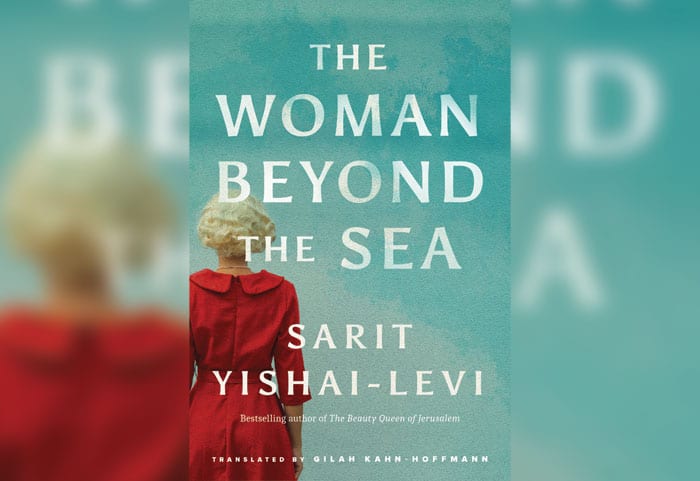
From Sarit Yishai-Levi, the author of “The Beauty Queen of Jerusalem,” comes “The Woman Beyond the Sea,” a mesmerizing and immersive multigenerational story that incorporates history, Jewish culture and family.
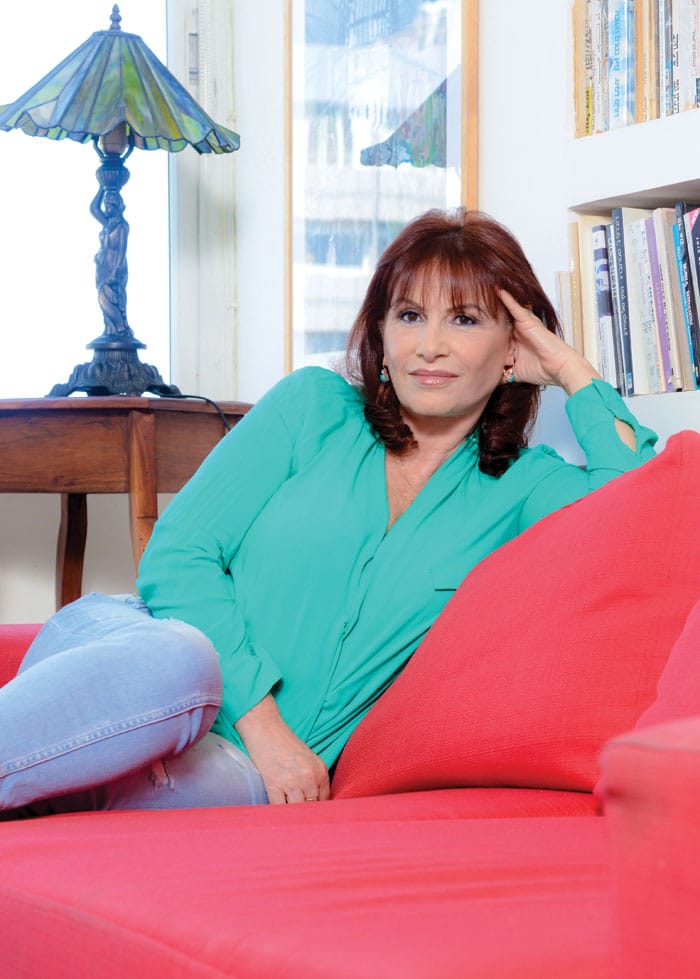
“Anyone who reads my books cannot help but notice that the Jewish background and Jewish values are an important part of them,” Yishai-Levi told the Journal. “And certainly that the Jewish education I received greatly influences my writing.”
“The Woman Beyond the Sea,” translated by Gilah Kahn-Hoffmann and published in English last month, traces the paths of three women.
Eliya is a young woman who thinks she has finally found true love, until her husband ends their relationship in a Paris café, leading to a suicide attempt. There’s also Lily, Eliya’s mother, who vanishes for long hours every day and a third, mysterious woman, who abandoned her newborn baby on the doorstep of a convent on a snowy night in Jerusalem. To heal herself, Eliya seeks to piece together the jagged shards of her life and history.
“I hope people will love the story and the heroes as I love them,” she said.
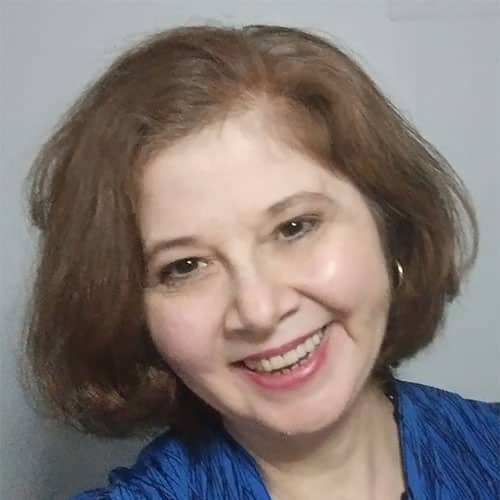
Sarit Yishai-Levi says the inspiration for the book came from life itself.
“I can’t put my finger on a specific point, but I can say that each of the characters in ‘The Woman Beyond the Sea’ has a piece of me, both men and women,” Yishai-Levi said. “Each of the characters has experiences I’ve had, loves I’ve loved, pains I’ve had, thoughts I’ve thought. You don’t have to look far for inspiration, just look inside and around.”
Yishai-Levi was born in Jerusalem in 1947 to a family of Sephardic Jews, who spoke Ladino, and had lived in the city for eight generations.
“My ancestors came to Jerusalem from Toledo in Spain with a short stop in Thessaloniki,” she said. “My grandfather’s family on my father’s side came from the city of Bitola in Macedonia and until a very, very late age I did not know that his entire family had perished in Auschwitz.”
Yishai-Levi’s father served in the Israeli security forces and was injured while performing his duty; her mother was injured in the War of Liberation.
“My parents’ home was secular but respected tradition and holidays and this is who I am today: a secular woman who believes in God. I light Shabbat candles and celebrate all the holidays with my family.”
“My parents’ home was secular but respected tradition and holidays and this is who I am today: a secular woman who believes in God,” she said. “I light Shabbat candles and celebrate all the holidays with my family.”
The Passover evenings she recalls having at her family’s home in Jerusalem couldn’t happen today.
“About a hundred people from the extended family from my father’s and my mother’s sides gathered around the Seder table,” Yishai-Levi said. “Today we are a much smaller family. Judaism occupies an important part of my culture.”
Yishai-Levi was an actress for a short time before turning to journalism. “When I realized that I was not very good in that demanding profession, I decided to leave,” she said.
The experience of giving birth to her daughter, Mia, shook Yishai-Levi so much that, afterwards, she had to write her feelings down.
“I sent it to my agent and asked her to make sure that the article was published,” she said.
“From there it was easy,” Yishai-Levi said. “I became a successful journalist with many scopes. Prose writing was always a dream of mine, and I didn’t dare to fulfill it, until one day I realized that if not now, then never.”
Yishai-Levi started to write what became the book “The Beauty Queen of Jerusalem,” which was a huge success in Israel, was translated into 17 languages and was adapted into a TV series on Netflix.
When asked how she feels about being an international success, Yishai-Levi says it’s amazing and exciting. “I suppose that if this had happened to me at a young age it might have confused me,” she said. “I have seen young people who were very confused by sudden success on a large scale. The fact that I am a mature woman makes it easier for me to deal with success, to accept it with great love and excitement and to enjoy its fruits, but I always remain with my feet on the ground.”
Yishai-Levi said she writes when the muse hits her. “It can be three months in a row, or a week in a row or even a day, and then I can stop for a very long time and come back to the story at some point,” she said.
She wrote “The Beauty Queen of Jerusalem” over six-and-a-half years, “The Woman Beyond The Sea” in three-and-a-half years and she has been writing her current book for more than three years and is still in progress.
Her third novel takes place in the ’90s and is set in different places around the world. Unlike her previous books, where she has dealt with mother-daughter relationships, this one deals with mother-son relationships.
“I always write about family because I think that family is the most important and meaningful part of a person’s life,” she said.