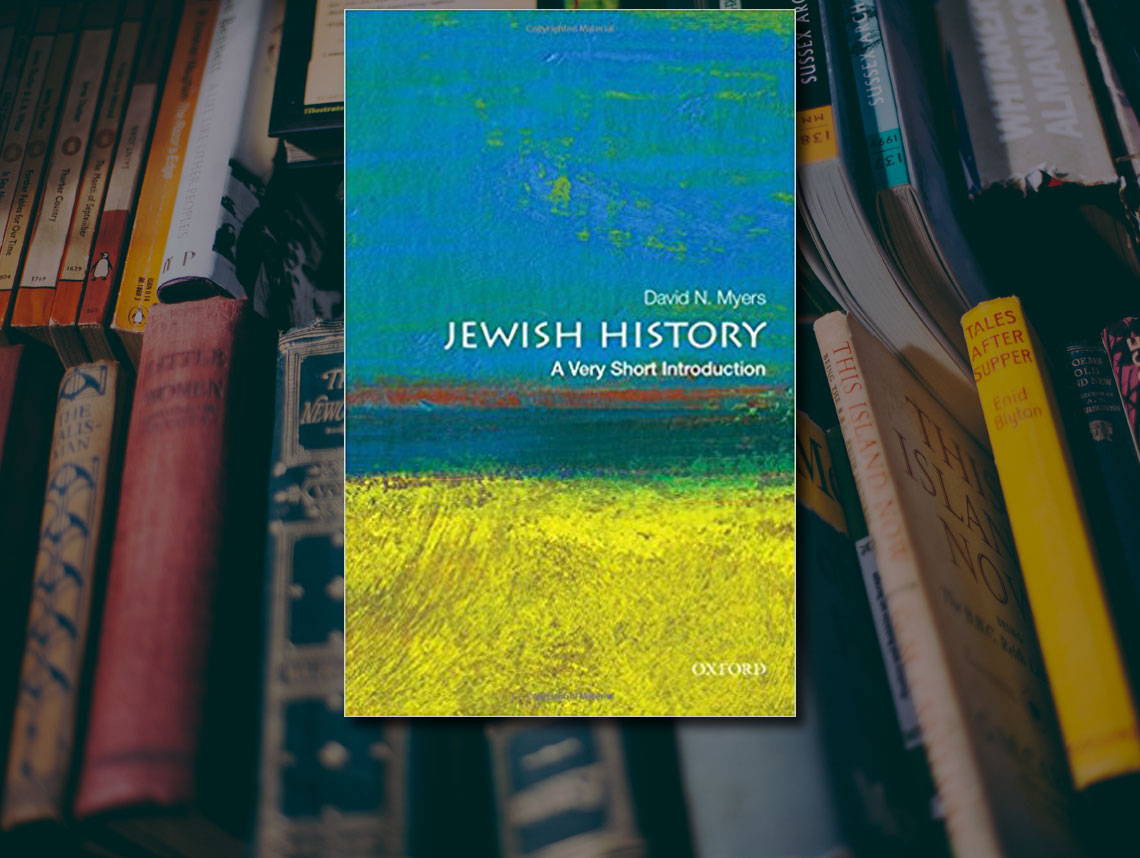
David N. Myers, an accomplished and distinguished Jewish historian, has written a small book about a very big subject: “Jewish History: A Very Short Introduction” (Oxford). It’s the latest title in Oxford’s “Very Short Introduction” series, which now consists of more than 500 chapbooks that span the breadth of human knowledge from “Accounting” to “Zionism.”
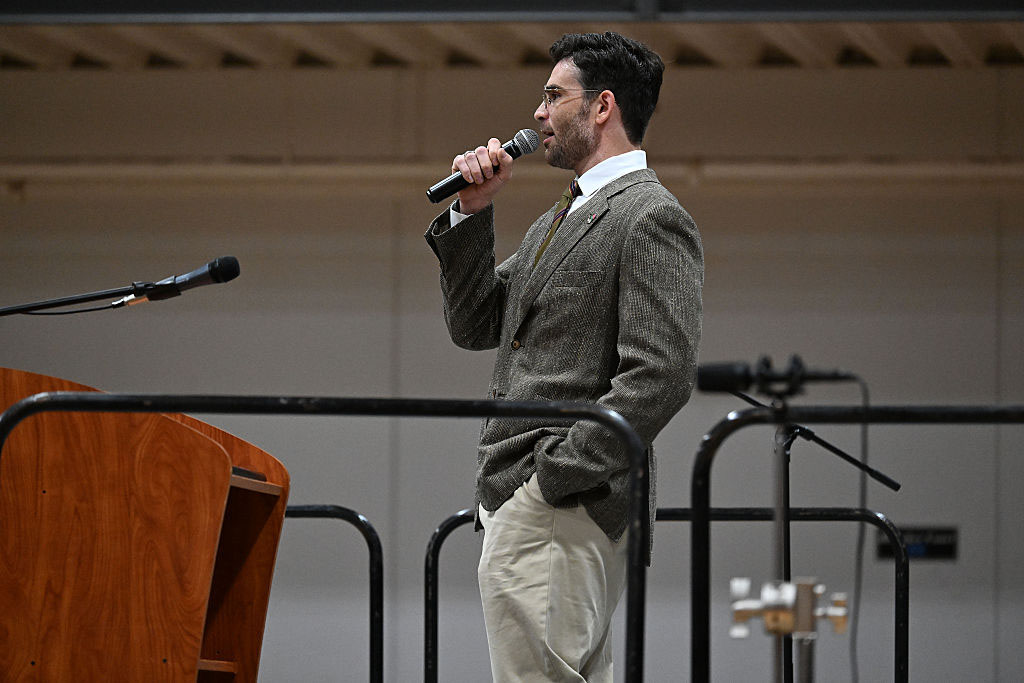
I am very nearly heartbroken at my obligation to acknowledge that Myers, who is a contributor to the Journal, the Sady and Ludwig Kahn Professor of Jewish History at UCLA and the recently appointed president of the Center for Jewish History in New York City, is the same embattled figure who has come under an especially ugly attack by a few right-wing character assassins.
The criticism starts with the fact that Myers is affiliated with the New Israel Fund, a progressive Zionist organization that opposes the building of new settlements on the West Bank and does not rule out a boycott of some products manufactured there — a position shared by many Jews in Israel and around the world. His critics leap to the conclusion that Myers is therefore “unfit” to head the Center for Jewish History or any other Jewish organization. But as the Journal reported, some 500 of his fellow scholars came to his defense in a letter of support.
Happily, the scholarship that informs “Jewish History: A Very Short Introduction” is the best evidence of what his colleagues have written about. Indeed, it’s not less than breathtaking to behold how Myers has managed to capture the vast sweep of Jewish history without sacrificing its substance or its nuance, all the way from the ancient Israelites we encounter in the Bible to the modern Jewish communities in which we live now.
As one of the many examples of his intellectual deftness, Myers describes how the writings that come down to us from distant antiquity only gradually “gain[ed] coherence and the veil of sanctity that envelops the Bible as sacred scripture.” But, as a deeply well-informed Zionist, he reminds us that “[t]he bookishness of the Jews became a sore point for later Zionists,” who “aimed to replace what they saw as the excessively cerebral and passive diaspora Jews with a strong and brave ‘New Hebrew’ rooted in the soil of the homeland.” And when he writes that “the association of Jews and books has been virtually unbreakable,” the words take on a certain irony when we think of the conflicts that are raging between secular Jews and religious Jews in Israel today.
The same irony rings out from his description of medieval Spain under Muslim control. “Although Muslim rule was not uniformly favorable toward Jews, it was under the reign of Islam that Jewish culture reached some of its grandest attainments — in philosophy, science, and poetry, as well as in the more traditional Jewish pursuit of rabbinic commentary.”
Above all, Myers affirms that Judaism is a tapestry, not a monolith, and it is a fabric to which new threads are always being added. “Jewish identity, like Jewish history itself, has never been a static proposition; from their humble desert origins, Jews have continually reimagined and renamed themselves — and been renamed by others — in response to shifting historical circumstances.” Precisely because the Jewish people were dispersed so widely and for such a long time, Myers points out, we must speak of “an evolving series of Jewish cultures (plural) rather than a single unified culture,” which he describes as “a richly marbled admixture of local customs and shared global practices.”
Perhaps the highest compliment that can be bestowed on this little book is that it amounts to a short course on a subject so rich and strange that even a library full of books cannot exhaust its complexities. Virtually any line of text from “Jewish History” will provide enough ideas and information to sustain a passionate conversation, whether in a book club, a classroom or around a Shabbat dinner table.
Still, the sound and fury that has been recently directed toward Myers must come to the reader’s mind when we come upon certain passages that were written before he came into the crosshairs. “The task ahead is to understand the different, though connected, ways in which Jews have chosen to identify themselves,” he writes. “In so doing, we can see the continuity and change that add such animating tension to Jewish history.”
Alas, the “animating tension” has come to focus on Myers himself, if perhaps only briefly. His book is the best evidence that the abuse he has suffered from some right-wing critics is not only unmerited but downright tragic. In the pages of “Jewish History,” he shows himself to be moderate, measured, deeply knowledgeable and fairly glowing with Jewish values. All we can hope is that Myers, like the Jewish people themselves, will not only survive but, more than that, go from strength to strength.
JONATHAN KIRSCH, author and publishing attorney, is the book editor of the Jewish Journal.