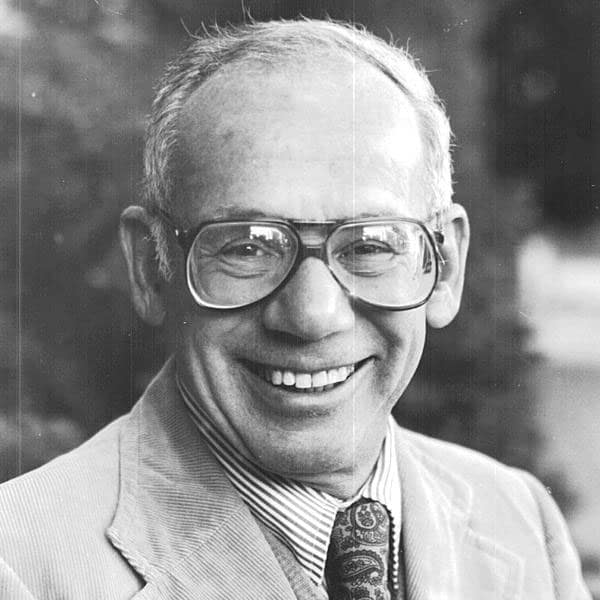
For Ira Feinberg, what he calls the “pinnacle of my life’s experiences” took place 63 years ago.
Feinberg was a 17-year-old New Yorker when he joined the elite troops of the Palmach force fighting in Israel’s War of Independence.
“No other experience in my life had such meaning as this period serving in the first army to fight for the Jewish people and for the independence of the State of Israel,” he says in the film, adding that “Nothing comes close to it.”
For the foreign volunteers like Feinberg who left home to join in the battle, the remembrance of those historic days remains undimmed.
Some 4,800 men and women from 58 countries put their lives on the line to help defend the newborn Jewish state, including about 900 to 1,000 Americans.
Feinberg has just released a documentary, “My Brother’s Keeper,” that he produced and directed on Machal, the Hebrew acronym for Volunteers from Abroad. The 40-minute film re-creates a real sense of those long-ago years by talking to some of the volunteers at a 2008 reunion in Israel, which is celebrating its independence on May 9.
The Machalniks there join Feinberg in expressing a similar pride and sense of life-changing involvement.
Feinberg, who now lives just outside New York City in Fort Lee, N.J., realized that the Israel reunion was likely to be the last gathering of the aging veterans, so he brought along a camera crew to preserve their reminiscences for posterity.
They recall fighting at the beginning with World War I rifles or dropping hand grenades from open cockpits. Feinberg enlivens the testimony with some historic newsreel footage and photos of bare-chested Machalniks posing fiercely with Browning automatic rifles but, of necessity, the action is somewhat static.
The film is particularly useful in telling the story of the American participants, who by fighting in a “foreign” army broke U.S. laws and risked the loss of their citizenship. Yet surprisingly little is known of their deeds, either in their home country or in Israel.
Esther Shawmut Friedman joined the Israeli army as a combat medic, serving with the 8th Armored Brigade in the battle for Beersheba and other engagements.
“This was the greatest experience of my life,” she says. “Greater than being in the U.S. Navy during World War II, getting married or having a child.”
Canadian Joe Warner believes to this day that “If we failed to have a state, being a Jew anywhere in the world wouldn’t be worth a nickel.”
Jason Fenton was a 16-year-old high schooler in Cambridge, England, when he followed in his older brother’s footsteps in 1948 by joining the 4th Anti-Tank unit, in which this reporter also served. Most of his comrades were veterans of World War II.
Fenton, a retired American university professor, holds the likely distinction of being the youngest volunteer. He has told the story of his unit and of Machal in his book, “Strength and Courage.”
“Other than creating a family with 11 grandchildren, being part of the rebirth of the Jewish state after 2,000 years of exile was the most important thing I have ever done,” he says.
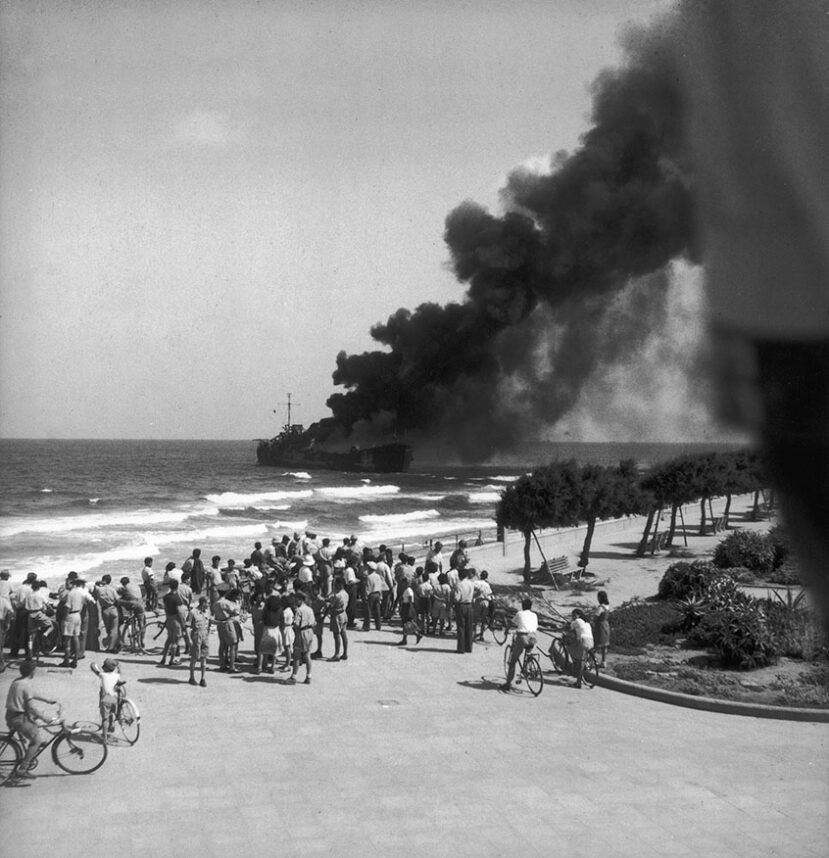
The foreign volunteers were predominantly Jewish but also included a good number of non-Jews. The first were the crew members of Aliyah Bet, who manned the rust bucket ships that ran the British blockade to bring the remnants of European Jewry to Palestine in 1947 and early 1948.
Machalniks would go on to fight in all branches of the Israel Defense Forces, but their greatest impact was in applying their World War II training to build up the Israeli Air Force and Navy.
By countries, the volunteers ranged in number from one each from Bechuanaland, Burma and Panama to the large U.S. contingent, 804 from South Africa, 785 from the United Kingdom and 270 from Canada.
In general, visual coverage of the War of Independence was meager. There were no embedded TV cameramen, of course, and even combat news photographers were rare—the newly created state had more pressing matters to worry about.
Hollywood tried to plug the cinematic hole of films celebrating the near miraculous victories of 1948-49 with “Cast a Giant Shadow,” starring Kirk Douglas in the role of Col. David “Mickey” Marcus, an American World War II officer who went to Israel in early 1948 to aid the country in its struggle.
Predictably, the picture was long on drama and short on reality.
(“My Brother’s Keeper” is produced by Cinema Angels and can be ordered at http://www.Irafeinberg.com.)