Jews are always talking about how Israel needs better PR — in Hebrew, hasbara, a term that connotes something between promotion and propaganda — so it’s worth asking, with so many Israelis working in Hollywood, what are they doing about it?
Some of Israel’s best exports have come to Hollywood. In recent years, a stream of Israeli products, from television shows to movies and talent, have flooded Tinseltown: HBO’s “In Treatment,” based on the Israeli program “B’Tipul,” became a fast hit; the films “Beaufort” and “Waltz With Bashir” both were nominated for foreign language film Oscars; actresses Ayelet Zurer (“Angels & Demons”) and Gal Gadot (“Fast & Furious”) have appeared in big-budget blockbusters; and a slew of Israeli producers, from billionaire Arnon Milchan to Marvel Entertainment’s Avi Arad, have helped cement the legacy.
Like any immigrant experience, competing impulses shape the Israeli experience in Hollywood: a desire to succeed, to escape the conflict, to assimilate into a society without religious orthodoxies or compulsory military service. But apart from the drive to build their own bank accounts, how are Israelis using their success? What of their values remain even though their surroundings change?
As Los Angeles raises the curtain on its 25th Israel Film Festival, two Israelis — from opposite ends of the industry — reveal their deeply personal (and deeply disparate) motives for success.
“With the exception of one movie in my life, I am always thinking about the business side,” said producer Avi Lerner, co-founder of Nu Image and Millennium Films, who will be honored with a Lifetime Achievement Award at the festival’s gala on Oct. 20.
Growing up in Israel, Lerner found solace in movies from an early age. “Instead of going to school, I went to see movies,” he told me. He began his career as a theater operator in Israel, and then worked as a producer in the UK and South Africa before moving toa Los Angeles, where he has produced more than 300 films. At 63, Lerner is comfortable with his niche producing B-level action flicks featuring stars past their prime — his most recent, “The Expendables,” with Sylvester Stallone and Bruce Willis, has grossed more than $100 million at the box office (it cost $80 million).
Hollywood, Lerner told me, is about a bottom line, pure and simple. Commercial success is enough for him so long as it continues: “I always feel the place in which you are successful, you want to do better — that’s the nature of everyone.”
Lerner attributes the influx of Israeli influence in Hollywood to the Jewish penchant for storytelling, and to Israel’s complex society for providing good fodder. But he doesn’t believe films can change the world. In fact, he doesn’t see Hollywood films as reflecting the real world at all. Even the suggestion of a parallel between his growing up in a violent society and making action movies for a living is met with dismissal.
“In a movie, it’s very easy to distinguish who is good and who is bad — the hero is always trying to catch the bad guy; the hero always saves the girl. But life is not like that. We are selling illusions; we are selling nice stories to people.”
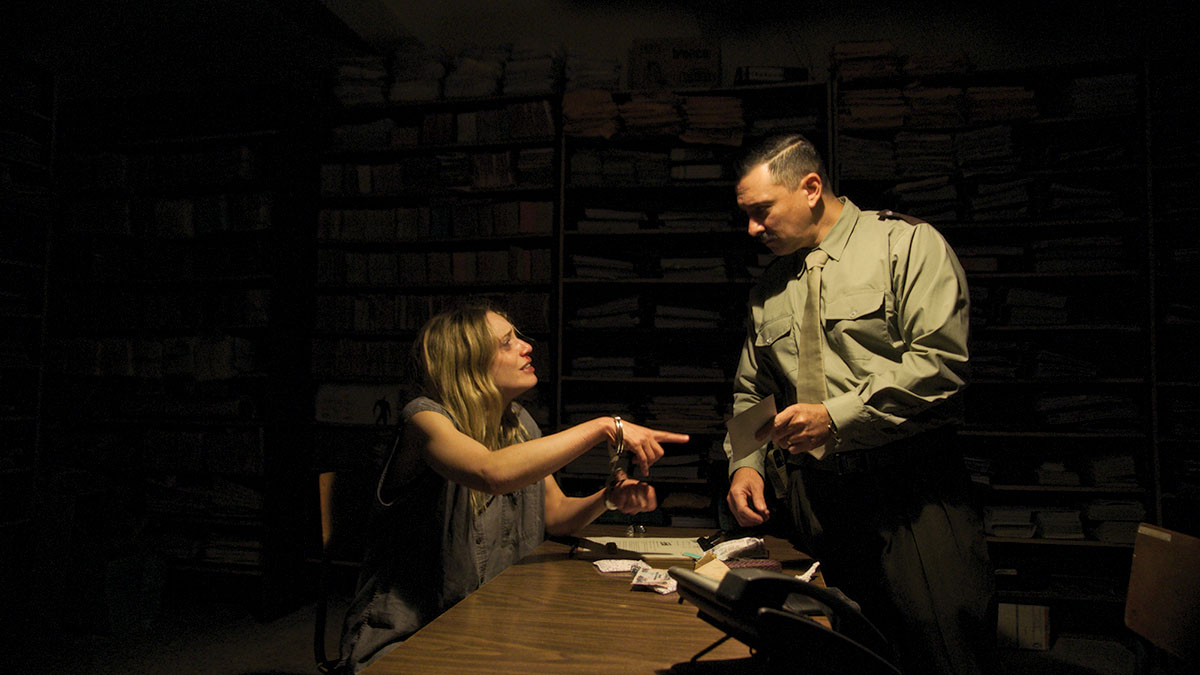
For Yafit Josephson, a young Israeli actress, Hollywood hasn’t been such a welcoming place. Her one-woman show, “New Eyes” (neweyesplay.com), about life on the audition circuit, is a heartfelt, humorous and sometimes harrowing account of being endlessly typecast as “the villain.”
“I was always getting cast as the Middle Eastern terrorist, the witch, the evil producer — whatever it was, I thought, ‘Why? Is it because I’m from the Middle East? Is it because of the conflict? Am I representing this conflict?’ ” Josephson said during a phone interview.
Her show, inspired by her own experience, is the story of how she worked through an identity crisis — from visiting a plastic surgeon who could fix her nose (to which her mother says, “A nose job? Are you out of your mind? It’s like giving away Jerusalem!”), to telling off a casting director who wants her to play a “merciless” Israeli soldier (“In Israel my friends saw me as a whiny, fearful little poodle, but in the U.S. I’m a Doberman.”). Eventually she comes to terms with being both visibly Jewish and undeniably Israeli in an industry that desperately wants her to conform.
“I represent my country, and I would feel like I was betraying myself and everything I stand for if I portrayed Israel in a negative way,” Josephson said. “Before I put this play on stage, I went to my parents and said, ‘Mom and Dad, I’m not going to make it in Hollywood because of my strong opinions.’ What I represent with my identity is stronger than my desire to do anything it takes to be in Hollywood.”
Josephson, 28, has been living in Los Angeles for seven years and says she understands why some fellow Israelis will do anything to ascend the ladder. But that doesn’t mean she is like them. In her eyes, she has a mission.
“In the play I’m encouraging Israelis to remind themselves where they’re coming from, and I’m encouraging them to support Israel, even if they’re away from Israel,” she said.
For his part, Lerner is unapologetic about a lack of a higher calling in his work, but he does share Josephson’s (and much of Jewish Hollywood’s) desire to be embraced by the American mainstream.
“The bottom line is the Jewish people have to succeed,” Lerner said. “And it all comes from the fear that if you don’t succeed, they won’t accept you.”
For more about “New Eyes,” visit this story at ” title=”neweyesplay.com” target=”_blank”>neweyesplay.com.