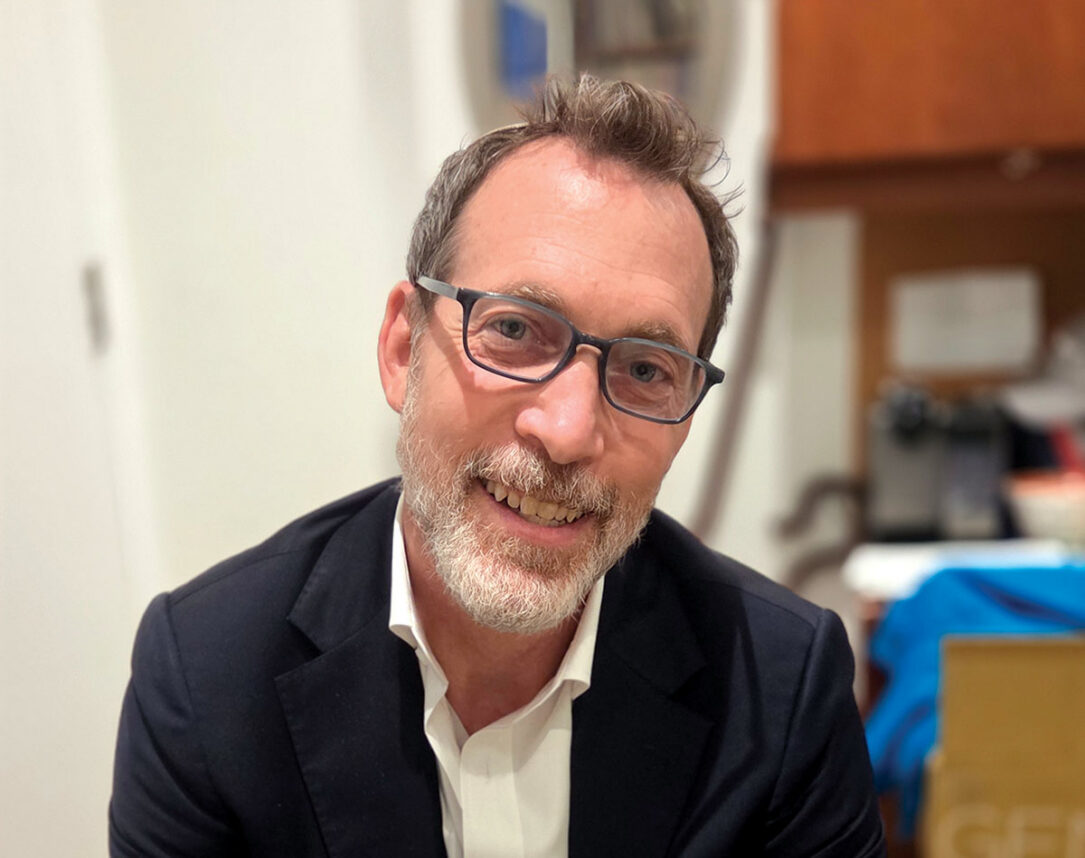
Rabbi David Woznica, Stephen Wise Temple
What can we do? What can we do in these painful and confusing times? These questions have become an ongoing theme in conversations among Jews. We are living through a painful and frightening rise in antisemitism in America. At the same time, many Jews are confused and disappointed by the lack of support from groups and institutions they once believed would stand with them.
My sermon will begin with a brief “open letter” to those who harbor hatred toward Jews and Israel. I will then turn to a second “open letter” to my fellow Jews: a call to consider what each of us can do in response.
Most importantly, I hope to explore how we can channel our energy not simply into surviving antisemitism, but into living fuller, stronger, and more meaningful Jewish lives in the year ahead.
Rabbi Joel Nickerson, Wilshire Boulevard Temple
As we enter 5787, I keep thinking about two different ways we exile ourselves from one another. This summer, I spent the Fourth of July in Jerusalem. On a Shabbat afternoon walk, I found myself standing before a replica of the Liberty Bell, 7,000 miles from Philadelphia. Standing there, far from home, I found myself thinking about America and about the particular stake American Jews have in the American project. The Liberty Bell reminded me that America has always been an unfinished project. A gap has always existed between the ideals we proclaim and the country we actually are, but I don’t think that means we give up on those ideals. I think it means we have a responsibility to keep pushing America closer to them. There is something deeply Jewish about that idea: we don’t have to pretend something is perfect in order to love it. We can see what is broken and still believe it is worth repairing. At a moment when many Americans, including many Jews, feel tempted to withdraw, go quiet, or give up on the possibility of a shared future, I want to argue for the opposite. Silence can become a kind of self-imposed exile. We have a responsibility to stay engaged, use our voices, ask hard questions, and keep helping America become more fully what it aspires to be.
And on Rosh Hashanah morning, I’ll turn that challenge inward. At a time when we increasingly sort people through political, ideological and communal “litmus tests,” we should ask what conversations and relationships we close off before they even begin. Perhaps this New Year calls us to resist both forms of exile – refusing to withdraw from the communities we love, and refusing to push others outside them.
Rabbi Julia Knobloch, Temple Beth El and Center, San Pedro
The underlying theme this year is “humility.” I see much fanaticism wherever I look, self-gratification and self-righteousness. Daily discourses, be they political or personal, are characterized by extremes, partisanship, or an overblown perception of our achievements. Not everything or everyone is brilliant, fantastic, outstanding or deserves an A+. I believe that this unrealistic perception of ourselves also conditions unrealistic expectations we may have: Of life, of relationships, of teshuva.
So, my Erev Rosh Hashanah sermon, “Second Chances: Hard Work and Happenstance,” encourages us to accept something that is less than ideal as good enough.
We’re not always going to get what we think we deserve, and that’s okay.
On Rosh Hashanah Day I speak about the tension between what I call “Sacred Longing and Entitlement.” The idea for the sermon was sparked by a scandal that took place in Germany over the summer. It involved a politician who had a child through surrogacy, which is illegal in Germany – and it allows me to bring in some thoughts about Hagar [the mother of Abraham’s firstborn son] as well, which goes, of course, with the Torah reading – we’re not doing the Akedah this year.
For Kol Nidrei, I felt I needed to speak about antisemitism. In part prompted by the proposed bill to list Jewish as an ethnicity on census forms, it is called “A Renewal of Vows: Reaffirming Jewish Identity in the Face of Antisemitism.” It largely appeals to a sense of Jewish uniqueness, but I also snuck in the claim that true pride and sustainable courage don’t really work without a sense of humility.
I still need to write the sermons for Yom Kippur Day and Neilah, but they will feature clay in a potter’s hand, Jonah, Job, and Jeremiah, thoughts about Spain’s and Argentine’s national anthems, as well as, for good measure, some references to Leonard Cohen songs – though not “Who by Fire!” L’shana tova!
Rabbi Brad Artson, Goldstine Distinguished Scholar of American Jewish University
With the new beginning of the Jewish year, with the dawning of another Rosh HaShanah, we must find a way to respond to the rising partisan extremism in all camps, the fear, rage and divisiveness of our age, by affirming the core wisdom of Torah: that God (and we) are all one. In God we all have one Source, so all of us, equally, are God’s children. Can we model approaching the world with curiosity, wonder, and gratitude? Can we dare to be open to a range of human cultures, political views and opinions, while also insisting on our own dignity, values, and worth. As Jews, we have an ancient and deep tradition of wisdom and holiness that has fashioned people of resilience and compassion across the millennia. Despite the surging tide of bigotry, antisemitism, and violence, we dare not hide. We dare not retreat. We must not let their hate silence or marginalize us. Instead, let’s dig deep into the fountain of Torah to renew big, openhearted love: for God, for each other, for the stranger. Let us affirm and defend American democracy, Israel as a Jewish and democratic state, and the right of all peoples to freedom, dignity, and self-determination and to dream a Jewish future worthy of our past. Our ancient sacred mission is to dare to model the path not taken: one of courage, purpose, and faith. Blessings to all for a new year of health, joy, and shalom.
Rabbi Adam Kligfeld, Temple Beth Am
We must transform עם ישראל חי/Am yisrael hai from a song to a slogan. We must elevate singing those words from an activity to an anthem.
As writer Dara Horn has taught, at the core Judaism is about peoplehood. The people of Israel are a joinable nation, with a distinct religion represented in myriad forms and expressions, with a timeless and inseverable bond to our one sacred land. No outsider, hater or enemy gets to define us, box us in, reduce us to “merely” a religion in order to sanitize their antizionism with the defense that they are not against the Jewish religion…ergo they are not antisemites.
We must reclaim our nationhood, our tribe, both with pride, confidence and conviction on the one hand, and an honesty and realism that permits us to identify and repudiate those expressions of Jewish peoplehood that push past healthy and noble tribalism to ugly jingoism.
This moment affords us no luxury of excessive, perseverative self-critique. One day, we hope and pray, עם ישראל/Am yisrael will be sufficiently secure from the threat of annihilation that we can focus most of our energies on the lofty and Sisyphean task of refining our nation, polishing it ever closer towards perfection. One day I will give that sermon, loudly and proudly. Part of my soul wants to, now. But my people need something different today
Our enemies are real. They lurk. They encircle. They are growing. And they are devious. And from within that crucible our task is clear: to uphold, defend and perpetuate this historic, embattled, land-centered, divinely-attuned nation.
Today? עם ישראל חי.
Rabbi Erez Sherman, Sinai Temple
A few weeks ago, I attended the World Cup quarterfinal match between Spain and Belgium at Los Angeles Stadium. The night before the game, my host alerted me that we would be taking three more guests to the game: three of the last Israeli hostages released after 738 days in captivity. I watched as these free young men smiled from ear to ear, fulfilling a dream to see a World Cup match.
After an exhilarating game, we drove them to the airport. As we parted ways, I told them, “We don’t know each other well. But I want to let you know that for 738 days, our community knew you.” The three freed hostages extended their arms for an embrace and replied, “And we felt your prayers every single day.”
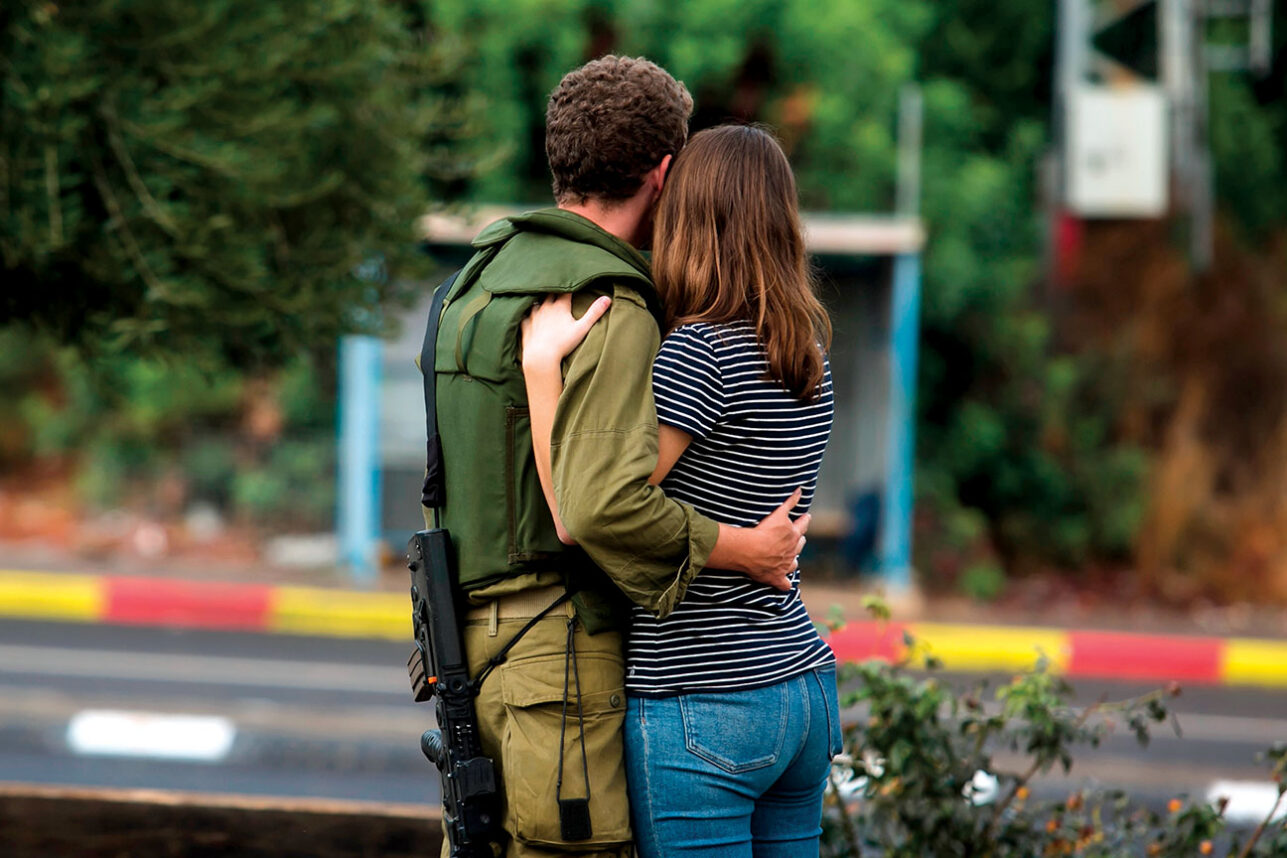
This Jewish New Year will begin like no other. For the first time since October 7th, we will no longer need to pray on the High Holidays for the return of the hostages
The Passover Haggadah does not tell us to retell our story as if we were slaves in Egypt, but rather to tell our story as if we left Egypt and became free people.
This Rosh Hashanah will be different. We will be a free people, but our work is far from over.
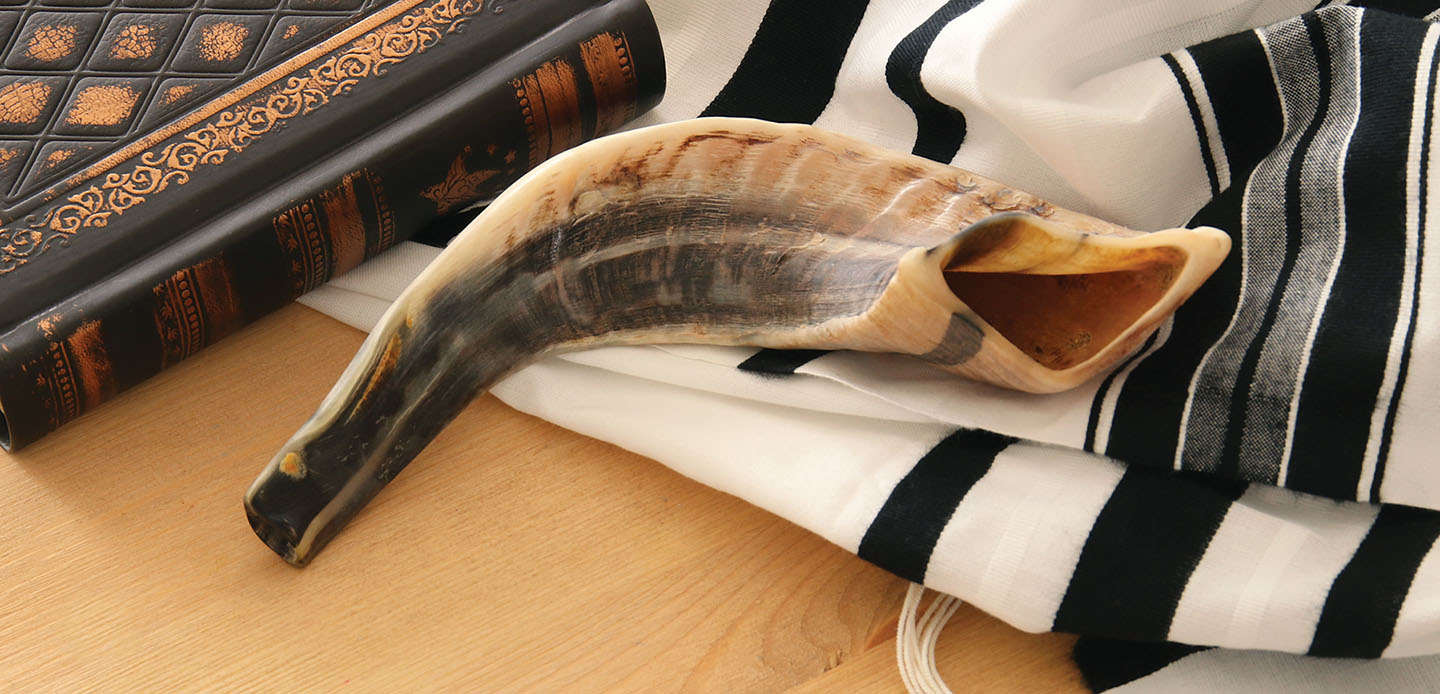
When Jews arrive at their synagogues this year, they will miss the sound of the shofar, as it is not sounded when the new year coincides with the Sabbath. Yet, this may be the exact moment we need this year.
The ancient ram’s horn is our spiritual alarm clock. The prophet Isaiah teaches us, “rise and wake up, shine your light unto the world” (Isaiah 60:1).
Sometimes we do not hear the alarm clock when it sounds, and other times it fails to go off. So this year, when we are commanded not to sound the shofar, what are we obligated to listen to?
Perhaps the answer comes in the central prayer of the High Holy Days, called the Un’taneh Tokef. The liturgy tells us that the great shofar is sounded, and a still small voice is heard.
This year we must listen to the cries of those we cannot hear. Last year, those cries emanated from the tunnels of Hamas, from the families whose loved ones were murdered on that fateful day. We heard their stories, we met their families, we stood in public squares, blasting the shofar to bring them home.
As released hostage Yosef Ohana recently told an audience in the United States, he could understand why his parents and family would continue to pray for him, but it did not make sense to him why the entire world would do so too. That is the power of hearing those cries, as they stir our souls to make a difference.
There were not 251 hostages. There were 251 worlds that needed to be restored.
While in captivity, we could not hear their voices, but the sound of the shofar symbolized their shouts from the depths of distress.
And now, on this first Rosh Hashanah of their freedom, as they tell stories that we could never imagine, the sound of the shofar will be silent.
So this year, while the shofar cannot be sounded, we must make our voices heard.
We know we cannot do it alone. That is the power of bringing together the voices of our people. A place where a diverse spectrum of the Jewish community can gather to exchange ideas, sharpen each other’s minds, and make significant differences in building the bridges of tomorrow.
This new year, listen to the silent cries, for they too can pierce our hearts and souls as strongly as the loudest sound of the shofar.
Rabbi Sherman’s article, “The Silent Shofar,” was originally published by Voice of the People, a collaborative effort involving the President of Israel, the World Zionist Organization and the Jewish Agency for Israel.
Rabbi Michael Barclay, Ner Simcha
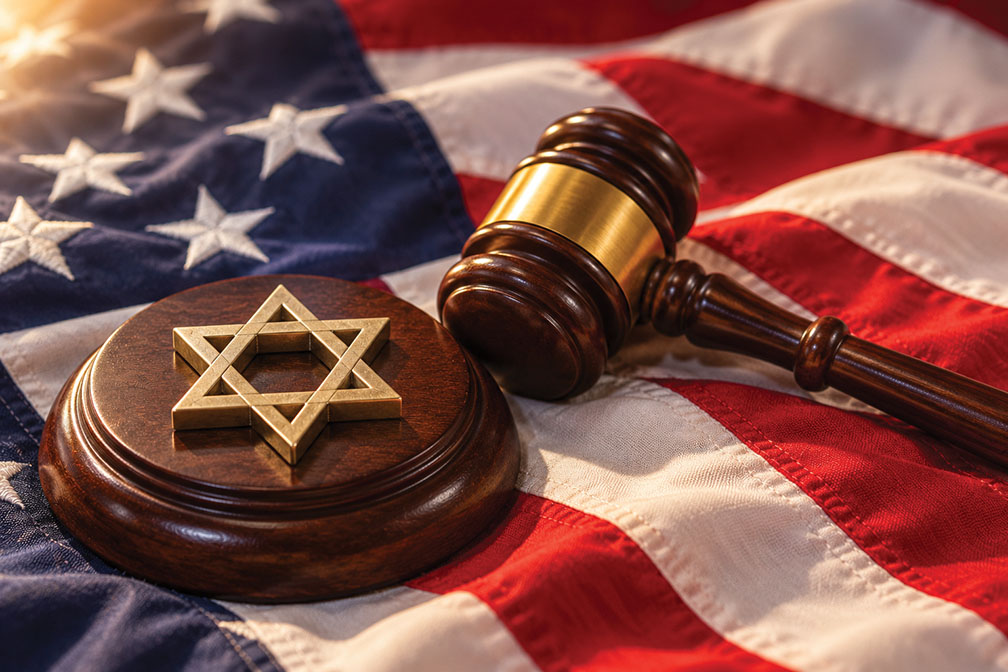
This year, Rosh Hashanah falls on the 25th anniversary of the horrific tragedies of September 11th. While anti-Semites often complain that Jews cannot be truly committed to America, the exact opposite is true: this country is based on Jewish values and history, and America has been the greatest place in the history of the Diaspora for us.
From the very beginning of this nation, Jews and Jewish values have been integral in the formation of the United States. Christopher Columbus was a Jew (among other proofs, he placed “B”H” on the top of his personal letters to his son); the first death of the American Revolution in 1770 that led to the Boston Massacre was a Jew named Christopher Seder; and Alexander Hamilton’s mother, Rachael Levine, converted prior to his birth, making Hamilton Jewish (he was additionally raised in a Yeshiva on Nevis). The three branches of our government were consciously and directly taken from the governmental model of ancient Israel. Even before the Revolution, there was the Jewish influence in American colleges, and you can still see the importance of Judaism simply by looking at the seals of Yale, Dartmouth, and Columbia, all of which have Hebrew prominently placed in their official seals.
The values of America and Judaism are consonant with each other, and both rely on individual responsibility and dedication to the values that are shared.
As we mourn the tragedies of September 11th, let us all remember that in order to observe our Judaism, we must also be American patriots… and that any true patriot must also, by definition, respect and treasure Judaism and our Jewish values.