The Rosh Hashanah holiday may well be the most underrated holy day of the Jewish calendar. Some people are aware that there are Jews who go to synagogue only three days a year. These are called the High Holy days – viz. the two days of Rosh Hashanah and Yom Kippur (the Day of Atonement). Still, most people think of Rosh Hashanah as a light festival where Jews celebrate the arrival of the New Year on the Hebrew calendar – maybe without the excitement of a dropped crystal ball festooned with 32,000 LEDs at the stroke of midnight. This understanding misses a central religious message of Rosh Hashanah – that this world of ours is a Creation.
The teaching of Creation asserts that we live on a planet, the context of our existence, that is not a random outcome of a blind physical process. It is part of a vast universe brought into being, controlled by rigorous laws of nature shaped and sustained by a Creator who is the ground of Being.
The most remarkable teaching of Judaism may not be monotheism – that there is One God – which is commonly accepted as the greatest Jewish contribution to world civilization. Rather the extraordinary Jewish religious claim is that this God, whose Presence exceeds all space and whose existence precedes and extends beyond all time, is nevertheless deeply connected to our little speck of life. God cares. In fact, God loves life – especially life’s highest developed form, the human being, and wants the best for Creation and all God’s creatures. This teaching is taken up and taught to all of humanity by Christianity, with 1.9 billion adherents, and by Islam, with 1.1 billion followers.
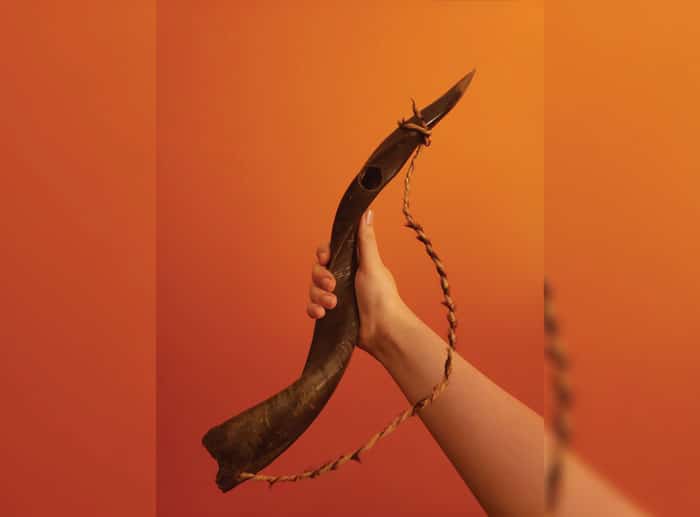
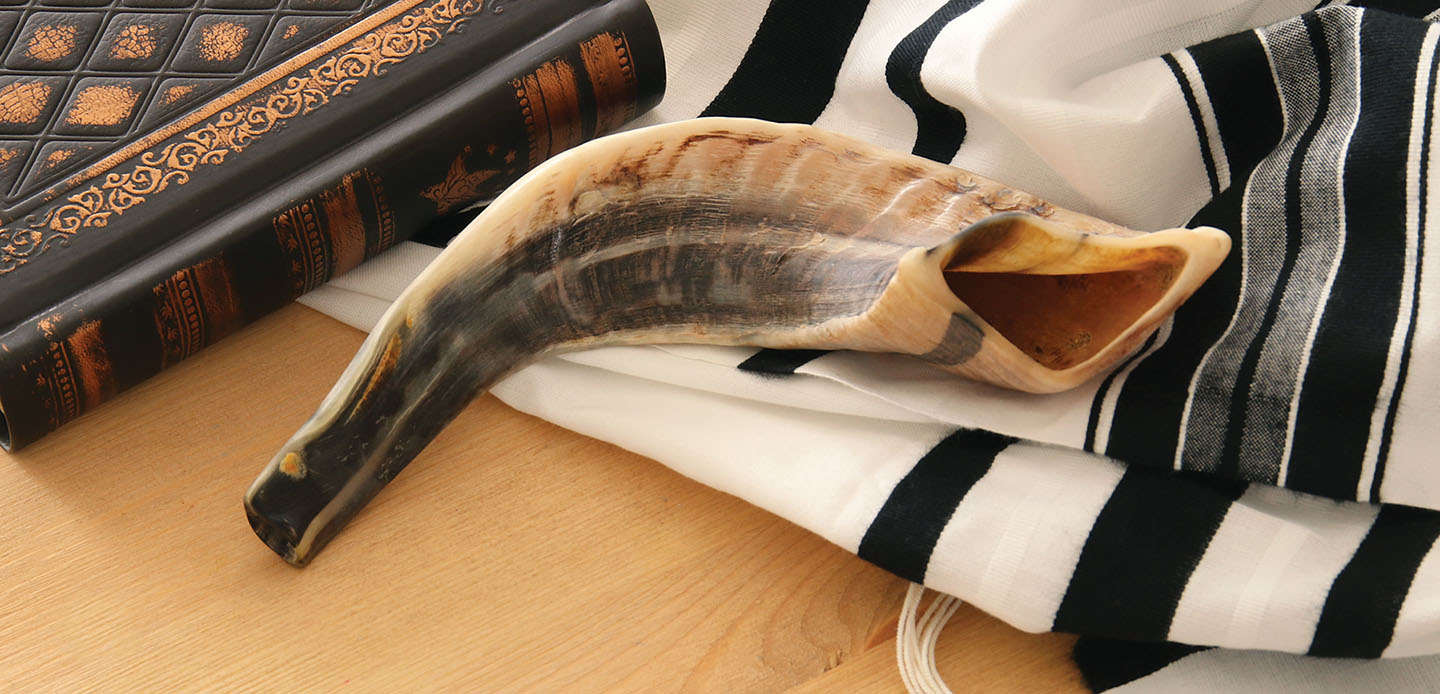
On Rosh Hashanah, Jews gather to celebrate the process of Creation as if this is the anniversary of the Big Bang. “Today is the birth day of the world,” says the High Holy Days prayer book. The blasts of the ram’s horn symbolize the coronation trumpets of the Lord who is responsible for this reality. As a community we acknowledge that we have received an extraordinary gift, Creation. We are not the Masters of the Universe who can do with it whatever we will. We are accountable to a higher Power for how we treat it, whether by polluting it or by preserving it.
There is a second dimension of Creation. Contrary to ancient science and the classic Aristotelian wisdom that postulated a steady state eternal matter, we recognize that this universe came into being and will one day exhaust and end its existence. Therefore, we approach Nature in a spirit of respecting its design and beauty, but feel free to join in its evolution and transformation. Judaism in its messianic vision teaches that this earth can and should be turned into a paradise for all the living. According to the prophets, this world was created to be filled with life (see Isaiah 45:18). The calling of all humanity is to nurture the growth of life and overcome the enemies of life – poverty, hunger, oppression/inequality, war, and sickness. The Talmud says that humanity is invited to covenant with God to improve Creation. We become partners in Creation when we cure a disease or when we upgrade the productivity of the land to sustain more life.
In the period from Rosh Hashanah to Yom Kippur, we do a reckoning as to when we lived up to our calling and when we failed so that we can turn from degrading or destroying to upgrading the quality of life, both in society and in nature.
There is a third, more personal dimension to the concept of Creation. This understanding implies that there are levels of existence. The level of material existence is visible and measurable and manipulable. But at the same time, divinity and holiness exist that are not visible or measurable. Yet this spiritual realm is as real as the physical.
We can live life at a purely material level and never miss the other aspect of existence. But when we go into our inner nature and connect to others, we develop relationships and love that are the deepest and most moving aspects of life. To meet God’s presence, we must go into the deepest levels of life, where we can intuit and encounter the divine.
From Rosh Hashanah to Yom Kippur, we try to focus on and go deeper into the inner life. This includes making an honest reckoning of where we cheated and failed and where we lived up to our best values. But it is not just about sin. In every aspect of our life and behavior, we review what we can change or how we can embrace living more deeply. In the words of Rabbi Joseph Soloveitchik, one of the greatest Jewish theologians of the twentieth century, we try to develop a deeper consciousness, a new heart and spirit, to expand our longings and goals. If we succeed in some measure, then we will have been partners with the Creator in the highest level of creation – self-creation.
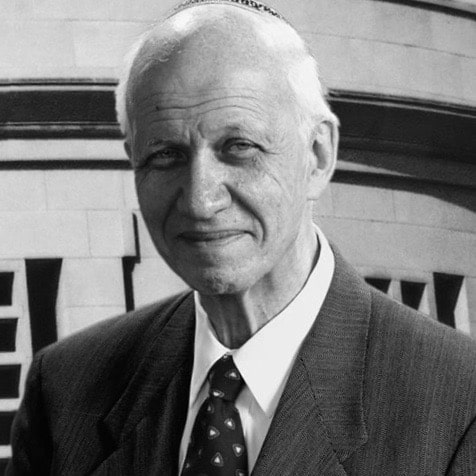
Rabbi Irving Greenberg is a Senior Scholar in Residence at the Hadar Institute and the author of “The Triumph of Life: A Narrative Theology of Judaism.”