In the 1920s, the son of a destitute blacksmith from Lodz, Poland, amazed the world with his feats of strength. Heralded as the modern Samson and the Iron King, Zishe Breitbart became a Jewish folk hero, twisting bars of iron, pulling trains by his teeth and killing bulls with his fists.
While other kids heard bedtime tales of princes, frogs and giants, my brother, Gary Bart, and I were weaned on the Circle of Death, a motordome balanced on the strongman’s chest bearing two motorcycles chasing each other in a circle.
The fact that a Jew had become famous for his strength was remarkable; the fact that he was a cousin was riveting.
While I moved on to other things, the little boy who was my brother — so fascinated with the strongman’s heroic deeds that his friends actually began calling him "Zishe" — became obsessed, and when "Invincible" opens in Los Angeles in September, my brother, the producer, will have realized a lifelong dream.
"I felt since childhood that I was on a mission to discover everything about him," he says, "and tell the world that at a time when there was a great perception of Jewish weakness, there was an enormously strong Jew who defended and inspired his people."
My brother’s quest led him through archives and libraries where he discovered that almost everything written about Breitbart was in Yiddish, German, Polish, Czechoslovakian — everything but English. He hired translators and researchers, placed ads in Jewish newspapers around the world, consulted curators and experts in circus history, vaudeville and the physical culture movement, even obtained nine original Breitbart circus posters from a dealer who had bought out the contents of a bankrupt East German museum.
A researcher he hired in Vienna uncovered the dramatic story of a conflict between Breitbart and a famous hypnotist named Hanussen (played in the film by Tim Roth), who eventually became Hitler’s clairvoyant. In a sensational trial, each accused the other of defamation.
"I think what fascinated Tim about the role," Bart says, "was that here was a man who fancied himself the minister of the occult in the emerging Third Reich, who had published a newspaper that supported Hitler and raised funds to support anti-Semitic organizations, and who we later discover in the film is Jewish himself."
Getting the film made proved my brother almost as invincible as his hero. After working for a year and a half with an English playwright on a script, a producer friend mentioned the idea to famed German director, Werner Herzog, who accepted the project on the condition that he write his own script. "Although he would be faithful to the character and major events, he wanted artistic license to tell the story."
"When Werner finally agreed to do the film, I flew up to his home in San Francisco," Bart says. "We had a fine dinner. He opened a bottle of wine, and I said I thought it was a great leap of faith on my part turning the project over to him, a German, not a Jew, that I thought we could heal some wounds and be an example to others."
Securing financing for the film was accomplished through Fine Line for American rights and Channel 4 England for world rights.
Nothing prepared Bart, however, for the actual experience of filming in Germany — a country that our dad would never set foot in because he had lost so many family members in the Holocaust — or for eating lunch with actors dressed as Nazis, armed with authentic Nazi rifles.
The shtetl scenes were filmed in the Latvian village of Kuldiga. "Here was a formerly Jewish town that looked totally untouched by the war. It’s exactly like all these photos you see. The only thing missing were the Jews."
Other scenes were shot in Vilnius, formerly Vilna, the seat of Jewish learning in Eastern Europe. "There’s virtually nothing Jewish left there at all," Bart notes. "I searched for a mezuzah, or even nail holes where a mezuzah might have been, and found nothing."
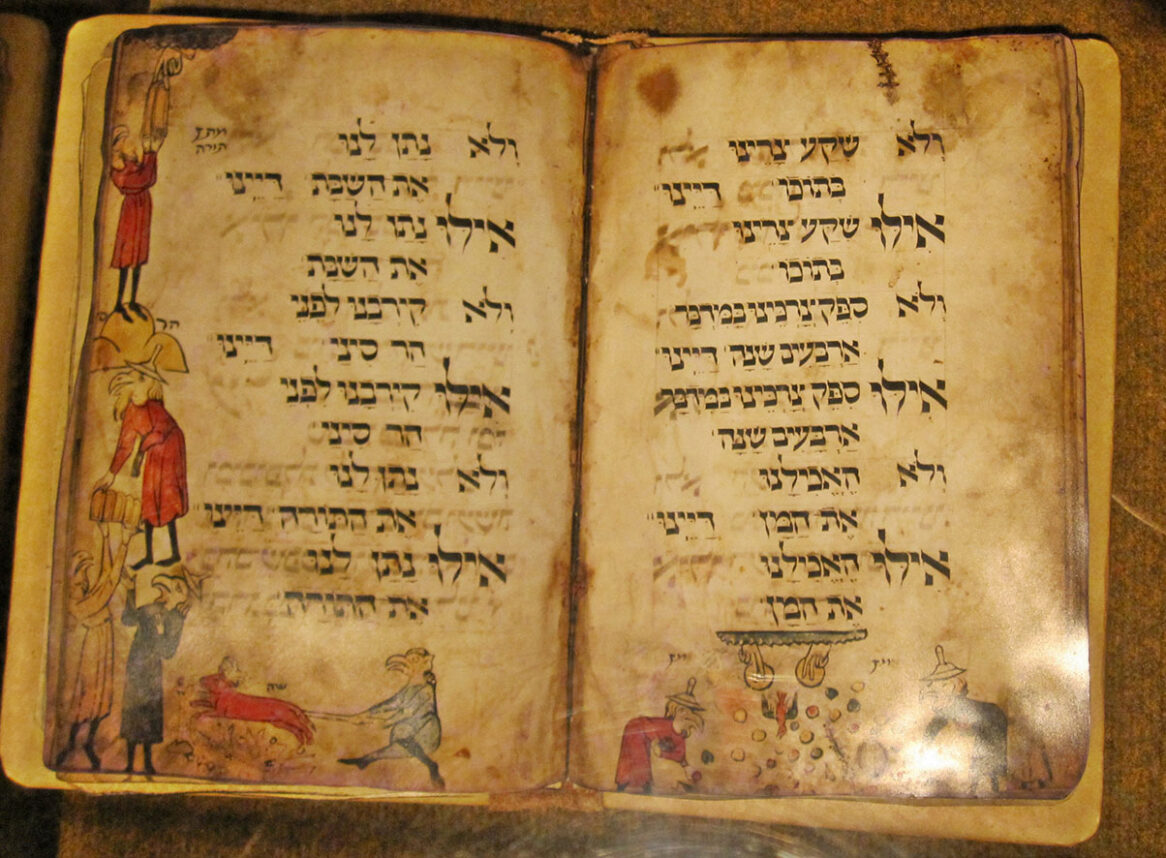
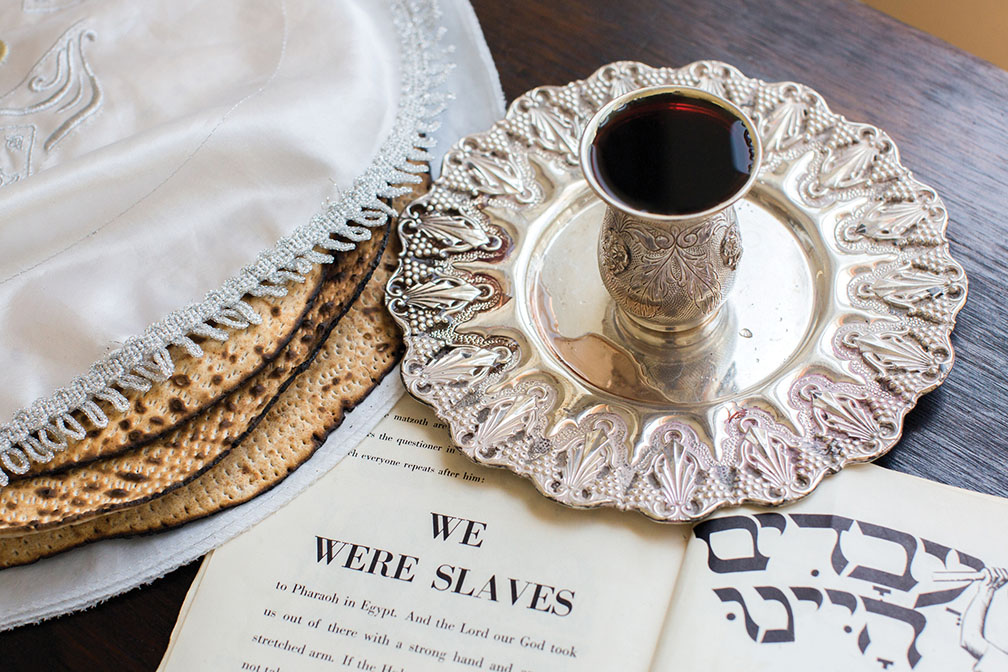
Knowing that he would spend Passover in Germany, Bart had packed haggadot and managed to locate a kosher caterer in Cologne who brought everything: seder plate, matzot, even kosher wine. "Although only myself, the assistant director and head wardrobe designer are Jewish, the main actors attended, as well as Werner, who, being the consummate director that he is, started directing and virtually took over the seder!"
In all, Bart spent five months in Europe. "I felt a tremendous sense of responsibility," he says. "Since Werner is not Jewish, I wanted to be sure all things Jewish were done properly and that Breitbart’s portrayal was true to his character."