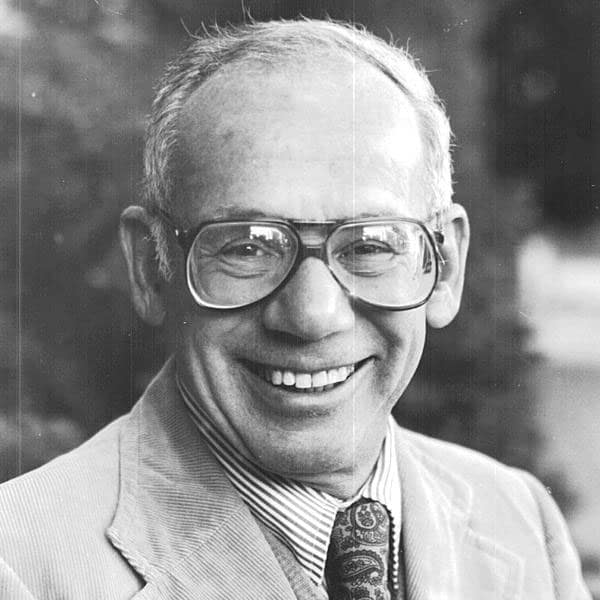
Shortly after famed photographer Roman Vishniac died in 1990, his daughter Mara checked through his New York apartment. In the bottom drawer of a file cabinet she found a bundle of folders and envelopes labeled “Berlin.”
The discovery was a surprise to Mara and her mother, Luta. Vishniac had gained worldwide renown for his masterful photographic record of Jewish life in the shtetls and urban ghettoes of Eastern Europe, shortly before they were extinguished in the Holocaust.
Later, this collection of photos was exhibited and published under the apt title, “A Vanished World.”
But the Berlin photos were practically unknown, or were presumed to have been left behind when Vishniac fled Berlin, his home for 20 years, in 1939.
Vishniac hadn’t given much thought to his Berlin photos either. Many were found at the end of long sequences of pictures of plant and insect microorganisms. A pioneer in microphotography, Vishniac had apparently snapped the Berlin scenes to finish up rolls of film.
Some 40 of the Berlin photos, first curated by Aubrey Pomerance at the Jewish Museum in Berlin, are now on exhibit through Dec. 14 at UCLA Hillel’s Dortort Center for Creativity in the Arts.
Most of the photos were taken in the 1920s, shortly after the Russian-born Vishniac settled in Berlin, then the center of a vibrant art and music renaissance.
Vishniac seemed most interested, however, in the lives of ordinary people, the distinctive “Berliner” types who now represent a vanished world of their own.
Or, as UCLA Hillel director Rabbi Chaim Seidler-Feller put it at the exhibit’s opening reception, “You are standing in front of history.”
There are working-class pub patrons, chimney sweeps, bus conductors, booksellers and rotund beer wagon drivers.
After the Nazi takeover in 1933, Vishniac’s attention turned toward the increasingly embattled Jewish community, with Jewish children in separate schools, petitioners seeking help to leave the country, placards extolling Hitler, and young Jews on training farms preparing for kibbutz life in Palestine.
Scattered throughout are photos of Vishniac’s extended family, taken mostly at party reunions, which resemble, to the unschooled eye at least, the stiff-posed pictures spread across any family album.
The master’s touch is more apparent in a series of remarkable portraits of Vishniac’s friends, among them the Russian pre-Bolshevik leader Alexander Kerensky and the great tenor Joseph Schmidt.
Mara Vishniac Kohn, who is the keeper of her father’s legacy and a living link to his work, was at the opening reception and talked at some length to The Journal.
Now living in Santa Barbara and the wife of Nobel Laureate Walter Kohn, she said that as a youngster in Berlin she was largely unaware of the momentous changes happening around her and that the family was at first partially shielded by holding Latvian passports.
However, Vishniac Kohn recalled one unusual assignment. While her parents listened to illegal radio broadcasts from Moscow and London, young Mara was stationed outside to warn of any approaching strangers.
“Roman Vishniac’s Berlin,” a handsome book of the exhibit with commentary by Vishniac Kohn, has been published by the Jewish Museum Berlin in English and German.
The exhibit is at UCLA Hillel, 574 Hilgard Ave. in Westwood, and is co-sponsored by Germany’s Goethe Institut and the local consulate general, Club ’33, and the UCLA Center for Jewish Studies. Gallery hours are Monday through Friday, 10 a.m. to 4 p.m. For additional information, go to www.uclahillel.org, or phone Hillel artistic director Perla Karney at (310) 208-3081, ext. 108.