In James Still’s “A Long Bridge Over Deep Waters,” a Catholic Cambodian asks an elderly Jew, “Why don’t you believe in Jesus?”
The senior citizen replies that she regards Jesus as “a revolutionary Jew,” not the savior — and that she would rather argue with God than feel awe for Him.
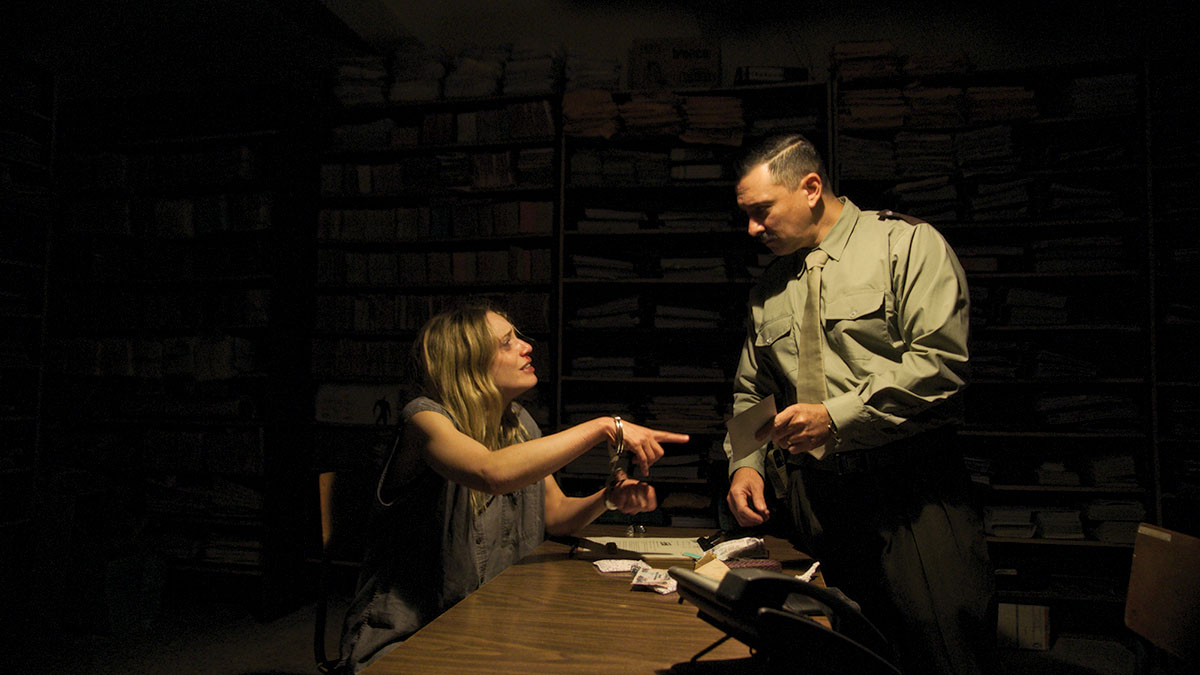
The debate is typical of “Waters,” a series of intense encounters between 57 members of 10 Los Angeles religious communities produced by the multicultural Cornerstone Theater. It’s the culmination of the company’s four-year faith-based theater cycle, which staged eight projects on creeds from Mormon to Baha’i. According to Cornerstone’s Lee Lawlor, “‘Waters,’ is a ‘bridge show’ incorporating all the groups, in our tradition of building bridges between diverse communities.”
With so much ground to cover, Still found “Waters” initially “overwhelming.” The 46-year-old playwright grew up Methodist in a Kansas town and did not meet many minorities until his church exchange program with a synagogue when he was 15. Yet he understood what it was like to be ‘the other,’ given that he was gay. “I yearned to find out if anyone else felt they were on the margins, or hated, or invisible,” he said.
Cornerstone’s faith project drew him, in part, because “it’s scary now for minorities to discuss religion in this country,” he said. “There’s pressure to talk about faith as one thing only, and that is Christianity.”
To structure the sprawling “Waters,” Still drew on Arthur Schnitzler’s classic play, “La Ronde,” in which scenes are connected by protagonists moving from one sequence to another. To create his characters, he conducted more than 1,000 hours of interviews; a “spiritual restlessness” among some Jews inspired the fictional Alan, who is secular but considers synagogue after his mother’s death. Other characters include a Hindu who clashes with her Muslim roommate; an all-American family of atheists; and a lesbian Jewish mother, Connie.
Actress Lisa Robins, who plays Connie, feels spiritually challenged by her role. Like her character, she is a Jewish single mother who has explored other religions but is investigating Judaism now that she has a child. “But Connie has much more of a commitment to the religion,” she said. “When I say onstage that I believe in God, I’m actually wondering, ‘What do I believe.’ It’s awkward.”
Still intended awkward moments to occur throughout “Waters:” “The play is about how faith both unites and divides us,” he said.
“Waters” plays at the Ford Amphitheater June 2-12. For tickets, call (323) 461-3673.