It was not until a movie about the Kindertransport came out in 2000 that Ruth Moll began to consider herself a Holocaust survivor.
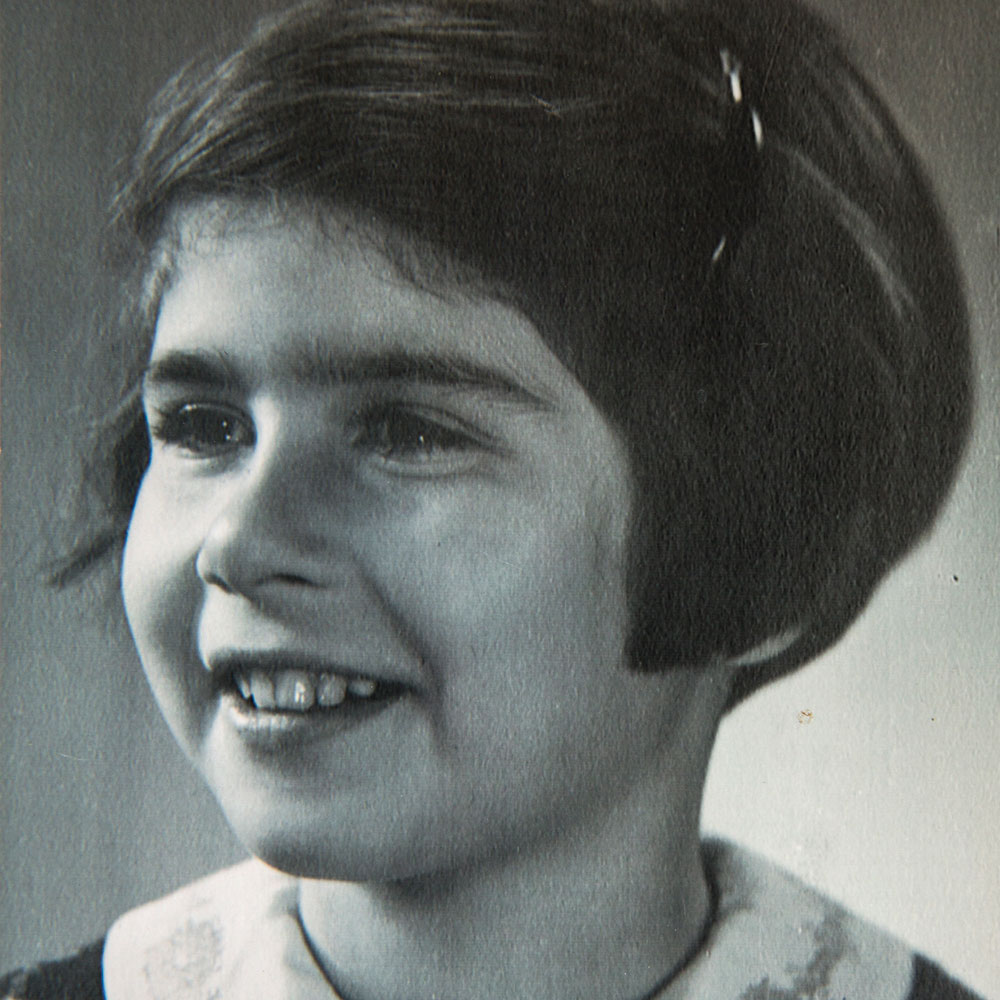
Moll was 10 years old when she and her two sisters boarded a train to escape Nazi Germany shortly after Kristallnacht in November 1938. They were among the 10,000 children saved in the Kindertransport, a series of rescues organized by Great Britain before World War II began.
So, unlike many of the stories recounted around Yom HaShoah, Moll’s evasion of Nazi persecution does not involve ghettos or concentration camps. But that does not make her experience less harrowing or, as she insists, less critical to relate.
“It’s very important for people to know,” Moll told the Journal after a memorial candlelighting at a Cedars-Sinai Yom HaShoah ceremony on April 21.
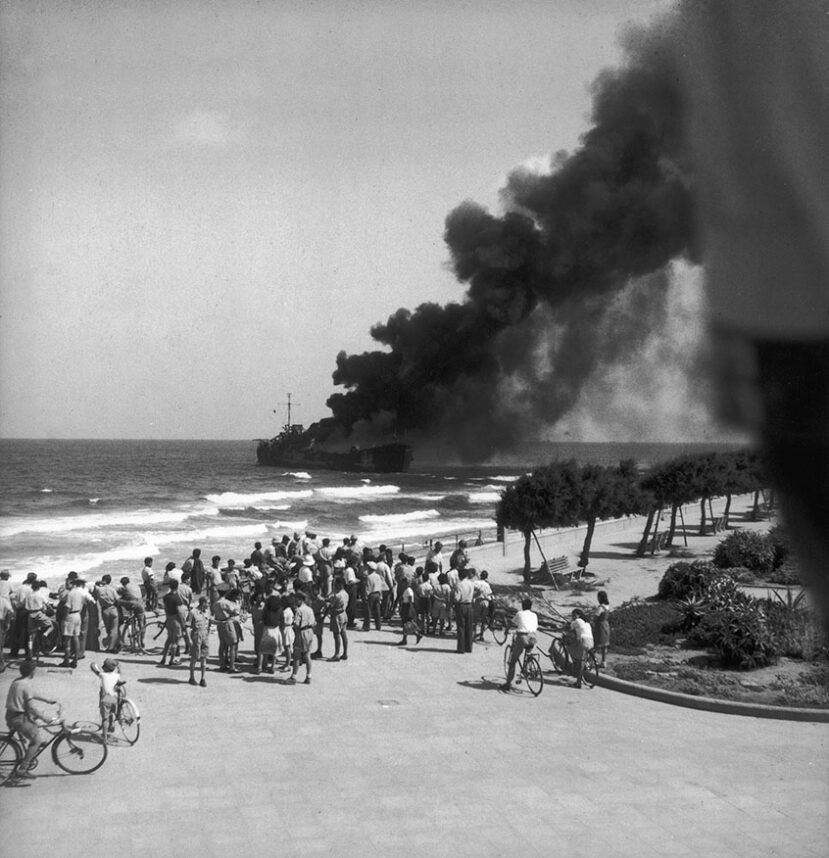
As a contrast, she cited the example of the MS St. Louis, an ocean liner that was filled with hundreds of European Jewish refugees but turned back from the United States in 1939.
“To think a country like America could have done that — it’s not very nice,” Moll said. “And that’s why I stress that if it wasn’t for England, I wouldn’t be talking to you today.”
Now 89, Moll volunteers in various nonclinical roles at Cedars-Sinai, where she was one of several survivors who participated in the memorial candlelighting. The event included an address from Rabbi Marvin Hier, dean and founder of the Simon Wiesenthal Center, before a crowd of 200 or so members of the extended hospital community.
Born Ruth Schmidt in Stuttgart, Germany, Moll enjoyed a traditional Jewish childhood before the horrors of Kristallnacht ravaged her community. She remembers hearing the sound of shattering glass from inside her home. Weeks later, the Gestapo came looking for her father, a successful businessman. Luckily, he wasn’t home.
Sensing the immediacy of the Nazi threat, the Schmidt parents sought to protect their three daughters, ages 12, 10 and 9 at the time. With the help of a wealthy aunt, they secured travel documents and tickets for their children on a train bound for the Netherlands coast. A ferry would take them the rest of the way to England.
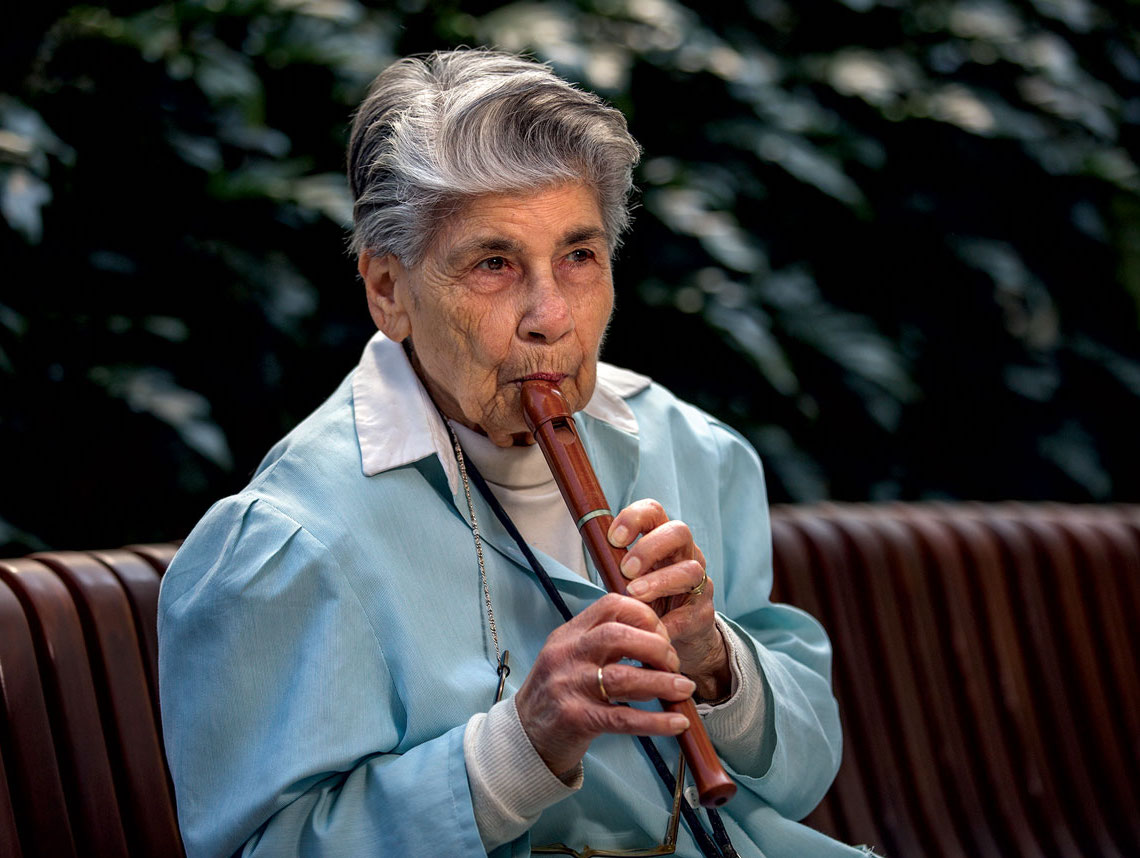
The children were permitted one small overnight suitcase each; no sentimental items could be accommodated. But Moll managed to smuggle her wooden recorder, on which she had been playing children’s songs since kindergarten, in her bag. She has kept the instrument to this day.
“It meant a lot to me because I was the only one of the three of us [who played] an instrument,” she told the Journal. She joked that she would probably need some breathing practice before she could play the wind instrument again. “I’m an old woman,” she laughed.
She left home not knowing if she ever would see her parents again, and upon arriving in England, on Feb. 3, 1939, the Schmidt girls were met by a relative, who enrolled them in a Christian boarding school. Moll’s parents later gained passage to England, mere weeks before the war started, and while they were able to visit their daughters at the boarding school, the family was not fully reunited until after the war.
Unfortunately, many of the other children saved by the Kindertransport never saw their families again. That includes her late husband, Rudy Moll, whom she met after moving to California in the 1950s.
Moll’s flight from Nazi persecution was made possible in the aftermath of Kristallnacht when a group of British Jewish and Quaker leaders appealed to Parliament for the admission of unaccompanied Jewish children as refugees from Nazi territories. British authorities agreed to take in an unspecified number as temporary migrants, with the assumption that they would return to Germany once the danger had passed.
Jewish organizations inside Germany and its territories planned the extraction, prioritizing especially vulnerable children, such as orphans, and organizing the travel from major cities like Prague, Vienna and Frankfurt, where Moll and her sisters were dropped off at the train station by the family maid.
Overall, around 10,000 children made it safely to England, mostly by train and ship, with a few arriving by airplane. The Kindertransport ceased operating in May 1940, when Dutch forces surrendered to the German army, making the last leg, the ferry, unnavigable.
“England was the only country who was willing to open their doors to save 10,000 children,” Moll said, “and they would have saved more if they would have had the money.”
Still, since she never saw the inside of a concentration camp, she never thought of herself as a Holocaust survivor. “Into the Arms of Strangers,” a documentary about the Kindertransport, changed her perspective.
“Now when people ask me, I tell them I’m a survivor,” she said. “It seems to have some kind of impact, which is really what I’m happy about.”
She sees the rescue effort that saved her life as a moral imperative for future generations, one that’s never been more pressing than today. With this in mind, she talked about the refugee crisis in Syria and Europe, saying that people today aren’t listening to what’s going on in Syria and noticing the parallels with the Holocaust.
“I’m scared for what’s happening in the world, for myself,” Moll said. “Because we said never again, but who knows?”