
fbpx

April 26, 2017

Learn About Car Garages Options and their Maintenance Requirements

Cars have become part of the everyday life and as such, they to deserve a haven to retreat to at the end of the day. It is good to know what is available and, therefore, make an informed choice as you incorporate your needs. Here are some of the more popular garage examples.

Size is a key issue to look out for when making a decision. The number of cars, the vehicle type, and how much space would you want, play a role in deciding on the size and is best addressed by the following types of garages.

1. Single Garage

As the name suggests, this type is the simplest. It is a space that accommodates an average sized car and offers comfortable space for passengers to exit and board the vehicle.

2. Double Garage

This type appeals to the homeowner who needs enough parking ports for two vehicles. It then follows that for two averaged-sized vehicles, you need double space, generally 300 square feet, which can always change to take care of the customer’s preference.

3. Tandem Garage

In this type of garages, vehicles are parked in a tail-nose order. They are not common among homes, however, families with two vehicles and end up using only one, may be attracted to such a garage.

When it comes to the attachment to the main house, two types of car garages are evident. They are two garage types, namely;

1. Attached Garage

If you want a direct link to your car, this is the garage for you. The unit is connected to the main house, and in most cases, it adds to the beautiful design of the home.

2. Detached Garage

Some of the more common designs of homes include a garage unit besides or behind a house. What separates the main house and the unit, is a driveway that can be connected by a breezeway or a roof. For some homeowners, this space has become an extra carport addition to the compound.

Construction Materials


Now that you do have an idea on what type of garage you would want, the second consideration that is equally important is the material to be used to construct the carport. Whatever material you settle on, depends with the prevailing environment’s natural calamities, security issues in the neighborhood, durability as well as your preference. So one can make units from steel, wood or aluminum.

Garage Doors

There are several types of doors available to you when constructing your next car-housing unit. They include the following.

1. Roll up

This is the most common type of door and is also known as a raised-panel door. The ease of use attracts many to it, and with technological advancements, the door panels are automated with a sensor feature that detects your car approaching and automatically opens as well as closes when you exit.

2. Swing out

In this type, the garage doors open like normal doors, that is, they swing out. In many instances, the system has two doors.

For whatever choice you make on the garage door, it is prudent for you to consider the servicing needs of the garage doors. The best way to maintain and service the garage doors is to adopt a preventive maintenance approach which is cost-effective and a measure of safety. Here are a few tips to consider.

1. Listening and Looking

This is the best option. Every time the door is in use, check out for any anomalies.

2. Tighten All Parts

Due to the constant operation of the system, vibrations and movements cause bolts to lessen. Check them out and tighten those that need securing.

3. Inspect and Servicing The Rollers

It is advisable to conduct professional servicing at least twice a year. For any rollers with an issue, replacing them would work best to avoid instances of door jamming. As part of servicing, constant lubrication of the movable parts should also be considered.

Garaports


In consideration of the various preferences, individuals may have, closed structures for your car may be something you don’t want to explore. You could opt for a garaport which is a structure that is semi-covered. It is mostly open on all sides. However, it has a roofing. It is a cost effective option considering the space it also provides.

Indeed, under construction, the value of a garage unit is a major consideration when it comes to its use, and as part of the beauty compliment, it adds to the home. Happy selecting.


Learn About Car Garages Options and their Maintenance Requirements Read More »
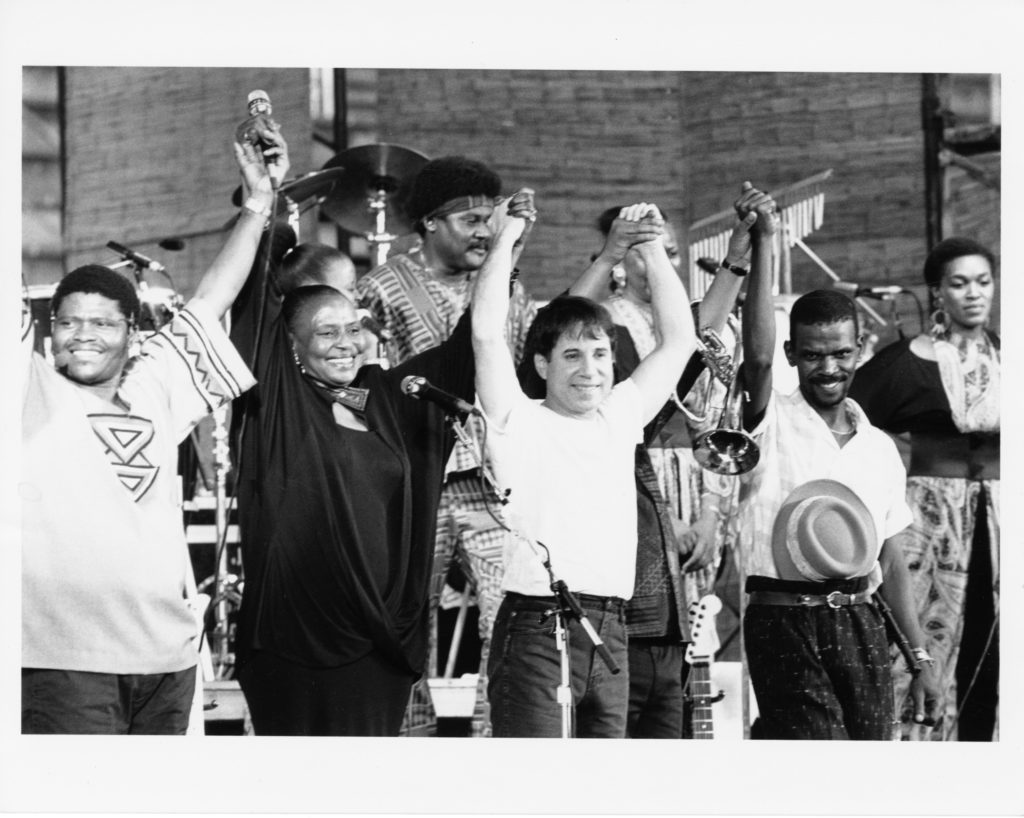
Here’s to you, Paul Simon: Skirball showcases his ‘Words & Music’

In 1964, a Jewish music executive, Goddard Lieberson, then the president of Columbia Records, told his newest act, a harmonizing duo inspired by the Everly Brothers, to use their “ethnic” names.

Goodbye, Tom and Jerry. Hello, Simon and Garfunkel.

“[Paul] Simon didn’t think people were going to buy folk songs sung by two middle-class Jewish men, but he embraced it,” said Erin Clancey, curator of “Paul Simon: Words & Music,” the Skirball Cultural Center’s latest exhibition.

“Words & Music,” which runs through Sept. 3, presents this curious piece of music industry trivia and much more, in a retrospective of his creativity that spans more than 16 albums — from Simon’s early work with Art Garfunkel to his 2016 solo album, “Stranger to Stranger.”

The exhibit is on loan from the Rock and Roll Hall of Fame and Museum in Cleveland. Its chronological sections display more than 150 items  — scratchpad notes, awards, the first jacket he wore on “American Bandstand” and his first acoustic guitar, a 13th birthday gift from his father, Louis, a professional bass player.

Additional items from the early years include correspondence between Simon and Garfunkel when Simon was away at summer camp that shows the two were friends before they were collaborators. “Send my love to Marilyn and any other nice lookin’ girls up there,” Simon wrote in one letter. It also features the duo’s first recording contract with Columbia, from 1957.

One section of the exhibit, “Simon and Garfunkel,” features nearly 35 photographs, sheet music and handwritten lyrics encapsulating the duo’s brief, impactful six years together when they recorded such baby boomer hits as “Mrs. Robinson,” “Homeward Bound” and “America.”

Clancey recalled a Skirball staffer looking at a photo of Simon and saying, “Hmm, that looks like my dad.”

simon3
Paul Simon backstage at Lincoln Center in New York in 1967. Photo by Don Hunstein, courtesy of Sony Music Entertainment.

“That’s kind of who we’re pitching this to — dads,” she said. “I guess that could be described as the core audience for this, people for whom this music is the soundtrack to their youth, the soundtrack to their young adulthood.”

The treasures include a photo of Simon and Garfunkel seated on the floor of a CBS studio while recording tracks for their debut album, “Wednesday Morning, 3 A.M.,” which sold poorly and prompted the duo to disband. Simon moved to England and immersed himself in the folk music scene. Included in the exhibition is a diary of his performances in the U.K.

Without either of them knowing it at the time, Tom Wilson, a music producer who had worked with Tom and Jerry, provided their big breakthrough. Responding to the growing popularity of folk-rock, Wilson overdubbed electric instruments onto “The Sound of Silence,” which Simon had written in response to the assassination of President John F. Kennedy. The record topped the Billboard Hot 100 chart.

Notified of his hit record, Simon returned to the United States. From 1966 to 1970, he and Garfunkel recorded blockbuster albums, including “Sounds of Silence,” “Bookends” and their last together, “Bridge Over Troubled Water.”

simon6Included are handwritten lyrics of “The Boxer,” from “Bridge Over Troubled Water,” that Simon scribbled onto an inflight airline magazine.


The examination of Simon’s versatile solo career shows how he has stayed relevant even as popular music has evolved. “Mother and Child Reunion” helped introduce Western audiences to reggae music; “Me and Julio Down by the Schoolyard” showcased his love of language; and “Still Crazy After All These Years” is Simon the songwriter at what he has called his peak.

Still, creative frustration hit him in the mid-1980s before a trip to Johannesburg, South Africa, in pursuit of township sounds he’d heard on a cassette tape, led to a career rejuvenating fusion of South African and American music on his 1986 landmark record, “Graceland.”

Handwritten lyrics from the title track and from “Diamonds on the Soles of Her Shoes,” the Album of the Year Grammy Award for “Graceland,” and annotated sheet music highlight the exhibition’s section on “Graceland.” On May 12, Skirball is screening “Under African Skies,” a 2012 documentary examining Simon’s bold decision to record music in South Africa in the 1980s, when the country was still under apartheid rule. In the documentary, Simon “talks about how perhaps he didn’t understand the fullness of the situation, the crisis of South Africa,” Clancey said.

One section of the exhibition, “Paul Simon in Popular Culture,” is unique to the Skirball. Included is a movie poster from “The Graduate,” which featured the song, “Mrs. Robinson,” originally “Mrs. Roosevelt” until Simon changed the lyric to match a character in the film at director Mike Nichols’ request.

“We’ve included sections that deal specifically with Paul’s popularity, his icon status, his place in our cultural consciousness, which I think was not so much the focus of the rock hall’s exhibition,” Clancey said. “They’re focused on music, of course, and the various instruments and songs, lyrics, etc. We’re interested in Paul as a cultural figure, first, and as a musician, second.”

Further distinguishing the Skirball exhibition is an interactive music lab Skirball developed in partnership with Roland Corp., an electronic music equipment manufacturer and distributor. It enables people to sing and jam with Simon.

“They have a drum circle where you can listen to songs that have a very distinctive drumbeat like, ‘50 Ways [to Leave Your Lover].’ You can harmonize along with Simon and Garfunkel to ‘Mrs. Robinson.’ I expect that to be a very, very popular attraction,” Clancey said.

Skirball and Roland previously partnered in 2008 for the Skirball exhibition “Bob Dylan’s American Journey, 1956-1966.”

Meanwhile, listening stations provide an opportunity to hear nearly 30 songs.

Simon, 75, was born in Newark, N.J., on Oct. 13, 1941. His parents were Hungarian Jews who immigrated to the U.S. at the beginning of World War II. Simon grew up in Queens, N.Y., which is where he met Garfunkel. He has been inducted into the Rock and Roll Hall of Fame as a solo artist and with Simon and Garfunkel. Twice previously married, including to the actress Carrie Fisher, he currently is married to folk singer Edie Brickell.

The rock hall displayed the Simon exhibition in 2015. Simon did not see it but nevertheless provided two of the museum’s officials, Karen Herman and Craig Inciardi, with an “oral history, of his life story,” Herman said. “We had a guitar next to him and said, ‘If you feel like it, go ahead and play,’ which he did a few times. We wanted to get at what makes Paul Simon Paul Simon.

“He was gracious with his story. He was gracious with his archives.”

The exhibition at the Skirball also suggests a musician’s concern for social justice is key to relevancy.

“Beyond just the fact of his Jewish identity and his pop cultural icon status, he’s also a person who fits very well with our mission, which is a sort of a dual mission of celebrating influential cultural figures but also people who have something to say with regard to social justice,” Clancey said. “His work, his lyrics, have often reflected the frustrations of the people. They have been very pointed at times with regard to social justice. We felt that was a good match.”


“Paul Simon: Words & Music” runs through Sept. 3 at the Skirball Cultural Center. For more information, go to skirball.org. 

Here’s to you, Paul Simon: Skirball showcases his ‘Words & Music’ Read More »

Obituaries, March 6-April 1

Martin Ableser died March 12 at 74. Survived by wife Lucy; daughter Deanna (Ken) Jaffee; 1 grandchild. Hillside

Edward Blake died March 11 at 92. Survived by daughter Shortie; 3 grandchildren; 8 great-grandchildren. Hillside

Barbara Edson died March 17 at 85. Survived by daughters Libby (John), Lisa, Dori (Charles) Boyles; 5 grandchildren. Hillside

Donald Field died March 12 at 83. Survived by wife Gail; daughter Kristi (Todd) Contreras; sons Gary, Kyle; 7 grandchildren; 2 great-grandchildren. Hillside

William Genego died March 8 at 66. Survived by stepsons Nicolo Nourafchan, Lorenzo Nourafchan, Leonardo Nourafchan; brother John. Hillside

Ellis Gusky died March 18 at 102. Survived by 2 grandchildren. Hillside

June Heiser died March 9 at 100. Survived by daughter Judith Schiffner (Herbert Klein); son Joel; 4 grandchildren; 5 great-grandchildren; sister Lila Matlin; brother Julius Levine. Hillside

Joseph Levy died April 1 at 87. Hillside

Robert Marks died March 6 at 91. Survived by wife Barbara Shafer; son Randy. Hillside

Richard Steinberg died March 6 at 89. Survived by son Andrew (Desiree); 1 grandchild. Hillside  

Obituaries, March 6-April 1 Read More »

Trish Vradenburg, TV writer who put spotlight on Alzheimer’s, 70

Trish Vradenburg. Photo courtesy of UsAgainstAlzheimer’s.

Trish Vradenburg, a television writer and advocate to end Alzheimer’s disease, died on April 17. She was 70.

A spokesperson for the family declined to disclose the cause of death, but in a phone interview, her husband, George, chairman and founding board member of UsAgainstAlzheimer’s, described his wife’s death as “sudden.”

Vradenburg and her husband co-founded UsAgainstAlzheimer’s, which aims to increase funding for Alzheimer’s research and discover a cure by 2020 for the progressive disease, a type of dementia, after her mother, Bea Lerner, died of Alzheimer’s in 1992. Vradenburg wrote a semi-autobiographical play about her mother, “Surviving Grace,” about a sitcom writer and her mom battling Alzheimer’s together.

Vradenburg was born Patricia Ann Lerner on May 9, 1946, in Newark, N.J. She began her career as a speechwriter in the U.S. Senate after graduating from Boston University, where she studied political science, in 1986. She was a television writer for “Designing Women,” “Family Ties” and “Kate & Allie”; published the novel “Liberated Lady”; and wrote for the New York Daily News, The Boston Globe, The Washington Post, Ladies’ Home Journal and Woman’s Day.

Judaism was important to Vradenburg, though she was a secular Jew. “She identified deeply with being Jewish and [I] converted to Judaism because she felt so deeply about her religion,” George, a former AOL executive, said. “I found this great depth in this community and purposefulness in the community.”

The couple resided in Washington, D.C., at the time of her death. They lived in Los Angeles and moved to Washington after George was offered a job with AOL. The two were married for 48 years at the time of Vradenburg’s death.

“A piece of light in the universe has gone out,” George said. “There is a brightness that will be dimmed.”

Her survivors include her husband, George; daughter Alissa Vradenburg and son-in-law Michael Sheresky; son Tyler Vradenburg and daughter-in-law Jeannine Cacioppe Vradenburg; brother Rabbi Michael Lerner and sister-in-law Cat Zavis; and four grandchildren.

A private funeral service was held April 20 in Los Angeles at Hillside Memorial Park and Mortuary. Lerner and Temple Israel of Hollywood Rabbi John Rosove led the service. A public memorial service in Washington is scheduled for May 9.

Trish Vradenburg, TV writer who put spotlight on Alzheimer’s, 70 Read More »

Parashat Tazria-Metzora: The burden and gift of empathy

For the past eight years, I have led a study group for physicians from my congregation. Every few months, we get together for good food, some wine (OK, lots of wine) and to discuss issues like medical ethics.

About three years ago, several of the sessions clustered on the idea of whether doctors could have empathy toward their patients. As one of the doctors wrote to me: “Can you (should you) act empathic when you don’t feel it? Is it okay not to feel it? How can you feel it in every encounter when you see 25 patients, one after the next, day after day?”

This week’s double portion, Parashat Tazria-Metzora, very subtly raises these same questions. Of all the weekly readings, these two in the book of Leviticus are by far the most medical, dealing with topics like afterbirth, seminal discharges, skin eruptions, burns and sores. How do we make sense of these conditions? How do the rabbis understand them?

To begin, it is necessary to make an apology. For hundreds of years, religious scholars and rabbis have associated the theology of sin and guilt with that of disease. Often, in order to make a moral point about gossip or some other social ill, rabbis link this section in Leviticus with the text in Deuteronomy where Miriam criticizes Moses and then is struck by a skin eruption. Their conclusion tells us that to be declared tameh (literally unclean) is the same as being unfit ethically. To be sick is to be wrong, and to be debilitated makes you an abomination to both your fellow human beings and to God.

When we graft morality too heavily onto purity and wellness, we cause more suffering while ignoring the sanctity of the sick. To be unclean is not to be immoral — ever.

One does not have to go far to see the danger in this thinking. How many would-be mothers are made to feel that something is morally wrong with them if they cannot bear children? How many people who have cancer feel that it’s a punishment for some unknowable crime?

When we graft morality too heavily onto purity and wellness, we cause more suffering while ignoring the sanctity of the sick. To be unclean is not to be immoral — ever.

Learning with my congregation’s doctors made it clear to me that they share much with the ancient priests of Israel, actually. The priests of our far-reaching past were twice burdened, first by God to be the caretaker of the Divine-human connection through the rituals of the Mishkan (Tabernacle), and again by the people themselves, who presented to the priest all manner of physical ailment. The same is true for the doctor who embodies the knowledge of science and then takes that knowledge and encounters real people.

Where they intersect the most is in the realm of human connection, the critical role of empathy. The parallels between doctoring and priestly work, the heady stuff of bearing witness to the most profound moments of human suffering, find their greatest expression in the empathic need for mutual recognition.

The word “patient” comes from the Latin meaning “to suffer.” The patient suffers and wants to be seen as a validated person in the eyes of the sacred authority. The priest/doctor can give validation through empathy, while feeling that they have been given a gift by being cum pati, with those who suffer, for their own life has been validated as consequential. Such is the dual gift-giving of being in service to one another and why the rabbis caution us to treat the sick with dignity and honor, for it is at the foot of their bed when we visit with care and love that God’s presence resides (Shulchan Aruch, Yoreh De’ah 335).

Lastly, we know from Leviticus itself what role empathy plays out in the act of holiness. The central theme of the Holiness Code, found a few chapters later, is that empathy itself leads to holiness. “Love your neighbor as yourself” (Leviticus 19:18) is one of the great cornerstones of Western morality.

This plays out nicely with those who have been healed from their sickness. After the priest sees them and welcomes them back to the community, a sacrificial rite is performed. The patient is brought to the literal center of the community and anointed in the same manner with the same rituals that anoint the High Priest over the people. Both priest and patient are bound together in this ritual of mutuality.

The ethical stance on sickness found in our Torah is not to see how the ill are immoral, but how those who suffer illness provoke us to become more moral by responding to their suffering in the same manner as the priest — with empathy, patience and care. 

Parashat Tazria-Metzora: The burden and gift of empathy Read More »

Here’s 5 apps that make your phone an interior decorator

Need some help with your next home decorating project? Thanks to some innovative apps, you can have useful design assistance in the palm of your hand. Here’s a roundup of a few of my favorite apps to make decorating easier.

I’ve downloaded and tested each of them, and the photos shown here are actual screen shots from my smartphone. These free apps are so fun to use that you’ll find yourself playing with them even when you’re not redecorating.

Benjamin Moore Color Capture

Say you see a beautiful rose in your garden and decide you want to paint your walls that exact color. With this app, just take a photograph of the rose and you’ll get an instant color match corresponding to an actual Benjamin Moore color. You also can upload images from your photo library. Other paint companies, including Sherwin-Williams and Dunn-Edwards, have similar apps.

Paint My Wall

If you find it difficult to imagine how a new paint color will look on your walls, this app will help you experiment without picking up a brush. Upload a photo of your room, choose a color and use your fingertip to “paint” the color on the wall. Once you’re done, you can continue to change the wall by clicking on other colors.

Size Up

Developed in Israel, this app turns your phone into a measuring tape. Wondering how wide that sofa in the store is? Set your phone down at one end, hit “start,” and then move it to the other end and hit “stop.” The app calculates the distance for you. In my experience, it is best used for approximate, rather than exact, measurements. For this article, I experimented with a television cabinet that was 68 1/2 inches wide, and the app overshot it by 1 inch.

Amikasa

This Webby Award-winning app is a 3-D room designer that lets you experiment with how furniture would look in your home. There are two ways to use it. First, you can select any piece of furniture from Amikasa’s extensive library and use augmented reality to view the piece as if it were in your own room. Alternately, you can build a room from scratch, setting the dimensions and furnishing it with pieces from actual brands. You even can try different flooring and wall colors.  As you’re designing your room, you can view it in three modes — a top-view floor plan, a 3-D overview from any angle and an interactive view from inside the room.

iHandy Level (pictured above)

Hanging pictures is a snap with this longtime favorite of DIY decorators. Your phone turns into a level, complete with a bubble that moves back and forth just like a real level.

Here’s 5 apps that make your phone an interior decorator Read More »

Even the experts are turning on the West Bank occupation

For decades, I’ve been writing about the danger Israel’s occupation of the West Bank — and before that, Gaza — poses to the existence of a democratic State of Israel.

It’s not a position that makes you popular with a vocal minority of American Jews, and perhaps a majority of the Jewish establishment. One of the most frequent critiques I get is that I am a naive non-combatant writing from the safety of the United States who knows nothing about Israeli security, the realities of the Middle East or the true nature of the Palestinians.

So, fine, let’s say I plead no contest to all those charges. But suppose I could find someone who served at the highest ranks of Israel’s army or intelligence services and who holds the same positions on the issues that I do? Would that convince the critics?

Now, what if I could find 270 of them?

Commanders for Israel’s Security (CIS) is a group of former combat commanders, generals and intelligence officials who have undertaken a campaign in Israel to end the occupation.

“We believe in separation as opposed to annexation,” Gen. (Res.) Giora Inbar, a CIS leader, told me. “We understand security comes by agreement, not by fighting.”

Inbar visited the Jewish Journal offices early last month as part of a speaking tour sponsored by Israel Policy Forum. He is, at 64, tall and trim, with close-cropped gray hair and a gravelly close-your-eyes-and-it’s-Yitzhak-Rabin voice. Inbar and other members of the group, including Amnon Reshef, a hero of the Yom Kippur War, will be back in Los Angeles next weekend, as well.

Like Rabin, they harbor few illusions about whether Hamas loves Jews or whether ISIS doesn’t have its sights set on Ramallah, much less Amman. As the former head of the Israel Defense Forces’ liaison unit in southern Lebanon, Inbar worked with intelligence-gathering units that likely knew more about what was going on in Syria than Bashar Assad.

“We are combat commanders,” Inbar explained. “Each of us at a point in his career understood the limits of power. We believe the two-state solution is the only solution that guarantees the security of Israel.”

When Israel conquered the West Bank and Gaza in the Six-Day War, 50 years ago this June, it assumed control of the millions of Palestinians who live there, without granting them full democratic rights. Unless it withdraws, the country soon will find itself having to choose between being an apartheid state or a binational state of Jews and Arabs — something the generals and most analysts see as a recipe for a Syria-like disaster.

Commanders for Israel’s Security is dealing with an issue that so far the government of Prime Minister Benjamin Netanyahu has refused to face, or, in some cases, has made worse. The CIS idea is very simple, and emblematic of the fighting ethos of the Israel Defense Forces: Seize the initiative.

“We refuse to condition our response on their initiative,” Inbar said. “We are not going to let anyone use the claim of ‘no partner’ as an excuse. No partner? OK, we are strong enough to initiate.”

For CIS, that means a simple three-point plan.

First, Israel can complete the security fence running between the country and the territories, and enforce strict security along the fence. Netanyahu, bowing to a right wing that doesn’t want to acknowledge Israel’s lack of sovereignty over the West Bank, has resisted finishing the fence — a lapse that risks Israeli lives. 

Second, say the commanders, work with Palestinians to improve their infrastructure and economy. In Hamas-controlled Gaza, that could mean allowing plans for a seaport to go forward.

“Help them build their economy and lifestyle, so they have something to lose,” Inbar said.

Finally, engage the Palestinians and Israel’s regional neighbors in talks along the lines of the Arab Peace Plan, which Israel has long rejected or ignored.

The peace talks can come last, Inbar said, and whether they bear fruit or not, Israel’s initial two steps will ensure it a safe and secure democratic state. 

“The idea is to bridge the stagnation and status quo that now exists with a permanent status agreement in the future,” the general explained.

In Israel, military yichus, or pedigree, matters. When CIS launched a controversial public relations campaign earlier this year that warned Israelis of a one-state inevitability, opinion polls showed that 7 percent of Israelis who didn’t think there was a chance of a two-state solution changed their mind — overnight.

But there is much more work to be done.

I interviewed Inbar the same week members of Netanyahu’s coalition sought to pass a bill that would extend Israeli sovereignty to the Jerusalem-area settlement of Ma’ale Adumim.

“It’s a disaster,” Inbar told me. “It really violates the territorial contiguity of the Palestinians.”

Netanyahu delayed a vote on the bill to avoid a confrontation with the Trump administration, but proponents have vowed to reintroduce it. 

Meanwhile, sources in Israel have told me Commanders for Israel have held at least two private meetings with Netanyahu himself. 

As Israel celebrates its 69th birthday, these former generals may be just the gift it needs.


Rob Eshman is publisher and editor-in-chief of TRIBE Media Corp./Jewish Journal. Email
him at robe@jewishjournal.com. You can follow him on Instagram and Twitter @foodaism
and @RobEshman.

Even the experts are turning on the West Bank occupation Read More »

Henry Jaglom’s ‘Train to Zakopané’ carries an unexpected love story

For three decades, Henry Jaglom interviewed his father, Simon, about his past, including his privileged childhood in czarist Russia and his imprisonment as a “capitalist” under the Bolsheviks.

But the younger Jaglom’s new film, “Train to Zakopané,” captures the story that Simon was most reluctant to recount: How he met a charming Polish nurse in 1928 on a train to the ski resort of Zakopané, but was repelled when she began spewing virulent anti-Semitic remarks. (“I can smell a Jew a kilometer away,” she repeatedly said.)

As revenge, Simon vowed to seduce the young woman before telling her that he was Jewish. What he didn’t expect was that during their rendezvous, he would fall in love with her.

The world premiere of the film will take place April 29 as part of the Los Angeles Jewish Film Festival. The festival, which is a program of TRIBE Media, the parent company of the Jewish Journal, runs through May 3.

The feature film is bookended by videotaped interviews Henry Jaglom (“Festival in Cannes,” “Just 45 Minutes From Broadway”) conducted with his father three years before his death in 1993 at age 96. After the opening interview, the movie flashes back in time to tell the story, with actors playing the real-life characters, in vivid black and white.

“This has haunted me all my life,” Jaglom, 79, said of why he made the drama. “My father always said it was the one story he didn’t like to tell, because he did something he didn’t think was right. He was planning to sleep with a girl and then reveal something that would be very upsetting to her.

“My father was elegant, a gentleman, so this was very different than he had ever behaved when I knew him,” the filmmaker added. “I never could have made this film when he was alive.”

Five years ago — prompted by the resurgence of anti-Semitism in Europe — Jaglom first wrote the story as a play in order to avoid the technical distractions of filmmaking. The show, also titled “Train to Zakopané,” premiered in 2014 at the Edgemar Center for the Arts in Santa Monica, where it ran for a year and a half.

After the play closed, Jaglom began writing his movie version, which stars his wife, Tanna Frederick, as the nurse Katia. Digital images help create the atmosphere in the idyllic village of Zakopané. And unlike the play, the film begins and ends with real-life interviews with Simon Jaglom.

How does the filmmaker regard his father’s long-ago plans for revenge?

“I feel that it was almost biblical, and that he was justified,” the filmmaker said.

For tickets and information about “Train to Zakopané,” visit lajfilmfest.org.

Henry Jaglom’s ‘Train to Zakopané’ carries an unexpected love story Read More »

‘Harold and Lillian’ documents a movie-making marriage

The names Harold and Lillian Michelson may not be familiar, but the hundreds of movie titles they worked on certainly are. He was a storyboard artist and she was a film researcher, with resumés that include “The Ten Commandments,” “The Apartment,” “The Birds,” “The Graduate,” “Rosemary’s Baby,” “Fiddler on the Roof,” “Scarface” and “Who’s Afraid of Virginia Woolf?” The royal couple in “Shrek,” King Harold and Queen Lillian, were named after them.

Now, they’re the subjects of “Harold and Lillian: A Hollywood Love Story,” which will be presented during the Los Angeles Jewish Film Festival on May 1 at Laemmle’s Town Center 5 in Encino. Lillian will receive the Marvin Paige Hollywood Legacy Award and participate in a post-screening Q-and-A with the film’s writer-director Daniel Raim.

The festival is a program of TRIBE Media, the parent company of the Jewish Journal.

Raim set out to pay tribute to the couple’s impressive body of work in his latest documentary. But as the title suggests, it also recognizes a marriage that lasted 60 years, until Harold’s death in 2007.

Israeli-born, Raim met the Michelsons 20 years ago while studying at the American Film Institute (AFI) and making his first documentary, “The Man on Lincoln’s Nose,” about production designer Robert Boyle, with whom Harold worked on Alfred Hitchcock’s “The Birds.” As he got to know them, Raim realized that “they had these incredible careers that needed to be talked about,” he said in a telephone interview.

“In 2013, I started making a couple of short films as an homage to their life’s work, but as I did interviews, everyone I spoke with said they were inspired by them as a couple,” he noted. “The challenge was to tell the story of their creative collaboration and their romantic partnership.”

He did that through film clips, Harold’s drawings, and the poems and love letters he sent to Lillian. He also used new and archival interviews with the Michelsons and others, Mel Brooks and Danny DeVito among them. At least once a month for a year and a half, Raim visited Lillian, now 88, at the the Motion Picture and  Television Fund facility in Woodland Hills “and got her to open up her heart, mind and history,” he said.

Her engaging anecdotes about her work include tales of befriending a drug lord for “Scarface” research and probing Russian-Jewish women for information on shtetl-era underwear for “Fiddler on the Roof.” One even made a pattern for her.

“Lillian had a very difficult childhood but went from growing up in orphanages to becoming a very successful self-made woman,” Raim said. “She was born into a Jewish family but was not raised in a Jewish environment. It was a Catholic orphanage. I wish I had that in the movie, but I learned about that after I finished it.”

As for Harold, “I think he was culturally Jewish in a nonreligious way,” Raim said. “He’s buried at Forest Lawn and had a rabbi at his funeral, but I don’t think praying was a big part of his life.”

A pilot during World War II, Harold met Lillian, a friend of his sister’s, in 1945 in Miami. He moved to Los Angeles two years later. She followed, they married, and by 1949, they had their first child, and Harold was working as an art apprentice at Columbia Pictures.

The film details his experiences working there and at other studios, producing storyboards for Cecil B. DeMille on “The Ten Commandments,” Mike Nichols on “The Graduate” and Alfred Hitchcock on the 1963 film “The Birds.”

“‘The Birds’ was a turning point in Harold’s career because it was the first time he was invited by a director to be by his side through the entire shoot,” Raim said. “Up to that point, Harold had never even met a director, so it was a master class in cinema for him. It propelled him to the next level.”

By 1970, he was a production designer and went on to earn Oscar nominations in art direction for “Star Trek: The Motion Picture” and “Terms of Endearment.”

But for Raim, it was equally important to depict Harold as the romantic he was.

“Harold was madly in love with Lillian. The honeymoon period never waned for him,” the director said. “It was a true partnership. She provided the research for him to do his storyboards and a home to come home to. He supported her career and buying a film research library in 1969, when they had almost no money.”

Raim can relate to that aspect of his subjects’ marriage: His wife, Jennifer Raim, co-produced and edited “Harold and Lillian.”

“We also have a working relationship. There were times at the editing table, going over the cuts, when I thought we really are walking in [the Michelsons’] footsteps,” he said. “Their ability to work together made their love story possible, and I can appreciate that in looking at my own life.”

Born in Rehovot to an Israeli mother and an American father who was teaching computer science there, Raim moved to Palo Alto, Calif., with his family when he was 5 but returned to Israel on his own at 15 to study at an arts high school in Haifa. “I thrived for three years studying painting and playing in a Russian rock band,” he said.

While serving in the Israel Defense Forces as a cameraman, “It became clear to me that that was my calling,” he said. “In 1997, when I completed my service, I went to Hollywood, looking for a mentor to teach me about cinema. I met Robert Boyle at AFI and the rest is history.”

His next documentary is about “Fiddler on the Roof” creator Joseph Stein, and his first scripted feature is a coming-of-age story based on his experiences during the 1991 Gulf War, “when I was living with a host family and my room was the safe room where we’d go when the air raid sirens went off.”

In the run-up to opening engagements of “Harold and Lillian,” including May 12 in Los Angeles, Raim said he is gratified that people will finally learn about “two unsung heroes who made such an important contribution to films we all know and love. I think it’s inspiring, especially for young people, to see that anyone can come out of anywhere and work in a place like Hollywood. You just need tenacity and talent.”

“Harold and Lillian: A Hollywood Love Story” will be screened May 1 at the Los Angeles Jewish Film Festival at Laemmle’s Town Center 5 and will premiere at that theater, Laemmle’s Playhouse 7 and Laemmle’s Monica Film Center on May 12. For more information, go to lajfilmfest.org. 

‘Harold and Lillian’ documents a movie-making marriage Read More »

Jewish life alive and well in the South

As a rabbinic student at the Hebrew Union College-Jewish Institute of Religion in Los Angeles, my breaks from study are tied to Jewish holidays. This Passover, rather than spend my spring break relaxing and visiting family, I embarked on a 2,300-mile journey through the American South, visiting small communities and leading them in Passover-themed programming as a representative of the Goldring/Woldenberg Institute of Southern Jewish Life (ISJL).

Jewish communities exist today all across our country, in both large cities and small towns. Serving congregations across 13 states, the Jackson, Miss.-based ISJL is committed to the belief that every Jewish community, no matter how small, deserves the same access to excellent Jewish programming. For communities large and small, the six departments of the ISJL (community engagement, cultural programming, education, history, museum and rabbinic) serve as a “one-stop shop” for Jewish life in the South, bringing Jewish services and support to communities in need of them.

The rabbinic department, consisting of Rabbis Jeremy Simons and Matthew Dreffin, provides rabbinic services to the dozens of congregations throughout the region without full-time rabbis, regardless of their congregational size or financial assets. Providing holiday and life-cycle programming, Simons and Dreffin act as traveling rabbis across the region, spending Shabbats often in these small communities.

Now in its seventh year, one of the most successful programs the ISJL rabbinic department is its Passover Pilgrimage, sending the two rabbis on a whirlwind tour of Southern Jewish communities to bring Passover-based programming to as many communities as possible during the week of the holiday.

Having served as the rabbinic intern last summer, it was my pleasure to be offered the opportunity to join them on the Pilgrimage, allowing for even more communities to be reached.

Over eight days, I visited five communities from Mississippi to Virginia, leading Passover seders, adult education programming and Friday night Shabbat services. In each stop, I had wonderful and unique experiences as I forged connections with the communities and we celebrated the Passover holiday.

What follows are highlights of my journey, each stop a snapshot of the vibrancy and joy I found everywhere I turned.

Temple B’nai Israel, Natchez, Miss., April 7-8

There is a beauty to small towns. Nestled along a bend of the Mississippi River, Natchez was the first community on my Passover Pilgrimage. As the first permanent Jewish community in Mississippi, Natchez Jews have had a presence in the heart of the downtown for nearly 175 years. However, as with many cities in the South, the Jewish community is aging and shrinking, as younger Jews move to larger cities.

But seeing the seder I led, one would have no idea. The 60 people in attendance filled the basement social hall of the synagogue with prayers, songs and conversations, and the home-cooked meal by one of the synagogue members filled the hearts and stomachs of everyone in attendance.

One of the special things about this seder was seeing the entire Natchez community come together. Jews, Catholics and Episcopalians sitting together brought new meaning to one of the most well-known lines of the haggadah: “Let all who are hungry come and eat.”

B’nai Israel, Hattiesburg, Miss., April 10

Traditionally, during a Passover seder, there are three pieces of matzo on the table. There are several interpretations as to why, but the one that stands out is that the three pieces represent the past, present and future. The middle matzo, the present, is the one that is broken to represent the imperfect world in which we dwell. And as much as that resonates with me, my second stop, in Hattiesburg, drew me much more to the third piece of matzo, symbolizing the future.

In many of the small communities where the ISJL rabbinic department works, the communities are shrinking due to the younger generations moving away. However, the opposite was much the case in Hattiesburg. There were nearly 70 people in attendance, of various backgrounds and ages, but nothing made me happier than seeing the 15 children who were there. And rather than seat them with their families or relegate them to the back of the social hall, the community put them up front, at the same table with me, reigniting my hope for the future of communities like Hattiesburg.

The Upper Cumberland Jewish Community, Crossville, Tenn., April 12

One of the sad, but unfortunately true, realities of these small communities is that as they age, and as younger people move away, they will lose numbers until they are forced to close.

When the ISJL was founded in 1986, it was only a museum, designed to provide a place for closing communities to store and donate their sacred objects and artifacts. Now, with six departments, the ISJL is helping keep small communities afloat by loaning various sacred objects to other communities. I had the pleasure to partake in such a loan in Crossville.

Since the 1960s, Crossville has grown into a resort town, with numerous lakes and golf courses attracting residents from across the Midwest, as well as from Florida, New York and California. But due to its transplant nature, the community does not have a permanent building or sacred objects. With that in mind, a family requested a long-term loan from the ISJL of a Torah scroll.

However, very few people knew that the Torah was going to be delivered, so we decided to surprise the community by having it be the reward for the afikomen. Seeing the reaction of 80 Jews and non-Jews as we revealed the Torah scroll to them reminded me of the opportunities I take for granted.

Blacksburg Jewish Community Center, Blacksburg, Va., April 13

Judaism is a complex experience. For me, in addition to the religious, spiritual and cultural aspects of it, Judaism and Jewish rituals also provide a cerebral and academic experience, allowing us to engage in study on multiple levels. It was for this reason that I was so excited to lead not just Passover seders but also an educational program.

Located just blocks from Virginia Tech University, the Jewish community of Blacksburg, I found, is filled with a similar passion for the study of Judaism in both a religious and academic perspective.

We are commanded in the haggadah to retell the Passover story, and to do so as if it has happened to us. With that in mind, our discussion focused on bringing the values of the Passover story — freedom, its comparison to enslavement, and the treatment of the other — into the 21st century.

To serve as a guide for such a vibrant and lively discussion on how such values can and do appear in our world was inspiring, as it showed that the desire to engage in the study of Judaism and Jewish living exists in every community.

Congregation Emanuel, Statesville, N.C., April 14

The ISJL operates as a transdenominational organization, serving communities that identify as Reform, Conservative, Orthodox and unaffiliated.

As a student at a Reform seminary, most of my opportunities to lead services occur in a Reform setting. However, the final stop on my Passover Pilgrimage afforded me the opportunity to spend my Shabbat in a Conservative setting, with Congregation Emanuel of Statesville.

Housed in one of the few 19th-century synagogues still in existence, the community survives due to the members’ passion and the assistance they receive from various nearby rabbis in addition to the ISJL. As with many small communities, consistent worship is dependent upon lay leadership, as a steady rabbinic presence cannot be taken for granted. When they do receive a visiting rabbi, they are incredibly appreciative, and I loved being able to lead the community in prayer.

In addition to enjoying the opportunity to lead in a siddur and tradition different from what I am accustomed, the passion and enthusiasm with which they filled such an historic space was truly uplifting and made my Shabbat truly one of shalom, of peace and wholeness.


Rob Friedman is a rabbinic student at Hebrew Union College-Jewish Institute of Religion.

Jewish life alive and well in the South Read More »